
Methods of treatment of pancreatic cancer
a pancreatic cancer and composition technology, applied in the field of methods and compositions for the treatment of pancreatic cancer, can solve the problems of low pancreatic cancer treatment improvement, high mortality rate of pancreatic cancer, and failure to identify an improved treatment regime, so as to prolong the overall survival, prolong the disease-free survival, and delay the progression
Patent Information
- Authority / Receiving Office
- US · United States
- Patent Type
- Applications(United States)
- Current Assignee / Owner
- Publication Date
- 2014-03-20
Smart Images
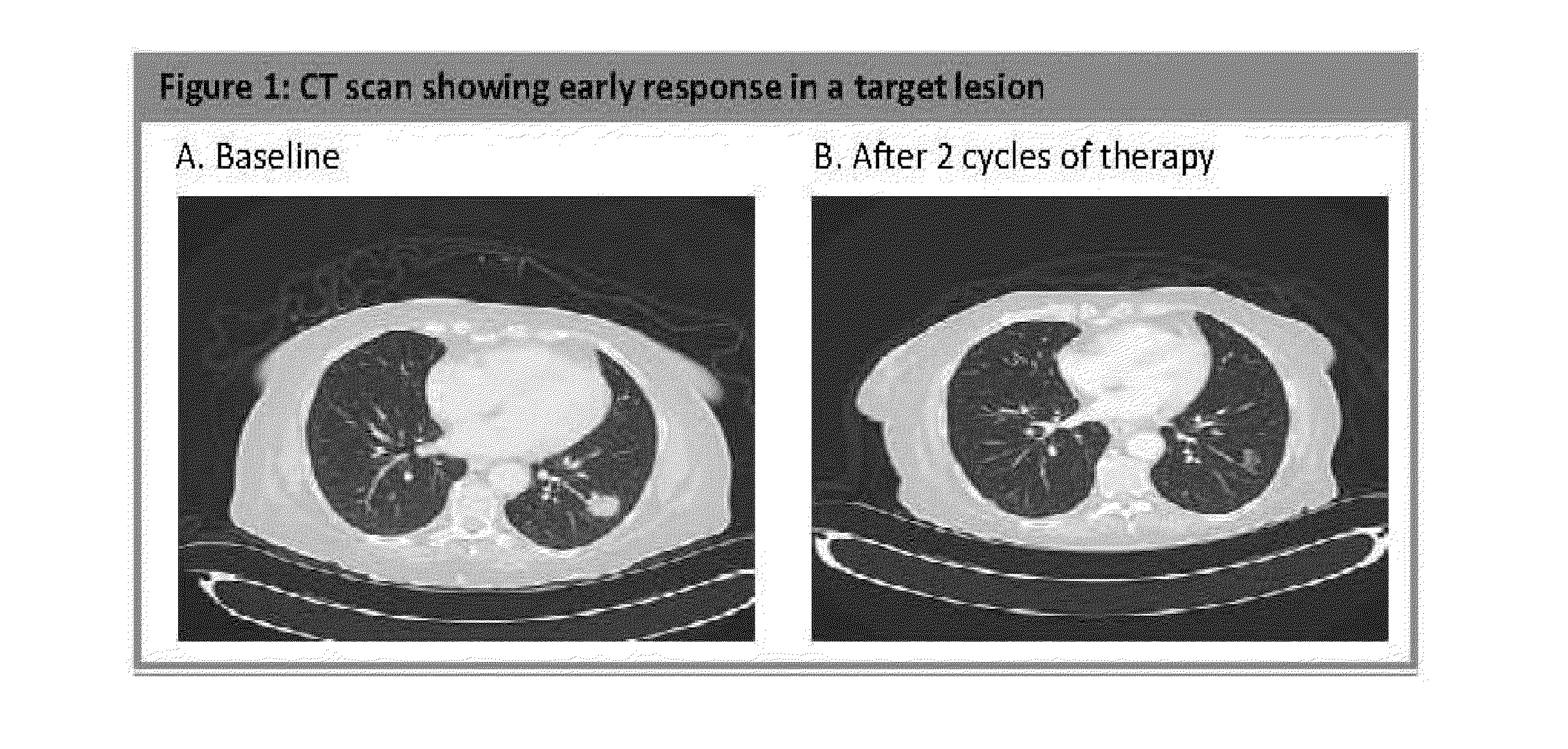
Figure 1 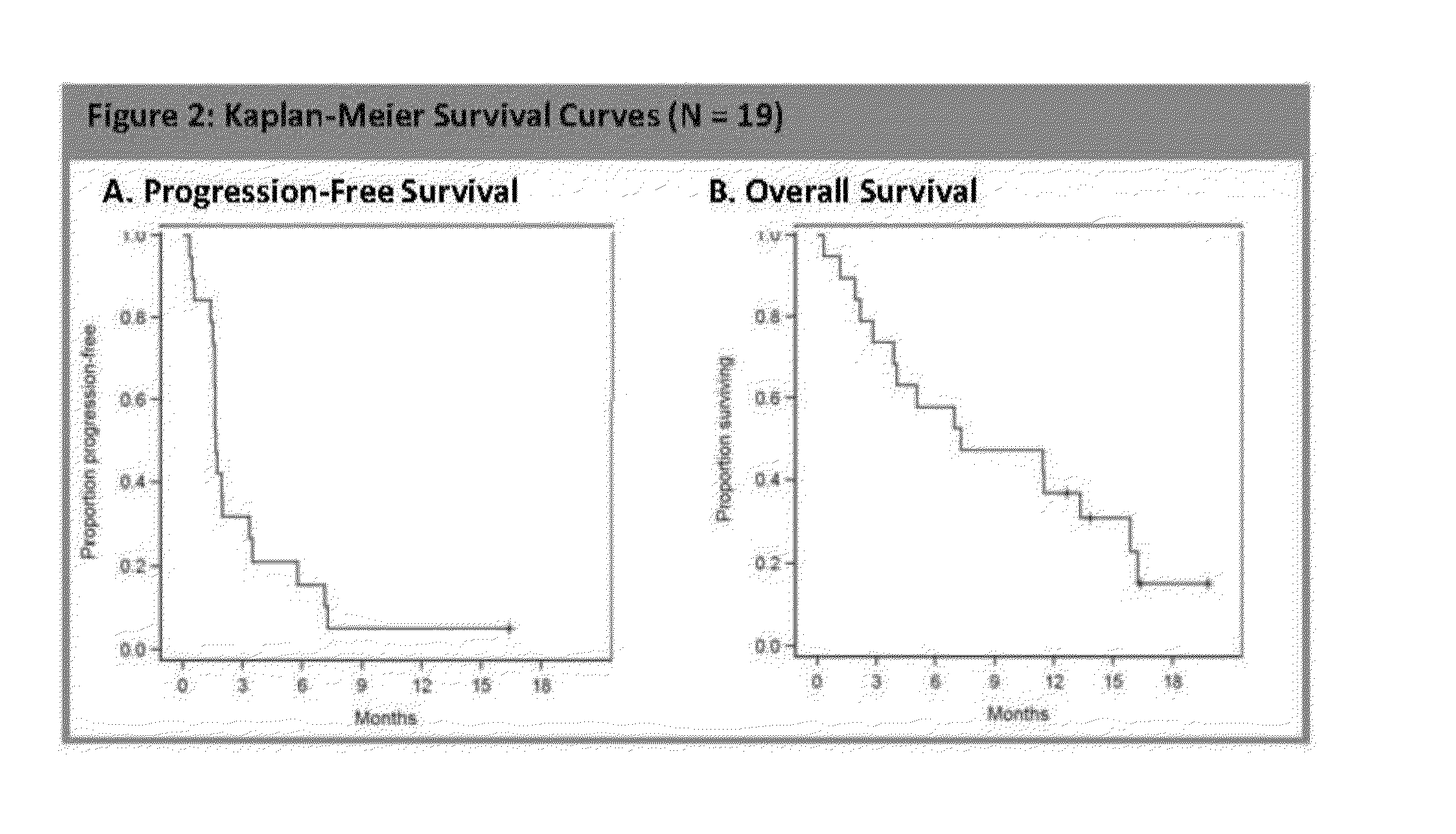
Figure 2 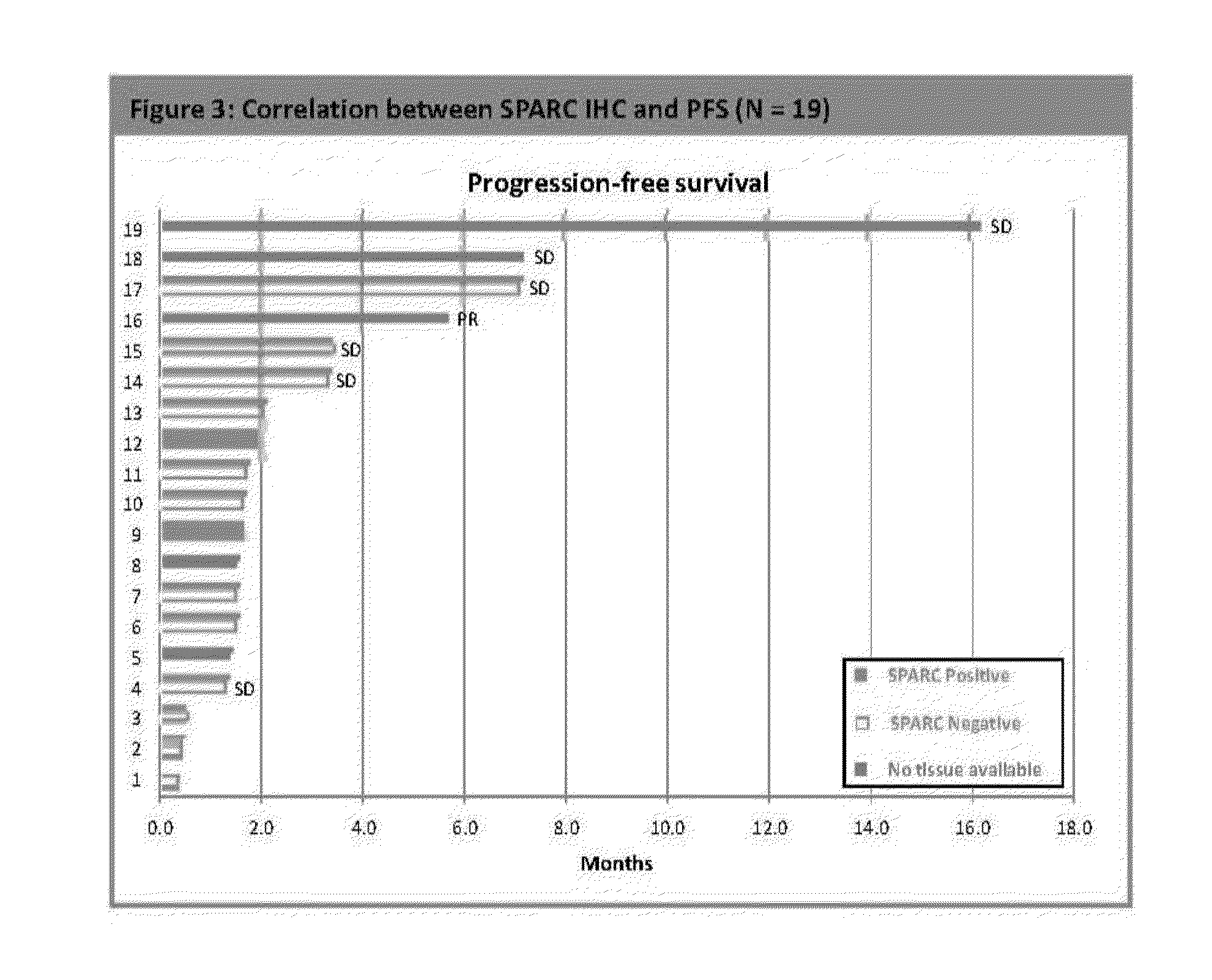
Figure 3
Abstract
Description
CROSS-REFERENCE TO RELATED APPLICATIONS
[0001] This application claims priority benefit to U.S. Provisional Patent Application Nos. 61 / 351,846 filed Jun. 4, 2010, 61 / 377,035, filed Aug. 25, 2010, and 61 / 446,932, filed Feb. 25, 2011, the contents of each are hereby incorporated herein by reference in their entirety.TECHNICAL FIELD
[0002] The present invention relates to methods and compositions for the treatment of pancreatic cancer in an individual by administering compositions comprising nanoparticles that comprise a taxane and an albumin as a second-line therapy.BACKGROUND
[0003] Pancreatic cancer has one of the highest mortality rates among all cancers and is the fourth most common cause of adult cancer death in the United States with an estimated 42,470 cases per year. See Nieto et al., The Oncologist, 13:562-576 (2008); and Cancer Facts and Figures, American Cancer Society (2009). It accounts for about 3% of all newly diagnosed cancers in the United States each year. However, almost ...
Examples
example 1
A Phase II Trial of Nab-Paclitaxel in Patients with Advanced Pancreatic Cancer Who have Progressed on Gemcitabine-Based Therapy
[0306]This example demonstrates that Nab-paclitaxel was well tolerated and provided clinical benefit in patients who had progressed on gemcitabine-based therapy.
Materials and Methods
[0307]In the Phase II open-label trial, patients with locally advanced, unresectable or metastatic pancreatic ductal carcinoma (ECOG PS 0-2) who progressed within 6 months of gemcitabine-based therapy received nab-paclitaxel at 100 mg / m2 intravenously over 30 minutes on days 1, 8 and 15 on a 28-day cycle. The patients were at least 18 years of age with good organ function. The contrast CT (Computed Tomography) was evaluated at baseline and every 2 cycles. The primary endpoint was 6-month overall survival (OS). The secondary endpoints were response rate by RECIST (Response Evaluation Criteria In Solid Tumors) criteria, progression-free survival (PFS), safety and tolerability, and ...
example 2
A Phase I Study of Two Different Schedules of Nab-Paclitaxel with Ascending Doses of Vandetanib with Expansion in Patients with Pancreatic Cancer
[0310]This Example reports a Phase I study of two different schedules of Nab-paclitaxel with ascending doses of vandetanib with expansion in patients with pancreatic cancer. A primary objective was to determine the maximum tolerated dose (MTD) of the combination of Nab-paclitaxel and vandetanib. A secondary objective was to assess preliminary efficacy in patients with pancreatic cancer.
Materials and Methods
[0311]Patients were randomized to one of two cohorts. Doses of Nab-paclitaxel for Cohort A were fixed at 100 mg / m2 Nab-paclitaxel intravenously weekly for three weeks on a 28 day cycle. Doses of Nab-paclitaxel for Cohort B were fixed at 260 mg / m2 Nab-paclitaxel intravenously on a three week schedule. Vandetanib was administered to patients at doses of 100 mg, 200 mg, or 300 mg by mouth daily for each cohort. A 3+3 design was used. Expansi...