
Inhibition of TRP channels as a treatment for cardiac hypertrophy and heart failure
a technology of trp channel and cardiac hypertrophy, which is applied in the field of development biology and molecular biology, can solve the problems of ventricular dilation and the clinical syndrome of heart failure, the specific mechanism responsible for this persistent calcium signal remains elusive, and the intracellular calcium concentration increases, so as to improve one or more symptoms of cardiac hypertrophy, increase exercise capacity, and improve the effect of blood ejection volum
Patent Information
- Authority / Receiving Office
- US · United States
- Patent Type
- Applications(United States)
- Current Assignee / Owner
- Publication Date
- 2005-08-18
- Estimated Expiration
- Not applicable · inactive patent
Smart Images
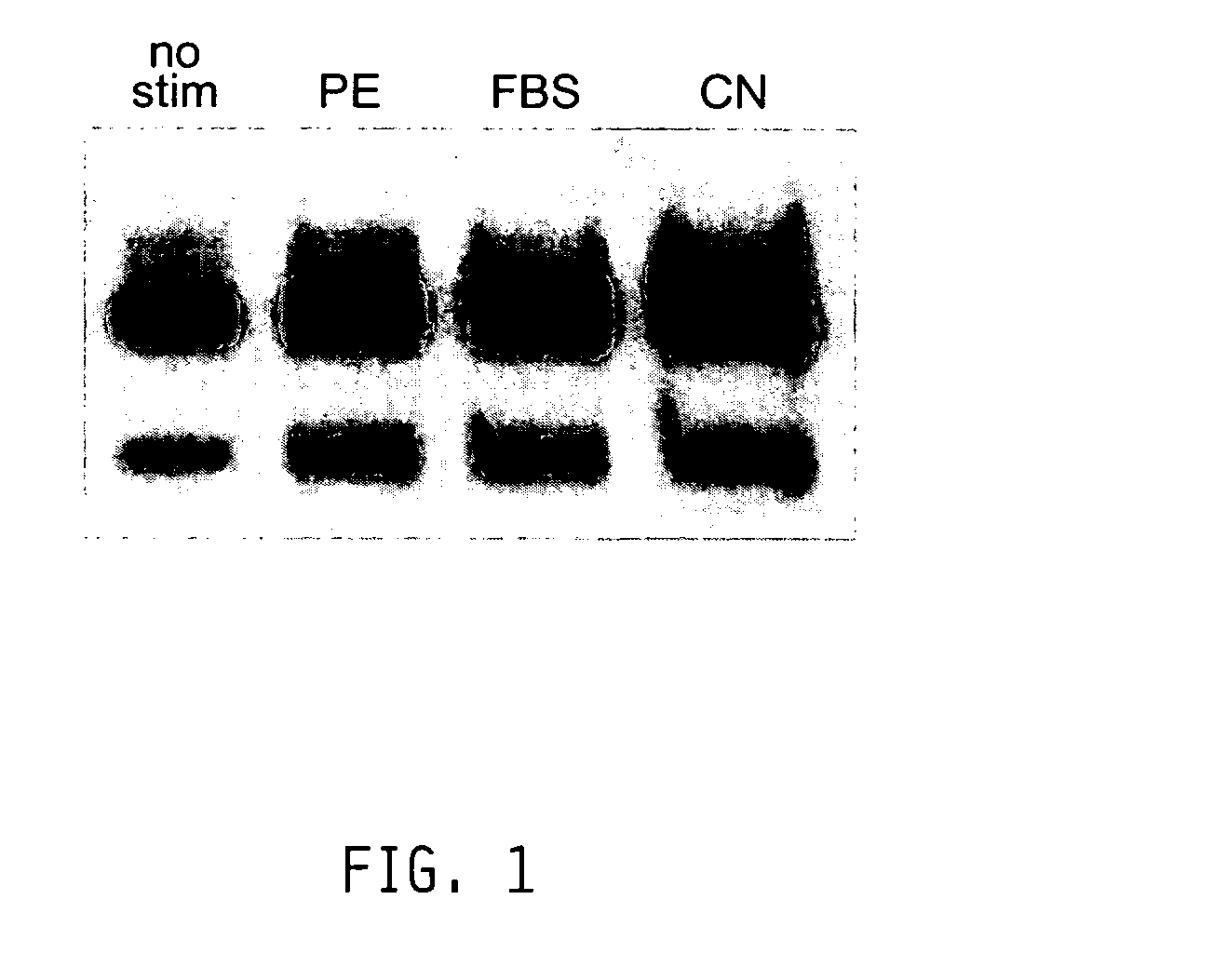
Figure 1 
Figure 2 
Figure 3
Abstract
Description
[0001] This application claims priority to U.S. Provisional Patent Application 60 / 519,980 filed on Nov. 13, 2003, which is specifically incorporated by reference.BACKGROUND OF THE INVENTION
[0002] 1. Field of the Invention
[0003] The present invention relates generally to the fields of developmental biology and molecular biology. More particularly, it concerns gene regulation and cellular physiology in cardiomyocytes. Specifically, the invention relates to the use inhibitors of Transient Receptor Potential (TRP) channels to block non-voltage gated calcium flux into cells. It also relates to the use of TRP channel inhibitors to treat cardiac hypertrophy and heart failure, and to screening methods for finding inhibitors of cardiac TRP channels.
[0004] 2. Description of Related Art
[0005] Cardiac hypertrophy is an adaptive response of the heart to many forms of cardiac disease, including hypertension, mechanical load abnormalities, myocardial infarction, valvular dysfunction, certain c...
Examples
example 1
Materials and Methods
[0328] NRVM culture. For preparations of neonatal rat ventricular myocytes (NRVMs), hearts were removed from 10-20 newborn (1-2 days old) Sprague-Dawley rats. Isolated ventricles were pooled, minced and dispersed by three 20-minute incubations at 37° C. in Ads buffer (116 mM NaCl, 20 mM HEPES, 10 mM NaH2PO4, 5.5 mM glucose, 5 mM KCl, 0.8 mM MgSO4, pH 7.4) containing collagenase Type II (65 U / ml, Worthington) and pancreatin (0.6 mg / ml, GibcoBRL). Dispersed cells were applied to a discontinuous gradient of 40.5% and 58.5% (v / v) Percoll (Amersham Biosciences), centrifuged, and myocytes collected from the interface layer. Myocyte preparations were pre-plated in Dulbecco's modified Eagle's medium (DMEM, Cellgro), supplemented with 10% (v / v) fetal bovine serum (FBS, HyClone), 4 mM L-glutamine and 1% penicillin / streptomycin for 1 hr at 37° C. to reduce fibroblast contamination, then plated at a density of 2.5×10⁵ cells per well on 6-well tissue culture plates (or 10,0...
example 2
In Vivo Models
[0333] Trans-thoracic Aortic Banding (TAB). For chronic left thoracotomy and aortic ligation, male Sprague-Dawley rats (Harlan, Indianapolis, Ind.; 8-9 weeks of age, 200-225 g) were anesthetized with 5% isoflurane (v / v 100% O2), intubated and maintained at 2.0% isoflurane with positive pressure ventilation. A left thoracotomy through the third intercostal space was performed and the descending thoracic aorta, 3-4 mm cranial to the intersection of the aorta and azygous vein was isolated. A segment of 5-0 silk suture was then positioned around the isolated aorta to function as a ligature. A blunted hypodermic needle (gauge determined by weight) was placed between the aorta and the suture to prevent complete aortic occlusion when the suture was tied. When tying was completed, the needle was removed from between the aorta and ligature, re-establishing flow through the vessel. The thorax was then closed and the pneumothorax evacuated. After 7 days of recovery, animals were...
example 3
Results
[0336] Transcriptomic Analysis of Hypertrophic Cardiomyocytes. The inventors performed a transcriptomic survey of genes that were differentially expressed in non-hypertrophic neonatal rat ventricular myocytes (NRVM) and myocytes stimulated to undergo hypertrophy with the adrenergic agonist phenylephrine (PE). RNA isolated from NRVM was labeled, hybridized to Affymetrix GeneChip Rat Expression Arrays, scanned and quantitated. A summary of some genes observed to be induced during phenylephrine-dependent hypertrophy are listed in the Table 4.
TABLE 4GeneFold upregulated by PEMyosin heavy chain, embryonic18 Brain natriuretic factor4Atrial natriuretic factor2MCIP12.5 Alpha skeletal actin2Transient receptor potential channel TRPC318
[0337] As shown, expression of known hypertrophic markers was induced by phenylephrine, including: embryonic myosin heavy chain, brain and atrial natriuretic peptides, alpha skeletal actin, and the calcineurin-induced gene MCIP1. In addition, the inv...