
Methods of treating bladder cancer
a bladder cancer and composition technology, applied in the field of bladder cancer methods and compositions, can solve the problems of recurrence rate of bladder cancer, poor surgical candidates or refusal of patients, and no standard second-line chemotherapy for metastatic urothelial cancer, so as to inhibit the growth of bladder cancer tumors, delay the progress of bladder cancer, shrink the effect of tumor siz
Patent Information
- Authority / Receiving Office
- US · United States
- Patent Type
- Applications(United States)
- Current Assignee / Owner
- Publication Date
- 2013-10-10
- Estimated Expiration
- Not applicable · inactive patent
Smart Images
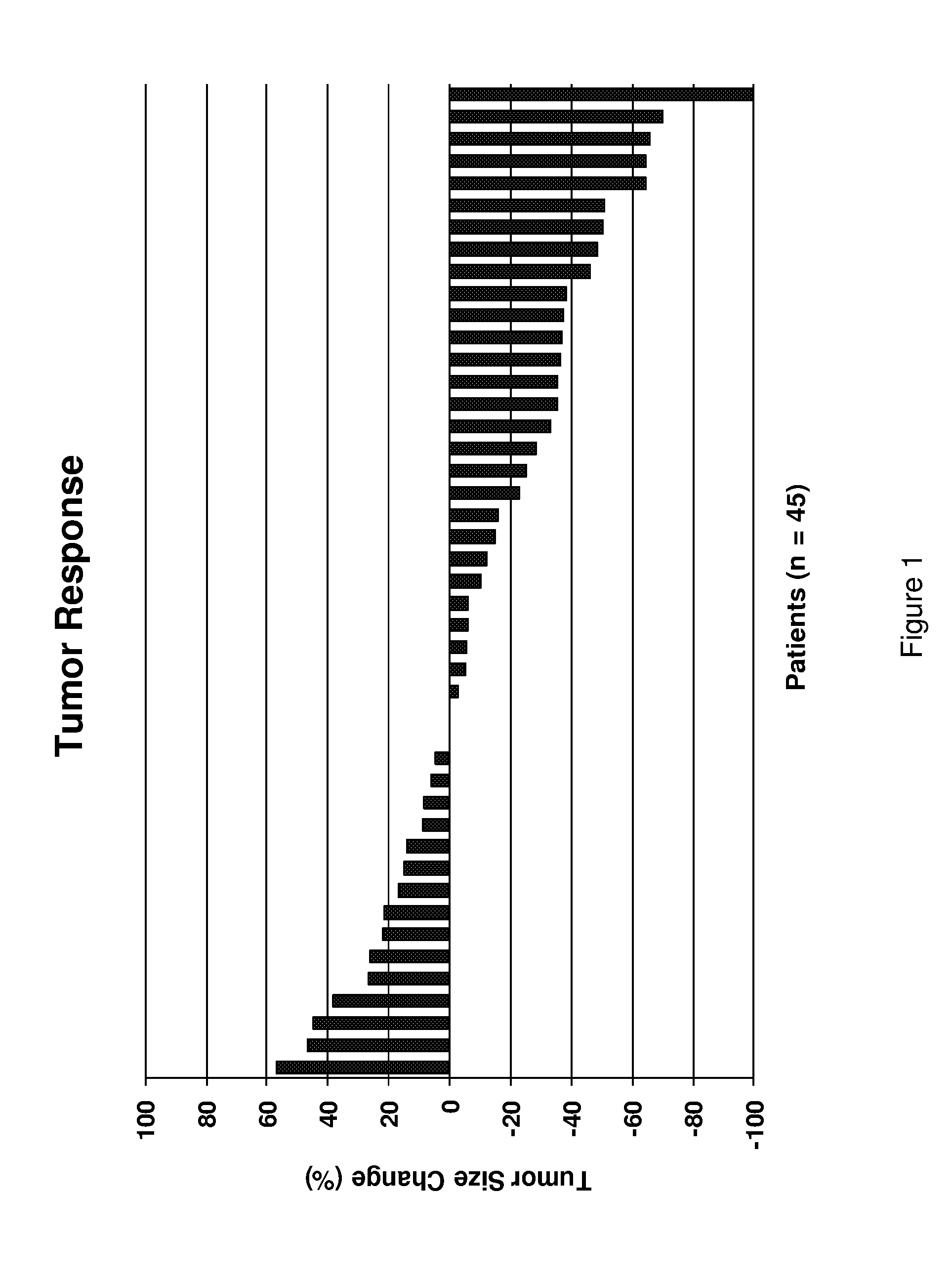
Figure 1 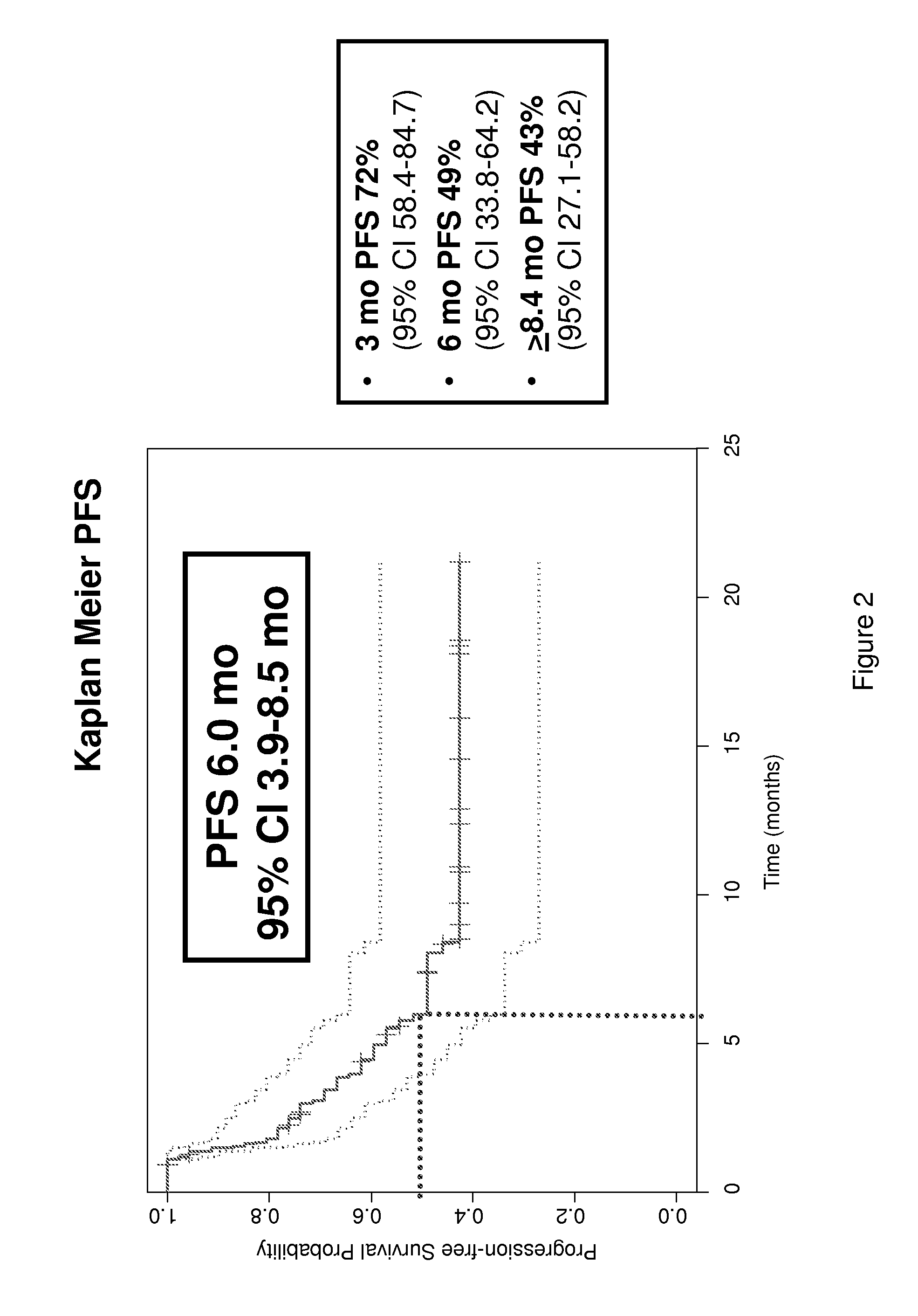
Figure 2 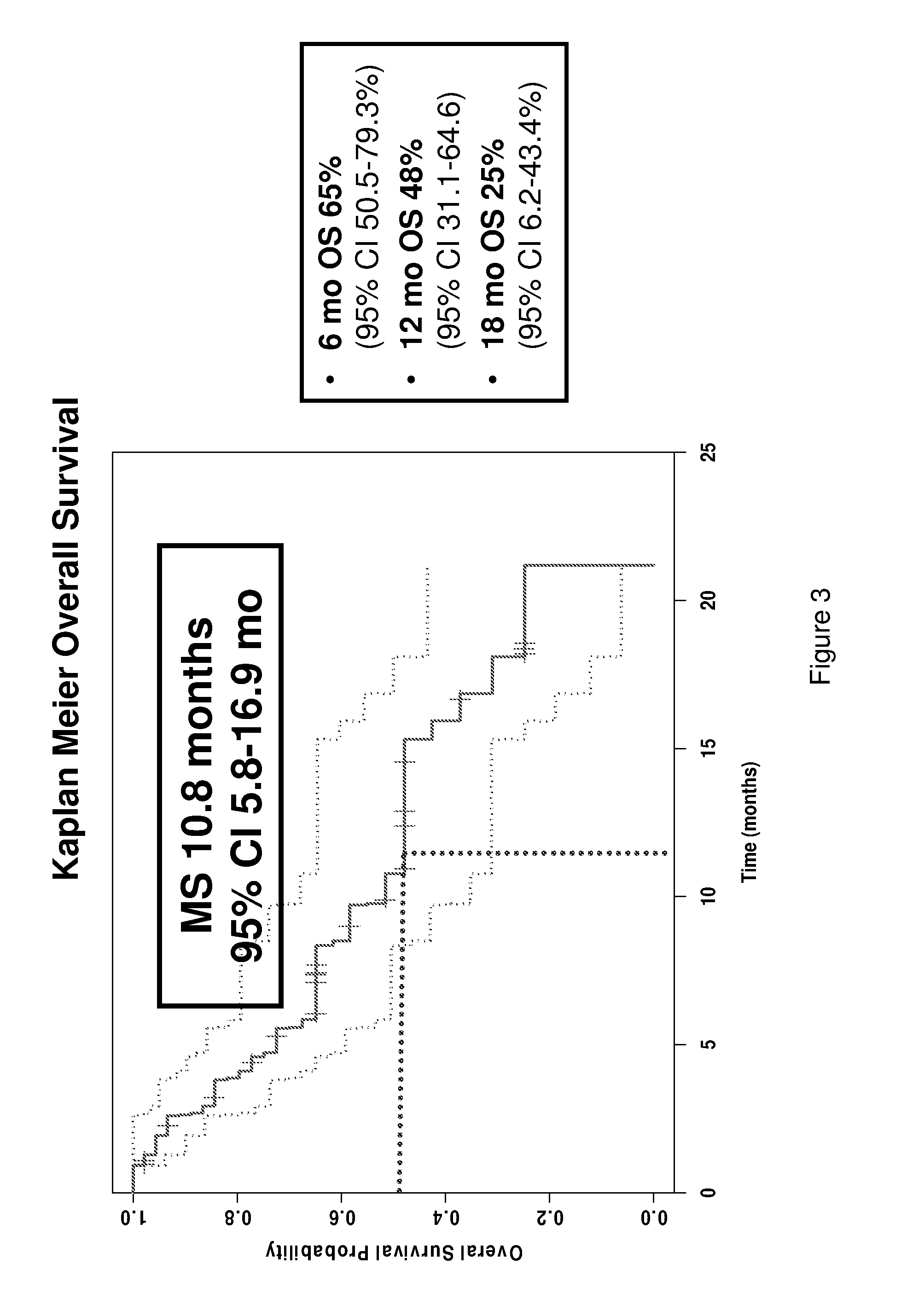
Figure 3
Abstract
Description
CROSS-REFERENCE TO RELATED APPLICATIONS
[0001] This application claims the priority benefit of U.S. Provisional Patent Application No. 61 / 396,800 filed on Jun. 2, 2010 and U.S. Provisional Patent Application No. 61 / 449,513 filed Mar. 4, 2011, the contents of which are incorporated herein by reference in their entirety.TECHNICAL FIELD
[0002] The present invention relates to methods and compositions for the treatment of bladder cancer by administering compositions comprising nanoparticles that comprise a taxane and an albumin.BACKGROUND
[0003] Bladder cancer is the fifth most common cancer in North America. Non-muscle-invasive bladder cancer, is difficult to treat and up to 50 percent of patients receiving drugs infused into the bladder (intravesical agents) will experience recurrence of the cancer. Typical second-line treatment for patients with high grade, non-muscle-invasive bladder cancer who have failed standard intravesical therapy is surgical removal of the entire bladder, cystectomy...
Examples
example 1
Phase I Trial of Intravesicular Administration of Nanoparticle Albumin-Bound Paclitaxel in the Treatment of BCG-Refractory Non-Muscle-Invasive Bladder Cancer
[0157]This example demonstrates the activity of Nab-paclitaxel in the treatment of non-muscle invasive bladder cancer when administered intravesicularly.
Eligibility Criteria
[0158]Inclusion criteria included recurrent high grade (HG) Ta, T1, and Tis transitional cell carcinomas failing at least one prior regimen of standard intravesical therapy (including BCG, mitomycin C, or interferon). The patients are either inoperable due to medical comorbidities or refusal of cystectomy.
Drug Administration
[0159]Nab-paclitaxel reconstituted in 0.9% sodium chloride at 5 mg / ml was administered intravesicularly once weekly for 6 weeks via sterile catheterization with a dwell time of 2 hours. Starting dose was 150 mg with a dose escalation model used until a maximal deliverable dose (MDD) of 500 mg / 100 ml was achieved. Serum levels of Nab-paclit...
example 2
Phase II Study of Single Agent Nab-Paclitaxel as Second-Line Therapy in Patients with Metastatic Urothelial Carcinoma
[0169]This experiment demonstrates the effect of Nab-paclitaxel in patients with metastatic urothelial cancer failing first line cisplatin-based treatments for metastatic disease.
[0170]Patients with unresectable locally advanced or metastatic urothelial cancer of the bladder, ureter or renal pelvis, who progressed on or after first-line platinum based chemotherapy were enrolled on this open-label, two-stage, multicenter clinical trial. Key eligibility criteria included measurable disease with predominantly transitional cell histology, ECOG performance status 0-2, and adequate organ function. Patients treated with prior taxanes for metastatic disease, pre-existing neuropathy>=grade 1 or uncontrolled brain metastases or other illnesses were excluded.
Key Inclusion
[0171]Age≧18 years of age
[0172]ECOG performance status≦2
[0173]Locally advanced or metastatic disease
[0174]His...
example 3a
A Phase II Study of Single-Agent Nab-Paclitaxel in Platinum-Refractory Second-Line Metastatic Urothelial Carcinoma (UC)
[0202]In this multi-institutional phase II study, the efficacy and tolerability of Nab-paclitaxel as a single agent was evaluated in patients with platinum-refractory metastatic UC.
Methods
[0203]Patients with measurable UC, progressing on or after first-line platinum-based chemotherapy were enrolled onto this two-stage trial. ABI-007 was given at 260 mg / m2 IV q3 weekly until progression. Clinical evaluation, CBC and blood chemistries were performed every cycle with restaging CT scans every 2 cycles.
Results
[0204]48 patients were enrolled with the following baseline characteristics: Male: Female 40:8; median age 68; ECOG Performance Status 0:1:2, 15:24:8. 248 cycles were delivered with a median of 5.5 cycles / pt with 17 / 48 pts (35%) requiring dose reductions. Most frequent adverse events (AE) were alopecia (12%), fatigue (12%), pain (12%), neuropathy (9%) and nausea (4%...