
A method for treating and controlling post-harvest physiological disorders in fruit via edible coatings
Patent Information
- Authority / Receiving Office
- US · United States
- Current Assignee / Owner
- Publication Date
- 2020-07-09
Smart Images
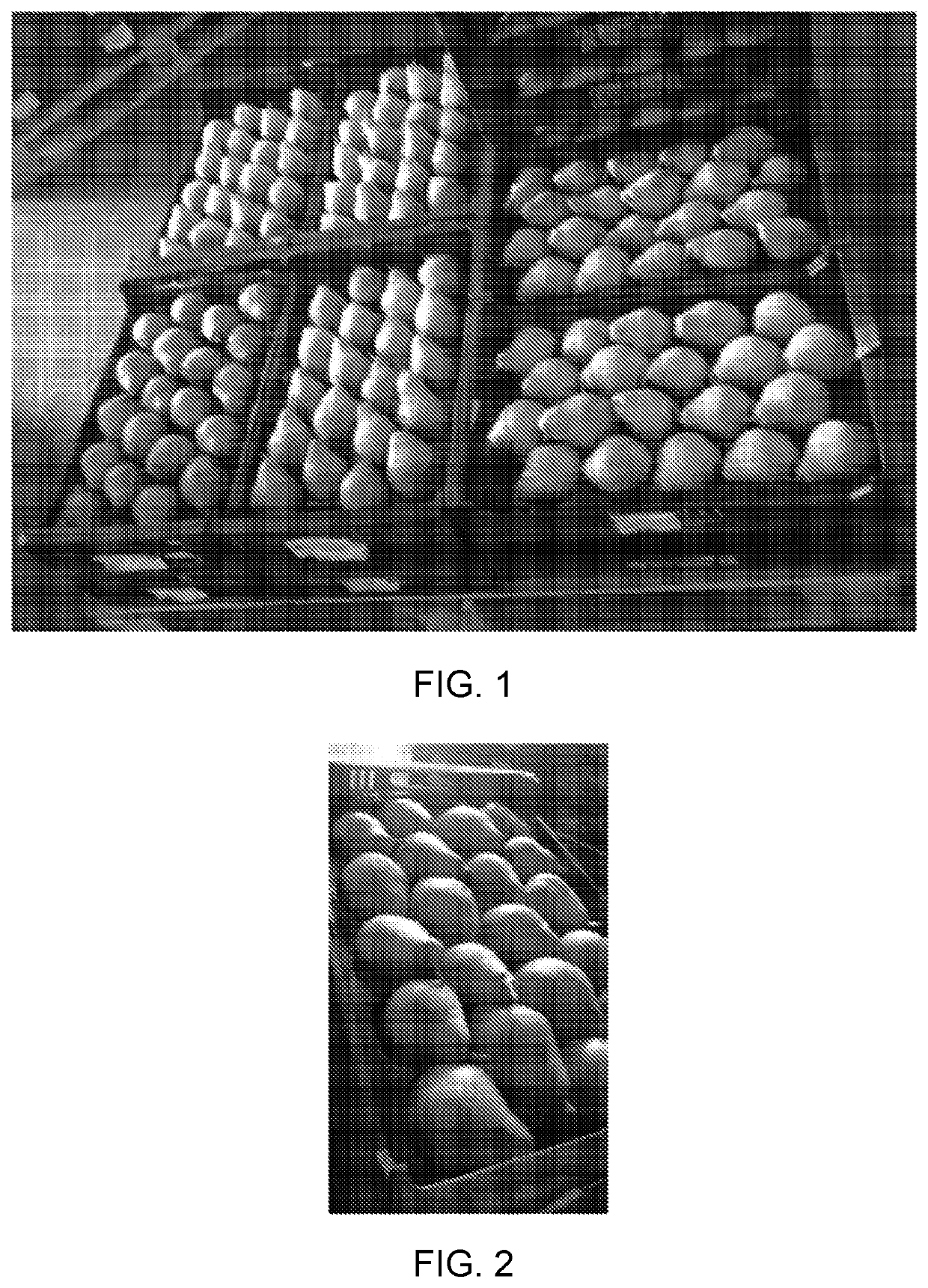
Figure 1 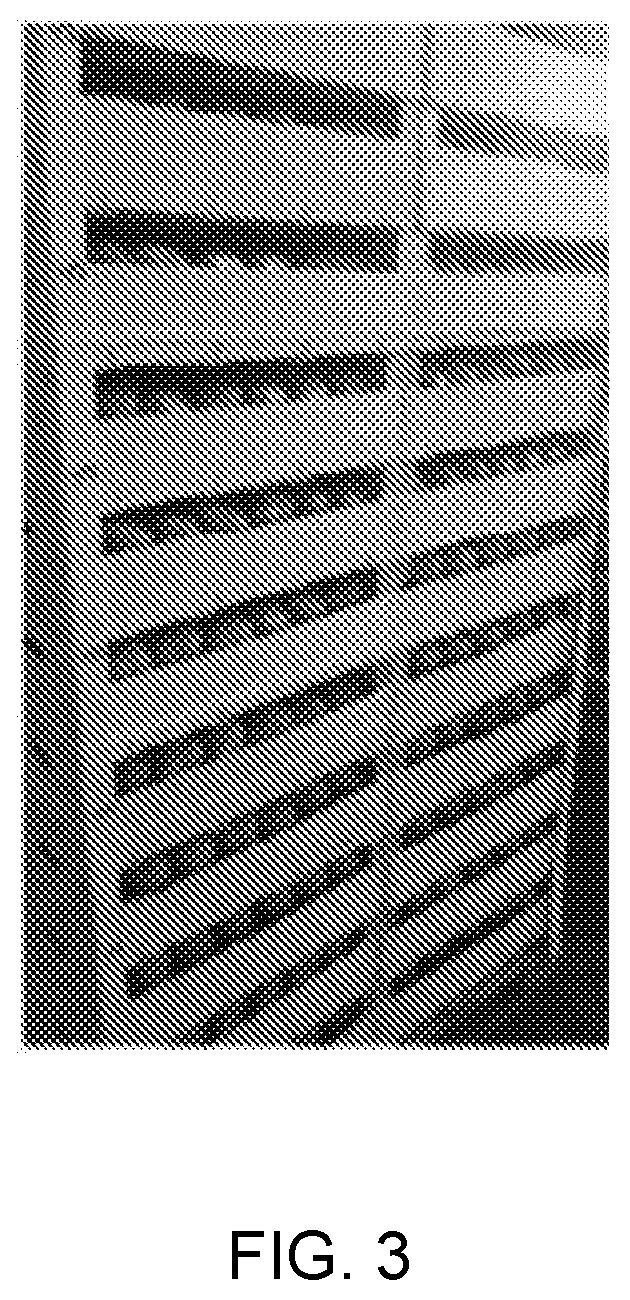
Figure 2 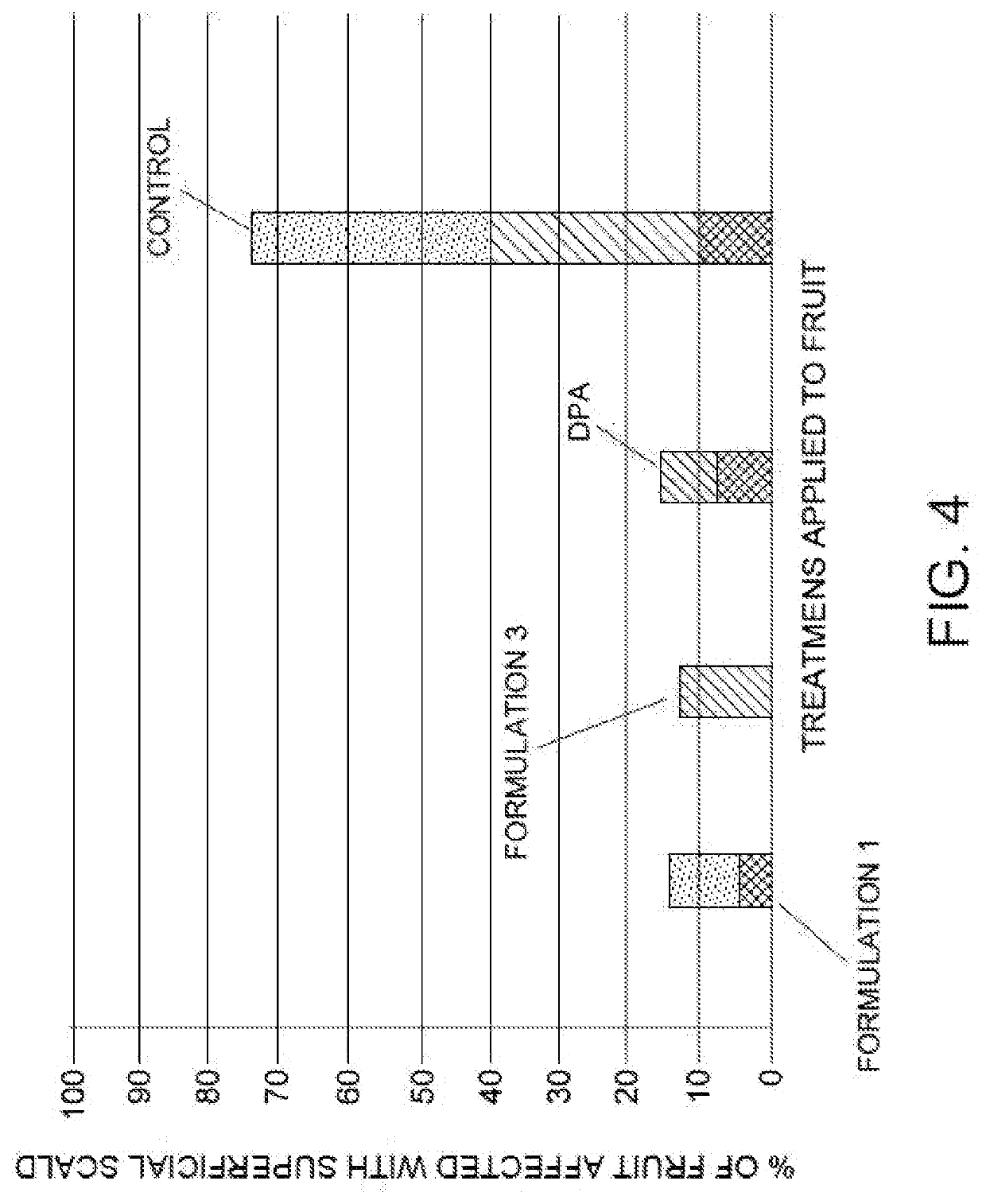
Figure 3
Abstract
Description
FIELD OF THE INVENTION
[0001] The present invention belongs to the field of Chemical Industry, more specifically the sector of agricultural chemistry and horticulture.
[0002] The present invention describes a method for treating fruits and vegetables, more specifically pome fruits, such as apples, pears and kiwis; tropical fruits, such as avocados, mangos and papaya; and stone fruits, such as peaches, plums, cherries, nectarines, to mention just a few, in the preservation, post-preservation and / or transport to the final destination processes which comprises the application of an aqueous formulation which is a edible coating and said coating comprising at least one phospholipid, or at least one polysorbate, or at least a sorbitan ester, or at least a sucro ester of fatty acids or at least a sucroglyceride of fatt acids or a combination thereof.BACKGROUND ART OF THE INVENTION
[0003] Fruits and vegetables, especially citric fruits, but also pome fruits such as apples, pears, peaches and even...
Examples
example 1
the Effectiveness of the Formulation 3 in Delaying Scald in Pome Fruit
[0139]A study was carried out to evaluate different fruit preservation alternatives, the majority of which were based on the formulation 3 preparation, alone or in combination with different additives, DPA and ethoxyquin to control scald.
[0140]The treatments tested were the following:
[0141]Formulation 3 diluted to 2% (v / v) was applied by immersing a total of 1800 kg of Granny Smith apples. Said fruits had been picked early and then preserved for 6 months in a Controlled Atmosphere (CA) and Normal Cold (NC). CA and NC, 0.5° C., 90-9% Relative Humidity (RH)
[0142]The following properties were evaluated in each of the storage conditions:
TABLE 8Properties evaluated during the testing of formulation 3.Normal Cold (NC) after 2, 4 and 6Controlled Atmosphere (CA) after 4months of storageand 6 months of storageAppearance (Scald)Appearance (Scald)Physiology and qualityPhysiology and qualityat 0.10 and 20° C.at 0.10 and 20° C...
example 2
the Effectiveness of Formulation 1 in a Post-Harvest Treatment
[0145]In the present study of effectiveness, formulation 1, as it is described in table 4 of the present application, was applied in 4 facilities, wherein 4 post-harvest treatments were applied to fruit, using said formulation in different concentrations and fruit in different conditions.
2. A—Factory 1 (Lleda, Spain):
[0146]Methodology:
[0147]0.2% (v / v) of formulation 1 was applied to pears in the basin of an unloader on a production line of the factory when they were removed from the chamber. The fruit had been previously treated with 1-methylcyclopropane (1-MCP) and the control sample showed significant problems due to friction on the line and physiological disorders and scald caused by blows and friction on the line and in the brushes.
[0148]After the week of treatment, the following results were observed:
[0149]Control without Post-preservation treatment: >30% damages due to friction on the line.
[0150]Fruit treated in the...
example 3
the Effectiveness of Formulation 2 in a Post-Harvest Treatment
3. A—Factory 5 (Lleida, Spain):
[0170]Methodology:
[0171]In the present study of effectiveness, formulation 2 which contains Sunflower lecithin described in table 5 of the present application, was applied in a facility where a post-harvest treatment was carried out on pears using said formulation in a concentration of 0.4% (v / v) following its removal from the chamber in controlled atmosphere (CA) and before entering normal atmosphere (NA), then spending approximately 20 days in the NA on the production line. This study was carried out to verify 1) the delay in the appearance of physiological scald when passing from CA to NA and 2) to verify the effectiveness in controlling scald due to friction on the line and maintaining the good appearance and marketability thereof, after passing through CA, then through NA and making the fruit marketable.
[0172]The results obtained were excellent, as shown in the photographs below:
[0173]P...