
System and Method for Digital Cancellation of Self-Interference in Full-Duplex Communications
a full-duplex communication and self-interference technology, applied in the field of wireless communications, can solve the problems of significant self-interference at the radio network component, add complexity to the transmitter/receiver system,
Patent Information
- Authority / Receiving Office
- US · United States
- Current Assignee / Owner
- Publication Date
- 2016-02-25
Smart Images
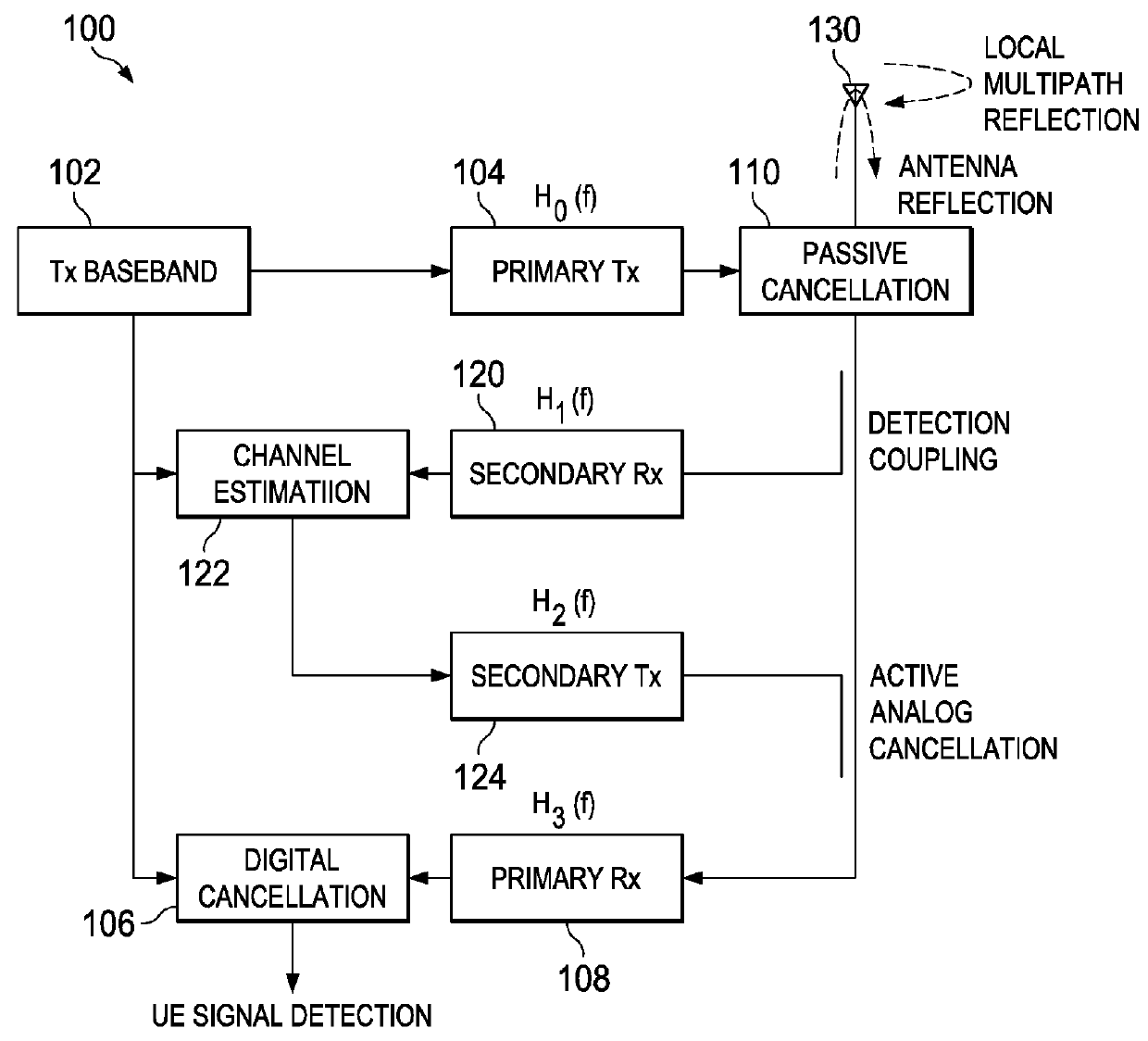
Figure 1 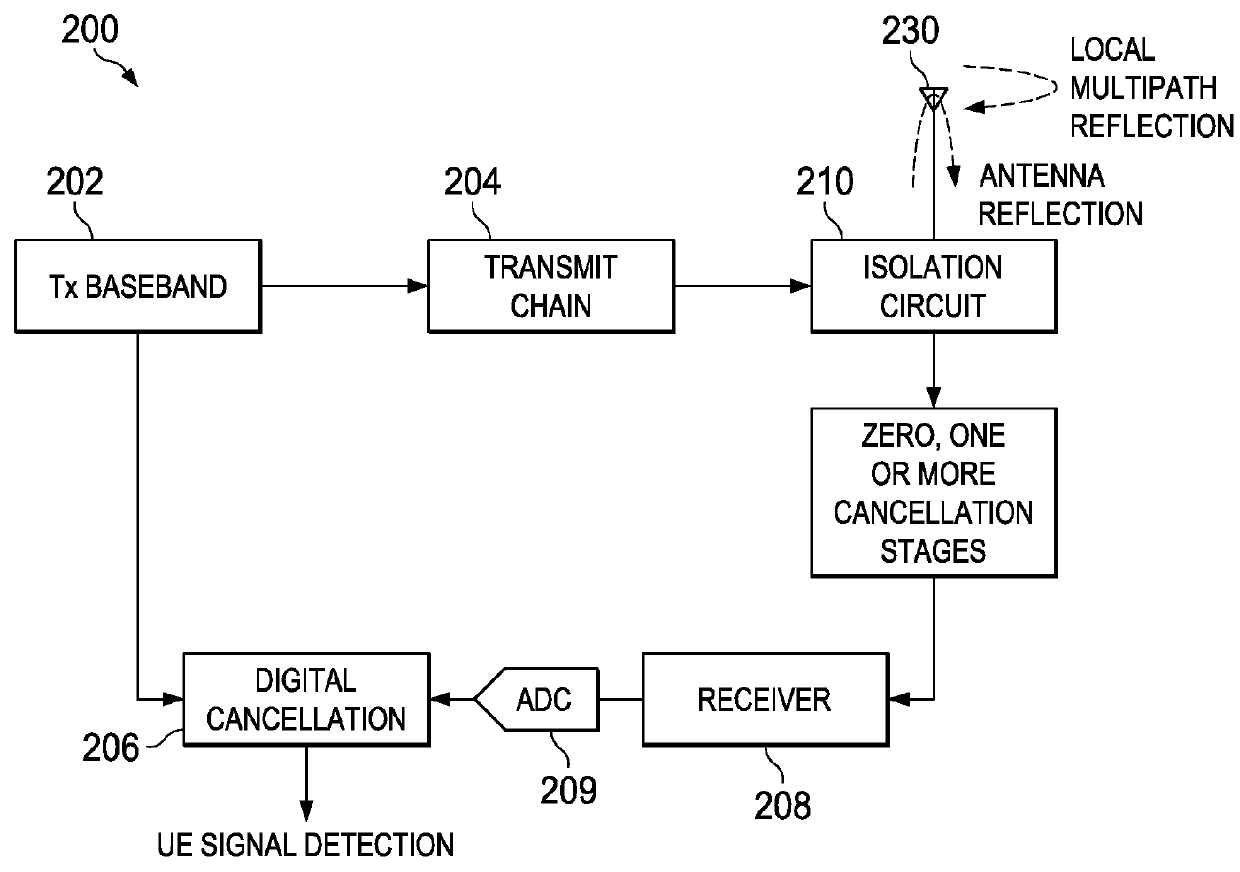
Figure 2 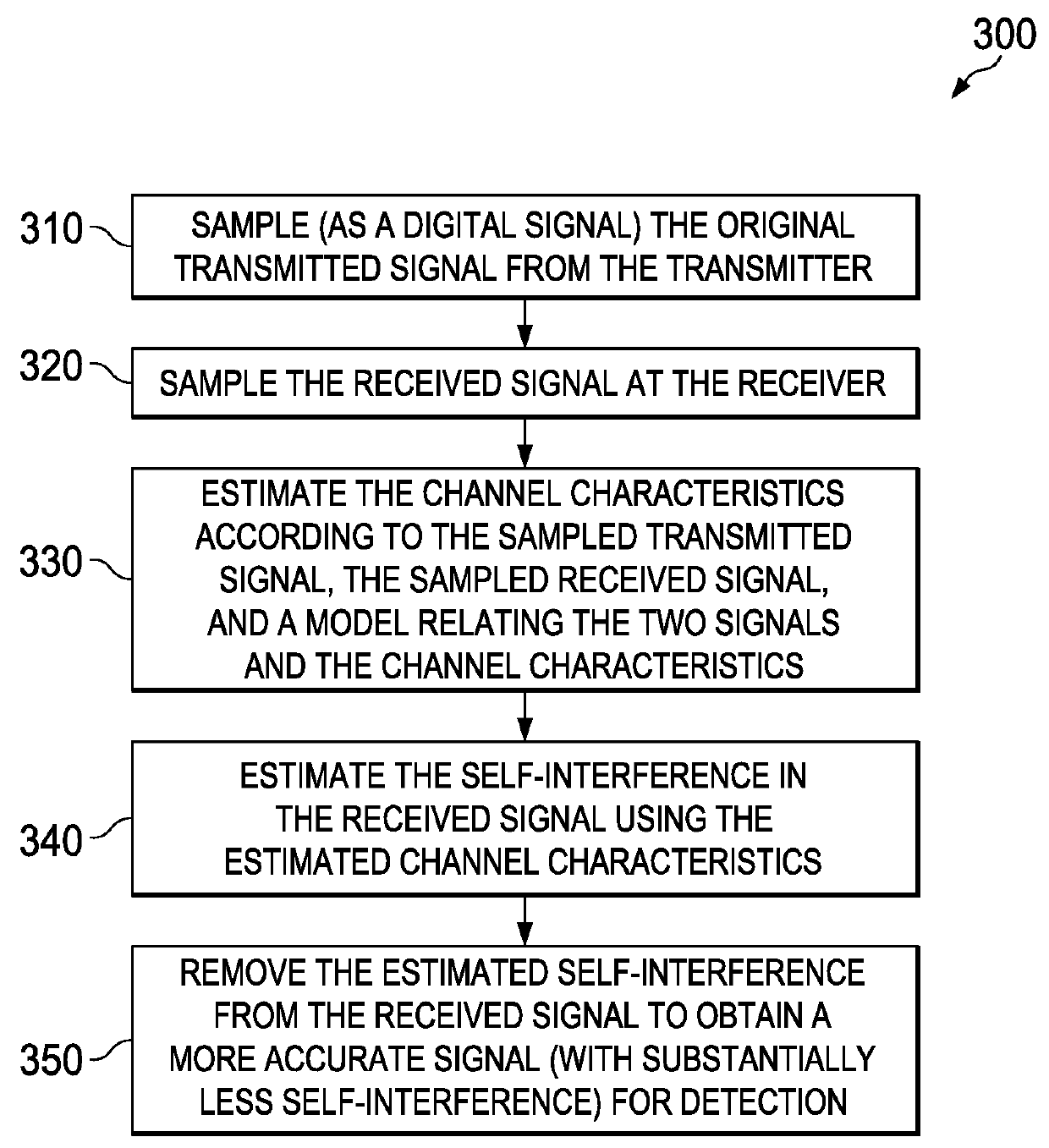
Figure 3
Abstract
Description
TECHNICAL FIELD
[0001] The present invention relates to the field of wireless communications, and, in particular embodiments, to a system and method for digital cancellation of self-interference in full-duplex communications.BACKGROUND
[0002] In radio communications, it is desirable to transmit and receive from the same antenna or antennas. More efficiency can be achieved if the transmission and reception occurs simultaneously on the same radio channel, also referred to as full duplex on the same channel. The simultaneous transmission and reception can cause significant self-interference at the radio network component. Typically, reducing this self-interference to acceptable levels requires accurate estimation and accordingly cancelling of such interference. Multiple cancellation stages, e.g., including analog and digital stages, may also be needed to reduce self-interference effectively, which adds complexity to the transmitter / receiver system. There is a need for an effective and rela...
Examples
Embodiment Construction
[0013]The making and using of the presently preferred embodiments are discussed in detail below. It should be appreciated, however, that the present invention provides many applicable inventive concepts that can be embodied in a wide variety of specific contexts. The specific embodiments discussed are merely illustrative of specific ways to make and use the invention, and do not limit the scope of the invention.
[0014]In full-duplex transmissions, signals are transmitted and received simultaneously on the same frequency channel using a common antenna of a communications device. As such, a portion of the transmitted signals can be reflected into the receiver causing interference with the detected signals. This is referred to as self-interference. To receive and detect the signals with sufficient accuracy, an interference cancellation scheme is needed. A suitable and effective implementation includes multiple cancellation stages, e.g., both analog and digital cancellation. Embodiments ...