
Synergistic tumor treatment with il-2 and integrin-binding-fc-fusion protein
Patent Information
- Authority / Receiving Office
- US · United States
- Current Assignee / Owner
- Publication Date
- 2017-08-03
Smart Images
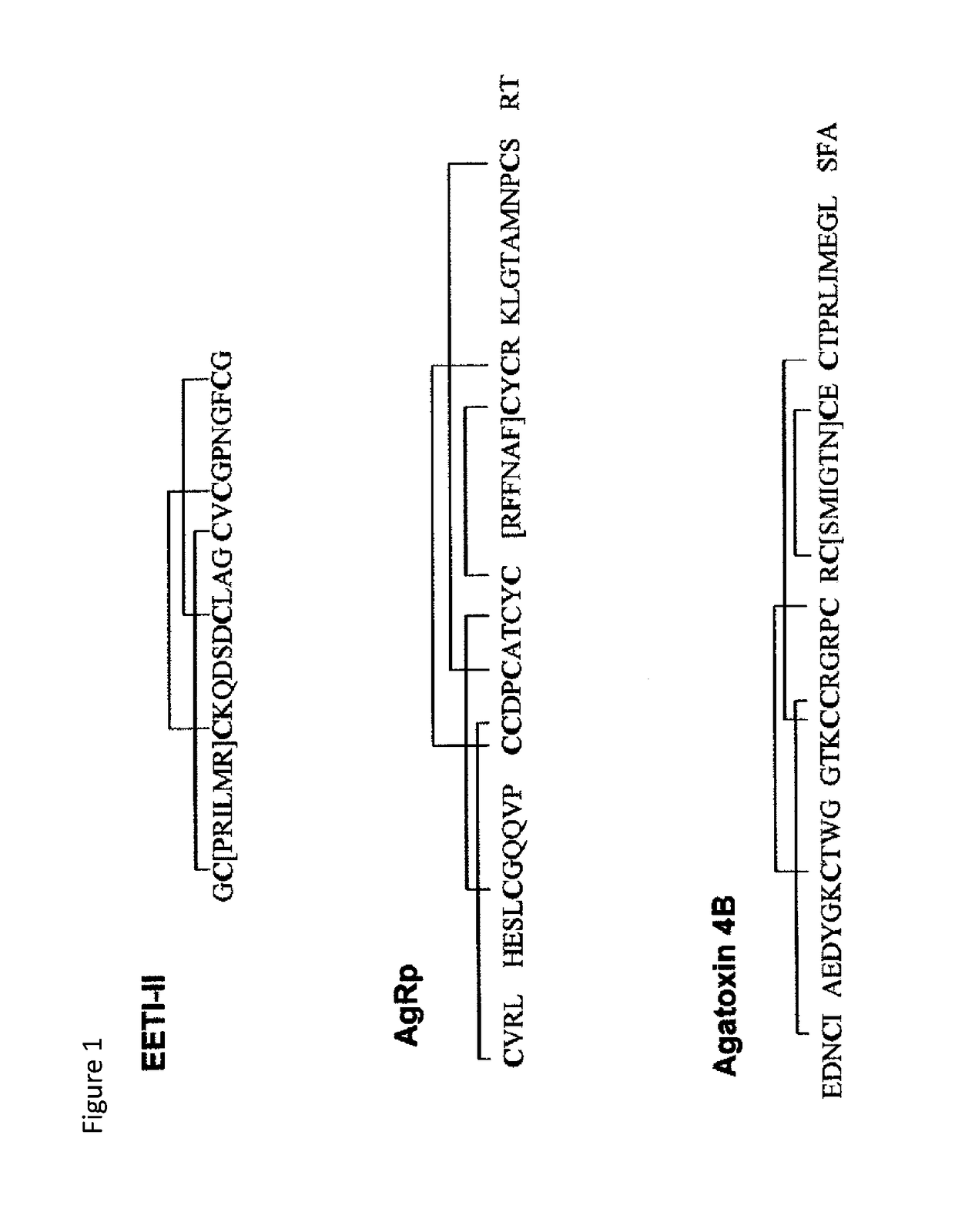
Figure 1 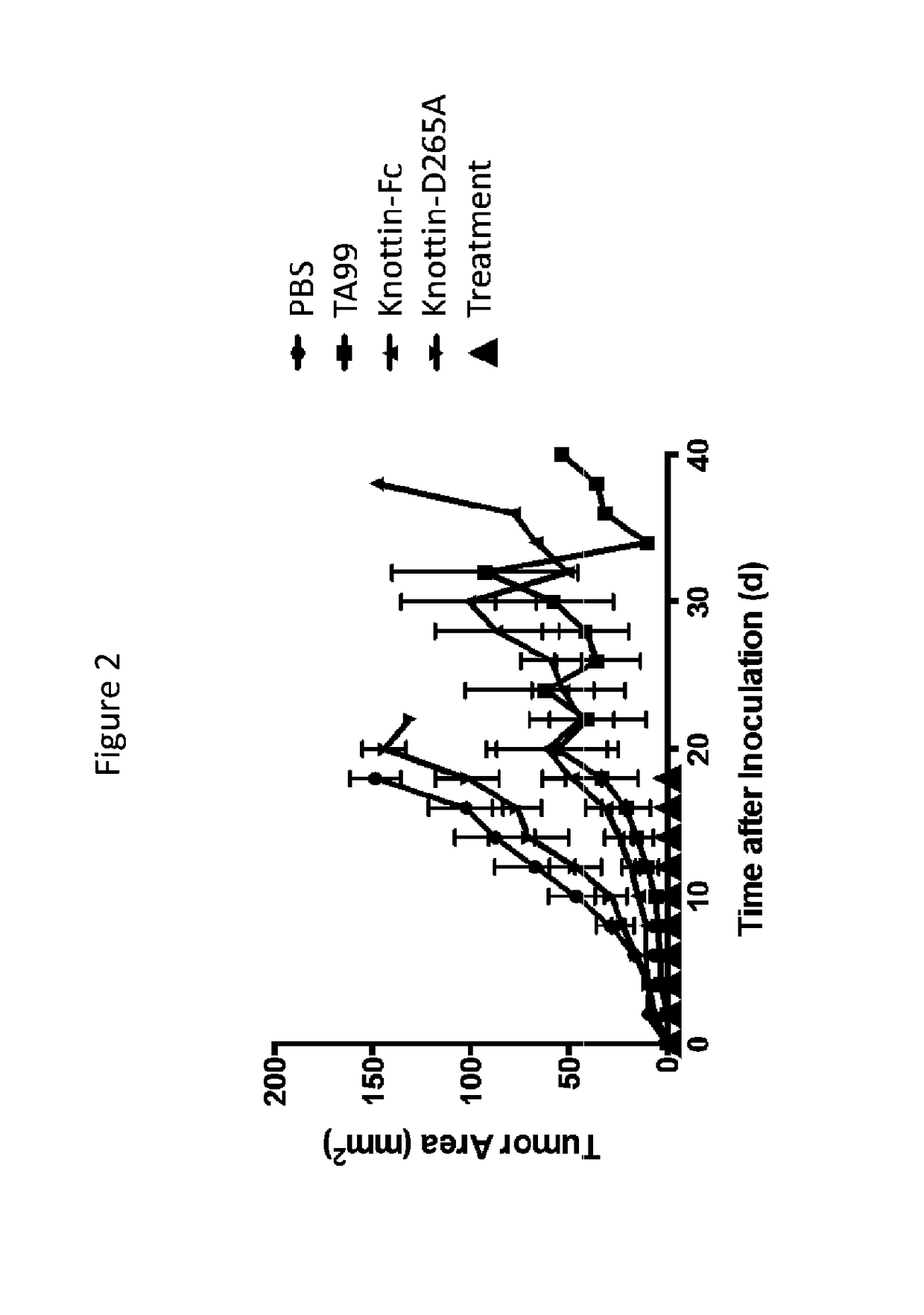
Figure 2 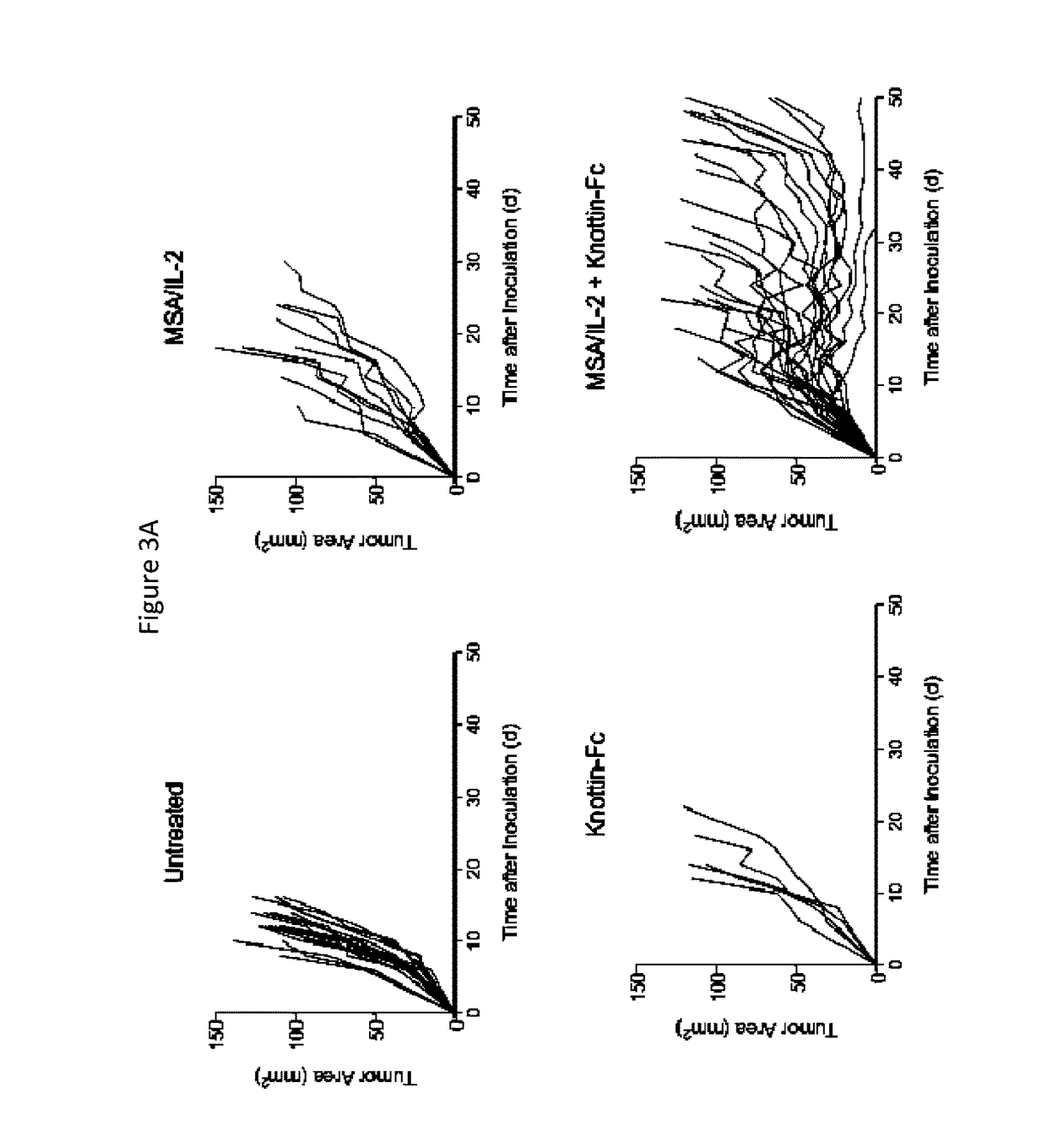
Figure 3
Abstract
Description
RELATED APPLICATIONS
[0001] This application claims the benefit of the priority date of U.S. Provisional Application No. 62 / 036,554, which was filed on Aug. 12, 2014. The content of this provisional application is hereby incorporated by reference in its entirety.GOVERNMENT FUNDING
[0002] This invention was made with Government support under contract CA174795 awarded by the National Institutes of Health. The Government has certain rights in the invention.BACKGROUND OF THE INVENTION
[0003] Interleukin-2 (IL-2) is a pleiotropic cytokine that activates and induces the proliferation of T cells and NK cells. Although IL-2 is an FDA approved therapy, systemic IL-2 treatment has significant toxicity and therefore the response rate of patients is less than 25%. Combining extended half-life IL-2 and an antibody against a tumor-specific antigen shows promising results for treatment. However, antibody-based therapies often suffer from the fact that many tumors lack known tumor-associated antigens.[00...
Examples
Example
Example 1
Knottin-Fc Treatment is as Effective as TA99 Treatment in B16F10 Tumors
[0295]To address the lack of general tumor-associated antigens, a knottin-Fc protein was engineered. The knottin-Fc protein comprises two parts: 1) an engineered cystine knot (knottin) peptide that binds with high affinity to tumor-associated αvβ3, αvβ5, and α5β1 integrin receptors (specifically 2.5F, SEQ ID NO: 86 or 88), and 2) an antibody Fc domain that mediates immune effector functions in vivo. The knottin-Fc used is 2.5F with a K15S substitution, fused to a mouse IgG2a Fc domain, SEQ ID NO: 45, unless stated otherwise.
[0296]To determine the effects of the knottin-Fc on tumor growth, 2.5×10⁵ B16F10 murine melanoma cells were injected into the flanks of C57BL / 6 mice subcutaneously. Prophylactic treatment was done with 80 μg knottin-Fc, 80 μg knottin-D265A (The D265A mutation in the murine IgG2a Fc domain eliminates binding to FcγR and complement), or 200 μg TA99, administered intraperitoneally every ...
Example
Example 2
Knottin-Fc and Extended-PK IL-2 Synergistically Control Tumor Growth of B16F10 Tumors
[0299]A therapeutic study was conducted to examine the effect of adding MSA / IL-2 to knottin-Fc treatment. Tumors were established by injecting C57BL / 6 mice subcutaneously with 1×10⁶ B16F10 murine melanoma cells. 30 μg MSA / IL-2 and / or 500 μg knottin-Fc was administered intraperitoneally on day 6 after tumor inoculation and every 6 days after that for 4 treatments total.
[0300]Tumor area was measured and plotted (FIG. 3A). While MSA / IL-2 and knottin-Fc alone had no effect on tumor growth, the combination of MSA / IL-2 and knottin-Fc effectively controlled tumor growth. A Kaplan-Meier survival plot revealed that the combination of MSA / IL-2 and knottin-Fc extended the survival of these mice, whereas monotherapies had no significant effect (FIG. 3B).
Example
Example 3
Knottin-Fc and Extended-PK IL-2 Synergistically Control Tumor Growth of MC38 Tumors
[0301]A separate therapeutic study was conducted to examine the effect of MSA / IL-2 on knottin-Fc efficacy in a tumor type that has no reported targetable antigens. 1×10⁶ MC38 murine colon carcinoma cells were injected into the flanks of C57BL / 6 mice. 6 days after tumor inoculation and every 6 days after for a total of 4 treatments, 30 μg MSA-IL-2 and / or 500 μg knottin-Fc was administered intraperitoneally.
[0302]Tumor growth was controlled with the combination of MSA / IL-2 and knottin-Fc, but not when each component was administered as a monotherapy (FIG. 4A). A Kaplan-Meier survival plot shows an increase in survival in the mice treated with the combination of MSA / IL-2 and knottin-Fc compared to when each component was administered as a monotherapy (FIG. 4B).