
Methods of treating nasal airways
a nasal airway and airway technology, applied in the field of medical devices and treatments, can solve the problems of significant affecting the quality of life of patients, abnormal respiration, inadequate nasal airflow, etc., and achieve the effect of reducing airflow resistance or perceived airflow resistan
Patent Information
- Authority / Receiving Office
- US · United States
- Patent Type
- Applications(United States)
- Current Assignee / Owner
- Publication Date
- 2019-11-07
Smart Images
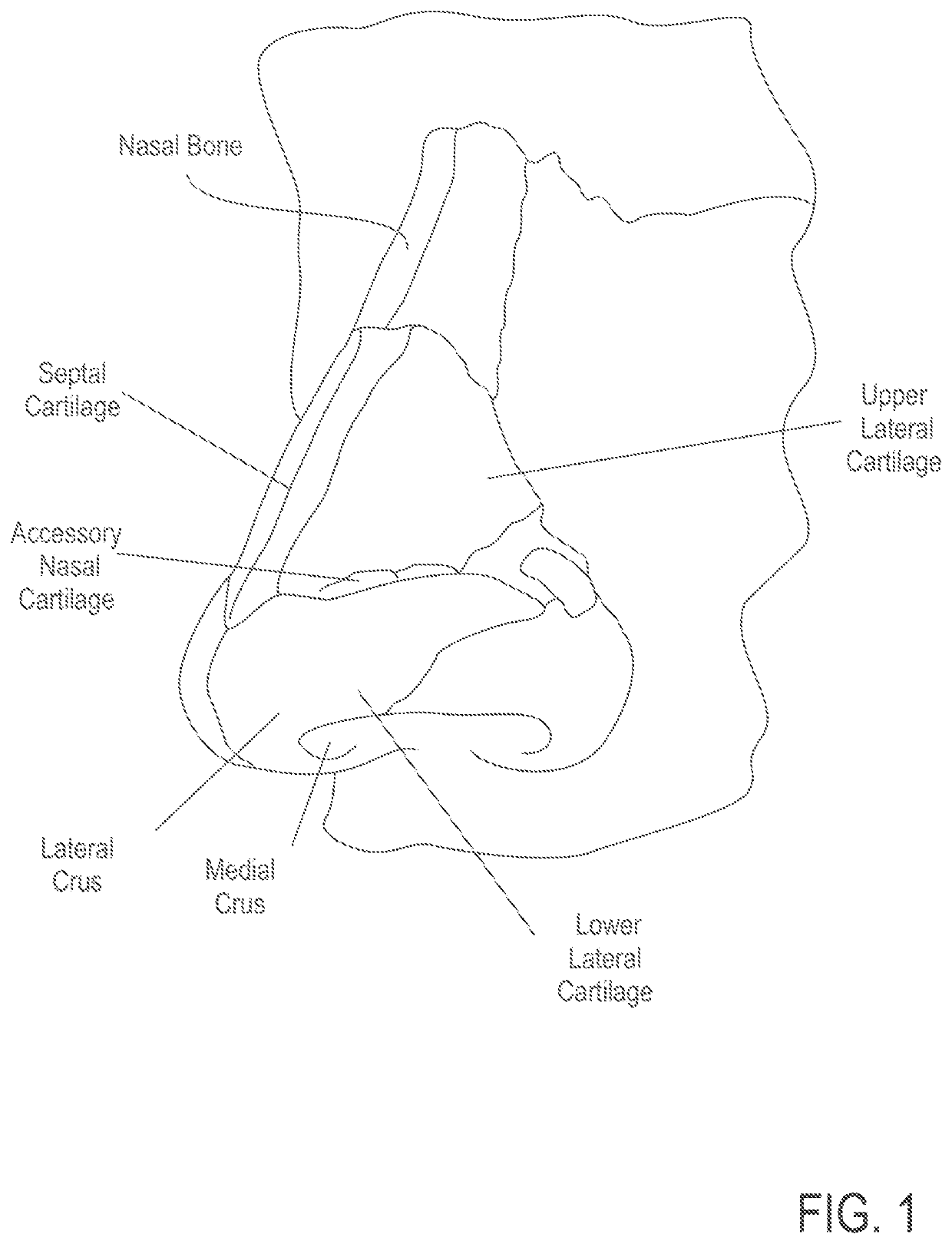
Figure 1 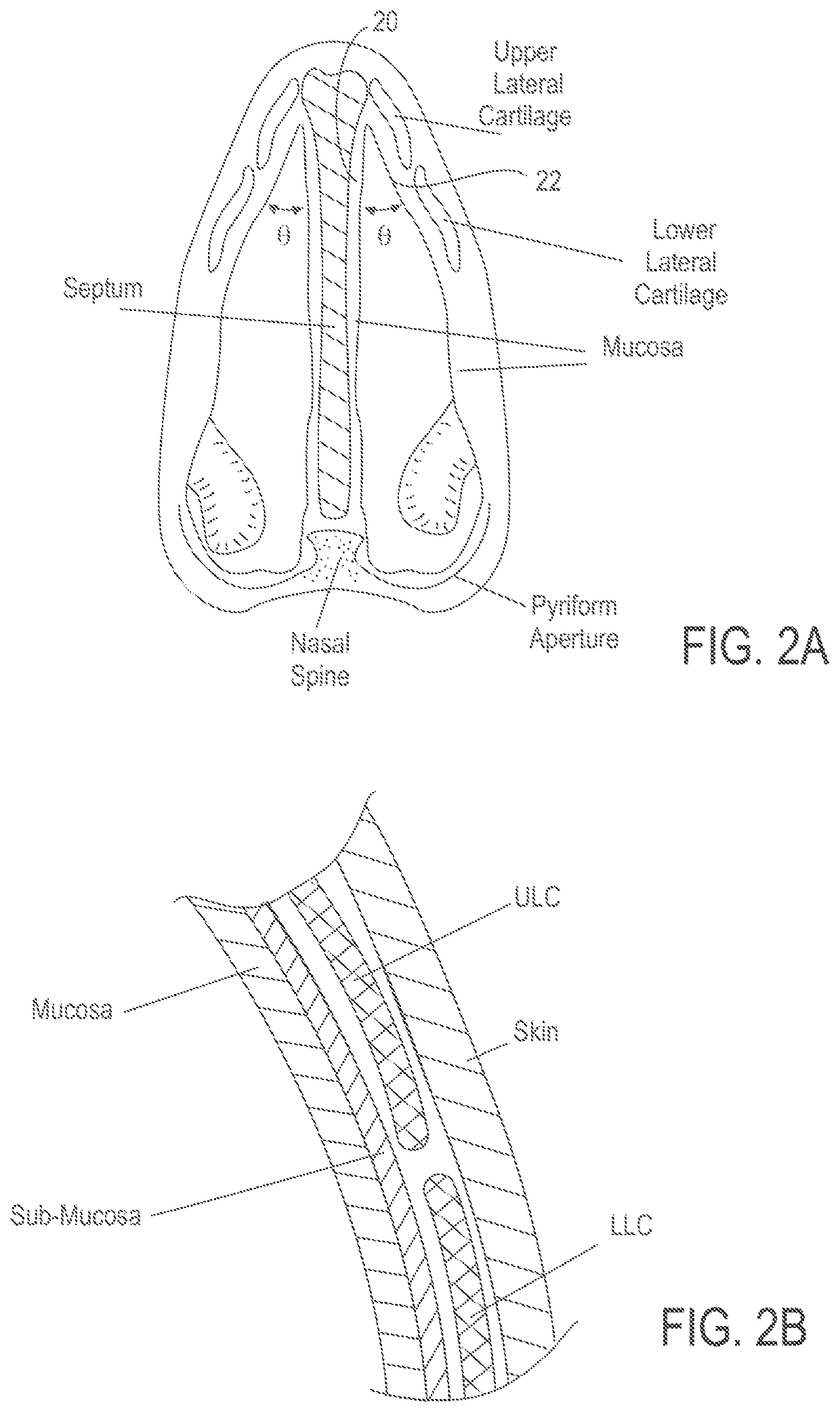
Figure 2 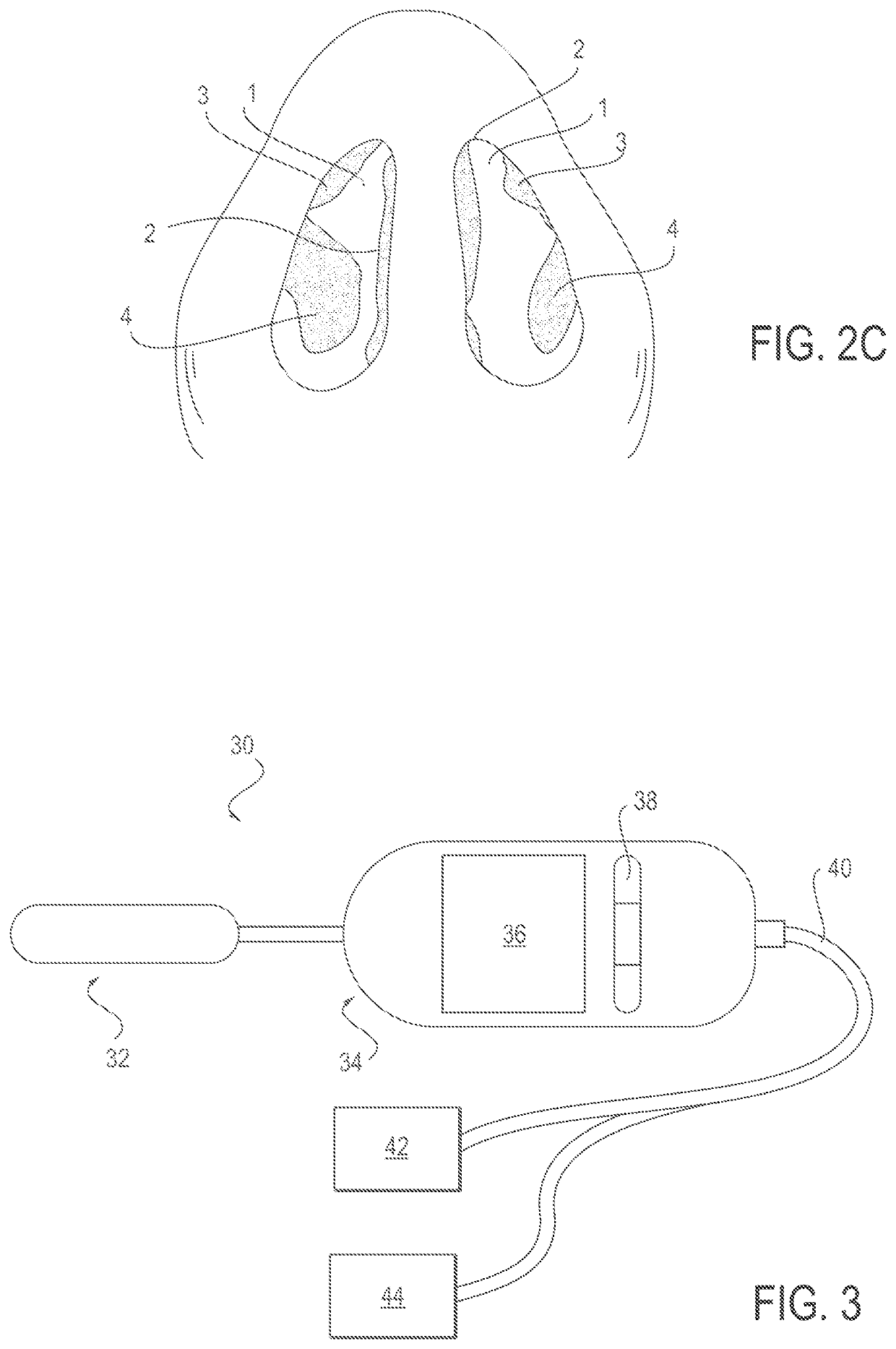
Figure 3
Abstract
Description
CROSS-REFERENCE TO RELATED APPLICATIONS
[0001] This application is a continuation of U.S. patent application Ser. No. 15 / 596,455 filed May 16, 2017, which is a continuation of U.S. patent application Ser. No. 15 / 248,935, entitled “DEVICES TO TREAT NASAL AIRWAYS,” filed Aug. 26, 2016, now U.S. Pat. No. 9,687,296, which is a continuation of U.S. patent application Ser. No. 14 / 864,428, now U.S. Pat. No. 9,433,463, entitled “DEVICES TO TREAT NASAL AIRWAYS,” filed Sep. 24, 2015, which is a continuation of U.S. patent application Ser. No. 14 / 737,196, now U.S. Pat. No. 9,179,967, entitled “ DEVICES TO TREAT NASAL AIRWAYS,” filed Jun. 11, 2015, which is a continuation of U.S. patent application Ser. No. 14 / 607,639, now U.S. Pat. No. 9,179,964, entitled METHODS AND DEVICES TO TREAT NASAL AIRWAYS, filed Jan. 28, 2015, which is a continuation of U.S. patent application Ser. No. 14 / 026,922, now U.S. Pat. No. 8,986,301, entitled METHODS AND DEVICES TO TREAT NASAL AIRWAYS, filed Sep. 13, 2013, whic...
Examples
Embodiment Construction
[0091]The following disclosure provides embodiments of systems and methods for improving breathing by decreasing airflow resistance or perceived airflow resistance at or near a site of an internal or external nasal valve. Such embodiments may include methods and devices for reshaping, remodeling, strengthening, or changing the properties of the tissues of the nose, including, but not limited to the skin, muscle, mucosa, submucosa, and cartilage in the area of the nasal valves.
[0092]While, in some instances, nasal dysfunction can lead to poor airflow, nasal breathing can also be improved in people with normal breathing and / or normal nasal anatomy by decreasing nasal airflow resistance in the nasal valve and associated nasal anatomy. Remodeling or changing the structure of the nasal valve can improve nasal airflow in people with inadequate nasal airflow resulting from causes other than nasal valve dysfunction, such as deviated septum, enlarged turbinates, mucosal swelling, and / or muco...