
Target Re-Identification
a target and re-identification technology, applied in the field of target re-identification, can solve the problem of difficult identification, and achieve the effect of improving the selection of the target and making it more difficult to identify
Patent Information
- Authority / Receiving Office
- US · United States
- Current Assignee / Owner
- Publication Date
- 2020-07-09
Smart Images
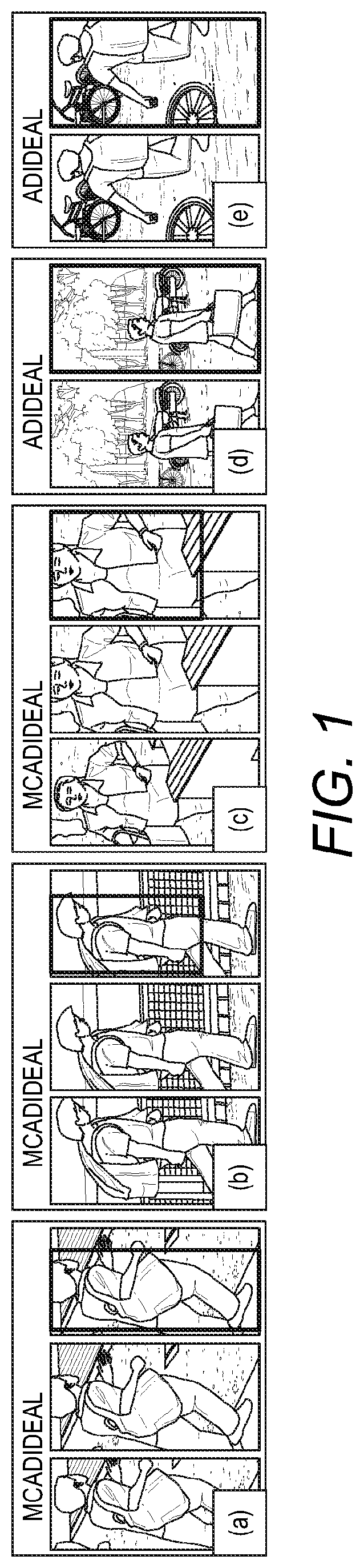
Figure 1 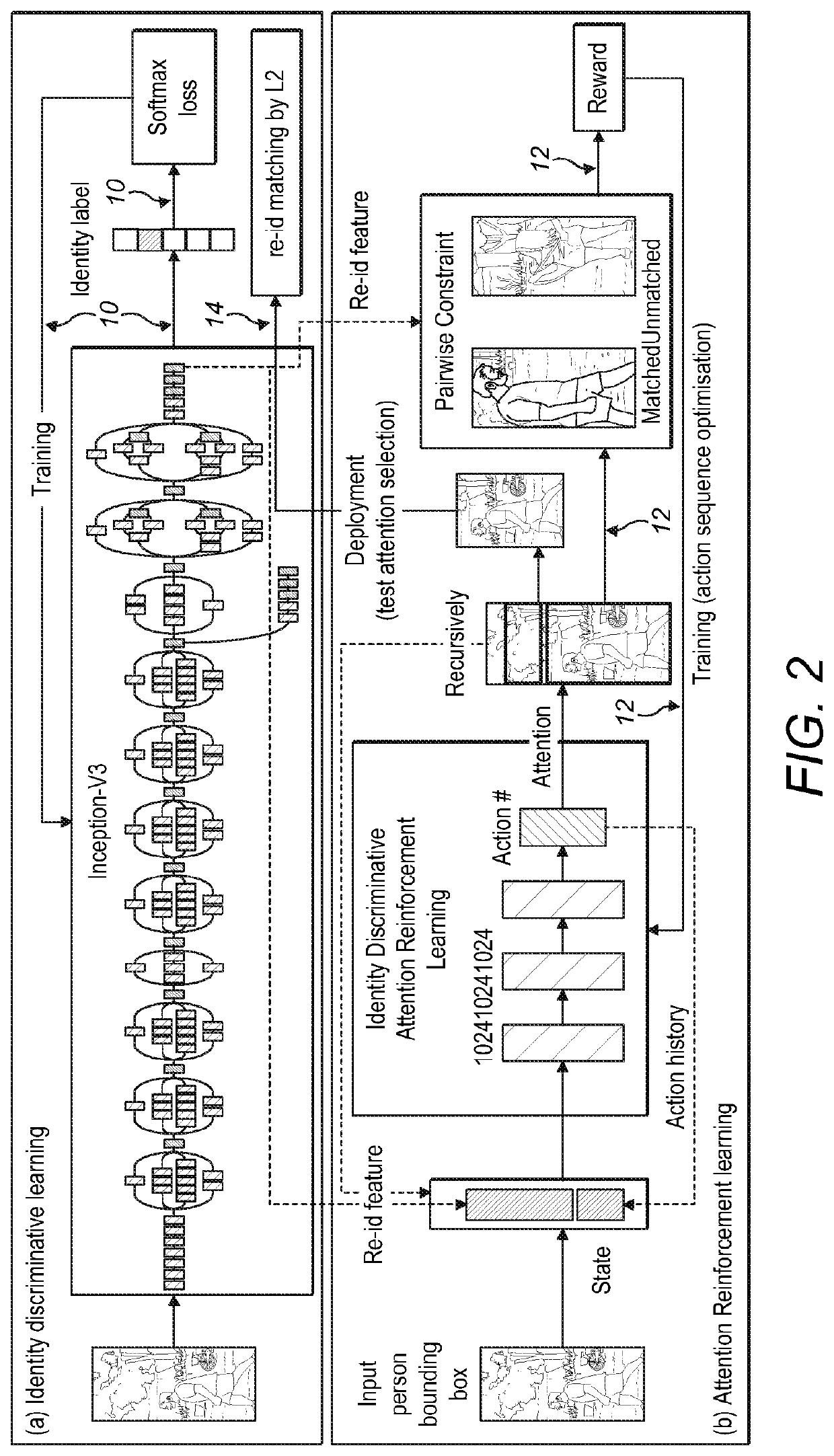
Figure 2 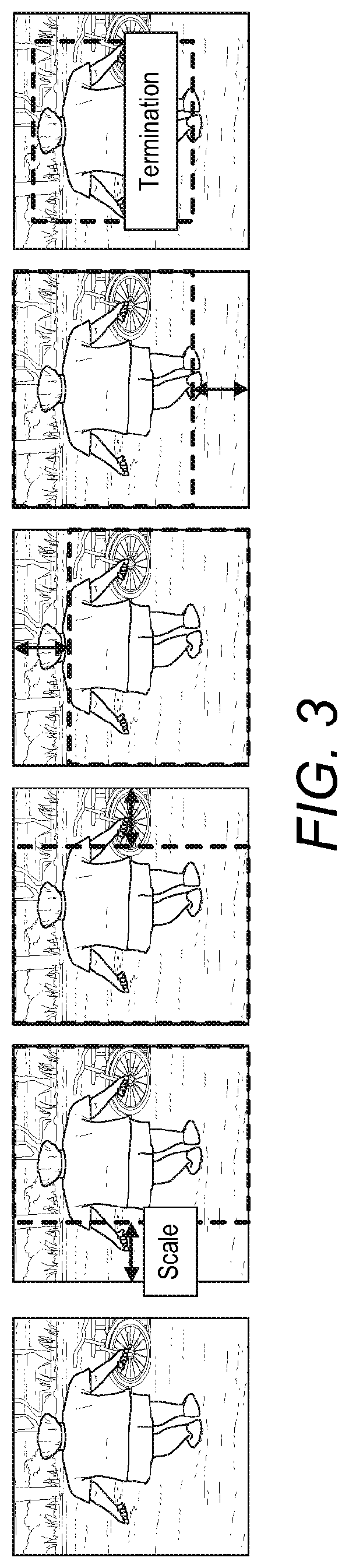
Figure 3
Abstract
Description
FIELD OF THE INVENTION
[0001] The present invention relates to a method and apparatus for searching video data and in particular to searching for targets, such as people, within the video data. The method and system includes video target matching by attention search procedures.BACKGROUND OF THE INVENTION
[0002] Effective and automatic association of information from multiple independent sources can be very useful for a wide range of applications including data mining, object and entity search and association, visual surveillance across a distributed source of visual inputs. In particular, the analysis of intelligence gathering data and inference from multiple independent sources of different types of information at different places and times can be valuable. Such collections of multi-source data (e.g. visual and non-visual) are often very large and either widely disparate (random) or closely akin (ambiguous) in their apparent attributes. Underlying intrinsic associations may often be hi...
Examples
Embodiment Construction
[0073]There is very little attempt in the prior art for solving the problem of attention selection (target bounding) within auto-detected bounding boxes for optimising person re-id. The present solution operates on any third party detectors independently so to benefit continuously from a wide range of detectors that may be developed in future.
[0074]According to some aspects, attention selection may be used within any auto-detected person bounding boxes for maximising re-id tasks. The model may be described as Identity DiscriminativE Attention reinforcement Learning (IDEAL) for attention selection post-detection given re-id discriminative constraints. Specifically, IDEAL is designed to locate automatically identity-sensitive attention regions within auto-detected bounding boxes by optimising recursively attending actions using reinforcement learning subject to a reward function on satisfying re-id pairwise label constraints. In contrast to existing saliency selection methods, this gl...