
Methods of treatment
a phosphodiesterase inhibitor and phosphodiesterase technology, applied in the direction of enzyme inhibitors, drug compositions, peptide/protein ingredients, etc., to achieve the effects of safe restoration of camp function, reducing the risk of toxicity, and preventing cellular migration
Patent Information
- Authority / Receiving Office
- US · United States
- Patent Type
- Applications(United States)
- Current Assignee / Owner
- Publication Date
- 2022-11-10
Smart Images
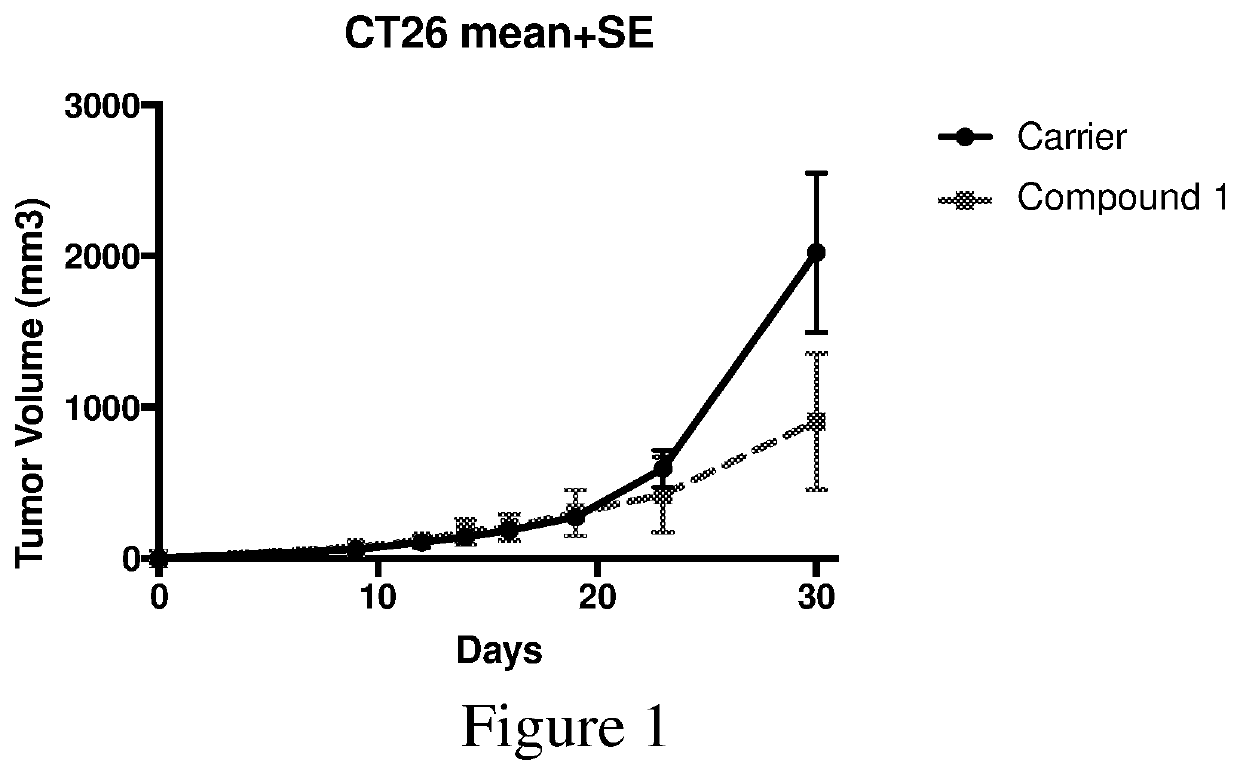
Figure 1 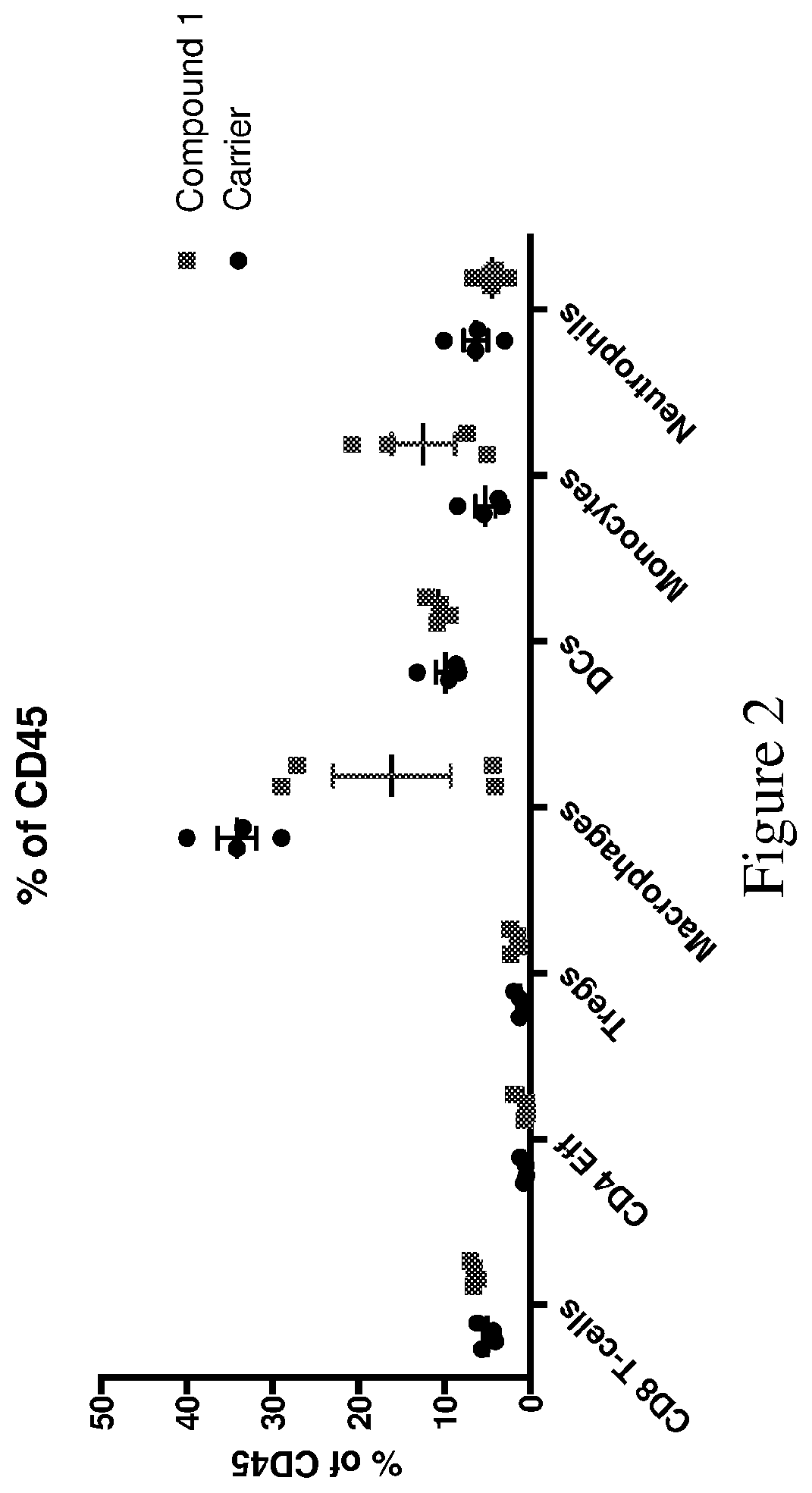
Figure 2 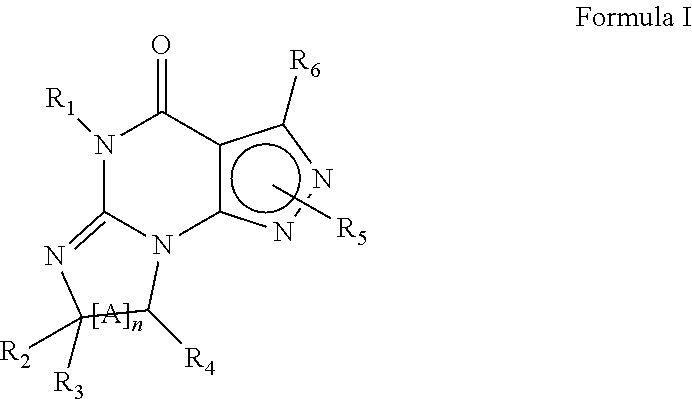
Figure 3
Abstract
Description
FIELD OF DISCLOSURE
[0001] The field relates to inhibitors of phosphodiesterase 1 (PDE1) useful for the treatment of certain cancers and tumors, such as colon cancer. The field further relates to the administration of inhibitors of phosphodiesterase 1 (PDE1) for the for the treatment of certain cancers and tumors, such as colon cancer.BACKGROUND OF THE DISCLOSURE
[0002] Colorectal cancer is the third most commonly diagnosed cancer in men and the second in women worldwide, and accounts for an estimated 50,000 deaths per year. In contrast to incidence trends, decreasing colorectal cancer mortality rates have been observed in a large number of countries and are most likely attributed to colorectal cancer screening, reduced prevalence of risk factors, and / or improved therapies. However, when widespread malignancy is encountered, these cases are not responsive to curative treatments.
[0003] It is additionally estimated that metastases cause 90% of cancer-related deaths worldwide. In most cases...
Examples
example 1
ng the Ability of PDE1 Inhibitors to Inhibit the Growth of Murine Colon Cancer
[0181]Aliquots of cancerous cells are injected into the subscapular space of BALB / C mice to induce colon carcinoma. The tumors are allowed to grow for 7 days, when tumor volume is measured. Once a tumor has formed, drug treatment is initiated (50 mg / kg Compound 1, once daily, i.p. in 0.5% methylcellulose vehicle) and tumor growth is observed and recorded daily. Compounds 1 is shown below:
[0182]The mice were sacrificed at thirty days post-injection, and the tumors are isolated from the mice. As shown in FIG. 1, Compound 1 significantly slowed tumor growth in the CT26 cell samples after 30 days.
[0183]The tumors were then enzymatically dissociated into a single cell suspensions, stained with fluorophore-tagged antibodies and are analyzed by flow cytometry. Cells were sorted and analyzed for immune markers. As shown in FIG. 2, treatment with Compound 1 led to significant increases in monocytes and CD8 T-cells,...
example 2
of Co-Administration of PDE1 Inhibitors with Checkpoint Inhibitors to Inhibit the Growth of Murine Cancer
[0184]The effects of Compound 1, alone or combination with sub-effective doses of the checkpoint inhibitor, anti-PD-1, were assessed on the growth of CT26 xenograft tumors in BALB / c mice. Treatment-naïve tumor-bearing mice (i.e., isotype group) were compared with groups of mice receiving monotherapy of Compound 1 defined in Example 1, mice receiving a sub-effective dose of a checkpoint inhibitor (anti-PD-1 antibody), and mice receiving both Compound 1 and a sub-effective dose of anti-PD-1 antibody.
[0185]BALB / c mice were subcutaneously injected with CT26 cells at day 0 and then divided into four groups at day 7: (1) Compound 1 treatment, (50 mg / kg, i.p. qd), 5 days / week; (2) Isotype group, ip mlgG isotype at days 7, 10 and 14; (3) Anti-PD-1 group, administered i.p. at days 7, 10 and 14; and (4) Combination group, treated with Compound 1 and anti-PD-1 as group 1 and group 3. Tumor ...