
Method and apparatus to exercise developmentally delayed persons
a technology for developing disabled children and exercise equipment, applied in the field of methods and equipment for developing disabled people, can solve the problems of restricting the transition into alternative postures, restricting the promotion of weight bearing activities, and restricting the transition to alternative postures, so as to achieve the effect of necessary strength
Patent Information
- Authority / Receiving Office
- US · United States
- Patent Type
- Patents(United States)
- Current Assignee / Owner
- Publication Date
- 2000-06-27
- Estimated Expiration
- Not applicable · inactive patent
Smart Images
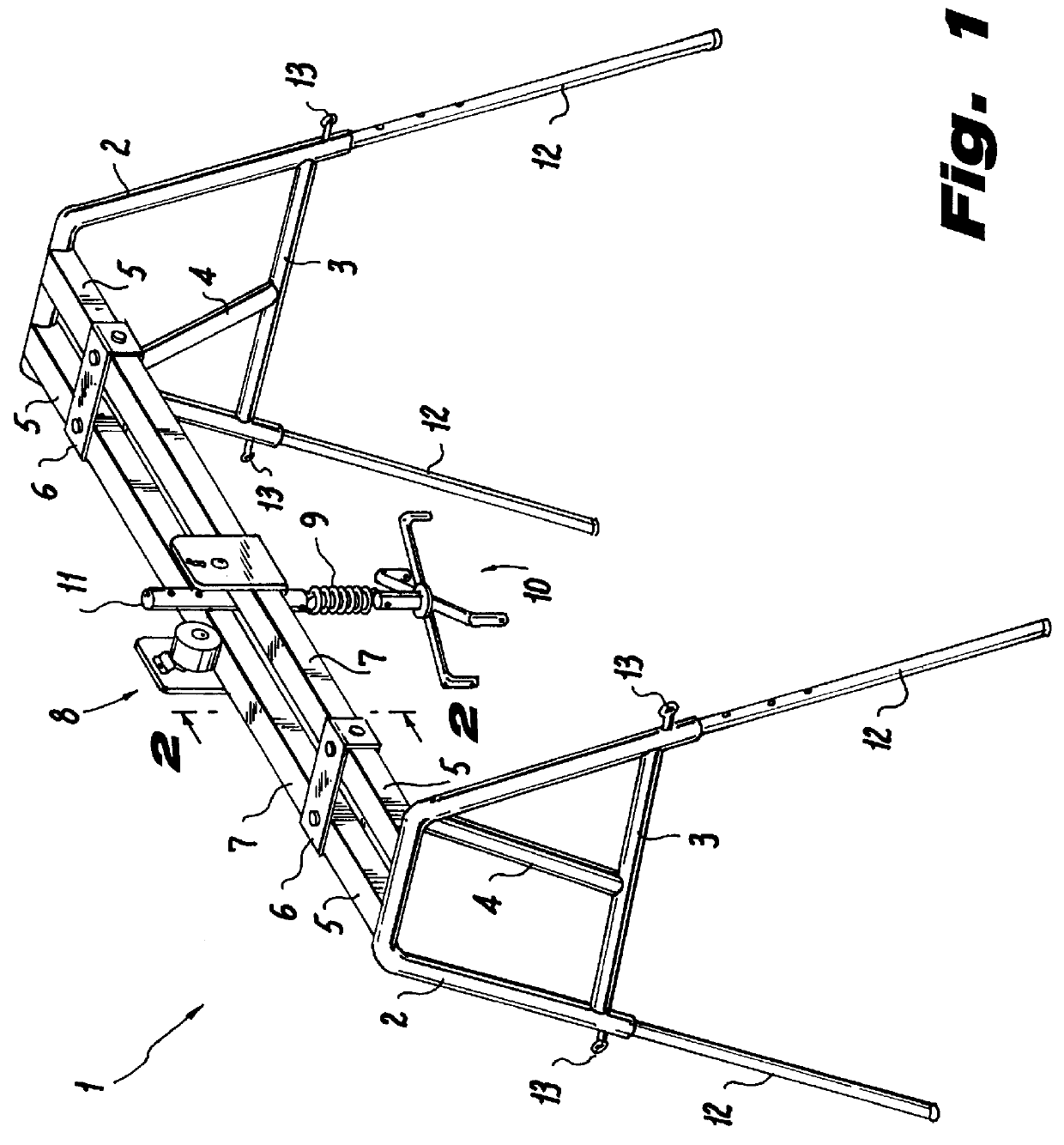
Figure 1 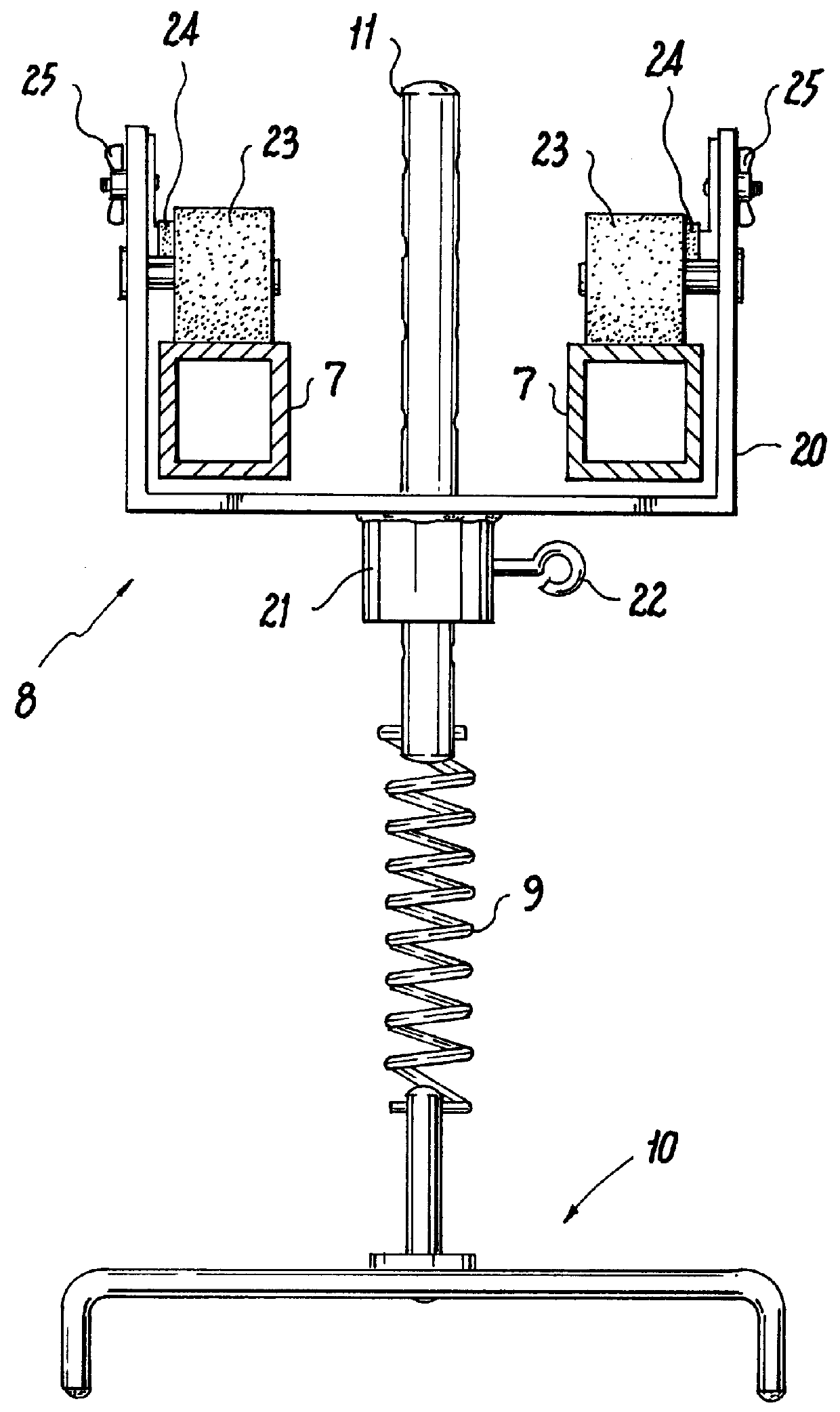
Figure 2 
Figure 3
Abstract
Description
The present invention relates to methods and devices to promote ambulation in developmentally disabled persons, especially children.The invention relates to a method and apparatus used to help developmentally delayed children exercise specific muscle groups, practice movement strategies and gain strength necessary to sit, to crawl, and to walk.The prior art is replete with assistive devices. A sampling of the patents in this field is as follows. U.S. Pat. No. 3,721,436 of Barthel, Jr. describes an exercise and walker device that supports an individual in a harness and permits movements over a two-dimensional area and up and down adjustments. However in Barthel, Jr. '436, the harness only holds the person in an upright position, which does not assist the person in quadruped, crawling positions, which are necessary to strengthen arm development and to facilitate vestibular development for better balance, thus preventing the child to easily tip over and injure itself.U.S. Pat. No. 3,58...
Examples
Embodiment Construction
The frame 1 of the gliding support device of the present invention shown in FIG. 1 is intended for home use. As such, it is constructed of lightweight steel or aluminum tubing with features for ease of transporting and assembly.
Although many difficult structural configurations are applicable, in the preferred embodiment, the two top end sections are pre-assembled and include welded parts for maximum rigidity. They each have a bent tubing member 2, cross brace 3, rail end extensions 5, rail attachment member 6 and angled brace 4. The structure is completed by adding rails 7 and legs 12 which have a telescopic fit in end sections 2 and are adjustable for height with the aid of spring pins 13 which fit in the desired adjustment hole. A trolley subassembly 8 completes the home support track.
FIG. 2 shows details of trolley 8 including frame 20, support rollers 23 (which roll on the top surface of rails 7), adjustable height rod 11, collar 21, and spring pin 22 for adjusting height.
Also i...