
Method and apparatus for determining transit-time differentials for signal waveforms for real-time pattern recognition, localization and monitoring of optical and acoustic signals
a signal waveform and transit time differential technology, applied in direction finders using ultrasonic/sonic/infrasonic waves, amplifiers, transmission, etc., can solve the drawback of multi-template matching procedures, parallel, multi-template matching procedures, and invariant translation, so as to increase the accuracy of measurement
Patent Information
- Authority / Receiving Office
- US · United States
- Patent Type
- Patents(United States)
- Current Assignee / Owner
- Publication Date
- 2002-08-27
- Estimated Expiration
- Not applicable · inactive patent
Smart Images
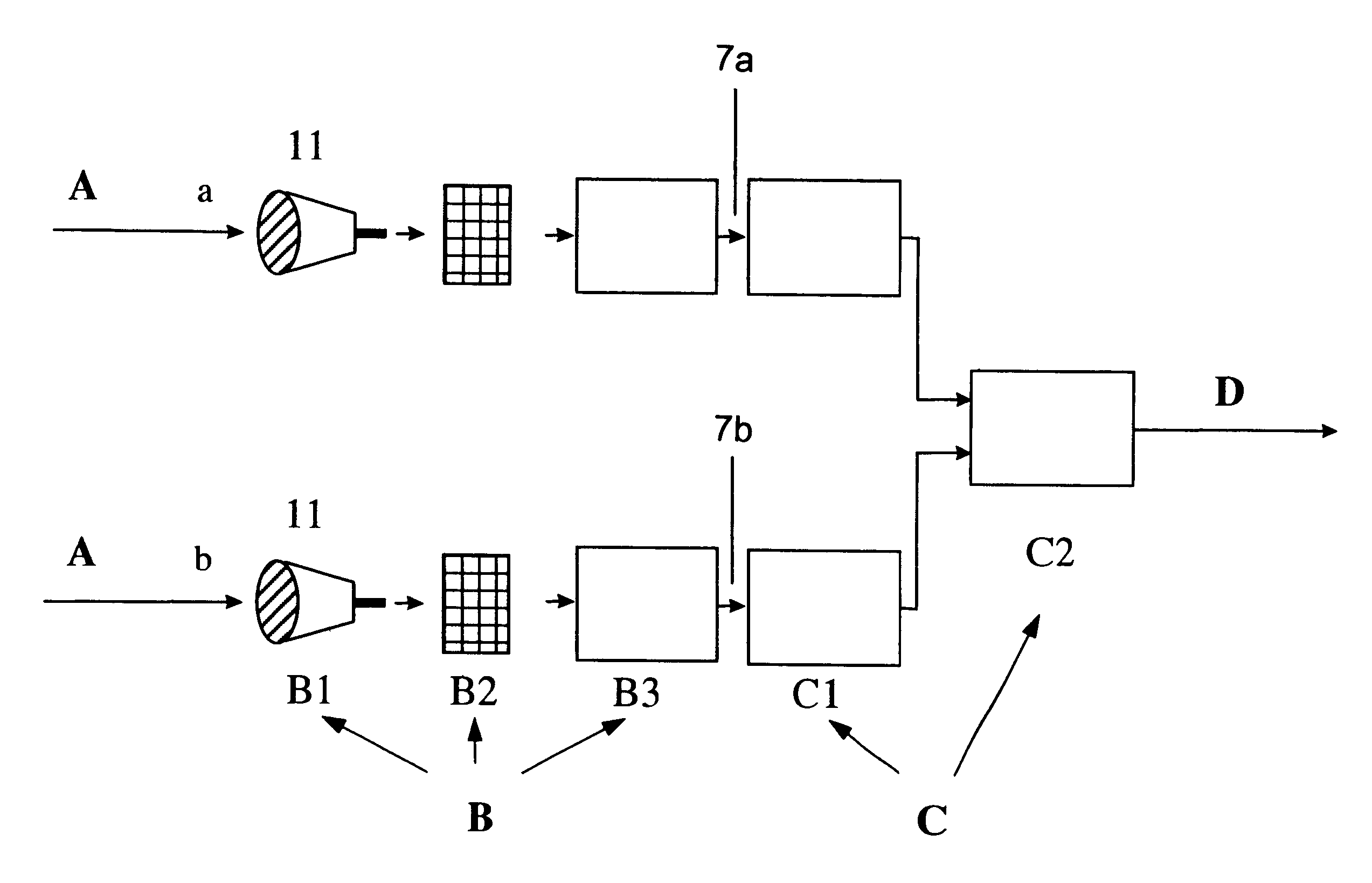
Figure 1 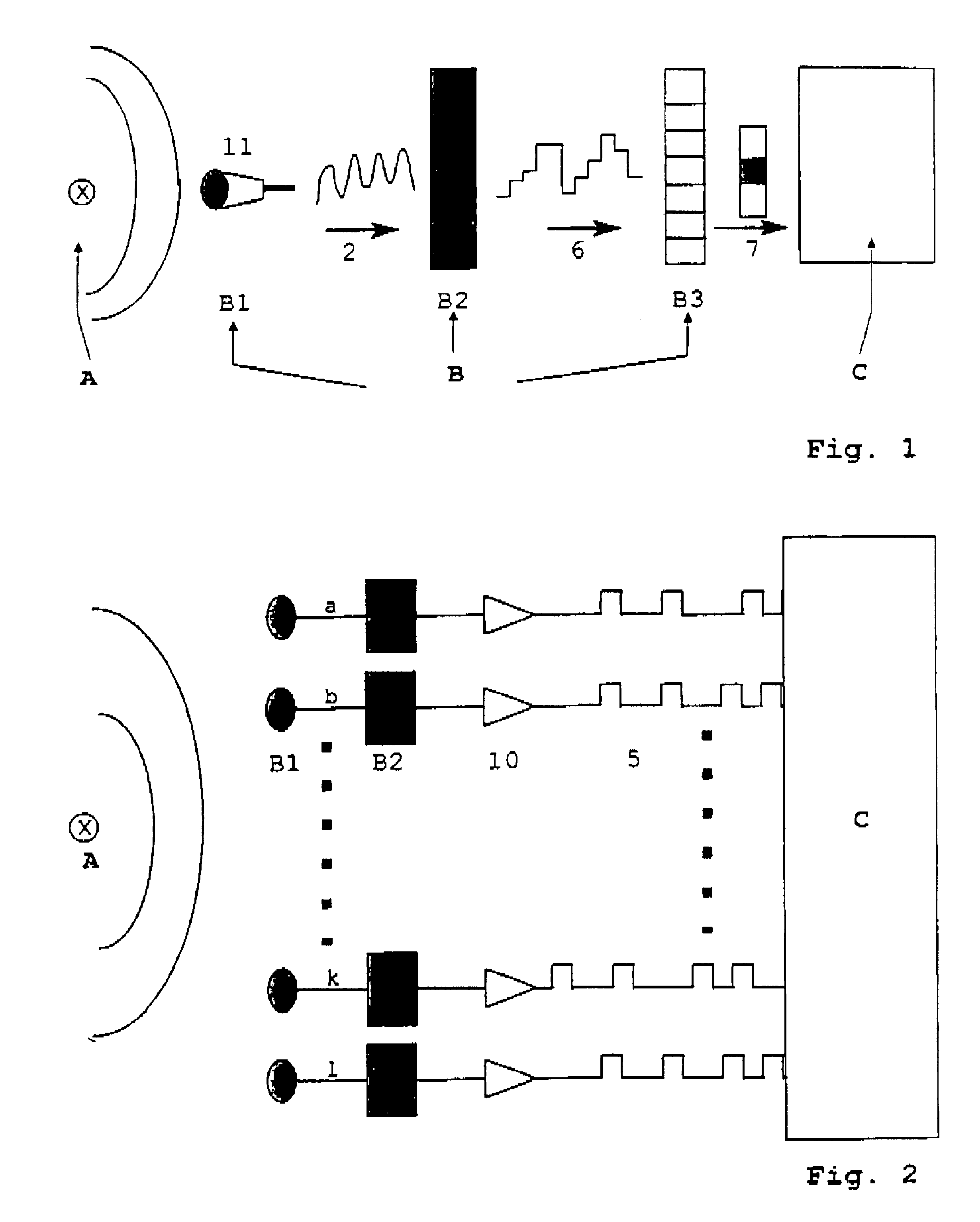
Figure 2 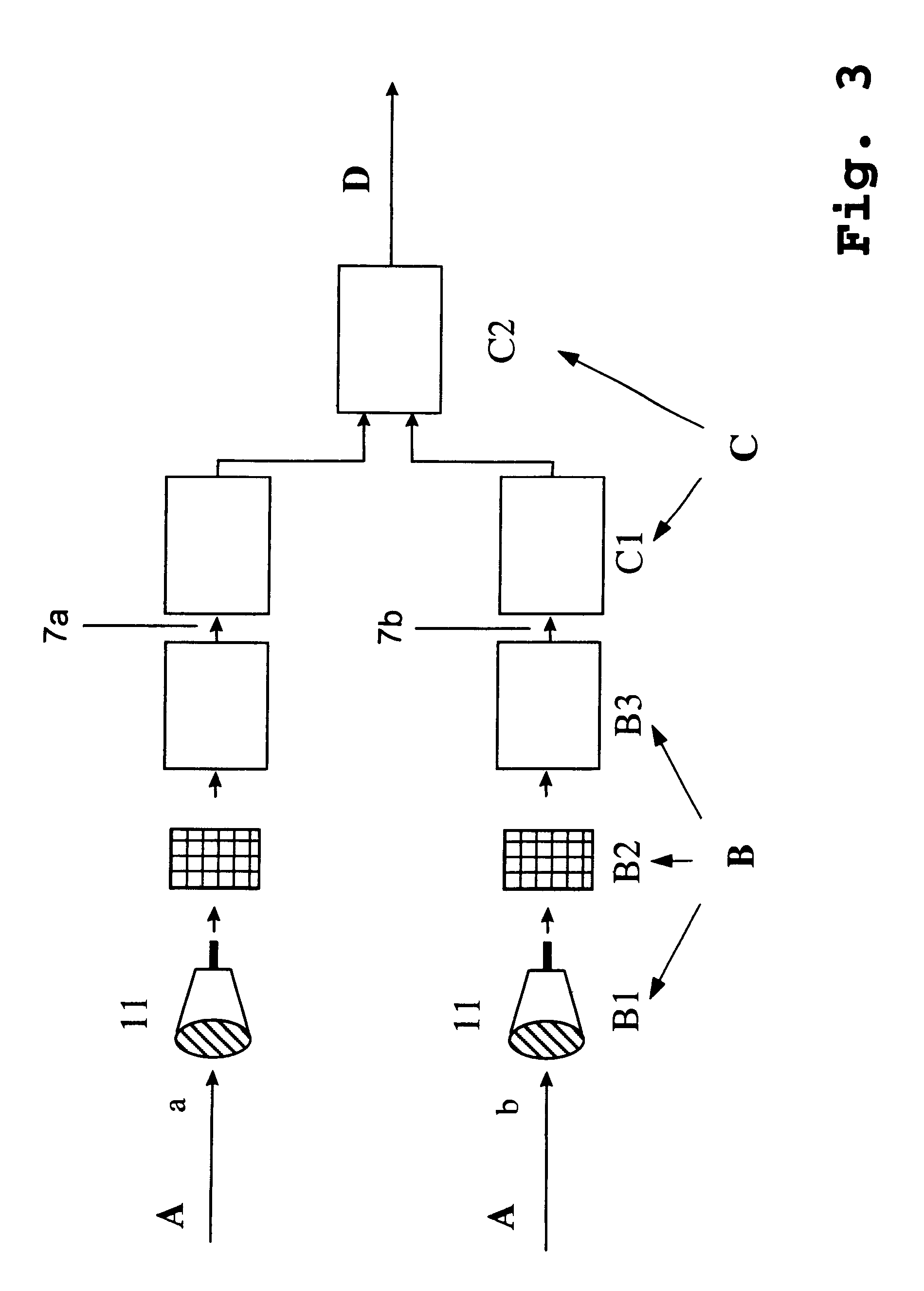
Figure 3
Abstract
Description
DESCRIPTION1. State of the ArtThe invention relates to a method and apparatus to segment-wise detect and bring into coincidence signal waveforms which can be converted into monotone and continuous trajectories, in particular for purposes of real-time pattern recognition, of position finding and determination of transit-time differentials. Said signals are sample in time-discrete manner at the input side, are detected by correlation and thereupon the signal transit-times of different pairs of signal combinations and of different signal waveforms will then be determined.The invention also relates to apparatus implementing such a method.A procedure of the above kind used in signal detection is based on conventional template matching wherein the input signal is correlated with a pre-stored reference signal. By means of time-discrete sampling, the signal is rendered as a sequence of input vectors which form a matrix within which the signal is determined by the sum of all matrix pixel pos...
Examples
Embodiment Construction
In the method of the invention, first pattern recognition is carried out and then the determination of the transit-time differential by detecting key waveforms, and the information is processed further in a subsequent multi-coincidence unit; shift-invariant, parallel multi-template matching is carried out during which key waveforms are correlated in parallel and an output per clock step, illustratively of a set of transit-time differentials, is created in the said subsequent multi-coincidence unit.
The method to segment-wise determine pattern recognition and transit-time differentials of signal waveforms which can be converted into monotone and continuous space-time trajectories, in particular for purposes of real-time pattern recognition, is characterized in that pre-programmed key signals are detected by signal sampling and processing the sampled data, further by subjecting to multiple coincidences combined signal pairs of different signal transit times and different waveforms. At ...