
Apparatus and method for high-frequency operation in a battery charger
a battery charger and high-frequency technology, applied in the field of industrial and motor vehicle battery chargers, can solve the problems of reducing the efficiency of battery chargers operating at ac mains frequency, reducing the efficiency of battery chargers, and being larger and heavier than desired. , to achieve the effect of reducing the size and weight of battery chargers and achieving higher operating efficiency
Patent Information
- Authority / Receiving Office
- US · United States
- Patent Type
- Patents(United States)
- Current Assignee / Owner
- Publication Date
- 2005-01-04
- Estimated Expiration
- Not applicable · inactive patent
Smart Images
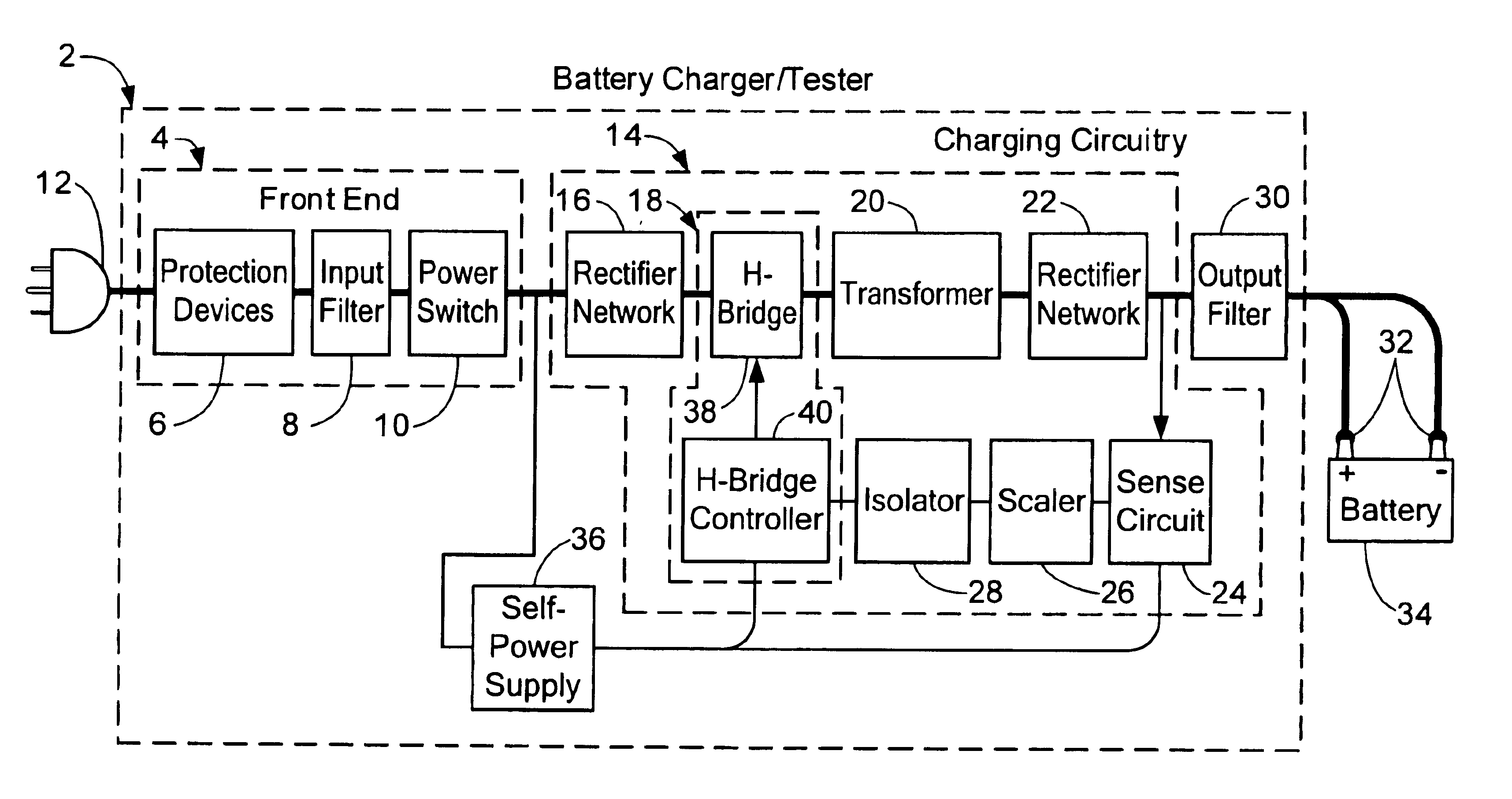
Figure 1 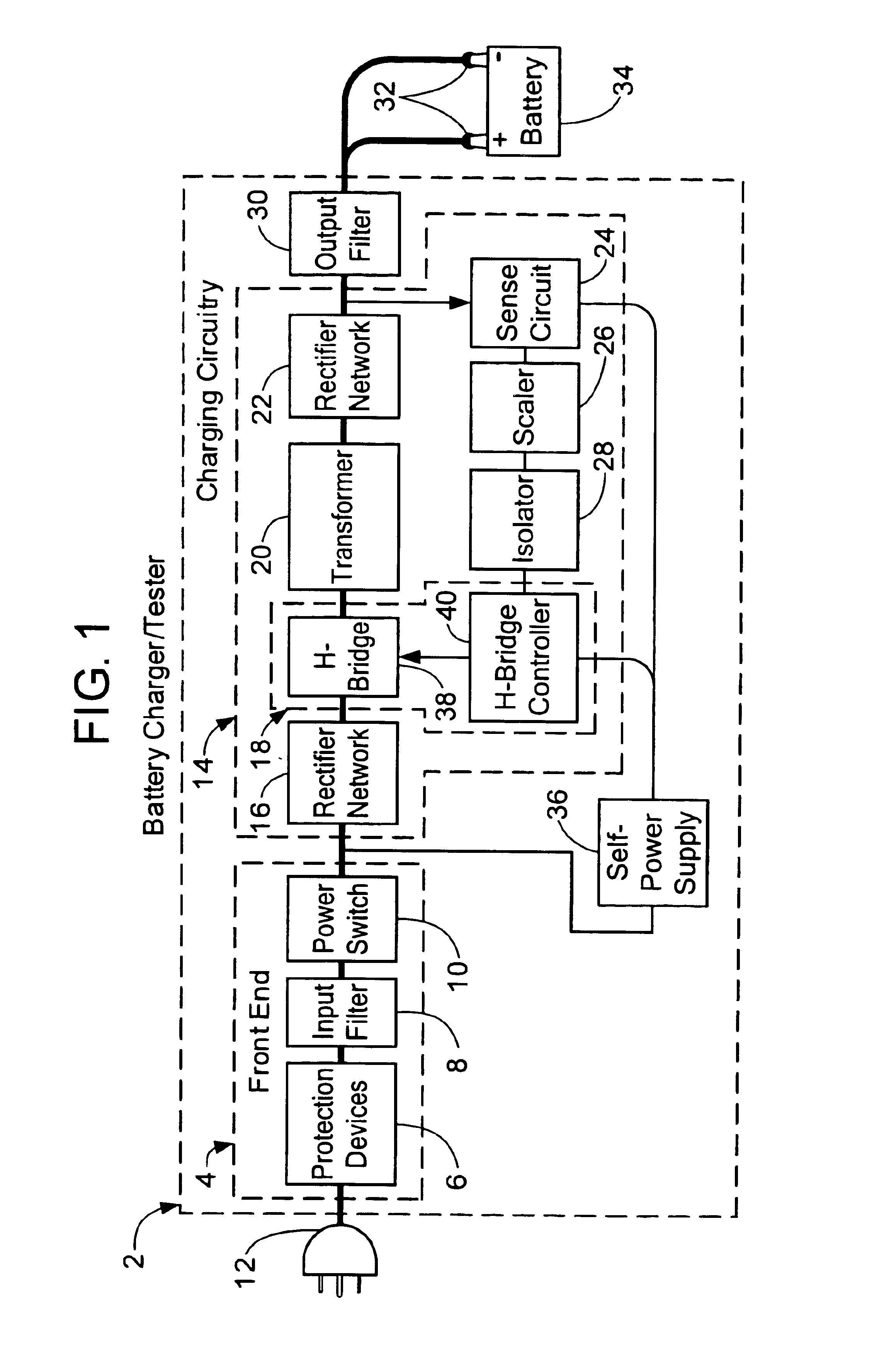
Figure 2 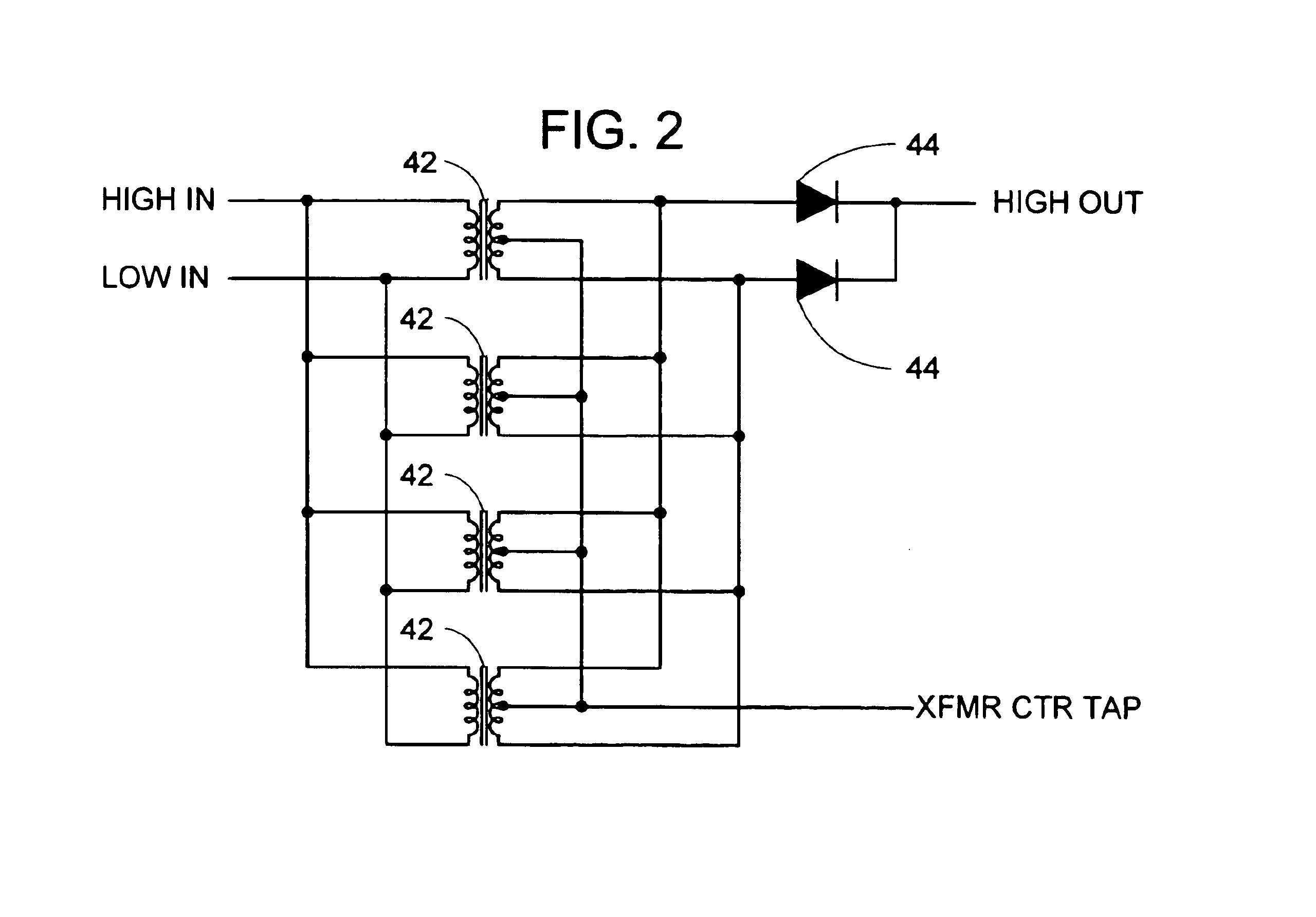
Figure 3
Abstract
Description
FIELD OF THE INVENTIONThe present invention relates generally to industrial and motor vehicle battery chargers. More particularly, the present invention relates to an apparatus and method for using frequencies different from power mains in a storage battery charger.BACKGROUND OF THE INVENTIONRechargeable batteries are an important source of portable power for transportation and recreation equipment, utility devices, and other electrical applications. Maintenance of a rechargeable battery, also referred to as a storage or secondary battery, often requires charging the battery by converting power available from an alternating current (AC) source to meet the needs of the battery.In pursuit of minimization of complexity and component cost, typical battery chargers operate at the same frequency as the electrical power distribution system, also called the AC mains, which is sinusoidal 60 Hz or 50 Hz AC virtually throughout the world. While inexpensive and straightforward in application, s...
Examples
Embodiment Construction
A battery charger includes line-level input rectification, a high-frequency oscillator-controlled chopper circuit, multiple transformers operating in parallel, and controlled output rectification. Use of line-level input rectification reorders the elements of the battery charger compared to previous designs. A chopper frequency several orders of magnitude higher than that of the AC power mains is used. The use of multiple, parallel-wired transformers for voltage and current transformation eases constraints on the physical geometry of a manufactured battery charger product by permitting individual transformers, each smaller than a comparable single transformer, to be employed. Controlled output rectifiers permit power levels to be regulated dynamically.
A preferred embodiment of the present inventive apparatus and method is shown in FIG. 1. Within a battery charger 2, a front-end circuit 4, comprised of a protection device 6, an electromagnetic interference (EMI) filter 8, and a main ...