
Off axis optical signal redirection architectures
a technology of optical signal redirection and optical path length, applied in optics, instruments, optical light guides, etc., can solve the problems of limited bandwidth and switching speed capabilities of oeo switches, and achieve the effects of reducing path length, reducing optical path length, and reducing effective packing density
Patent Information
- Authority / Receiving Office
- US · United States
- Patent Type
- Patents(United States)
- Current Assignee / Owner
- Publication Date
- 2005-09-13
- Estimated Expiration
- Not applicable · inactive patent
Smart Images
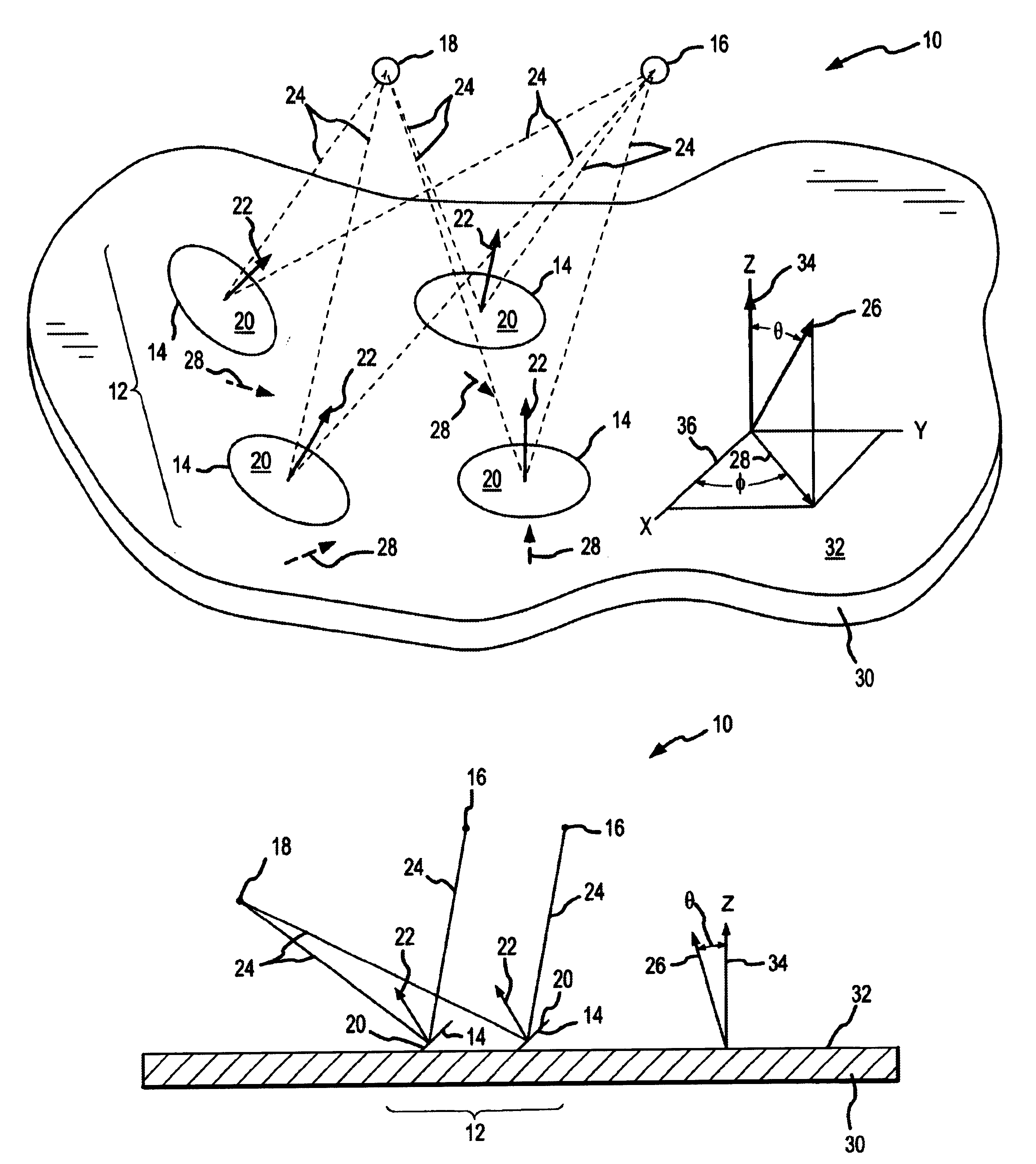
Figure 1 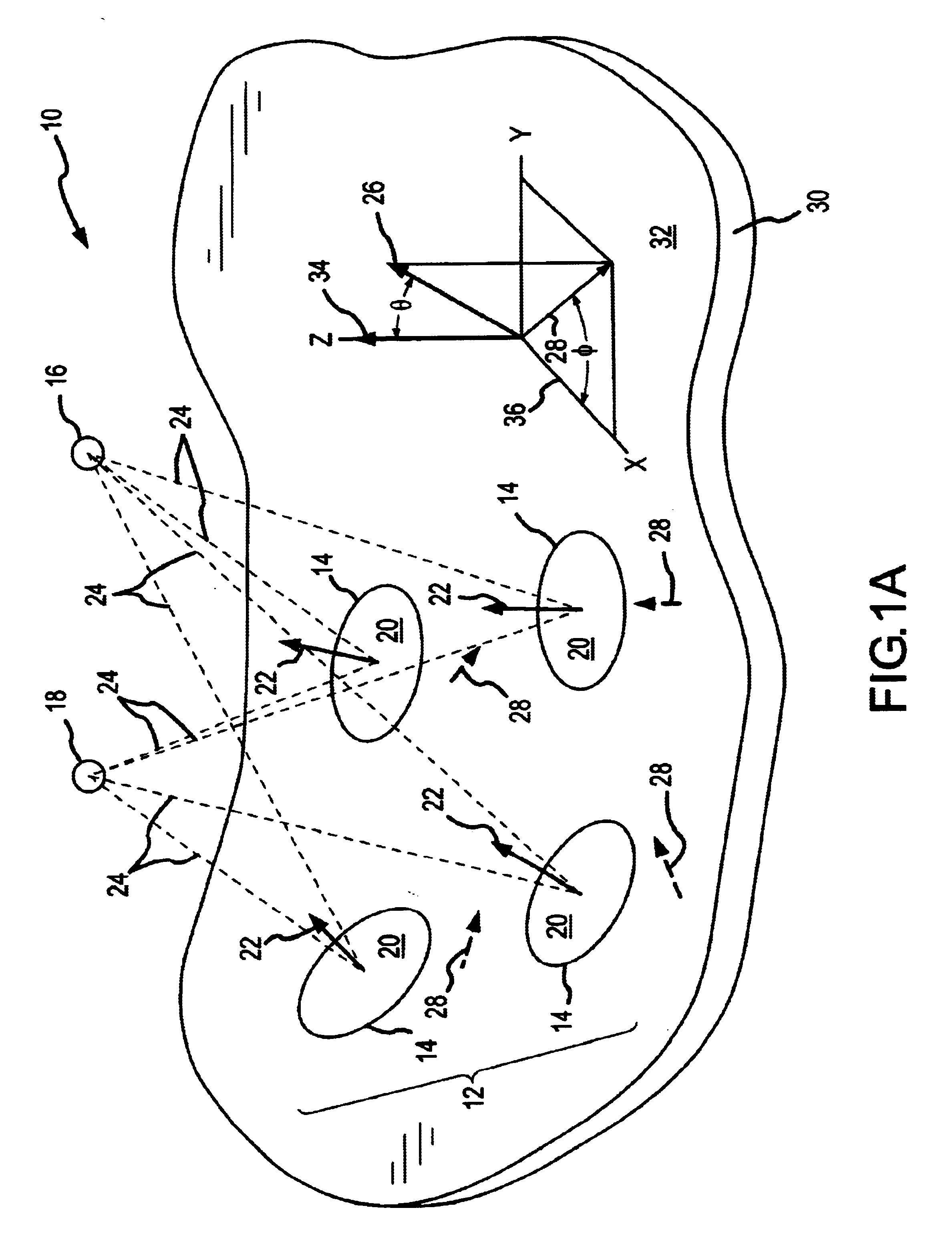
Figure 2 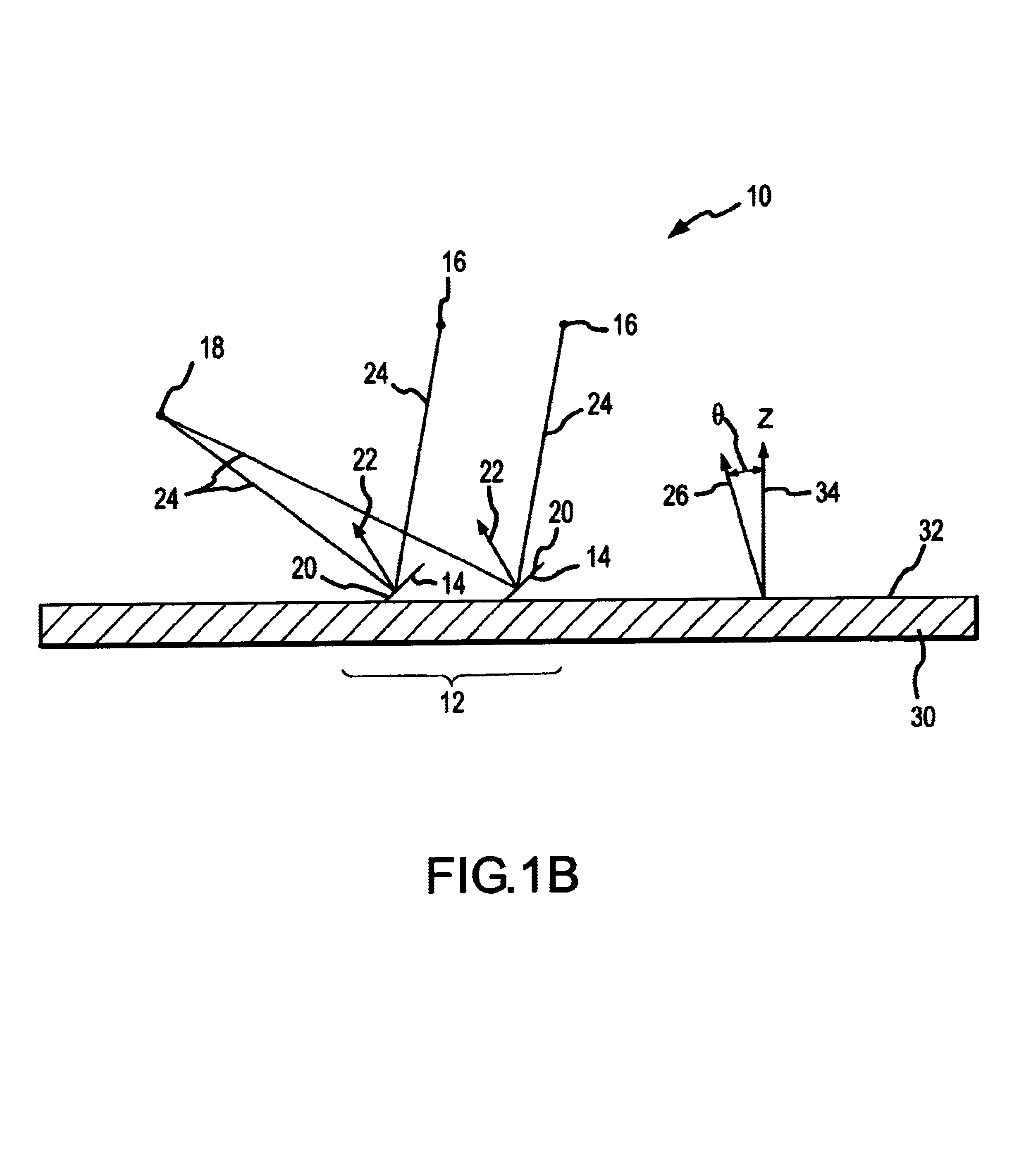
Figure 3
Abstract
Description
FIELD OF THE INVENTION
[0001] The present invention relates generally to the field of optical telecommunications equipment, and more particularly to reflective-type optical signal redirection equipment employing one or more arrays of positionable reflectors.BACKGROUND OF THE INVENTION
[0002] With the increasing use of optical signals in telecommunications networks, the demand for high-bandwidth capable equipment for redirecting the transmission of optical signals within the network, such as N×N optical switches (where N is a positive whole number), multiplexers (i.e. an N×1 switch), demulitplexers (i.e., a 1×N switch) and the like, has increased. One type of optical switch converts an optical signal received on one optical port to the switch interface (e.g., an optical fiber end) to an electrical signal, redirects the signal electronically, and re-converts the electrical signal to an optical signal output on a desired optical port from the switch interface (e.g., another optical fiber e...
Examples
Embodiment Construction
[0035]Referring now to FIGS. 1A-C, there are shown several examples of off axis optical signal redirection systems 10. The optical signal redirection systems 10 shown include one reflective microstructure array 12 formed on a single substrate 30. However, in other embodiments, there may be two or more reflective microstructure arrays 12 formed on one, two or more substrates 30. Each reflective microstructure array 12 includes one or more reflective microstructures 14. Each of the reflective microstructures 14 includes an optically reflective surface 20 and is positionable with respect to the substrate 30 in order to orient its reflective surface 20 for redirecting optical signals 24 incoming from one or more originating locations 16 to one or more target locations 18. It will be appreciated that, depending upon the direction of propagation of the optical signals 24, an originating location 16 may be a target location 18 and a target location 18 may be an originating location 16. For...