
Glass cloth and printed wiring board
a technology of glass cloth and printed wiring, which is applied in the direction of printed circuit aspects, weaving, other domestic objects, etc., can solve the problems of lowering productivity, inaccurate positioning of holes, and inferior insulation, and achieve the effect of enhancing the flattening of glass cloth
Patent Information
- Authority / Receiving Office
- US · United States
- Patent Type
- Patents(United States)
- Current Assignee / Owner
- Publication Date
- 2006-05-23
- Estimated Expiration
- Not applicable · inactive patent
Smart Images
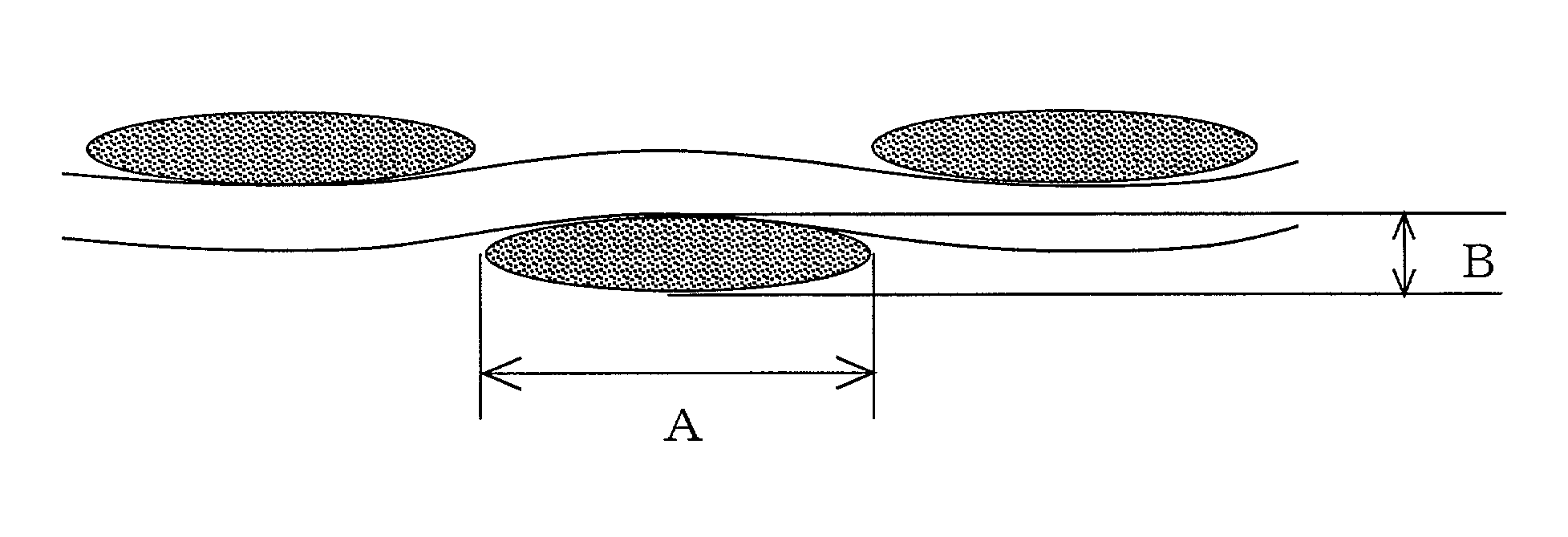
Figure 1 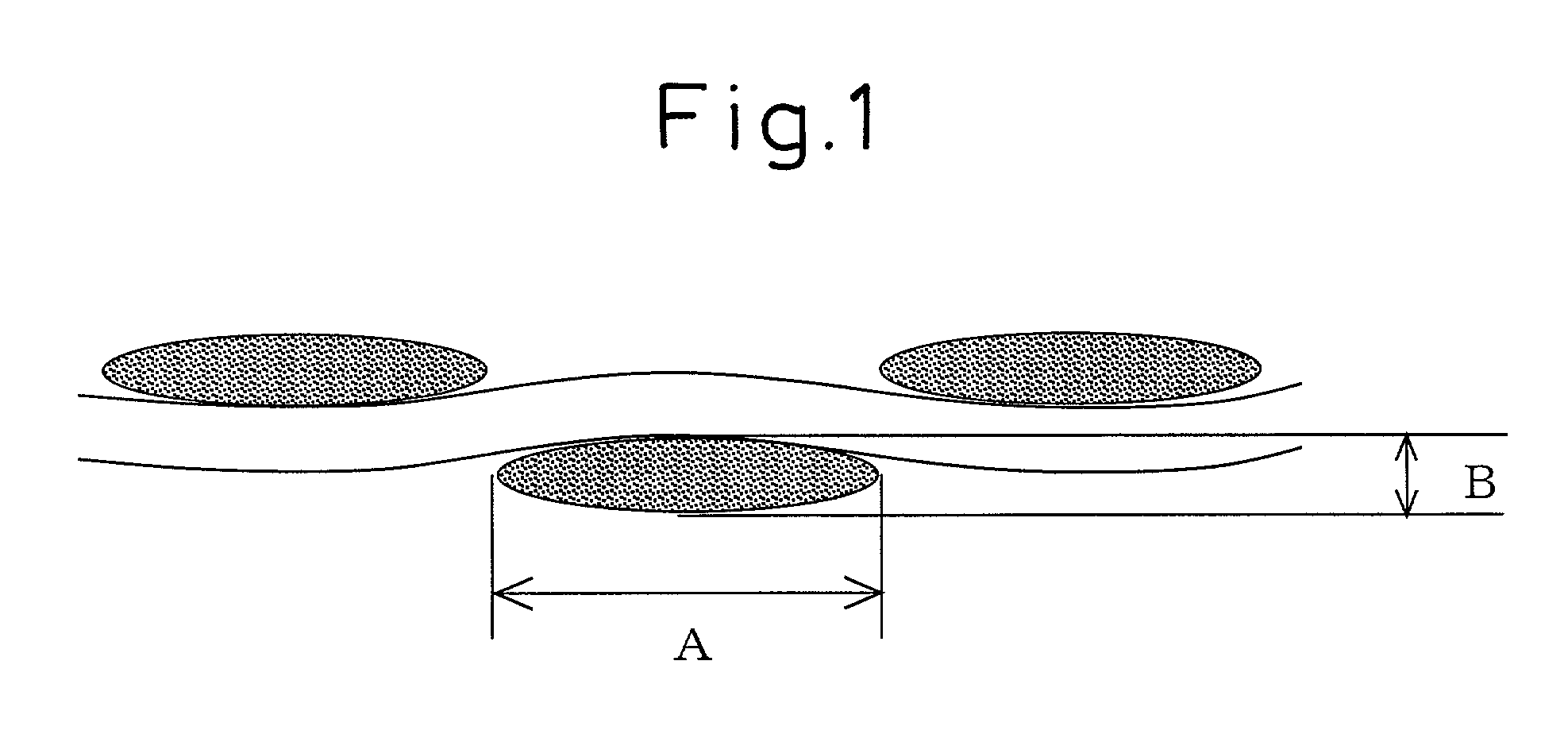
Figure 2
Abstract
Description
TECHNICAL FIELD
[0001] The present invention relates to a printed wiring board used in the electronic and electrical fields and, particularly, to a high density printed wiring board with small-diameter holes bored therein and to a glass cloth used therefor.BACKGROUND ART
[0002] A printed wiring board, particularly a laminated printed wiring board, is constituted by laminating a plurality of insulating substrates, each carrying a conductive layer, with each other. The conductive layer provided between the insulation substrates is electrically connected to other optional conductive layers positioned on the upper or lower insulation substrates via conductive holes called through-holes, inner holes or blind holes. On the other hand, corresponding to the recent development of high performance and small-sized electronic equipments, a printed wiring board must be densely loaded with electronic elements. For the purpose of increasing the wiring density, the diameters of the via holes must be re...
Examples
example 1
[0055]A glass cloth was woven by an air jet loom from warp and weft yarns of C1200 1 / 0 1.0 Z at a warp density of 69 ends / 25 mm and a weft density of 69 ends / 25 mm. The resultant gray fabric was continuously subjected to a flattening treatment through a press roll at a line pressure of 300 N / cm and then to a fiber-opening treatment by a high-pressure water spray at a pressure of 200N / cm2. Thereafter, the glass cloth was desized at 400° C. for 24 hours.
[0056]Subsequently, the glass cloth was dipped into a solution of silane coupler (SZ6032, manufactured by Toray•Dow Corning K.K.) as a surface treatment agent, squeezed and dried at 120° C. for 1 minute to result in the finished glass cloth having a basis weight of 24 g / m2 and a thickness of 0.028 mm. Therefrom, a laminated board was prepared as described above.
example 2
[0057]A glass cloth was woven by an air jet loom from warp and weft yarns of C900 1 / 0 1.0 Z at a warp density of 69 ends / 25 mm and a weft density of 69 ends / 25 mm. The resultant gray fabric was subjected to a fiber-opening treatment by a high-pressure water spray at a pressure of 200N / cm2. Thereafter, the glass cloth was desized at 400° C. for 24 hours.
[0058]Subsequently, the glass cloth was subjected to a surface treatment in the same manner as in Example 1 to result in the finished glass cloth having a basis weight of 30 g / m2 and a thickness of 0.030 mm. Therefrom, a laminated board was prepared as described above.
example 3
[0059]A glass cloth was woven by an air jet loom from warp and weft yarns of D900 1 / 0 1.0 Z at a warp density of 69 ends / 25 mm and a weft density of 69 ends / 25 mm. The resultant gray fabric was subjected to a fiber-opening treatment by a high-pressure water spray at a pressure of 150N / cm2. Thereafter, the glass cloth was desized at 400° C. for 24 hours.
[0060]Subsequently, the glass cloth was subjected to a surface treatment in the same manner as in Example 1 to result in the finished glass cloth having a basis weight of 30 g / m2 and a thickness of 0.032 mm. Therefrom, a laminated board was prepared as described above.