
Dynamic allocation of computer memory
Patent Information
- Authority / Receiving Office
- US · United States
- Current Assignee / Owner
- Publication Date
- 2006-06-06
Smart Images
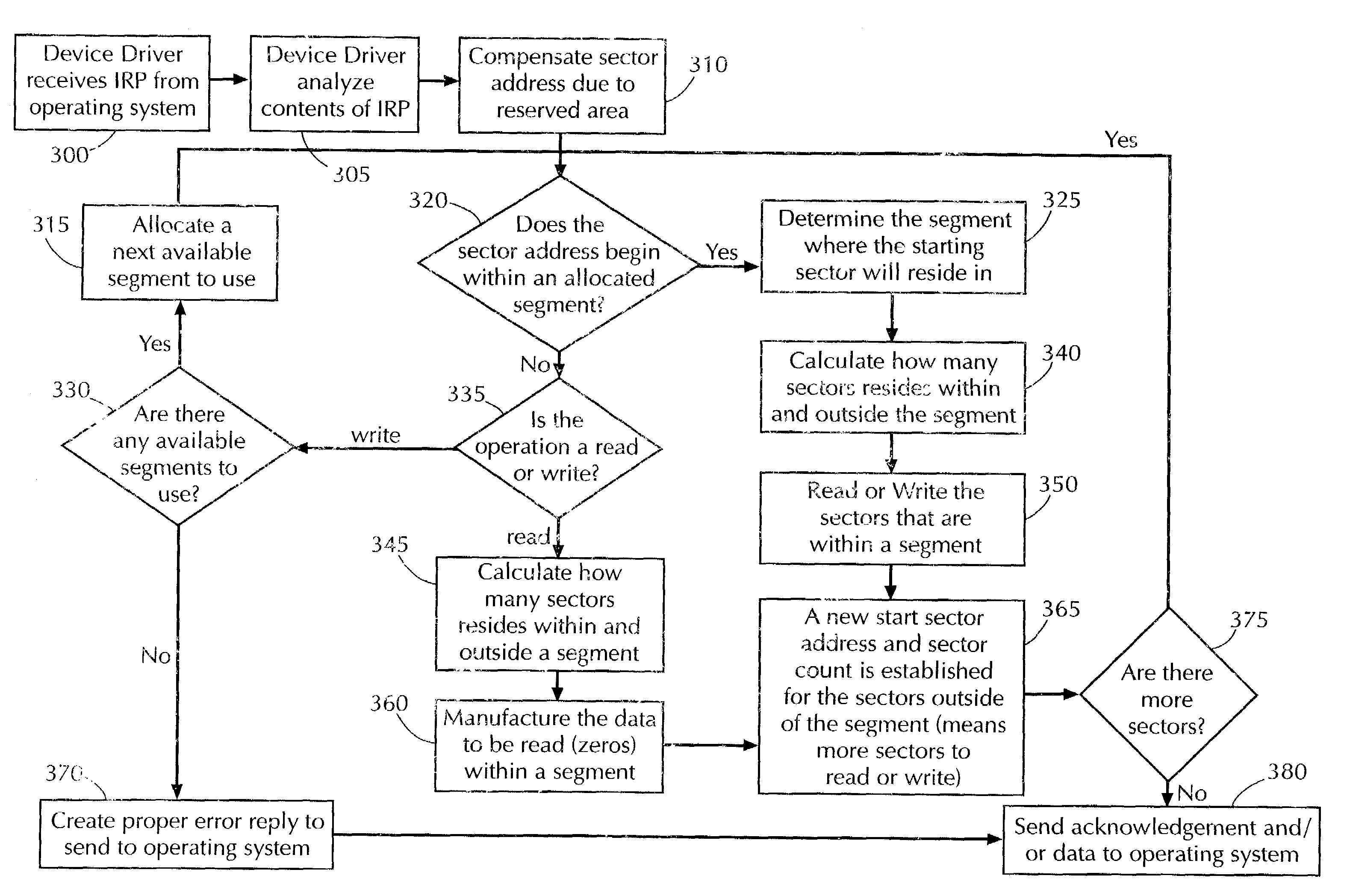
Figure 1 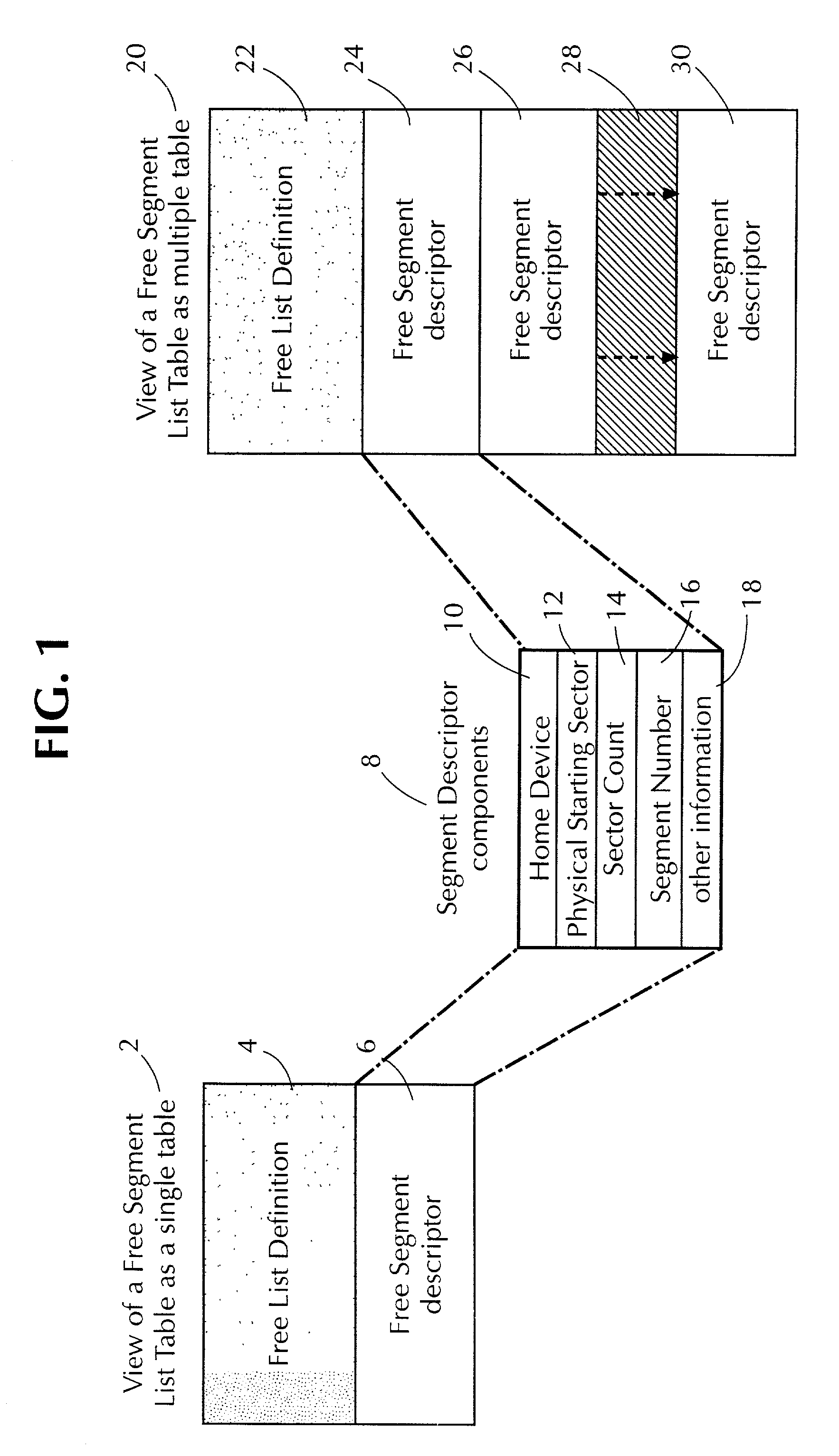
Figure 2 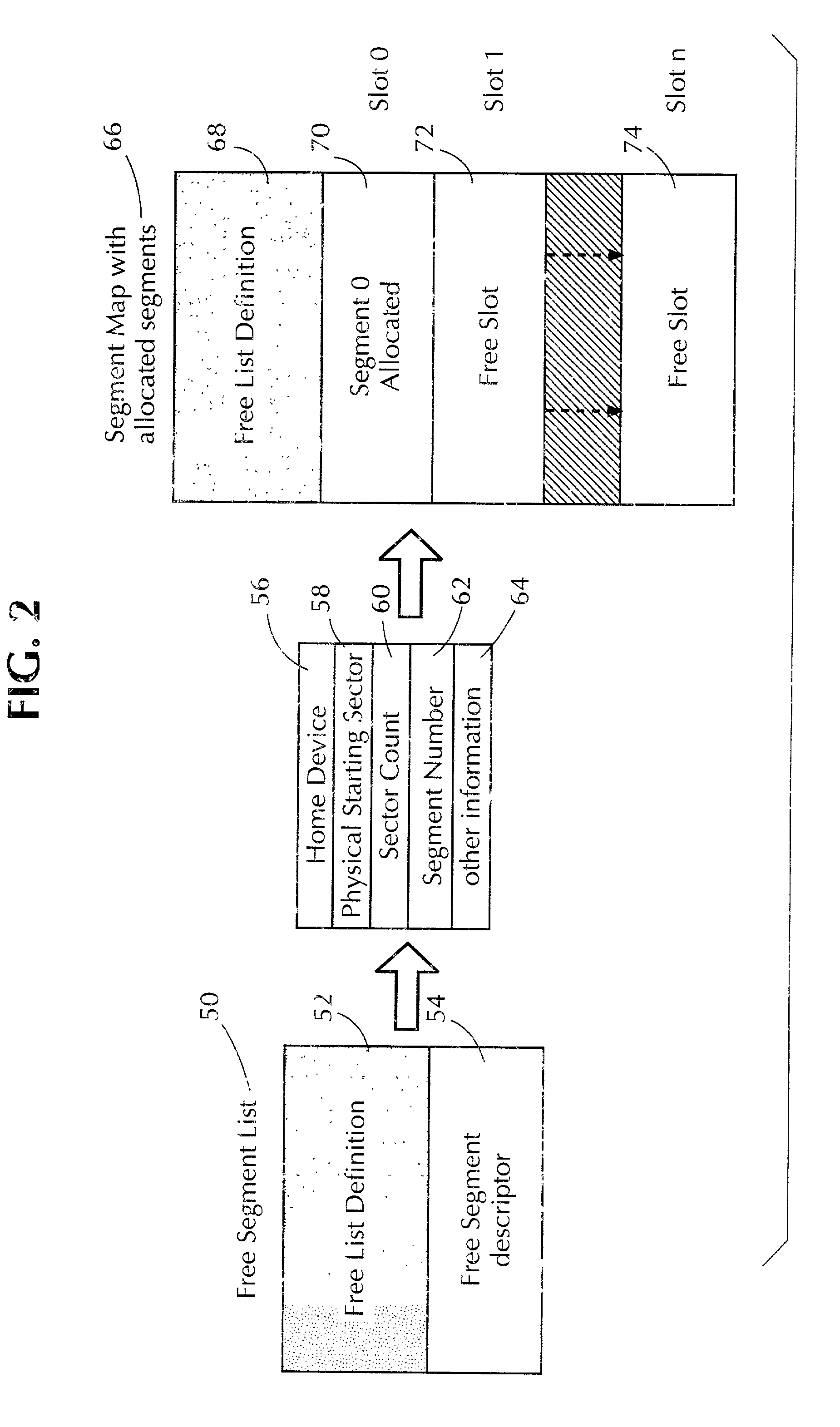
Figure 3
Abstract
Description
TECHNICAL FIELD
[0001] The subject invention relates to dynamic allocation method that allows computer memory space, such as disk space, to be allocated to a virtual disk on demand rather than having the entire space pre-allocated.BACKGROUND
[0002] Volumes are created on a hard disk by providing parameters to disk creation utilities such as Fdisk on Windows NT or Disk Druid on Linux. The parameters includes information such as partition type, volume name and volume size. The disk utility creates the new volume by allocating the disk space as dictated by the user's given parameters. Therefore if the disk utility is instructed to create a 1 GB volume, 1 GB of disk space will be allocated and reserved for the volume's exclusive use. Once the disk space is allocated, the disk space belongs to that volume, and that volume only, whether data is written to it or not.
[0003] This method of creating volumes in which the required disk space must be pre-allocated is not very efficient in terms of co...
Examples
Embodiment Construction
Dynamic Allocation Algorithm
[0036]The dynamic allocation (DA) algorithm of the present invention does not literally allocate individual disk sectors as they are used, which would be highly inefficient. Instead dynamic allocation of disk space requires a virtual storage device where all the sectors are grouped into larger allocation units called segments, and the DA parcels out segments as they are needed. Within the context of the present invention, generally, a virtual storage device can be any conventional type of computer memory that has been defined by a user of the present invention to have an amount of memory or storage capacity that is greater than the actual physical memory or storage capacity. For example, the virtual storage device can be a device that a server, workstation, or computer, utilizing the device perceives the device as a physical storage unit, where in actuality, the virtual storage device's physical structure can consist of only a portion of a predefined stor...