
Slim terminal gaming system
a gaming system and terminal technology, applied in the field of computers, can solve the problems of increasing the cost of a cluster of gaming stations, increasing the cost of maintaining the computer (video) gaming stations, and increasing the cost of each gaming station. , to achieve the effect of reducing the cost, reducing the hardware and software required for each client/terminal computer, and increasing the tamper resistance of individual gaming stations
Patent Information
- Authority / Receiving Office
- US · United States
- Patent Type
- Patents(United States)
- Current Assignee / Owner
- Publication Date
- 2007-03-13
- Estimated Expiration
- Not applicable · inactive patent
Smart Images
Figure 1 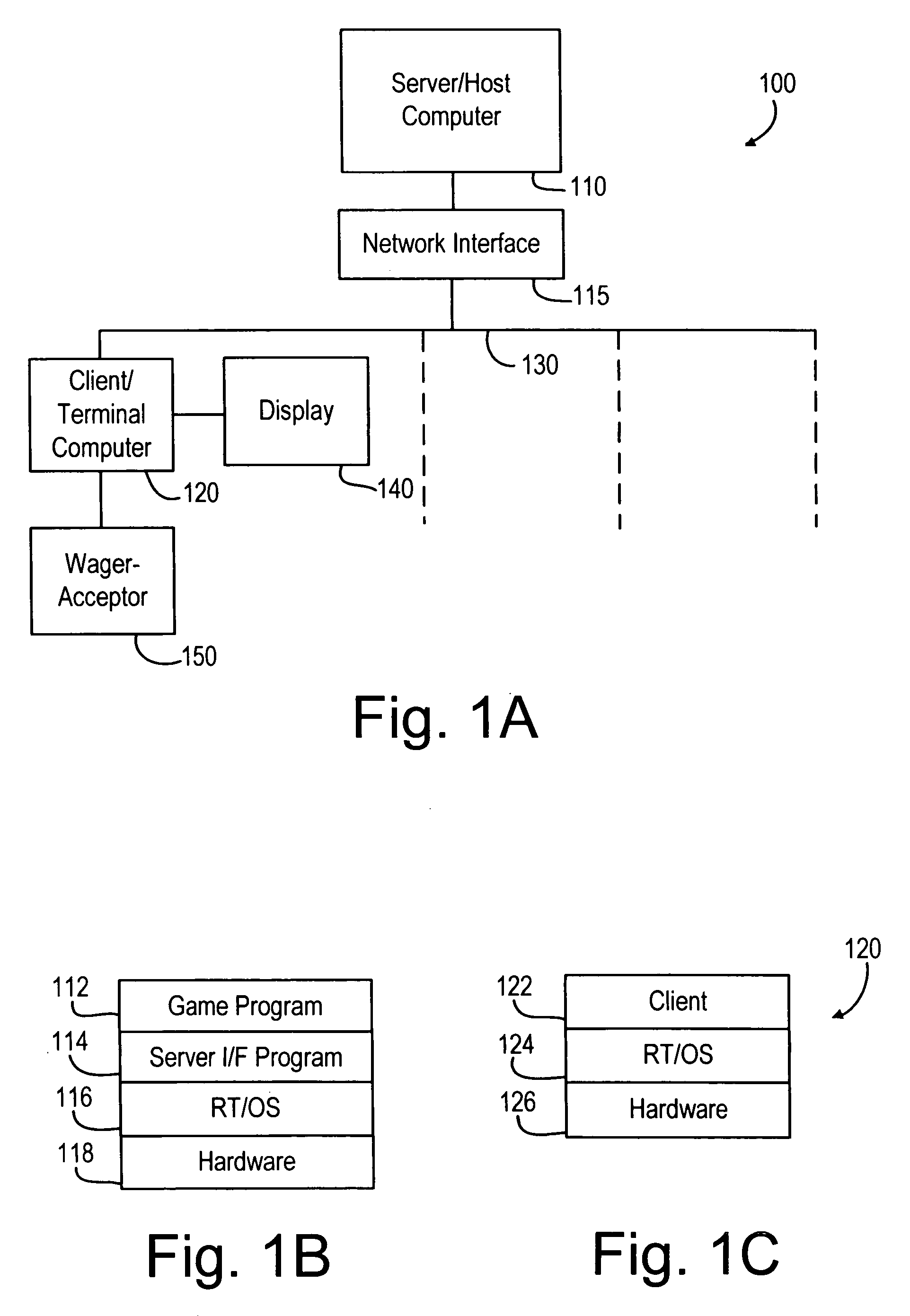
Figure 2 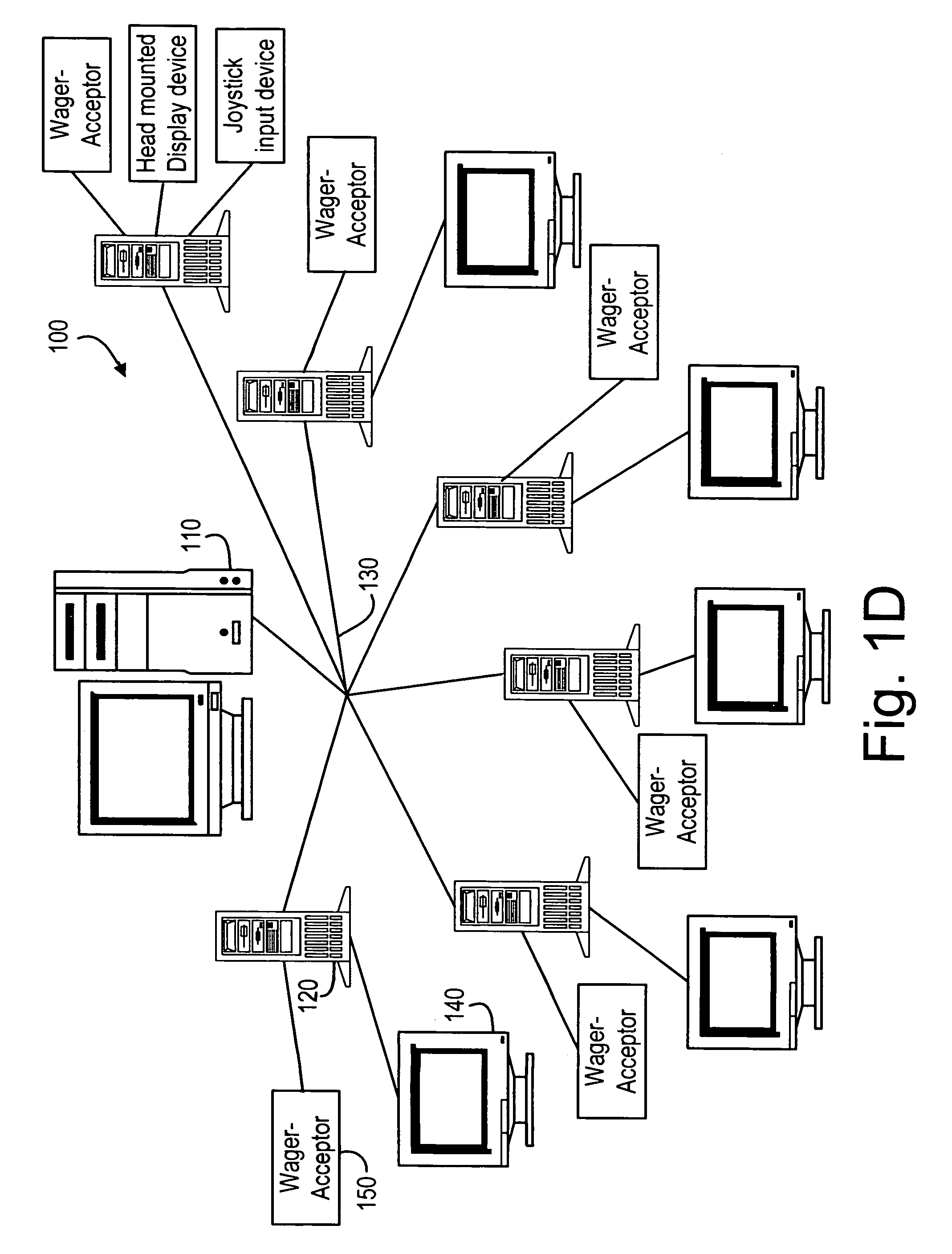
Figure 3
Abstract
Description
CROSS-REFERENCE TO RELATED APPLICATION
[0001] This application is a continuation of U.S. patent application Ser. No. 09,199,529, filed Nov. 24, 1998, now U.S. Pat. No. 6,409,602 which is a continuation-in-part of U.S. patent application Ser. No. 09 / 187,135, filed Nov. 6, 1998 now abandoned.BACKGROUND OF THE INVENTION
[0002] 1. Field of the Invention
[0003] The present invention relates generally to computers and, more particularly, to computer-implemented gaming systems.
[0004] 2. Related Art
[0005] Computer gaming systems are typically comprised of computer stations including a display device, a wager or bet-acceptor, and controls such as buttons, keyboards, levers or the like. Typically, computer gaming stations are dedicated to only one type of game (e.g., video poker, black jack, slot machine) and their physical appearance, as well as the location of the controls, are customized for the game provided. Gaming stations may be modified to provide a different type of game, but this typically ...
Examples
Embodiment Construction
[0033]A computer gaming system 100, in accordance to one embodiment of the invention, is shown in FIG. 1A. Computer gaming system 100 includes a server / host computer 110 connected to a plurality of remote client / terminal computers 120 via network interface 115 and communication pathways 130. Each of client / terminal computers 120 is connected to a display device 140. Communication pathways 130 are implemented with electrical cables, optical fibers, RF links, IR links and protocol interfaces such as LAN, WAN, or any combination thereof.
[0034]In some embodiments, display devices 140 are touch screen display devices that allow a patron to enter input commands by simply touching the screen of display device 140. The use of touch screen display devices eliminates the need for separate input controls to be provided on client / terminal computers 120 such as a keyboard. As a result, the hardware cost for each client / terminal computer 120 is reduced. Moreover, since the context and meaning of ...