
Method and configuration for mutual authentication of two data processing units
a technology of two data processing units and configurations, applied in data processing applications, instruments, digital transmission, etc., can solve the problems of enormous simplification of data processing units, and achieve the effect of easy transportation
Patent Information
- Authority / Receiving Office
- US · United States
- Current Assignee / Owner
- Publication Date
- 2008-04-01
- Estimated Expiration
- Not applicable · inactive patent
Smart Images
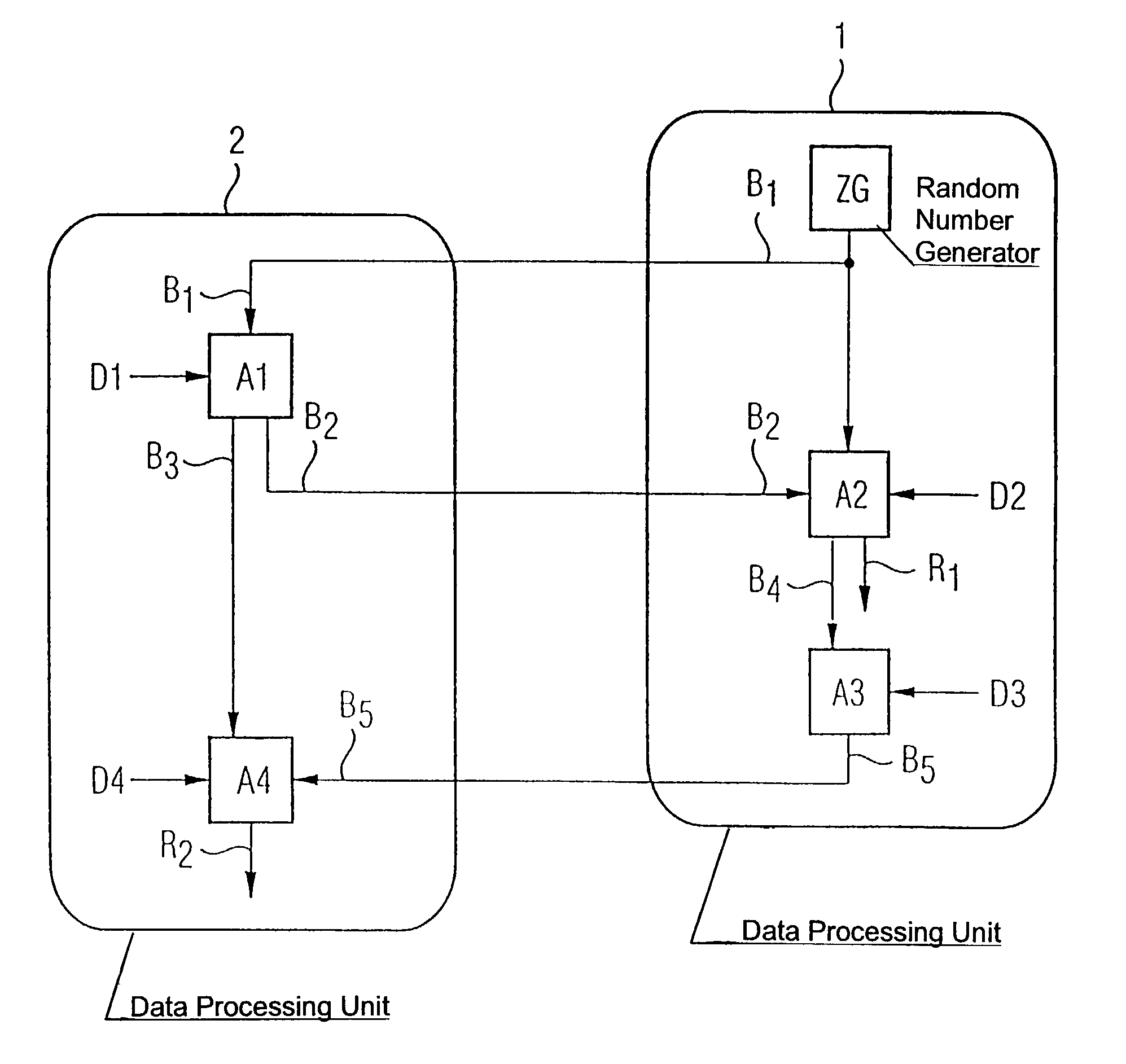
Figure 1 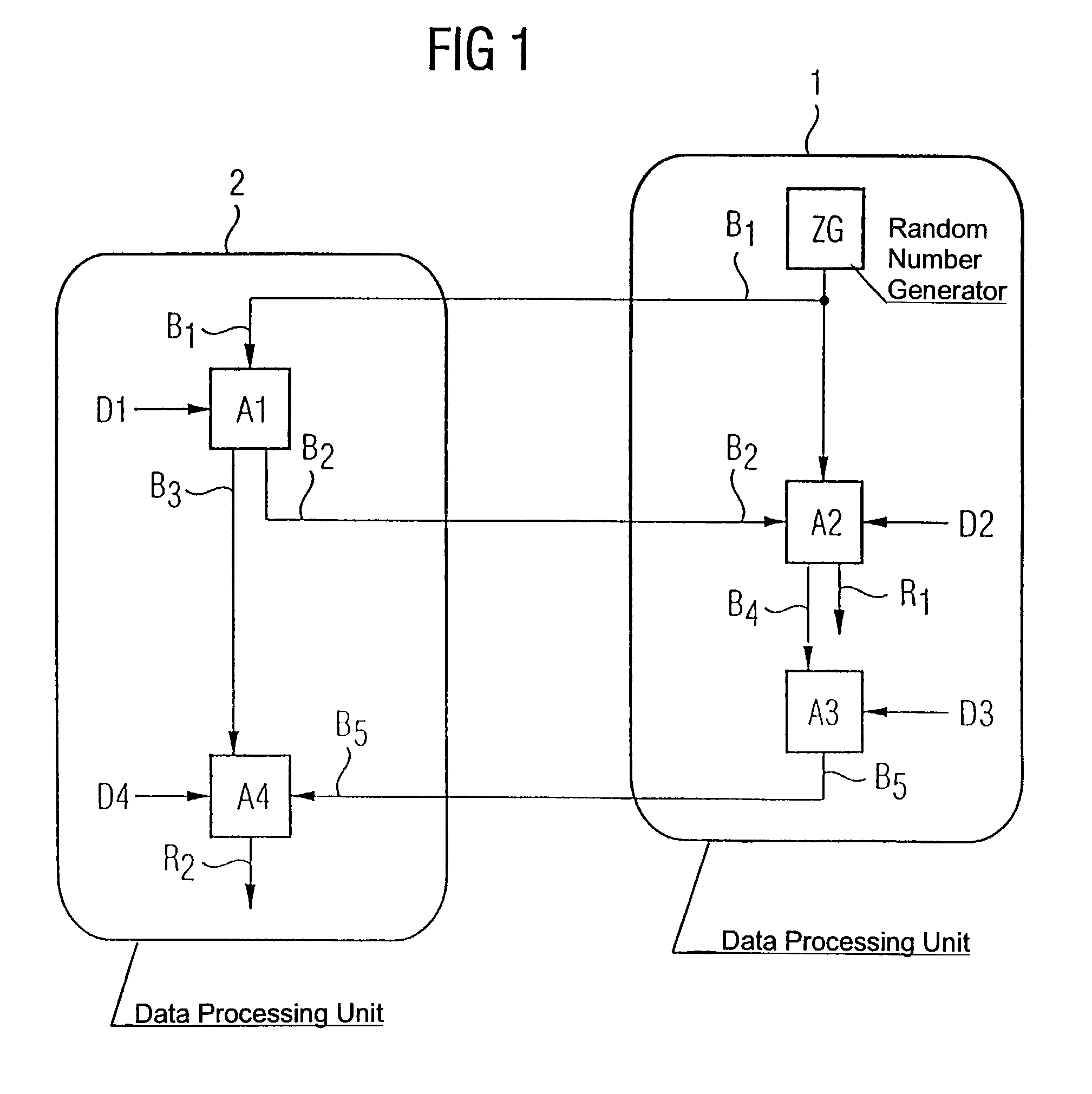
Figure 2 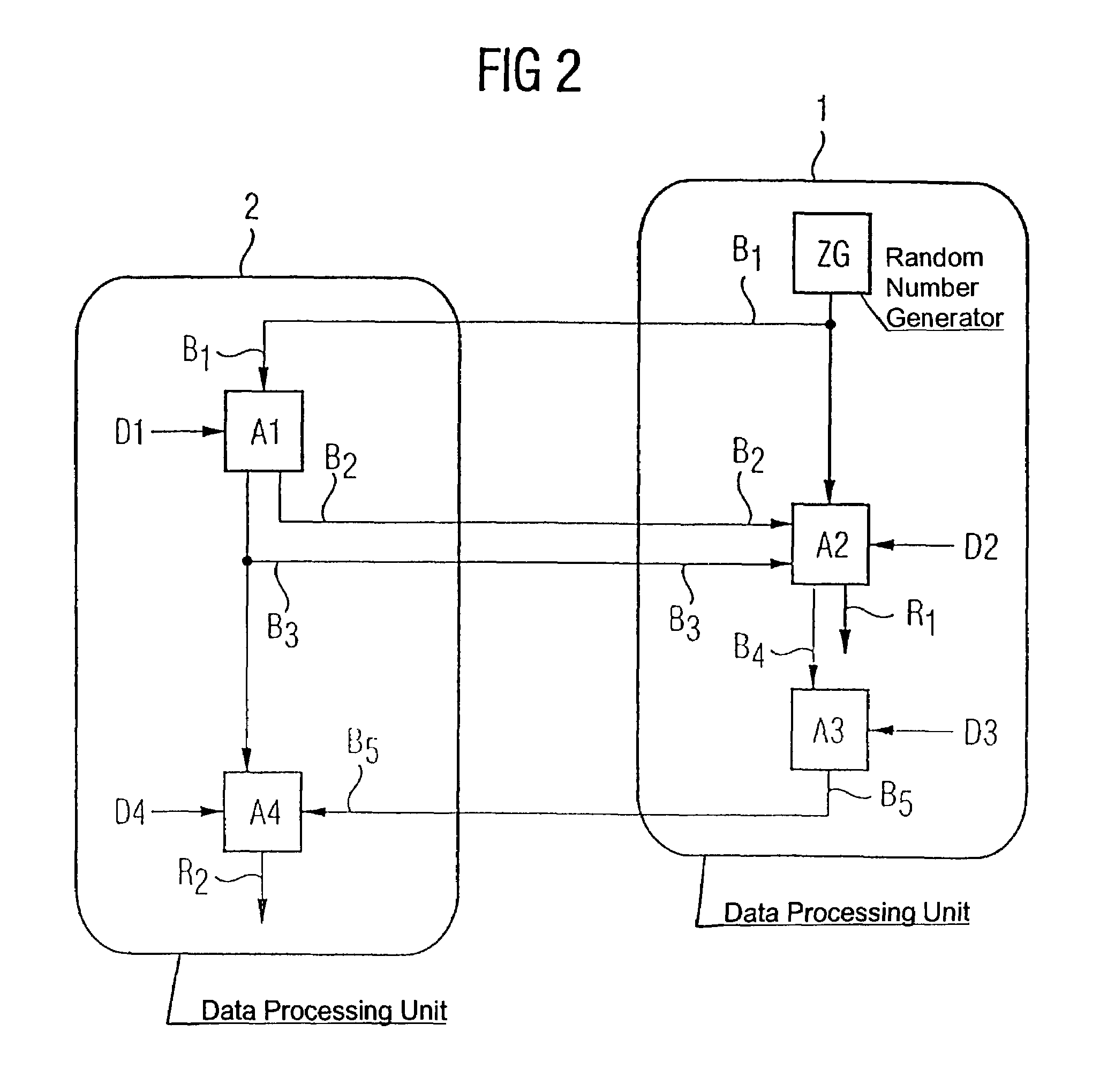
Figure 3
Abstract
Description
CROSS-REFERENCE TO RELATED APPLICATION
[0001] This application is a continuation of copending International Application No. PCT / DE01 / 00335, filed Jan. 26, 2001, which designated the United States and was not published in English.BACKGROUND OF THE INVENTIONField of the Invention
[0002] The present invention relates to a method and a configuration for mutual authentication of two data processing units, using a challenge and response method.
[0003] The authentication of data processing units has gained major financial importance in conjunction with electronic data transmission, electronic signatures, smart cards, such as telephone cards, and electronic purses. The authentication of data processing units is of major importance so that only authorized users or data processing units may read or modify data.
[0004] Known methods for authentication of data processing units use challenge and response methods based on cryptographic methods, such as data encryption standard (DES), rivest shamer adelma...
Examples
Embodiment Construction
[0025]Referring now to the figures of the drawing in detail and first, particularly, to FIG. 1 thereof, there is shown a system containing a first data processing unit 1 and a second data processing unit 2. A flowchart is described, in which some method steps are carried out in the first data processing unit 1 and other data processing steps are carried out in the data processing unit 2. The method starts with the production of a first bit string B1, which is in the exemplary embodiment produced using a random number generator ZG in the first data processing unit 1. The first bit string B1 is transmitted from the first data processing unit 1 to the second data processing unit 2, and a second bit string B2 and a third bit string B3 are produced in the second data processing unit 2, using an algorithm A1, from the first bit string B1 and from first data D1.
[0026]The algorithm may be one of the algorithms that are known from the prior art, such as DES, RSA, etc. The data D1 may be, for...