
Method and apparatus for testing tunnel magnetoresistive effect element, manufacturing method of tunnel magnetoresistive effect element and tunnel magnetoresistive effect element
a manufacturing method and technology of tunnel magnetoresistive effect, applied in the direction of functional testing of recording heads, semiconductor/solid-state device testing/measurement, instruments, etc., can solve the problems of requiring a great deal of manpower and in time for confirming reliability, and achieve the effect of quick and easy confirmation of reliability of tmr elements
Patent Information
- Authority / Receiving Office
- US · United States
- Patent Type
- Patents(United States)
- Current Assignee / Owner
- Publication Date
- 2008-08-26
Smart Images
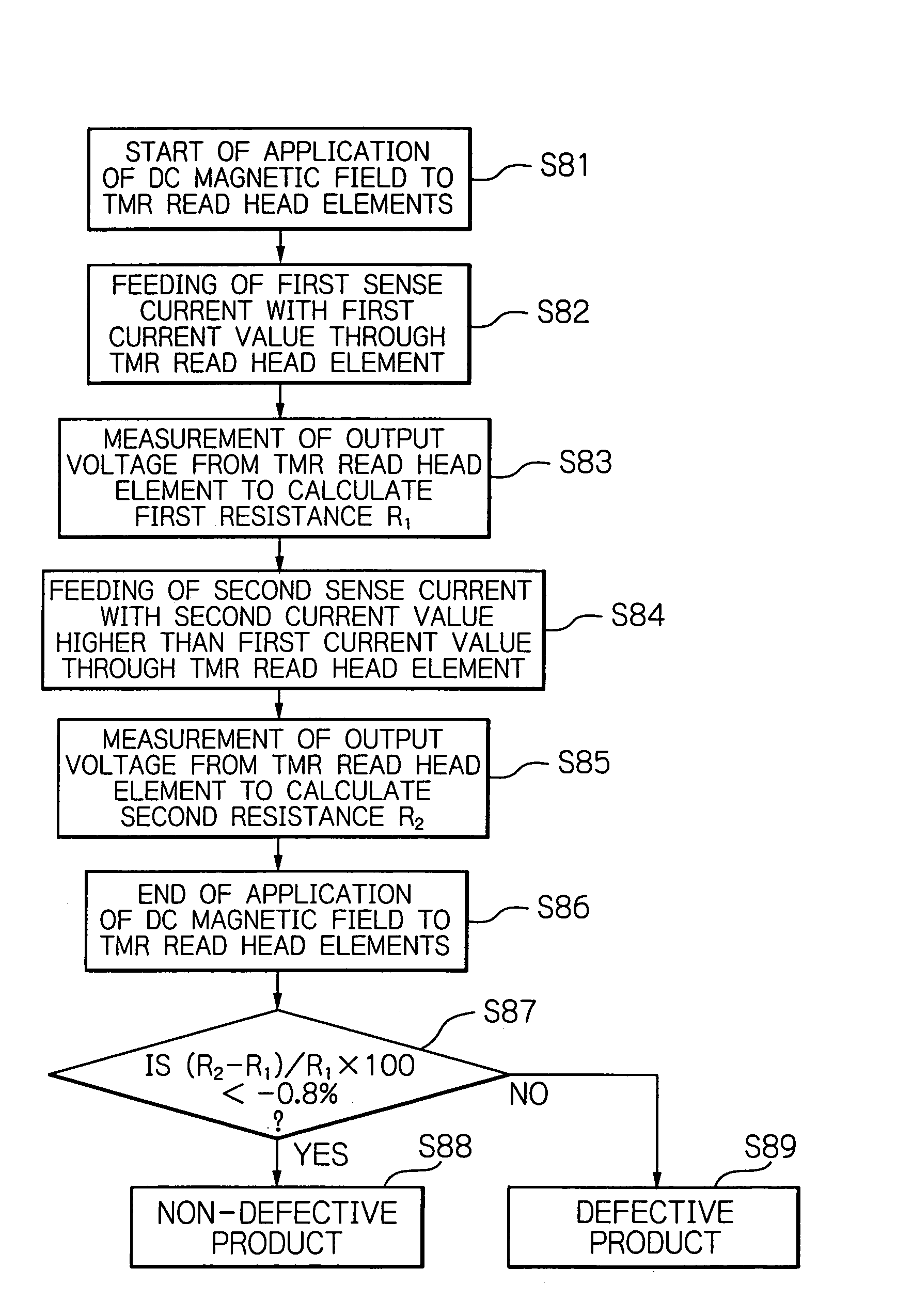
Figure 1 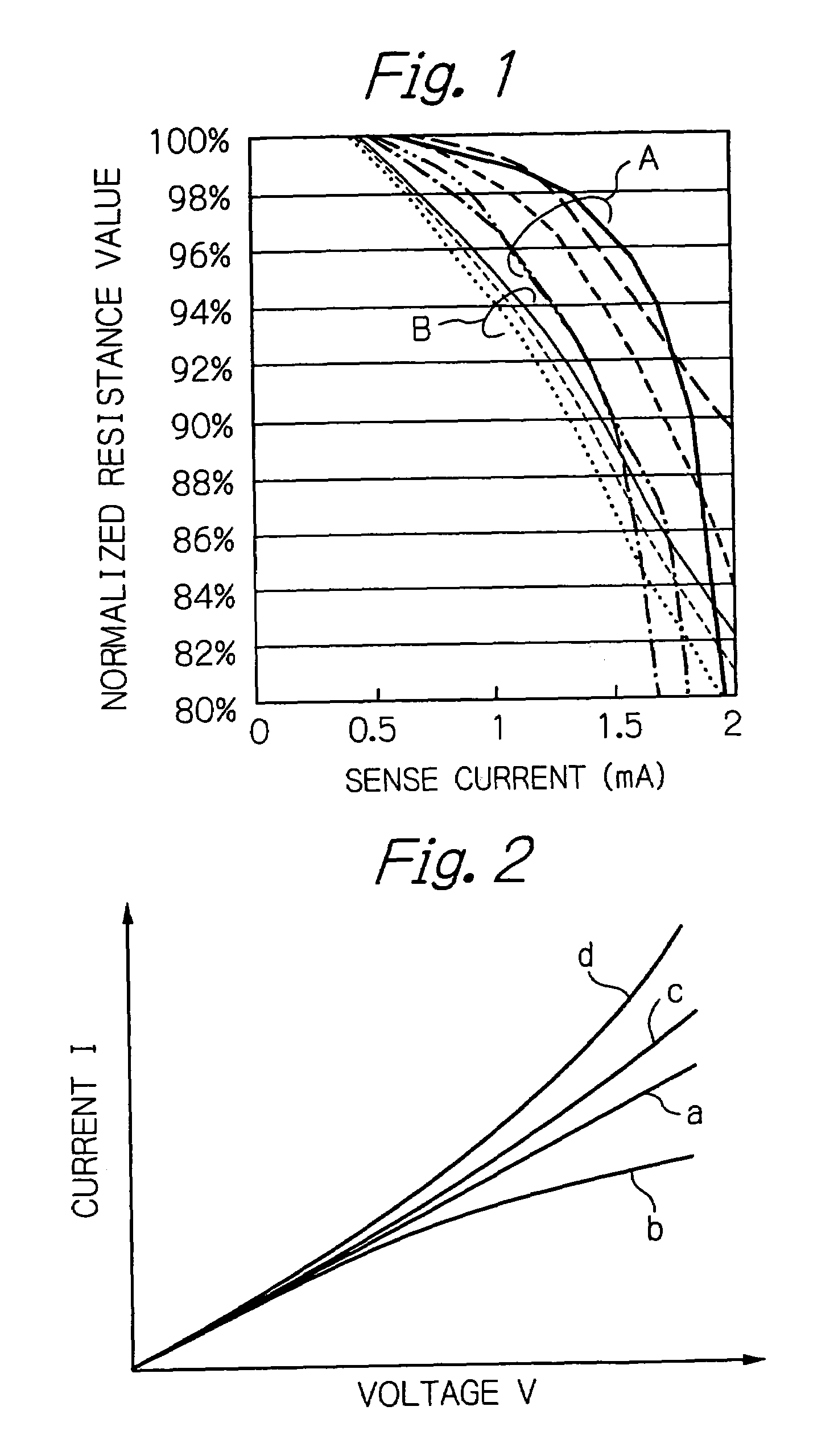
Figure 2 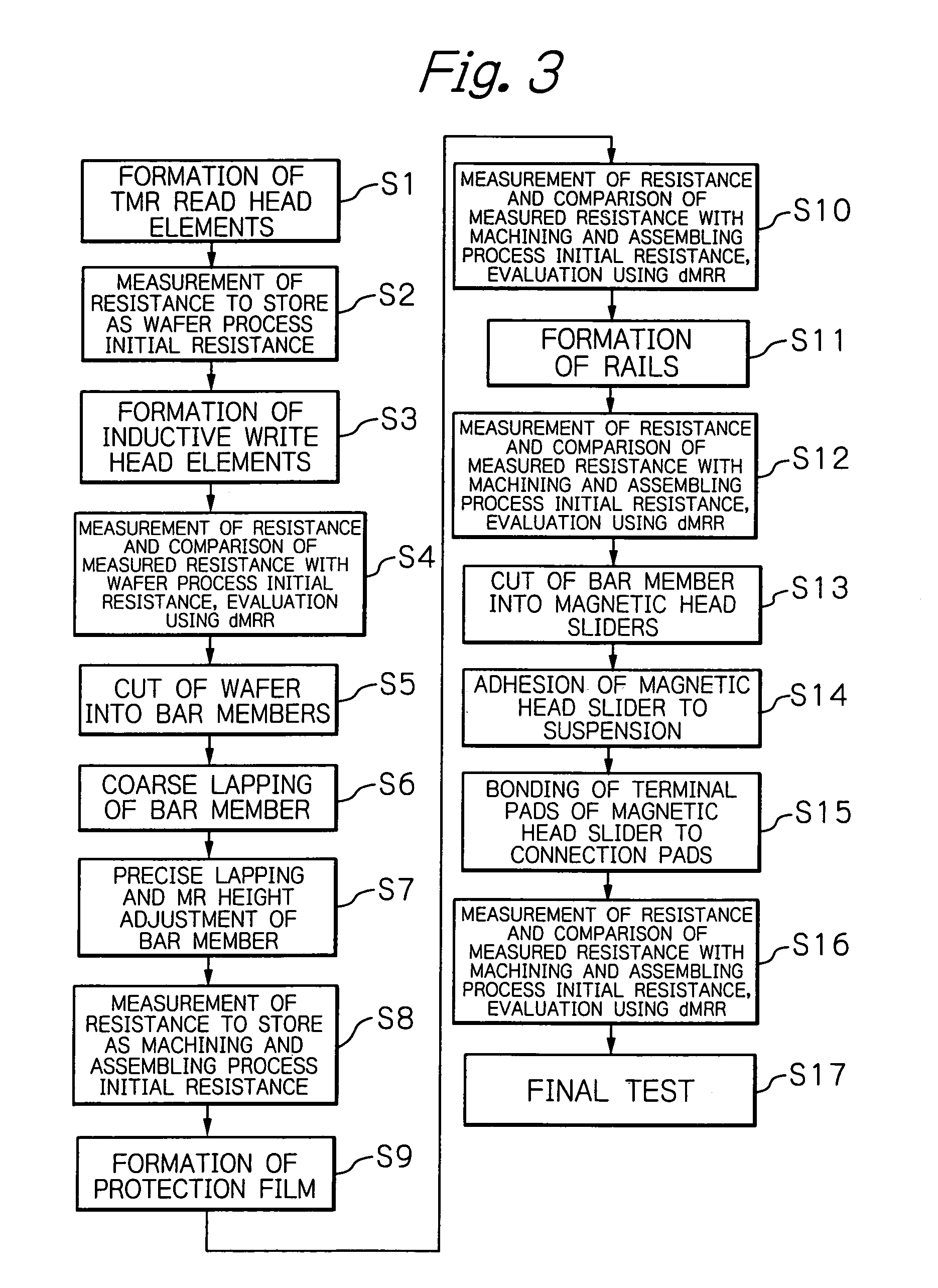
Figure 3
Abstract
Description
PRIORITY CLAIM
[0001] This application claims priority from Japanese patent application No. 2004-220247, filed on Jul. 28, 2004 and Japanese patent application No. 2005-081768, filed on Mar. 22, 2005, which are incorporated herein by reference.BACKGROUND OF THE INVENTION
[0002] 1. Field of the Invention
[0003] The present invention relates to a method and apparatus for testing a tunnel magnetoresistive effect (TMR) element such as a TMR read head element using the tunnel magnetoresistive effect or a magnetoresistive random access memory (MRAM) cell, to a manufacturing method of a TMR element, and to a TMR element.
[0004] 2. Description of the Related Art
[0005] An evaluation test is in general performed for determining whether or not a thin-film magnetic head with a TMR read head element is a non-defective product, during or after manufacturing the magnetic head. This evaluation test includes a reliability test for confirming that a breakdown voltage of the MR head element is sufficiently hig...
Examples
Embodiment Construction
[0054]Before describing a preferred embodiment of the present invention, the story leading up to the present invention will be first discussed.
[0055]The inventors of this application had found that the changing characteristic in resistance of each TMR read head element differs between TMR read head elements with a predominance of metallic conduction and TMR read head elements with a predominance of tunnel current when the sense currents flowing through the TMR read head elements are increased up to a value at which the element breakdown might occur.
[0056]FIG. 1 illustrates characteristics of normalized resistances (%) versus sense currents Is (mA) measured by the inventors with respect to a plurality of TMR read head elements.
[0057]As will be noted from the figure, there were two groups, that is, a group B of the TMR read head elements with resistances gradually decreasing when the sense currents increased and a group A of the TMR read head elements with resistances abruptly decreas...