
Locking compression hip screw
a hip screw and compression technology, applied in the field of compression hip screws, can solve the problems of displacement of major fracture fragments by shearing
Patent Information
- Authority / Receiving Office
- US · United States
- Patent Type
- Patents(United States)
- Current Assignee / Owner
- Publication Date
- 2009-03-17
Smart Images
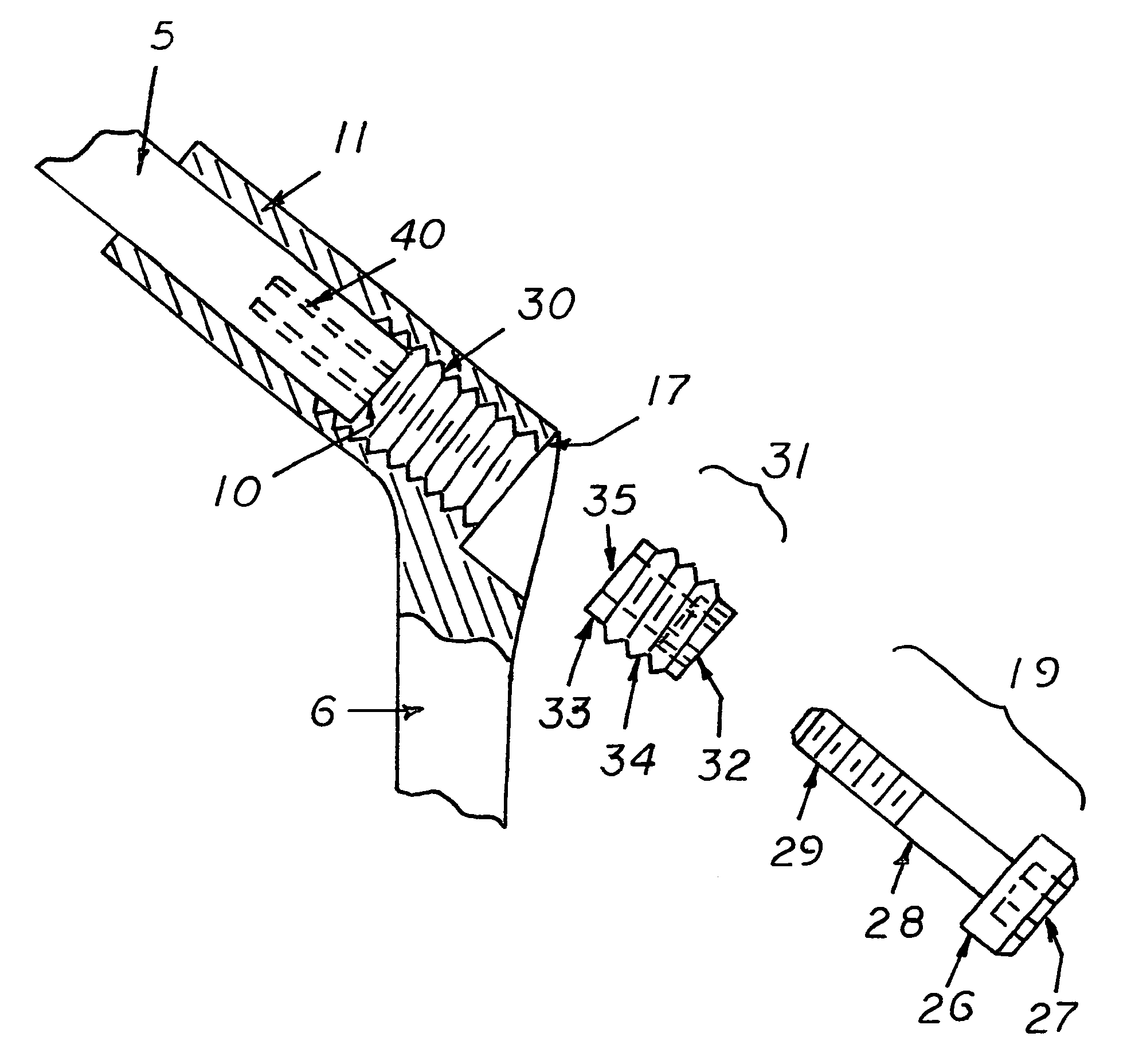
Figure 1 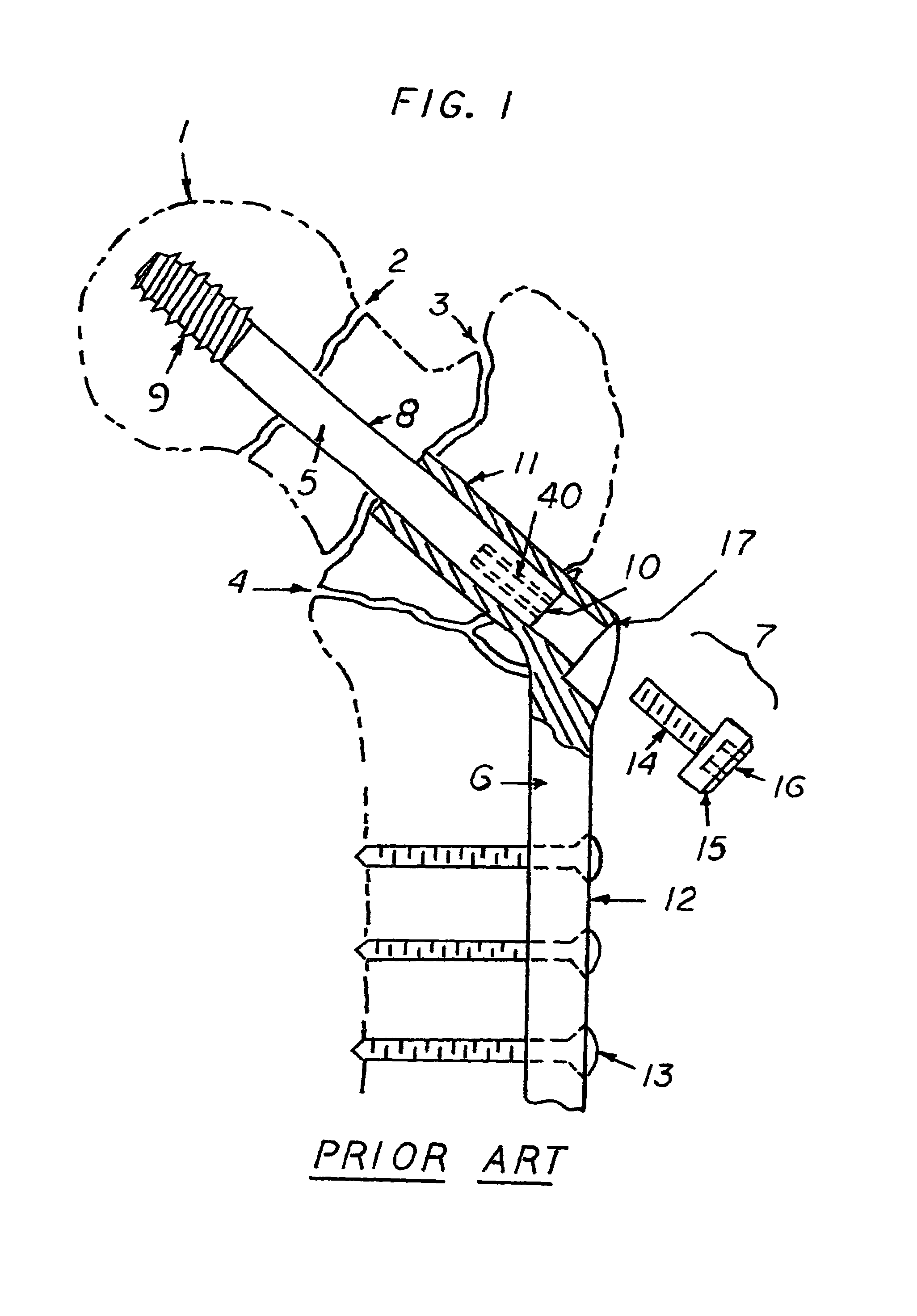
Figure 2 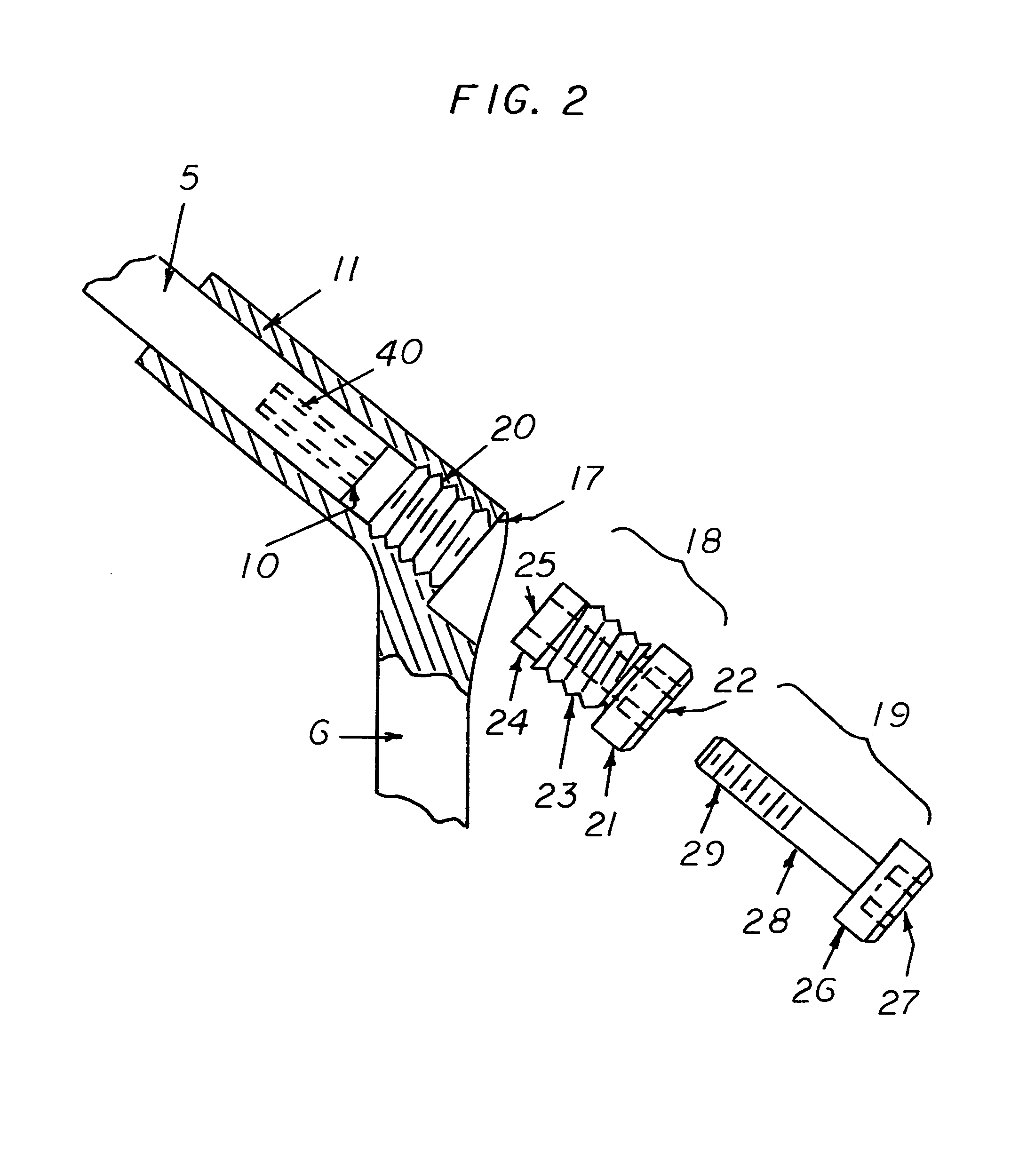
Figure 3
Abstract
Description
CROSS REFERENCE TO RELATED APPLICATIONS
[0001] Not ApplicableFEDERALLY SPONCERED RESEARCH AND DEVELOPEMENT
[0002] Not ApplicableREFERENCES CITED [REFERENCED BY]
[0003] U.S. Patent Document4,432,358February 1984Fixel129 / 92 BB4,621,629August 1985Koeneman128 / 92 YS4,612,920September 1986Lower128 / 92 BA4,617,922October 1986Griggs128 / 92 YS4,657,001April 1987Fixel128 / 92 YS5,041,116August 1991Wilson606 / 655,167,663December 1992Brumfield606 / 645,324,292June 1994Meyers606 / 735,454,813October 1995Lawes606 / 625,032,125July 1999Durham606 / 626,443,954 B1September 2002Bramlet et al.606 / 626,645,209 B2November 2003Hall, IV et al.606 / 69ADDITIONAL REFERENCES
[0004] 1. Cole, P. A. and Bhandari, M. “Specialty Update: What's new in Orthopaedic Trauma”. J Bone Joint Surg 87A (12), 2005; 2823-2838.
[0005] 2. Shaw, J. A. and Wilson, S. “Internal Fixation of Proximal Femur Fractures: A Biomechanical Comparison of the Gamma Locking Nail and the Omega Compression Hip Screw”. Orthopedic Review 22 (1), 1993; 61-68.DESCRIPTIONBA...
Examples
Embodiment Construction
[0019]FIG. 1 shows a generic compression hip screw within a schematic representation of the proximal femur 1. Fracture patterns well controlled by a conventional hip screw include the femoral neck fracture 2, and the intertrochanteric hip fracture 3. The reverse obliquity hip fracture 4 is not well stabilized with a conventional compression hip screw and it is towards this fracture pattern, with or without comminuted extensions, that the Locking Compression Hip Screw is directed.
[0020]The three integral parts of a generic compression hip screw are: the femoral head lag screw 5, the side plate 6, and the compressing screw 7.
[0021]The femoral head lag screw consists of a smooth metallic shank 8 of variable length, with course cancerous bone threads 9 on the medial end and axially aligned female threads within the lateral end 10. The lateral end 10 may also have a flat or slot milled on its surface so that a custom insertion tool (wrench) can gain torsional purchase on the lateral end,...