

Hip arthroplasty trialing apparatus and method
a trialing apparatus and hip technology, applied in the field of hip arthroplasty, can solve the problems of inconvenient operation, inconvenient use, and inability to conduct more recently developed minimally invasive total hips, and achieve the effect of convenient interoperative determination of head offset and neck length, quick and effective interoperative trialing, and optimal hip mechanics
Patent Information
- Authority / Receiving Office
- US · United States
- Current Assignee / Owner
- Publication Date
- 2009-10-27
- Estimated Expiration
- Not applicable · inactive patent
Smart Images
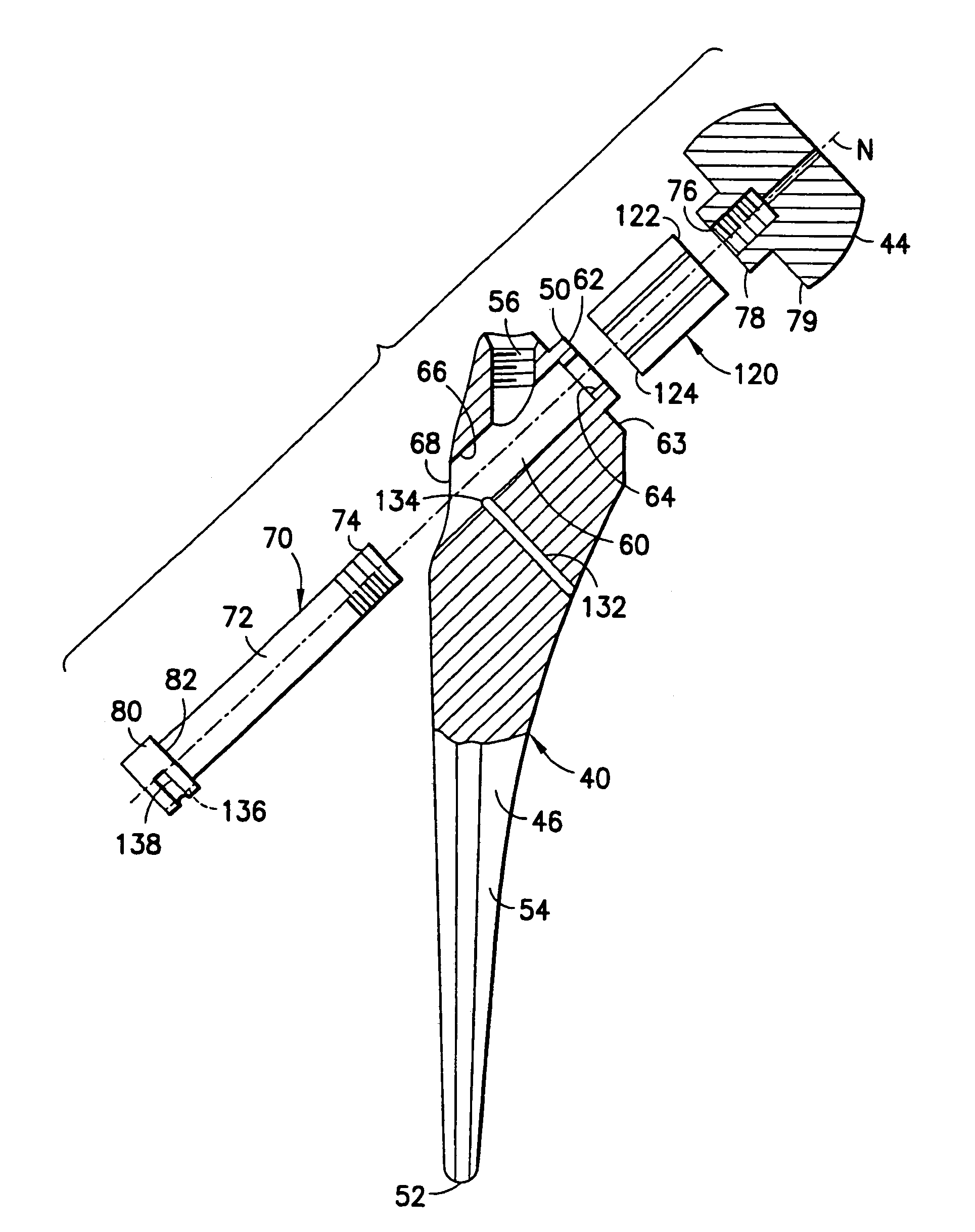
Figure 1 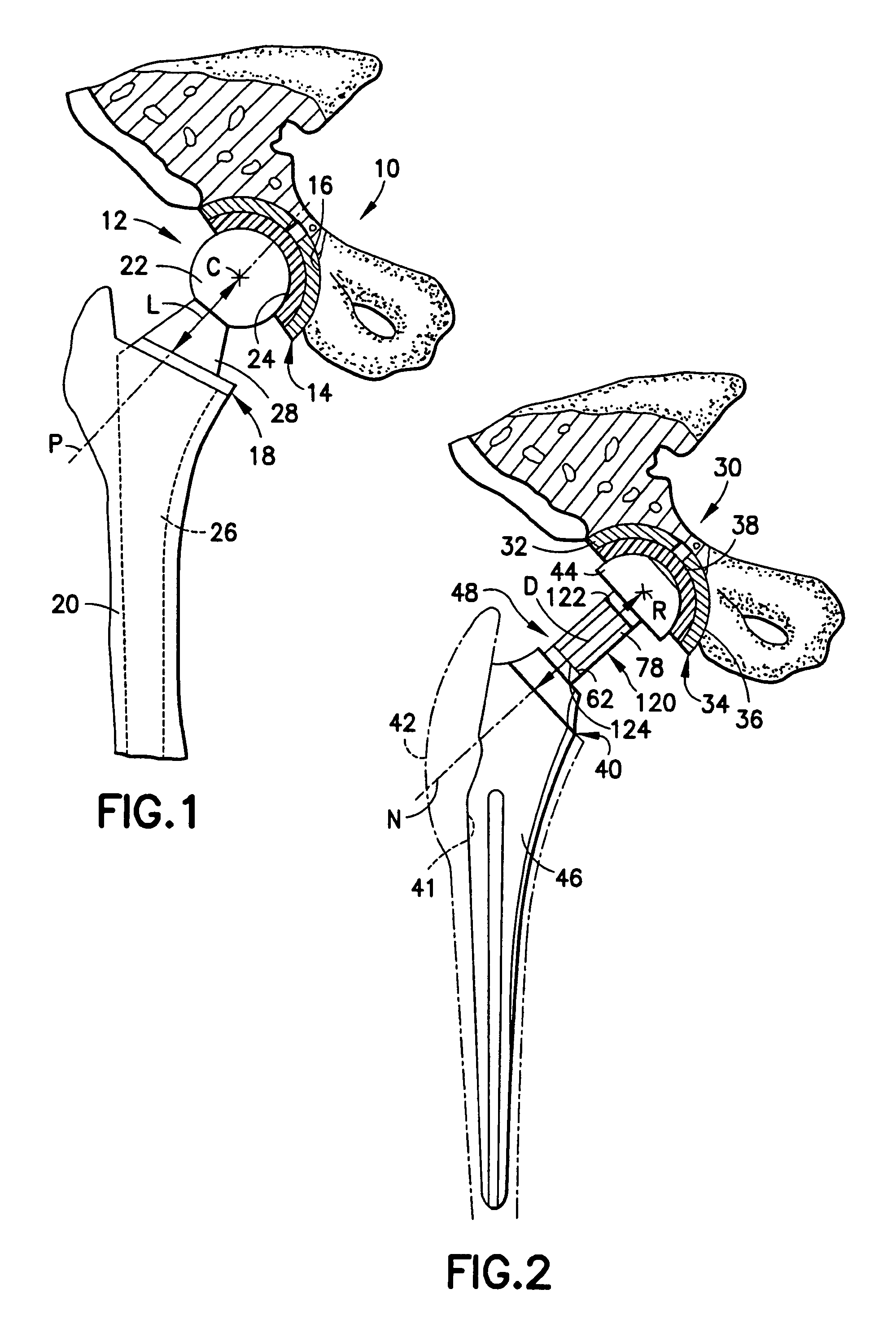
Figure 2 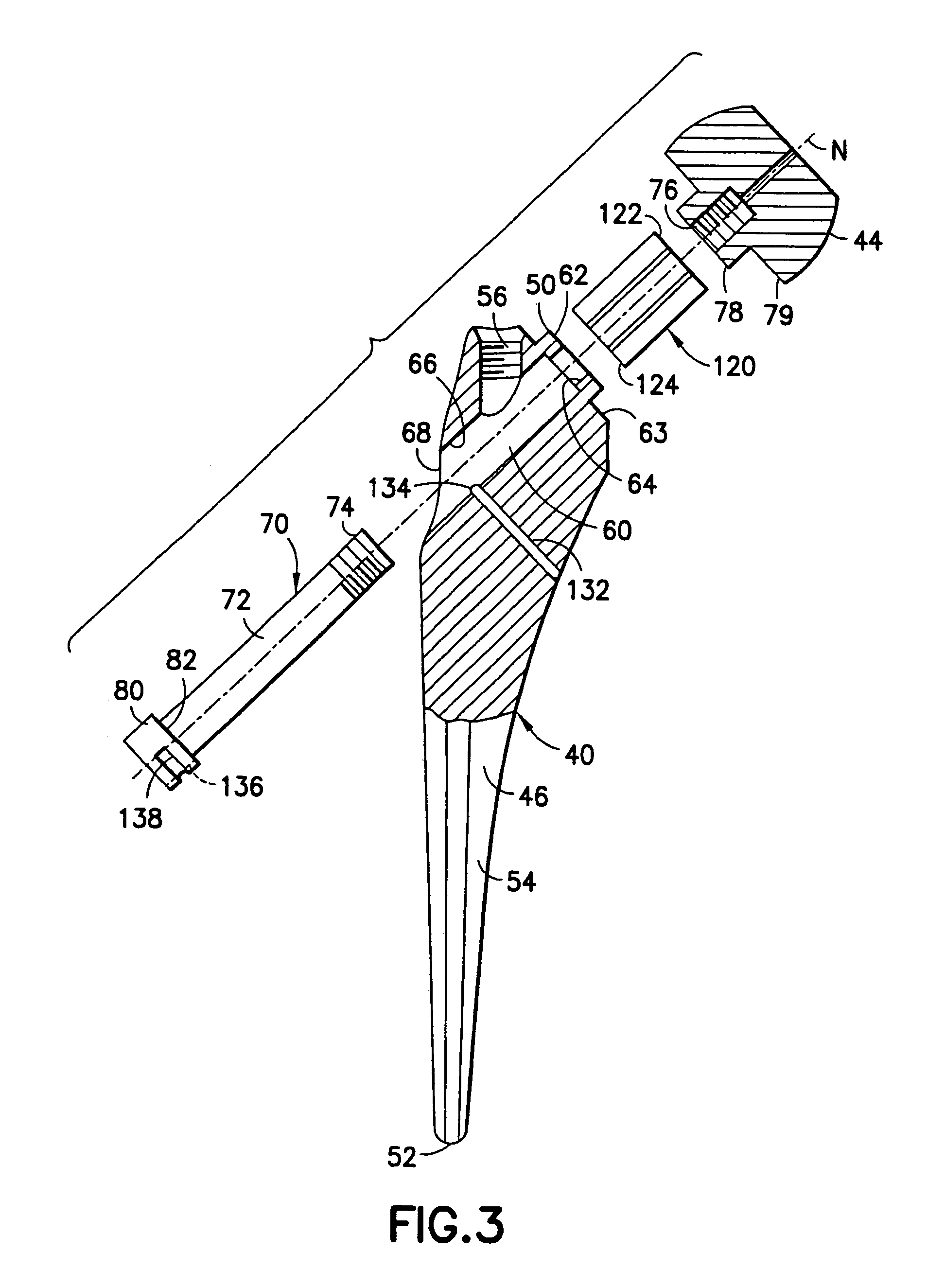
Figure 3
Abstract
Description
BACKGROUND OF THE INVENTION
[0001] 1. Field of the Invention
[0002] The present invention relates generally to hip arthroplasty and pertains, more specifically, to apparatus and method for conducting interoperative trialing to determine an appropriate head offset and neck length in the femoral component of a prosthetic hip joint.
[0003] 2. Description of the Related Prior Art
[0004] Total hip arthroplasty requires the preparation of an implant site for the reception of a femoral component and an acetabular component of a prosthetic hip joint to be implanted at the implant site. Proper hip mechanics are achieved through the selection of an appropriate head offset and neck length in the femoral component of the prosthetic hip implant. That is, the distance between the stem of the femoral component and the femoral head of the component, provided by the length of the neck of the component, establishes the requisite head offset and neck length which, in turn, provides the desired range of motion...
Examples
Embodiment Construction
[0023]Referring now to the drawing, and especially to FIG. 1 thereof, an implant site 10 has been provided with a prosthetic hip joint 12 which is seen to include an acetabular component 14 implanted in acetabulum 16, and a femoral component 18 implanted in proximal femur 20. Femoral component 18 includes a femoral head 22, which is engaged with a bearing surface 24 of the acetabular component 14 for articulation of the prosthetic hip joint 12, a femoral stem 26, which is affixed within the proximal femur 20 to secure the femoral component 18 in place, and a femoral neck 28, which connects the femoral head 22 to the femoral stem 26 and which spaces the femoral head 22 from the femoral stem 26, all as now well-known in prosthetic hip joints.
[0024]As is conventional, prosthetic hip joint 12 relies upon soft tissue (not shown) at the implant site 10 to maintain femoral head 22 of femoral component 18 appropriately engaged with bearing surface 24 of acetabular component 14 for proper hi...