
Video quality assessment
a video quality and video technology, applied in the field of video quality assessment, can solve the problems of inability to accurately estimate the perceived quality degradation of the video packet payload, the inability to take the effect of packet loss into account, and the more likely to suffer from a loss of packets, etc., to achieve the effect of more impact and quality of decoded video
Patent Information
- Authority / Receiving Office
- US · United States
- Patent Type
- Patents(United States)
- Current Assignee / Owner
- Publication Date
- 2010-11-30
Smart Images
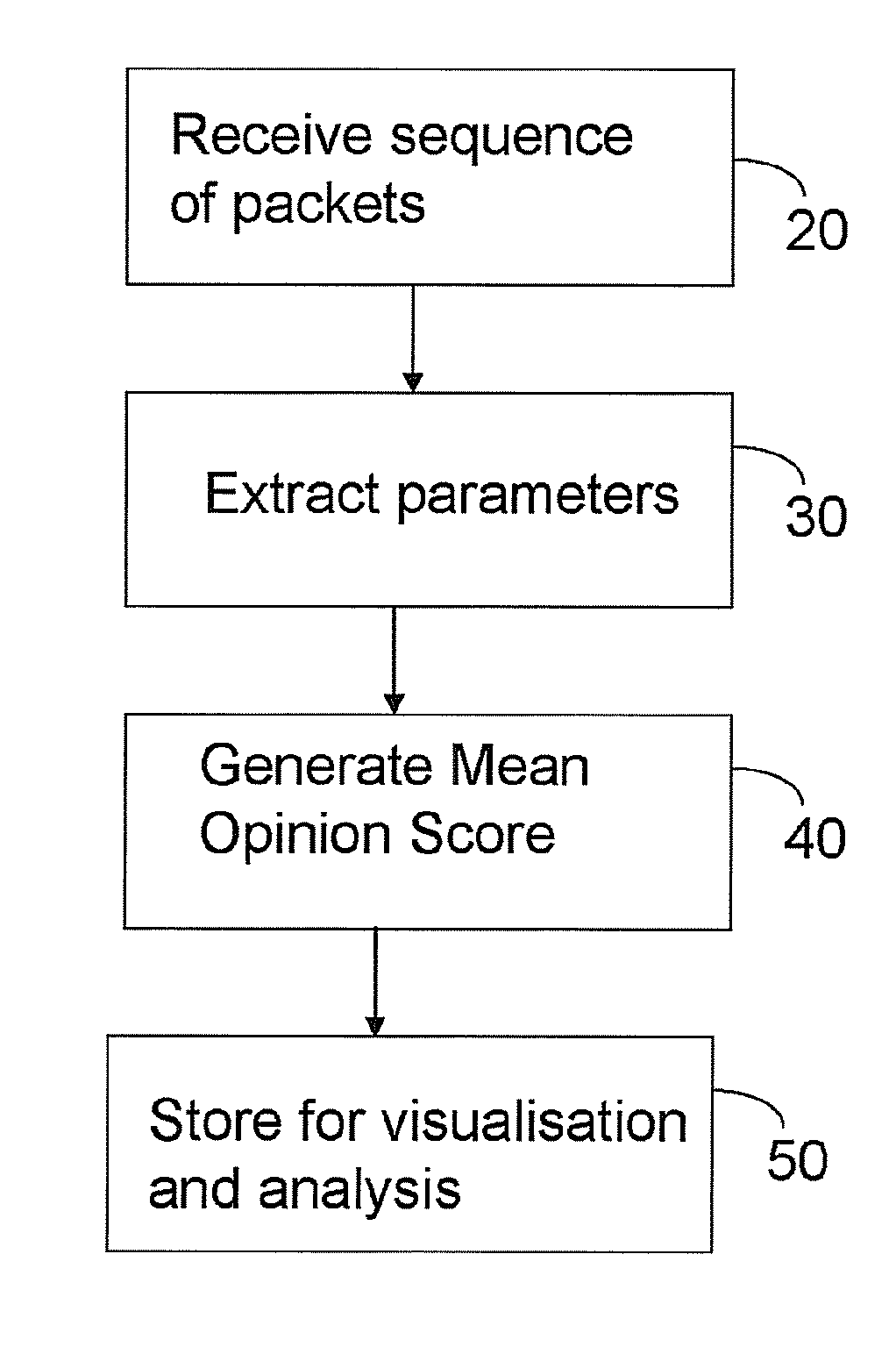
Figure 1 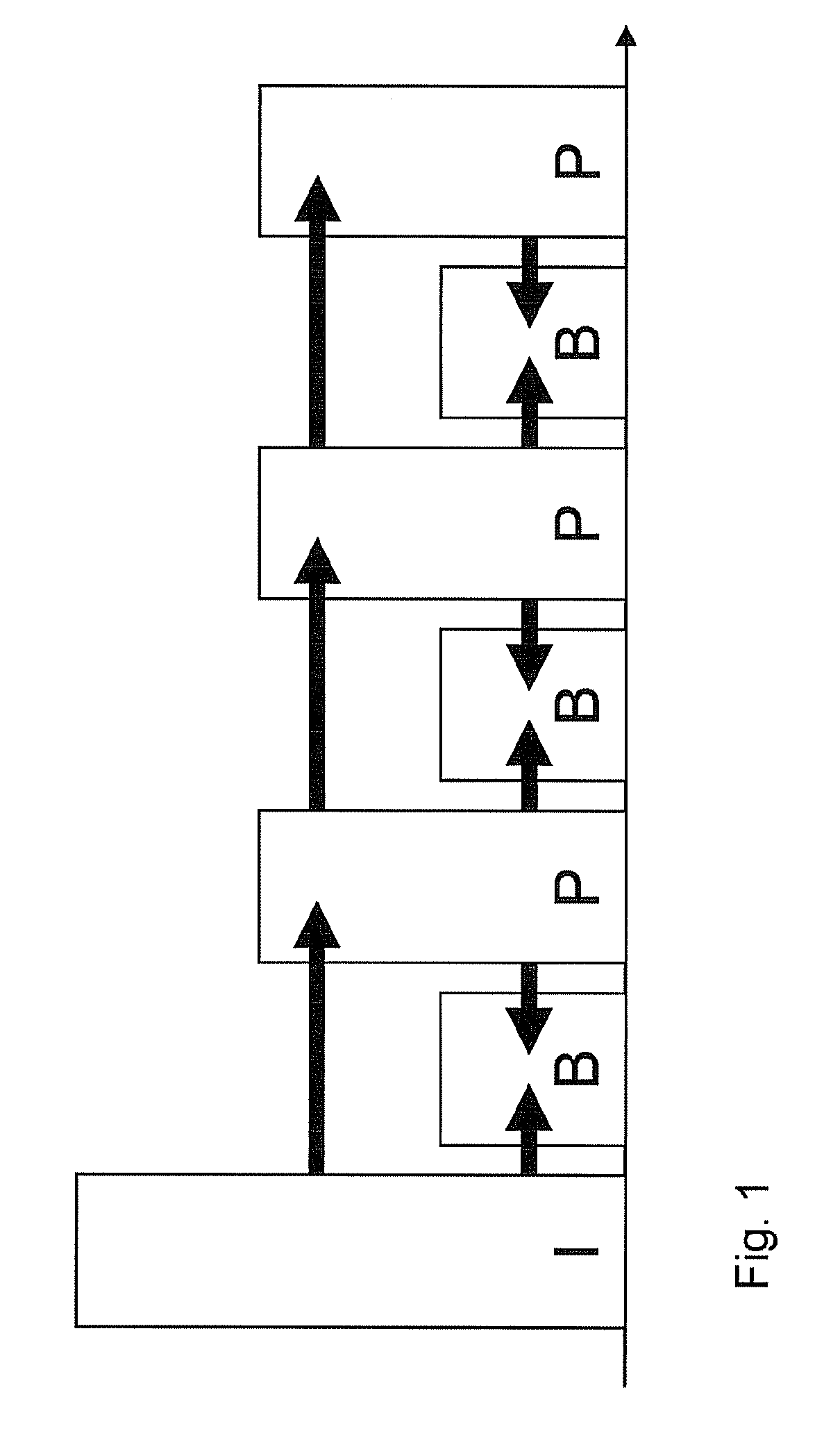
Figure 2 
Figure 3
Abstract
Description
BACKGROUND
[0001] a. Field of the Invention
[0002] The present invention relates to the problem of estimating the effect of packet transmission impairments, including packet loss, on the subjective quality of a video transmission where frames of data relating to the same video frame or field are permitted to span more than one packet.
[0003] The invention has particular application in a class of multimedia quality prediction models that predict the effect of packet transmission impairments on the perceived quality of a media stream.
[0004] In “VoIP Quality Assessment: Taking Account of the Edge-Device”, S R Broom, IEEE Trans on Audio, Speech and Language Processing, Vol 14, No. 6, November 2006, pp 1977-1983, Broom describes a model that predicts the effect of packet transmission impairments on the perceived, or subjective, quality of a voice over internet protocol (VoIP) call. The prediction is based on passive analysis of the packet stream carrying the voice data and can be performed at m...
Examples
Embodiment Construction
[0032]Referring now to FIG. 1, encoding using I-frames B-frames and P-frames is illustrated. The advantage of using P and B-frames is that they only encode the difference between the frame to be encoded and another frame, and can therefore be encoded using fewer bits than the equivalent I-frame. However, P and B-frames suffer from a problem called error-propagation whereby an error in one frame will also affect any frames that are based on it. Most recent video coding standards support I, P and B frames, including MPEG-2 part 2, MPEG-4 part 2, MPEG-4 Part 10 (H.264), H.263 and VC-1, with the more recent standards extending the concept of I, P and B encoding to slices of pictures in addition to whole frames.
[0033]The result of such video coding approaches is that successive encoded video frames can vary widely in their size in bytes and their sensitivity to errors. Moreover the bit-rates required to transport video images dictate that each video encoded frame must often be divided in...