
Polypropylene homopolymers with high heat deflection temperature, high stiffness and flowability
a technology of polypropylene and applied in the field of polypropylene homopolymers with high heat deflection temperature, high stiffness and flowability, can solve the problems of increasing the fraction of molecules having relatively short chains that is detrimental to impact strength, complex solution, and difficulty in providing polypropylene with high flowability and high stiffness at the same time. achieve good shrinkage value, high melt flow rate, and high stiffness
Patent Information
- Authority / Receiving Office
- US · United States
- Patent Type
- Patents(United States)
- Current Assignee / Owner
- Publication Date
- 2014-11-25
- Estimated Expiration
- Not applicable · inactive patent
Smart Images
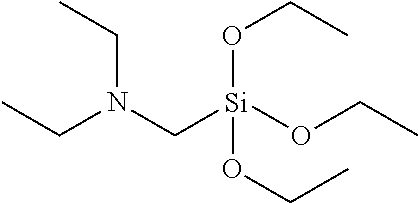
Figure 1 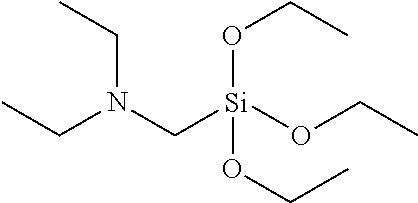
Figure 2 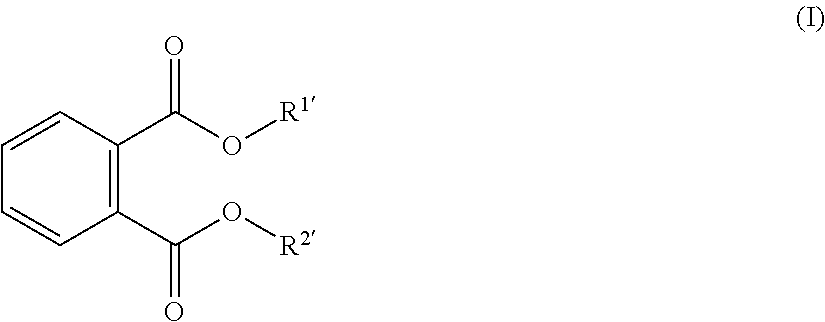
Figure 3
Abstract
Description
[0001] The present invention relates to polypropylene compositions with very high melt flow rate and a process for producing the same. The present invention is further concerned with materials comprising polypropylene compositions of very high melt flow rate and use of such very high melt flow rate polypropylene compositions.BACKGROUND
[0002] The need for polyproyplene homopolymers with excellent stiffness at high flowability is constantly increasing as down-gauging and light-weighing become more important with the need for saving energy resources. High flowability polypropylenes are typically used in moulding and particularly the automotive business where injection moulding is the preferred conversion-process. Especially for glass fibre applications high flow homopolymer with good mechanical properties and high thermal stability is required.
[0003] The production of ultra high MFR polypropylene homopolymers may be achieved by controlling the reaction conditions such that a fraction of m...
Examples
Embodiment Construction
[0025]It has been surprisingly found that a relatively high amount of above 40% of lamellas having a thickness within a range of 24.2 to 84.6 nm with respect to the whole lamella thickness range, as obtained in a SIST measurement is advantageous as to several aspects.
[0026]In a SIST measurement the melt enthalpy is recorded as function of temperature and evaluated through measuring the melt enthalpy of fractions melting within temperature intervals of 10° C. in the range from 50 to 200° C. The melting curve of the polypropylene crystallized this way is used for calculating the lamella thickness distribution according to the Thomson-Gibbs equation. Details are given in the experimental part.
[0027]An amount of above 40% with respect to lamella thickness within a range of 24.2 to 84.6 nm allows polypropylene compositions having an excellent balance of properties. In a first aspect, flowability such as reflected by melt flow rate, is very high. The significantly better flowability enabl...