
Volatile memory backup system including all-solid-state battery
a backup system and all-solid-state technology, applied in batteries, sustainable manufacturing/processing, instruments, etc., can solve the problems of low heat resistance, uninterruptible power systems (upss) or power generators such as diesel power generators, and the supercapacitor (even if small) is too large to be mounted in a memory module, etc., to achieve high energy density, large capacity, and high power density
Patent Information
- Authority / Receiving Office
- US · United States
- Patent Type
- Patents(United States)
- Current Assignee / Owner
- Publication Date
- 2016-08-30
Smart Images
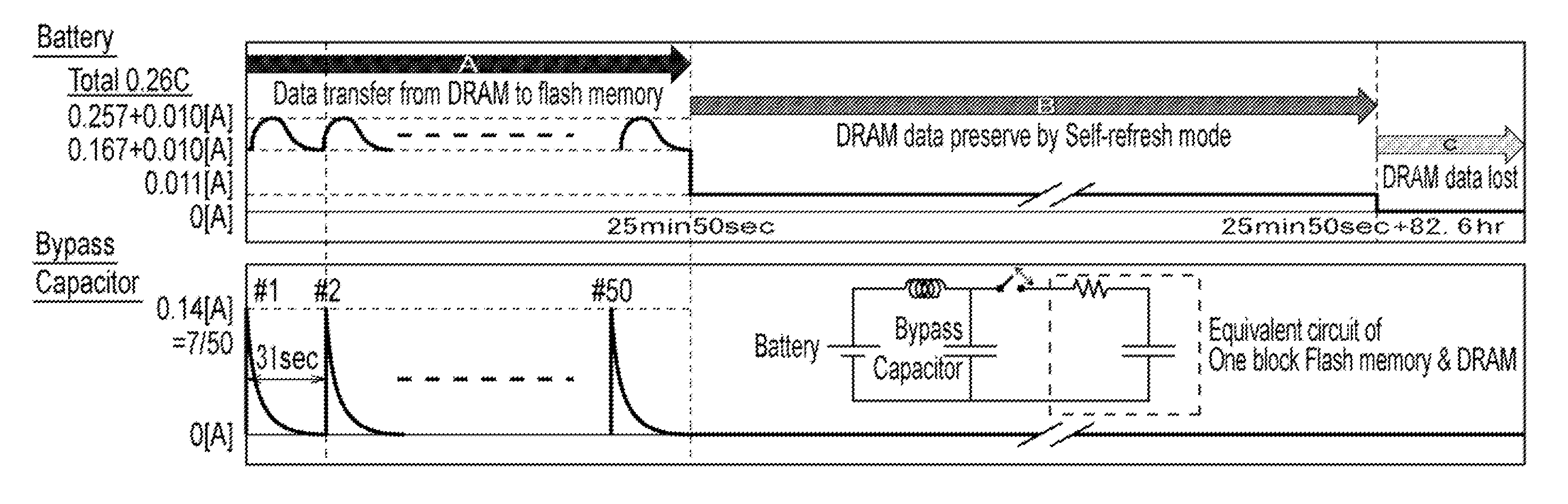
Figure 1 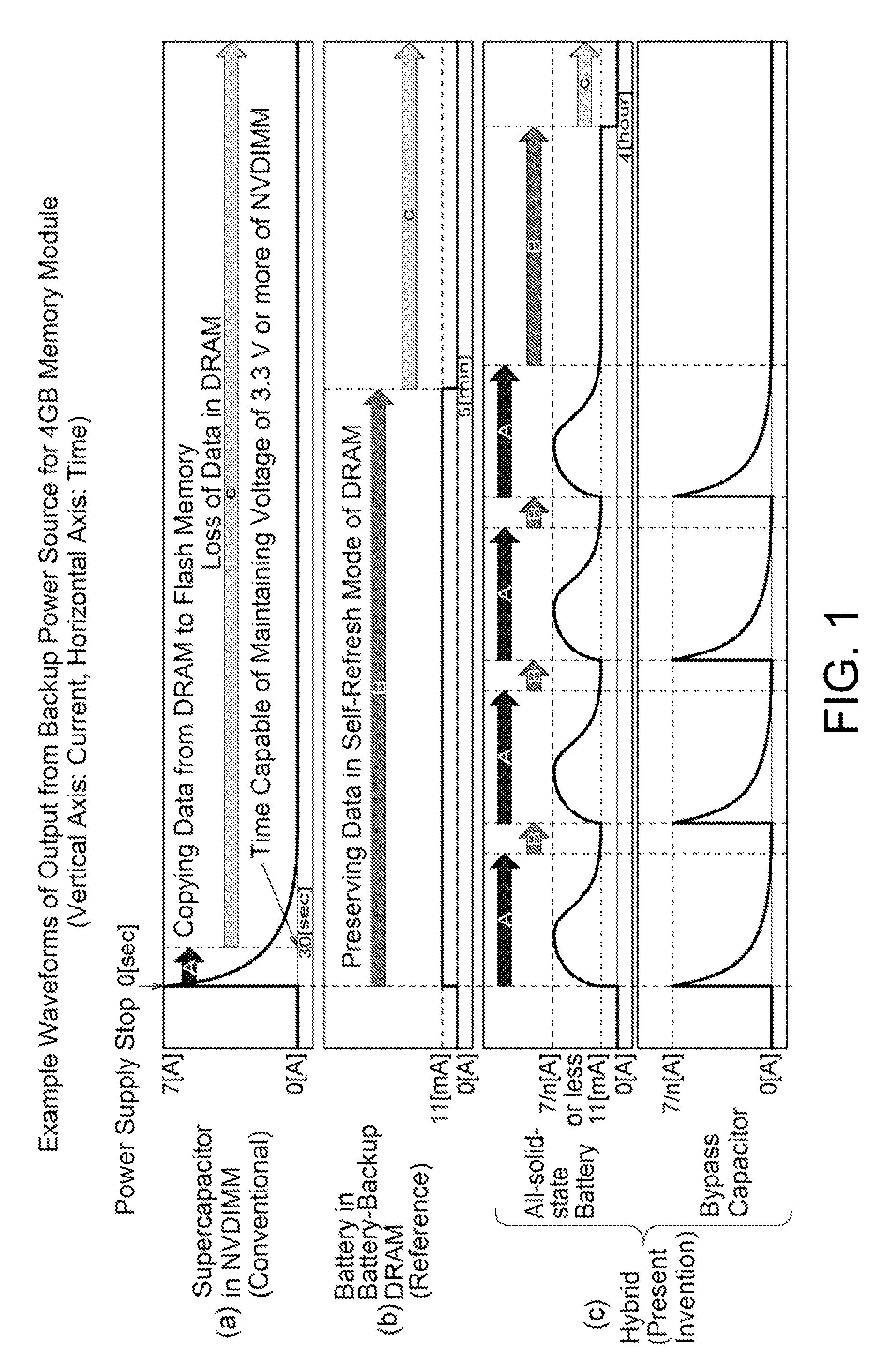
Figure 2 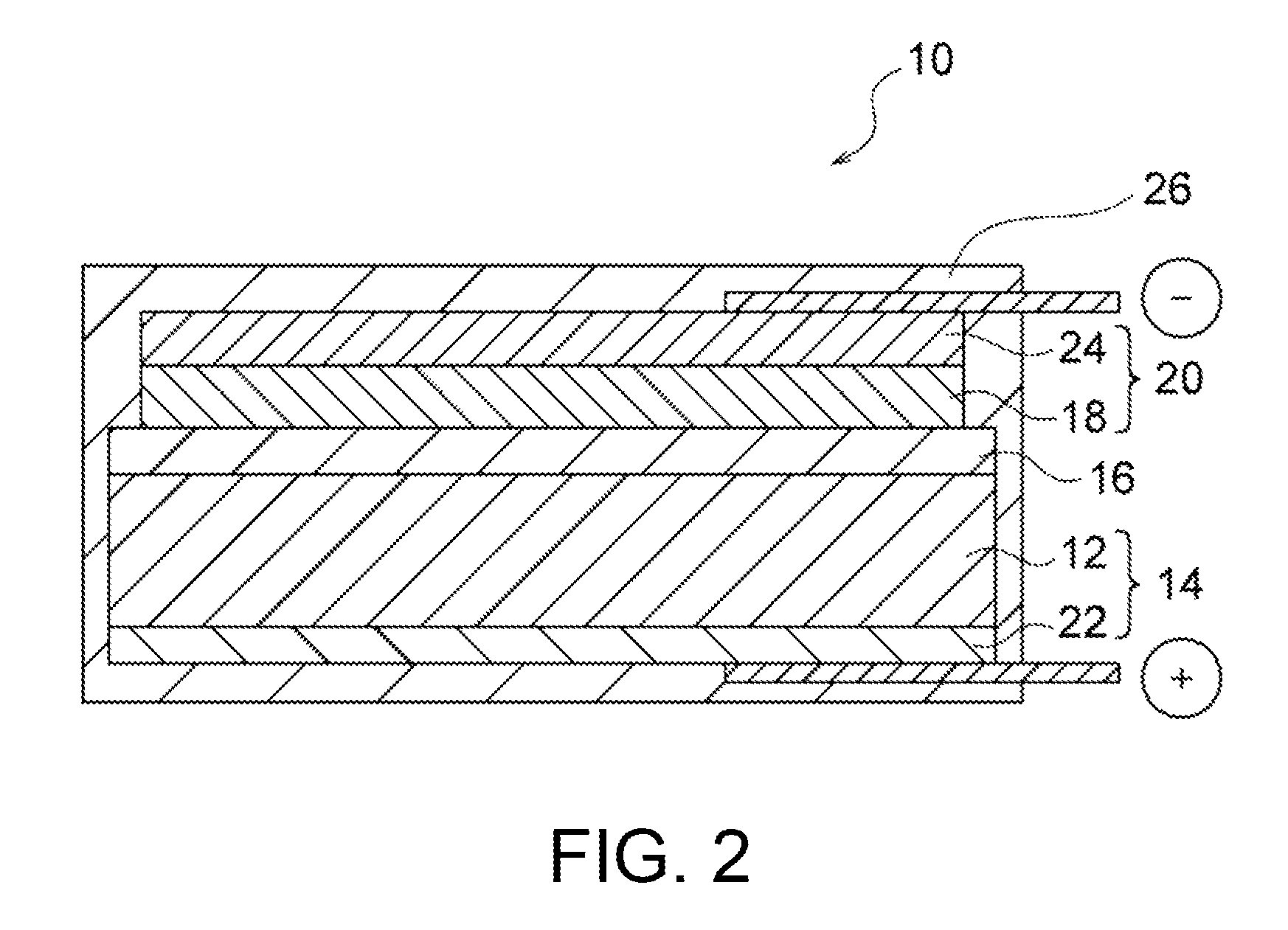
Figure 3
Abstract
Description
CROSS-REFERENCE TO RELATED APPLICATIONS
[0001] This application is a continuation application of PCT / JP2015 / 061028 filed Apr. 8, 2015, which claims priority to U.S. provisional application No. 61 / 989,591 filed May 7, 2014; U.S. provisional application No. 62 / 025,563 filed Jul. 17, 2014; U.S. provisional application No. 62 / 048,941 filed Sep. 11, 2014; and U.S. provisional application No. 62 / 081,688 filed Nov. 19, 2014, the entire contents all of which are incorporated herein by reference.BACKGROUND OF THE INVENTION
[0002] 1. Field of the Invention
[0003] The present invention relates to volatile memory backup systems including all-solid-state batteries.
[0004] 2. Description of the Related Art
[0005] Volatile memories, such as DRAMs, are used as main memories of computers and servers. Especially DRAMs, which provide significantly high processing speed, have recently been used widely in computers and servers. At the same time, volatile memories, such as DRAMs, have such characteristics as to lo...
Examples
examples
[0098]The present invention will now be described more in detail with reference to the following examples.
example a1
[0099]An all-solid-state battery 10 having the configuration in FIG. 2 was produced. A positive-electrode active material sheet was produced as a positive-electrode active material 12 that had a layered rock-salt structure, a composition Li(Ni1 / 3Co1 / 3Mn1 / 3)O2 (hereinafter referred to as NCM), and the (003) plane oriented in the direction from a positive electrode layer 14 toward a negative electrode layer 20. A positive-electrode active material sheet having a thickness of 30 μm was prepared. A solid electrolyte layer 16 was formed on the sheet positive-electrode active material 12. A ceramic material having a garnet-type crystal structure having a composition Li7La3Zr2O12 containing Al (hereinafter referred to as LLZ-Al) was used as a lithium-ion conductive material of the solid electrolyte layer 16. The solid electrolyte layer 16 was prepared to have a thickness of 10 μm. A negative-electrode active material 18 having a thickness of 10 μm was prepared with lithium metal. A positiv...
example a2
[0101]The unit cells produced in Example A1 were stacked in parallel to produce a battery having a capacity of 100 mAh. The energy density calculated as in Example Al was 650 Wh / L.