
Humanized light chain mice
a technology of light chain mice and mice, which is applied in the field of humanized light chain mice, can solve the problems of unsatisfactory anti-mouse antibodies, unsatisfactory anti-mouse antibodies, and mice with substantial problems with their immune systems, so as to improve fertility, restore fertility, and reduce the effect of fertility
Patent Information
- Authority / Receiving Office
- US · United States
- Patent Type
- Patents(United States)
- Current Assignee / Owner
- Publication Date
- 2017-04-18
Smart Images
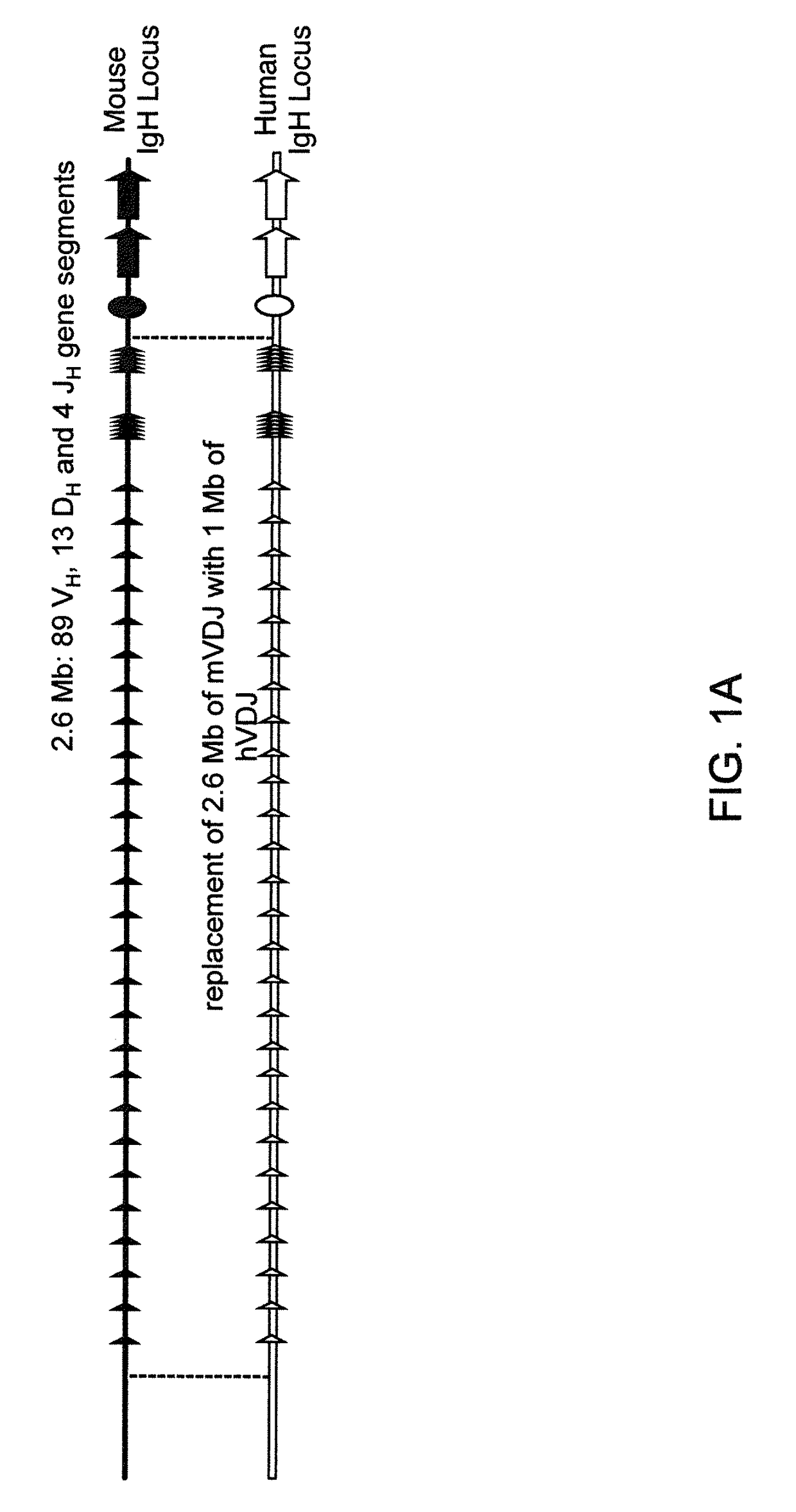
Figure 1 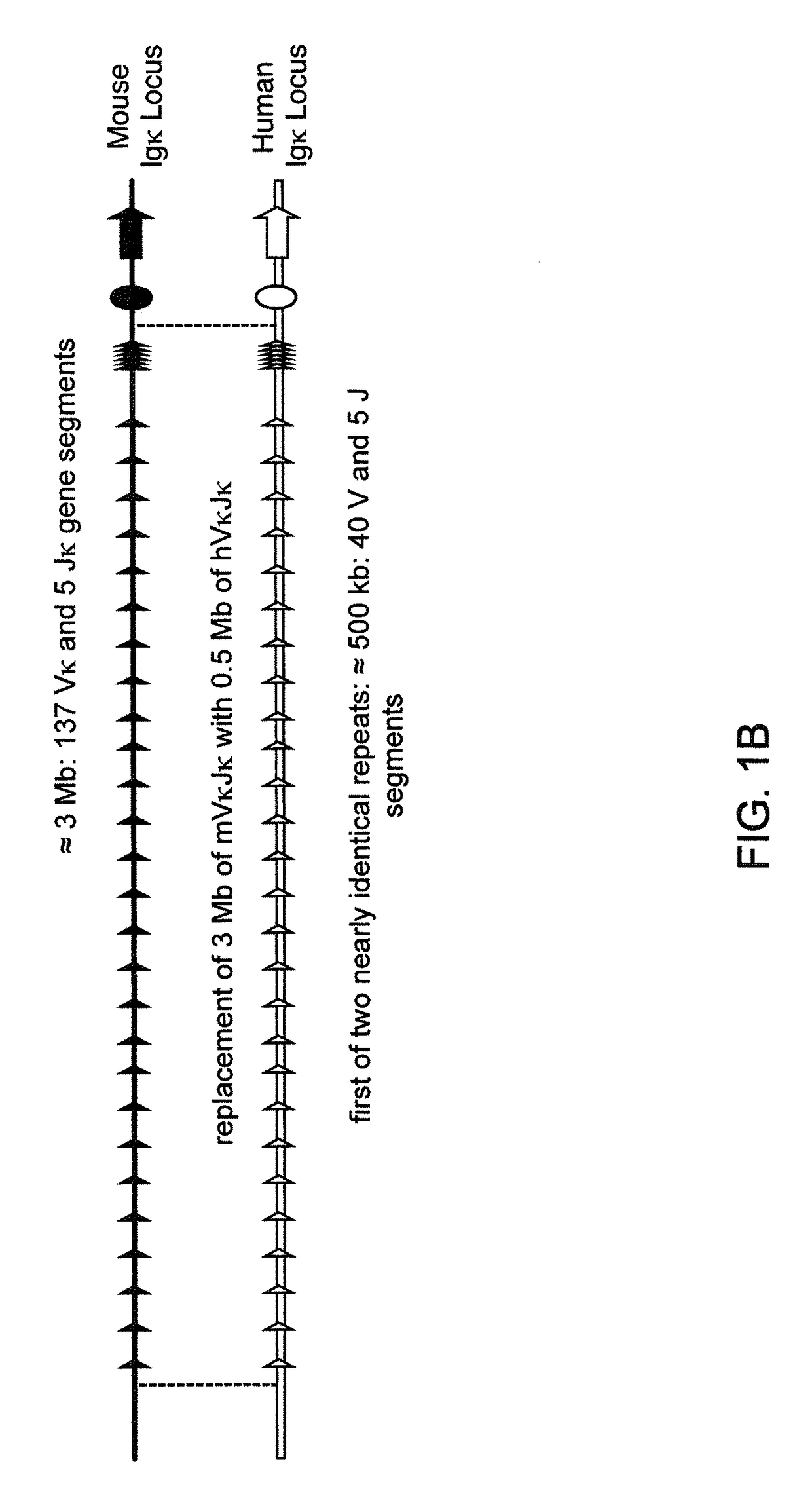
Figure 2 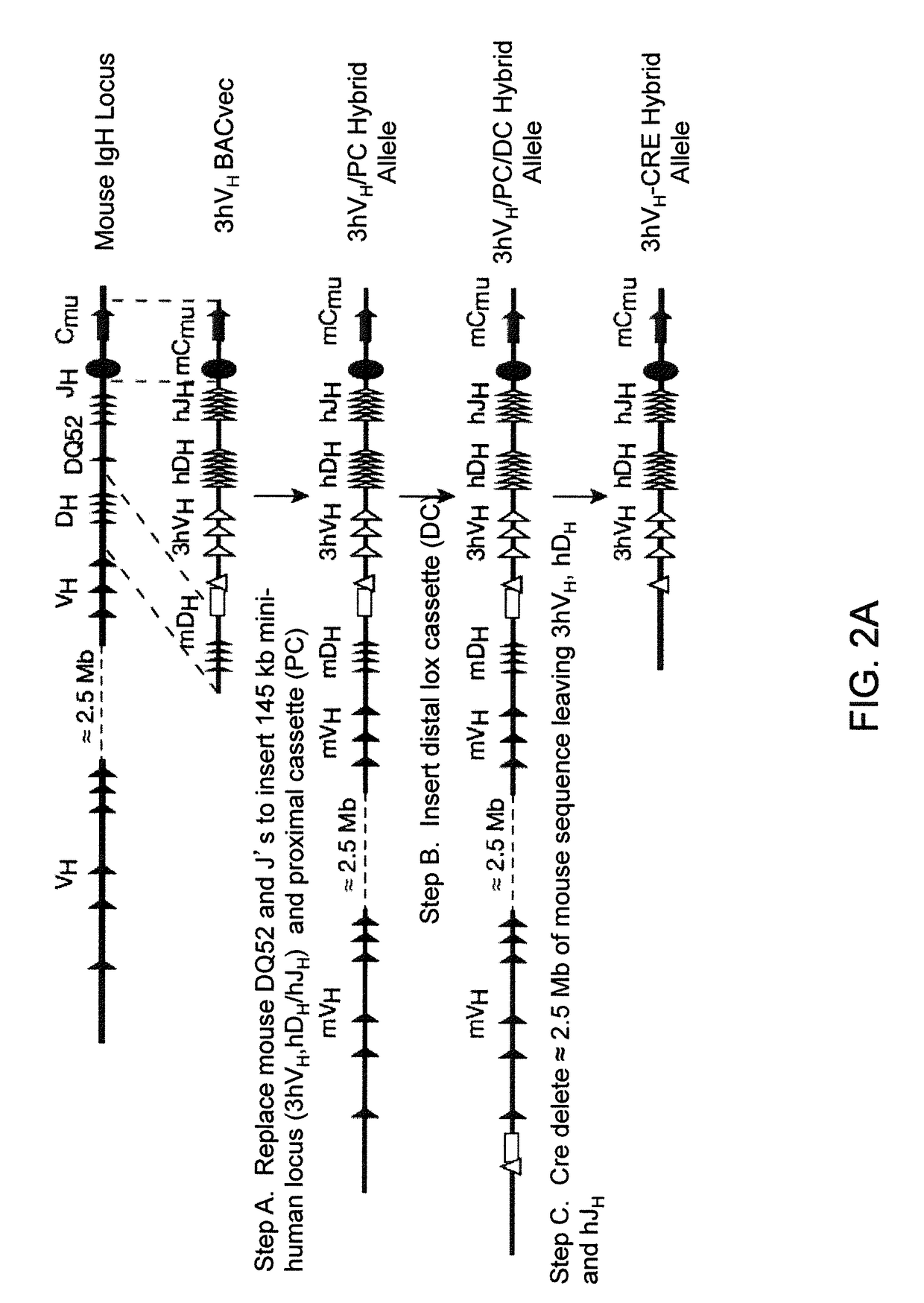
Figure 3
Abstract
Description
CROSS-REFERENCE TO RELATED APPLICATIONS
[0001] This application is a divisional of U.S. patent application Ser. No. 13 / 716,238, filed Dec. 17, 2012, which claims the benefit under 35 USC §119(e) of U.S. Provisional Application Ser. No. 61 / 578,097 filed Dec. 20, 2011, which applications are hereby incorporated by reference in their entirety.FIELD OF INVENTION
[0002] Genetically modified non-human fertile animals that express human immunoglobulin λ light chain variable sequences cognate with human heavy chain variable sequences. Genetically modified mice, cells, embryos, and tissues that comprise a nucleic acid sequence encoding an ADAM6a functional in a mouseADAM6 locus are described, wherein the mice, cells, embryos, and tissues comprise human immunoglobulin lambda light chain gene segments that are capable of rearranging to form a functional immunoglobulin light chain variable domain. Modifications include human and / or humanized immunoglobulin loci. Mice that comprise ADAM6 function ar...
Examples
example 1
Humanization of Mouse Immunoglobulin Genes
[0590]Human and mouse bacterial artificial chromsomes (BACs) were used to engineer 13 different BAC targeting vectors (BACvecs) for humanization of the mouse immunoglobulin heavy chain and κ light chain loci. Tables 1 and 2 set forth detailed descriptions of the steps performed for the construction of all BACvecs employed for the humanization of the mouse immunoglobulin heavy chain and κ light chain loci, respectively.
[0591]Identification of Human and Mouse BACs.
[0592]Mouse BACs that span the 5′ and 3′ ends of the immunoglobulin heavy chain and κ light chain loci were identified by hybridization of filters spotted with BAC library or by PCR screening mouse BAC library DNA pools. Filters were hybridized under standard conditions using probes that corresponded to the regions of interest. Library pools were screened by PCR using unique primer pairs that flank the targeted region of interest. Additional PCR using the same primers was performed t...
example 2
Generation of Fully Humanized Mice by Combination of Multiple Humanized Immunoglobulin Alleles
[0615]At several points, ES cells bearing a portion of the human immunoglobulin heavy chain or κ light chain variable repertoires as described in Example 1 were microinjected and the resulting mice bred to create multiple versions of VELOCIMMUNE® mice with progressively larger fractions of the human germline immunoglobulin repertoires (Table 5; FIGS. 5A and 5B). VELOCIMMUNE® 1 (V1) mice possess 18 human VH gene segments and all of the human DH and JH gene segments combined with 16 human Vκ gene segments and all the human Jκ gene segments. VELOCIMMUNE® 2 (V2) and VELOCIMMUNE® (V3) mice have increased variable repertoires bearing a total of 39 VH and 30 Vκ, and 80 VH and 40 Vκ, respectively. Since the genomic regions encoding the mouse VH, DH and JH gene segments, and Vκ and Jκ gene segments, have been completely replaced, antibodies produced by any version of VELOCIMMUNE® mice contain human ...
example 3
Lymphocyte Populations in Mice with Humanized Immunoglobulin Genes
[0618]Mature B cell populations in the three different versions of VELOCIMMUNE® mice were evaluated by flow cytometry.
[0619]Briefly, cell suspensions from bone marrow, spleen and thymus were made using standard methods. Cells were resuspended at 5×10⁵ cells / mL in BD Pharmingen FACS staining buffer, blocked with anti-mouse CD16 / 32 (BD Pharmingen), stained with the appropriate cocktail of antibodies and fixed with BD Cytofix™ all according to the manufacturer's instructions. Final cell pellets were resuspended in 0.5 mL staining buffer and analyzed using a BD FACSCALIBUR™ and BD CELLQUEST PRO™ software. All antibodies (BD Pharmingen) were prepared in a mass dilution / cocktail and added to a final concentration of 0.5 mg / 105 cells. Antibody cocktails for bone marrow (A-D) staining were as follows: A: anti-mouse IgMb-FITC, anti-mouse IgMa-PE, anti-mouse CD45R(B220)-APC; B: anti-mouse CD43(S7)-PE, anti-mouse CD45R(B220)-APC...