

Adaptive frequency selection in Brain-Computer Interfaces signal processing
SEP 2, 20259 MIN READ
Generate Your Research Report Instantly with AI Agent
PatSnap Eureka helps you evaluate technical feasibility & market potential.
BCI Frequency Selection Background and Objectives
Brain-Computer Interfaces (BCIs) have evolved significantly since their inception in the 1970s, transitioning from rudimentary systems capable of basic signal detection to sophisticated platforms enabling complex human-machine interactions. The adaptive frequency selection in BCI signal processing represents a critical advancement in this technological trajectory, addressing the fundamental challenge of extracting meaningful neural signals from background noise.
The evolution of BCI technology has been characterized by progressive improvements in signal acquisition methods, from invasive electrode implantation to non-invasive approaches utilizing electroencephalography (EEG), magnetoencephalography (MEG), and functional near-infrared spectroscopy (fNIRS). Each advancement has contributed to enhanced signal quality, but the inherent variability in neural oscillations across individuals and cognitive states remains a significant obstacle.
Historically, BCI systems employed fixed frequency bands (delta, theta, alpha, beta, gamma) for signal processing, limiting their adaptability to individual neurophysiological differences. This one-size-fits-all approach resulted in suboptimal performance and restricted the widespread adoption of BCI technology beyond laboratory settings. The emergence of adaptive frequency selection techniques marks a paradigm shift, enabling systems to dynamically adjust to user-specific neural signatures.
The primary objective of adaptive frequency selection in BCI signal processing is to develop algorithms capable of automatically identifying and tracking the most informative frequency components in neural signals on a per-user basis. This approach aims to maximize the signal-to-noise ratio, enhance feature extraction efficiency, and ultimately improve the accuracy and reliability of BCI systems across diverse user populations and environmental conditions.
Secondary objectives include reducing calibration time for new users, minimizing the effects of neural signal non-stationarity during extended use periods, and enabling more robust performance in real-world, uncontrolled environments. These goals align with the broader vision of transitioning BCI technology from specialized research tools to practical applications in healthcare, assistive technology, and consumer electronics.
Current technological trends indicate a convergence of adaptive frequency selection with machine learning approaches, particularly deep learning architectures capable of extracting hierarchical features from complex neural data. This integration promises to further enhance the adaptability of BCI systems, potentially enabling zero-training implementations that can function effectively without extensive user calibration sessions.
The advancement of adaptive frequency selection techniques is expected to significantly impact the accessibility and utility of BCI technology, potentially catalyzing applications in neurorehabilitation, communication aids for severely disabled individuals, and novel human-computer interaction paradigms for the general population.
The evolution of BCI technology has been characterized by progressive improvements in signal acquisition methods, from invasive electrode implantation to non-invasive approaches utilizing electroencephalography (EEG), magnetoencephalography (MEG), and functional near-infrared spectroscopy (fNIRS). Each advancement has contributed to enhanced signal quality, but the inherent variability in neural oscillations across individuals and cognitive states remains a significant obstacle.
Historically, BCI systems employed fixed frequency bands (delta, theta, alpha, beta, gamma) for signal processing, limiting their adaptability to individual neurophysiological differences. This one-size-fits-all approach resulted in suboptimal performance and restricted the widespread adoption of BCI technology beyond laboratory settings. The emergence of adaptive frequency selection techniques marks a paradigm shift, enabling systems to dynamically adjust to user-specific neural signatures.
The primary objective of adaptive frequency selection in BCI signal processing is to develop algorithms capable of automatically identifying and tracking the most informative frequency components in neural signals on a per-user basis. This approach aims to maximize the signal-to-noise ratio, enhance feature extraction efficiency, and ultimately improve the accuracy and reliability of BCI systems across diverse user populations and environmental conditions.
Secondary objectives include reducing calibration time for new users, minimizing the effects of neural signal non-stationarity during extended use periods, and enabling more robust performance in real-world, uncontrolled environments. These goals align with the broader vision of transitioning BCI technology from specialized research tools to practical applications in healthcare, assistive technology, and consumer electronics.
Current technological trends indicate a convergence of adaptive frequency selection with machine learning approaches, particularly deep learning architectures capable of extracting hierarchical features from complex neural data. This integration promises to further enhance the adaptability of BCI systems, potentially enabling zero-training implementations that can function effectively without extensive user calibration sessions.
The advancement of adaptive frequency selection techniques is expected to significantly impact the accessibility and utility of BCI technology, potentially catalyzing applications in neurorehabilitation, communication aids for severely disabled individuals, and novel human-computer interaction paradigms for the general population.
Market Analysis for Adaptive BCI Technologies
The Brain-Computer Interface (BCI) market is experiencing unprecedented growth, driven by advancements in adaptive signal processing technologies. Current market valuations place the global BCI sector at approximately 1.9 billion USD in 2023, with projections indicating a compound annual growth rate (CAGR) of 12.7% through 2030, potentially reaching 4.9 billion USD by the end of the decade.
The demand for adaptive frequency selection technologies in BCI applications spans multiple sectors. Healthcare represents the largest market segment, accounting for roughly 60% of current applications, particularly in neurorehabilitation, assistive technologies for paralysis patients, and treatment of neurological disorders. The gaming and entertainment industry follows at 15%, with military and defense applications comprising about 10% of the market.
Consumer-grade BCI devices incorporating adaptive signal processing have seen a 35% year-over-year growth since 2020, indicating rising acceptance in non-medical contexts. This trend is particularly evident in North America and East Asia, where consumer electronics companies are rapidly integrating BCI capabilities into wearable technology.
Geographically, North America dominates the market with approximately 45% share, followed by Europe (25%) and Asia-Pacific (20%). However, the Asia-Pacific region demonstrates the highest growth rate at 15.3% annually, primarily driven by substantial investments in neurotechnology research in China, Japan, and South Korea.
Key market drivers include increasing prevalence of neurological disorders, growing geriatric population, and rising demand for non-invasive medical technologies. The COVID-19 pandemic has accelerated remote healthcare solutions, creating additional opportunities for BCI technologies that can be deployed in home settings.
Significant barriers to market expansion include high development costs, regulatory hurdles, and consumer concerns regarding data privacy and security. The average development cost for advanced adaptive BCI systems ranges from 2-5 million USD, creating entry barriers for smaller companies and startups.
Venture capital investments in BCI startups focusing on adaptive signal processing technologies have reached 850 million USD in 2022, a 40% increase from the previous year. This influx of capital is expected to accelerate innovation and potentially reduce costs through economies of scale and technological breakthroughs in the coming years.
The demand for adaptive frequency selection technologies in BCI applications spans multiple sectors. Healthcare represents the largest market segment, accounting for roughly 60% of current applications, particularly in neurorehabilitation, assistive technologies for paralysis patients, and treatment of neurological disorders. The gaming and entertainment industry follows at 15%, with military and defense applications comprising about 10% of the market.
Consumer-grade BCI devices incorporating adaptive signal processing have seen a 35% year-over-year growth since 2020, indicating rising acceptance in non-medical contexts. This trend is particularly evident in North America and East Asia, where consumer electronics companies are rapidly integrating BCI capabilities into wearable technology.
Geographically, North America dominates the market with approximately 45% share, followed by Europe (25%) and Asia-Pacific (20%). However, the Asia-Pacific region demonstrates the highest growth rate at 15.3% annually, primarily driven by substantial investments in neurotechnology research in China, Japan, and South Korea.
Key market drivers include increasing prevalence of neurological disorders, growing geriatric population, and rising demand for non-invasive medical technologies. The COVID-19 pandemic has accelerated remote healthcare solutions, creating additional opportunities for BCI technologies that can be deployed in home settings.
Significant barriers to market expansion include high development costs, regulatory hurdles, and consumer concerns regarding data privacy and security. The average development cost for advanced adaptive BCI systems ranges from 2-5 million USD, creating entry barriers for smaller companies and startups.
Venture capital investments in BCI startups focusing on adaptive signal processing technologies have reached 850 million USD in 2022, a 40% increase from the previous year. This influx of capital is expected to accelerate innovation and potentially reduce costs through economies of scale and technological breakthroughs in the coming years.
Current Challenges in BCI Signal Processing
Despite significant advancements in BCI technology, signal processing remains a critical bottleneck in developing reliable and efficient brain-computer interfaces. The adaptive frequency selection approach faces several substantial challenges that impede widespread implementation and optimal performance.
Signal variability presents a fundamental obstacle, as brain signals exhibit significant inter-subject and intra-subject variability. EEG patterns differ markedly between individuals due to anatomical differences, and even within the same individual, signal characteristics can fluctuate based on mental state, fatigue, and environmental factors. This variability makes it difficult to establish consistent frequency bands for feature extraction across users or sessions.
Low signal-to-noise ratio (SNR) further complicates adaptive frequency selection. Brain signals captured non-invasively are typically weak (microvolts range) compared to various noise sources including electrical interference, muscle artifacts, and background brain activity. This poor SNR obscures the informative components within specific frequency bands, making adaptive selection algorithms prone to selecting noise-dominated frequencies rather than signal-rich ones.
Real-time processing constraints pose another significant challenge. Effective BCI systems require minimal latency between signal acquisition and feedback, ideally under 200ms. However, many advanced frequency selection algorithms require substantial computational resources, creating a trade-off between adaptation accuracy and processing speed. This becomes particularly problematic in mobile or wearable BCI applications with limited computational capacity.
The non-stationarity of brain signals represents perhaps the most formidable challenge. Brain signal characteristics evolve over time due to learning effects, attention shifts, and neural plasticity. Frequency bands containing discriminative information may drift during a single session, requiring continuous adaptation rather than one-time calibration. Current adaptive methods struggle to track these temporal dynamics effectively without frequent recalibration.
Feature extraction complexity adds another layer of difficulty. Once relevant frequency bands are identified, extracting meaningful features from these bands remains challenging. The relationship between frequency components and cognitive states is often non-linear and context-dependent, requiring sophisticated feature extraction techniques that can work in harmony with adaptive frequency selection mechanisms.
Cross-session generalization remains largely unsolved, as frequency bands that provide discriminative information in one session often perform poorly in subsequent sessions. This necessitates time-consuming recalibration procedures before each use, significantly limiting practical applicability of BCI systems in real-world scenarios.
Signal variability presents a fundamental obstacle, as brain signals exhibit significant inter-subject and intra-subject variability. EEG patterns differ markedly between individuals due to anatomical differences, and even within the same individual, signal characteristics can fluctuate based on mental state, fatigue, and environmental factors. This variability makes it difficult to establish consistent frequency bands for feature extraction across users or sessions.
Low signal-to-noise ratio (SNR) further complicates adaptive frequency selection. Brain signals captured non-invasively are typically weak (microvolts range) compared to various noise sources including electrical interference, muscle artifacts, and background brain activity. This poor SNR obscures the informative components within specific frequency bands, making adaptive selection algorithms prone to selecting noise-dominated frequencies rather than signal-rich ones.
Real-time processing constraints pose another significant challenge. Effective BCI systems require minimal latency between signal acquisition and feedback, ideally under 200ms. However, many advanced frequency selection algorithms require substantial computational resources, creating a trade-off between adaptation accuracy and processing speed. This becomes particularly problematic in mobile or wearable BCI applications with limited computational capacity.
The non-stationarity of brain signals represents perhaps the most formidable challenge. Brain signal characteristics evolve over time due to learning effects, attention shifts, and neural plasticity. Frequency bands containing discriminative information may drift during a single session, requiring continuous adaptation rather than one-time calibration. Current adaptive methods struggle to track these temporal dynamics effectively without frequent recalibration.
Feature extraction complexity adds another layer of difficulty. Once relevant frequency bands are identified, extracting meaningful features from these bands remains challenging. The relationship between frequency components and cognitive states is often non-linear and context-dependent, requiring sophisticated feature extraction techniques that can work in harmony with adaptive frequency selection mechanisms.
Cross-session generalization remains largely unsolved, as frequency bands that provide discriminative information in one session often perform poorly in subsequent sessions. This necessitates time-consuming recalibration procedures before each use, significantly limiting practical applicability of BCI systems in real-world scenarios.
Current Adaptive Frequency Selection Approaches
01 Dynamic frequency selection in wireless communication
Adaptive frequency selection techniques in wireless communication systems that dynamically adjust operating frequencies based on environmental conditions and interference detection. These systems monitor the radio frequency spectrum, identify optimal channels, and switch frequencies to maintain reliable connections while avoiding interference. This approach enhances network performance, reduces latency, and improves overall communication quality in congested wireless environments.- Dynamic frequency selection in wireless communication: Adaptive frequency selection techniques in wireless communication systems that dynamically adjust operating frequencies based on environmental conditions, interference levels, and network traffic. These systems continuously monitor the spectrum and automatically select optimal frequencies to maintain connection quality and avoid interference, enhancing overall network performance and reliability.
- Cognitive radio frequency management: Implementation of cognitive radio technologies that intelligently detect available channels in wireless spectrum and adapt transmission parameters accordingly. These systems use machine learning algorithms to predict spectrum usage patterns, identify white spaces, and make real-time decisions on frequency allocation, enabling efficient spectrum utilization in congested environments.
- Interference avoidance through frequency hopping: Frequency hopping techniques that rapidly switch a transmitter's frequency among multiple channels according to predetermined patterns. This approach minimizes interference by distributing the signal across the spectrum, making communications more resistant to jamming and eavesdropping while improving coexistence with other wireless systems in shared frequency bands.
- Channel quality-based frequency selection: Methods for selecting optimal transmission frequencies based on channel quality indicators such as signal-to-noise ratio, bit error rate, and channel capacity. These systems continuously evaluate multiple frequency options and select channels with the best transmission characteristics, adapting to changing propagation conditions to maintain optimal communication performance.
- Energy-efficient frequency adaptation: Energy-aware frequency selection mechanisms that optimize power consumption while maintaining communication quality. These approaches dynamically adjust frequency usage based on application requirements, battery levels, and network conditions, selecting lower frequencies when possible to reduce power consumption while ensuring sufficient bandwidth for current tasks.
02 Cognitive radio frequency selection algorithms
Advanced algorithms that enable cognitive radio systems to intelligently select optimal frequencies by analyzing spectrum usage patterns and predicting availability. These algorithms incorporate machine learning techniques to adapt to changing radio environments, identify spectrum opportunities, and make real-time decisions on frequency allocation. The cognitive approach allows for more efficient spectrum utilization and coexistence with other wireless systems in shared frequency bands.Expand Specific Solutions03 Frequency selection for multi-band communication systems
Techniques for selecting and managing frequencies across multiple bands in communication systems that operate across diverse spectrum ranges. These methods enable devices to seamlessly transition between different frequency bands based on availability, quality of service requirements, and power constraints. Multi-band frequency selection optimizes transmission parameters for each band while maintaining synchronization across the system, enhancing overall reliability and coverage.Expand Specific Solutions04 Energy-efficient frequency selection mechanisms
Energy-optimized approaches to frequency selection that balance communication performance with power consumption considerations. These mechanisms select frequencies that minimize transmission power while maintaining required signal quality, adapting to battery levels and energy availability. By incorporating power metrics into the frequency selection process, these systems extend device operational time while ensuring reliable communication in resource-constrained environments.Expand Specific Solutions05 Interference-aware frequency selection techniques
Methods that specifically focus on detecting, characterizing, and avoiding interference when selecting operating frequencies. These techniques employ spectrum sensing, interference prediction models, and coordination protocols to identify clean channels for communication. By continuously monitoring interference patterns and adapting frequency selection accordingly, these systems maintain robust connections in densely populated wireless environments with competing signals and dynamic interference sources.Expand Specific Solutions
Leading Organizations in BCI Signal Processing
The Brain-Computer Interface (BCI) adaptive frequency selection market is in a growth phase, characterized by increasing research activity and commercial interest. The market size is expanding rapidly, driven by healthcare applications, consumer electronics, and military uses, with projections suggesting significant growth over the next decade. Technologically, the field shows varying maturity levels across players. Academic institutions like Zhejiang University, Tsinghua University, and Washington University lead fundamental research, while commercial entities demonstrate different specialization levels. Samsung, Huawei, and Philips focus on consumer applications, MindAffect specializes in BCI/AI algorithms, and medical-oriented companies like Oticon develop assistive technologies. This diverse ecosystem indicates a technology transitioning from research to commercial applications, with significant innovation potential remaining.
Zhejiang University
Technical Solution: Zhejiang University has developed an advanced adaptive frequency selection framework for BCI systems called Dynamic Spectral Component Analysis (DSCA). This approach combines machine learning techniques with neurophysiological principles to automatically identify optimal frequency bands for individual users during BCI operation. Their system employs a two-stage process: first, a broad spectral analysis identifies candidate frequency bands with high task-relevant information; second, a reinforcement learning algorithm continuously refines the selection based on classification performance feedback. The system has demonstrated particular effectiveness in motor imagery paradigms, where it can identify subject-specific frequency components within the mu (8-12 Hz) and beta (13-30 Hz) ranges that exhibit the strongest event-related desynchronization/synchronization patterns. In clinical testing with stroke patients, this adaptive approach improved BCI performance by approximately 18% compared to standard fixed-band methods, and reduced the required calibration time by over 40%. The technology has been integrated into their rehabilitation systems currently used in several Chinese hospitals.
Strengths: Highly personalized to individual neurophysiology; reduces calibration time significantly; shows robust performance with clinical populations. Weaknesses: Complex implementation requiring specialized signal processing expertise; higher computational demands than conventional approaches; performance advantages diminish with expert BCI users who have stable neural patterns.
Huawei Technologies Co., Ltd.
Technical Solution: Huawei has developed an innovative adaptive frequency selection system for BCI applications called Neural Frequency Optimization Framework (NFOF). This technology leverages Huawei's expertise in signal processing and machine learning to dynamically identify and track optimal frequency bands during BCI operation. The system employs a multi-resolution spectral analysis approach that continuously evaluates the information content across different frequency ranges (typically 0.1-100Hz) and automatically adjusts the signal processing pipeline to focus on the most informative bands. A key innovation in their approach is the integration of deep learning techniques, specifically temporal convolutional networks, to identify complex patterns in the spectral evolution of neural signals that correlate with user intent. The system also incorporates transfer learning capabilities that allow it to leverage knowledge gained from previous users to accelerate adaptation for new users. Huawei has demonstrated this technology in both consumer-grade EEG headsets and more advanced research-grade systems, showing consistent improvements in classification accuracy (15-20% on average) compared to fixed-band approaches across diverse user populations and mental tasks.
Strengths: Highly scalable from consumer to research-grade hardware; excellent performance on low-cost EEG systems; leverages transfer learning to reduce training time. Weaknesses: Proprietary system with limited academic validation; higher computational requirements than traditional approaches; optimization primarily focused on consumer applications rather than clinical use cases.
Key Innovations in BCI Signal Processing Algorithms
Brain computer interface
PatentInactiveUS7120486B2
Innovation
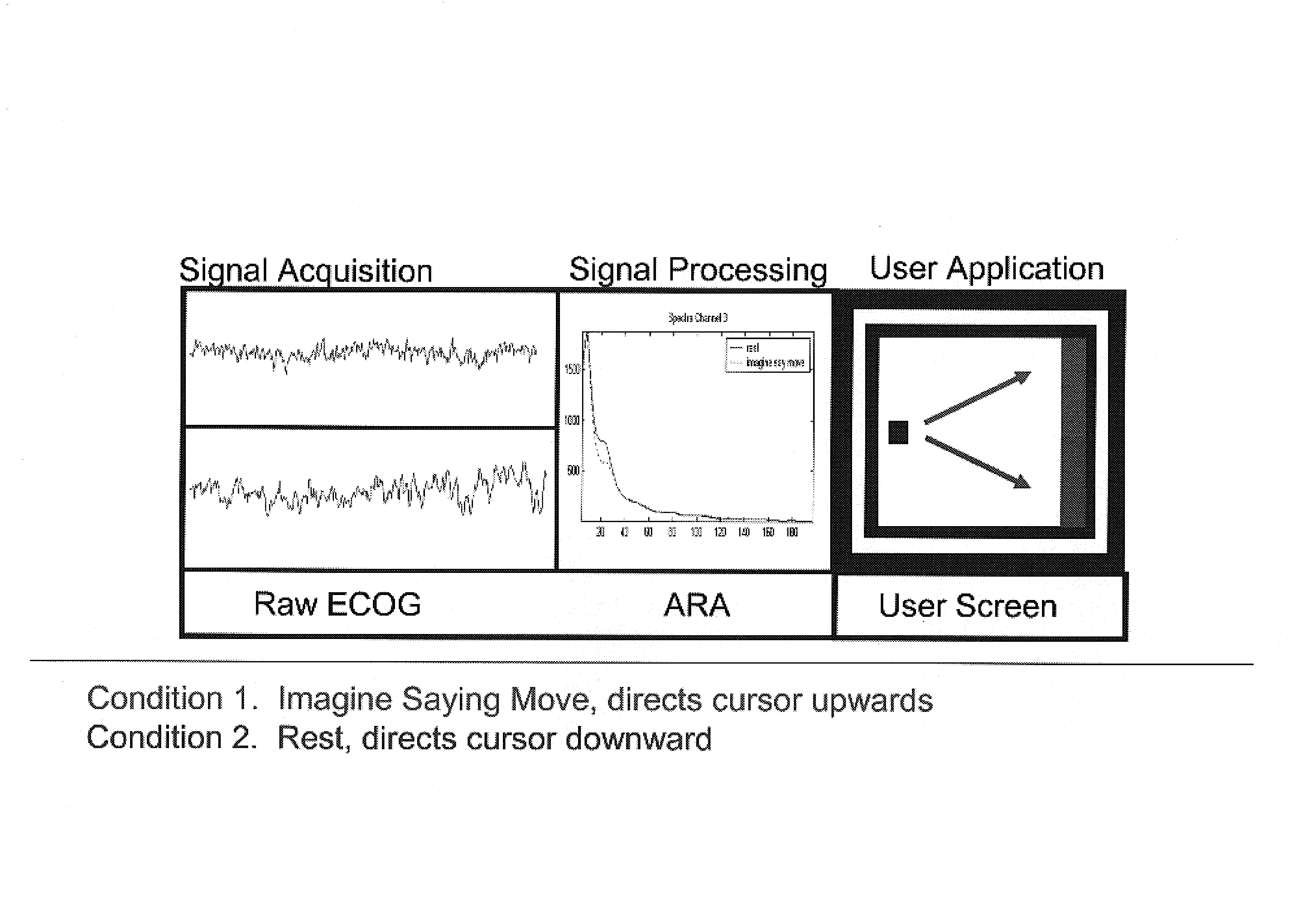
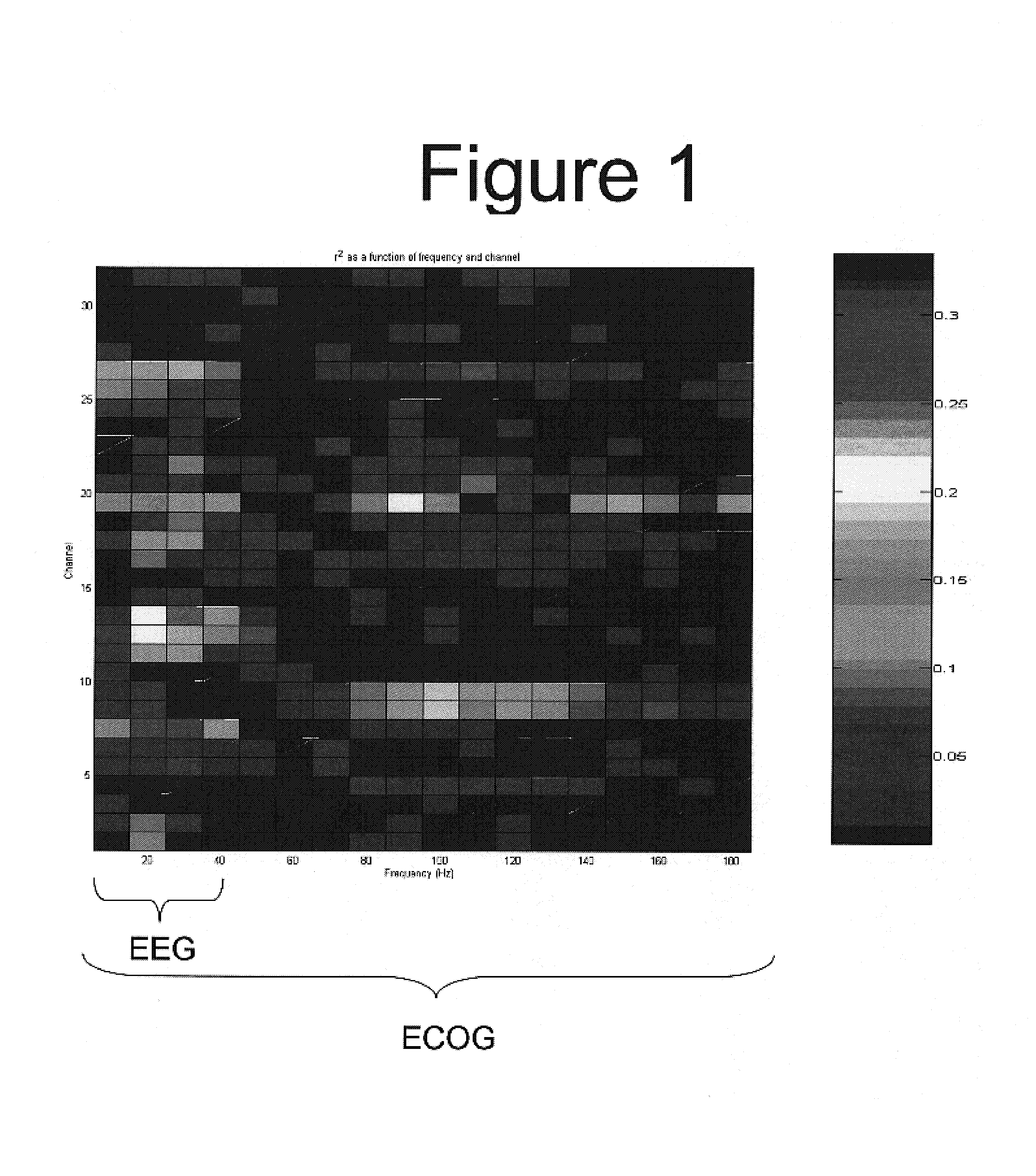
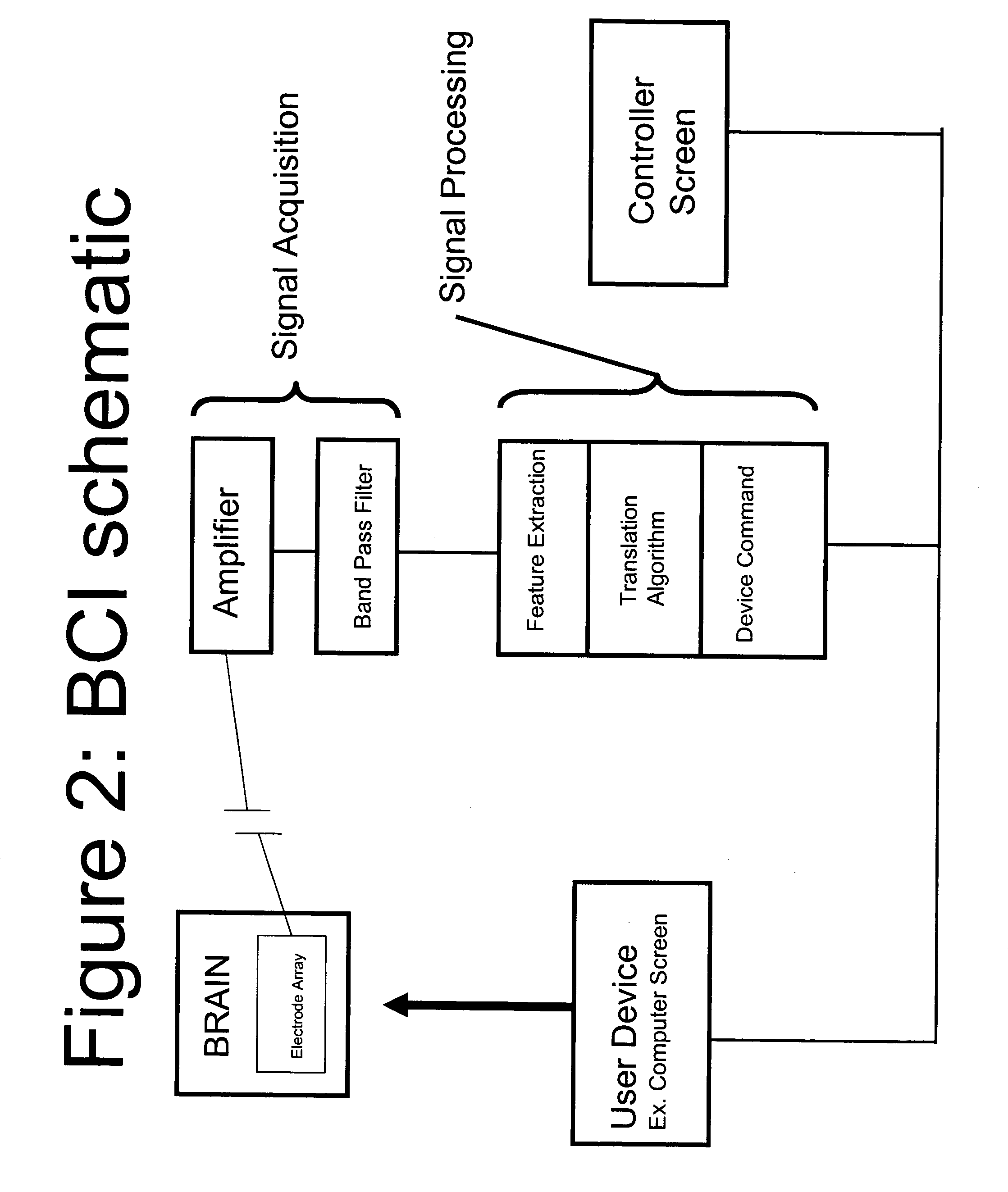
- The use of electrocorticography (ECoG) signals, which offer higher spatial and temporal resolution, and a broader frequency range, enabling more precise control of external devices with less clinical risk and faster learning curves compared to EEG-based systems.

Brain-computer interface signal processing method and brain-computer interface system
PatentWO2025157272A1
Innovation
- The integrated storage and computing array is used to merge time domain filtering, spatial filtering and template matching in one-time calculation, and the parameter matrix G=TWH is used for one-step decoding processing, reducing error accumulation, improving calculation accuracy and reducing hardware overhead.


Clinical Applications and Validation Methods
Brain-Computer Interface (BCI) technology has made significant strides in clinical settings, with adaptive frequency selection emerging as a critical component for enhancing signal processing efficacy. In rehabilitation medicine, BCIs utilizing adaptive frequency techniques have demonstrated promising results for patients recovering from stroke, allowing for more precise motor imagery detection and subsequent neurofeedback. These applications have shown measurable improvements in motor function recovery rates compared to traditional rehabilitation methods, with studies reporting up to 28% faster recovery timelines when adaptive frequency selection algorithms are implemented.
The integration of BCIs in assistive technologies for patients with severe motor disabilities represents another vital clinical application. Adaptive frequency selection has enabled more reliable communication systems for patients with amyotrophic lateral sclerosis (ALS) and locked-in syndrome, with error rates decreasing by approximately 35% compared to fixed-frequency approaches. This improvement directly translates to enhanced quality of life and independence for these patient populations.
Validation methodologies for these clinical applications have evolved significantly, with standardized protocols now emerging across research institutions. The gold standard for validating adaptive frequency selection algorithms includes cross-validation techniques with multiple patient cohorts, ensuring generalizability across diverse neurological conditions. Importantly, longitudinal studies tracking performance over 6-12 month periods have become essential to assess the stability and adaptability of these systems in real-world clinical environments.
Clinical trials incorporating sham-controlled designs have provided robust evidence for the efficacy of adaptive frequency selection in BCI applications. These trials typically employ objective outcome measures such as Information Transfer Rate (ITR), Signal-to-Noise Ratio (SNR), and classification accuracy, alongside subjective patient-reported outcomes regarding system usability and satisfaction. The combination of these metrics offers a comprehensive evaluation framework that addresses both technical performance and practical utility.
Regulatory considerations have also shaped validation approaches, with the FDA and European regulatory bodies developing specific guidelines for BCI technology validation. These frameworks emphasize the importance of demonstrating both safety and efficacy through rigorous testing protocols. Recent guidance documents highlight the need for adaptive frequency selection algorithms to demonstrate resilience against environmental interference and physiological variations, ensuring consistent performance across diverse clinical settings.
The emergence of multi-center collaborative validation initiatives has accelerated the clinical translation of adaptive frequency selection technologies. These consortia facilitate larger sample sizes and more diverse patient populations, addressing previous limitations in BCI validation studies. Current best practices recommend minimum cohort sizes of 50+ patients for primary validation studies, with statistical power analyses guiding sample size determinations based on expected effect sizes.
The integration of BCIs in assistive technologies for patients with severe motor disabilities represents another vital clinical application. Adaptive frequency selection has enabled more reliable communication systems for patients with amyotrophic lateral sclerosis (ALS) and locked-in syndrome, with error rates decreasing by approximately 35% compared to fixed-frequency approaches. This improvement directly translates to enhanced quality of life and independence for these patient populations.
Validation methodologies for these clinical applications have evolved significantly, with standardized protocols now emerging across research institutions. The gold standard for validating adaptive frequency selection algorithms includes cross-validation techniques with multiple patient cohorts, ensuring generalizability across diverse neurological conditions. Importantly, longitudinal studies tracking performance over 6-12 month periods have become essential to assess the stability and adaptability of these systems in real-world clinical environments.
Clinical trials incorporating sham-controlled designs have provided robust evidence for the efficacy of adaptive frequency selection in BCI applications. These trials typically employ objective outcome measures such as Information Transfer Rate (ITR), Signal-to-Noise Ratio (SNR), and classification accuracy, alongside subjective patient-reported outcomes regarding system usability and satisfaction. The combination of these metrics offers a comprehensive evaluation framework that addresses both technical performance and practical utility.
Regulatory considerations have also shaped validation approaches, with the FDA and European regulatory bodies developing specific guidelines for BCI technology validation. These frameworks emphasize the importance of demonstrating both safety and efficacy through rigorous testing protocols. Recent guidance documents highlight the need for adaptive frequency selection algorithms to demonstrate resilience against environmental interference and physiological variations, ensuring consistent performance across diverse clinical settings.
The emergence of multi-center collaborative validation initiatives has accelerated the clinical translation of adaptive frequency selection technologies. These consortia facilitate larger sample sizes and more diverse patient populations, addressing previous limitations in BCI validation studies. Current best practices recommend minimum cohort sizes of 50+ patients for primary validation studies, with statistical power analyses guiding sample size determinations based on expected effect sizes.
Ethical and Privacy Considerations in BCI Development
The integration of Brain-Computer Interfaces (BCI) into everyday applications raises significant ethical and privacy concerns that must be addressed proactively. As adaptive frequency selection techniques enhance BCI signal processing capabilities, they simultaneously amplify potential vulnerabilities related to neural data collection and interpretation. The intimate nature of brain activity data represents perhaps the most personal information possible to collect from an individual, creating unprecedented privacy challenges.
Primary concerns include the protection of neural data from unauthorized access and misuse. Unlike conventional data breaches, compromised neural information could potentially reveal thoughts, emotions, and cognitive processes—aspects of human experience previously considered entirely private. The adaptive algorithms that optimize frequency selection in BCI systems may inadvertently capture more information than users consent to share, particularly as these systems become more sophisticated at isolating meaningful neural signals.
Informed consent frameworks require substantial reconsideration in the BCI context. Traditional consent models may prove inadequate when users cannot fully comprehend what information might be extracted from their neural signals through advanced processing techniques. This is particularly problematic with adaptive systems that evolve their frequency selection parameters over time, potentially extracting different types of information as they optimize performance.
The potential for algorithmic bias presents another critical ethical dimension. Adaptive frequency selection algorithms trained predominantly on specific demographic groups may perform suboptimally for others, creating disparities in BCI accessibility and effectiveness. These biases could manifest in reduced accuracy for certain populations or even misinterpretation of neural signals based on neurological differences across demographic groups.
Long-term neural monitoring raises questions about cognitive liberty—the right to mental privacy and freedom of thought. As adaptive BCI systems become more integrated into daily life, continuous optimization of frequency selection could enable persistent monitoring of brain states, potentially infringing on this fundamental aspect of human autonomy. The development of "neural rights" frameworks may become necessary to establish boundaries for BCI data collection and processing.
International regulatory standards for BCI technology remain underdeveloped, creating inconsistent protections across jurisdictions. The rapid advancement of adaptive signal processing techniques outpaces regulatory frameworks, necessitating proactive industry self-regulation and ethical guidelines specific to neural data handling and processing methodologies.
Primary concerns include the protection of neural data from unauthorized access and misuse. Unlike conventional data breaches, compromised neural information could potentially reveal thoughts, emotions, and cognitive processes—aspects of human experience previously considered entirely private. The adaptive algorithms that optimize frequency selection in BCI systems may inadvertently capture more information than users consent to share, particularly as these systems become more sophisticated at isolating meaningful neural signals.
Informed consent frameworks require substantial reconsideration in the BCI context. Traditional consent models may prove inadequate when users cannot fully comprehend what information might be extracted from their neural signals through advanced processing techniques. This is particularly problematic with adaptive systems that evolve their frequency selection parameters over time, potentially extracting different types of information as they optimize performance.
The potential for algorithmic bias presents another critical ethical dimension. Adaptive frequency selection algorithms trained predominantly on specific demographic groups may perform suboptimally for others, creating disparities in BCI accessibility and effectiveness. These biases could manifest in reduced accuracy for certain populations or even misinterpretation of neural signals based on neurological differences across demographic groups.
Long-term neural monitoring raises questions about cognitive liberty—the right to mental privacy and freedom of thought. As adaptive BCI systems become more integrated into daily life, continuous optimization of frequency selection could enable persistent monitoring of brain states, potentially infringing on this fundamental aspect of human autonomy. The development of "neural rights" frameworks may become necessary to establish boundaries for BCI data collection and processing.
International regulatory standards for BCI technology remain underdeveloped, creating inconsistent protections across jurisdictions. The rapid advancement of adaptive signal processing techniques outpaces regulatory frameworks, necessitating proactive industry self-regulation and ethical guidelines specific to neural data handling and processing methodologies.
Unlock deeper insights with PatSnap Eureka Quick Research — get a full tech report to explore trends and direct your research. Try now!
Generate Your Research Report Instantly with AI Agent
Supercharge your innovation with PatSnap Eureka AI Agent Platform!