

Brain-Computer Interfaces in adaptive auditory prostheses development
SEP 2, 20259 MIN READ
Generate Your Research Report Instantly with AI Agent
PatSnap Eureka helps you evaluate technical feasibility & market potential.
BCI Auditory Prostheses Background and Objectives
Brain-Computer Interface (BCI) technology has evolved significantly since its inception in the 1970s, transitioning from rudimentary signal detection to sophisticated neural decoding systems. The integration of BCIs with auditory prostheses represents a convergence of neuroscience, signal processing, and biomedical engineering that promises to revolutionize hearing rehabilitation. This technological evolution has been accelerated by advances in electrode materials, computational algorithms, and our understanding of neural coding in the auditory pathway.
The primary objective of BCI-enabled adaptive auditory prostheses is to establish a bidirectional communication channel between neural activity and prosthetic devices, allowing for real-time adaptation based on the user's cognitive and environmental context. Unlike traditional hearing aids or cochlear implants that provide static signal processing, BCI-augmented systems aim to dynamically adjust sound processing parameters in response to neural feedback, effectively closing the loop between perception and device operation.
Historical developments in this field have progressed through several distinct phases. Early research focused on basic proof-of-concept demonstrations, followed by improvements in signal acquisition and noise reduction. Recent advancements have emphasized machine learning approaches for decoding neural signals and translating them into meaningful control parameters for auditory devices.
Current technical goals include enhancing signal-to-noise ratios in neural recordings, developing more sophisticated decoding algorithms that can interpret complex neural patterns, and creating adaptive systems that learn from user preferences and environmental contexts. Long-term objectives extend to creating fully implantable systems with wireless power and data transmission capabilities, minimizing invasiveness while maximizing functional benefits.
The integration of BCIs with auditory prostheses addresses critical limitations in current hearing technologies, particularly the "one-size-fits-all" approach that fails to account for individual differences in auditory processing and situational listening needs. By incorporating neural feedback, these systems aim to provide personalized hearing experiences that adapt to changing cognitive states, attention focus, and acoustic environments.
Emerging research trends indicate growing interest in multimodal integration, combining auditory with visual or tactile feedback to enhance overall perceptual experiences. Additionally, there is increasing focus on developing self-calibrating systems that can automatically optimize performance without requiring clinical intervention, potentially democratizing access to advanced hearing rehabilitation technologies.
The ultimate vision for this technology is to create seamless brain-prosthesis interfaces that not only restore hearing function but potentially enhance it beyond typical human capabilities, opening new frontiers in human-machine integration and sensory augmentation.
The primary objective of BCI-enabled adaptive auditory prostheses is to establish a bidirectional communication channel between neural activity and prosthetic devices, allowing for real-time adaptation based on the user's cognitive and environmental context. Unlike traditional hearing aids or cochlear implants that provide static signal processing, BCI-augmented systems aim to dynamically adjust sound processing parameters in response to neural feedback, effectively closing the loop between perception and device operation.
Historical developments in this field have progressed through several distinct phases. Early research focused on basic proof-of-concept demonstrations, followed by improvements in signal acquisition and noise reduction. Recent advancements have emphasized machine learning approaches for decoding neural signals and translating them into meaningful control parameters for auditory devices.
Current technical goals include enhancing signal-to-noise ratios in neural recordings, developing more sophisticated decoding algorithms that can interpret complex neural patterns, and creating adaptive systems that learn from user preferences and environmental contexts. Long-term objectives extend to creating fully implantable systems with wireless power and data transmission capabilities, minimizing invasiveness while maximizing functional benefits.
The integration of BCIs with auditory prostheses addresses critical limitations in current hearing technologies, particularly the "one-size-fits-all" approach that fails to account for individual differences in auditory processing and situational listening needs. By incorporating neural feedback, these systems aim to provide personalized hearing experiences that adapt to changing cognitive states, attention focus, and acoustic environments.
Emerging research trends indicate growing interest in multimodal integration, combining auditory with visual or tactile feedback to enhance overall perceptual experiences. Additionally, there is increasing focus on developing self-calibrating systems that can automatically optimize performance without requiring clinical intervention, potentially democratizing access to advanced hearing rehabilitation technologies.
The ultimate vision for this technology is to create seamless brain-prosthesis interfaces that not only restore hearing function but potentially enhance it beyond typical human capabilities, opening new frontiers in human-machine integration and sensory augmentation.
Market Analysis for Adaptive Hearing Solutions
The global market for adaptive hearing solutions is experiencing significant growth, driven by the increasing prevalence of hearing impairments and technological advancements. Currently, over 466 million people worldwide suffer from disabling hearing loss, with projections indicating this number could rise to nearly 900 million by 2050 according to World Health Organization data. This expanding patient population represents a substantial market opportunity for innovative hearing technologies.
The adaptive hearing solutions market can be segmented into traditional hearing aids, cochlear implants, and emerging BCI-enabled auditory prostheses. Traditional hearing aids dominate the current market with approximately 17.2 million units sold annually, while the cochlear implant segment maintains steady growth with over 65,000 implantations performed yearly. The emerging BCI-enabled solutions segment, though currently small, is projected to grow at the highest CAGR over the next decade.
Geographically, North America and Europe lead the market due to favorable reimbursement policies, high healthcare expenditure, and greater awareness of hearing health. However, Asia-Pacific represents the fastest-growing region, driven by improving healthcare infrastructure, rising disposable incomes, and increasing awareness about hearing health in countries like China, India, and Japan.
Consumer preferences are shifting toward more personalized, adaptive solutions that can automatically adjust to different acoustic environments. Market research indicates that over 70% of hearing aid users express dissatisfaction with performance in noisy environments, highlighting a significant unmet need that BCI-enabled adaptive solutions could address.
The pricing landscape varies considerably, with traditional hearing aids ranging from $1,000 to $4,000 per ear, while cochlear implants typically cost between $30,000 and $50,000 including surgery. BCI-enabled solutions are expected to command premium pricing initially, potentially between $15,000 and $25,000 per unit, but with declining costs as technology matures and adoption increases.
Reimbursement policies significantly impact market dynamics, with coverage varying widely across regions. In the United States, Medicare provides limited coverage for traditional hearing aids but more comprehensive coverage for cochlear implants when medically necessary. The reimbursement landscape for BCI-enabled hearing solutions remains underdeveloped, presenting a potential barrier to adoption.
Market forecasts suggest the global adaptive hearing solutions market will reach $11.2 billion by 2027, growing at a CAGR of 7.4%. The BCI-enabled segment is expected to exhibit the highest growth rate, potentially reaching $1.8 billion by 2030 as the technology matures and gains regulatory approvals.
The adaptive hearing solutions market can be segmented into traditional hearing aids, cochlear implants, and emerging BCI-enabled auditory prostheses. Traditional hearing aids dominate the current market with approximately 17.2 million units sold annually, while the cochlear implant segment maintains steady growth with over 65,000 implantations performed yearly. The emerging BCI-enabled solutions segment, though currently small, is projected to grow at the highest CAGR over the next decade.
Geographically, North America and Europe lead the market due to favorable reimbursement policies, high healthcare expenditure, and greater awareness of hearing health. However, Asia-Pacific represents the fastest-growing region, driven by improving healthcare infrastructure, rising disposable incomes, and increasing awareness about hearing health in countries like China, India, and Japan.
Consumer preferences are shifting toward more personalized, adaptive solutions that can automatically adjust to different acoustic environments. Market research indicates that over 70% of hearing aid users express dissatisfaction with performance in noisy environments, highlighting a significant unmet need that BCI-enabled adaptive solutions could address.
The pricing landscape varies considerably, with traditional hearing aids ranging from $1,000 to $4,000 per ear, while cochlear implants typically cost between $30,000 and $50,000 including surgery. BCI-enabled solutions are expected to command premium pricing initially, potentially between $15,000 and $25,000 per unit, but with declining costs as technology matures and adoption increases.
Reimbursement policies significantly impact market dynamics, with coverage varying widely across regions. In the United States, Medicare provides limited coverage for traditional hearing aids but more comprehensive coverage for cochlear implants when medically necessary. The reimbursement landscape for BCI-enabled hearing solutions remains underdeveloped, presenting a potential barrier to adoption.
Market forecasts suggest the global adaptive hearing solutions market will reach $11.2 billion by 2027, growing at a CAGR of 7.4%. The BCI-enabled segment is expected to exhibit the highest growth rate, potentially reaching $1.8 billion by 2030 as the technology matures and gains regulatory approvals.
Technical Challenges in BCI-Auditory Integration
The integration of Brain-Computer Interfaces (BCI) with auditory prostheses presents significant technical challenges that must be addressed for successful implementation. One of the primary obstacles is the accurate interpretation of neural signals related to auditory processing. The human auditory system involves complex neural pathways that are difficult to decode with current BCI technologies, particularly when attempting to distinguish between different sound frequencies, spatial locations, and semantic content.
Signal acquisition represents another major challenge, as neural signals related to auditory processing are often weak and distributed across multiple brain regions. Current non-invasive BCI methods like EEG suffer from poor spatial resolution and signal-to-noise ratio, limiting their effectiveness for precise auditory applications. While invasive methods offer better signal quality, they introduce surgical risks and long-term biocompatibility concerns that remain unresolved.
Real-time processing capabilities present significant technical hurdles. Adaptive auditory prostheses require instantaneous signal processing to provide meaningful auditory feedback without perceptible delays. Current algorithms struggle to achieve the necessary speed while maintaining accuracy, especially when processing complex auditory scenes with multiple sound sources or in noisy environments.
The bidirectional communication between BCIs and auditory prostheses introduces additional complexity. Effective systems must not only interpret neural signals to control the prosthesis but also deliver sensory feedback to the brain, creating a closed-loop system. This requires sophisticated encoding strategies to translate external sounds into meaningful neural stimulation patterns that the brain can interpret naturally.
Personalization and adaptation mechanisms represent another technical challenge. Individual variations in neural patterns and auditory processing necessitate adaptive algorithms that can learn and adjust to each user's unique neural signatures. Current machine learning approaches require extensive training periods and struggle to adapt to neural plasticity over time.
Power consumption and miniaturization remain significant barriers to practical implementation. Portable BCI-auditory prosthesis systems require energy-efficient components that can operate continuously for extended periods. The computational demands of real-time neural signal processing conflict with the need for compact, low-power devices suitable for everyday use.
Data security and privacy concerns also present technical challenges, as BCI systems collect highly sensitive neural data that must be protected from unauthorized access while still enabling necessary functionality. Developing secure communication protocols that maintain system performance without compromising user privacy requires advanced cryptographic solutions specifically designed for neural interfaces.
Signal acquisition represents another major challenge, as neural signals related to auditory processing are often weak and distributed across multiple brain regions. Current non-invasive BCI methods like EEG suffer from poor spatial resolution and signal-to-noise ratio, limiting their effectiveness for precise auditory applications. While invasive methods offer better signal quality, they introduce surgical risks and long-term biocompatibility concerns that remain unresolved.
Real-time processing capabilities present significant technical hurdles. Adaptive auditory prostheses require instantaneous signal processing to provide meaningful auditory feedback without perceptible delays. Current algorithms struggle to achieve the necessary speed while maintaining accuracy, especially when processing complex auditory scenes with multiple sound sources or in noisy environments.
The bidirectional communication between BCIs and auditory prostheses introduces additional complexity. Effective systems must not only interpret neural signals to control the prosthesis but also deliver sensory feedback to the brain, creating a closed-loop system. This requires sophisticated encoding strategies to translate external sounds into meaningful neural stimulation patterns that the brain can interpret naturally.
Personalization and adaptation mechanisms represent another technical challenge. Individual variations in neural patterns and auditory processing necessitate adaptive algorithms that can learn and adjust to each user's unique neural signatures. Current machine learning approaches require extensive training periods and struggle to adapt to neural plasticity over time.
Power consumption and miniaturization remain significant barriers to practical implementation. Portable BCI-auditory prosthesis systems require energy-efficient components that can operate continuously for extended periods. The computational demands of real-time neural signal processing conflict with the need for compact, low-power devices suitable for everyday use.
Data security and privacy concerns also present technical challenges, as BCI systems collect highly sensitive neural data that must be protected from unauthorized access while still enabling necessary functionality. Developing secure communication protocols that maintain system performance without compromising user privacy requires advanced cryptographic solutions specifically designed for neural interfaces.
Current BCI Solutions for Hearing Restoration
01 Adaptive BCI systems for personalized user experience
Brain-Computer Interface systems that adapt to individual users' neural patterns and cognitive states to improve accuracy and usability over time. These systems employ machine learning algorithms to recognize and adjust to changes in brain signals, allowing for personalized calibration and continuous optimization of the interface based on user feedback and performance metrics. The adaptive mechanisms help overcome signal variability issues and reduce training time for users.- Adaptive BCI systems for personalized user experience: Brain-Computer Interface systems that adapt to individual users' neural patterns and cognitive states to improve accuracy and usability over time. These systems employ machine learning algorithms to recognize and adjust to changes in brain signals, allowing for personalized calibration and continuous optimization of the interface based on user feedback and performance metrics.
- Real-time signal processing and feedback mechanisms: Advanced signal processing techniques that enable real-time adaptation of BCI systems by analyzing neural signals and providing immediate feedback. These mechanisms incorporate noise reduction algorithms, artifact rejection, and dynamic threshold adjustments to maintain optimal performance across varying environmental conditions and physiological states of the user.
- Multimodal integration for enhanced BCI adaptivity: Integration of multiple input modalities (such as EEG, EMG, eye tracking, and physiological sensors) to create more robust and adaptive brain-computer interfaces. This approach combines different data streams to compensate for limitations in individual modalities, enabling the system to adapt to various user contexts and environmental conditions while improving overall accuracy and reliability.
- Self-calibrating BCI systems with error correction: Self-calibrating brain-computer interfaces that automatically adjust parameters based on detected errors and performance metrics. These systems implement continuous calibration protocols that reduce the need for manual intervention, featuring adaptive error correction mechanisms that learn from misinterpretations and gradually improve accuracy through reinforcement learning techniques.
- Neuroplasticity-based adaptive training protocols: BCI systems that leverage neuroplasticity principles to develop adaptive training protocols that evolve with user proficiency. These interfaces incorporate progressive difficulty levels and customized feedback mechanisms that respond to users' learning curves, facilitating mutual adaptation between the user's brain and the interface to achieve optimal performance and skill development over time.
02 Real-time signal processing and feedback mechanisms
Advanced signal processing techniques that enable real-time adaptation of BCI systems through continuous monitoring and analysis of neural signals. These systems incorporate feedback loops that allow for immediate adjustments based on changing brain states or environmental conditions. The technology includes noise reduction algorithms, artifact rejection methods, and dynamic feature extraction to maintain optimal performance despite variations in signal quality or user state.Expand Specific Solutions03 Multimodal integration for enhanced BCI adaptivity
Integration of multiple input modalities (such as EEG, EMG, eye tracking, and physiological sensors) to create more robust and adaptive brain-computer interfaces. By combining different data sources, these systems can better interpret user intent and adapt to changing conditions. The multimodal approach compensates for limitations in any single modality and provides redundancy that improves reliability and accuracy in various usage scenarios.Expand Specific Solutions04 Neuroplasticity-based adaptive training protocols
BCI systems that leverage neuroplasticity principles to create adaptive training protocols that evolve with user progress. These systems monitor learning curves and neural adaptations to automatically adjust difficulty levels, provide appropriate challenges, and optimize skill acquisition. The training protocols incorporate gamification elements and cognitive exercises designed to enhance user engagement while promoting neural pathway development specific to BCI control.Expand Specific Solutions05 Context-aware BCI systems for dynamic environments
Brain-computer interfaces that adapt to changing environmental contexts and user situations through context-awareness capabilities. These systems detect and respond to variations in user cognitive load, attention levels, and environmental distractions by adjusting their parameters and interaction methods. The technology incorporates situational intelligence to predict optimal interaction modes based on contextual factors and user history, enabling seamless transitions between different usage scenarios.Expand Specific Solutions
Leading Organizations in Neural Auditory Research
Brain-Computer Interfaces (BCIs) in adaptive auditory prostheses development is currently in an early growth phase, characterized by increasing research momentum but limited commercial deployment. The global market for BCI-enhanced auditory prosthetics is projected to reach $3.5 billion by 2028, driven by rising hearing impairment prevalence and technological advancements. Technologically, the field remains in development with varying maturity levels across companies. Established players like Cochlear Ltd. and Advanced Bionics lead with commercial applications, while Precision Neuroscience and Neurable are advancing innovative BCI solutions. Academic institutions including Tsinghua University and Cornell University contribute significant research. The ecosystem features collaboration between medical device manufacturers, neurotechnology startups, and research institutions, with increasing integration of AI and machine learning to enhance adaptive capabilities of auditory prostheses.
Cochlear (HK) Ltd.
Technical Solution: Cochlear has pioneered the Nucleus Smart Sound IQ technology that incorporates BCI elements for adaptive auditory prostheses. Their system utilizes a dual-loop feedback mechanism where both automated signal processing and neural feedback inform stimulation parameters. The Nucleus 7 Sound Processor features SCAN technology that continuously analyzes the acoustic environment and automatically selects the appropriate program. Their SmartSound iQ with SCAN technology uses machine learning algorithms to classify environments into six distinct categories and optimize sound processing accordingly. Cochlear's Neural Response Telemetry (NRT) system measures the auditory nerve's response to electrical stimulation, allowing for personalized mapping based on objective neural measurements. Their latest innovation includes the integration of EEG-based attention detection that identifies which sound sources the user is focusing on and enhances those signals while suppressing background noise.
Strengths: Market leader with extensive clinical data supporting outcomes; robust wireless connectivity options; advanced electrode array designs with 22 channels; comprehensive remote care capabilities. Weaknesses: More conservative approach to innovation compared to some competitors; limited customization options for sound processing strategies; higher cost of implant system.
Precision Neuroscience Corp.
Technical Solution: Precision Neuroscience has developed the Layer 7 Cortical Interface, an ultra-thin, minimally invasive neural interface that can be inserted through a small cranial slit without traditional open-brain surgery. For auditory applications, their system utilizes high-density electrode arrays placed over the auditory cortex to record and stimulate neural activity with unprecedented spatial resolution. Their BCI platform incorporates advanced signal processing algorithms that decode neural patterns associated with different auditory stimuli and user intentions. The company's adaptive auditory prosthesis approach focuses on direct cortical stimulation that bypasses damaged portions of the auditory pathway, potentially benefiting patients who cannot use conventional cochlear implants. Their system employs a closed-loop architecture that continuously monitors neural responses to stimulation patterns and automatically adjusts parameters to optimize auditory perception. Precision Neuroscience has also developed proprietary machine learning models that translate complex acoustic features into stimulation patterns that produce the most natural auditory sensations based on real-time neural feedback.
Strengths: Minimally invasive surgical approach with reduced recovery time; high-density electrode arrays providing superior spatial resolution; direct cortical interface enabling solutions for patients with auditory nerve damage. Weaknesses: Limited long-term clinical data on implant stability and biocompatibility; more complex regulatory pathway as a cortical implant; higher technical barriers for widespread clinical adoption compared to conventional hearing technologies.
Key Patents in Adaptive Auditory Neural Interfaces
Programmable auditory prosthesis with trainable automatic adaptation to acoustic conditions
PatentInactiveEP1532841A1
Innovation
- A programmable auditory prosthesis with a sound processing system that allows users to adjust and store preferences for different acoustic environments, enabling automatic adaptation of processing factors based on user input and sound analysis, using a combination of user-controlled settings and data-driven calculations to optimize output signals.
Asymmetric EEG-based coding and decoding method for brain-computer interfaces
PatentActiveUS11221672B2
Innovation
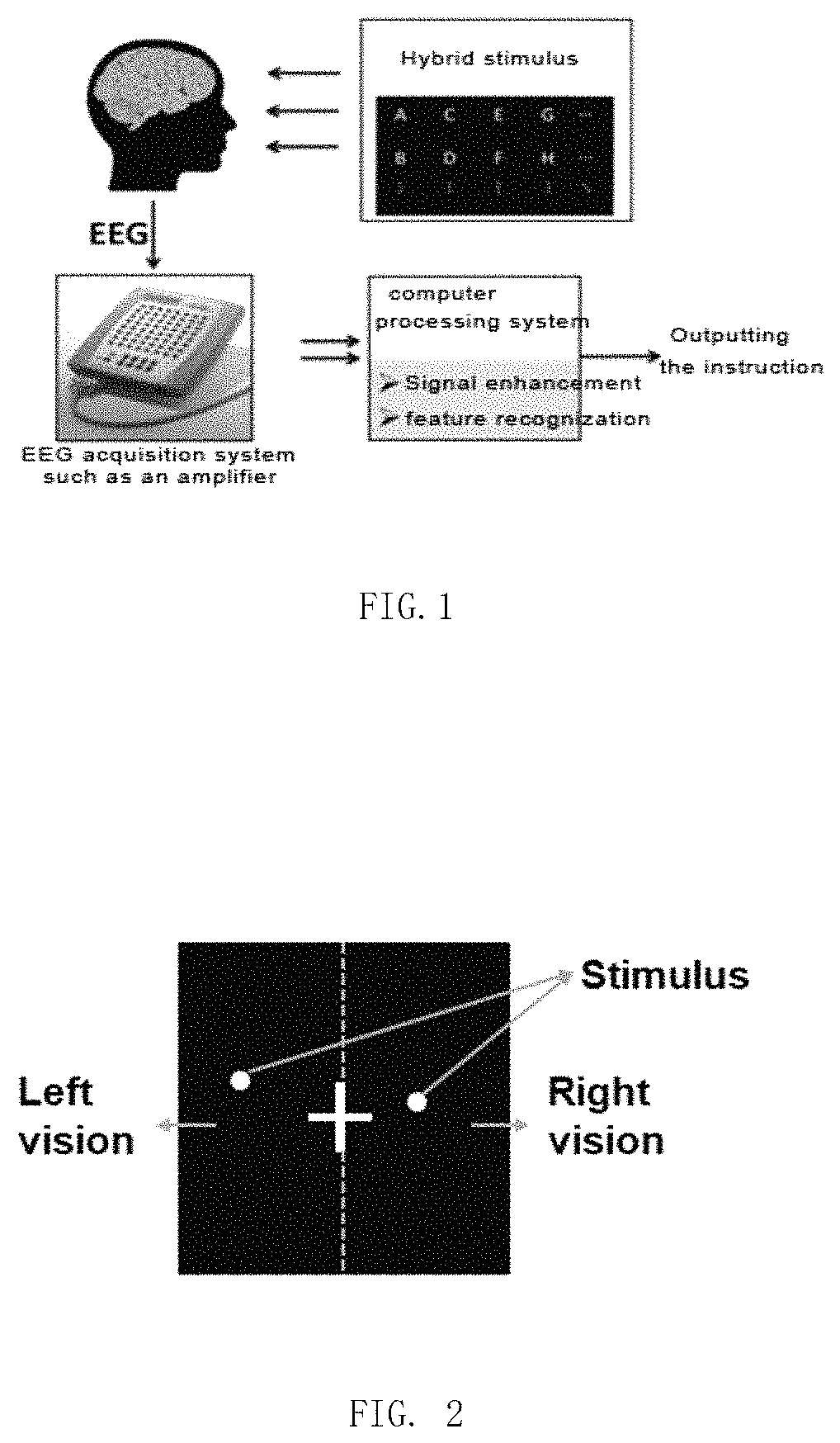
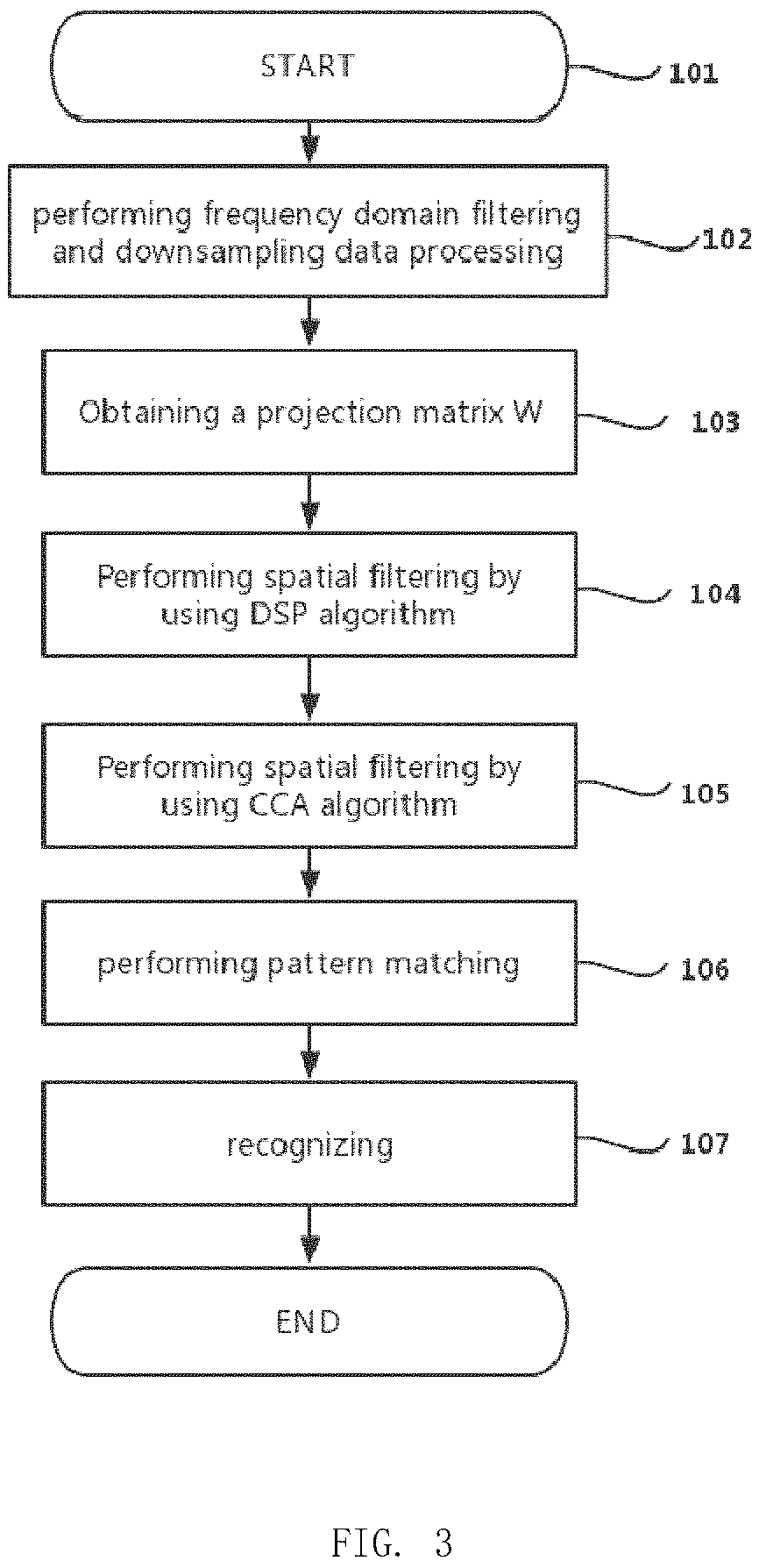
- An asymmetric EEG-based coding and decoding method that utilizes spatial division multiple access (SDMA), code division multiple access (CDMA), frequency division multiple access (FDMA), and phase division multiple access (PDMA) coding, combined with discriminant mode spatial filtering and template matching, to enhance signal-to-noise ratio and classification efficiency.
Regulatory Framework for Neural Prosthetic Devices
The regulatory landscape for neural prosthetic devices, particularly Brain-Computer Interfaces (BCIs) used in adaptive auditory prostheses, presents a complex framework that continues to evolve alongside technological advancements. Currently, these devices fall under the classification of Class III medical devices in most jurisdictions, requiring the highest level of regulatory scrutiny due to their invasive nature and direct interaction with neural tissue.
In the United States, the Food and Drug Administration (FDA) has established specific pathways for BCI approval through the Center for Devices and Radiological Health (CDRH). The Premarket Approval (PMA) process remains the primary route for most neural prosthetic devices, requiring extensive clinical trials to demonstrate safety and efficacy. Recently, the FDA has introduced the Breakthrough Devices Program, which has accelerated the development pathway for several innovative BCI technologies in the auditory prosthesis space.
The European regulatory framework has undergone significant transformation with the implementation of the Medical Device Regulation (MDR 2017/745), replacing the previous Medical Device Directive. This change has introduced more stringent requirements for clinical evidence, post-market surveillance, and technical documentation for neural interfaces. Notably, the MDR specifically addresses active implantable medical devices, creating additional hurdles for BCI-based auditory prostheses.
International standards such as ISO 14708 (Active Implantable Medical Devices) and IEC 60601 (Medical Electrical Equipment) provide critical technical specifications that manufacturers must adhere to. These standards address biocompatibility, electrical safety, electromagnetic compatibility, and risk management considerations specific to neural interfaces.
Emerging regulatory challenges include the handling of adaptive algorithms and machine learning components in BCIs. As auditory prostheses increasingly incorporate self-learning capabilities to optimize sound processing based on neural feedback, regulators are developing new frameworks to evaluate the safety and performance of these dynamic systems. The FDA's proposed regulatory framework for AI/ML-based Software as a Medical Device (SaMD) represents an important step in this direction.
Privacy and cybersecurity regulations present another critical dimension, with requirements stemming from legislation such as HIPAA in the US and GDPR in Europe. These frameworks mandate robust data protection measures for the sensitive neural data collected and processed by adaptive auditory BCIs.
Looking forward, international harmonization efforts through the International Medical Device Regulators Forum (IMDRF) aim to create more consistent global approaches to BCI regulation, potentially streamlining the approval process for innovative auditory neural prostheses while maintaining rigorous safety standards.
In the United States, the Food and Drug Administration (FDA) has established specific pathways for BCI approval through the Center for Devices and Radiological Health (CDRH). The Premarket Approval (PMA) process remains the primary route for most neural prosthetic devices, requiring extensive clinical trials to demonstrate safety and efficacy. Recently, the FDA has introduced the Breakthrough Devices Program, which has accelerated the development pathway for several innovative BCI technologies in the auditory prosthesis space.
The European regulatory framework has undergone significant transformation with the implementation of the Medical Device Regulation (MDR 2017/745), replacing the previous Medical Device Directive. This change has introduced more stringent requirements for clinical evidence, post-market surveillance, and technical documentation for neural interfaces. Notably, the MDR specifically addresses active implantable medical devices, creating additional hurdles for BCI-based auditory prostheses.
International standards such as ISO 14708 (Active Implantable Medical Devices) and IEC 60601 (Medical Electrical Equipment) provide critical technical specifications that manufacturers must adhere to. These standards address biocompatibility, electrical safety, electromagnetic compatibility, and risk management considerations specific to neural interfaces.
Emerging regulatory challenges include the handling of adaptive algorithms and machine learning components in BCIs. As auditory prostheses increasingly incorporate self-learning capabilities to optimize sound processing based on neural feedback, regulators are developing new frameworks to evaluate the safety and performance of these dynamic systems. The FDA's proposed regulatory framework for AI/ML-based Software as a Medical Device (SaMD) represents an important step in this direction.
Privacy and cybersecurity regulations present another critical dimension, with requirements stemming from legislation such as HIPAA in the US and GDPR in Europe. These frameworks mandate robust data protection measures for the sensitive neural data collected and processed by adaptive auditory BCIs.
Looking forward, international harmonization efforts through the International Medical Device Regulators Forum (IMDRF) aim to create more consistent global approaches to BCI regulation, potentially streamlining the approval process for innovative auditory neural prostheses while maintaining rigorous safety standards.
User Experience and Accessibility Considerations
The integration of Brain-Computer Interfaces (BCIs) into adaptive auditory prostheses necessitates meticulous attention to user experience and accessibility considerations. These factors are paramount in determining the adoption rate, long-term usage, and overall effectiveness of these sophisticated medical devices.
User-centered design principles must guide the development process from inception to implementation. Auditory prostheses equipped with BCI technology should prioritize intuitive operation, minimizing the cognitive load required for daily use. This is particularly crucial for elderly users or those with additional disabilities who may struggle with complex interfaces or calibration procedures.
Customization capabilities represent another critical dimension of user experience. Each individual's hearing loss profile, cognitive processing patterns, and environmental needs differ significantly. Adaptive systems must therefore offer personalized settings that can be easily adjusted by users or healthcare providers, ensuring optimal performance across diverse acoustic environments.
Physical comfort and aesthetic considerations cannot be overlooked. The form factor of BCI components must balance functionality with wearability, as devices that are uncomfortable or visually conspicuous face resistance regardless of their technical capabilities. Miniaturization of components and discreet design elements can significantly enhance user acceptance and reduce stigma associated with hearing assistive technologies.
Accessibility extends beyond the physical interface to include considerations for diverse user populations. This encompasses multilingual support, accommodations for users with limited dexterity or visual impairments, and simplified training protocols. The learning curve for mastering BCI-enabled auditory prostheses should be gentle, with comprehensive support materials available in multiple formats.
Battery life and maintenance requirements substantially impact daily usability. Extended operation periods between charges and straightforward maintenance procedures are essential for ensuring consistent benefit, particularly for users with limited technical proficiency or those in regions with restricted access to specialized support services.
Ethical considerations regarding data privacy and user autonomy must be addressed proactively. Users should maintain control over their neurological data, with transparent policies governing data collection, storage, and utilization. Opt-in features for advanced functionality that requires additional data sharing can help balance innovation with privacy concerns.
Continuous feedback mechanisms should be incorporated to allow for ongoing refinement of the user experience. This might include automated performance monitoring, satisfaction surveys, and channels for users to report specific challenges or suggestions for improvement, creating a virtuous cycle of user-informed development.
User-centered design principles must guide the development process from inception to implementation. Auditory prostheses equipped with BCI technology should prioritize intuitive operation, minimizing the cognitive load required for daily use. This is particularly crucial for elderly users or those with additional disabilities who may struggle with complex interfaces or calibration procedures.
Customization capabilities represent another critical dimension of user experience. Each individual's hearing loss profile, cognitive processing patterns, and environmental needs differ significantly. Adaptive systems must therefore offer personalized settings that can be easily adjusted by users or healthcare providers, ensuring optimal performance across diverse acoustic environments.
Physical comfort and aesthetic considerations cannot be overlooked. The form factor of BCI components must balance functionality with wearability, as devices that are uncomfortable or visually conspicuous face resistance regardless of their technical capabilities. Miniaturization of components and discreet design elements can significantly enhance user acceptance and reduce stigma associated with hearing assistive technologies.
Accessibility extends beyond the physical interface to include considerations for diverse user populations. This encompasses multilingual support, accommodations for users with limited dexterity or visual impairments, and simplified training protocols. The learning curve for mastering BCI-enabled auditory prostheses should be gentle, with comprehensive support materials available in multiple formats.
Battery life and maintenance requirements substantially impact daily usability. Extended operation periods between charges and straightforward maintenance procedures are essential for ensuring consistent benefit, particularly for users with limited technical proficiency or those in regions with restricted access to specialized support services.
Ethical considerations regarding data privacy and user autonomy must be addressed proactively. Users should maintain control over their neurological data, with transparent policies governing data collection, storage, and utilization. Opt-in features for advanced functionality that requires additional data sharing can help balance innovation with privacy concerns.
Continuous feedback mechanisms should be incorporated to allow for ongoing refinement of the user experience. This might include automated performance monitoring, satisfaction surveys, and channels for users to report specific challenges or suggestions for improvement, creating a virtuous cycle of user-informed development.
Unlock deeper insights with PatSnap Eureka Quick Research — get a full tech report to explore trends and direct your research. Try now!
Generate Your Research Report Instantly with AI Agent
Supercharge your innovation with PatSnap Eureka AI Agent Platform!