Analyze Emission Reduction Techniques for Turbine Engine Applications
SEP 23, 20259 MIN READ
Generate Your Research Report Instantly with AI Agent
PatSnap Eureka helps you evaluate technical feasibility & market potential.
Turbine Engine Emission Reduction Background and Objectives
Turbine engines have been a cornerstone of aviation, power generation, and industrial applications for decades, with their development tracing back to the early 20th century. However, as environmental concerns have grown, the focus has shifted significantly toward reducing harmful emissions from these powerful but polluting systems. The evolution of turbine engine technology has been marked by continuous improvements in efficiency and performance, but emission reduction has emerged as a critical priority only in recent decades, driven by increasingly stringent regulatory frameworks worldwide.
The primary emissions of concern from turbine engines include nitrogen oxides (NOx), carbon monoxide (CO), unburned hydrocarbons (UHC), sulfur oxides (SOx), and particulate matter. Each of these pollutants contributes to environmental degradation, climate change, and public health issues in different ways. NOx, for instance, contributes to smog formation and acid rain, while CO2 emissions are directly linked to global warming.
Historical approaches to turbine engine design prioritized performance metrics such as thrust-to-weight ratio, specific fuel consumption, and reliability. The paradigm shift toward environmentally conscious design began in earnest during the 1970s with the introduction of the first emission standards for aircraft engines by the International Civil Aviation Organization (ICAO). Since then, emission standards have become progressively more stringent, compelling manufacturers to innovate continuously.
The technical objectives for emission reduction in turbine engines span multiple dimensions. Short-term goals focus on meeting current regulatory requirements through incremental improvements to combustion systems. Medium-term objectives aim to develop and implement advanced combustion concepts such as lean premixed prevaporized (LPP) combustion and rich-burn, quick-quench, lean-burn (RQL) strategies. Long-term goals envision revolutionary changes, including alternative fuel integration, electrification of auxiliary systems, and potentially hybrid propulsion architectures.
Current research trajectories are exploring multiple pathways simultaneously: optimizing combustor design to minimize hot spots where NOx formation occurs; developing advanced fuel injection systems for more precise fuel-air mixing; implementing staged combustion techniques; and investigating catalytic combustion to lower reaction temperatures. Additionally, significant effort is being directed toward making turbine engines compatible with sustainable aviation fuels (SAFs) and hydrogen, which could dramatically reduce carbon emissions.
The ultimate technical objective is to develop turbine engines that maintain or improve upon current performance standards while drastically reducing environmental impact—ideally approaching near-zero emission levels for certain pollutants. This ambitious goal requires a multidisciplinary approach combining advances in materials science, computational fluid dynamics, control systems, and fundamental combustion chemistry.
The primary emissions of concern from turbine engines include nitrogen oxides (NOx), carbon monoxide (CO), unburned hydrocarbons (UHC), sulfur oxides (SOx), and particulate matter. Each of these pollutants contributes to environmental degradation, climate change, and public health issues in different ways. NOx, for instance, contributes to smog formation and acid rain, while CO2 emissions are directly linked to global warming.
Historical approaches to turbine engine design prioritized performance metrics such as thrust-to-weight ratio, specific fuel consumption, and reliability. The paradigm shift toward environmentally conscious design began in earnest during the 1970s with the introduction of the first emission standards for aircraft engines by the International Civil Aviation Organization (ICAO). Since then, emission standards have become progressively more stringent, compelling manufacturers to innovate continuously.
The technical objectives for emission reduction in turbine engines span multiple dimensions. Short-term goals focus on meeting current regulatory requirements through incremental improvements to combustion systems. Medium-term objectives aim to develop and implement advanced combustion concepts such as lean premixed prevaporized (LPP) combustion and rich-burn, quick-quench, lean-burn (RQL) strategies. Long-term goals envision revolutionary changes, including alternative fuel integration, electrification of auxiliary systems, and potentially hybrid propulsion architectures.
Current research trajectories are exploring multiple pathways simultaneously: optimizing combustor design to minimize hot spots where NOx formation occurs; developing advanced fuel injection systems for more precise fuel-air mixing; implementing staged combustion techniques; and investigating catalytic combustion to lower reaction temperatures. Additionally, significant effort is being directed toward making turbine engines compatible with sustainable aviation fuels (SAFs) and hydrogen, which could dramatically reduce carbon emissions.
The ultimate technical objective is to develop turbine engines that maintain or improve upon current performance standards while drastically reducing environmental impact—ideally approaching near-zero emission levels for certain pollutants. This ambitious goal requires a multidisciplinary approach combining advances in materials science, computational fluid dynamics, control systems, and fundamental combustion chemistry.
Market Demand Analysis for Low-Emission Turbine Technologies
The global market for low-emission turbine technologies has experienced significant growth in recent years, driven primarily by stringent environmental regulations and increasing awareness of climate change impacts. According to industry reports, the market for clean turbine technologies reached approximately $25 billion in 2022, with projections indicating a compound annual growth rate of 7.8% through 2030.
Aviation and power generation sectors represent the largest demand segments, collectively accounting for over 70% of the market share. Commercial aviation, in particular, faces mounting pressure to reduce its carbon footprint, with international agreements like the Carbon Offsetting and Reduction Scheme for International Aviation (CORSIA) mandating substantial emission reductions by 2035.
The power generation sector shows equally strong demand signals, with natural gas turbines increasingly replacing coal-fired plants in many regions. This transition is creating a robust market for turbines with enhanced emission control capabilities, particularly for NOx, CO, and particulate matter reduction technologies.
Regional analysis reveals varying market dynamics. Europe leads in adoption of low-emission technologies due to the European Green Deal and stringent EU emission standards. North America follows closely, driven by EPA regulations and corporate sustainability commitments. The Asia-Pacific region, particularly China and India, represents the fastest-growing market segment with 9.3% annual growth, fueled by rapid industrialization coupled with new environmental policies.
Customer requirements are evolving beyond mere regulatory compliance. End-users increasingly demand solutions that balance emission reduction with operational efficiency and cost-effectiveness. Survey data indicates that 68% of industrial turbine operators prioritize technologies that offer both environmental benefits and reduced operational costs through improved fuel efficiency.
Emerging market trends include growing interest in hydrogen-capable turbines, with several major energy companies announcing plans to develop hydrogen infrastructure. This shift is creating new market opportunities for turbine manufacturers who can provide flexible systems capable of operating with varying hydrogen-natural gas blends.
The retrofit market segment deserves special attention, as many operators seek cost-effective solutions to upgrade existing turbine fleets rather than complete replacement. This segment is projected to grow at 8.5% annually, outpacing the overall market, and represents a significant opportunity for technology providers offering modular emission reduction solutions.
Aviation and power generation sectors represent the largest demand segments, collectively accounting for over 70% of the market share. Commercial aviation, in particular, faces mounting pressure to reduce its carbon footprint, with international agreements like the Carbon Offsetting and Reduction Scheme for International Aviation (CORSIA) mandating substantial emission reductions by 2035.
The power generation sector shows equally strong demand signals, with natural gas turbines increasingly replacing coal-fired plants in many regions. This transition is creating a robust market for turbines with enhanced emission control capabilities, particularly for NOx, CO, and particulate matter reduction technologies.
Regional analysis reveals varying market dynamics. Europe leads in adoption of low-emission technologies due to the European Green Deal and stringent EU emission standards. North America follows closely, driven by EPA regulations and corporate sustainability commitments. The Asia-Pacific region, particularly China and India, represents the fastest-growing market segment with 9.3% annual growth, fueled by rapid industrialization coupled with new environmental policies.
Customer requirements are evolving beyond mere regulatory compliance. End-users increasingly demand solutions that balance emission reduction with operational efficiency and cost-effectiveness. Survey data indicates that 68% of industrial turbine operators prioritize technologies that offer both environmental benefits and reduced operational costs through improved fuel efficiency.
Emerging market trends include growing interest in hydrogen-capable turbines, with several major energy companies announcing plans to develop hydrogen infrastructure. This shift is creating new market opportunities for turbine manufacturers who can provide flexible systems capable of operating with varying hydrogen-natural gas blends.
The retrofit market segment deserves special attention, as many operators seek cost-effective solutions to upgrade existing turbine fleets rather than complete replacement. This segment is projected to grow at 8.5% annually, outpacing the overall market, and represents a significant opportunity for technology providers offering modular emission reduction solutions.
Current Emission Reduction Technologies and Challenges
The current landscape of emission reduction technologies for turbine engines is characterized by a multi-faceted approach addressing various pollutants including nitrogen oxides (NOx), carbon monoxide (CO), unburned hydrocarbons (UHC), and particulate matter. Combustor design innovations represent the primary technological focus, with lean premixed combustion systems emerging as the industry standard for stationary gas turbines, achieving up to 90% NOx reduction compared to conventional diffusion flame combustors.
Water or steam injection technology continues to be widely implemented, particularly in older turbine systems, reducing NOx emissions by lowering flame temperatures. However, this approach faces efficiency penalties of 2-3% and increases water consumption significantly, limiting its application in water-scarce regions.
Selective Catalytic Reduction (SCR) systems have demonstrated exceptional NOx reduction capabilities of 80-95% in stationary applications but remain challenging to implement in aviation due to weight, space constraints, and catalyst degradation concerns at high temperatures. The technology also requires precise temperature control within the 300-400°C range for optimal performance.
Advanced fuel preparation techniques, including improved atomization and vaporization systems, have shown promising results in reducing both NOx and particulate emissions by ensuring more complete combustion. These technologies are increasingly being integrated into next-generation turbine designs across both aviation and power generation sectors.
The aviation sector faces unique challenges with emission reduction technologies needing to balance environmental performance with stringent weight, reliability, and safety requirements. Current aviation turbine emission control focuses primarily on combustor redesign rather than post-combustion treatments prevalent in stationary applications.
Significant technical challenges persist across all turbine applications. Thermal management remains critical as many low-emission combustion technologies operate near lean blowout limits, creating stability concerns. Material limitations also constrain innovation, with current high-temperature materials struggling to withstand the extreme conditions in advanced low-emission combustors.
Regulatory disparities across regions create implementation challenges, with varying emission standards complicating global deployment strategies. Additionally, the trade-off between NOx reduction and CO/UHC emissions presents a persistent technical dilemma, as technologies that reduce flame temperature to control NOx often increase incomplete combustion products.
The cost implications of emission reduction technologies remain substantial, with retrofitting existing turbines typically increasing capital costs by 15-30% and potentially reducing overall system efficiency by 1-5%, depending on the technology employed.
Water or steam injection technology continues to be widely implemented, particularly in older turbine systems, reducing NOx emissions by lowering flame temperatures. However, this approach faces efficiency penalties of 2-3% and increases water consumption significantly, limiting its application in water-scarce regions.
Selective Catalytic Reduction (SCR) systems have demonstrated exceptional NOx reduction capabilities of 80-95% in stationary applications but remain challenging to implement in aviation due to weight, space constraints, and catalyst degradation concerns at high temperatures. The technology also requires precise temperature control within the 300-400°C range for optimal performance.
Advanced fuel preparation techniques, including improved atomization and vaporization systems, have shown promising results in reducing both NOx and particulate emissions by ensuring more complete combustion. These technologies are increasingly being integrated into next-generation turbine designs across both aviation and power generation sectors.
The aviation sector faces unique challenges with emission reduction technologies needing to balance environmental performance with stringent weight, reliability, and safety requirements. Current aviation turbine emission control focuses primarily on combustor redesign rather than post-combustion treatments prevalent in stationary applications.
Significant technical challenges persist across all turbine applications. Thermal management remains critical as many low-emission combustion technologies operate near lean blowout limits, creating stability concerns. Material limitations also constrain innovation, with current high-temperature materials struggling to withstand the extreme conditions in advanced low-emission combustors.
Regulatory disparities across regions create implementation challenges, with varying emission standards complicating global deployment strategies. Additionally, the trade-off between NOx reduction and CO/UHC emissions presents a persistent technical dilemma, as technologies that reduce flame temperature to control NOx often increase incomplete combustion products.
The cost implications of emission reduction technologies remain substantial, with retrofitting existing turbines typically increasing capital costs by 15-30% and potentially reducing overall system efficiency by 1-5%, depending on the technology employed.
Current Technical Solutions for Turbine Emission Control
01 Engine-based emission reduction technologies
Various technologies focus on reducing emissions directly from engines through improved combustion processes, exhaust treatment systems, and engine design modifications. These include selective catalytic reduction, exhaust gas recirculation, and advanced fuel injection systems that optimize combustion efficiency. Such technologies can significantly reduce nitrogen oxides (NOx), particulate matter, and carbon dioxide emissions from internal combustion engines in vehicles and industrial equipment.- Engine-based emission reduction technologies: Various technologies are implemented in engines to reduce emissions, including advanced combustion control systems, exhaust gas recirculation (EGR), and optimized fuel injection. These technologies focus on reducing emissions at the source by improving combustion efficiency and reducing the formation of pollutants. Modifications to engine design and operation parameters help achieve significant reductions in nitrogen oxides (NOx), particulate matter, and carbon dioxide emissions.
- Exhaust aftertreatment systems: Aftertreatment systems are installed in the exhaust stream to capture or convert pollutants before they are released into the atmosphere. These systems include catalytic converters, diesel particulate filters (DPF), selective catalytic reduction (SCR) systems, and other technologies that treat emissions after combustion. The systems work by chemically converting harmful pollutants into less harmful substances or by physically trapping particulate matter, significantly reducing the environmental impact of vehicle and industrial emissions.
- Carbon capture and storage technologies: Carbon capture and storage (CCS) technologies are designed to capture carbon dioxide emissions from large point sources such as power plants and industrial facilities. These technologies involve capturing CO2, transporting it to a storage site, and depositing it where it will not enter the atmosphere, typically underground geological formations. Various methods include pre-combustion capture, post-combustion capture, and oxy-fuel combustion, all aimed at reducing greenhouse gas emissions while allowing continued use of fossil fuels during the transition to cleaner energy sources.
- Emission monitoring and management systems: Advanced monitoring and management systems are employed to track, analyze, and control emissions in real-time. These systems utilize sensors, data analytics, and artificial intelligence to optimize operations for minimal environmental impact. By providing accurate measurements and insights, these technologies enable proactive emission management, regulatory compliance, and identification of opportunities for further emission reductions. They are implemented in various sectors including transportation, energy production, and manufacturing to ensure continuous improvement in emission control.
- Market-based emission reduction approaches: Market-based approaches leverage economic incentives to reduce emissions, including carbon trading systems, emission credits, and offset mechanisms. These approaches establish frameworks where emission reductions have monetary value, encouraging businesses to invest in cleaner technologies and practices. By putting a price on carbon and other pollutants, these systems create financial motivation for emission reductions while allowing flexibility in how those reductions are achieved. They often involve certification processes, verification protocols, and trading platforms to ensure the integrity of emission reduction claims.
02 Carbon capture and storage systems
Carbon capture and storage (CCS) technologies involve capturing carbon dioxide emissions from industrial processes and power generation before they enter the atmosphere, then transporting and storing them in underground geological formations. These systems can be integrated into existing facilities or designed into new plants, offering significant reduction in greenhouse gas emissions. Advanced monitoring systems ensure the captured carbon remains safely stored without leakage.Expand Specific Solutions03 Emission trading and carbon credit systems
Market-based approaches to emission reduction include carbon trading platforms, emission allowance systems, and carbon credit mechanisms. These systems establish economic incentives for reducing emissions by putting a price on carbon and allowing entities to trade emission permits. Organizations that reduce emissions below their allocated amount can sell their excess allowances to others who exceed their limits, creating a financial motivation for overall emission reduction.Expand Specific Solutions04 Renewable energy integration for emission reduction
Integration of renewable energy sources such as solar, wind, and hydroelectric power into existing energy systems significantly reduces emissions by replacing fossil fuel consumption. These technologies include smart grid systems that optimize renewable energy utilization, energy storage solutions that address intermittency issues, and hybrid systems that combine multiple renewable sources. The transition to renewable energy represents one of the most effective approaches to achieving substantial emission reductions across various sectors.Expand Specific Solutions05 Monitoring and verification technologies for emissions
Advanced monitoring systems enable accurate measurement, reporting, and verification of emissions across various industries. These technologies include continuous emission monitoring systems, remote sensing devices, satellite-based monitoring, and AI-powered analytics that track emission levels in real-time. Such systems provide essential data for regulatory compliance, identifying emission reduction opportunities, and validating the effectiveness of implemented reduction measures.Expand Specific Solutions
Key Industry Players in Turbine Emission Reduction
The emission reduction techniques for turbine engine applications market is in a growth phase, driven by increasing environmental regulations and sustainability goals. The market size is expanding rapidly, with projections showing significant growth as industries prioritize decarbonization. Technologically, the field is advancing from early-stage innovations to commercially viable solutions, with varying maturity levels across different approaches. Key players include established aerospace and energy giants like General Electric, RTX Corp., Rolls-Royce, and Siemens Energy, who leverage their extensive R&D capabilities to develop advanced combustion systems and hydrogen technologies. Emerging competition comes from specialized firms like BJ Energy Solutions focusing on low-carbon technologies, while academic institutions such as Tsinghua University and Northwestern Polytechnical University contribute fundamental research to advance the field.
General Electric Company
Technical Solution: GE's emission reduction technology for turbine engines centers on their advanced combustion systems, particularly the Dry Low NOx (DLN) and Dry Low Emissions (DLE) combustors. These systems achieve ultra-low emissions by pre-mixing fuel and air before combustion, maintaining precise control over flame temperature to minimize NOx formation[1]. GE has further enhanced this technology with their latest DLN 2.6+ combustion system, which can achieve single-digit NOx emissions (less than 9 ppm) while maintaining high efficiency[3]. Their LEAP engine technology incorporates advanced materials like ceramic matrix composites (CMCs) that allow higher operating temperatures without additional cooling air, improving efficiency and reducing CO2 emissions by 15-20% compared to previous generation engines[5]. GE has also pioneered hydrogen capability in their gas turbines, with over 8 million operating hours on hydrogen/natural gas blends, and is developing capabilities for 100% hydrogen operation to enable zero-carbon power generation[7].
Strengths: Industry-leading NOx reduction capabilities; extensive operational experience with alternative fuels including hydrogen blends; advanced materials technology enabling higher efficiency. Weaknesses: Higher initial capital costs for advanced emission control systems; retrofitting older turbine fleets remains challenging; hydrogen combustion technology still requires further development for full commercial deployment.
RTX Corp.
Technical Solution: RTX Corp. (formerly Raytheon Technologies), through its Pratt & Whitney division, has developed the Geared Turbofan (GTF) engine as its cornerstone emission reduction technology. The GTF architecture incorporates a reduction gearbox that allows the fan and low-pressure turbine to operate at their optimal speeds, significantly improving propulsive efficiency and reducing fuel consumption by 16-20% compared to previous generation engines[2]. This directly translates to equivalent reductions in CO2 emissions. The combustor technology in GTF engines utilizes advanced TALON X (Technology for Advanced Low NOx) combustion systems that achieve up to 50% reduction in NOx emissions compared to ICAO CAEP/6 standards[4]. Pratt & Whitney has also developed the TALON X+ combustor that further optimizes air-fuel mixing to minimize NOx formation while maintaining combustion stability across all operating conditions. Their engines incorporate sophisticated cooling technologies and thermal barrier coatings that enable higher operating temperatures for improved efficiency without increasing NOx production[6]. RTX has also been advancing sustainable aviation fuel (SAF) compatibility, with all current engines certified for 50% SAF blends and development underway for 100% SAF operation[8].
Strengths: Revolutionary geared architecture providing significant efficiency improvements; advanced TALON combustor technology with industry-leading NOx reduction; extensive operational experience with over 12,000 GTF engines delivered. Weaknesses: Complex geared architecture introduces additional maintenance considerations; full SAF implementation dependent on fuel availability; retrofitting emission reduction technologies to legacy fleets remains challenging.
Core Emission Reduction Patents and Technical Literature
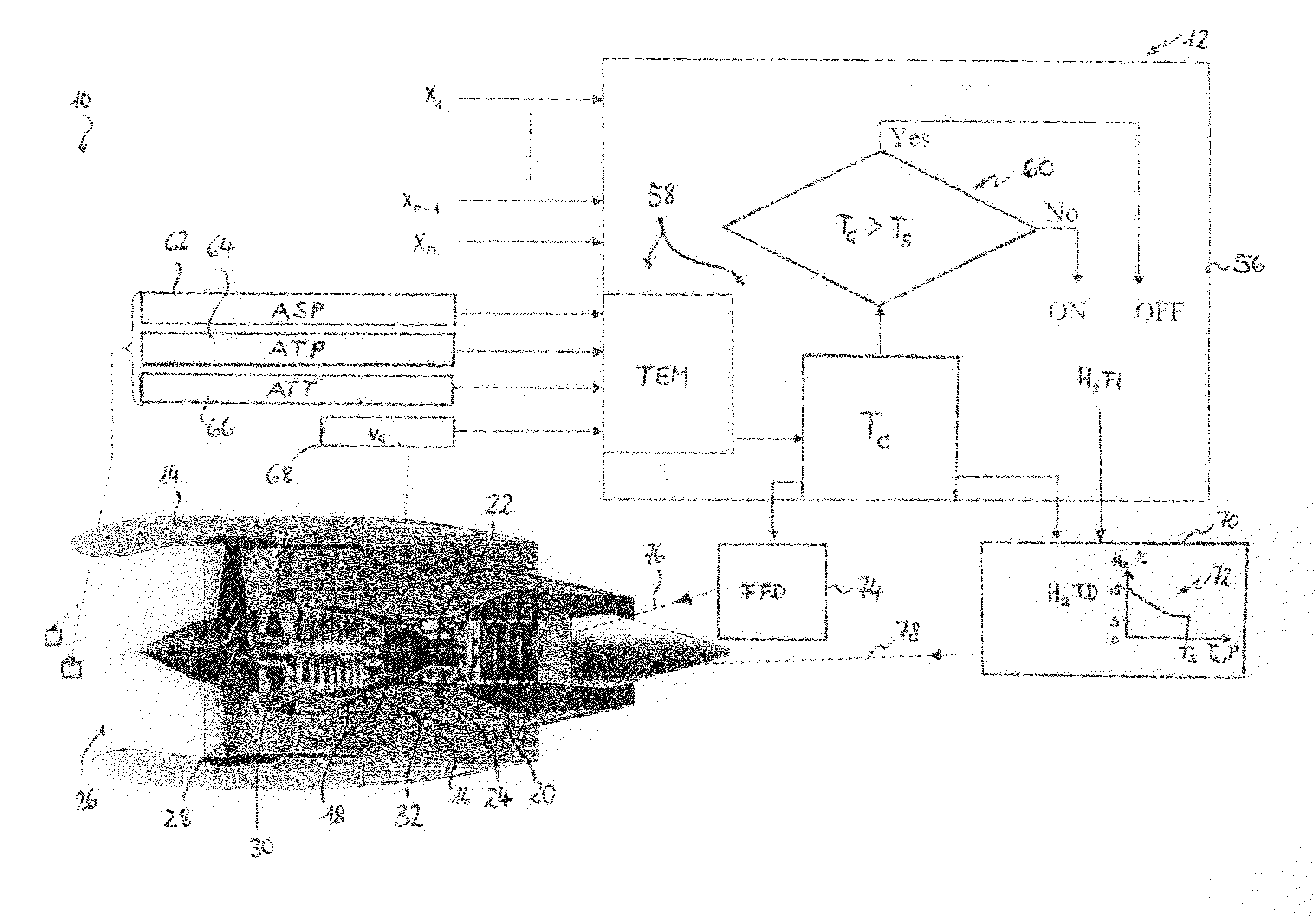
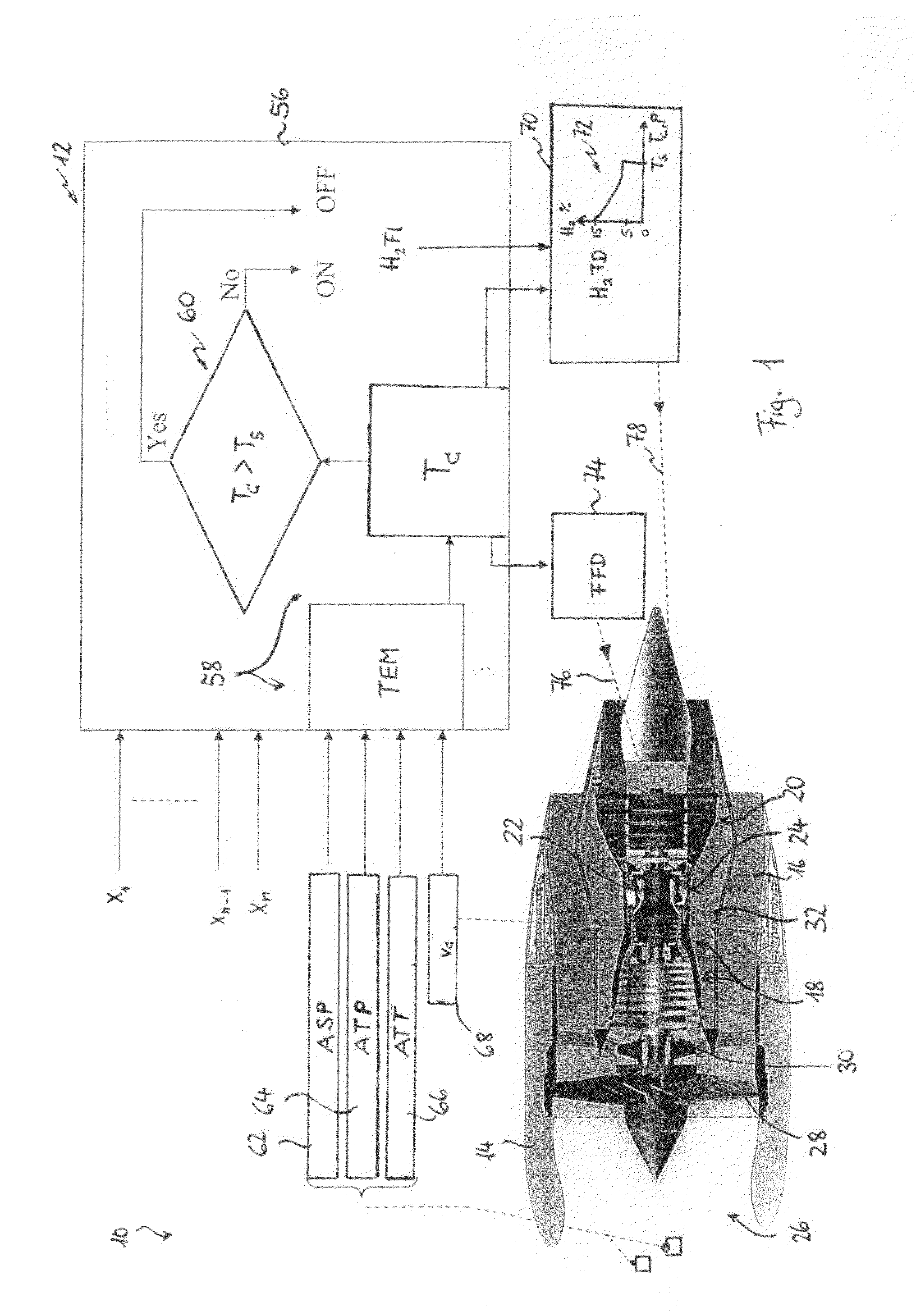
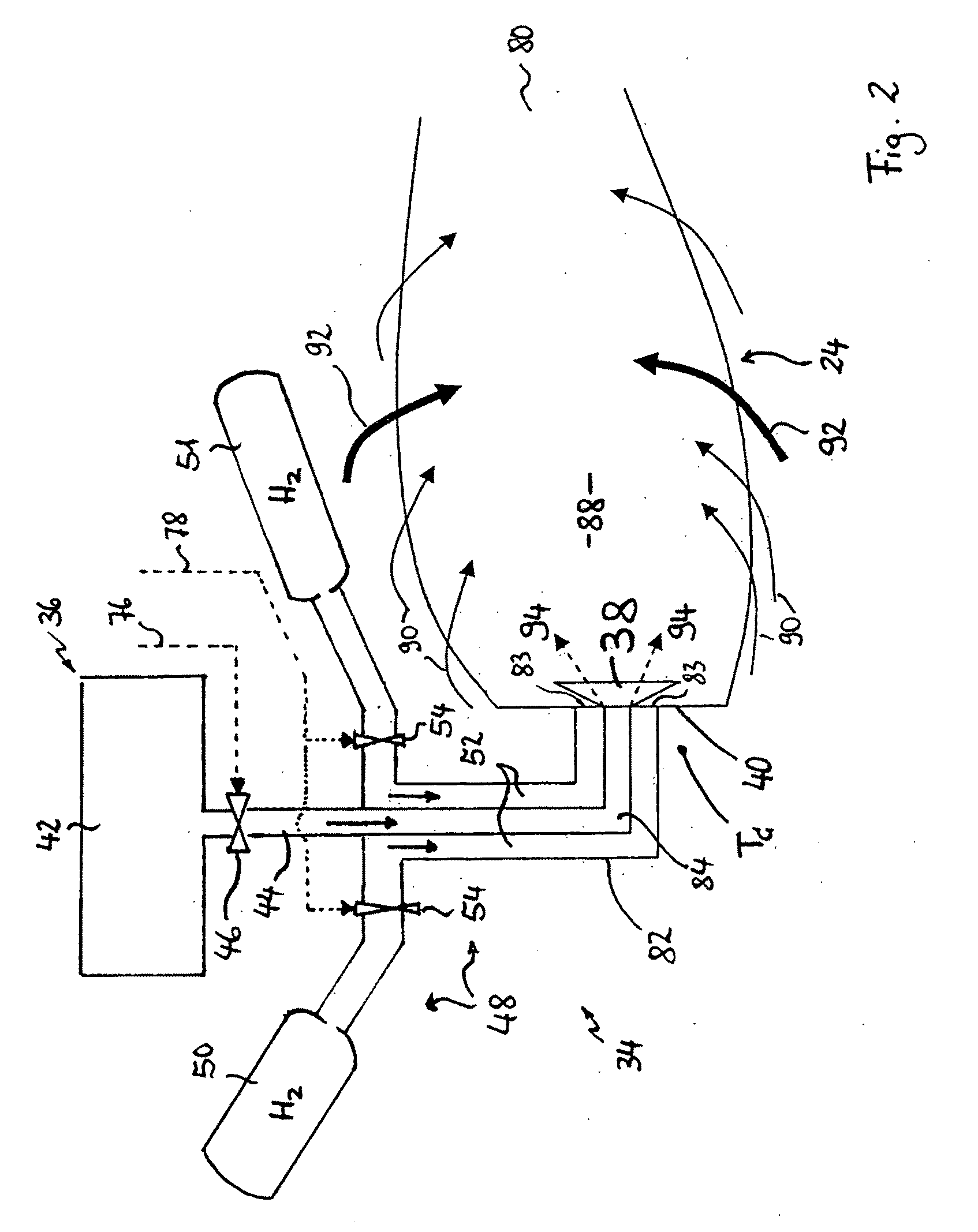
Gas Turbine Engine and Method for Reducing Turbine Engine Combustor Gaseous Emission
PatentActiveUS20090301096A1
Innovation
- Injecting hydrogen into the combustor during low power operations to accelerate combustion kinetics, allowing for a smaller combustor size without increasing emissions, and stopping hydrogen injection at higher power levels to minimize hydrogen consumption and NOX formation.

Turbine engine including a steam system
PatentPendingEP4553305A1
Innovation
- The integration of a steam system into the turbine engine, which includes secondary combustors for introducing fuel and steam, employing a reheat cycle to reduce the maximum temperature and thereby decrease NOx and other pollutant emissions. This system can include inter-turbine and inter-stage combustors, with steam being introduced at various ratios to optimize performance.


Regulatory Framework and Compliance Standards
The regulatory landscape governing turbine engine emissions has evolved significantly over the past decades, becoming increasingly stringent as environmental concerns gain prominence globally. The International Civil Aviation Organization (ICAO) serves as the primary international body establishing standards for aircraft emissions through its Committee on Aviation Environmental Protection (CAEP). These standards, particularly CAEP/8 and the more recent CAEP/10, have progressively tightened limits on nitrogen oxides (NOx), carbon monoxide (CO), unburned hydrocarbons (UHC), and particulate matter emissions from aircraft engines.
In the United States, the Environmental Protection Agency (EPA) works in conjunction with the Federal Aviation Administration (FAA) to implement and enforce these international standards. The EPA's Clean Air Act regulations specifically address aviation emissions, with Title II provisions focusing on aircraft engine standards. Similarly, the European Union has established its own regulatory framework through the European Aviation Safety Agency (EASA), which often implements standards that exceed ICAO requirements, particularly regarding NOx and CO2 emissions.
Regional variations in emission regulations present significant challenges for turbine engine manufacturers operating in global markets. For instance, certain urban areas with severe air quality issues, such as California's South Coast Air Basin, have implemented additional requirements for stationary turbines used in power generation. These regional differences necessitate adaptable emission reduction strategies that can be modified to meet varying compliance standards across different jurisdictions.
Compliance verification methodologies have also become more sophisticated, with continuous emissions monitoring systems (CEMS) increasingly required for stationary turbines. For aircraft engines, the certification process involves rigorous testing under standardized conditions, with emissions measured at various power settings throughout the landing and take-off (LTO) cycle. This standardized approach ensures consistency in emissions reporting and facilitates international comparisons.
Looking forward, upcoming regulatory changes signal even stricter emissions controls. The ICAO's Carbon Offsetting and Reduction Scheme for International Aviation (CORSIA) represents a significant shift toward market-based measures for addressing aviation's climate impact. Additionally, several jurisdictions are developing standards for non-volatile particulate matter emissions, which have traditionally been less regulated than gaseous pollutants despite their significant health impacts.
The economic implications of these regulations are substantial, with compliance costs driving significant research and development investments in emission reduction technologies. However, these regulations also create market opportunities for innovative solutions that can achieve compliance while maintaining or improving engine performance and efficiency.
In the United States, the Environmental Protection Agency (EPA) works in conjunction with the Federal Aviation Administration (FAA) to implement and enforce these international standards. The EPA's Clean Air Act regulations specifically address aviation emissions, with Title II provisions focusing on aircraft engine standards. Similarly, the European Union has established its own regulatory framework through the European Aviation Safety Agency (EASA), which often implements standards that exceed ICAO requirements, particularly regarding NOx and CO2 emissions.
Regional variations in emission regulations present significant challenges for turbine engine manufacturers operating in global markets. For instance, certain urban areas with severe air quality issues, such as California's South Coast Air Basin, have implemented additional requirements for stationary turbines used in power generation. These regional differences necessitate adaptable emission reduction strategies that can be modified to meet varying compliance standards across different jurisdictions.
Compliance verification methodologies have also become more sophisticated, with continuous emissions monitoring systems (CEMS) increasingly required for stationary turbines. For aircraft engines, the certification process involves rigorous testing under standardized conditions, with emissions measured at various power settings throughout the landing and take-off (LTO) cycle. This standardized approach ensures consistency in emissions reporting and facilitates international comparisons.
Looking forward, upcoming regulatory changes signal even stricter emissions controls. The ICAO's Carbon Offsetting and Reduction Scheme for International Aviation (CORSIA) represents a significant shift toward market-based measures for addressing aviation's climate impact. Additionally, several jurisdictions are developing standards for non-volatile particulate matter emissions, which have traditionally been less regulated than gaseous pollutants despite their significant health impacts.
The economic implications of these regulations are substantial, with compliance costs driving significant research and development investments in emission reduction technologies. However, these regulations also create market opportunities for innovative solutions that can achieve compliance while maintaining or improving engine performance and efficiency.
Sustainability Impact and Carbon Footprint Analysis
The implementation of emission reduction techniques in turbine engine applications has profound implications for global sustainability efforts and carbon footprint reduction. Current turbine engines contribute significantly to worldwide greenhouse gas emissions, with aviation alone accounting for approximately 2.5% of global CO2 emissions and power generation turbines representing a substantial portion of industrial carbon output.
Advanced emission reduction technologies demonstrate remarkable potential for environmental impact mitigation. Quantitative analyses indicate that next-generation combustion systems can reduce NOx emissions by 70-80% compared to conventional designs, while innovative fuel injection systems have demonstrated CO2 reductions of 15-25% in field tests. These improvements translate directly to measurable climate change mitigation effects.
Life cycle assessment (LCA) studies reveal that implementing comprehensive emission reduction strategies across the turbine engine lifecycle can reduce the total carbon footprint by 30-40% when considering manufacturing, operation, and end-of-life phases. The most significant gains occur during the operational phase, where fuel efficiency improvements and cleaner combustion technologies deliver the greatest sustainability benefits.
Beyond carbon dioxide, addressing non-CO2 emissions such as nitrogen oxides, particulate matter, and unburned hydrocarbons provides additional environmental advantages. Recent research indicates that controlling these pollutants delivers co-benefits for air quality, ecosystem health, and human wellbeing, particularly in densely populated areas near power generation facilities or along major flight corridors.
Economic analyses demonstrate positive correlation between emission reduction investments and long-term sustainability outcomes. While initial implementation costs for advanced technologies may be substantial, the environmental return on investment typically manifests within 3-7 years through reduced environmental compliance costs, carbon taxation savings, and enhanced corporate sustainability profiles.
The global adoption of turbine emission reduction technologies could potentially prevent 150-200 million tons of CO2-equivalent emissions annually by 2030, representing a critical contribution to international climate agreements and sustainability goals. This projection assumes progressive implementation across aviation, power generation, and industrial applications, with corresponding policy support mechanisms.
Sustainability certification systems increasingly recognize and reward emission reduction achievements in turbine applications, creating market incentives for technology adoption. Organizations implementing comprehensive emission reduction strategies report enhanced stakeholder relations, improved regulatory compliance positioning, and strengthened competitive advantage in environmentally conscious markets.
Advanced emission reduction technologies demonstrate remarkable potential for environmental impact mitigation. Quantitative analyses indicate that next-generation combustion systems can reduce NOx emissions by 70-80% compared to conventional designs, while innovative fuel injection systems have demonstrated CO2 reductions of 15-25% in field tests. These improvements translate directly to measurable climate change mitigation effects.
Life cycle assessment (LCA) studies reveal that implementing comprehensive emission reduction strategies across the turbine engine lifecycle can reduce the total carbon footprint by 30-40% when considering manufacturing, operation, and end-of-life phases. The most significant gains occur during the operational phase, where fuel efficiency improvements and cleaner combustion technologies deliver the greatest sustainability benefits.
Beyond carbon dioxide, addressing non-CO2 emissions such as nitrogen oxides, particulate matter, and unburned hydrocarbons provides additional environmental advantages. Recent research indicates that controlling these pollutants delivers co-benefits for air quality, ecosystem health, and human wellbeing, particularly in densely populated areas near power generation facilities or along major flight corridors.
Economic analyses demonstrate positive correlation between emission reduction investments and long-term sustainability outcomes. While initial implementation costs for advanced technologies may be substantial, the environmental return on investment typically manifests within 3-7 years through reduced environmental compliance costs, carbon taxation savings, and enhanced corporate sustainability profiles.
The global adoption of turbine emission reduction technologies could potentially prevent 150-200 million tons of CO2-equivalent emissions annually by 2030, representing a critical contribution to international climate agreements and sustainability goals. This projection assumes progressive implementation across aviation, power generation, and industrial applications, with corresponding policy support mechanisms.
Sustainability certification systems increasingly recognize and reward emission reduction achievements in turbine applications, creating market incentives for technology adoption. Organizations implementing comprehensive emission reduction strategies report enhanced stakeholder relations, improved regulatory compliance positioning, and strengthened competitive advantage in environmentally conscious markets.
Unlock deeper insights with PatSnap Eureka Quick Research — get a full tech report to explore trends and direct your research. Try now!
Generate Your Research Report Instantly with AI Agent
Supercharge your innovation with PatSnap Eureka AI Agent Platform!