Boosting CMOS Battery Efficiency: Insights and Techniques
JUL 22, 20259 MIN READ
Generate Your Research Report Instantly with AI Agent
Patsnap Eureka helps you evaluate technical feasibility & market potential.
CMOS Battery Evolution
The evolution of CMOS battery technology has been a critical factor in the advancement of portable electronic devices. Initially developed in the 1960s, Complementary Metal-Oxide-Semiconductor (CMOS) technology has undergone significant improvements, particularly in terms of power efficiency and battery life.
In the early stages, CMOS batteries were primarily used to maintain basic system settings and clock functions in computers. These batteries were typically small, low-capacity lithium cells with limited lifespan. As electronic devices became more sophisticated, the demands on CMOS batteries increased, driving the need for enhanced performance and longevity.
The 1990s saw a shift towards more energy-efficient CMOS designs, with manufacturers focusing on reducing power consumption in standby modes. This period also marked the introduction of rechargeable CMOS batteries, which offered longer operational life and reduced environmental impact compared to their disposable counterparts.
The turn of the millennium brought about a revolution in CMOS battery technology. The integration of power management circuits directly into CMOS chips led to significant improvements in energy efficiency. These advancements allowed for the development of ultra-low-power CMOS designs, capable of operating on minimal current draw.
In recent years, the focus has shifted towards optimizing the entire power delivery system. This holistic approach involves not only improving battery chemistry but also enhancing power management algorithms and circuit designs. The advent of smart power management systems has enabled dynamic voltage and frequency scaling, further reducing power consumption in CMOS devices.
Nanotechnology has played a crucial role in the latest developments of CMOS battery technology. The use of nanomaterials in battery electrodes has led to increased energy density and faster charging capabilities. Additionally, the integration of energy harvesting technologies with CMOS batteries has opened up new possibilities for self-powered devices.
The ongoing trend in CMOS battery evolution is towards miniaturization and increased power density. Researchers are exploring novel materials and architectures to create batteries that can deliver more power in smaller form factors. This includes the development of solid-state batteries and the use of advanced composite materials.
Looking ahead, the future of CMOS battery technology is likely to be shaped by the demands of emerging technologies such as Internet of Things (IoT) devices, wearable electronics, and implantable medical devices. These applications require batteries that are not only efficient and long-lasting but also safe and environmentally friendly.
In the early stages, CMOS batteries were primarily used to maintain basic system settings and clock functions in computers. These batteries were typically small, low-capacity lithium cells with limited lifespan. As electronic devices became more sophisticated, the demands on CMOS batteries increased, driving the need for enhanced performance and longevity.
The 1990s saw a shift towards more energy-efficient CMOS designs, with manufacturers focusing on reducing power consumption in standby modes. This period also marked the introduction of rechargeable CMOS batteries, which offered longer operational life and reduced environmental impact compared to their disposable counterparts.
The turn of the millennium brought about a revolution in CMOS battery technology. The integration of power management circuits directly into CMOS chips led to significant improvements in energy efficiency. These advancements allowed for the development of ultra-low-power CMOS designs, capable of operating on minimal current draw.
In recent years, the focus has shifted towards optimizing the entire power delivery system. This holistic approach involves not only improving battery chemistry but also enhancing power management algorithms and circuit designs. The advent of smart power management systems has enabled dynamic voltage and frequency scaling, further reducing power consumption in CMOS devices.
Nanotechnology has played a crucial role in the latest developments of CMOS battery technology. The use of nanomaterials in battery electrodes has led to increased energy density and faster charging capabilities. Additionally, the integration of energy harvesting technologies with CMOS batteries has opened up new possibilities for self-powered devices.
The ongoing trend in CMOS battery evolution is towards miniaturization and increased power density. Researchers are exploring novel materials and architectures to create batteries that can deliver more power in smaller form factors. This includes the development of solid-state batteries and the use of advanced composite materials.
Looking ahead, the future of CMOS battery technology is likely to be shaped by the demands of emerging technologies such as Internet of Things (IoT) devices, wearable electronics, and implantable medical devices. These applications require batteries that are not only efficient and long-lasting but also safe and environmentally friendly.
Market Demand Analysis
The market demand for CMOS battery efficiency solutions has been steadily increasing in recent years, driven by the growing ubiquity of portable electronic devices and the rising importance of energy conservation. As consumers and industries alike seek longer-lasting, more efficient power sources, the need for advanced CMOS battery technologies has become paramount.
In the consumer electronics sector, smartphones, tablets, and wearable devices are primary drivers of this demand. Users expect increasingly longer battery life from their devices, even as the devices themselves become more powerful and feature-rich. This has created a significant market opportunity for CMOS battery efficiency technologies that can extend device usage time without compromising performance.
The automotive industry represents another major market for CMOS battery efficiency solutions. With the rapid growth of electric vehicles (EVs) and hybrid electric vehicles (HEVs), there is a pressing need for more efficient battery management systems. CMOS-based technologies that can optimize power consumption and extend driving range are highly sought after by automotive manufacturers.
In the industrial sector, the Internet of Things (IoT) and smart sensor networks have emerged as key areas driving demand for efficient CMOS battery solutions. These applications often require long-term, low-power operation in remote or hard-to-reach locations, making battery efficiency a critical factor.
The healthcare industry has also shown increasing interest in CMOS battery efficiency technologies. Portable medical devices, implantable sensors, and wearable health monitors all benefit from extended battery life, improving patient care and reducing the frequency of battery replacements.
Market analysts project substantial growth in the CMOS battery efficiency market over the next five years. This growth is expected to be fueled by advancements in semiconductor manufacturing processes, the development of new materials, and innovative circuit design techniques.
However, the market also faces challenges. Balancing improved efficiency with cost-effectiveness remains a key concern for manufacturers. Additionally, as devices become smaller and more complex, there is increasing pressure to develop CMOS battery solutions that can deliver high performance within tight space constraints.
Despite these challenges, the overall market outlook for CMOS battery efficiency technologies remains highly positive. The ongoing trend towards miniaturization, coupled with the ever-increasing demand for longer-lasting portable devices, ensures a robust and growing market for innovative solutions in this field.
In the consumer electronics sector, smartphones, tablets, and wearable devices are primary drivers of this demand. Users expect increasingly longer battery life from their devices, even as the devices themselves become more powerful and feature-rich. This has created a significant market opportunity for CMOS battery efficiency technologies that can extend device usage time without compromising performance.
The automotive industry represents another major market for CMOS battery efficiency solutions. With the rapid growth of electric vehicles (EVs) and hybrid electric vehicles (HEVs), there is a pressing need for more efficient battery management systems. CMOS-based technologies that can optimize power consumption and extend driving range are highly sought after by automotive manufacturers.
In the industrial sector, the Internet of Things (IoT) and smart sensor networks have emerged as key areas driving demand for efficient CMOS battery solutions. These applications often require long-term, low-power operation in remote or hard-to-reach locations, making battery efficiency a critical factor.
The healthcare industry has also shown increasing interest in CMOS battery efficiency technologies. Portable medical devices, implantable sensors, and wearable health monitors all benefit from extended battery life, improving patient care and reducing the frequency of battery replacements.
Market analysts project substantial growth in the CMOS battery efficiency market over the next five years. This growth is expected to be fueled by advancements in semiconductor manufacturing processes, the development of new materials, and innovative circuit design techniques.
However, the market also faces challenges. Balancing improved efficiency with cost-effectiveness remains a key concern for manufacturers. Additionally, as devices become smaller and more complex, there is increasing pressure to develop CMOS battery solutions that can deliver high performance within tight space constraints.
Despite these challenges, the overall market outlook for CMOS battery efficiency technologies remains highly positive. The ongoing trend towards miniaturization, coupled with the ever-increasing demand for longer-lasting portable devices, ensures a robust and growing market for innovative solutions in this field.
Technical Challenges
The development of CMOS battery technology has made significant strides in recent years, yet several technical challenges persist in the quest for enhanced efficiency. One of the primary obstacles is the inherent trade-off between power consumption and performance. As CMOS devices continue to shrink, leakage current becomes increasingly problematic, leading to reduced battery life and overall system efficiency.
Another significant challenge lies in the thermal management of CMOS batteries. As power density increases, heat dissipation becomes a critical issue, potentially affecting both performance and longevity. Innovative cooling solutions and thermal design techniques are necessary to address this challenge effectively.
The integration of advanced materials presents both opportunities and hurdles. While novel materials offer the potential for improved energy density and faster charging capabilities, their integration into existing CMOS manufacturing processes can be complex and costly. Ensuring compatibility and reliability of these new materials within the CMOS ecosystem remains a significant technical challenge.
Power management circuitry plays a crucial role in optimizing battery efficiency. However, designing sophisticated power management systems that can adapt to varying load conditions while maintaining high efficiency across a wide range of operating scenarios is a complex task. This challenge is further compounded by the need for these systems to operate with minimal overhead and power consumption themselves.
The pursuit of higher energy density in CMOS batteries often conflicts with safety considerations. Balancing the desire for increased capacity with the need to prevent thermal runaway and other safety hazards requires careful engineering and innovative safety mechanisms.
Addressing the issue of charge/discharge cycle efficiency is another key challenge. Improving the coulombic efficiency of CMOS batteries while maintaining long-term stability and preventing capacity fade over numerous cycles remains an area of active research and development.
Lastly, the environmental impact and sustainability of CMOS battery production and disposal present ongoing challenges. Developing eco-friendly manufacturing processes and improving the recyclability of battery components are critical considerations in the evolution of CMOS battery technology.
These technical challenges collectively represent the frontier of CMOS battery research and development. Overcoming these hurdles will require interdisciplinary collaboration, innovative engineering solutions, and continued investment in advanced materials and manufacturing techniques.
Another significant challenge lies in the thermal management of CMOS batteries. As power density increases, heat dissipation becomes a critical issue, potentially affecting both performance and longevity. Innovative cooling solutions and thermal design techniques are necessary to address this challenge effectively.
The integration of advanced materials presents both opportunities and hurdles. While novel materials offer the potential for improved energy density and faster charging capabilities, their integration into existing CMOS manufacturing processes can be complex and costly. Ensuring compatibility and reliability of these new materials within the CMOS ecosystem remains a significant technical challenge.
Power management circuitry plays a crucial role in optimizing battery efficiency. However, designing sophisticated power management systems that can adapt to varying load conditions while maintaining high efficiency across a wide range of operating scenarios is a complex task. This challenge is further compounded by the need for these systems to operate with minimal overhead and power consumption themselves.
The pursuit of higher energy density in CMOS batteries often conflicts with safety considerations. Balancing the desire for increased capacity with the need to prevent thermal runaway and other safety hazards requires careful engineering and innovative safety mechanisms.
Addressing the issue of charge/discharge cycle efficiency is another key challenge. Improving the coulombic efficiency of CMOS batteries while maintaining long-term stability and preventing capacity fade over numerous cycles remains an area of active research and development.
Lastly, the environmental impact and sustainability of CMOS battery production and disposal present ongoing challenges. Developing eco-friendly manufacturing processes and improving the recyclability of battery components are critical considerations in the evolution of CMOS battery technology.
These technical challenges collectively represent the frontier of CMOS battery research and development. Overcoming these hurdles will require interdisciplinary collaboration, innovative engineering solutions, and continued investment in advanced materials and manufacturing techniques.
Current Solutions
01 Power management techniques for CMOS batteries
Various power management techniques are employed to improve CMOS battery efficiency. These include implementing low-power modes, optimizing voltage regulation, and utilizing power-saving circuits. Such techniques help extend battery life and reduce overall power consumption in CMOS-based devices.- Power management techniques for CMOS batteries: Various power management techniques are employed to enhance CMOS battery efficiency. These include implementing low-power modes, optimizing voltage regulation, and utilizing power-saving circuits. Such techniques help extend battery life and improve overall system performance in CMOS-based devices.
- CMOS battery monitoring and replacement systems: Advanced monitoring systems are developed to track CMOS battery health and performance. These systems can provide real-time data on battery status, predict potential failures, and facilitate timely replacements. This proactive approach ensures continuous operation of CMOS-dependent components and prevents data loss due to battery failure.
- Energy harvesting for CMOS battery supplementation: Innovative energy harvesting techniques are integrated into CMOS systems to supplement or recharge the battery. These methods may include harvesting energy from ambient light, thermal gradients, or mechanical vibrations, reducing the load on the primary CMOS battery and extending its operational lifespan.
- CMOS circuit design for reduced power consumption: Advanced CMOS circuit designs focus on minimizing power consumption without compromising performance. Techniques such as dynamic voltage scaling, clock gating, and power gating are implemented to reduce the energy demands on the CMOS battery, thereby improving its efficiency and longevity.
- Integration of high-efficiency power storage technologies: Research is conducted on integrating advanced power storage technologies with CMOS systems. This includes exploring the use of supercapacitors, solid-state batteries, or other high-efficiency energy storage solutions to complement or replace traditional CMOS batteries, potentially offering improved energy density and longer operational life.
02 Battery monitoring and charging systems
Advanced battery monitoring and charging systems are developed to enhance CMOS battery efficiency. These systems include intelligent charging algorithms, real-time battery status monitoring, and adaptive charging techniques. By optimizing the charging process and preventing overcharging, these systems contribute to improved battery longevity and performance.Expand Specific Solutions03 Circuit design optimization for reduced power consumption
Innovative circuit design techniques are implemented to minimize power consumption in CMOS-based systems. These include the use of low-leakage transistors, dynamic voltage and frequency scaling, and power gating. By optimizing circuit design, the overall efficiency of CMOS batteries is improved, leading to extended battery life.Expand Specific Solutions04 Integration of energy harvesting technologies
Energy harvesting technologies are integrated into CMOS-based systems to supplement battery power and improve overall efficiency. These technologies capture and convert ambient energy sources such as light, heat, or motion into electrical energy, reducing the load on the primary CMOS battery and extending its operational life.Expand Specific Solutions05 Advanced battery materials and construction
Research and development efforts focus on improving CMOS battery materials and construction techniques. This includes the use of novel electrode materials, advanced electrolytes, and innovative battery architectures. These advancements aim to increase energy density, improve charge-discharge efficiency, and enhance overall battery performance in CMOS applications.Expand Specific Solutions
Key Industry Players
The CMOS battery efficiency market is in a growth phase, driven by increasing demand for longer-lasting portable devices and energy-efficient systems. The global market size is expanding, with key players like Texas Instruments, Qualcomm, and Renesas Electronics leading innovation. These companies are investing heavily in R&D to develop advanced power management solutions. The technology is maturing rapidly, with firms like TSMC and GlobalFoundries pushing the boundaries of semiconductor manufacturing processes to enhance CMOS battery performance. Emerging players such as Contemporary Amperex Technology are also making significant strides in battery technology, indicating a competitive and dynamic landscape.
Texas Instruments Incorporated
Technical Solution: Texas Instruments (TI) has developed advanced CMOS battery management solutions to boost efficiency. Their BQ76952 battery monitor and protector IC utilizes a proprietary Impedance Track™ algorithm for accurate state-of-charge estimation[1]. TI's ultra-low-power MSP430™ microcontrollers, when integrated with their battery management systems, can achieve standby power consumption as low as 100 nA[2]. They've also introduced a new family of synchronous DC/DC buck converters that can achieve up to 98% efficiency in portable and battery-powered applications[3].
Strengths: Industry-leading power efficiency, comprehensive battery management solutions. Weaknesses: Higher cost compared to some competitors, complexity in implementation for some designs.
QUALCOMM, Inc.
Technical Solution: Qualcomm has made significant strides in CMOS battery efficiency through their Quick Charge technology. The latest Quick Charge 5 can charge devices from 0 to 50% in just 5 minutes, while operating 70% more efficiently than its predecessor[4]. Their power management ICs (PMICs) utilize advanced CMOS processes to integrate multiple power management functions, reducing overall power consumption. Qualcomm's Snapdragon platforms incorporate these PMICs along with their own CPU and GPU designs, optimized for energy efficiency in mobile devices[5].
Strengths: Rapid charging technology, highly integrated solutions for mobile devices. Weaknesses: Primarily focused on mobile applications, may have limited applicability in other sectors.
Core Innovations
Grid and formation method thereof
PatentActiveCN101593683A
Innovation
- By using boron fluoride ions for doping operations on the polysilicon layer, boron ions and fluorine ions are introduced to improve carrier conditions and passivate defective sites without increasing operating steps, forming a layer with improved electrical properties and reliability. gate.


CMOS device integration for low external resistance
PatentInactiveUS20040188766A1
Innovation
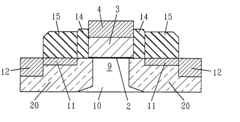
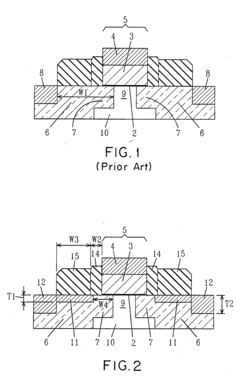
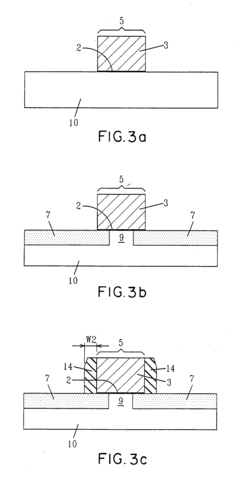
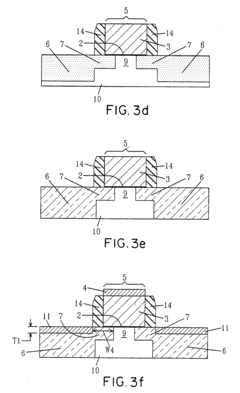
- The introduction of a first silicide region with a lesser thickness, positioned closer to the channel, and a second silicide region with greater thickness, providing low sheet resistance interconnects, allows for reduced external resistance by minimizing the electron path and avoiding the disadvantages of conventional silicide spacing, while maintaining low resistance contacts.
Power Management ICs
Power Management ICs play a crucial role in optimizing CMOS battery efficiency. These integrated circuits are designed to regulate and distribute power effectively within electronic devices, ensuring optimal performance while minimizing energy consumption. In the context of CMOS batteries, power management ICs are instrumental in extending battery life and improving overall system efficiency.
One of the primary functions of power management ICs is voltage regulation. These chips employ advanced techniques such as buck converters, boost converters, and linear regulators to maintain stable voltage levels across various components of a device. By precisely controlling voltage, power management ICs prevent unnecessary power dissipation and protect sensitive CMOS circuits from voltage fluctuations.
Another key feature of power management ICs is their ability to implement dynamic voltage and frequency scaling (DVFS). This technique allows the system to adjust its operating voltage and frequency based on workload demands, significantly reducing power consumption during periods of low activity. DVFS is particularly beneficial for CMOS batteries, as it helps conserve energy and extend battery life in mobile devices and other portable electronics.
Power management ICs also incorporate sophisticated power gating mechanisms. These circuits can selectively shut down unused portions of a chip or system, effectively eliminating standby power consumption. By intelligently managing power distribution, these ICs contribute to substantial improvements in overall battery efficiency.
Advanced power management ICs often include integrated battery charging and monitoring capabilities. These features enable precise control over the charging process, optimizing charge rates and preventing overcharging, which can degrade battery performance over time. Additionally, accurate battery monitoring allows for better power management decisions, such as adjusting system performance based on remaining battery capacity.
The integration of power management functions into a single IC offers several advantages. It reduces component count, minimizes board space requirements, and improves overall system reliability. Furthermore, the tight integration allows for more sophisticated power management strategies, such as adaptive power schemes that can dynamically adjust based on real-time system conditions and user behavior patterns.
Recent advancements in power management IC technology have focused on improving efficiency across a wide range of load conditions. This includes the development of high-efficiency DC-DC converters that maintain optimal performance even at light loads, which is particularly important for extending battery life in low-power modes.
As CMOS technology continues to evolve, power management ICs are becoming increasingly sophisticated. The integration of artificial intelligence and machine learning algorithms into these chips is enabling more intelligent power management decisions, further enhancing battery efficiency and device performance.
One of the primary functions of power management ICs is voltage regulation. These chips employ advanced techniques such as buck converters, boost converters, and linear regulators to maintain stable voltage levels across various components of a device. By precisely controlling voltage, power management ICs prevent unnecessary power dissipation and protect sensitive CMOS circuits from voltage fluctuations.
Another key feature of power management ICs is their ability to implement dynamic voltage and frequency scaling (DVFS). This technique allows the system to adjust its operating voltage and frequency based on workload demands, significantly reducing power consumption during periods of low activity. DVFS is particularly beneficial for CMOS batteries, as it helps conserve energy and extend battery life in mobile devices and other portable electronics.
Power management ICs also incorporate sophisticated power gating mechanisms. These circuits can selectively shut down unused portions of a chip or system, effectively eliminating standby power consumption. By intelligently managing power distribution, these ICs contribute to substantial improvements in overall battery efficiency.
Advanced power management ICs often include integrated battery charging and monitoring capabilities. These features enable precise control over the charging process, optimizing charge rates and preventing overcharging, which can degrade battery performance over time. Additionally, accurate battery monitoring allows for better power management decisions, such as adjusting system performance based on remaining battery capacity.
The integration of power management functions into a single IC offers several advantages. It reduces component count, minimizes board space requirements, and improves overall system reliability. Furthermore, the tight integration allows for more sophisticated power management strategies, such as adaptive power schemes that can dynamically adjust based on real-time system conditions and user behavior patterns.
Recent advancements in power management IC technology have focused on improving efficiency across a wide range of load conditions. This includes the development of high-efficiency DC-DC converters that maintain optimal performance even at light loads, which is particularly important for extending battery life in low-power modes.
As CMOS technology continues to evolve, power management ICs are becoming increasingly sophisticated. The integration of artificial intelligence and machine learning algorithms into these chips is enabling more intelligent power management decisions, further enhancing battery efficiency and device performance.
Environmental Impact
The environmental impact of CMOS battery technology is a critical consideration in the quest for improved efficiency. As the demand for electronic devices continues to grow, the environmental footprint of battery production and disposal becomes increasingly significant. CMOS batteries, while generally smaller and less resource-intensive than many other battery types, still contribute to electronic waste and pose potential environmental risks.
The manufacturing process of CMOS batteries involves the use of various chemicals and materials, some of which can be harmful to the environment if not properly managed. These include lithium, which is often used in CMOS batteries, as well as other metals and compounds. The extraction and processing of these materials can lead to habitat destruction, water pollution, and greenhouse gas emissions.
Efforts to boost CMOS battery efficiency can have positive environmental implications. Improved efficiency typically translates to longer battery life, which in turn reduces the frequency of battery replacements and the associated electronic waste. This can significantly decrease the overall environmental impact of electronic devices that rely on CMOS batteries.
Energy consumption during the production of CMOS batteries is another important factor to consider. More efficient manufacturing processes can reduce the carbon footprint associated with battery production. Additionally, as CMOS batteries become more efficient, they may require less energy to charge and maintain, further reducing the overall energy demand of electronic devices.
The end-of-life management of CMOS batteries is a crucial aspect of their environmental impact. Proper recycling and disposal methods are essential to prevent hazardous materials from entering landfills or contaminating soil and water sources. Advancements in CMOS battery technology should also focus on improving recyclability and reducing the use of toxic materials.
As research into boosting CMOS battery efficiency progresses, it is important to consider the entire lifecycle of the battery, from raw material extraction to disposal. Innovations that not only improve performance but also minimize environmental impact will be key to sustainable technological advancement. This may include exploring alternative materials, developing more eco-friendly production methods, and designing batteries with easier disassembly and recycling in mind.
In conclusion, while the pursuit of enhanced CMOS battery efficiency primarily aims to improve device performance and longevity, it also presents an opportunity to address and mitigate environmental concerns associated with battery technology. By considering environmental factors alongside technical improvements, researchers and manufacturers can contribute to more sustainable electronic ecosystems.
The manufacturing process of CMOS batteries involves the use of various chemicals and materials, some of which can be harmful to the environment if not properly managed. These include lithium, which is often used in CMOS batteries, as well as other metals and compounds. The extraction and processing of these materials can lead to habitat destruction, water pollution, and greenhouse gas emissions.
Efforts to boost CMOS battery efficiency can have positive environmental implications. Improved efficiency typically translates to longer battery life, which in turn reduces the frequency of battery replacements and the associated electronic waste. This can significantly decrease the overall environmental impact of electronic devices that rely on CMOS batteries.
Energy consumption during the production of CMOS batteries is another important factor to consider. More efficient manufacturing processes can reduce the carbon footprint associated with battery production. Additionally, as CMOS batteries become more efficient, they may require less energy to charge and maintain, further reducing the overall energy demand of electronic devices.
The end-of-life management of CMOS batteries is a crucial aspect of their environmental impact. Proper recycling and disposal methods are essential to prevent hazardous materials from entering landfills or contaminating soil and water sources. Advancements in CMOS battery technology should also focus on improving recyclability and reducing the use of toxic materials.
As research into boosting CMOS battery efficiency progresses, it is important to consider the entire lifecycle of the battery, from raw material extraction to disposal. Innovations that not only improve performance but also minimize environmental impact will be key to sustainable technological advancement. This may include exploring alternative materials, developing more eco-friendly production methods, and designing batteries with easier disassembly and recycling in mind.
In conclusion, while the pursuit of enhanced CMOS battery efficiency primarily aims to improve device performance and longevity, it also presents an opportunity to address and mitigate environmental concerns associated with battery technology. By considering environmental factors alongside technical improvements, researchers and manufacturers can contribute to more sustainable electronic ecosystems.
Unlock deeper insights with Patsnap Eureka Quick Research — get a full tech report to explore trends and direct your research. Try now!
Generate Your Research Report Instantly with AI Agent
Supercharge your innovation with Patsnap Eureka AI Agent Platform!