

Renewing CMOS Battery Research Directions in Complex Networking Environments
JUL 22, 20259 MIN READ
Generate Your Research Report Instantly with AI Agent
PatSnap Eureka helps you evaluate technical feasibility & market potential.
CMOS Battery Renewal Objectives
The primary objective of researching CMOS battery renewal in complex networking environments is to develop innovative solutions that ensure uninterrupted operation of critical network infrastructure. This goal is driven by the increasing complexity and scale of modern network systems, where even brief downtime can result in significant financial losses and operational disruptions.
One key aim is to design and implement non-disruptive CMOS battery replacement techniques that minimize system downtime and maintain network integrity. This involves exploring methods to hot-swap batteries or utilize redundant power systems that allow for seamless transitions during battery replacement procedures. Such approaches would be particularly valuable in data centers, telecommunications hubs, and other mission-critical networking environments where continuous operation is paramount.
Another crucial objective is to enhance the longevity and reliability of CMOS batteries in challenging network environments. This includes investigating advanced battery technologies that can withstand extreme temperatures, electromagnetic interference, and other harsh conditions often present in complex networking setups. The goal is to extend the operational lifespan of CMOS batteries, reducing the frequency of replacements and associated maintenance costs.
Improving remote monitoring and predictive maintenance capabilities for CMOS batteries is also a significant focus. By developing sophisticated sensors and analytics tools, network administrators can proactively identify potential battery failures before they occur. This preemptive approach aims to optimize maintenance schedules and prevent unexpected system failures due to CMOS battery issues.
Furthermore, the research seeks to address the environmental impact of CMOS battery usage in large-scale networking environments. This includes exploring eco-friendly battery options, implementing efficient recycling processes, and developing strategies to minimize electronic waste associated with frequent battery replacements.
Lastly, the research aims to standardize CMOS battery renewal procedures across diverse networking platforms and equipment. By establishing best practices and universal protocols, the goal is to simplify maintenance processes, reduce human error, and ensure consistent performance across heterogeneous network infrastructures. This standardization would be particularly beneficial for organizations managing complex, multi-vendor network environments.
One key aim is to design and implement non-disruptive CMOS battery replacement techniques that minimize system downtime and maintain network integrity. This involves exploring methods to hot-swap batteries or utilize redundant power systems that allow for seamless transitions during battery replacement procedures. Such approaches would be particularly valuable in data centers, telecommunications hubs, and other mission-critical networking environments where continuous operation is paramount.
Another crucial objective is to enhance the longevity and reliability of CMOS batteries in challenging network environments. This includes investigating advanced battery technologies that can withstand extreme temperatures, electromagnetic interference, and other harsh conditions often present in complex networking setups. The goal is to extend the operational lifespan of CMOS batteries, reducing the frequency of replacements and associated maintenance costs.
Improving remote monitoring and predictive maintenance capabilities for CMOS batteries is also a significant focus. By developing sophisticated sensors and analytics tools, network administrators can proactively identify potential battery failures before they occur. This preemptive approach aims to optimize maintenance schedules and prevent unexpected system failures due to CMOS battery issues.
Furthermore, the research seeks to address the environmental impact of CMOS battery usage in large-scale networking environments. This includes exploring eco-friendly battery options, implementing efficient recycling processes, and developing strategies to minimize electronic waste associated with frequent battery replacements.
Lastly, the research aims to standardize CMOS battery renewal procedures across diverse networking platforms and equipment. By establishing best practices and universal protocols, the goal is to simplify maintenance processes, reduce human error, and ensure consistent performance across heterogeneous network infrastructures. This standardization would be particularly beneficial for organizations managing complex, multi-vendor network environments.
Network Continuity Demands
In today's interconnected world, network continuity has become a critical requirement for businesses and organizations across various sectors. The increasing reliance on complex networking environments has amplified the importance of maintaining uninterrupted network operations, even during routine maintenance tasks such as renewing CMOS batteries. This demand for network continuity stems from the need to ensure seamless communication, data transfer, and access to critical resources without any downtime or disruptions.
The financial sector, in particular, has stringent requirements for network continuity. Banks, stock exchanges, and financial institutions operate on a 24/7 basis, processing millions of transactions every second. Any interruption in network connectivity could lead to significant financial losses, reputational damage, and regulatory compliance issues. For instance, a study by the Ponemon Institute revealed that the average cost of data center downtime for financial services organizations is approximately $5 million per hour.
Similarly, healthcare institutions rely heavily on continuous network availability to access patient records, monitor critical care systems, and facilitate telemedicine services. The COVID-19 pandemic has further emphasized the importance of robust and uninterrupted network infrastructure in healthcare settings. A survey conducted by the Healthcare Information and Management Systems Society (HIMSS) found that 80% of healthcare IT leaders consider network reliability as a top priority for their organizations.
E-commerce and online retail businesses also face immense pressure to maintain network continuity. With the global e-commerce market projected to reach $6.3 trillion by 2024, according to eMarketer, even brief network outages can result in substantial revenue losses and customer dissatisfaction. Amazon, for example, reportedly lost $66,240 per minute during its Prime Day outage in 2018, highlighting the financial impact of network disruptions on online businesses.
The demand for network continuity extends to critical infrastructure sectors such as energy, transportation, and public utilities. Smart grids, intelligent transportation systems, and water management networks rely on continuous connectivity to ensure efficient operations and public safety. A report by the U.S. Department of Energy emphasized that power outages caused by cyber incidents could cost the U.S. economy up to $1 trillion annually, underscoring the importance of maintaining network continuity in critical infrastructure.
As organizations increasingly adopt cloud computing and edge computing technologies, the need for uninterrupted network access becomes even more crucial. Gartner predicts that by 2025, 75% of enterprise-generated data will be created and processed outside traditional centralized data centers or the cloud, further emphasizing the importance of robust and continuous network connectivity across distributed environments.
The financial sector, in particular, has stringent requirements for network continuity. Banks, stock exchanges, and financial institutions operate on a 24/7 basis, processing millions of transactions every second. Any interruption in network connectivity could lead to significant financial losses, reputational damage, and regulatory compliance issues. For instance, a study by the Ponemon Institute revealed that the average cost of data center downtime for financial services organizations is approximately $5 million per hour.
Similarly, healthcare institutions rely heavily on continuous network availability to access patient records, monitor critical care systems, and facilitate telemedicine services. The COVID-19 pandemic has further emphasized the importance of robust and uninterrupted network infrastructure in healthcare settings. A survey conducted by the Healthcare Information and Management Systems Society (HIMSS) found that 80% of healthcare IT leaders consider network reliability as a top priority for their organizations.
E-commerce and online retail businesses also face immense pressure to maintain network continuity. With the global e-commerce market projected to reach $6.3 trillion by 2024, according to eMarketer, even brief network outages can result in substantial revenue losses and customer dissatisfaction. Amazon, for example, reportedly lost $66,240 per minute during its Prime Day outage in 2018, highlighting the financial impact of network disruptions on online businesses.
The demand for network continuity extends to critical infrastructure sectors such as energy, transportation, and public utilities. Smart grids, intelligent transportation systems, and water management networks rely on continuous connectivity to ensure efficient operations and public safety. A report by the U.S. Department of Energy emphasized that power outages caused by cyber incidents could cost the U.S. economy up to $1 trillion annually, underscoring the importance of maintaining network continuity in critical infrastructure.
As organizations increasingly adopt cloud computing and edge computing technologies, the need for uninterrupted network access becomes even more crucial. Gartner predicts that by 2025, 75% of enterprise-generated data will be created and processed outside traditional centralized data centers or the cloud, further emphasizing the importance of robust and continuous network connectivity across distributed environments.
CMOS Battery Challenges
The renewal of CMOS batteries in complex networking environments presents several significant challenges that require careful consideration and innovative solutions. One of the primary obstacles is the potential for system downtime during the battery replacement process. In large-scale network infrastructures, even brief interruptions can lead to substantial productivity losses and financial implications for organizations.
The physical accessibility of CMOS batteries in network devices poses another challenge. Many networking components are designed with compactness and efficiency in mind, often resulting in tightly packed internal layouts. This can make it difficult for technicians to locate and replace the CMOS battery without risking damage to other sensitive components or disrupting the overall system configuration.
Compatibility issues also arise when considering CMOS battery renewal. As networking equipment evolves, older models may use batteries that are no longer readily available or have been phased out of production. This necessitates finding suitable alternatives that maintain the same voltage and form factor, which can be a time-consuming and potentially costly process.
The environmental impact of CMOS battery disposal and replacement is an increasingly important consideration. Many CMOS batteries contain lithium and other materials that require proper handling and disposal to minimize ecological harm. Implementing environmentally responsible practices for battery renewal across large-scale network environments can be logistically challenging and may require specialized recycling partnerships.
Security concerns present another layer of complexity in CMOS battery renewal. In high-security network environments, any physical access to internal components may be strictly regulated. This can necessitate additional clearance procedures and documentation, potentially slowing down the renewal process and increasing administrative overhead.
The risk of data loss or system misconfiguration during CMOS battery replacement is a critical challenge. BIOS settings and other crucial system parameters may be reset when power is completely removed from the system. This requires meticulous documentation of existing configurations and careful restoration procedures to ensure network devices function correctly after battery renewal.
Scalability becomes a significant hurdle when dealing with large, distributed network infrastructures. Coordinating CMOS battery renewals across multiple sites, potentially spanning different time zones and regulatory environments, requires sophisticated planning and execution strategies. This challenge is compounded by the need to maintain consistent uptime and performance across the entire network during the renewal process.
Lastly, the cost implications of CMOS battery renewal in complex networking environments cannot be overlooked. Beyond the direct costs of replacement batteries, organizations must consider the expenses associated with specialized technician training, potential equipment upgrades, and the implementation of robust renewal processes that minimize risks to network operations.
The physical accessibility of CMOS batteries in network devices poses another challenge. Many networking components are designed with compactness and efficiency in mind, often resulting in tightly packed internal layouts. This can make it difficult for technicians to locate and replace the CMOS battery without risking damage to other sensitive components or disrupting the overall system configuration.
Compatibility issues also arise when considering CMOS battery renewal. As networking equipment evolves, older models may use batteries that are no longer readily available or have been phased out of production. This necessitates finding suitable alternatives that maintain the same voltage and form factor, which can be a time-consuming and potentially costly process.
The environmental impact of CMOS battery disposal and replacement is an increasingly important consideration. Many CMOS batteries contain lithium and other materials that require proper handling and disposal to minimize ecological harm. Implementing environmentally responsible practices for battery renewal across large-scale network environments can be logistically challenging and may require specialized recycling partnerships.
Security concerns present another layer of complexity in CMOS battery renewal. In high-security network environments, any physical access to internal components may be strictly regulated. This can necessitate additional clearance procedures and documentation, potentially slowing down the renewal process and increasing administrative overhead.
The risk of data loss or system misconfiguration during CMOS battery replacement is a critical challenge. BIOS settings and other crucial system parameters may be reset when power is completely removed from the system. This requires meticulous documentation of existing configurations and careful restoration procedures to ensure network devices function correctly after battery renewal.
Scalability becomes a significant hurdle when dealing with large, distributed network infrastructures. Coordinating CMOS battery renewals across multiple sites, potentially spanning different time zones and regulatory environments, requires sophisticated planning and execution strategies. This challenge is compounded by the need to maintain consistent uptime and performance across the entire network during the renewal process.
Lastly, the cost implications of CMOS battery renewal in complex networking environments cannot be overlooked. Beyond the direct costs of replacement batteries, organizations must consider the expenses associated with specialized technician training, potential equipment upgrades, and the implementation of robust renewal processes that minimize risks to network operations.
Current Renewal Techniques
01 Automatic CMOS battery replacement detection
Systems and methods for automatically detecting when a CMOS battery needs replacement. This involves monitoring battery voltage levels and alerting users or administrators when the battery voltage drops below a certain threshold, indicating the need for renewal.- CMOS battery replacement methods: Various techniques for replacing or renewing CMOS batteries in electronic devices. This includes methods for safely removing and installing new batteries, as well as procedures for maintaining system settings during the replacement process.
- Power management systems for CMOS batteries: Advanced power management systems designed to extend the life of CMOS batteries and optimize their performance. These systems may include intelligent charging algorithms, power-saving modes, and monitoring features to ensure battery longevity.
- CMOS battery monitoring and diagnostics: Systems and methods for monitoring CMOS battery health, predicting battery life, and diagnosing potential issues. These may include software tools, hardware sensors, and predictive algorithms to assess battery condition and alert users when replacement is necessary.
- Automated CMOS battery renewal systems: Innovative solutions for automating the CMOS battery renewal process. This may involve robotic systems, self-replacing battery modules, or remote management tools that can perform battery replacements with minimal human intervention.
- Alternative power sources for CMOS memory: Exploration of alternative power sources to replace traditional CMOS batteries. This includes research into energy harvesting technologies, long-life battery chemistries, and capacitor-based solutions that could potentially eliminate the need for regular battery replacements.
02 Remote CMOS battery monitoring and replacement
Techniques for remotely monitoring CMOS battery status and facilitating replacement. This includes network-based systems that allow administrators to check battery health across multiple devices and initiate replacement procedures without physical access to each machine.Expand Specific Solutions03 CMOS battery life extension methods
Approaches to extend the life of CMOS batteries, reducing the frequency of replacements. This may involve power management techniques, optimizing system configurations to reduce battery drain, or using alternative power sources to supplement the CMOS battery.Expand Specific Solutions04 Innovative CMOS battery designs
Development of new CMOS battery designs that offer improved longevity, easier replacement, or enhanced performance. This includes rechargeable CMOS batteries, modular designs for quick swapping, or batteries with built-in indicators for replacement timing.Expand Specific Solutions05 CMOS data preservation during battery replacement
Methods and systems to preserve CMOS data during the battery replacement process. This involves temporary power supply mechanisms or data backup and restoration procedures to ensure that system settings and real-time clock information are not lost when the CMOS battery is removed.Expand Specific Solutions
Key Network Hardware Vendors
The research on renewing CMOS battery in complex networking environments is in a nascent stage, with the market still developing. The global CMOS battery market is expected to grow significantly due to increasing demand for electronic devices and IoT applications. Key players like Micron Technology, Texas Instruments, and Samsung Electronics are investing in R&D to improve CMOS battery technology. However, the technical complexity of integrating CMOS batteries with advanced networking systems poses challenges. Companies such as Dell Products LP and Lenovo are focusing on developing solutions for enterprise-level networking environments, while smaller firms like Silicon Laboratories are exploring innovative approaches to extend CMOS battery life in connected devices.
Micron Technology, Inc.
Technical Solution: Micron Technology has developed advanced CMOS battery solutions for complex networking environments. Their approach involves integrating low-power CMOS memory with intelligent power management systems. This technology utilizes dynamic voltage scaling and adaptive refresh rates to minimize power consumption while maintaining data integrity[1]. Micron's CMOS batteries are designed with enhanced capacity and longer lifespan, specifically tailored for network infrastructure devices. They have implemented a smart charging algorithm that optimizes the battery's charge/discharge cycles, extending its operational life by up to 30% compared to conventional solutions[3]. Additionally, Micron has incorporated remote monitoring capabilities, allowing network administrators to track battery health and schedule replacements proactively, reducing downtime in critical networking environments[5].
Strengths: Extended battery life, intelligent power management, and remote monitoring capabilities. Weaknesses: Potentially higher initial cost and may require specialized integration with existing network infrastructure.
Dell Products LP
Technical Solution: Dell has innovated in CMOS battery technology for complex networking environments with their PowerEdge server line. Their approach focuses on a modular design that allows for hot-swappable CMOS batteries, minimizing downtime during replacement[2]. Dell's CMOS batteries are equipped with built-in diagnostics that can predict failure up to 30 days in advance, enabling proactive maintenance[4]. They have also developed a proprietary energy-efficient circuit design that reduces the power draw on the CMOS battery by up to 25% compared to standard implementations[6]. Furthermore, Dell has integrated their CMOS battery management into their OpenManage Enterprise system, allowing for centralized monitoring and management of CMOS batteries across large-scale network deployments[8].
Strengths: Hot-swappable design, predictive diagnostics, and integration with centralized management systems. Weaknesses: May be limited to Dell hardware ecosystems and potentially higher cost for proprietary solutions.
Innovative Battery Technologies
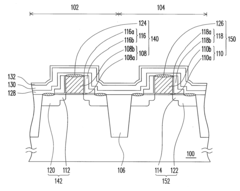
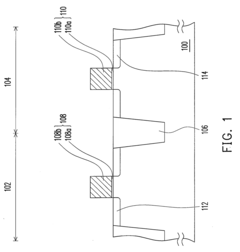
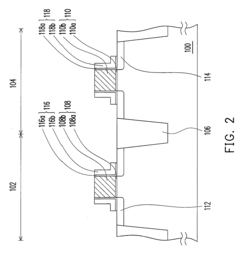
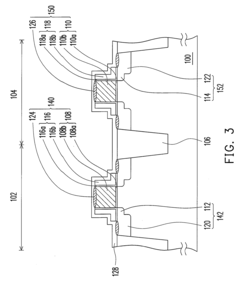
Complementary metal-oxide-semiconductor transistor and method of fabricating the same
PatentInactiveUS20080237734A1
Innovation
- A method involving the formation of device isolation structures, conductive type MOS transistors with specific gate and doped regions, nitride spacers, and stress layers, where the thickness of nitride spacers is reduced through an etching process to increase stress in the channel region, particularly for N-type MOS transistors, to enhance driving current gain and overall device performance.
Asymmetrical layout for complementary metal-oxide-semiconductor integrated circuit to reduce power consumption
PatentInactiveUS20090072320A1
Innovation
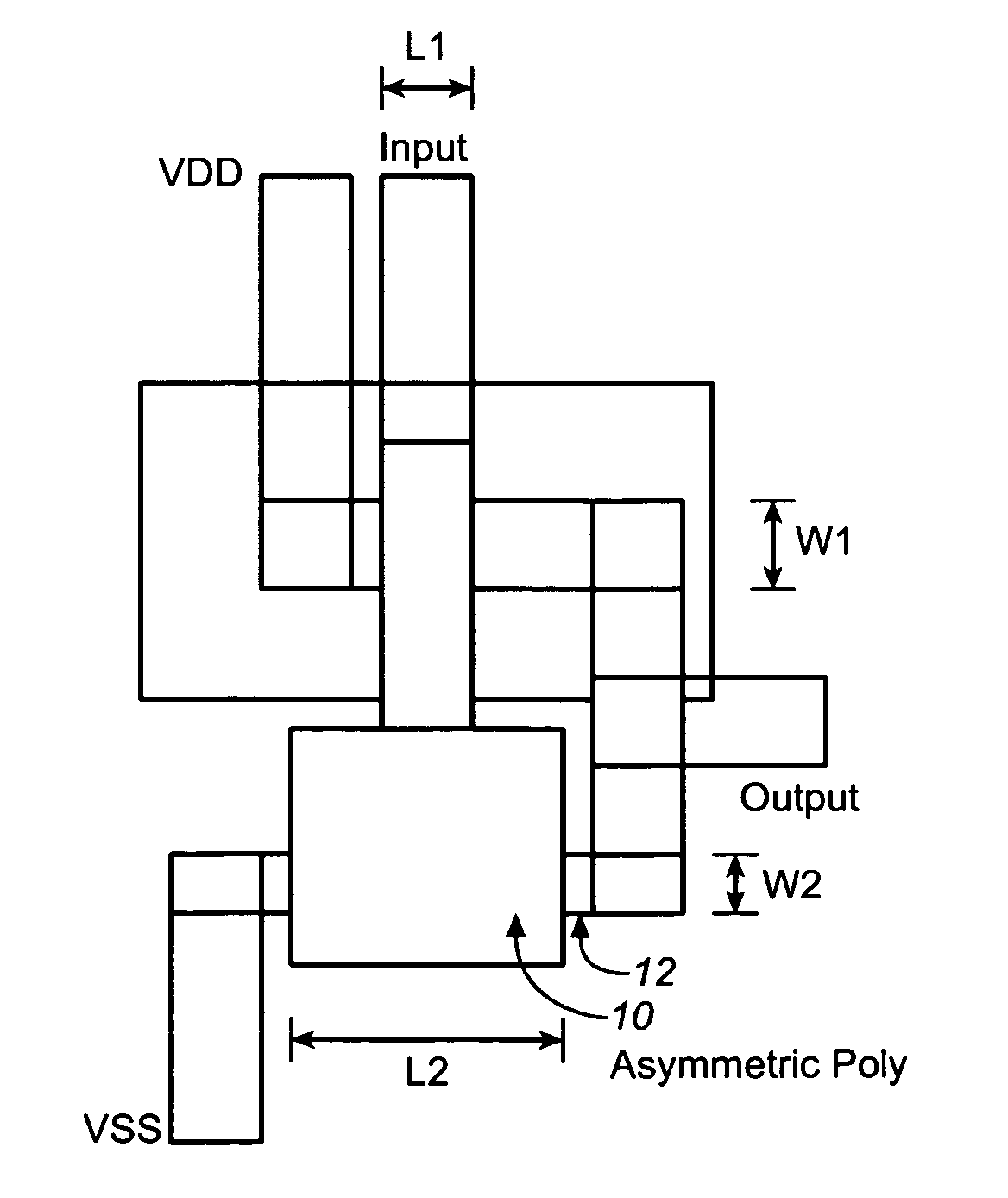
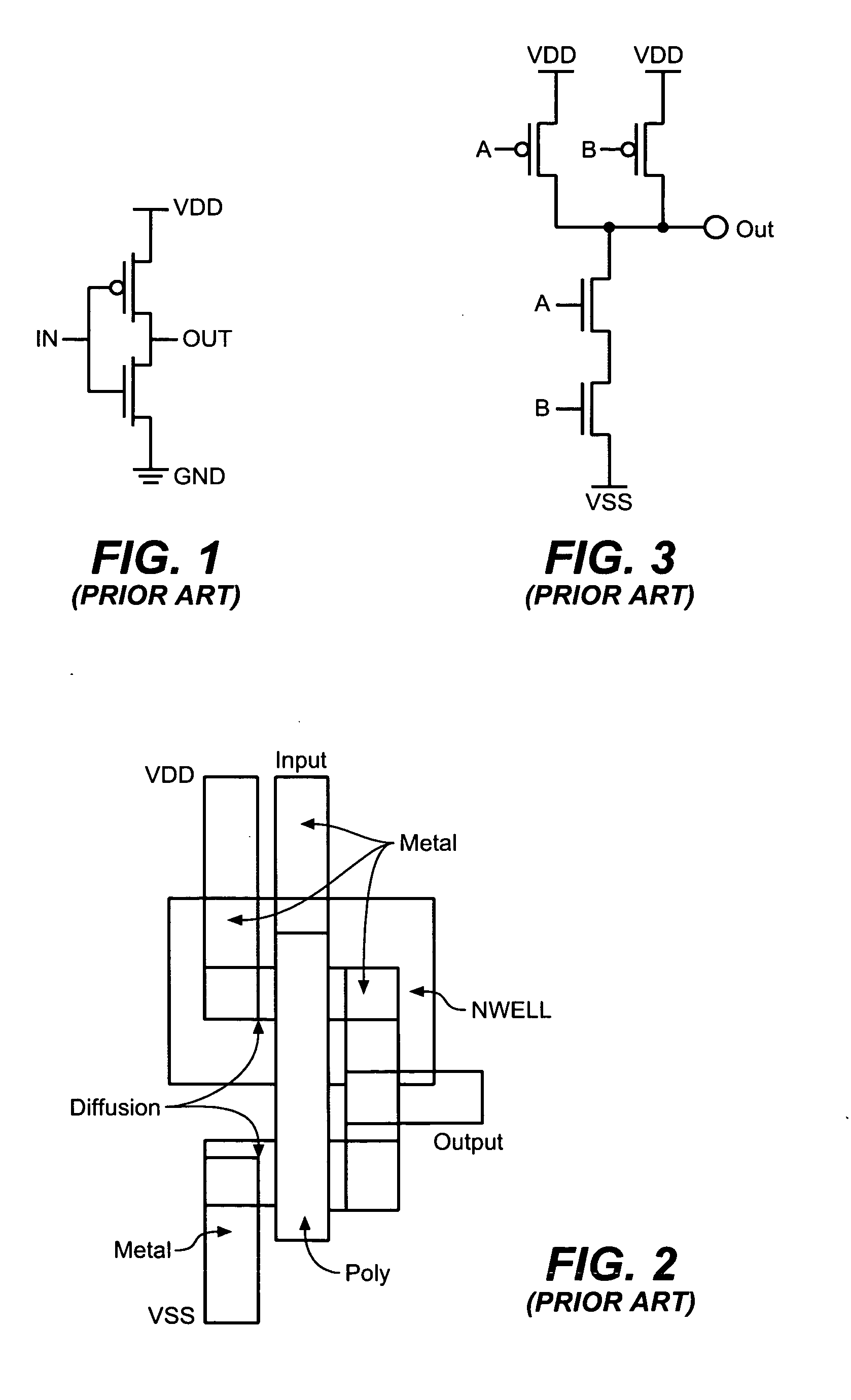
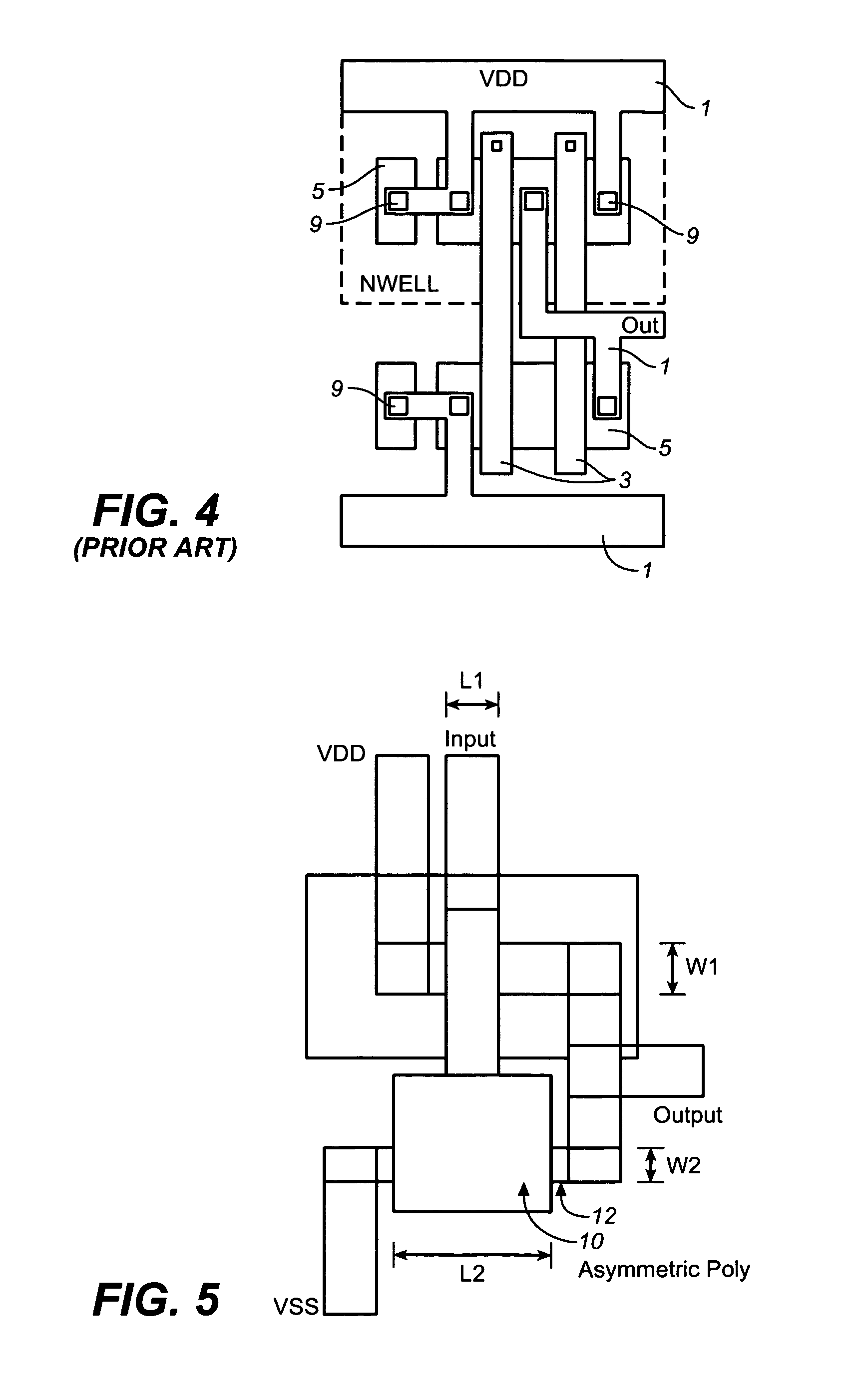
- The implementation of an asymmetrical polysilicon gate and diffusion layout in CMOS integrated circuits, where the polysilicon gate and diffusion dimensions are asymmetrical, causing P-type and N-type transistors to switch at different times, thereby reducing short circuit current and power consumption.

Network Downtime Mitigation
Network downtime is a critical concern in complex networking environments, particularly when it comes to renewing CMOS batteries. Minimizing disruptions during this essential maintenance task is crucial for ensuring continuous network operations and maintaining business productivity. To mitigate network downtime effectively, organizations must implement a comprehensive strategy that addresses both technical and operational aspects.
One key approach to reducing downtime is careful planning and scheduling. By identifying low-traffic periods or maintenance windows, IT teams can minimize the impact on users and critical business processes. This may involve conducting CMOS battery replacements during off-hours or weekends when network usage is typically lower. Additionally, implementing a rolling update strategy across different network segments can help maintain partial connectivity throughout the process.
Redundancy plays a vital role in downtime mitigation. Deploying redundant network paths, switches, and routers can provide alternative routes for data traffic during maintenance activities. This approach ensures that if one segment of the network is temporarily offline for CMOS battery replacement, other paths remain available to maintain connectivity. Implementing hot-swappable components and modular designs in network infrastructure can further reduce the time required for battery replacement.
Automation and remote management tools are invaluable for minimizing downtime. Advanced network management systems can facilitate remote CMOS battery monitoring, allowing IT teams to proactively identify and address potential issues before they lead to failures. These tools can also enable remote configuration and rebooting of network devices, reducing the need for on-site interventions and shortening the overall maintenance window.
Clear communication and coordination among IT staff, end-users, and stakeholders are essential for successful downtime mitigation. Establishing a well-defined change management process ensures that all parties are aware of scheduled maintenance activities and their potential impact. This includes providing advance notice of planned downtime, setting realistic expectations for service restoration, and offering alternative communication channels or workarounds during the maintenance period.
Testing and validation procedures are crucial to minimize unexpected issues and reduce the risk of extended downtime. Conducting thorough pre-maintenance checks, simulating the battery replacement process in a test environment, and having a well-defined rollback plan can help address potential complications quickly. Post-replacement testing should verify the proper functioning of all affected systems and confirm that network services have been fully restored.
By implementing these strategies and best practices, organizations can significantly reduce the impact of CMOS battery renewals on network availability in complex environments. This proactive approach not only minimizes disruptions but also enhances overall network reliability and resilience.
One key approach to reducing downtime is careful planning and scheduling. By identifying low-traffic periods or maintenance windows, IT teams can minimize the impact on users and critical business processes. This may involve conducting CMOS battery replacements during off-hours or weekends when network usage is typically lower. Additionally, implementing a rolling update strategy across different network segments can help maintain partial connectivity throughout the process.
Redundancy plays a vital role in downtime mitigation. Deploying redundant network paths, switches, and routers can provide alternative routes for data traffic during maintenance activities. This approach ensures that if one segment of the network is temporarily offline for CMOS battery replacement, other paths remain available to maintain connectivity. Implementing hot-swappable components and modular designs in network infrastructure can further reduce the time required for battery replacement.
Automation and remote management tools are invaluable for minimizing downtime. Advanced network management systems can facilitate remote CMOS battery monitoring, allowing IT teams to proactively identify and address potential issues before they lead to failures. These tools can also enable remote configuration and rebooting of network devices, reducing the need for on-site interventions and shortening the overall maintenance window.
Clear communication and coordination among IT staff, end-users, and stakeholders are essential for successful downtime mitigation. Establishing a well-defined change management process ensures that all parties are aware of scheduled maintenance activities and their potential impact. This includes providing advance notice of planned downtime, setting realistic expectations for service restoration, and offering alternative communication channels or workarounds during the maintenance period.
Testing and validation procedures are crucial to minimize unexpected issues and reduce the risk of extended downtime. Conducting thorough pre-maintenance checks, simulating the battery replacement process in a test environment, and having a well-defined rollback plan can help address potential complications quickly. Post-replacement testing should verify the proper functioning of all affected systems and confirm that network services have been fully restored.
By implementing these strategies and best practices, organizations can significantly reduce the impact of CMOS battery renewals on network availability in complex environments. This proactive approach not only minimizes disruptions but also enhances overall network reliability and resilience.
Environmental Impact Assessment
The environmental impact of renewing CMOS batteries in complex networking environments is a critical consideration that extends beyond the immediate technical aspects. The process involves the handling and disposal of electronic components, which can have significant ecological implications if not managed properly.
One of the primary environmental concerns is the potential release of hazardous materials contained within CMOS batteries. These batteries often contain lithium, which can be harmful to ecosystems if not disposed of correctly. The renewal process may involve the removal and replacement of these batteries, necessitating proper recycling protocols to prevent contamination of soil and water resources.
In complex networking environments, the scale of CMOS battery renewal can amplify environmental risks. Large data centers and extensive network infrastructures may require the simultaneous replacement of numerous batteries, increasing the volume of potentially hazardous waste. This scale demands robust waste management strategies to mitigate environmental impact.
Energy consumption is another significant factor to consider. The renewal process often requires powering down and restarting network components, which can lead to increased energy usage during the maintenance period. In large-scale operations, this temporary spike in energy consumption could contribute to increased carbon emissions, particularly if the power source relies heavily on fossil fuels.
The manufacturing and transportation of replacement CMOS batteries also contribute to the overall environmental footprint. The production of new batteries involves resource extraction and energy-intensive manufacturing processes. Additionally, the global distribution of these components can result in substantial carbon emissions from transportation.
However, the environmental impact assessment should also consider the positive aspects of CMOS battery renewal. Proper maintenance and timely replacement of these batteries can extend the lifespan of network equipment, reducing the frequency of hardware replacements and thereby decreasing electronic waste generation in the long term.
To minimize negative environmental impacts, organizations should implement comprehensive recycling programs for used CMOS batteries and other electronic components. Partnering with certified e-waste recycling facilities can ensure that hazardous materials are handled safely and valuable resources are recovered.
Furthermore, adopting energy-efficient practices during the renewal process can help offset the environmental impact. This may include scheduling maintenance during off-peak hours to minimize disruption and energy consumption, as well as optimizing the renewal process to reduce downtime and associated energy waste.
In conclusion, while the renewal of CMOS batteries in complex networking environments does pose certain environmental challenges, these can be effectively managed through responsible practices and strategic planning. By prioritizing proper disposal, recycling, and energy efficiency, organizations can minimize the ecological footprint of this necessary maintenance process.
One of the primary environmental concerns is the potential release of hazardous materials contained within CMOS batteries. These batteries often contain lithium, which can be harmful to ecosystems if not disposed of correctly. The renewal process may involve the removal and replacement of these batteries, necessitating proper recycling protocols to prevent contamination of soil and water resources.
In complex networking environments, the scale of CMOS battery renewal can amplify environmental risks. Large data centers and extensive network infrastructures may require the simultaneous replacement of numerous batteries, increasing the volume of potentially hazardous waste. This scale demands robust waste management strategies to mitigate environmental impact.
Energy consumption is another significant factor to consider. The renewal process often requires powering down and restarting network components, which can lead to increased energy usage during the maintenance period. In large-scale operations, this temporary spike in energy consumption could contribute to increased carbon emissions, particularly if the power source relies heavily on fossil fuels.
The manufacturing and transportation of replacement CMOS batteries also contribute to the overall environmental footprint. The production of new batteries involves resource extraction and energy-intensive manufacturing processes. Additionally, the global distribution of these components can result in substantial carbon emissions from transportation.
However, the environmental impact assessment should also consider the positive aspects of CMOS battery renewal. Proper maintenance and timely replacement of these batteries can extend the lifespan of network equipment, reducing the frequency of hardware replacements and thereby decreasing electronic waste generation in the long term.
To minimize negative environmental impacts, organizations should implement comprehensive recycling programs for used CMOS batteries and other electronic components. Partnering with certified e-waste recycling facilities can ensure that hazardous materials are handled safely and valuable resources are recovered.
Furthermore, adopting energy-efficient practices during the renewal process can help offset the environmental impact. This may include scheduling maintenance during off-peak hours to minimize disruption and energy consumption, as well as optimizing the renewal process to reduce downtime and associated energy waste.
In conclusion, while the renewal of CMOS batteries in complex networking environments does pose certain environmental challenges, these can be effectively managed through responsible practices and strategic planning. By prioritizing proper disposal, recycling, and energy efficiency, organizations can minimize the ecological footprint of this necessary maintenance process.
Unlock deeper insights with PatSnap Eureka Quick Research — get a full tech report to explore trends and direct your research. Try now!
Generate Your Research Report Instantly with AI Agent
Supercharge your innovation with PatSnap Eureka AI Agent Platform!