

How CMOS Battery Facilitates Comprehensive Software Optimization Designs?
JUL 22, 20259 MIN READ
Generate Your Research Report Instantly with AI Agent
PatSnap Eureka helps you evaluate technical feasibility & market potential.
CMOS Battery Evolution
The evolution of CMOS battery technology has played a crucial role in facilitating comprehensive software optimization designs. Initially introduced in the 1980s, CMOS (Complementary Metal-Oxide-Semiconductor) batteries were primarily used to maintain basic system settings and real-time clock information when a computer was powered off.
As computer systems became more complex, the importance of CMOS batteries in software optimization grew significantly. In the 1990s, CMOS batteries began to support more advanced BIOS (Basic Input/Output System) features, enabling the storage of detailed system configurations and hardware settings. This development allowed for more sophisticated software optimization techniques, as the BIOS could now retain critical information about system components and their optimal operating parameters.
The early 2000s saw a shift towards UEFI (Unified Extensible Firmware Interface) as a replacement for traditional BIOS. CMOS batteries adapted to support this transition, providing the necessary power to maintain UEFI settings and firmware configurations. This evolution enabled more comprehensive software optimization strategies, as UEFI offered greater flexibility and control over system initialization and runtime services.
With the advent of power management features in modern computing systems, CMOS batteries have taken on an even more critical role. They now support advanced power states and sleep modes, allowing for seamless transitions between different power configurations. This capability has become essential for software optimization techniques that aim to balance performance with energy efficiency.
In recent years, the integration of machine learning and artificial intelligence into system management has further expanded the role of CMOS batteries. These batteries now support the retention of learned system behaviors and optimization patterns, enabling more intelligent and adaptive software optimization strategies. This has led to significant improvements in system performance, stability, and energy efficiency across a wide range of computing devices.
The miniaturization of electronic components has also influenced CMOS battery evolution. Modern CMOS batteries are smaller, more efficient, and have longer lifespans than their predecessors. This has allowed for the implementation of more sophisticated software optimization techniques in compact devices such as smartphones, tablets, and wearables, where power management and system stability are critical concerns.
Looking towards the future, CMOS battery technology continues to evolve in support of emerging software optimization paradigms. Developments in non-volatile memory technologies and energy harvesting techniques are being explored to enhance the capabilities of CMOS batteries further. These advancements promise to enable even more comprehensive and intelligent software optimization designs, paving the way for the next generation of high-performance, energy-efficient computing systems.
As computer systems became more complex, the importance of CMOS batteries in software optimization grew significantly. In the 1990s, CMOS batteries began to support more advanced BIOS (Basic Input/Output System) features, enabling the storage of detailed system configurations and hardware settings. This development allowed for more sophisticated software optimization techniques, as the BIOS could now retain critical information about system components and their optimal operating parameters.
The early 2000s saw a shift towards UEFI (Unified Extensible Firmware Interface) as a replacement for traditional BIOS. CMOS batteries adapted to support this transition, providing the necessary power to maintain UEFI settings and firmware configurations. This evolution enabled more comprehensive software optimization strategies, as UEFI offered greater flexibility and control over system initialization and runtime services.
With the advent of power management features in modern computing systems, CMOS batteries have taken on an even more critical role. They now support advanced power states and sleep modes, allowing for seamless transitions between different power configurations. This capability has become essential for software optimization techniques that aim to balance performance with energy efficiency.
In recent years, the integration of machine learning and artificial intelligence into system management has further expanded the role of CMOS batteries. These batteries now support the retention of learned system behaviors and optimization patterns, enabling more intelligent and adaptive software optimization strategies. This has led to significant improvements in system performance, stability, and energy efficiency across a wide range of computing devices.
The miniaturization of electronic components has also influenced CMOS battery evolution. Modern CMOS batteries are smaller, more efficient, and have longer lifespans than their predecessors. This has allowed for the implementation of more sophisticated software optimization techniques in compact devices such as smartphones, tablets, and wearables, where power management and system stability are critical concerns.
Looking towards the future, CMOS battery technology continues to evolve in support of emerging software optimization paradigms. Developments in non-volatile memory technologies and energy harvesting techniques are being explored to enhance the capabilities of CMOS batteries further. These advancements promise to enable even more comprehensive and intelligent software optimization designs, paving the way for the next generation of high-performance, energy-efficient computing systems.
Software Optimization Demand
The demand for software optimization has grown exponentially in recent years, driven by the increasing complexity of modern computing systems and the ever-growing need for improved performance, efficiency, and user experience. As software applications become more sophisticated and resource-intensive, the importance of optimizing their performance has become paramount across various industries and sectors.
In the realm of personal computing and enterprise systems, software optimization plays a crucial role in enhancing system responsiveness, reducing power consumption, and maximizing hardware utilization. Users expect applications to load quickly, run smoothly, and consume minimal system resources. This demand has led to a focus on optimizing software for faster startup times, reduced memory footprint, and improved overall system performance.
The mobile computing sector has been a significant driver of software optimization demand. With the proliferation of smartphones and tablets, developers face the challenge of creating applications that deliver high performance while operating within the constraints of limited battery life and processing power. This has spurred innovation in areas such as code efficiency, power management algorithms, and adaptive performance techniques.
In the realm of cloud computing and data centers, software optimization is critical for managing large-scale infrastructure and reducing operational costs. Cloud service providers and enterprise IT departments are constantly seeking ways to optimize their software stacks to improve server utilization, reduce energy consumption, and enhance the scalability of their services. This has led to advancements in areas such as containerization, microservices architecture, and serverless computing.
The gaming industry has also been a major contributor to the demand for software optimization. Modern video games require intricate balance between stunning graphics, complex physics simulations, and responsive gameplay. Game developers are continually pushing the boundaries of what's possible on current hardware, driving the need for highly optimized game engines and rendering techniques.
In the field of artificial intelligence and machine learning, software optimization is crucial for developing and deploying complex models efficiently. As AI applications become more prevalent in various domains, there is a growing need for optimized algorithms and frameworks that can process vast amounts of data quickly and make real-time decisions.
The Internet of Things (IoT) has introduced new challenges and opportunities for software optimization. With billions of connected devices generating and processing data, there is a pressing need for efficient software solutions that can operate on resource-constrained devices while maintaining security and reliability.
As software systems continue to grow in complexity and scale, the demand for comprehensive optimization strategies that address performance, energy efficiency, and resource utilization across diverse computing environments will only intensify. This trend underscores the critical role of innovative approaches to software optimization in shaping the future of technology and digital experiences.
In the realm of personal computing and enterprise systems, software optimization plays a crucial role in enhancing system responsiveness, reducing power consumption, and maximizing hardware utilization. Users expect applications to load quickly, run smoothly, and consume minimal system resources. This demand has led to a focus on optimizing software for faster startup times, reduced memory footprint, and improved overall system performance.
The mobile computing sector has been a significant driver of software optimization demand. With the proliferation of smartphones and tablets, developers face the challenge of creating applications that deliver high performance while operating within the constraints of limited battery life and processing power. This has spurred innovation in areas such as code efficiency, power management algorithms, and adaptive performance techniques.
In the realm of cloud computing and data centers, software optimization is critical for managing large-scale infrastructure and reducing operational costs. Cloud service providers and enterprise IT departments are constantly seeking ways to optimize their software stacks to improve server utilization, reduce energy consumption, and enhance the scalability of their services. This has led to advancements in areas such as containerization, microservices architecture, and serverless computing.
The gaming industry has also been a major contributor to the demand for software optimization. Modern video games require intricate balance between stunning graphics, complex physics simulations, and responsive gameplay. Game developers are continually pushing the boundaries of what's possible on current hardware, driving the need for highly optimized game engines and rendering techniques.
In the field of artificial intelligence and machine learning, software optimization is crucial for developing and deploying complex models efficiently. As AI applications become more prevalent in various domains, there is a growing need for optimized algorithms and frameworks that can process vast amounts of data quickly and make real-time decisions.
The Internet of Things (IoT) has introduced new challenges and opportunities for software optimization. With billions of connected devices generating and processing data, there is a pressing need for efficient software solutions that can operate on resource-constrained devices while maintaining security and reliability.
As software systems continue to grow in complexity and scale, the demand for comprehensive optimization strategies that address performance, energy efficiency, and resource utilization across diverse computing environments will only intensify. This trend underscores the critical role of innovative approaches to software optimization in shaping the future of technology and digital experiences.
CMOS Battery Tech Challenges
The CMOS battery, a critical component in modern computing systems, faces several technical challenges that impact its role in facilitating comprehensive software optimization designs. One of the primary issues is the limited lifespan of these batteries, typically ranging from 3 to 5 years. This relatively short duration can lead to unexpected system failures and data loss, particularly in long-term deployments or in environments where regular maintenance is challenging.
Another significant challenge is the battery's sensitivity to temperature fluctuations. Extreme temperatures, both hot and cold, can dramatically reduce the CMOS battery's efficiency and lifespan. This sensitivity poses difficulties in maintaining consistent system performance across diverse operating environments, from data centers to industrial settings.
The size constraints of CMOS batteries present another hurdle. As electronic devices continue to shrink, the space allocated for these batteries becomes increasingly limited. This miniaturization trend conflicts with the need for batteries with sufficient capacity to support extended periods of operation, creating a delicate balance between form factor and functionality.
Power consumption is an ongoing concern. While CMOS batteries are designed for low power draw, the cumulative effect of powering the CMOS chip over extended periods can be significant. This constant drain, albeit small, impacts overall system energy efficiency and can be a critical factor in power-sensitive applications or mobile devices.
Compatibility issues arise as hardware and software evolve. Newer system designs may require different voltage levels or form factors, potentially rendering existing CMOS battery solutions obsolete. This challenge necessitates continuous adaptation and redesign of CMOS battery implementations to keep pace with technological advancements.
Environmental concerns also play a role in CMOS battery technology challenges. The materials used in these batteries, particularly lithium, raise questions about sustainability and proper disposal. As global environmental regulations become more stringent, finding eco-friendly alternatives or improving recycling processes becomes increasingly important.
Lastly, the integration of CMOS batteries with advanced power management systems presents both opportunities and challenges. While sophisticated power management can extend battery life and improve overall system efficiency, it also introduces complexity in design and potential points of failure. Balancing the benefits of advanced power management with the simplicity and reliability of traditional CMOS battery setups remains a significant technical challenge in the quest for optimal software and hardware integration.
Another significant challenge is the battery's sensitivity to temperature fluctuations. Extreme temperatures, both hot and cold, can dramatically reduce the CMOS battery's efficiency and lifespan. This sensitivity poses difficulties in maintaining consistent system performance across diverse operating environments, from data centers to industrial settings.
The size constraints of CMOS batteries present another hurdle. As electronic devices continue to shrink, the space allocated for these batteries becomes increasingly limited. This miniaturization trend conflicts with the need for batteries with sufficient capacity to support extended periods of operation, creating a delicate balance between form factor and functionality.
Power consumption is an ongoing concern. While CMOS batteries are designed for low power draw, the cumulative effect of powering the CMOS chip over extended periods can be significant. This constant drain, albeit small, impacts overall system energy efficiency and can be a critical factor in power-sensitive applications or mobile devices.
Compatibility issues arise as hardware and software evolve. Newer system designs may require different voltage levels or form factors, potentially rendering existing CMOS battery solutions obsolete. This challenge necessitates continuous adaptation and redesign of CMOS battery implementations to keep pace with technological advancements.
Environmental concerns also play a role in CMOS battery technology challenges. The materials used in these batteries, particularly lithium, raise questions about sustainability and proper disposal. As global environmental regulations become more stringent, finding eco-friendly alternatives or improving recycling processes becomes increasingly important.
Lastly, the integration of CMOS batteries with advanced power management systems presents both opportunities and challenges. While sophisticated power management can extend battery life and improve overall system efficiency, it also introduces complexity in design and potential points of failure. Balancing the benefits of advanced power management with the simplicity and reliability of traditional CMOS battery setups remains a significant technical challenge in the quest for optimal software and hardware integration.
Current CMOS-Software Solutions
01 Power management optimization for CMOS battery
Software techniques to optimize power consumption and extend CMOS battery life in electronic devices. This includes implementing power-saving modes, intelligent sleep states, and dynamic voltage scaling to reduce energy usage while maintaining system functionality.- Power management optimization for CMOS battery: Software techniques to optimize power consumption and extend CMOS battery life in electronic devices. This includes implementing power-saving modes, intelligent sleep states, and dynamic voltage scaling to reduce energy usage while maintaining system functionality.
- CMOS configuration data management: Methods for efficiently storing, retrieving, and updating CMOS configuration data to minimize battery drain. This involves optimizing data access patterns, implementing compression techniques, and utilizing non-volatile memory to reduce reliance on the CMOS battery.
- Real-time monitoring and predictive maintenance: Software solutions for real-time monitoring of CMOS battery health and implementing predictive maintenance algorithms. These systems can forecast battery life, schedule replacements, and provide alerts to prevent unexpected failures.
- CMOS battery-aware system optimization: Techniques for optimizing overall system performance while considering CMOS battery constraints. This includes adaptive algorithms that balance processing power, memory usage, and battery life to ensure optimal device operation and longevity.
- Software-based CMOS battery emulation and virtualization: Innovative approaches to emulate or virtualize CMOS battery functionality through software, potentially reducing or eliminating the need for physical CMOS batteries in certain applications. This can include creating virtual CMOS environments or implementing software-based alternatives to traditional hardware solutions.
02 CMOS configuration data management
Methods for efficiently storing, retrieving, and updating CMOS configuration data to minimize battery drain. This involves optimizing data access patterns, implementing compression techniques, and utilizing non-volatile memory to reduce reliance on the CMOS battery.Expand Specific Solutions03 Real-time battery monitoring and prediction
Software algorithms for monitoring CMOS battery health, predicting remaining battery life, and providing timely alerts for replacement. These techniques help prevent data loss and system failures due to unexpected battery depletion.Expand Specific Solutions04 CMOS battery-aware system optimization
Adaptive software strategies that adjust system behavior based on CMOS battery status. This includes prioritizing critical tasks, deferring non-essential operations, and optimizing boot sequences to minimize battery drain during system startup and shutdown.Expand Specific Solutions05 Integration with power management firmware
Techniques for seamlessly integrating CMOS battery optimization with system-level power management firmware. This ensures coordinated power-saving efforts across hardware and software components, maximizing overall energy efficiency and battery longevity.Expand Specific Solutions
Key CMOS Battery Manufacturers
The CMOS battery optimization landscape is in a mature phase, with a well-established market and steady growth. The global market size for CMOS batteries is estimated to be in the billions of dollars, driven by the increasing demand for electronic devices and automotive applications. Technologically, the field is relatively mature, with incremental improvements rather than disruptive innovations. Key players like Texas Instruments, Intel, and IBM are focusing on enhancing battery life and performance through software optimization. Companies such as Samsung SDI and LG Energy Solution are also contributing to advancements in battery technology, while semiconductor manufacturers like TSMC and GlobalFoundries play crucial roles in developing energy-efficient chips that complement CMOS battery optimization efforts.
International Business Machines Corp.
Technical Solution: IBM has developed advanced CMOS battery management systems that facilitate comprehensive software optimization designs. Their approach integrates power-aware algorithms with hardware-level optimizations to maximize battery life and system performance. IBM's solution employs machine learning techniques to predict power consumption patterns and dynamically adjust system parameters[1]. This includes adaptive voltage scaling and frequency throttling based on real-time workload analysis. Additionally, IBM has implemented a novel sleep state management system that minimizes power draw during idle periods while ensuring rapid wake-up times[3]. The company has also focused on optimizing BIOS-level interactions with the CMOS battery to reduce unnecessary power drain and improve overall system stability.
Strengths: Extensive experience in enterprise-level systems, strong R&D capabilities, and a holistic approach to power management. Weaknesses: Solutions may be overly complex for smaller devices or consumer electronics.
HP Development Co. LP
Technical Solution: HP's approach to leveraging CMOS batteries for software optimization focuses on enhancing system resilience and energy efficiency. Their proprietary HP Sure Start technology utilizes the CMOS battery to maintain a secure, isolated environment for critical system firmware[5]. This allows for continuous monitoring and automatic recovery of BIOS, ensuring system integrity even in the face of power loss or malicious attacks. HP has also developed adaptive power management algorithms that learn from user behavior patterns to optimize CMOS battery usage and extend its lifespan. Their solution includes a smart charging system that balances the load between the main battery and CMOS battery, reducing wear and improving overall system longevity[6]. Additionally, HP's software optimization includes power-aware scheduling techniques that coordinate with the CMOS battery status to prioritize tasks and manage background processes efficiently.
Strengths: Strong focus on security and system resilience, innovative approaches to battery life extension. Weaknesses: Some features may be limited to HP-specific hardware.
CMOS Battery Innovations
Computing device and method for clearing data stored in complementary metal-oxide semiconductor chip
PatentInactiveUS20120047307A1
Innovation
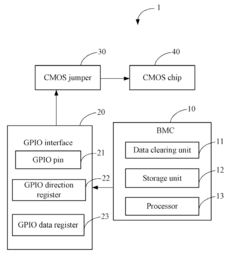
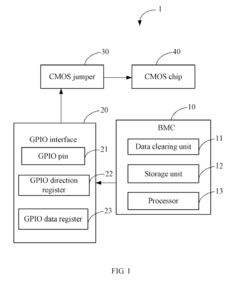
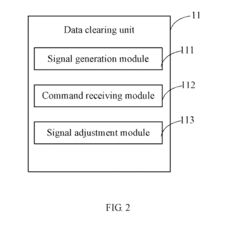
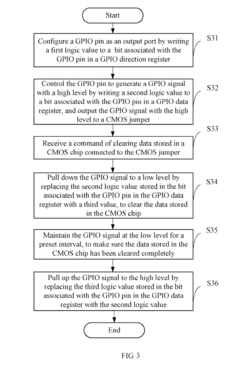
- A computing device with a data clearing unit that uses a GPIO interface to configure a CMOS jumper, generating a high-level signal to maintain data and then pulling it down to clear data stored in the CMOS chip, allowing for safe and controlled data reset.
Asymmetrical layout for complementary metal-oxide-semiconductor integrated circuit to reduce power consumption
PatentInactiveUS20090072320A1
Innovation
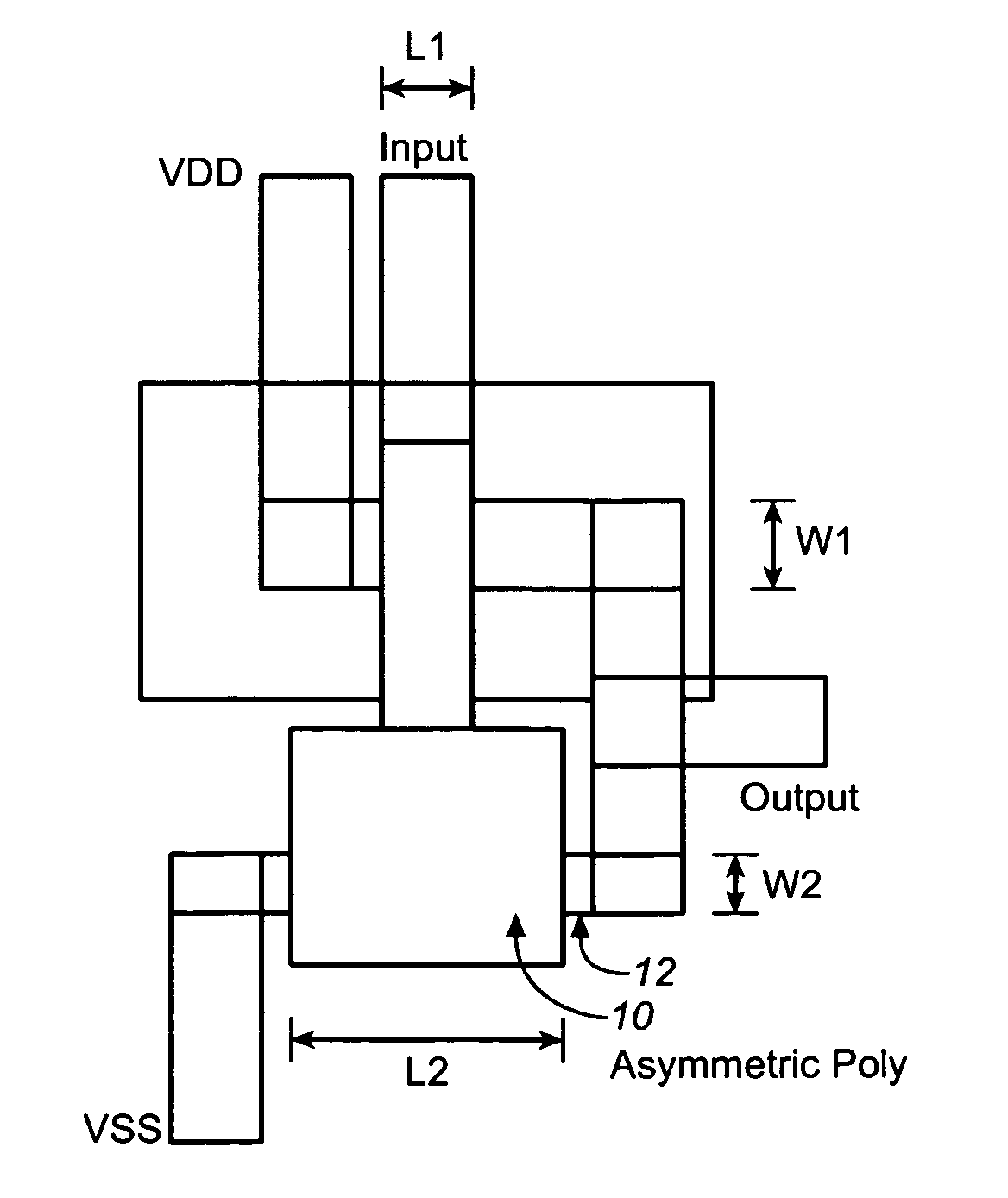
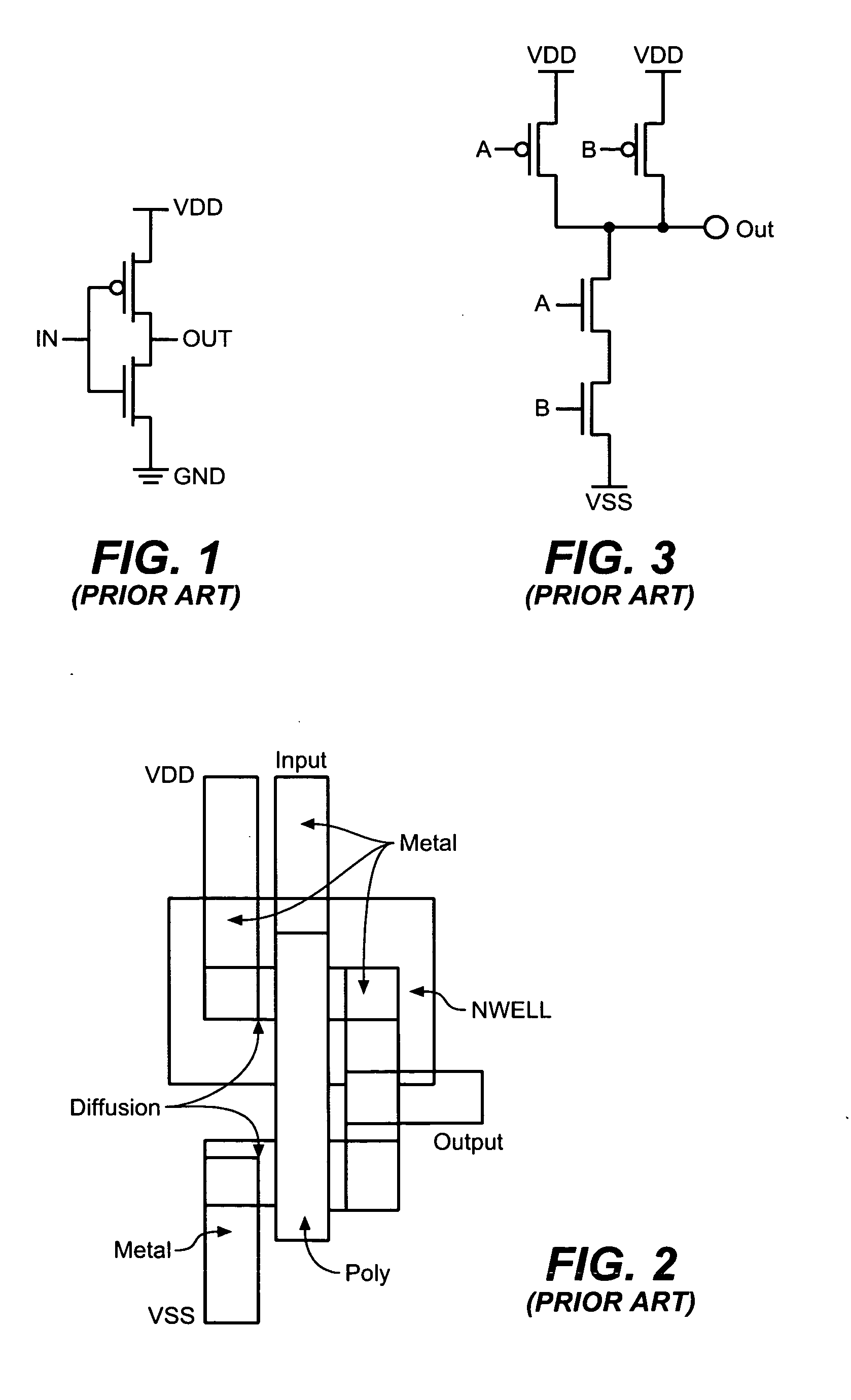
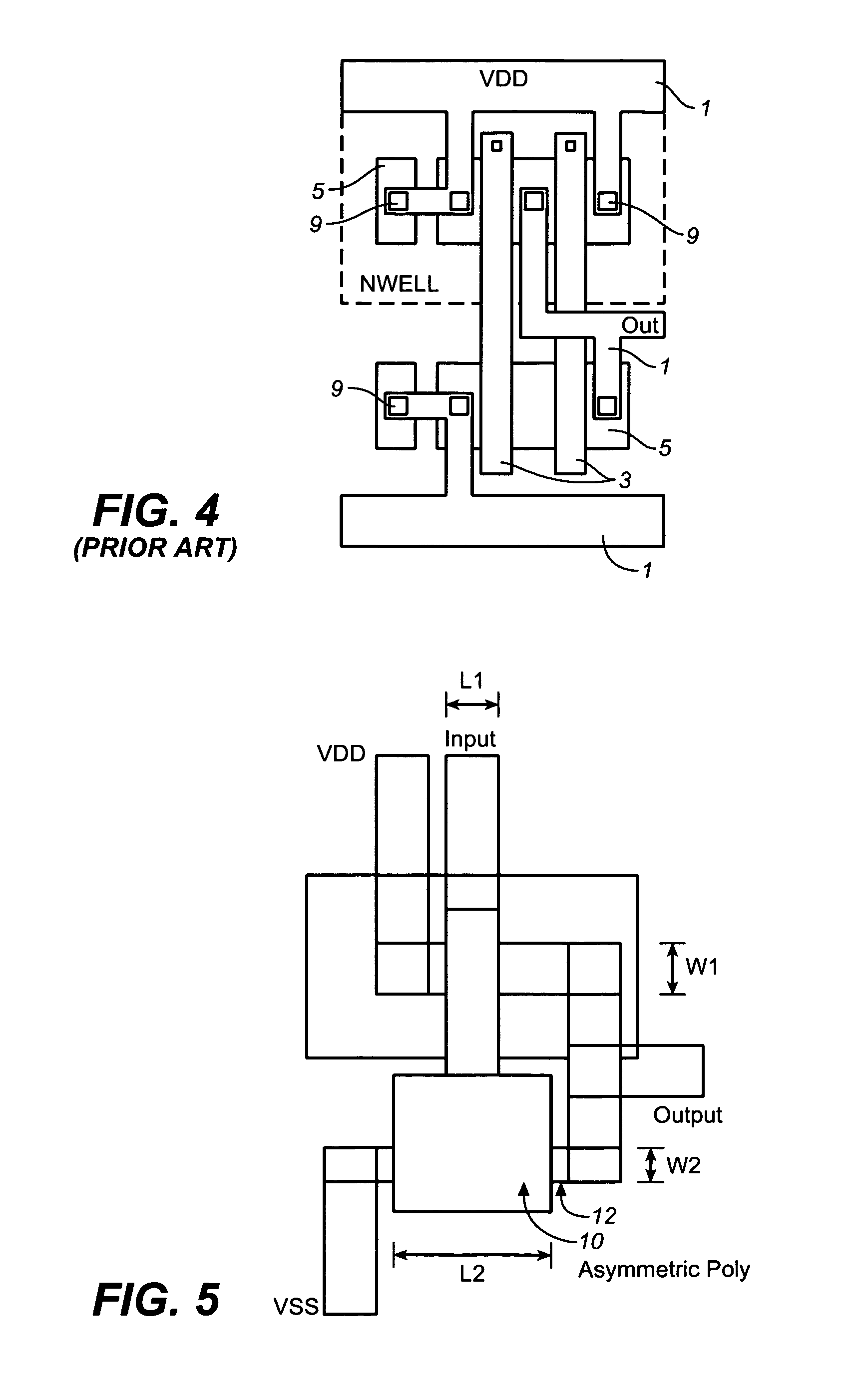
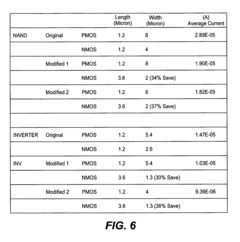
- The implementation of an asymmetrical polysilicon gate and diffusion layout in CMOS integrated circuits, where the polysilicon gate and diffusion dimensions are asymmetrical, causing P-type and N-type transistors to switch at different times, thereby reducing short circuit current and power consumption.
Power Management Strategies
Power management strategies play a crucial role in optimizing CMOS battery performance and enhancing overall software efficiency. These strategies focus on minimizing power consumption while maintaining system functionality and reliability. One key approach involves implementing dynamic voltage and frequency scaling (DVFS) techniques, which adjust the processor's voltage and clock speed based on workload demands. This adaptive method allows for significant power savings during periods of low activity while ensuring peak performance when required.
Another important strategy is the use of power gating, which selectively shuts down inactive components or blocks within the system. By isolating unused circuits, power leakage is reduced, contributing to extended battery life. Complementing this technique, clock gating is employed to disable clock signals to idle modules, further reducing dynamic power consumption.
Advanced power management also incorporates intelligent sleep modes and wake-up mechanisms. These features allow the system to enter low-power states during periods of inactivity and quickly resume normal operation when needed. The implementation of these modes requires careful consideration of wake-up latency and power-up sequences to maintain system responsiveness.
Thermal management is closely linked to power management strategies. Effective thermal design and management techniques help prevent overheating, which can lead to increased power consumption and reduced battery life. This includes the use of temperature sensors, adaptive cooling systems, and thermal-aware task scheduling algorithms.
Software-level optimizations also contribute significantly to power efficiency. Techniques such as code optimization, efficient memory management, and judicious use of system resources can reduce the overall computational load, thereby decreasing power demands. Additionally, implementing power-aware algorithms and data structures can further enhance energy efficiency.
The integration of hardware and software power management techniques is essential for achieving optimal results. This involves close collaboration between hardware designers and software developers to create synergistic solutions that leverage the strengths of both domains. By adopting a holistic approach to power management, systems can achieve a balance between performance, functionality, and energy efficiency, ultimately extending CMOS battery life and improving overall system reliability.
Another important strategy is the use of power gating, which selectively shuts down inactive components or blocks within the system. By isolating unused circuits, power leakage is reduced, contributing to extended battery life. Complementing this technique, clock gating is employed to disable clock signals to idle modules, further reducing dynamic power consumption.
Advanced power management also incorporates intelligent sleep modes and wake-up mechanisms. These features allow the system to enter low-power states during periods of inactivity and quickly resume normal operation when needed. The implementation of these modes requires careful consideration of wake-up latency and power-up sequences to maintain system responsiveness.
Thermal management is closely linked to power management strategies. Effective thermal design and management techniques help prevent overheating, which can lead to increased power consumption and reduced battery life. This includes the use of temperature sensors, adaptive cooling systems, and thermal-aware task scheduling algorithms.
Software-level optimizations also contribute significantly to power efficiency. Techniques such as code optimization, efficient memory management, and judicious use of system resources can reduce the overall computational load, thereby decreasing power demands. Additionally, implementing power-aware algorithms and data structures can further enhance energy efficiency.
The integration of hardware and software power management techniques is essential for achieving optimal results. This involves close collaboration between hardware designers and software developers to create synergistic solutions that leverage the strengths of both domains. By adopting a holistic approach to power management, systems can achieve a balance between performance, functionality, and energy efficiency, ultimately extending CMOS battery life and improving overall system reliability.
CMOS Security Implications
The CMOS battery plays a crucial role in maintaining system settings and facilitating software optimization designs, but it also introduces potential security implications that need to be carefully considered. One of the primary concerns is the vulnerability of CMOS data to physical tampering. Unauthorized access to the CMOS battery can allow malicious actors to alter system configurations, potentially compromising the integrity and security of the entire system.
Furthermore, the CMOS battery's function in retaining BIOS settings creates a potential attack vector. If an attacker gains physical access to a device, they could potentially remove the CMOS battery to reset the BIOS to default settings, bypassing security measures such as boot passwords or secure boot configurations. This could enable the installation of malicious bootloaders or the modification of critical system parameters.
Another security implication arises from the CMOS battery's role in maintaining the system clock. Time-based security mechanisms, such as certificate validation and time-limited software licenses, rely on accurate timekeeping. A compromised or failing CMOS battery could lead to clock drift or reset, potentially causing these security features to malfunction or become ineffective.
The CMOS memory's persistence also raises concerns about data retention. Even after a system is powered off, sensitive information stored in CMOS memory remains accessible. This could include network configurations, hardware settings, and other potentially valuable data for attackers. Proper sanitization procedures must be implemented when decommissioning or repurposing hardware to prevent unauthorized access to this residual data.
Additionally, the CMOS battery's involvement in power management features can have security implications. Malicious actors could potentially exploit power management settings to execute attacks, such as manipulating sleep states to bypass security controls or initiating unexpected system behavior. Careful consideration must be given to the security aspects of power management configurations stored in CMOS memory.
Lastly, the long-term reliability of CMOS batteries introduces a unique security challenge. As batteries degrade over time, they may cause intermittent system instability or unexpected resets. This unpredictability can potentially be exploited by attackers to induce system failures or create windows of vulnerability during which security measures might be temporarily disabled or bypassed.
Furthermore, the CMOS battery's function in retaining BIOS settings creates a potential attack vector. If an attacker gains physical access to a device, they could potentially remove the CMOS battery to reset the BIOS to default settings, bypassing security measures such as boot passwords or secure boot configurations. This could enable the installation of malicious bootloaders or the modification of critical system parameters.
Another security implication arises from the CMOS battery's role in maintaining the system clock. Time-based security mechanisms, such as certificate validation and time-limited software licenses, rely on accurate timekeeping. A compromised or failing CMOS battery could lead to clock drift or reset, potentially causing these security features to malfunction or become ineffective.
The CMOS memory's persistence also raises concerns about data retention. Even after a system is powered off, sensitive information stored in CMOS memory remains accessible. This could include network configurations, hardware settings, and other potentially valuable data for attackers. Proper sanitization procedures must be implemented when decommissioning or repurposing hardware to prevent unauthorized access to this residual data.
Additionally, the CMOS battery's involvement in power management features can have security implications. Malicious actors could potentially exploit power management settings to execute attacks, such as manipulating sleep states to bypass security controls or initiating unexpected system behavior. Careful consideration must be given to the security aspects of power management configurations stored in CMOS memory.
Lastly, the long-term reliability of CMOS batteries introduces a unique security challenge. As batteries degrade over time, they may cause intermittent system instability or unexpected resets. This unpredictability can potentially be exploited by attackers to induce system failures or create windows of vulnerability during which security measures might be temporarily disabled or bypassed.
Unlock deeper insights with PatSnap Eureka Quick Research — get a full tech report to explore trends and direct your research. Try now!
Generate Your Research Report Instantly with AI Agent
Supercharge your innovation with PatSnap Eureka AI Agent Platform!