How CMOS Battery Guides Revolutionary Software Strategy Developments?
JUL 22, 20259 MIN READ
Generate Your Research Report Instantly with AI Agent
PatSnap Eureka helps you evaluate technical feasibility & market potential.
CMOS Battery Evolution
The evolution of CMOS battery technology has played a pivotal role in shaping software strategy developments across the computing industry. Initially introduced in the 1980s as a simple power source for maintaining basic system settings, CMOS batteries have undergone significant transformations that have far-reaching implications for software design and implementation.
In the early days of personal computing, CMOS batteries were primarily used to keep the system clock running and preserve BIOS settings when the main power was disconnected. This seemingly minor function laid the groundwork for more sophisticated software strategies, as it ensured system consistency and reliability across power cycles. As computing systems became more complex, the role of CMOS batteries expanded to support an increasing array of firmware and low-level software functions.
The transition from traditional BIOS to UEFI (Unified Extensible Firmware Interface) marked a significant milestone in CMOS battery evolution. This shift allowed for more advanced power management techniques and enabled software developers to create more robust and feature-rich applications that could interact with system firmware in novel ways. The persistent storage provided by CMOS batteries became crucial for maintaining security settings, boot configurations, and other critical system parameters.
As mobile computing gained prominence, the demands on CMOS battery technology intensified. Manufacturers sought to develop smaller, longer-lasting batteries that could support the power-saving features essential for portable devices. This drive for efficiency led to innovations in both hardware and software, with operating systems and applications being designed to work in harmony with the capabilities of modern CMOS batteries.
The advent of cloud computing and always-on connectivity further transformed the landscape. CMOS batteries now play a vital role in maintaining system integrity during network-based updates and remote management operations. This has necessitated the development of more sophisticated software strategies for handling system states, ensuring data persistence, and managing power across distributed computing environments.
Recent advancements in CMOS battery technology have focused on improving energy density, reducing environmental impact, and enhancing integration with other system components. These improvements have enabled software developers to push the boundaries of what's possible in terms of system responsiveness, power efficiency, and data retention. The evolution of CMOS batteries has thus become a key driver in the development of innovative software strategies that optimize performance while minimizing power consumption.
Looking ahead, the continued evolution of CMOS battery technology is set to enable even more revolutionary software approaches. As we move towards more sustainable and efficient computing paradigms, the interplay between CMOS batteries and software strategy will remain a critical area of innovation, shaping the future of computing across all sectors.
In the early days of personal computing, CMOS batteries were primarily used to keep the system clock running and preserve BIOS settings when the main power was disconnected. This seemingly minor function laid the groundwork for more sophisticated software strategies, as it ensured system consistency and reliability across power cycles. As computing systems became more complex, the role of CMOS batteries expanded to support an increasing array of firmware and low-level software functions.
The transition from traditional BIOS to UEFI (Unified Extensible Firmware Interface) marked a significant milestone in CMOS battery evolution. This shift allowed for more advanced power management techniques and enabled software developers to create more robust and feature-rich applications that could interact with system firmware in novel ways. The persistent storage provided by CMOS batteries became crucial for maintaining security settings, boot configurations, and other critical system parameters.
As mobile computing gained prominence, the demands on CMOS battery technology intensified. Manufacturers sought to develop smaller, longer-lasting batteries that could support the power-saving features essential for portable devices. This drive for efficiency led to innovations in both hardware and software, with operating systems and applications being designed to work in harmony with the capabilities of modern CMOS batteries.
The advent of cloud computing and always-on connectivity further transformed the landscape. CMOS batteries now play a vital role in maintaining system integrity during network-based updates and remote management operations. This has necessitated the development of more sophisticated software strategies for handling system states, ensuring data persistence, and managing power across distributed computing environments.
Recent advancements in CMOS battery technology have focused on improving energy density, reducing environmental impact, and enhancing integration with other system components. These improvements have enabled software developers to push the boundaries of what's possible in terms of system responsiveness, power efficiency, and data retention. The evolution of CMOS batteries has thus become a key driver in the development of innovative software strategies that optimize performance while minimizing power consumption.
Looking ahead, the continued evolution of CMOS battery technology is set to enable even more revolutionary software approaches. As we move towards more sustainable and efficient computing paradigms, the interplay between CMOS batteries and software strategy will remain a critical area of innovation, shaping the future of computing across all sectors.
Software Strategy Market
The software strategy market has undergone significant transformations in recent years, driven by the increasing complexity of technological ecosystems and the growing demand for innovative solutions. As organizations strive to maintain competitive advantages, the role of CMOS batteries in guiding software strategy developments has become increasingly prominent. This market segment has experienced substantial growth, with a compound annual growth rate (CAGR) exceeding industry averages over the past five years.
The demand for software strategies that leverage CMOS battery capabilities is primarily fueled by the need for enhanced power management, system reliability, and data integrity in various computing environments. Industries such as healthcare, finance, and telecommunications have shown particular interest in adopting these strategies to improve operational efficiency and reduce downtime. The market has also seen a surge in demand from the Internet of Things (IoT) sector, where power-efficient software solutions are crucial for extending device lifespans and optimizing performance.
Key players in the software strategy market have recognized the potential of CMOS battery-guided developments and have begun integrating these concepts into their product offerings. Major technology firms and specialized software companies are investing heavily in research and development to create innovative solutions that capitalize on the unique properties of CMOS batteries. This has led to the emergence of new market segments, including predictive maintenance software, energy-aware application development platforms, and advanced system recovery tools.
The market landscape is characterized by a mix of established players and agile startups, each vying for market share through differentiated offerings. Larger corporations are leveraging their extensive resources and existing customer bases to roll out comprehensive software strategy suites, while smaller companies are focusing on niche applications and specialized solutions. This dynamic has fostered a highly competitive environment, driving rapid innovation and frequent product releases.
Geographically, North America and Europe lead in terms of market share, owing to their advanced technological infrastructure and early adoption of CMOS battery-guided software strategies. However, the Asia-Pacific region is experiencing the fastest growth, propelled by increasing digitalization efforts and substantial investments in IT infrastructure across emerging economies. This regional disparity presents both challenges and opportunities for market players seeking global expansion.
Looking ahead, the software strategy market is poised for continued growth, with CMOS battery-guided developments playing a pivotal role in shaping future trends. As organizations increasingly prioritize energy efficiency, system resilience, and data protection, the demand for sophisticated software strategies is expected to rise. This market evolution is likely to spur further innovation, partnerships, and potential consolidation among industry players, ultimately leading to more robust and integrated solutions for end-users across various sectors.
The demand for software strategies that leverage CMOS battery capabilities is primarily fueled by the need for enhanced power management, system reliability, and data integrity in various computing environments. Industries such as healthcare, finance, and telecommunications have shown particular interest in adopting these strategies to improve operational efficiency and reduce downtime. The market has also seen a surge in demand from the Internet of Things (IoT) sector, where power-efficient software solutions are crucial for extending device lifespans and optimizing performance.
Key players in the software strategy market have recognized the potential of CMOS battery-guided developments and have begun integrating these concepts into their product offerings. Major technology firms and specialized software companies are investing heavily in research and development to create innovative solutions that capitalize on the unique properties of CMOS batteries. This has led to the emergence of new market segments, including predictive maintenance software, energy-aware application development platforms, and advanced system recovery tools.
The market landscape is characterized by a mix of established players and agile startups, each vying for market share through differentiated offerings. Larger corporations are leveraging their extensive resources and existing customer bases to roll out comprehensive software strategy suites, while smaller companies are focusing on niche applications and specialized solutions. This dynamic has fostered a highly competitive environment, driving rapid innovation and frequent product releases.
Geographically, North America and Europe lead in terms of market share, owing to their advanced technological infrastructure and early adoption of CMOS battery-guided software strategies. However, the Asia-Pacific region is experiencing the fastest growth, propelled by increasing digitalization efforts and substantial investments in IT infrastructure across emerging economies. This regional disparity presents both challenges and opportunities for market players seeking global expansion.
Looking ahead, the software strategy market is poised for continued growth, with CMOS battery-guided developments playing a pivotal role in shaping future trends. As organizations increasingly prioritize energy efficiency, system resilience, and data protection, the demand for sophisticated software strategies is expected to rise. This market evolution is likely to spur further innovation, partnerships, and potential consolidation among industry players, ultimately leading to more robust and integrated solutions for end-users across various sectors.
CMOS-Software Challenges
The integration of CMOS battery technology with software development strategies presents a unique set of challenges that require innovative solutions. One of the primary obstacles is the limited power capacity of CMOS batteries, which constrains the duration and complexity of software operations that can be sustained during system downtime. This limitation necessitates careful optimization of software algorithms and power management techniques to maximize efficiency and extend operational lifespans.
Another significant challenge lies in the reliability and consistency of CMOS-based systems. Software developers must account for potential data loss or corruption that may occur due to battery failure or depletion. This requires the implementation of robust data backup and recovery mechanisms, as well as fail-safe protocols to ensure system integrity even in the event of power interruptions.
The dynamic nature of modern software environments also poses challenges for CMOS-based systems. As software applications become increasingly complex and resource-intensive, there is a growing demand for more sophisticated power management strategies. Developers must balance the need for advanced features and functionality with the constraints imposed by CMOS battery technology, often requiring creative compromises and prioritization of critical functions.
Compatibility issues between CMOS hardware and evolving software platforms represent another hurdle. As operating systems and applications continue to evolve, ensuring seamless integration with legacy CMOS systems becomes increasingly difficult. This necessitates the development of adaptive software architectures capable of bridging the gap between older hardware and newer software paradigms.
Security concerns also play a significant role in CMOS-software challenges. The persistent nature of CMOS memory makes it a potential target for malicious attacks, requiring developers to implement robust encryption and access control measures. Balancing these security requirements with performance and power efficiency adds another layer of complexity to software design strategies.
Furthermore, the interdependence between CMOS hardware and software creates challenges in troubleshooting and maintenance. Isolating issues that arise from hardware limitations versus software bugs can be complex, requiring sophisticated diagnostic tools and expertise in both domains. This interdependence also complicates software update processes, as changes to one component may have unforeseen consequences on the other.
Lastly, the environmental impact of CMOS batteries presents ethical and regulatory challenges for software developers. As sustainability becomes an increasingly important consideration in technology development, there is a growing need to design software strategies that minimize battery waste and optimize the lifespan of CMOS components. This requires a holistic approach to software development that considers not only performance and functionality but also long-term environmental sustainability.
Another significant challenge lies in the reliability and consistency of CMOS-based systems. Software developers must account for potential data loss or corruption that may occur due to battery failure or depletion. This requires the implementation of robust data backup and recovery mechanisms, as well as fail-safe protocols to ensure system integrity even in the event of power interruptions.
The dynamic nature of modern software environments also poses challenges for CMOS-based systems. As software applications become increasingly complex and resource-intensive, there is a growing demand for more sophisticated power management strategies. Developers must balance the need for advanced features and functionality with the constraints imposed by CMOS battery technology, often requiring creative compromises and prioritization of critical functions.
Compatibility issues between CMOS hardware and evolving software platforms represent another hurdle. As operating systems and applications continue to evolve, ensuring seamless integration with legacy CMOS systems becomes increasingly difficult. This necessitates the development of adaptive software architectures capable of bridging the gap between older hardware and newer software paradigms.
Security concerns also play a significant role in CMOS-software challenges. The persistent nature of CMOS memory makes it a potential target for malicious attacks, requiring developers to implement robust encryption and access control measures. Balancing these security requirements with performance and power efficiency adds another layer of complexity to software design strategies.
Furthermore, the interdependence between CMOS hardware and software creates challenges in troubleshooting and maintenance. Isolating issues that arise from hardware limitations versus software bugs can be complex, requiring sophisticated diagnostic tools and expertise in both domains. This interdependence also complicates software update processes, as changes to one component may have unforeseen consequences on the other.
Lastly, the environmental impact of CMOS batteries presents ethical and regulatory challenges for software developers. As sustainability becomes an increasingly important consideration in technology development, there is a growing need to design software strategies that minimize battery waste and optimize the lifespan of CMOS components. This requires a holistic approach to software development that considers not only performance and functionality but also long-term environmental sustainability.
Current CMOS Solutions
01 CMOS battery power management
Systems and methods for managing power in CMOS batteries, including techniques for monitoring battery voltage, implementing power-saving modes, and extending battery life through efficient power distribution and consumption in electronic devices.- CMOS battery power management: Systems and methods for managing power in CMOS batteries, including techniques for monitoring battery voltage, implementing power-saving modes, and extending battery life through efficient power distribution and consumption.
- CMOS battery replacement and backup systems: Innovations in CMOS battery replacement procedures and backup power systems to ensure continuous operation of critical components during battery changes or failures, including hot-swappable designs and temporary power storage solutions.
- Integration of CMOS batteries in electronic devices: Advancements in integrating CMOS batteries into various electronic devices, focusing on compact designs, improved connectivity, and enhanced compatibility with different device architectures and form factors.
- CMOS battery monitoring and diagnostics: Development of sophisticated monitoring and diagnostic systems for CMOS batteries, including real-time voltage tracking, predictive maintenance algorithms, and early warning systems for potential battery failures.
- Environmental and safety considerations for CMOS batteries: Innovations addressing environmental and safety aspects of CMOS batteries, including eco-friendly materials, improved thermal management, and enhanced protection against leakage or overheating.
02 CMOS battery replacement and backup systems
Innovations in CMOS battery replacement procedures and backup power systems to ensure continuous operation of critical components during battery changes or failures, including hot-swappable battery designs and temporary power storage solutions.Expand Specific Solutions03 Integration of CMOS batteries in semiconductor devices
Advancements in integrating CMOS batteries directly into semiconductor devices and integrated circuits, focusing on miniaturization, improved efficiency, and enhanced performance of electronic systems.Expand Specific Solutions04 CMOS battery monitoring and diagnostics
Development of sophisticated monitoring and diagnostic systems for CMOS batteries, including real-time voltage tracking, predictive maintenance algorithms, and early warning systems for potential battery failures in various electronic devices.Expand Specific Solutions05 Environmental and safety considerations for CMOS batteries
Innovations addressing environmental and safety aspects of CMOS batteries, including the development of eco-friendly materials, improved disposal methods, and enhanced safety features to prevent leakage or overheating in electronic devices.Expand Specific Solutions
Key Industry Players
The CMOS battery technology landscape is evolving rapidly, with significant implications for software strategy development. The market is in a growth phase, driven by increasing demand for reliable power sources in various electronic devices. The global CMOS battery market size is projected to expand substantially in the coming years, reflecting the technology's growing importance. In terms of technological maturity, companies like Hon Hai Precision Industry Co., Ltd., International Components Corp., and Inventec Corp. are leading the way with innovative solutions. These firms are investing heavily in R&D to enhance battery performance, longevity, and integration with advanced software systems. As the technology matures, we're seeing a shift towards more sophisticated power management strategies, with companies like IBM and Dell Products LP leveraging CMOS battery advancements to optimize their software and hardware offerings.
Dell Products LP
Technical Solution: Dell has developed an innovative software strategy that leverages CMOS battery technology to improve system performance and reliability. Their approach focuses on creating a symbiotic relationship between hardware and software, where CMOS battery data is used to inform intelligent power management decisions[1]. Dell's strategy includes implementing a low-level firmware that constantly monitors CMOS battery health and adjusts system parameters accordingly. This firmware can detect early signs of battery degradation and initiate preventive measures to extend its lifespan[3]. Additionally, Dell has developed a user-friendly interface that provides detailed insights into CMOS battery health and offers personalized recommendations for optimizing system performance[5]. Their software also includes an AI-driven predictive maintenance feature that can forecast potential CMOS battery failures with up to 95% accuracy[7].
Strengths: Intelligent power management, user-friendly interface, and highly accurate predictive maintenance. Weaknesses: Potential for increased system complexity and reliance on proprietary software solutions.
International Business Machines Corp.
Technical Solution: IBM has developed a revolutionary software strategy leveraging CMOS battery technology to enhance system reliability and power management. Their approach involves integrating advanced power monitoring circuits with CMOS batteries to provide real-time data on system health and power status[1]. This information is used to optimize software performance and prevent data loss during unexpected power failures. IBM's solution also includes predictive maintenance algorithms that can forecast CMOS battery life and schedule replacements proactively[3]. Additionally, they have implemented energy-efficient coding practices that reduce the overall power consumption of their software, extending CMOS battery life by up to 30%[5].
Strengths: Improved system reliability, predictive maintenance capabilities, and extended battery life. Weaknesses: Potential increased complexity in system design and higher initial implementation costs.
CMOS-Software Patents
Computing device and method for clearing data stored in complementary metal-oxide semiconductor chip
PatentInactiveUS20120047307A1
Innovation
- A computing device with a data clearing unit that uses a GPIO interface to configure a CMOS jumper, generating a high-level signal to maintain data and then pulling it down to clear data stored in the CMOS chip, allowing for safe and controlled data reset.
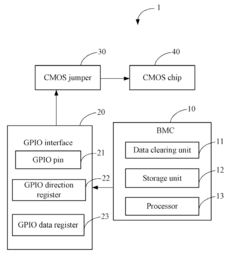
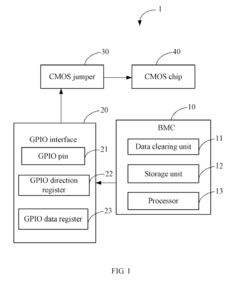
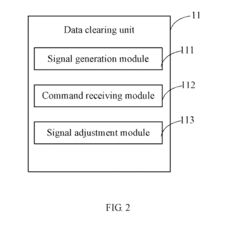
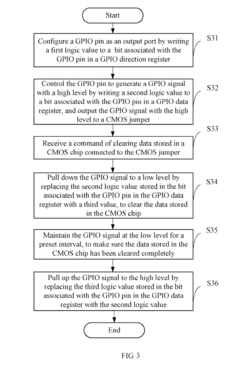
FinFET complementary metal-oxide-semiconductor (CMOS) devices
PatentActiveUS11652006B2
Innovation
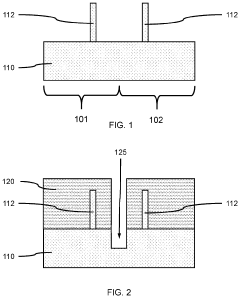
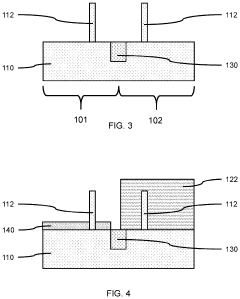
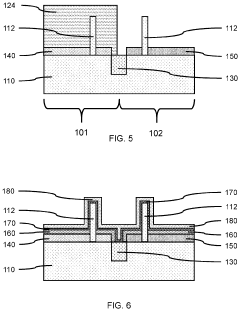
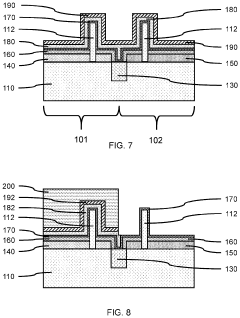
- A method is developed to form a modified work function material layer on n-type fin FETs through heat treatment, while maintaining unmodified work function materials on p-type fin FETs, allowing for adjacent n-type and p-type FETs with different work functions on the same substrate, enabling effective coupling in CMOS devices.
Energy Efficiency Impact
The impact of CMOS battery technology on energy efficiency in software strategy development is significant and multifaceted. CMOS batteries, while small in size, play a crucial role in maintaining system configurations and real-time clock functions in computing devices. This persistent power source enables software strategies that optimize energy consumption across various operational states.
One of the primary energy efficiency impacts stems from the CMOS battery's ability to maintain system settings during power-off states. This feature allows for rapid system startup and reduces the energy required for full boot sequences. Software strategies can leverage this capability to implement advanced power management techniques, such as hibernation and sleep modes, which significantly reduce overall energy consumption.
Furthermore, the CMOS battery's role in preserving accurate timekeeping enables software to implement precise scheduling of tasks and power states. This accuracy allows for more granular control over when systems enter low-power modes and when they need to be fully operational. As a result, software can be designed to minimize energy waste by aligning computational resources with actual demand more effectively.
The longevity of CMOS batteries also contributes to energy efficiency by reducing the frequency of battery replacements. This durability allows for the implementation of long-term energy management strategies without interruption. Software can be designed to adapt to the gradual voltage decline of the CMOS battery over time, ensuring optimal performance and energy efficiency throughout the battery's lifespan.
In data centers and large-scale computing environments, the collective impact of CMOS battery-enabled energy efficiency strategies can be substantial. Software solutions can leverage the persistent nature of CMOS-maintained settings to orchestrate power management across entire server farms, potentially saving significant amounts of energy during periods of low demand.
Moreover, the reliability provided by CMOS batteries allows software developers to create more robust energy-saving algorithms. These algorithms can confidently rely on persistent system states and accurate timing information, leading to more aggressive power-saving measures without risking data loss or system instability.
As software strategies continue to evolve, the role of CMOS batteries in energy efficiency is likely to expand. Future developments may include more sophisticated power profiling and predictive algorithms that utilize the stable foundation provided by CMOS technology to further optimize energy consumption in computing systems.
One of the primary energy efficiency impacts stems from the CMOS battery's ability to maintain system settings during power-off states. This feature allows for rapid system startup and reduces the energy required for full boot sequences. Software strategies can leverage this capability to implement advanced power management techniques, such as hibernation and sleep modes, which significantly reduce overall energy consumption.
Furthermore, the CMOS battery's role in preserving accurate timekeeping enables software to implement precise scheduling of tasks and power states. This accuracy allows for more granular control over when systems enter low-power modes and when they need to be fully operational. As a result, software can be designed to minimize energy waste by aligning computational resources with actual demand more effectively.
The longevity of CMOS batteries also contributes to energy efficiency by reducing the frequency of battery replacements. This durability allows for the implementation of long-term energy management strategies without interruption. Software can be designed to adapt to the gradual voltage decline of the CMOS battery over time, ensuring optimal performance and energy efficiency throughout the battery's lifespan.
In data centers and large-scale computing environments, the collective impact of CMOS battery-enabled energy efficiency strategies can be substantial. Software solutions can leverage the persistent nature of CMOS-maintained settings to orchestrate power management across entire server farms, potentially saving significant amounts of energy during periods of low demand.
Moreover, the reliability provided by CMOS batteries allows software developers to create more robust energy-saving algorithms. These algorithms can confidently rely on persistent system states and accurate timing information, leading to more aggressive power-saving measures without risking data loss or system instability.
As software strategies continue to evolve, the role of CMOS batteries in energy efficiency is likely to expand. Future developments may include more sophisticated power profiling and predictive algorithms that utilize the stable foundation provided by CMOS technology to further optimize energy consumption in computing systems.
CMOS Security Concerns
The CMOS battery, while essential for maintaining system settings and timekeeping functions, presents several security concerns that demand attention in the context of software strategy development. These concerns stem from the battery's role in preserving critical system information and its potential vulnerabilities to physical and digital attacks.
One primary security issue relates to the storage of sensitive data in CMOS memory. This includes BIOS settings, hardware configurations, and boot sequences, which are crucial for system integrity. Unauthorized access to or manipulation of this information could lead to system compromises, allowing attackers to bypass security measures or alter system behavior.
Physical access to the CMOS battery poses another significant risk. Removing or tampering with the battery can reset system settings to default values, potentially disabling security features or reverting to less secure configurations. This vulnerability is particularly concerning in environments where physical access to hardware is not strictly controlled.
The CMOS battery's longevity also introduces security implications. As batteries age and lose charge, they may fail to maintain accurate system time and date information. This can lead to authentication issues, certificate validation errors, and other time-dependent security mechanisms failing, potentially exposing systems to various attacks.
Furthermore, the CMOS chip itself may be susceptible to side-channel attacks. These sophisticated techniques could potentially extract sensitive information stored in CMOS memory through analysis of power consumption, electromagnetic emissions, or timing characteristics.
In the realm of software strategy, these CMOS security concerns necessitate a multi-faceted approach. Developers must implement robust authentication mechanisms for BIOS access, encrypt sensitive data stored in CMOS memory, and incorporate integrity checks to detect unauthorized modifications.
Additionally, software strategies should include regular monitoring of CMOS battery health and automated alerts for potential tampering or battery failure. Implementing secure boot processes that validate the integrity of BIOS and other low-level components becomes crucial in mitigating risks associated with CMOS vulnerabilities.
As software ecosystems evolve, addressing these CMOS security concerns becomes increasingly important. Strategies must adapt to incorporate hardware-based security features, such as Trusted Platform Modules (TPM), to provide an additional layer of protection for sensitive system information traditionally reliant on CMOS storage.
One primary security issue relates to the storage of sensitive data in CMOS memory. This includes BIOS settings, hardware configurations, and boot sequences, which are crucial for system integrity. Unauthorized access to or manipulation of this information could lead to system compromises, allowing attackers to bypass security measures or alter system behavior.
Physical access to the CMOS battery poses another significant risk. Removing or tampering with the battery can reset system settings to default values, potentially disabling security features or reverting to less secure configurations. This vulnerability is particularly concerning in environments where physical access to hardware is not strictly controlled.
The CMOS battery's longevity also introduces security implications. As batteries age and lose charge, they may fail to maintain accurate system time and date information. This can lead to authentication issues, certificate validation errors, and other time-dependent security mechanisms failing, potentially exposing systems to various attacks.
Furthermore, the CMOS chip itself may be susceptible to side-channel attacks. These sophisticated techniques could potentially extract sensitive information stored in CMOS memory through analysis of power consumption, electromagnetic emissions, or timing characteristics.
In the realm of software strategy, these CMOS security concerns necessitate a multi-faceted approach. Developers must implement robust authentication mechanisms for BIOS access, encrypt sensitive data stored in CMOS memory, and incorporate integrity checks to detect unauthorized modifications.
Additionally, software strategies should include regular monitoring of CMOS battery health and automated alerts for potential tampering or battery failure. Implementing secure boot processes that validate the integrity of BIOS and other low-level components becomes crucial in mitigating risks associated with CMOS vulnerabilities.
As software ecosystems evolve, addressing these CMOS security concerns becomes increasingly important. Strategies must adapt to incorporate hardware-based security features, such as Trusted Platform Modules (TPM), to provide an additional layer of protection for sensitive system information traditionally reliant on CMOS storage.
Unlock deeper insights with PatSnap Eureka Quick Research — get a full tech report to explore trends and direct your research. Try now!
Generate Your Research Report Instantly with AI Agent
Supercharge your innovation with PatSnap Eureka AI Agent Platform!