

Compare PCA Pump Alarm Systems by Sensitivity
MAR 7, 20269 MIN READ
Generate Your Research Report Instantly with AI Agent
Patsnap Eureka helps you evaluate technical feasibility & market potential.
PCA Pump Alarm System Background and Objectives
Patient-Controlled Analgesia (PCA) pumps represent a critical advancement in pain management technology, enabling patients to self-administer predetermined doses of analgesic medications within clinically established safety parameters. These sophisticated medical devices have evolved from basic mechanical systems to complex computerized platforms incorporating multiple layers of safety mechanisms and alarm systems designed to prevent medication errors and adverse events.
The fundamental principle underlying PCA technology centers on providing patients with controlled access to pain relief while maintaining strict dosage limitations through programmable parameters including bolus dose amounts, lockout intervals, and maximum hourly limits. However, the effectiveness of these safety measures heavily depends on the sensitivity and reliability of integrated alarm systems that monitor various operational parameters and patient safety indicators.
Current PCA pump alarm systems encompass multiple detection mechanisms including occlusion monitoring, air-in-line detection, low battery warnings, programming error alerts, and tamper detection systems. The sensitivity of these alarm mechanisms varies significantly across different manufacturers and device generations, directly impacting patient safety outcomes and clinical workflow efficiency. Variations in alarm sensitivity can lead to either excessive false alarms that cause alarm fatigue among healthcare providers or insufficient sensitivity that may fail to detect critical safety events.
The technological evolution of PCA systems has been driven by increasing regulatory requirements, clinical evidence regarding medication safety, and advances in sensor technology. Modern PCA pumps incorporate sophisticated pressure sensors, optical detection systems, and advanced algorithms designed to differentiate between clinically significant events and benign operational variations. The challenge lies in optimizing alarm sensitivity to maximize patient safety while minimizing unnecessary clinical interruptions.
The primary objective of comparing PCA pump alarm systems by sensitivity involves establishing standardized evaluation criteria for assessing the performance characteristics of different alarm mechanisms across various clinical scenarios. This comparative analysis aims to identify optimal sensitivity thresholds that balance patient safety requirements with practical clinical usability, ultimately supporting evidence-based decision-making in medical device selection and clinical protocol development.
Furthermore, this technological assessment seeks to advance the understanding of how alarm sensitivity variations impact overall healthcare delivery efficiency, patient satisfaction, and clinical outcomes in diverse healthcare settings ranging from acute care hospitals to ambulatory surgical centers.
The fundamental principle underlying PCA technology centers on providing patients with controlled access to pain relief while maintaining strict dosage limitations through programmable parameters including bolus dose amounts, lockout intervals, and maximum hourly limits. However, the effectiveness of these safety measures heavily depends on the sensitivity and reliability of integrated alarm systems that monitor various operational parameters and patient safety indicators.
Current PCA pump alarm systems encompass multiple detection mechanisms including occlusion monitoring, air-in-line detection, low battery warnings, programming error alerts, and tamper detection systems. The sensitivity of these alarm mechanisms varies significantly across different manufacturers and device generations, directly impacting patient safety outcomes and clinical workflow efficiency. Variations in alarm sensitivity can lead to either excessive false alarms that cause alarm fatigue among healthcare providers or insufficient sensitivity that may fail to detect critical safety events.
The technological evolution of PCA systems has been driven by increasing regulatory requirements, clinical evidence regarding medication safety, and advances in sensor technology. Modern PCA pumps incorporate sophisticated pressure sensors, optical detection systems, and advanced algorithms designed to differentiate between clinically significant events and benign operational variations. The challenge lies in optimizing alarm sensitivity to maximize patient safety while minimizing unnecessary clinical interruptions.
The primary objective of comparing PCA pump alarm systems by sensitivity involves establishing standardized evaluation criteria for assessing the performance characteristics of different alarm mechanisms across various clinical scenarios. This comparative analysis aims to identify optimal sensitivity thresholds that balance patient safety requirements with practical clinical usability, ultimately supporting evidence-based decision-making in medical device selection and clinical protocol development.
Furthermore, this technological assessment seeks to advance the understanding of how alarm sensitivity variations impact overall healthcare delivery efficiency, patient satisfaction, and clinical outcomes in diverse healthcare settings ranging from acute care hospitals to ambulatory surgical centers.
Market Demand for Enhanced PCA Pump Safety Systems
The healthcare industry is experiencing unprecedented demand for enhanced Patient-Controlled Analgesia (PCA) pump safety systems, driven by mounting concerns over medication errors and patient safety incidents. Healthcare facilities worldwide are increasingly prioritizing advanced alarm systems with superior sensitivity capabilities to minimize risks associated with opioid overdoses and programming errors. This heightened focus stems from regulatory pressures and the growing recognition that traditional alarm mechanisms often fail to detect subtle but critical changes in patient conditions.
Hospital administrators and clinical decision-makers are actively seeking PCA pump solutions that offer multi-layered safety features, particularly those incorporating sophisticated alarm sensitivity configurations. The market demand is particularly strong for systems capable of detecting minute variations in infusion patterns, respiratory depression indicators, and unauthorized access attempts. Healthcare providers are willing to invest significantly in technologies that can differentiate between false alarms and genuine safety threats, as excessive false alarms lead to alarm fatigue among nursing staff.
The aging global population and increasing prevalence of chronic pain conditions are expanding the addressable market for advanced PCA pump systems. Surgical volumes continue to rise, creating sustained demand for reliable pain management solutions with robust safety mechanisms. Healthcare institutions are particularly interested in alarm systems that can be customized based on patient demographics, medical history, and specific clinical protocols, enabling more precise sensitivity adjustments.
Regulatory bodies across major markets are implementing stricter safety standards for infusion devices, compelling healthcare facilities to upgrade their existing PCA pump infrastructure. The emphasis on evidence-based medicine and patient outcome metrics is driving demand for systems that provide comprehensive monitoring data and predictive analytics capabilities. Healthcare providers are increasingly evaluating PCA pump alarm systems based on their ability to integrate with electronic health records and hospital information systems.
Market research indicates strong preference for PCA pump alarm systems offering graduated sensitivity levels, allowing clinicians to fine-tune alert thresholds based on individual patient risk profiles. The demand extends beyond acute care settings, with outpatient surgical centers and long-term care facilities seeking portable PCA solutions with equally sophisticated safety features. This expanding market scope reflects the broader healthcare trend toward personalized medicine and precision monitoring technologies.
Hospital administrators and clinical decision-makers are actively seeking PCA pump solutions that offer multi-layered safety features, particularly those incorporating sophisticated alarm sensitivity configurations. The market demand is particularly strong for systems capable of detecting minute variations in infusion patterns, respiratory depression indicators, and unauthorized access attempts. Healthcare providers are willing to invest significantly in technologies that can differentiate between false alarms and genuine safety threats, as excessive false alarms lead to alarm fatigue among nursing staff.
The aging global population and increasing prevalence of chronic pain conditions are expanding the addressable market for advanced PCA pump systems. Surgical volumes continue to rise, creating sustained demand for reliable pain management solutions with robust safety mechanisms. Healthcare institutions are particularly interested in alarm systems that can be customized based on patient demographics, medical history, and specific clinical protocols, enabling more precise sensitivity adjustments.
Regulatory bodies across major markets are implementing stricter safety standards for infusion devices, compelling healthcare facilities to upgrade their existing PCA pump infrastructure. The emphasis on evidence-based medicine and patient outcome metrics is driving demand for systems that provide comprehensive monitoring data and predictive analytics capabilities. Healthcare providers are increasingly evaluating PCA pump alarm systems based on their ability to integrate with electronic health records and hospital information systems.
Market research indicates strong preference for PCA pump alarm systems offering graduated sensitivity levels, allowing clinicians to fine-tune alert thresholds based on individual patient risk profiles. The demand extends beyond acute care settings, with outpatient surgical centers and long-term care facilities seeking portable PCA solutions with equally sophisticated safety features. This expanding market scope reflects the broader healthcare trend toward personalized medicine and precision monitoring technologies.
Current State of PCA Alarm Sensitivity Technologies
Patient-controlled analgesia (PCA) pump alarm systems have evolved significantly over the past decade, with sensitivity technologies becoming increasingly sophisticated to balance patient safety with clinical workflow efficiency. Current alarm sensitivity mechanisms primarily operate through multi-parameter monitoring approaches that integrate pressure sensors, flow rate detectors, and occlusion detection algorithms to identify potential safety risks in real-time.
Modern PCA systems employ pressure-based sensitivity detection as the foundational technology, utilizing piezoelectric sensors capable of detecting pressure variations as low as 0.1 psi. These sensors continuously monitor downstream and upstream pressure differentials to identify occlusions, air bubbles, or catheter disconnections. Leading manufacturers have implemented adaptive pressure thresholds that automatically adjust based on infusion rates and patient-specific parameters, reducing false alarms while maintaining safety standards.
Flow rate monitoring represents another critical component of contemporary alarm sensitivity technologies. Advanced systems utilize ultrasonic flow sensors and optical detection methods to measure actual drug delivery rates with precision levels reaching ±2% accuracy. These technologies enable real-time comparison between programmed and actual delivery rates, triggering alarms when discrepancies exceed predetermined thresholds typically set between 10-15% variance.
Occlusion detection algorithms have become increasingly sophisticated, incorporating machine learning elements to distinguish between partial and complete blockages. Current systems can detect partial occlusions as small as 50% flow reduction within 30-60 seconds, while complete occlusions trigger immediate alarms. The sensitivity levels are typically adjustable across three to five preset levels, allowing clinicians to customize alarm thresholds based on patient acuity and medication criticality.
Air-in-line detection technologies have advanced to identify air bubbles as small as 50 microliters using dual-wavelength optical sensors. These systems differentiate between clinically significant air volumes and micro-bubbles that pose minimal risk, reducing nuisance alarms while maintaining patient safety. Integration with automated air purging mechanisms has further enhanced system reliability and reduced manual interventions.
Contemporary PCA alarm systems also incorporate smart alarm management features, including alarm escalation protocols, remote monitoring capabilities, and integration with hospital information systems. These technologies enable graduated alarm responses, starting with local alerts and escalating to nursing station notifications and mobile device alerts based on response times and alarm severity levels.
Modern PCA systems employ pressure-based sensitivity detection as the foundational technology, utilizing piezoelectric sensors capable of detecting pressure variations as low as 0.1 psi. These sensors continuously monitor downstream and upstream pressure differentials to identify occlusions, air bubbles, or catheter disconnections. Leading manufacturers have implemented adaptive pressure thresholds that automatically adjust based on infusion rates and patient-specific parameters, reducing false alarms while maintaining safety standards.
Flow rate monitoring represents another critical component of contemporary alarm sensitivity technologies. Advanced systems utilize ultrasonic flow sensors and optical detection methods to measure actual drug delivery rates with precision levels reaching ±2% accuracy. These technologies enable real-time comparison between programmed and actual delivery rates, triggering alarms when discrepancies exceed predetermined thresholds typically set between 10-15% variance.
Occlusion detection algorithms have become increasingly sophisticated, incorporating machine learning elements to distinguish between partial and complete blockages. Current systems can detect partial occlusions as small as 50% flow reduction within 30-60 seconds, while complete occlusions trigger immediate alarms. The sensitivity levels are typically adjustable across three to five preset levels, allowing clinicians to customize alarm thresholds based on patient acuity and medication criticality.
Air-in-line detection technologies have advanced to identify air bubbles as small as 50 microliters using dual-wavelength optical sensors. These systems differentiate between clinically significant air volumes and micro-bubbles that pose minimal risk, reducing nuisance alarms while maintaining patient safety. Integration with automated air purging mechanisms has further enhanced system reliability and reduced manual interventions.
Contemporary PCA alarm systems also incorporate smart alarm management features, including alarm escalation protocols, remote monitoring capabilities, and integration with hospital information systems. These technologies enable graduated alarm responses, starting with local alerts and escalating to nursing station notifications and mobile device alerts based on response times and alarm severity levels.
Existing PCA Alarm Sensitivity Solutions
01 Adjustable alarm threshold settings for PCA pumps
PCA pump systems can be configured with adjustable alarm sensitivity thresholds to accommodate different clinical scenarios and patient needs. These systems allow healthcare providers to customize alarm parameters such as occlusion pressure limits, flow rate deviations, and bolus delivery confirmations. By providing adjustable sensitivity settings, the systems can reduce false alarms while maintaining patient safety through appropriate alert levels for critical conditions.- Adjustable alarm threshold settings for PCA pumps: PCA pump systems can be configured with adjustable alarm sensitivity thresholds to accommodate different clinical scenarios and patient needs. These systems allow healthcare providers to customize alarm parameters such as occlusion pressure limits, flow rate deviations, and bolus delivery confirmations. By providing adjustable sensitivity settings, the systems can reduce false alarms while maintaining patient safety through appropriate alert levels for critical conditions.
- Multi-level alarm prioritization systems: Advanced PCA pumps incorporate multi-tiered alarm systems that categorize alerts based on severity and urgency. These systems distinguish between critical alarms requiring immediate intervention, warning alarms indicating potential issues, and advisory notifications for routine monitoring. The hierarchical approach helps clinicians prioritize responses and reduces alarm fatigue by presenting different alert types with varying audio-visual signals and escalation protocols.
- Pressure and occlusion detection sensitivity: PCA pump alarm systems utilize sophisticated pressure sensors and occlusion detection mechanisms with adjustable sensitivity levels. These systems monitor downstream and upstream pressure variations to detect blockages, kinks, or infiltrations in the infusion line. The sensitivity can be calibrated to distinguish between normal pressure fluctuations and actual occlusions, minimizing nuisance alarms while ensuring timely detection of flow impediments that could compromise drug delivery.
- Air-in-line detection and bubble sensing sensitivity: Modern PCA pumps incorporate air detection systems with configurable sensitivity to identify air bubbles or air-in-line conditions. These systems use ultrasonic or optical sensors to detect air of various sizes in the fluid path. The sensitivity settings can be adjusted to detect clinically significant air volumes while ignoring micro-bubbles that pose no risk, thereby balancing patient safety with operational efficiency and reducing unnecessary alarm activations.
- Smart alarm filtering and pattern recognition: Intelligent PCA pump systems employ advanced algorithms for alarm filtering and pattern recognition to enhance sensitivity specificity. These systems analyze historical data, trending patterns, and contextual information to differentiate between transient anomalies and persistent problems. By incorporating machine learning and adaptive algorithms, the pumps can automatically adjust sensitivity parameters based on usage patterns, reducing false positives while maintaining high detection rates for genuine safety concerns.
02 Multi-level alarm prioritization systems
Advanced PCA pumps incorporate multi-tiered alarm systems that categorize alerts based on severity and urgency. These systems distinguish between critical alarms requiring immediate intervention, warning alarms indicating potential issues, and advisory notifications for routine monitoring. The hierarchical approach helps clinicians prioritize responses and reduces alarm fatigue by presenting different alert levels through varied audio-visual signals.Expand Specific Solutions03 Pressure and occlusion detection sensitivity
PCA pump alarm systems utilize sophisticated pressure sensors to detect occlusions and flow restrictions in the infusion line. The sensitivity of these detection mechanisms can be calibrated to identify partial occlusions, complete blockages, and downstream pressure changes. Enhanced sensor technology enables early detection of potential delivery problems while minimizing false positives caused by patient movement or temporary line restrictions.Expand Specific Solutions04 Air-in-line and bubble detection sensitivity
Modern PCA pumps incorporate sensitive air detection systems that can identify air bubbles of various sizes within the infusion pathway. These systems use ultrasonic or optical sensors with adjustable sensitivity to detect clinically significant air volumes while avoiding unnecessary alarms from micro-bubbles. The detection threshold can be configured based on the infusion type and clinical requirements to balance safety with operational efficiency.Expand Specific Solutions05 Smart alarm filtering and notification systems
Intelligent PCA pump systems employ advanced algorithms to filter and process alarm signals, reducing nuisance alarms through pattern recognition and contextual analysis. These systems can differentiate between transient conditions and persistent problems, implement alarm delay periods for self-correcting issues, and integrate with hospital notification systems for appropriate escalation. The smart filtering capabilities improve alarm specificity while maintaining sensitivity to genuine safety concerns.Expand Specific Solutions
Major Players in PCA Pump Manufacturing Industry
The PCA pump alarm systems market represents a mature segment within the broader infusion therapy industry, currently valued at several billion dollars globally and experiencing steady growth driven by increasing surgical procedures and pain management needs. The competitive landscape is dominated by established medical device manufacturers, with Baxter International and Koninklijke Philips NV leading through their comprehensive portfolios of advanced PCA systems featuring sophisticated alarm mechanisms. Technology maturity varies significantly across players - while industry leaders like Baxter and Philips have achieved high sophistication in sensitivity algorithms and multi-parameter monitoring, emerging companies such as Shenzhen Shenke Medical Instrument and specialized manufacturers are still developing their alarm system capabilities. The market shows clear segmentation between premium solutions offering highly sensitive, customizable alarm systems and cost-effective alternatives with basic sensitivity features, reflecting diverse healthcare facility requirements and regional market dynamics.
Baxter International, Inc.
Technical Solution: Baxter has developed advanced PCA pump alarm systems with multi-layered safety protocols including pressure-based occlusion detection, air-in-line sensors, and flow rate monitoring. Their systems utilize proprietary algorithms that can detect micro-occlusions as small as 0.5 psi pressure changes and air bubbles down to 50 microliters. The alarm sensitivity can be adjusted across five levels to accommodate different clinical scenarios, with response times typically under 15 seconds for critical alarms. Their latest generation pumps incorporate machine learning algorithms to reduce false alarms by up to 40% while maintaining high sensitivity for genuine safety events.
Strengths: Market leader with extensive clinical validation, highly sensitive detection capabilities, customizable alarm thresholds. Weaknesses: Higher cost compared to competitors, complex user interface may require additional training.
Solventum Intellectual Properties Co.
Technical Solution: Solventum has developed innovative sensor technologies for PCA pump monitoring systems focusing on enhanced sensitivity through multi-modal detection approaches. Their technology combines acoustic wave sensors with traditional pressure monitoring to achieve detection sensitivity improvements of up to 60% compared to conventional systems. The system can identify occlusions at pressure differentials as low as 0.3 psi and features adaptive algorithms that learn patient-specific patterns to minimize false positives. Their alarm architecture includes graduated alert levels with customizable escalation protocols, enabling healthcare providers to fine-tune sensitivity based on patient acuity and medication criticality.
Strengths: Superior sensitivity through multi-modal detection, adaptive learning capabilities, reduced false alarm rates. Weaknesses: Newer technology with limited long-term clinical data, potentially higher implementation costs.
Core Technologies in PCA Alarm Sensitivity Detection
Alarm sensitivity control for patient monitors
PatentWO2012177733A1
Innovation
- A patient monitoring system that allows users to configure alarm sensitivity based on user indication, selecting from preset options or adjusting settings for physiological parameters, operating conditions, and signal metrics, enabling customizable alarm thresholds and sensitivity levels.


System and method for optimizing control of PCA and PCEA system
PatentActiveUS7871394B2
Innovation
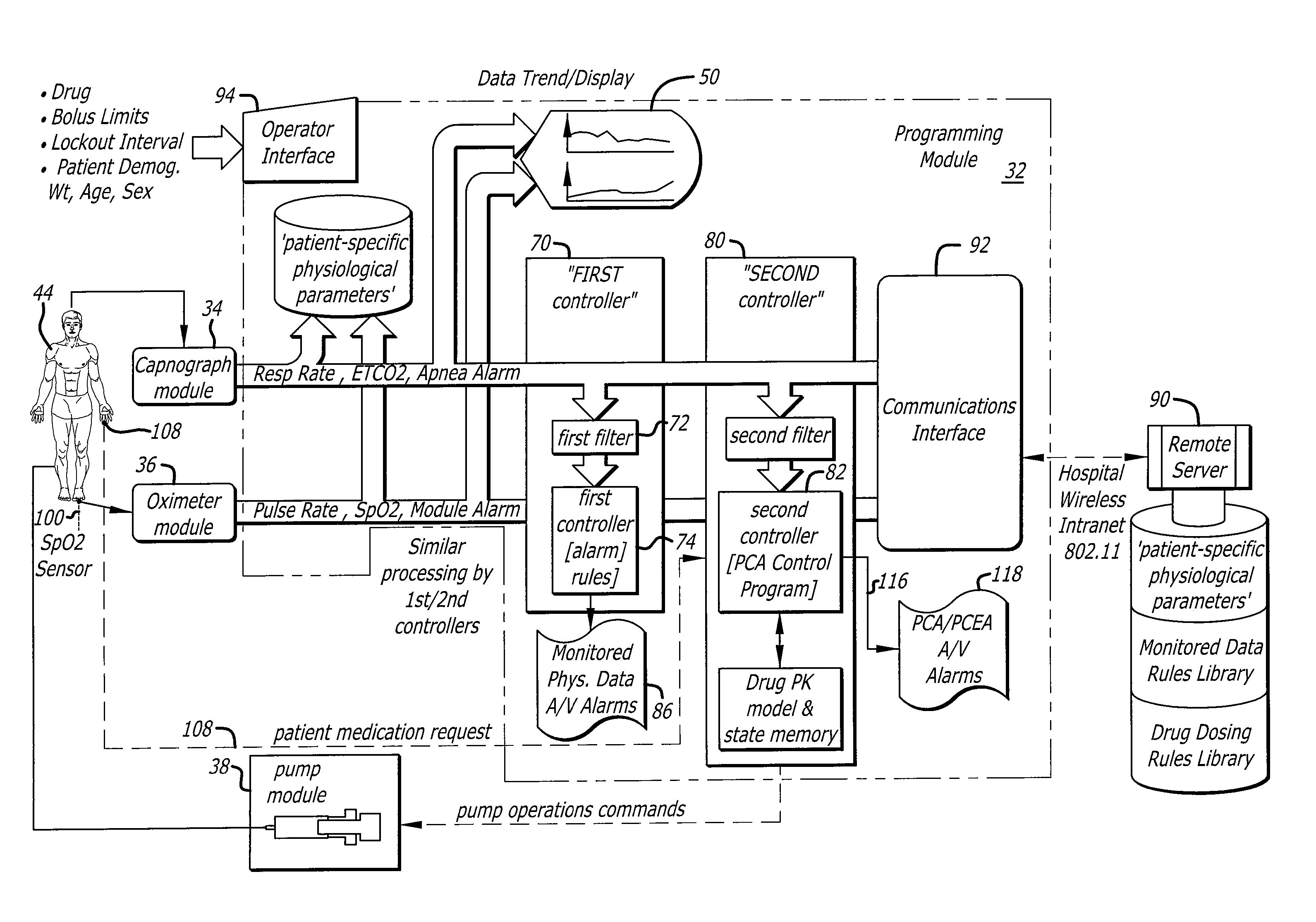
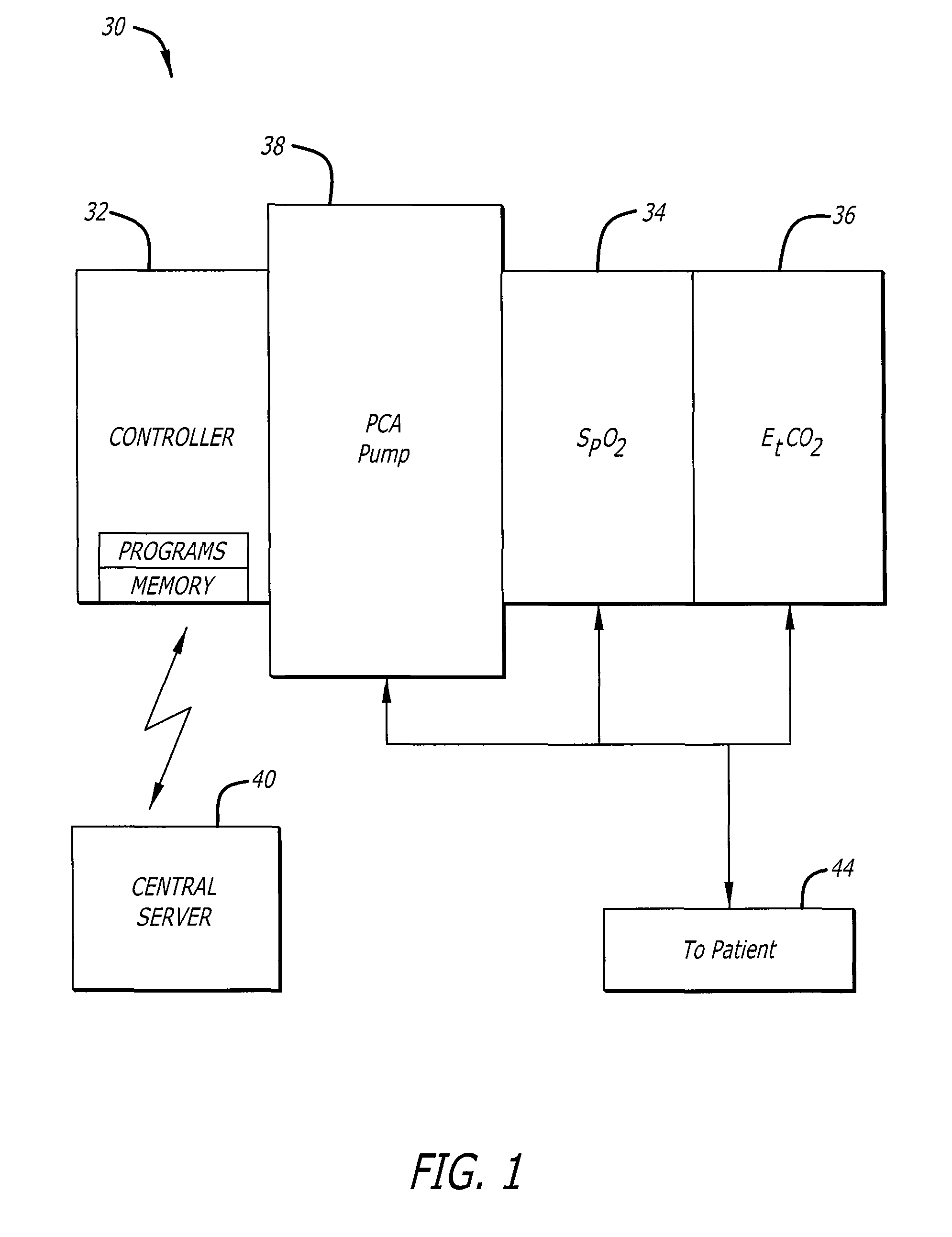
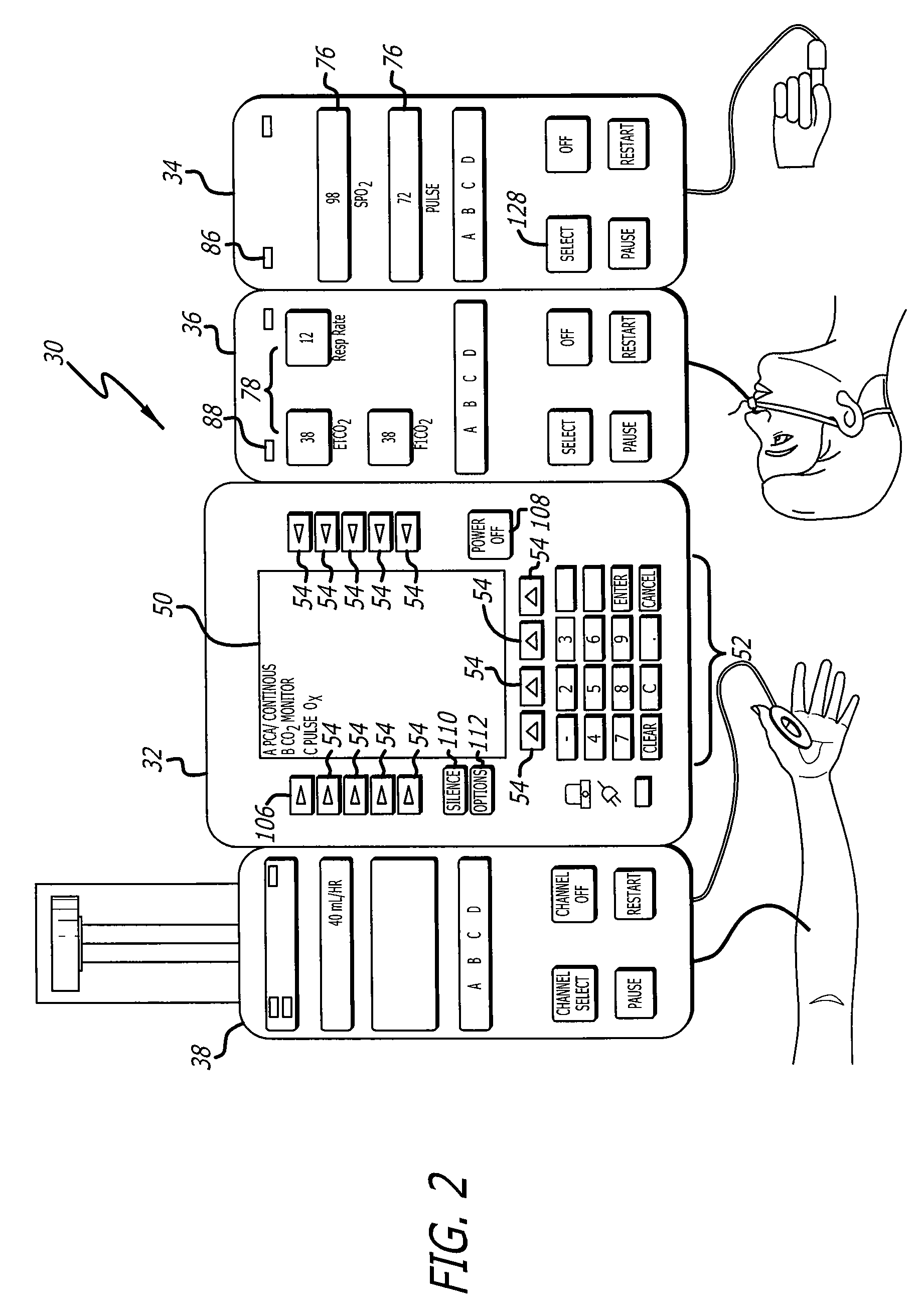
- A system and method that utilize a second controller to process physiological signals and request signals differently from the first controller, filtering data with techniques like moving averages and adaptive filters, and incorporating pharmacokinetic modeling to optimize PCA device operation, allowing for automatic inhibition of medication delivery during potential respiratory depression while minimizing false alarms.

FDA Regulatory Requirements for PCA Safety Systems
The FDA has established comprehensive regulatory frameworks governing Patient-Controlled Analgesia (PCA) pump safety systems, with particular emphasis on alarm sensitivity requirements. These regulations are primarily outlined in FDA Guidance documents, 21 CFR Part 820 Quality System Regulation, and specific device classification requirements under Class II medical device standards. The regulatory framework mandates that PCA pump manufacturers implement robust alarm systems capable of detecting and alerting healthcare providers to potential safety hazards with appropriate sensitivity levels.
Under FDA requirements, PCA pump alarm systems must demonstrate sensitivity thresholds that balance patient safety with clinical usability. The regulations specify that alarm systems should detect occlusions, air-in-line conditions, low battery states, and dosing irregularities within defined parameters. Sensitivity settings must be validated through rigorous testing protocols that demonstrate consistent performance across various clinical scenarios and environmental conditions.
The FDA's premarket submission requirements demand comprehensive documentation of alarm sensitivity testing, including statistical analysis of false positive and false negative rates. Manufacturers must provide clinical data demonstrating that their alarm sensitivity settings do not compromise patient care through excessive nuisance alarms while maintaining adequate detection capabilities for genuine safety threats. This includes validation of sensitivity performance across different medication viscosities, flow rates, and patient populations.
Quality management system requirements under ISO 13485 and FDA QSR mandate continuous monitoring of alarm system performance post-market. Manufacturers must establish procedures for collecting and analyzing field data regarding alarm sensitivity performance, including adverse event reporting when sensitivity failures contribute to patient safety incidents. Risk management processes must incorporate sensitivity analysis as part of ongoing device safety evaluation.
Recent FDA guidance emphasizes the importance of human factors engineering in alarm sensitivity design. Regulatory submissions must include usability studies demonstrating that healthcare providers can appropriately respond to alarms at specified sensitivity levels. The FDA requires evidence that alarm sensitivity settings support clinical workflow while maintaining patient safety standards across diverse healthcare environments and user competency levels.
Under FDA requirements, PCA pump alarm systems must demonstrate sensitivity thresholds that balance patient safety with clinical usability. The regulations specify that alarm systems should detect occlusions, air-in-line conditions, low battery states, and dosing irregularities within defined parameters. Sensitivity settings must be validated through rigorous testing protocols that demonstrate consistent performance across various clinical scenarios and environmental conditions.
The FDA's premarket submission requirements demand comprehensive documentation of alarm sensitivity testing, including statistical analysis of false positive and false negative rates. Manufacturers must provide clinical data demonstrating that their alarm sensitivity settings do not compromise patient care through excessive nuisance alarms while maintaining adequate detection capabilities for genuine safety threats. This includes validation of sensitivity performance across different medication viscosities, flow rates, and patient populations.
Quality management system requirements under ISO 13485 and FDA QSR mandate continuous monitoring of alarm system performance post-market. Manufacturers must establish procedures for collecting and analyzing field data regarding alarm sensitivity performance, including adverse event reporting when sensitivity failures contribute to patient safety incidents. Risk management processes must incorporate sensitivity analysis as part of ongoing device safety evaluation.
Recent FDA guidance emphasizes the importance of human factors engineering in alarm sensitivity design. Regulatory submissions must include usability studies demonstrating that healthcare providers can appropriately respond to alarms at specified sensitivity levels. The FDA requires evidence that alarm sensitivity settings support clinical workflow while maintaining patient safety standards across diverse healthcare environments and user competency levels.
Clinical Validation Standards for PCA Alarm Systems
Clinical validation of PCA alarm systems requires adherence to rigorous standards that ensure patient safety while minimizing false alarms. The Food and Drug Administration (FDA) has established comprehensive guidelines under 21 CFR Part 820 for medical device quality systems, which specifically address alarm system validation requirements. These standards mandate that PCA pump manufacturers demonstrate alarm sensitivity through controlled clinical trials involving diverse patient populations.
The International Electrotechnical Commission (IEC) 60601-1-8 standard provides the foundational framework for medical electrical equipment alarm systems. This standard defines specific requirements for alarm signal priority classification, timing parameters, and acoustic characteristics. For PCA systems, the standard requires that high-priority alarms achieve detection sensitivity rates exceeding 95% within specified response timeframes, typically ranging from 10 to 30 seconds depending on the alarm type.
Clinical validation protocols must incorporate multi-site studies encompassing various healthcare environments, including intensive care units, surgical recovery areas, and general medical floors. These studies evaluate alarm performance across different patient demographics, medication types, and clinical scenarios. The validation process requires documentation of sensitivity metrics for critical parameters such as occlusion detection, air-in-line detection, low battery warnings, and medication delivery errors.
Regulatory bodies mandate that clinical validation studies include statistical power analysis to ensure adequate sample sizes for meaningful sensitivity comparisons. The studies must demonstrate alarm system performance under both normal operating conditions and simulated failure modes. Additionally, validation protocols require assessment of alarm fatigue mitigation strategies, ensuring that high sensitivity does not compromise clinical workflow efficiency.
Post-market surveillance requirements under FDA 21 CFR Part 803 necessitate ongoing monitoring of alarm system performance through adverse event reporting and periodic safety updates. These standards ensure that sensitivity performance maintains consistency throughout the device lifecycle, providing continuous validation of clinical effectiveness and patient safety outcomes.
The International Electrotechnical Commission (IEC) 60601-1-8 standard provides the foundational framework for medical electrical equipment alarm systems. This standard defines specific requirements for alarm signal priority classification, timing parameters, and acoustic characteristics. For PCA systems, the standard requires that high-priority alarms achieve detection sensitivity rates exceeding 95% within specified response timeframes, typically ranging from 10 to 30 seconds depending on the alarm type.
Clinical validation protocols must incorporate multi-site studies encompassing various healthcare environments, including intensive care units, surgical recovery areas, and general medical floors. These studies evaluate alarm performance across different patient demographics, medication types, and clinical scenarios. The validation process requires documentation of sensitivity metrics for critical parameters such as occlusion detection, air-in-line detection, low battery warnings, and medication delivery errors.
Regulatory bodies mandate that clinical validation studies include statistical power analysis to ensure adequate sample sizes for meaningful sensitivity comparisons. The studies must demonstrate alarm system performance under both normal operating conditions and simulated failure modes. Additionally, validation protocols require assessment of alarm fatigue mitigation strategies, ensuring that high sensitivity does not compromise clinical workflow efficiency.
Post-market surveillance requirements under FDA 21 CFR Part 803 necessitate ongoing monitoring of alarm system performance through adverse event reporting and periodic safety updates. These standards ensure that sensitivity performance maintains consistency throughout the device lifecycle, providing continuous validation of clinical effectiveness and patient safety outcomes.
Unlock deeper insights with Patsnap Eureka Quick Research — get a full tech report to explore trends and direct your research. Try now!
Generate Your Research Report Instantly with AI Agent
Supercharge your innovation with Patsnap Eureka AI Agent Platform!