

Optimize PCA Pump Flow Rates to Minimize Sedation
MAR 7, 20269 MIN READ
Generate Your Research Report Instantly with AI Agent
Patsnap Eureka helps you evaluate technical feasibility & market potential.
PCA Pump Sedation Optimization Background and Goals
Patient-Controlled Analgesia (PCA) pumps have revolutionized pain management in clinical settings since their introduction in the 1970s. These devices allow patients to self-administer predetermined doses of analgesic medications, typically opioids, providing personalized pain relief while maintaining safety protocols. However, a significant challenge has emerged in the form of excessive sedation, which can lead to respiratory depression, delayed recovery, and compromised patient safety.
The evolution of PCA technology has progressed through several generations, from basic mechanical devices to sophisticated electronic systems with advanced monitoring capabilities. Early PCA pumps focused primarily on delivering consistent analgesic doses but lacked the precision needed to balance pain relief with sedation minimization. Modern systems incorporate multiple safety features, including lockout intervals, maximum dose limits, and continuous monitoring, yet sedation-related complications remain a persistent concern.
Current clinical practice relies heavily on standardized dosing protocols that may not account for individual patient variability in drug metabolism, pain sensitivity, and sedation susceptibility. This one-size-fits-all approach often results in suboptimal outcomes, with some patients experiencing inadequate pain relief while others suffer from excessive sedation. The challenge is compounded by the narrow therapeutic window between effective analgesia and dangerous sedation levels.
The primary objective of optimizing PCA pump flow rates centers on developing intelligent dosing algorithms that can dynamically adjust medication delivery based on real-time patient parameters. This involves integrating multiple data streams, including physiological monitoring, pain assessment scores, and pharmacokinetic modeling, to create personalized dosing profiles that minimize sedation risk while maintaining therapeutic efficacy.
Advanced sensor technologies and machine learning algorithms present unprecedented opportunities to transform PCA pump functionality. By incorporating continuous monitoring of respiratory patterns, consciousness levels, and pain indicators, next-generation systems can proactively adjust flow rates before sedation becomes problematic. This predictive approach represents a paradigm shift from reactive to preventive pain management strategies.
The ultimate goal extends beyond simple dose optimization to encompass comprehensive patient safety enhancement. Success metrics include reduced incidence of sedation-related adverse events, improved patient satisfaction scores, shortened recovery times, and decreased healthcare costs associated with sedation complications. Achieving these objectives requires interdisciplinary collaboration between biomedical engineers, clinicians, pharmacologists, and data scientists to develop robust, clinically validated solutions that can be seamlessly integrated into existing healthcare workflows.
The evolution of PCA technology has progressed through several generations, from basic mechanical devices to sophisticated electronic systems with advanced monitoring capabilities. Early PCA pumps focused primarily on delivering consistent analgesic doses but lacked the precision needed to balance pain relief with sedation minimization. Modern systems incorporate multiple safety features, including lockout intervals, maximum dose limits, and continuous monitoring, yet sedation-related complications remain a persistent concern.
Current clinical practice relies heavily on standardized dosing protocols that may not account for individual patient variability in drug metabolism, pain sensitivity, and sedation susceptibility. This one-size-fits-all approach often results in suboptimal outcomes, with some patients experiencing inadequate pain relief while others suffer from excessive sedation. The challenge is compounded by the narrow therapeutic window between effective analgesia and dangerous sedation levels.
The primary objective of optimizing PCA pump flow rates centers on developing intelligent dosing algorithms that can dynamically adjust medication delivery based on real-time patient parameters. This involves integrating multiple data streams, including physiological monitoring, pain assessment scores, and pharmacokinetic modeling, to create personalized dosing profiles that minimize sedation risk while maintaining therapeutic efficacy.
Advanced sensor technologies and machine learning algorithms present unprecedented opportunities to transform PCA pump functionality. By incorporating continuous monitoring of respiratory patterns, consciousness levels, and pain indicators, next-generation systems can proactively adjust flow rates before sedation becomes problematic. This predictive approach represents a paradigm shift from reactive to preventive pain management strategies.
The ultimate goal extends beyond simple dose optimization to encompass comprehensive patient safety enhancement. Success metrics include reduced incidence of sedation-related adverse events, improved patient satisfaction scores, shortened recovery times, and decreased healthcare costs associated with sedation complications. Achieving these objectives requires interdisciplinary collaboration between biomedical engineers, clinicians, pharmacologists, and data scientists to develop robust, clinically validated solutions that can be seamlessly integrated into existing healthcare workflows.
Market Demand for Enhanced PCA Safety Systems
The healthcare industry is experiencing unprecedented demand for enhanced patient-controlled analgesia safety systems, driven by mounting concerns over opioid-related adverse events and the critical need for precision pain management. Healthcare institutions worldwide are actively seeking advanced PCA technologies that can minimize sedation risks while maintaining effective pain relief, creating a substantial market opportunity for innovative flow rate optimization solutions.
Hospital administrators and clinical decision-makers are increasingly prioritizing PCA systems that incorporate intelligent monitoring and automated adjustment capabilities. The growing emphasis on patient safety protocols has elevated the importance of systems that can dynamically optimize medication delivery based on real-time patient responses, particularly in preventing excessive sedation that can lead to respiratory depression and other serious complications.
The market demand is particularly pronounced in intensive care units, post-surgical recovery departments, and oncology wards where PCA usage is most prevalent. Healthcare facilities are seeking solutions that can reduce the burden on nursing staff while simultaneously improving patient outcomes through more precise medication titration. This demand is further amplified by regulatory pressures and accreditation requirements that mandate enhanced safety measures for controlled substance administration.
Economic factors are also driving market interest, as healthcare organizations recognize that optimized PCA systems can reduce costs associated with adverse drug events, extended hospital stays, and increased monitoring requirements. The potential for improved patient satisfaction scores and reduced liability exposure adds additional economic incentives for adopting advanced PCA safety technologies.
Emerging markets in developing countries present significant growth opportunities as healthcare infrastructure modernizes and patient safety standards align with international best practices. The increasing adoption of electronic health records and integrated monitoring systems creates favorable conditions for implementing sophisticated PCA optimization technologies that can seamlessly integrate with existing hospital information systems.
The market is also responding to demographic trends, including an aging population requiring more frequent surgical interventions and pain management services. This demographic shift is creating sustained demand for safer, more effective PCA delivery systems that can accommodate the unique physiological characteristics and medication sensitivities of elderly patients.
Hospital administrators and clinical decision-makers are increasingly prioritizing PCA systems that incorporate intelligent monitoring and automated adjustment capabilities. The growing emphasis on patient safety protocols has elevated the importance of systems that can dynamically optimize medication delivery based on real-time patient responses, particularly in preventing excessive sedation that can lead to respiratory depression and other serious complications.
The market demand is particularly pronounced in intensive care units, post-surgical recovery departments, and oncology wards where PCA usage is most prevalent. Healthcare facilities are seeking solutions that can reduce the burden on nursing staff while simultaneously improving patient outcomes through more precise medication titration. This demand is further amplified by regulatory pressures and accreditation requirements that mandate enhanced safety measures for controlled substance administration.
Economic factors are also driving market interest, as healthcare organizations recognize that optimized PCA systems can reduce costs associated with adverse drug events, extended hospital stays, and increased monitoring requirements. The potential for improved patient satisfaction scores and reduced liability exposure adds additional economic incentives for adopting advanced PCA safety technologies.
Emerging markets in developing countries present significant growth opportunities as healthcare infrastructure modernizes and patient safety standards align with international best practices. The increasing adoption of electronic health records and integrated monitoring systems creates favorable conditions for implementing sophisticated PCA optimization technologies that can seamlessly integrate with existing hospital information systems.
The market is also responding to demographic trends, including an aging population requiring more frequent surgical interventions and pain management services. This demographic shift is creating sustained demand for safer, more effective PCA delivery systems that can accommodate the unique physiological characteristics and medication sensitivities of elderly patients.
Current PCA Sedation Issues and Technical Challenges
Patient-controlled analgesia (PCA) systems face significant challenges in maintaining optimal pain management while minimizing sedation-related complications. Current PCA pumps operate on fixed dosing algorithms that fail to account for individual patient variability in drug metabolism, pain sensitivity, and sedation susceptibility. This one-size-fits-all approach frequently results in either inadequate pain relief or excessive sedation, creating a persistent clinical dilemma.
The primary technical challenge lies in the lack of real-time physiological feedback integration within existing PCA systems. Most current devices rely solely on patient demand patterns and predetermined lockout intervals, without considering dynamic factors such as respiratory rate, oxygen saturation, or consciousness levels. This limitation prevents the system from automatically adjusting flow rates when early signs of over-sedation emerge, potentially leading to respiratory depression or prolonged recovery times.
Pharmacokinetic variability presents another substantial obstacle in optimizing PCA flow rates. Factors including age, body mass index, renal function, hepatic metabolism, and concurrent medications significantly influence drug clearance rates and sedation thresholds. Current PCA protocols inadequately address these variables, often resulting in standardized dosing regimens that may be inappropriate for specific patient populations, particularly elderly patients or those with compromised organ function.
Existing monitoring systems demonstrate insufficient integration capabilities with PCA devices. While hospitals employ various monitoring technologies for vital signs and sedation assessment, these systems typically operate independently from pain management devices. The absence of automated communication between monitoring equipment and PCA pumps prevents real-time dose optimization based on patient response, creating gaps in safety protocols and therapeutic effectiveness.
Technical limitations in current PCA hardware architecture further compound these challenges. Most existing pumps lack the computational capacity and sensor integration necessary for advanced algorithmic control. The software platforms governing these devices often employ simplistic decision trees that cannot accommodate complex, multi-variable optimization strategies required for personalized sedation management.
Data standardization and interoperability issues create additional barriers to implementing sophisticated flow rate optimization systems. Electronic health records, monitoring devices, and PCA pumps frequently utilize incompatible data formats and communication protocols, hindering the development of comprehensive, integrated solutions that could enable intelligent dose adjustment based on comprehensive patient data analysis.
The primary technical challenge lies in the lack of real-time physiological feedback integration within existing PCA systems. Most current devices rely solely on patient demand patterns and predetermined lockout intervals, without considering dynamic factors such as respiratory rate, oxygen saturation, or consciousness levels. This limitation prevents the system from automatically adjusting flow rates when early signs of over-sedation emerge, potentially leading to respiratory depression or prolonged recovery times.
Pharmacokinetic variability presents another substantial obstacle in optimizing PCA flow rates. Factors including age, body mass index, renal function, hepatic metabolism, and concurrent medications significantly influence drug clearance rates and sedation thresholds. Current PCA protocols inadequately address these variables, often resulting in standardized dosing regimens that may be inappropriate for specific patient populations, particularly elderly patients or those with compromised organ function.
Existing monitoring systems demonstrate insufficient integration capabilities with PCA devices. While hospitals employ various monitoring technologies for vital signs and sedation assessment, these systems typically operate independently from pain management devices. The absence of automated communication between monitoring equipment and PCA pumps prevents real-time dose optimization based on patient response, creating gaps in safety protocols and therapeutic effectiveness.
Technical limitations in current PCA hardware architecture further compound these challenges. Most existing pumps lack the computational capacity and sensor integration necessary for advanced algorithmic control. The software platforms governing these devices often employ simplistic decision trees that cannot accommodate complex, multi-variable optimization strategies required for personalized sedation management.
Data standardization and interoperability issues create additional barriers to implementing sophisticated flow rate optimization systems. Electronic health records, monitoring devices, and PCA pumps frequently utilize incompatible data formats and communication protocols, hindering the development of comprehensive, integrated solutions that could enable intelligent dose adjustment based on comprehensive patient data analysis.
Existing PCA Flow Rate Optimization Solutions
01 Patient-controlled analgesia pump systems with safety mechanisms
PCA pump systems incorporate various safety features to prevent overdose and ensure proper sedation delivery. These mechanisms include lockout intervals, dose limits, and alarm systems that monitor patient response and drug administration. Advanced safety protocols help minimize risks associated with patient-controlled sedation by implementing automated checks and balances throughout the delivery process.- Patient-controlled analgesia pump systems with safety mechanisms: PCA pump systems incorporate various safety features to prevent overdose and ensure proper sedation delivery. These mechanisms include lockout intervals, dose limits, and alarm systems that monitor patient response and drug administration. Advanced safety protocols help minimize risks associated with patient-controlled sedation by implementing automatic shut-off features and real-time monitoring capabilities.
- Programmable drug delivery control systems for sedation: Sophisticated control systems allow healthcare providers to program specific sedation parameters including bolus doses, continuous infusion rates, and maximum dosage limits. These programmable features enable customization of sedation protocols based on individual patient needs and clinical requirements. The systems provide flexibility in adjusting sedation levels while maintaining precise control over medication delivery.
- Integrated monitoring and feedback mechanisms: PCA sedation systems incorporate monitoring technologies that track vital signs, sedation depth, and patient response to medication. These integrated systems provide real-time feedback to both patients and healthcare providers, enabling timely adjustments to sedation protocols. The monitoring capabilities include sensors and data processing units that assess patient status and ensure optimal sedation levels throughout treatment.
- Portable and compact PCA pump designs: Modern PCA sedation devices feature compact, lightweight, and portable designs that enhance patient mobility and comfort during treatment. These designs incorporate miniaturized components and efficient power systems while maintaining full functionality. The portable nature of these devices allows for greater flexibility in clinical settings and improved patient experience during sedation therapy.
- Multi-drug delivery and combination sedation protocols: Advanced PCA systems support the delivery of multiple sedative agents simultaneously or in programmed sequences to achieve optimal sedation effects. These systems allow for combination therapy protocols that can include different classes of sedatives and analgesics. The capability to manage multiple drug reservoirs and delivery channels provides enhanced flexibility in sedation management and enables more sophisticated treatment approaches.
02 Smart infusion pumps with monitoring and feedback systems
Modern PCA sedation systems integrate intelligent monitoring capabilities that track patient vital signs, sedation levels, and drug delivery rates. These systems provide real-time feedback to healthcare providers and can automatically adjust delivery parameters based on patient response. The integration of sensors and data analytics enables more precise control of sedation depth and improves patient safety outcomes.Expand Specific Solutions03 Portable and wearable PCA devices for ambulatory sedation
Compact and portable PCA pump designs allow patients greater mobility while receiving controlled sedation. These devices feature lightweight construction, extended battery life, and user-friendly interfaces that enable safe self-administration outside traditional clinical settings. Wearable configurations provide continuous sedation management for outpatient procedures and chronic pain management.Expand Specific Solutions04 Multi-drug delivery systems for combination sedation therapy
Advanced PCA pumps support the simultaneous or sequential administration of multiple sedative agents to achieve optimal sedation profiles. These systems allow for customized drug combinations and ratios tailored to individual patient needs. The capability to deliver multiple medications through a single device simplifies sedation protocols and reduces the complexity of managing multiple infusion lines.Expand Specific Solutions05 Electronic control and programming interfaces for PCA pumps
Sophisticated electronic control systems enable precise programming of sedation parameters including bolus doses, continuous infusion rates, and lockout periods. Digital interfaces provide intuitive operation for both patients and healthcare providers, with features such as touchscreen displays, wireless connectivity, and integration with electronic medical records. These control systems enhance accuracy in drug delivery and facilitate comprehensive documentation of sedation therapy.Expand Specific Solutions
Key Players in PCA Pump and Pain Management Industry
The PCA pump flow rate optimization market represents an emerging segment within the broader pain management and medical device industry, currently in its early development stage with significant growth potential driven by increasing focus on personalized medicine and patient safety. The market size remains relatively modest but is expanding as healthcare providers seek to balance effective pain management with reduced sedation risks. Technology maturity varies considerably across market participants, with established medical device manufacturers like ResMed and Curlin Medical leading in pump technology development, while companies such as Aural Analytics bring innovative AI-driven monitoring solutions. Industrial giants including Robert Bosch, Toshiba, and ABB contribute advanced automation and control systems expertise. Research institutions like MIT and University of Michigan drive fundamental innovation, while specialized firms like Flux Instruments focus on precision flow control technologies. The competitive landscape reflects a convergence of traditional medical device expertise with emerging digital health and AI capabilities.
Curlin Medical, Inc.
Technical Solution: Curlin Medical specializes in precision infusion pump technology with proprietary algorithms for sedation optimization in PCA applications. Their pumps feature advanced flow control mechanisms that utilize patient monitoring data to dynamically adjust medication delivery rates. The system incorporates safety protocols that prevent over-sedation by implementing multi-layered dose verification and real-time patient response monitoring. Their technology includes customizable dosing profiles and automated titration capabilities that reduce manual intervention while maintaining optimal therapeutic outcomes.
Strengths: Specialized focus on infusion pump technology with strong clinical validation and safety features. Weaknesses: Smaller market presence compared to larger medical device manufacturers, potentially limiting research and development resources.
Avent, Inc.
Technical Solution: Avent develops advanced PCA pump systems with intelligent flow rate optimization algorithms that continuously monitor patient sedation levels through integrated biosensors. Their technology employs machine learning models to predict optimal infusion rates based on patient-specific parameters including weight, age, medical history, and real-time physiological responses. The system automatically adjusts medication delivery rates to maintain target sedation levels while minimizing oversedation risks through predictive analytics and closed-loop feedback control mechanisms.
Strengths: Proven expertise in medical device manufacturing with strong regulatory compliance and established market presence. Weaknesses: Limited integration with advanced AI-based monitoring systems compared to newer technology companies.
Core Innovations in Sedation Monitoring Technologies
System and method for optimizing control of PCA and PCEA system
PatentActiveEP2032189A1
Innovation
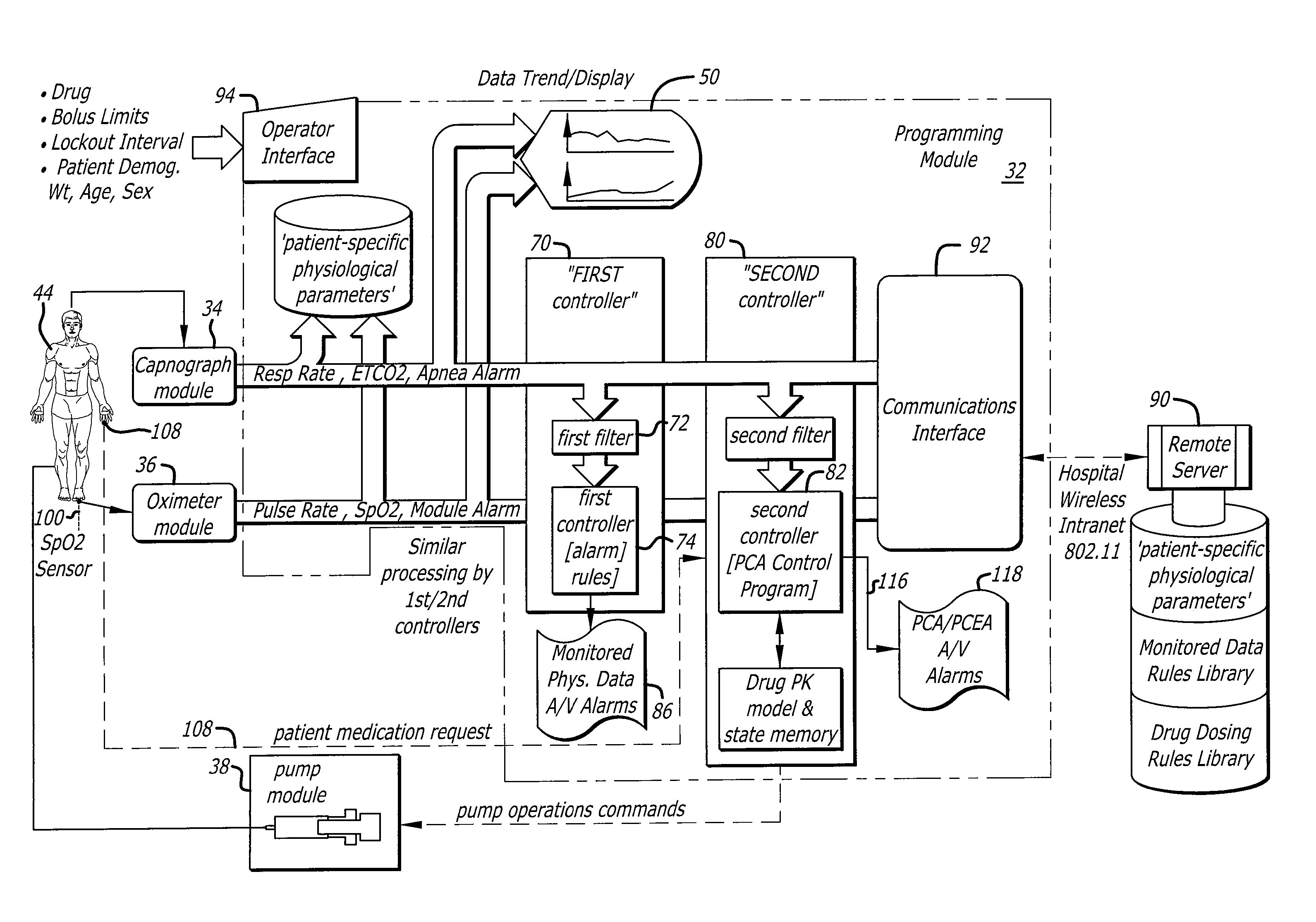
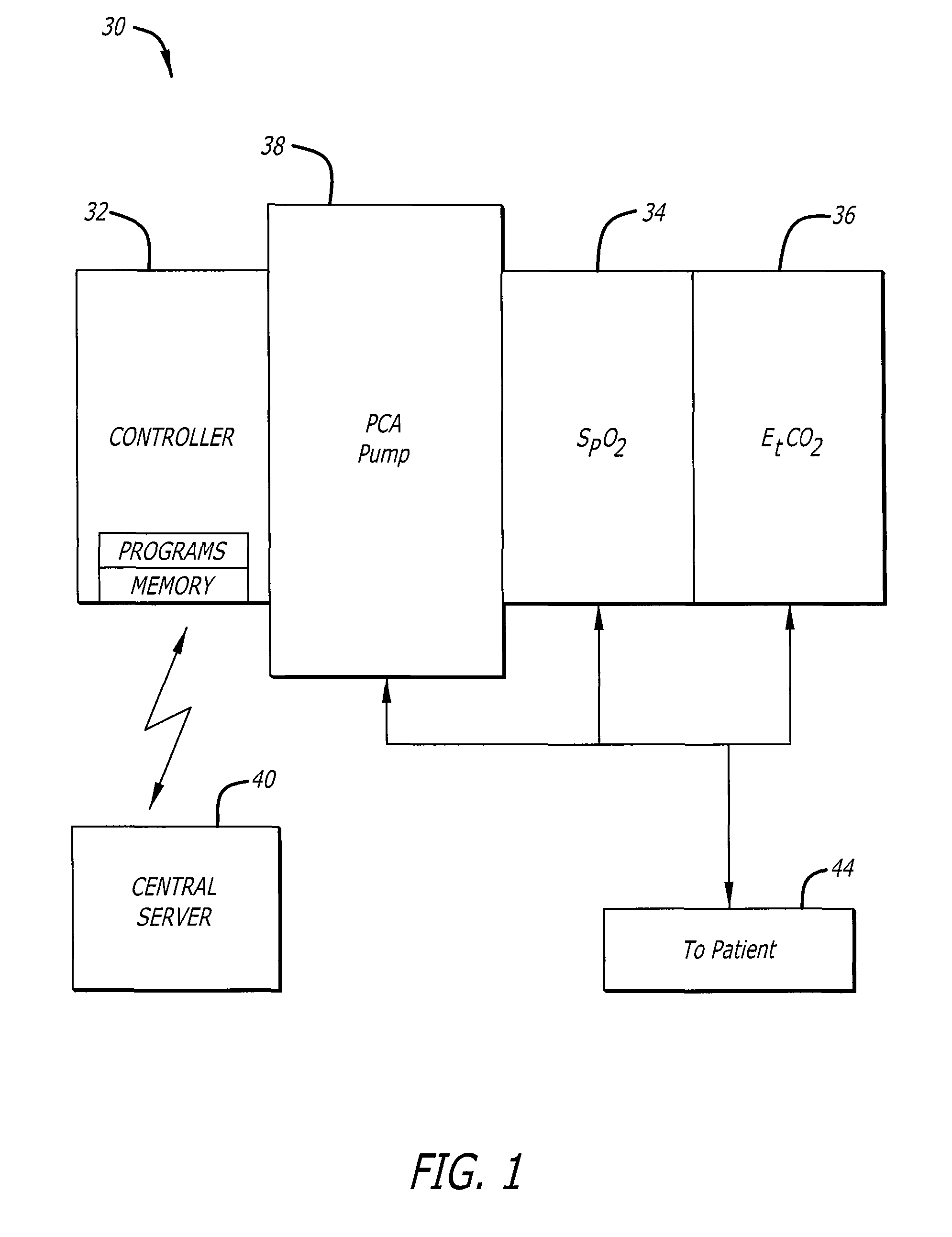
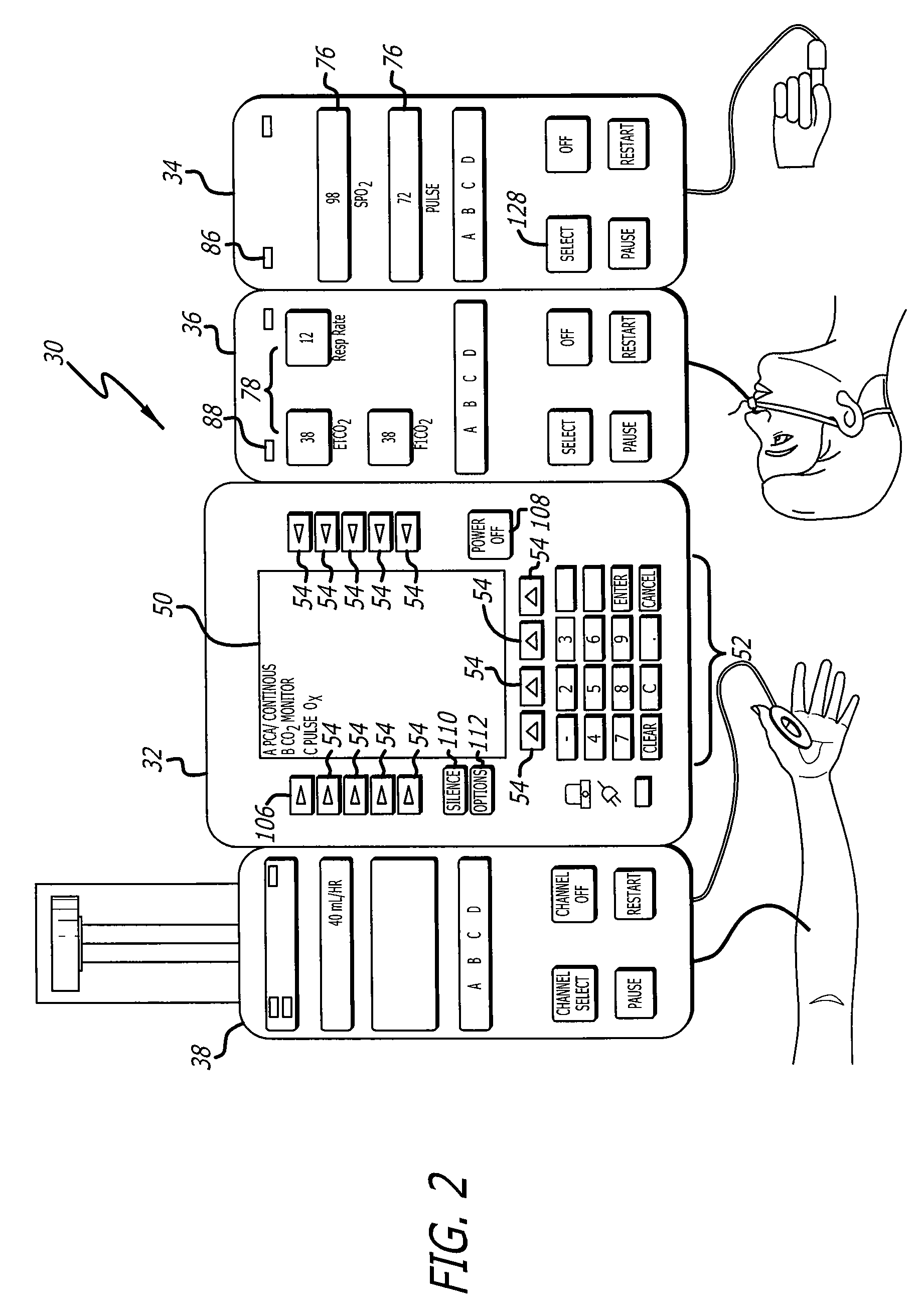
- A system and method that utilize a second controller to process physiological signals and request signals differently, filtering data with techniques like moving averages and adaptive filters, and incorporating pharmacokinetic modeling to optimize PCA device operation and reduce false alarms, allowing for automatic pausing and resuming of medication delivery based on patient-specific data and rules that can be modified remotely.
System and method for optimizing control of PCA and PCEA system
PatentActiveUS7871394B2
Innovation
- A system and method that utilize a second controller to process physiological signals and request signals differently from the first controller, filtering data with techniques like moving averages and adaptive filters, and incorporating pharmacokinetic modeling to optimize PCA device operation, allowing for automatic inhibition of medication delivery during potential respiratory depression while minimizing false alarms.

Regulatory Framework for PCA Device Safety Standards
The regulatory framework governing PCA device safety standards represents a comprehensive multi-layered approach designed to ensure patient safety while enabling therapeutic efficacy. At the international level, the International Organization for Standardization (ISO) provides foundational guidelines through ISO 60601-2-24, which specifically addresses the safety and essential performance requirements for infusion pumps and controllers. This standard establishes critical parameters for flow rate accuracy, occlusion detection, and alarm systems that directly impact sedation management protocols.
In the United States, the Food and Drug Administration (FDA) classifies PCA pumps as Class II medical devices under 21 CFR 880.5725, requiring premarket notification through the 510(k) pathway. The FDA's guidance documents emphasize risk management principles outlined in ISO 14971, mandating comprehensive hazard analysis for flow rate optimization algorithms. Manufacturers must demonstrate that sedation minimization features do not compromise analgesic effectiveness or introduce new safety risks.
The European Union's Medical Device Regulation (MDR 2017/745) imposes stringent conformity assessment procedures for PCA devices, requiring detailed clinical evaluation data supporting flow rate optimization claims. Notified bodies must verify that algorithmic adjustments for sedation reduction maintain compliance with essential safety requirements, particularly regarding software lifecycle processes defined in IEC 62304.
Clinical governance standards established by organizations such as The Joint Commission and the Institute for Safe Medication Practices (ISMP) provide operational frameworks for PCA implementation. These guidelines mandate standardized concentration protocols, dose limits, and monitoring requirements that influence how flow rate optimization algorithms must function within clinical workflows.
Emerging regulatory considerations address cybersecurity requirements under FDA's premarket and postmarket cybersecurity guidance, as connected PCA devices with advanced flow optimization capabilities present new attack vectors. Additionally, artificial intelligence and machine learning components used in predictive sedation algorithms face evolving regulatory scrutiny under FDA's Software as Medical Device framework, requiring validation of algorithmic decision-making processes and bias mitigation strategies.
In the United States, the Food and Drug Administration (FDA) classifies PCA pumps as Class II medical devices under 21 CFR 880.5725, requiring premarket notification through the 510(k) pathway. The FDA's guidance documents emphasize risk management principles outlined in ISO 14971, mandating comprehensive hazard analysis for flow rate optimization algorithms. Manufacturers must demonstrate that sedation minimization features do not compromise analgesic effectiveness or introduce new safety risks.
The European Union's Medical Device Regulation (MDR 2017/745) imposes stringent conformity assessment procedures for PCA devices, requiring detailed clinical evaluation data supporting flow rate optimization claims. Notified bodies must verify that algorithmic adjustments for sedation reduction maintain compliance with essential safety requirements, particularly regarding software lifecycle processes defined in IEC 62304.
Clinical governance standards established by organizations such as The Joint Commission and the Institute for Safe Medication Practices (ISMP) provide operational frameworks for PCA implementation. These guidelines mandate standardized concentration protocols, dose limits, and monitoring requirements that influence how flow rate optimization algorithms must function within clinical workflows.
Emerging regulatory considerations address cybersecurity requirements under FDA's premarket and postmarket cybersecurity guidance, as connected PCA devices with advanced flow optimization capabilities present new attack vectors. Additionally, artificial intelligence and machine learning components used in predictive sedation algorithms face evolving regulatory scrutiny under FDA's Software as Medical Device framework, requiring validation of algorithmic decision-making processes and bias mitigation strategies.
Clinical Risk Management in PCA Therapy Systems
Clinical risk management in PCA therapy systems represents a critical framework for ensuring patient safety while maintaining therapeutic efficacy. The complexity of PCA systems, particularly when optimizing flow rates to minimize sedation, introduces multiple risk vectors that require systematic identification, assessment, and mitigation strategies.
Patient safety risks in PCA systems primarily stem from medication overdose, respiratory depression, and excessive sedation. These risks are amplified when flow rate optimization algorithms are implemented, as automated adjustments may inadvertently create scenarios where traditional monitoring protocols become insufficient. The integration of real-time physiological monitoring with flow rate control systems necessitates robust fail-safe mechanisms to prevent adverse events.
Risk stratification protocols must account for patient-specific factors including age, weight, comorbidities, and medication tolerance levels. High-risk patient populations, such as elderly patients or those with respiratory compromise, require enhanced monitoring parameters and more conservative flow rate boundaries. The system must incorporate dynamic risk assessment capabilities that continuously evaluate patient status and adjust safety thresholds accordingly.
Technical risk management encompasses hardware reliability, software validation, and cybersecurity considerations. PCA pump systems optimizing flow rates rely heavily on sensor accuracy and algorithm reliability. Failure modes analysis reveals potential points of system compromise, including sensor malfunction, communication interruptions, and algorithm errors. Redundant safety systems and manual override capabilities serve as essential backup mechanisms.
Clinical workflow integration presents additional risk management challenges. Healthcare providers must receive comprehensive training on optimized PCA systems, understanding both automated functions and manual intervention protocols. Clear escalation procedures and alarm management strategies prevent alert fatigue while ensuring appropriate clinical response to system warnings.
Regulatory compliance frameworks, including FDA guidelines and international safety standards, establish minimum requirements for risk management in PCA systems. Documentation protocols must capture all system interactions, patient responses, and clinical interventions to support continuous improvement and regulatory reporting requirements.
Patient safety risks in PCA systems primarily stem from medication overdose, respiratory depression, and excessive sedation. These risks are amplified when flow rate optimization algorithms are implemented, as automated adjustments may inadvertently create scenarios where traditional monitoring protocols become insufficient. The integration of real-time physiological monitoring with flow rate control systems necessitates robust fail-safe mechanisms to prevent adverse events.
Risk stratification protocols must account for patient-specific factors including age, weight, comorbidities, and medication tolerance levels. High-risk patient populations, such as elderly patients or those with respiratory compromise, require enhanced monitoring parameters and more conservative flow rate boundaries. The system must incorporate dynamic risk assessment capabilities that continuously evaluate patient status and adjust safety thresholds accordingly.
Technical risk management encompasses hardware reliability, software validation, and cybersecurity considerations. PCA pump systems optimizing flow rates rely heavily on sensor accuracy and algorithm reliability. Failure modes analysis reveals potential points of system compromise, including sensor malfunction, communication interruptions, and algorithm errors. Redundant safety systems and manual override capabilities serve as essential backup mechanisms.
Clinical workflow integration presents additional risk management challenges. Healthcare providers must receive comprehensive training on optimized PCA systems, understanding both automated functions and manual intervention protocols. Clear escalation procedures and alarm management strategies prevent alert fatigue while ensuring appropriate clinical response to system warnings.
Regulatory compliance frameworks, including FDA guidelines and international safety standards, establish minimum requirements for risk management in PCA systems. Documentation protocols must capture all system interactions, patient responses, and clinical interventions to support continuous improvement and regulatory reporting requirements.
Unlock deeper insights with Patsnap Eureka Quick Research — get a full tech report to explore trends and direct your research. Try now!
Generate Your Research Report Instantly with AI Agent
Supercharge your innovation with Patsnap Eureka AI Agent Platform!