

Optimize PCA Pump Algorithms for Rapid Response
MAR 7, 20269 MIN READ
Generate Your Research Report Instantly with AI Agent
Patsnap Eureka helps you evaluate technical feasibility & market potential.
PCA Pump Algorithm Background and Optimization Goals
Patient-Controlled Analgesia (PCA) pumps represent a critical advancement in pain management technology, enabling patients to self-administer predetermined doses of analgesic medication within clinically safe parameters. These sophisticated medical devices have evolved from simple mechanical systems to complex computerized platforms that integrate multiple safety mechanisms, dose calculation algorithms, and patient monitoring capabilities.
The fundamental principle underlying PCA technology centers on providing patients with controlled autonomy over their pain management while maintaining strict clinical oversight. Traditional PCA systems operate through programmable infusion algorithms that calculate bolus doses, lockout intervals, and maximum dosage limits based on physician prescriptions and patient-specific parameters. However, current algorithmic approaches often exhibit delayed response times that can compromise patient comfort and clinical outcomes.
The technological evolution of PCA pumps has progressed through several distinct phases, beginning with basic mechanical delivery systems in the 1970s to today's microprocessor-controlled devices featuring advanced safety interlocks and wireless connectivity. Modern PCA systems incorporate sophisticated software architectures that manage complex dosing calculations, patient authentication, and real-time monitoring of physiological parameters.
Contemporary challenges in PCA pump algorithm design primarily revolve around response latency issues that create gaps between patient pain perception and medication delivery. Current systems typically exhibit response delays ranging from 2-8 seconds, which can significantly impact patient satisfaction and pain control efficacy. These delays stem from multiple algorithmic processing steps including input validation, safety checks, dose calculations, and mechanical actuation sequences.
The optimization objectives for next-generation PCA pump algorithms focus on achieving sub-second response times while maintaining or enhancing existing safety protocols. Primary goals include reducing computational overhead in dose calculation routines, streamlining safety verification processes, and implementing predictive algorithms that anticipate patient needs based on historical usage patterns and physiological indicators.
Advanced optimization targets encompass the integration of machine learning capabilities to personalize dosing algorithms based on individual patient responses, real-time adaptation to changing pain levels through continuous monitoring, and enhanced user interface responsiveness. These improvements aim to bridge the gap between patient pain experience and therapeutic intervention, ultimately improving clinical outcomes and patient satisfaction in acute and chronic pain management scenarios.
The fundamental principle underlying PCA technology centers on providing patients with controlled autonomy over their pain management while maintaining strict clinical oversight. Traditional PCA systems operate through programmable infusion algorithms that calculate bolus doses, lockout intervals, and maximum dosage limits based on physician prescriptions and patient-specific parameters. However, current algorithmic approaches often exhibit delayed response times that can compromise patient comfort and clinical outcomes.
The technological evolution of PCA pumps has progressed through several distinct phases, beginning with basic mechanical delivery systems in the 1970s to today's microprocessor-controlled devices featuring advanced safety interlocks and wireless connectivity. Modern PCA systems incorporate sophisticated software architectures that manage complex dosing calculations, patient authentication, and real-time monitoring of physiological parameters.
Contemporary challenges in PCA pump algorithm design primarily revolve around response latency issues that create gaps between patient pain perception and medication delivery. Current systems typically exhibit response delays ranging from 2-8 seconds, which can significantly impact patient satisfaction and pain control efficacy. These delays stem from multiple algorithmic processing steps including input validation, safety checks, dose calculations, and mechanical actuation sequences.
The optimization objectives for next-generation PCA pump algorithms focus on achieving sub-second response times while maintaining or enhancing existing safety protocols. Primary goals include reducing computational overhead in dose calculation routines, streamlining safety verification processes, and implementing predictive algorithms that anticipate patient needs based on historical usage patterns and physiological indicators.
Advanced optimization targets encompass the integration of machine learning capabilities to personalize dosing algorithms based on individual patient responses, real-time adaptation to changing pain levels through continuous monitoring, and enhanced user interface responsiveness. These improvements aim to bridge the gap between patient pain experience and therapeutic intervention, ultimately improving clinical outcomes and patient satisfaction in acute and chronic pain management scenarios.
Market Demand for Rapid Response Pain Management Systems
The global pain management market continues to experience substantial growth driven by an aging population, increasing prevalence of chronic pain conditions, and rising awareness of effective pain treatment protocols. Healthcare systems worldwide are prioritizing patient-centered care approaches that emphasize rapid pain relief and improved quality of life outcomes. This shift has created significant demand for advanced pain management technologies that can deliver precise, timely, and personalized therapeutic interventions.
Patient-controlled analgesia systems represent a critical segment within this expanding market, particularly in hospital settings where acute pain management is essential. Emergency departments, surgical units, intensive care facilities, and oncology centers increasingly require sophisticated pain management solutions that can respond immediately to patient needs while maintaining safety protocols. The demand for rapid response capabilities has intensified as healthcare providers recognize the clinical and economic benefits of preventing pain escalation through proactive intervention.
Current market drivers include regulatory emphasis on pain as the fifth vital sign, patient satisfaction metrics tied to reimbursement rates, and growing evidence supporting early pain intervention strategies. Healthcare institutions are investing in technologies that can reduce nursing workload while improving patient outcomes, creating opportunities for intelligent PCA systems with enhanced algorithmic capabilities.
The post-surgical care market segment demonstrates particularly strong demand for rapid response pain management systems. Surgical volumes continue to increase globally, with minimally invasive procedures requiring precise pain control to facilitate faster recovery and shorter hospital stays. Outpatient surgical centers and same-day discharge protocols further emphasize the need for reliable, responsive pain management technologies that can adapt quickly to changing patient conditions.
Chronic pain management represents another significant market opportunity, with healthcare systems seeking solutions that can provide consistent, personalized care while reducing the risk of medication-related complications. The opioid crisis has intensified focus on precision dosing and intelligent monitoring capabilities that can optimize therapeutic outcomes while minimizing adverse effects.
Emerging markets in developing countries are experiencing rapid healthcare infrastructure expansion, creating new opportunities for advanced pain management technologies. These markets often prioritize cost-effective solutions that can deliver sophisticated care capabilities while operating within resource-constrained environments, driving demand for efficient, automated pain management systems with rapid response characteristics.
Patient-controlled analgesia systems represent a critical segment within this expanding market, particularly in hospital settings where acute pain management is essential. Emergency departments, surgical units, intensive care facilities, and oncology centers increasingly require sophisticated pain management solutions that can respond immediately to patient needs while maintaining safety protocols. The demand for rapid response capabilities has intensified as healthcare providers recognize the clinical and economic benefits of preventing pain escalation through proactive intervention.
Current market drivers include regulatory emphasis on pain as the fifth vital sign, patient satisfaction metrics tied to reimbursement rates, and growing evidence supporting early pain intervention strategies. Healthcare institutions are investing in technologies that can reduce nursing workload while improving patient outcomes, creating opportunities for intelligent PCA systems with enhanced algorithmic capabilities.
The post-surgical care market segment demonstrates particularly strong demand for rapid response pain management systems. Surgical volumes continue to increase globally, with minimally invasive procedures requiring precise pain control to facilitate faster recovery and shorter hospital stays. Outpatient surgical centers and same-day discharge protocols further emphasize the need for reliable, responsive pain management technologies that can adapt quickly to changing patient conditions.
Chronic pain management represents another significant market opportunity, with healthcare systems seeking solutions that can provide consistent, personalized care while reducing the risk of medication-related complications. The opioid crisis has intensified focus on precision dosing and intelligent monitoring capabilities that can optimize therapeutic outcomes while minimizing adverse effects.
Emerging markets in developing countries are experiencing rapid healthcare infrastructure expansion, creating new opportunities for advanced pain management technologies. These markets often prioritize cost-effective solutions that can deliver sophisticated care capabilities while operating within resource-constrained environments, driving demand for efficient, automated pain management systems with rapid response characteristics.
Current PCA Algorithm Limitations and Response Time Challenges
Patient-Controlled Analgesia (PCA) pumps currently face significant algorithmic limitations that directly impact their ability to deliver rapid and effective pain management responses. Traditional PCA algorithms operate on relatively simple logic systems that primarily focus on dose delivery timing and lockout intervals, without incorporating sophisticated predictive analytics or real-time physiological feedback mechanisms. These conventional approaches often result in suboptimal pain control, particularly during breakthrough pain episodes where patients require immediate relief.
The most prominent limitation lies in the static nature of current dosing algorithms. Most PCA systems rely on predetermined dosing parameters set by healthcare providers, which remain constant throughout the treatment period regardless of changing patient conditions or pain intensity fluctuations. This inflexibility creates substantial delays in achieving adequate analgesia, as the system cannot dynamically adjust to individual patient responses or anticipate pain escalation patterns.
Response time challenges are further compounded by the linear processing architecture employed in existing PCA algorithms. When patients activate the demand button, the system must sequentially verify lockout status, calculate appropriate dosing, and initiate pump mechanisms before drug delivery begins. This multi-step verification process, while essential for safety, introduces cumulative delays that can extend response times to 15-30 seconds or longer, which proves inadequate for acute pain management scenarios.
Current algorithms also lack sophisticated data integration capabilities, failing to leverage available patient monitoring data such as heart rate variability, respiratory patterns, or movement sensors that could provide early indicators of pain escalation. This limitation prevents proactive pain management and forces the system into a purely reactive mode, where intervention occurs only after patients experience significant discomfort.
The absence of machine learning integration represents another critical constraint. Existing PCA algorithms cannot learn from individual patient response patterns or adapt their behavior based on historical effectiveness data. This static approach prevents optimization of dosing strategies and fails to account for factors such as drug tolerance development, circadian pain variations, or individual pharmacokinetic differences that significantly impact treatment efficacy.
Safety protocol implementations, while necessary, often introduce additional response delays through conservative programming approaches. Multiple redundant safety checks and extended verification procedures can create bottlenecks in the delivery pathway, particularly when rapid intervention is most critical for patient comfort and treatment success.
The most prominent limitation lies in the static nature of current dosing algorithms. Most PCA systems rely on predetermined dosing parameters set by healthcare providers, which remain constant throughout the treatment period regardless of changing patient conditions or pain intensity fluctuations. This inflexibility creates substantial delays in achieving adequate analgesia, as the system cannot dynamically adjust to individual patient responses or anticipate pain escalation patterns.
Response time challenges are further compounded by the linear processing architecture employed in existing PCA algorithms. When patients activate the demand button, the system must sequentially verify lockout status, calculate appropriate dosing, and initiate pump mechanisms before drug delivery begins. This multi-step verification process, while essential for safety, introduces cumulative delays that can extend response times to 15-30 seconds or longer, which proves inadequate for acute pain management scenarios.
Current algorithms also lack sophisticated data integration capabilities, failing to leverage available patient monitoring data such as heart rate variability, respiratory patterns, or movement sensors that could provide early indicators of pain escalation. This limitation prevents proactive pain management and forces the system into a purely reactive mode, where intervention occurs only after patients experience significant discomfort.
The absence of machine learning integration represents another critical constraint. Existing PCA algorithms cannot learn from individual patient response patterns or adapt their behavior based on historical effectiveness data. This static approach prevents optimization of dosing strategies and fails to account for factors such as drug tolerance development, circadian pain variations, or individual pharmacokinetic differences that significantly impact treatment efficacy.
Safety protocol implementations, while necessary, often introduce additional response delays through conservative programming approaches. Multiple redundant safety checks and extended verification procedures can create bottlenecks in the delivery pathway, particularly when rapid intervention is most critical for patient comfort and treatment success.
Existing Algorithm Solutions for PCA Response Optimization
01 Adaptive algorithm optimization for faster response
PCA pump systems can employ adaptive algorithms that dynamically adjust dosing parameters based on patient demand patterns and historical usage data. These algorithms utilize predictive models and machine learning techniques to anticipate patient needs and pre-calculate dosing schedules, thereby reducing computation time and improving response speed when a patient activates the PCA button. The optimization includes real-time parameter tuning and feedback loops that minimize latency between button press and drug delivery initiation.- Adaptive algorithm optimization for faster response: PCA pump systems can implement adaptive algorithms that dynamically adjust dosing parameters based on patient demand patterns and historical usage data. These algorithms utilize predictive models and machine learning techniques to anticipate patient needs and pre-calculate dosing schedules, significantly reducing the computation time required when a patient initiates a bolus request. The adaptive approach allows the system to optimize response speed by maintaining ready-to-execute dosing protocols.
- Hardware acceleration and processor optimization: Enhanced response speed can be achieved through dedicated hardware components and optimized processor architectures specifically designed for PCA pump control algorithms. This includes the use of high-speed microcontrollers, parallel processing capabilities, and specialized computational units that can execute complex dosing calculations in minimal time. Hardware-level optimizations reduce latency between patient request and drug delivery initiation.
- Real-time monitoring and feedback loop systems: Implementation of real-time monitoring systems with closed-loop feedback mechanisms enables faster algorithm response by continuously tracking system parameters and patient physiological data. These systems utilize sensors and monitoring devices to provide instantaneous data input to the control algorithms, allowing for immediate adjustments and rapid response to patient-initiated requests. The continuous data stream eliminates delays associated with periodic sampling.
- Simplified calculation methods and lookup tables: Response speed improvements can be achieved by implementing simplified calculation methods and pre-computed lookup tables for common dosing scenarios. Instead of performing complex calculations in real-time, the system references pre-calculated values stored in memory, dramatically reducing processing time. This approach maintains accuracy while minimizing computational overhead, particularly beneficial for frequently requested dose combinations.
- Priority-based processing and interrupt handling: PCA pump algorithms can incorporate priority-based processing schemes and optimized interrupt handling mechanisms to ensure patient bolus requests receive immediate attention. These systems assign highest priority to patient-initiated commands, temporarily suspending lower-priority background tasks to allocate maximum processing resources to dose delivery calculations. Advanced interrupt architectures minimize context-switching overhead and ensure deterministic response times.
02 Hardware acceleration and processing optimization
Enhanced processing capabilities through dedicated hardware components such as specialized microcontrollers, digital signal processors, or application-specific integrated circuits can significantly improve algorithm execution speed. These hardware improvements enable faster calculation of complex dosing algorithms, rapid sensor data processing, and reduced system latency. Implementation of parallel processing architectures and optimized memory management further contributes to minimizing response time in PCA pump operations.Expand Specific Solutions03 Simplified algorithm architecture for rapid execution
Streamlined algorithm designs that reduce computational complexity while maintaining safety and efficacy can achieve faster response times. This approach involves implementing efficient data structures, optimizing code execution paths, and eliminating unnecessary computational steps. Simplified decision trees and lookup tables replace complex calculations where appropriate, enabling near-instantaneous response to patient requests while ensuring proper lockout intervals and dose limits are maintained.Expand Specific Solutions04 Pre-computation and caching strategies
PCA pump algorithms can implement pre-computation techniques where frequently used calculations are performed in advance during idle periods and stored in cache memory. This strategy includes pre-calculating dose delivery profiles, flow rate adjustments, and safety check parameters based on current settings. When a patient initiates a dose request, the system retrieves pre-computed values rather than performing real-time calculations, dramatically reducing response latency and ensuring consistent, rapid drug delivery.Expand Specific Solutions05 Real-time monitoring and interrupt-driven response
Implementation of interrupt-driven architectures and real-time operating systems enables PCA pumps to prioritize patient dose requests with minimal delay. These systems utilize hardware interrupts that immediately suspend lower-priority tasks when a PCA button is pressed, allowing the dosing algorithm to execute with highest priority. Real-time monitoring of system states and sensor inputs ensures that all safety checks are performed efficiently without compromising response speed, while maintaining continuous surveillance of pump operation parameters.Expand Specific Solutions
Key Players in PCA Pump and Algorithm Development Industry
The PCA pump algorithm optimization field represents an emerging healthcare technology sector currently in its early development stage, characterized by significant growth potential driven by increasing demand for precision pain management solutions. The market demonstrates moderate scale with substantial expansion opportunities as healthcare systems globally prioritize patient-controlled analgesia improvements. Technology maturity varies considerably across market participants, with leading Chinese universities including Jiangsu University, Huazhong University of Science & Technology, and Shanghai Jiao Tong University conducting foundational research, while established corporations like Koninklijke Philips NV bring advanced commercial expertise. State Grid companies and specialized medical technology firms such as Guangzhou Weiyuan Medical Technology contribute infrastructure and clinical application capabilities, creating a diverse ecosystem spanning academic research, industrial implementation, and healthcare delivery systems.
Huazhong University of Science & Technology
Technical Solution: HUST has pioneered research in intelligent PCA pump optimization using reinforcement learning algorithms that adapt to individual patient pain patterns and medication responses. Their system employs multi-sensor fusion technology to monitor patient vital signs, movement patterns, and self-reported pain levels to create personalized dosing profiles. The algorithms utilize edge computing capabilities to process data locally, reducing latency to under 100 milliseconds for critical dosing decisions while incorporating safety interlocks and physician override capabilities for enhanced clinical control.
Strengths: Advanced AI research capabilities with focus on personalized medicine and real-time optimization. Weaknesses: Early-stage technology requiring extensive clinical trials and validation before widespread adoption.
Wuhan University
Technical Solution: Wuhan University has developed optimization algorithms for PCA pumps focusing on rapid response through predictive pain management models. Their research incorporates Internet of Things (IoT) sensors and cloud-based analytics to create comprehensive patient monitoring ecosystems. The algorithms use time-series analysis and pattern recognition to identify early indicators of breakthrough pain, enabling proactive medication delivery adjustments. Their system integrates with electronic health records to leverage historical patient data for improved prediction accuracy and personalized treatment protocols.
Strengths: Comprehensive research approach combining IoT technology with advanced analytics for holistic patient care. Weaknesses: Dependency on robust network infrastructure and potential data privacy concerns with cloud-based processing.
Core Innovations in Rapid Response PCA Control Algorithms
System and method for optimizing control of PCA and PCEA system
PatentActiveUS7871394B2
Innovation
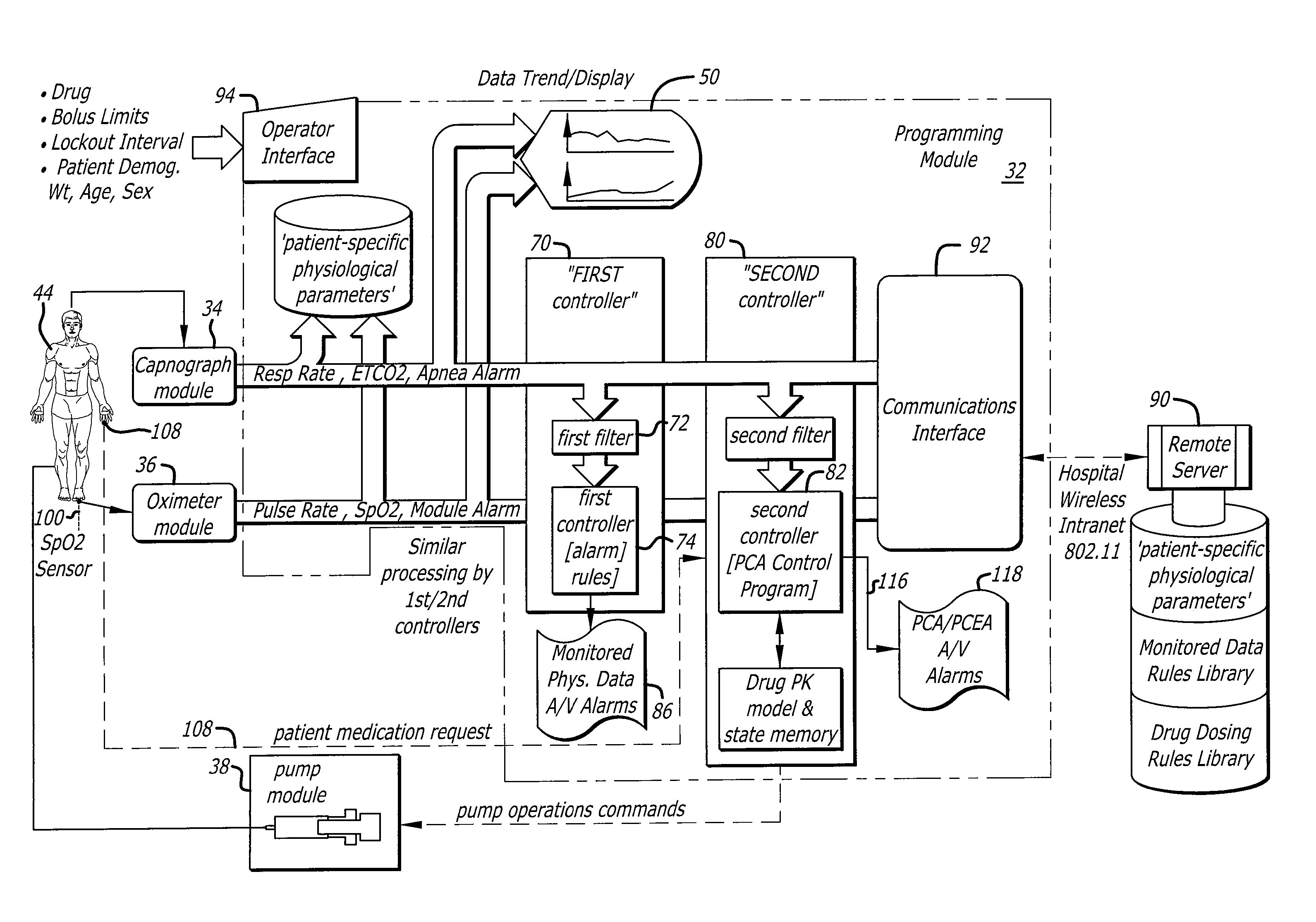
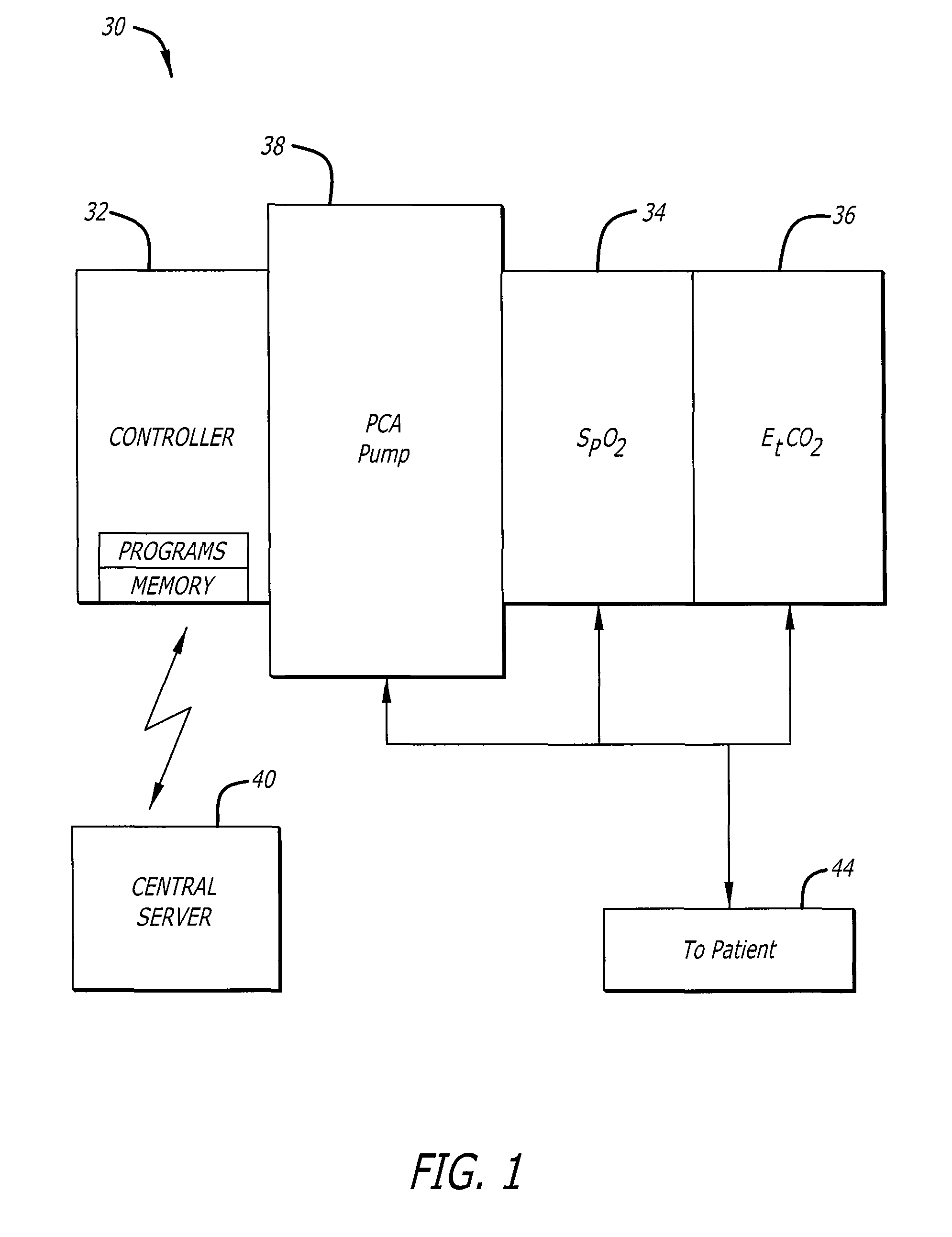
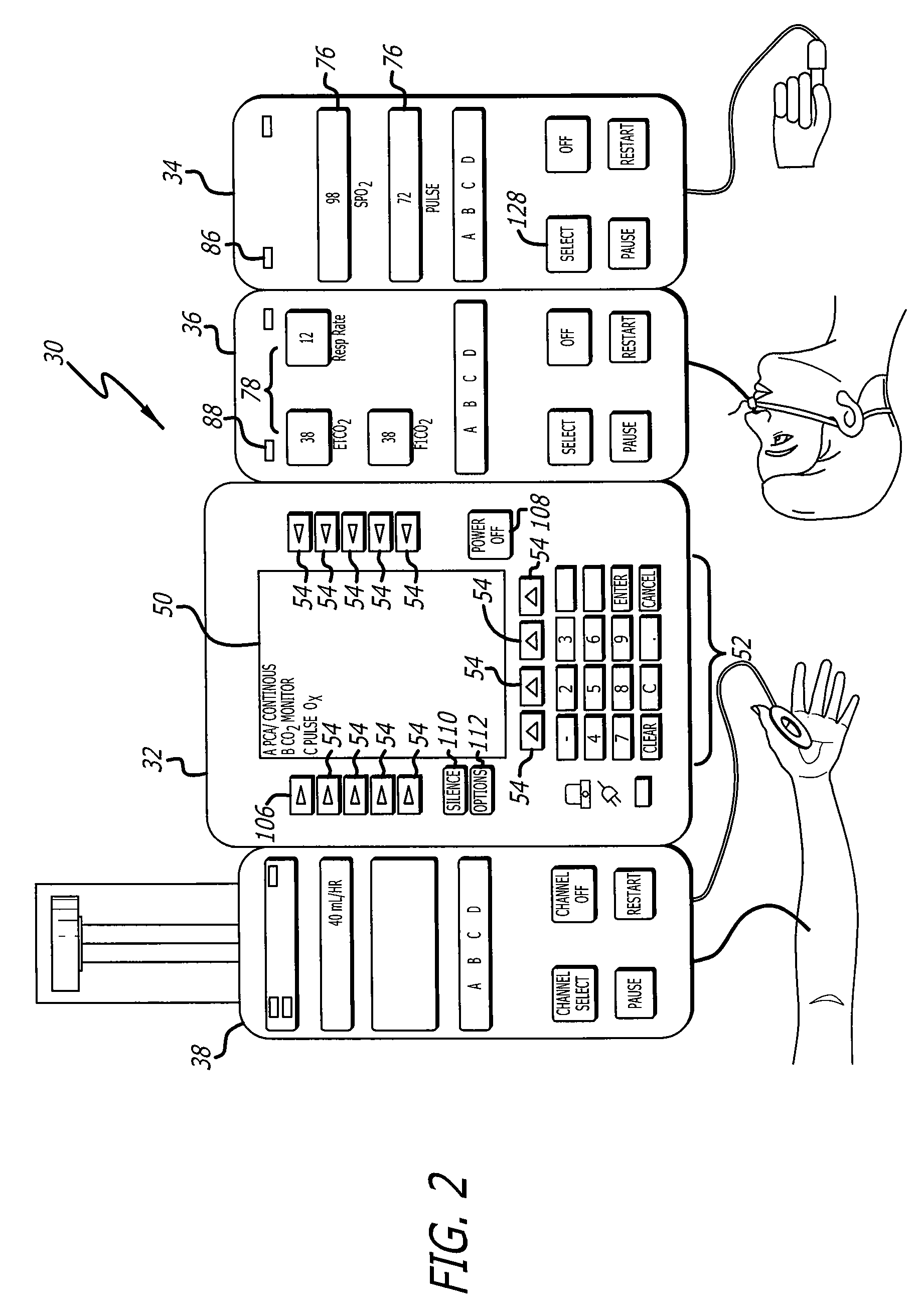
- A system and method that utilize a second controller to process physiological signals and request signals differently from the first controller, filtering data with techniques like moving averages and adaptive filters, and incorporating pharmacokinetic modeling to optimize PCA device operation, allowing for automatic inhibition of medication delivery during potential respiratory depression while minimizing false alarms.

A system for adaptive control of medicament delivery, and related process
PatentInactiveSG10201801161PA
Innovation
- A computer system with a processor, medicament controller, parameter sensors, and threshold comparator that adaptively controls medicament availability by monitoring vital signs and adjusting the time between doses and dosage levels based on predetermined thresholds and patient response, reducing the frequency or increasing the duration of medicament administration as necessary.


Regulatory Framework for PCA Pump Algorithm Validation
The regulatory landscape for PCA pump algorithm validation encompasses multiple jurisdictional frameworks that establish stringent requirements for safety, efficacy, and performance verification. The FDA's 510(k) premarket notification process serves as the primary pathway for PCA pump approval in the United States, requiring substantial equivalence demonstration to predicate devices. The European Union's Medical Device Regulation (MDR) 2017/745 mandates comprehensive clinical evaluation and post-market surveillance for Class IIb medical devices, which includes PCA pumps with algorithmic control systems.
Algorithm validation protocols must adhere to IEC 62304 standards for medical device software lifecycle processes, ensuring systematic verification and validation activities throughout development phases. The standard requires risk-based classification of software components, with PCA pump algorithms typically falling under Class C due to their potential impact on patient safety. Documentation requirements include software requirements specifications, architectural design descriptions, and detailed verification protocols that demonstrate algorithm performance under various clinical scenarios.
Clinical validation frameworks necessitate multi-phase testing approaches, beginning with bench testing using standardized test protocols that simulate real-world usage patterns. Human factors engineering studies, as outlined in IEC 62366-1, must evaluate user interface design and alarm systems to minimize use-related risks. Clinical trials must demonstrate algorithm performance across diverse patient populations, with particular attention to pediatric and geriatric cohorts where pharmacokinetic variations may affect dosing accuracy.
Post-market surveillance requirements mandate continuous monitoring of algorithm performance through adverse event reporting systems and periodic safety updates. The FDA's unique device identification (UDI) system enables traceability of algorithm versions, facilitating rapid response to safety concerns. Cybersecurity considerations, governed by FDA guidance on premarket cybersecurity submissions, require robust protection mechanisms for algorithm integrity and patient data security.
International harmonization efforts through the International Medical Device Regulators Forum (IMDRF) are establishing convergent standards for software validation, though regional variations in implementation timelines and specific requirements persist. Regulatory bodies increasingly emphasize real-world evidence collection and adaptive clinical trial designs to accommodate rapid algorithm iterations while maintaining patient safety standards.
Algorithm validation protocols must adhere to IEC 62304 standards for medical device software lifecycle processes, ensuring systematic verification and validation activities throughout development phases. The standard requires risk-based classification of software components, with PCA pump algorithms typically falling under Class C due to their potential impact on patient safety. Documentation requirements include software requirements specifications, architectural design descriptions, and detailed verification protocols that demonstrate algorithm performance under various clinical scenarios.
Clinical validation frameworks necessitate multi-phase testing approaches, beginning with bench testing using standardized test protocols that simulate real-world usage patterns. Human factors engineering studies, as outlined in IEC 62366-1, must evaluate user interface design and alarm systems to minimize use-related risks. Clinical trials must demonstrate algorithm performance across diverse patient populations, with particular attention to pediatric and geriatric cohorts where pharmacokinetic variations may affect dosing accuracy.
Post-market surveillance requirements mandate continuous monitoring of algorithm performance through adverse event reporting systems and periodic safety updates. The FDA's unique device identification (UDI) system enables traceability of algorithm versions, facilitating rapid response to safety concerns. Cybersecurity considerations, governed by FDA guidance on premarket cybersecurity submissions, require robust protection mechanisms for algorithm integrity and patient data security.
International harmonization efforts through the International Medical Device Regulators Forum (IMDRF) are establishing convergent standards for software validation, though regional variations in implementation timelines and specific requirements persist. Regulatory bodies increasingly emphasize real-world evidence collection and adaptive clinical trial designs to accommodate rapid algorithm iterations while maintaining patient safety standards.
Safety Protocols for High-Speed PCA Drug Delivery Systems
High-speed PCA drug delivery systems require comprehensive safety protocols to mitigate risks associated with rapid medication administration. These protocols must address the inherent challenges of accelerated drug delivery while maintaining patient safety standards. The primary safety concerns include overdose prevention, system malfunction detection, and physiological monitoring during rapid drug administration phases.
Patient monitoring protocols form the cornerstone of safe high-speed PCA operations. Continuous vital sign monitoring becomes critical when delivery rates exceed standard parameters, requiring real-time assessment of respiratory rate, oxygen saturation, blood pressure, and cardiac rhythm. Advanced monitoring systems must incorporate predictive algorithms that can detect early signs of respiratory depression or cardiovascular instability before clinical symptoms manifest.
Drug concentration verification protocols ensure accurate medication delivery during rapid response scenarios. Multi-point verification systems, including barcode scanning, drug library cross-referencing, and concentration validation, must operate seamlessly at accelerated speeds. These protocols require redundant checking mechanisms that can function effectively without introducing delays that compromise the rapid response capability.
Emergency intervention protocols define immediate response procedures when safety thresholds are exceeded during high-speed delivery. Automated system shutdown mechanisms must activate within milliseconds of detecting anomalous conditions, while simultaneously alerting clinical staff through multiple communication channels. These protocols include predefined reversal agent administration procedures and emergency medication protocols specific to rapid PCA scenarios.
System integrity monitoring protocols continuously assess pump mechanical performance, software functionality, and communication network stability. Real-time diagnostic systems must detect micro-failures in pump mechanisms, software glitches, or network interruptions that could compromise delivery accuracy. These protocols incorporate predictive maintenance algorithms that identify potential system failures before they impact patient safety.
Clinical staff training protocols ensure healthcare providers possess specialized competencies for managing high-speed PCA systems. Training programs must cover rapid assessment techniques, emergency response procedures, and system troubleshooting specific to accelerated delivery scenarios. Competency validation protocols require demonstration of proficiency in both routine operations and emergency situations unique to high-speed PCA environments.
Patient monitoring protocols form the cornerstone of safe high-speed PCA operations. Continuous vital sign monitoring becomes critical when delivery rates exceed standard parameters, requiring real-time assessment of respiratory rate, oxygen saturation, blood pressure, and cardiac rhythm. Advanced monitoring systems must incorporate predictive algorithms that can detect early signs of respiratory depression or cardiovascular instability before clinical symptoms manifest.
Drug concentration verification protocols ensure accurate medication delivery during rapid response scenarios. Multi-point verification systems, including barcode scanning, drug library cross-referencing, and concentration validation, must operate seamlessly at accelerated speeds. These protocols require redundant checking mechanisms that can function effectively without introducing delays that compromise the rapid response capability.
Emergency intervention protocols define immediate response procedures when safety thresholds are exceeded during high-speed delivery. Automated system shutdown mechanisms must activate within milliseconds of detecting anomalous conditions, while simultaneously alerting clinical staff through multiple communication channels. These protocols include predefined reversal agent administration procedures and emergency medication protocols specific to rapid PCA scenarios.
System integrity monitoring protocols continuously assess pump mechanical performance, software functionality, and communication network stability. Real-time diagnostic systems must detect micro-failures in pump mechanisms, software glitches, or network interruptions that could compromise delivery accuracy. These protocols incorporate predictive maintenance algorithms that identify potential system failures before they impact patient safety.
Clinical staff training protocols ensure healthcare providers possess specialized competencies for managing high-speed PCA systems. Training programs must cover rapid assessment techniques, emergency response procedures, and system troubleshooting specific to accelerated delivery scenarios. Competency validation protocols require demonstration of proficiency in both routine operations and emergency situations unique to high-speed PCA environments.
Unlock deeper insights with Patsnap Eureka Quick Research — get a full tech report to explore trends and direct your research. Try now!
Generate Your Research Report Instantly with AI Agent
Supercharge your innovation with Patsnap Eureka AI Agent Platform!