

Compare PCA Pump Algorithms for Optimal Delivery
MAR 7, 20269 MIN READ
Generate Your Research Report Instantly with AI Agent
Patsnap Eureka helps you evaluate technical feasibility & market potential.
PCA Pump Algorithm Background and Objectives
Patient-Controlled Analgesia (PCA) pumps represent a revolutionary advancement in pain management technology, fundamentally transforming how patients receive analgesic medications in clinical settings. These sophisticated medical devices enable patients to self-administer predetermined doses of pain medication within clinically established safety parameters, marking a significant departure from traditional nurse-administered pain management protocols.
The evolution of PCA technology began in the 1960s with early mechanical devices and has progressed through multiple generations of increasingly sophisticated electronic systems. Modern PCA pumps incorporate advanced microprocessor-controlled algorithms that manage complex dosing calculations, safety interlocks, and patient interaction protocols. This technological progression has been driven by the growing recognition that patient-controlled pain management often provides superior outcomes compared to conventional scheduled dosing regimens.
Contemporary PCA systems face mounting pressure to optimize drug delivery algorithms as healthcare institutions seek to balance effective pain relief with opioid safety concerns. The algorithmic foundation of these devices must simultaneously address multiple competing objectives: maximizing therapeutic efficacy, minimizing adverse effects, preventing medication errors, and accommodating individual patient variability in drug metabolism and pain perception.
Current algorithmic challenges encompass several critical domains including bolus dose calculation optimization, lockout interval determination, background infusion rate management, and cumulative dose monitoring. These parameters must be dynamically balanced to ensure therapeutic effectiveness while maintaining patient safety margins. The complexity increases when considering patient-specific factors such as age, weight, renal function, hepatic metabolism, and concurrent medications.
The primary objective of advancing PCA pump algorithms centers on developing intelligent delivery systems that can adapt to individual patient responses in real-time. This involves creating algorithms capable of learning from patient usage patterns, physiological feedback, and clinical outcomes to optimize subsequent dosing recommendations. Advanced algorithms should incorporate predictive modeling to anticipate patient needs while maintaining strict safety boundaries.
Secondary objectives include enhancing interoperability with hospital information systems, improving user interface design for both patients and clinicians, and developing robust data analytics capabilities for continuous quality improvement. The ultimate goal is achieving personalized pain management that maximizes patient comfort and satisfaction while minimizing healthcare provider workload and reducing the risk of medication-related adverse events.
Future algorithmic development must also address emerging regulatory requirements, cybersecurity concerns, and the integration of artificial intelligence technologies to create next-generation PCA systems that represent the pinnacle of personalized medicine in acute pain management.
The evolution of PCA technology began in the 1960s with early mechanical devices and has progressed through multiple generations of increasingly sophisticated electronic systems. Modern PCA pumps incorporate advanced microprocessor-controlled algorithms that manage complex dosing calculations, safety interlocks, and patient interaction protocols. This technological progression has been driven by the growing recognition that patient-controlled pain management often provides superior outcomes compared to conventional scheduled dosing regimens.
Contemporary PCA systems face mounting pressure to optimize drug delivery algorithms as healthcare institutions seek to balance effective pain relief with opioid safety concerns. The algorithmic foundation of these devices must simultaneously address multiple competing objectives: maximizing therapeutic efficacy, minimizing adverse effects, preventing medication errors, and accommodating individual patient variability in drug metabolism and pain perception.
Current algorithmic challenges encompass several critical domains including bolus dose calculation optimization, lockout interval determination, background infusion rate management, and cumulative dose monitoring. These parameters must be dynamically balanced to ensure therapeutic effectiveness while maintaining patient safety margins. The complexity increases when considering patient-specific factors such as age, weight, renal function, hepatic metabolism, and concurrent medications.
The primary objective of advancing PCA pump algorithms centers on developing intelligent delivery systems that can adapt to individual patient responses in real-time. This involves creating algorithms capable of learning from patient usage patterns, physiological feedback, and clinical outcomes to optimize subsequent dosing recommendations. Advanced algorithms should incorporate predictive modeling to anticipate patient needs while maintaining strict safety boundaries.
Secondary objectives include enhancing interoperability with hospital information systems, improving user interface design for both patients and clinicians, and developing robust data analytics capabilities for continuous quality improvement. The ultimate goal is achieving personalized pain management that maximizes patient comfort and satisfaction while minimizing healthcare provider workload and reducing the risk of medication-related adverse events.
Future algorithmic development must also address emerging regulatory requirements, cybersecurity concerns, and the integration of artificial intelligence technologies to create next-generation PCA systems that represent the pinnacle of personalized medicine in acute pain management.
Market Demand for Advanced PCA Drug Delivery Systems
The global patient-controlled analgesia market has experienced substantial growth driven by increasing surgical procedures, rising chronic pain prevalence, and growing awareness of personalized pain management approaches. Healthcare institutions worldwide are prioritizing patient-centered care models that emphasize comfort, safety, and treatment efficacy, creating significant demand for advanced PCA systems with sophisticated algorithmic controls.
Hospital systems represent the largest market segment for PCA drug delivery technologies, with intensive care units, post-surgical recovery wards, and oncology departments showing particularly strong adoption rates. The aging global population has intensified demand for effective pain management solutions, as elderly patients often require more precise dosing protocols and enhanced safety monitoring capabilities that advanced algorithms can provide.
Regulatory pressures and patient safety initiatives have accelerated market interest in PCA systems featuring intelligent delivery algorithms. Healthcare providers increasingly seek solutions that minimize human error, reduce opioid-related adverse events, and provide comprehensive audit trails for compliance purposes. This regulatory environment has created substantial market opportunities for systems incorporating predictive analytics, real-time monitoring, and automated safety interventions.
The market demonstrates strong geographic variation in adoption patterns, with North American and European healthcare systems leading in advanced PCA technology implementation. Emerging markets in Asia-Pacific regions show rapidly growing demand as healthcare infrastructure modernizes and pain management standards evolve toward international best practices.
Technological convergence trends are expanding market scope beyond traditional hospital settings. Home healthcare applications, outpatient surgical centers, and specialized pain clinics represent emerging market segments where portable, algorithm-driven PCA systems can address unmet clinical needs while reducing healthcare costs.
Market demand increasingly favors integrated solutions that combine hardware reliability with sophisticated software capabilities. Healthcare purchasers prioritize systems offering interoperability with electronic health records, remote monitoring capabilities, and data analytics features that support evidence-based pain management protocols and clinical decision-making processes.
Hospital systems represent the largest market segment for PCA drug delivery technologies, with intensive care units, post-surgical recovery wards, and oncology departments showing particularly strong adoption rates. The aging global population has intensified demand for effective pain management solutions, as elderly patients often require more precise dosing protocols and enhanced safety monitoring capabilities that advanced algorithms can provide.
Regulatory pressures and patient safety initiatives have accelerated market interest in PCA systems featuring intelligent delivery algorithms. Healthcare providers increasingly seek solutions that minimize human error, reduce opioid-related adverse events, and provide comprehensive audit trails for compliance purposes. This regulatory environment has created substantial market opportunities for systems incorporating predictive analytics, real-time monitoring, and automated safety interventions.
The market demonstrates strong geographic variation in adoption patterns, with North American and European healthcare systems leading in advanced PCA technology implementation. Emerging markets in Asia-Pacific regions show rapidly growing demand as healthcare infrastructure modernizes and pain management standards evolve toward international best practices.
Technological convergence trends are expanding market scope beyond traditional hospital settings. Home healthcare applications, outpatient surgical centers, and specialized pain clinics represent emerging market segments where portable, algorithm-driven PCA systems can address unmet clinical needs while reducing healthcare costs.
Market demand increasingly favors integrated solutions that combine hardware reliability with sophisticated software capabilities. Healthcare purchasers prioritize systems offering interoperability with electronic health records, remote monitoring capabilities, and data analytics features that support evidence-based pain management protocols and clinical decision-making processes.
Current State and Challenges of PCA Algorithm Implementation
Patient-Controlled Analgesia (PCA) pump algorithms have evolved significantly over the past two decades, yet their implementation faces substantial technical and clinical challenges. Current PCA systems predominantly utilize three main algorithmic approaches: traditional lockout-based algorithms, adaptive dosing algorithms, and predictive pain management algorithms. Each approach demonstrates distinct advantages and limitations in clinical deployment.
Traditional lockout-based algorithms remain the most widely implemented solution, featuring fixed dosing parameters with predetermined lockout intervals. These systems operate on simple Boolean logic, allowing drug delivery only when specific time and dosage thresholds are met. While reliable and straightforward to implement, these algorithms lack the sophistication to adapt to individual patient variability and changing pain patterns throughout treatment cycles.
Adaptive dosing algorithms represent the current technological frontier, incorporating machine learning elements to adjust delivery parameters based on patient usage patterns and physiological feedback. However, implementation challenges include computational complexity, real-time processing requirements, and the need for extensive clinical validation. These systems require sophisticated sensor integration and robust data processing capabilities that strain current hardware limitations in portable medical devices.
The integration of predictive algorithms faces significant regulatory and safety challenges. Current implementations struggle with balancing proactive pain management against the risk of overdosage. Regulatory bodies require extensive clinical trials demonstrating safety and efficacy, creating lengthy approval processes that hinder rapid technological advancement. Additionally, the variability in patient responses to opioid medications complicates algorithm standardization across diverse patient populations.
Technical challenges in current PCA algorithm implementation include limited computational resources in portable devices, battery life constraints affecting algorithm complexity, and the need for fail-safe mechanisms that can override algorithmic decisions. Interoperability issues between different manufacturer systems create fragmentation in algorithm development and deployment. Furthermore, the lack of standardized communication protocols between PCA pumps and hospital information systems limits the potential for advanced algorithmic features that could leverage broader patient data for optimization.
Traditional lockout-based algorithms remain the most widely implemented solution, featuring fixed dosing parameters with predetermined lockout intervals. These systems operate on simple Boolean logic, allowing drug delivery only when specific time and dosage thresholds are met. While reliable and straightforward to implement, these algorithms lack the sophistication to adapt to individual patient variability and changing pain patterns throughout treatment cycles.
Adaptive dosing algorithms represent the current technological frontier, incorporating machine learning elements to adjust delivery parameters based on patient usage patterns and physiological feedback. However, implementation challenges include computational complexity, real-time processing requirements, and the need for extensive clinical validation. These systems require sophisticated sensor integration and robust data processing capabilities that strain current hardware limitations in portable medical devices.
The integration of predictive algorithms faces significant regulatory and safety challenges. Current implementations struggle with balancing proactive pain management against the risk of overdosage. Regulatory bodies require extensive clinical trials demonstrating safety and efficacy, creating lengthy approval processes that hinder rapid technological advancement. Additionally, the variability in patient responses to opioid medications complicates algorithm standardization across diverse patient populations.
Technical challenges in current PCA algorithm implementation include limited computational resources in portable devices, battery life constraints affecting algorithm complexity, and the need for fail-safe mechanisms that can override algorithmic decisions. Interoperability issues between different manufacturer systems create fragmentation in algorithm development and deployment. Furthermore, the lack of standardized communication protocols between PCA pumps and hospital information systems limits the potential for advanced algorithmic features that could leverage broader patient data for optimization.
Existing PCA Algorithm Solutions and Approaches
01 Adaptive dosing algorithms for patient-controlled analgesia
Advanced algorithms that dynamically adjust drug delivery rates based on patient demand patterns and physiological parameters. These algorithms analyze historical usage data, pain scores, and patient responses to optimize bolus doses and lockout intervals. Machine learning techniques can be incorporated to predict patient needs and prevent under or over-medication while maintaining safety limits.- Adaptive dosing algorithms for patient-controlled analgesia: Advanced algorithms that dynamically adjust medication delivery based on patient demand patterns, physiological parameters, and historical usage data. These algorithms optimize pain management by predicting patient needs and adjusting bolus doses, lockout intervals, and background infusion rates to maintain therapeutic levels while minimizing adverse effects. Machine learning techniques may be incorporated to personalize delivery profiles based on individual patient responses.
- Safety mechanisms and limit controls in PCA systems: Implementation of multiple safety layers including maximum dose limits, lockout periods, and alarm systems to prevent overdosing. These mechanisms monitor cumulative drug delivery over specified time intervals and automatically restrict further administration when thresholds are approached. Advanced systems incorporate predictive analytics to identify potentially dangerous usage patterns and provide early warnings to healthcare providers.
- Bolus delivery optimization and timing control: Sophisticated control methods for optimizing the timing, volume, and rate of bolus injections in patient-controlled systems. These approaches calculate optimal bolus parameters based on pharmacokinetic models, patient weight, pain intensity scores, and previous response patterns. The systems may employ variable bolus sizes and adaptive lockout intervals to achieve more consistent therapeutic plasma concentrations.
- Integration of physiological monitoring with delivery algorithms: Systems that incorporate real-time physiological monitoring data such as respiratory rate, oxygen saturation, heart rate, and sedation levels into the drug delivery algorithm. This integration enables closed-loop control where the pump automatically adjusts delivery parameters in response to physiological changes, enhancing both efficacy and safety. The algorithms can pause or reduce delivery when concerning physiological trends are detected.
- User interface and programming optimization for PCA pumps: Enhanced user interfaces and programming methods that simplify the configuration of complex delivery algorithms while reducing programming errors. These systems feature intuitive touchscreens, drug libraries with pre-configured protocols, barcode scanning for medication verification, and wireless connectivity for remote monitoring and adjustment. The interfaces guide clinicians through optimal parameter selection based on patient characteristics and clinical guidelines.
02 Bolus delivery optimization and timing control
Methods for optimizing the timing and volume of bolus doses in PCA systems to achieve therapeutic efficacy while minimizing side effects. These approaches include variable bolus sizes based on time of day, pain intensity levels, and patient-specific pharmacokinetic profiles. The systems may incorporate predictive models to determine optimal delivery windows and adjust lockout periods dynamically.Expand Specific Solutions03 Safety monitoring and limit enforcement mechanisms
Integrated safety features that monitor cumulative drug delivery and enforce maximum dose limits over specified time periods. These mechanisms include multi-level alarm systems, automatic shutoff protocols, and real-time tracking of total medication administered. The systems can detect anomalous usage patterns and alert healthcare providers to potential safety concerns or device malfunctions.Expand Specific Solutions04 Flow rate calculation and precision delivery control
Technical implementations for precise calculation and control of medication flow rates in PCA pumps. These include advanced motor control systems, pressure sensing mechanisms, and feedback loops that ensure accurate delivery volumes. The systems compensate for variations in fluid viscosity, temperature, and back-pressure to maintain consistent delivery rates across different operating conditions.Expand Specific Solutions05 User interface and programming optimization
Enhanced user interfaces and programming methods that simplify PCA pump configuration and operation. These include intuitive touchscreen displays, pre-programmed therapy protocols, and wireless connectivity for remote monitoring and adjustment. The interfaces provide clear visualization of delivery status, remaining medication, and patient usage patterns to facilitate clinical decision-making.Expand Specific Solutions
Key Players in PCA Pump and Algorithm Development
The PCA pump algorithm optimization market represents a mature yet evolving segment within the broader infusion therapy industry, currently valued at several billion dollars globally and experiencing steady growth driven by increasing demand for precise medication delivery systems. The competitive landscape is dominated by established medical device manufacturers including Baxter International, Terumo Corp., and CareFusion 303, who possess decades of experience in infusion pump technology and have developed sophisticated algorithmic approaches for patient-controlled analgesia delivery. Technology giants like Siemens AG and Robert Bosch GmbH are increasingly entering this space, bringing advanced computational capabilities and IoT integration to traditional pump systems. The market shows high technical maturity in basic PCA functionality, but significant innovation opportunities remain in areas such as predictive analytics, machine learning-enhanced dosing algorithms, and integrated patient monitoring systems, positioning the industry at an inflection point between traditional mechanical systems and next-generation smart medical devices.
Baxter International, Inc.
Technical Solution: Baxter has developed advanced PCA pump algorithms incorporating multi-modal pain assessment and predictive analytics for optimal drug delivery. Their SIGMA Spectrum infusion system utilizes adaptive dosing algorithms that analyze patient response patterns, vital signs integration, and historical usage data to optimize bolus timing and dosing intervals. The system employs machine learning techniques to predict patient pain episodes and proactively adjust delivery parameters. Their algorithm includes safety protocols with dynamic lockout periods, dose escalation limits, and real-time monitoring of respiratory depression indicators. The platform integrates with hospital information systems to provide comprehensive pain management analytics and supports personalized dosing profiles based on patient demographics, medical history, and pharmacokinetic modeling.
Strengths: Market-leading infusion pump technology with comprehensive safety features and hospital system integration. Weaknesses: Higher cost compared to basic PCA systems and requires extensive staff training for optimal utilization.
Terumo Corp.
Technical Solution: Terumo's PCA pump algorithms focus on precision delivery through their TE-331 series, incorporating advanced flow control mechanisms and patient-centric dosing optimization. Their algorithm utilizes continuous monitoring of delivery accuracy with real-time flow rate adjustments to ensure consistent drug administration. The system features intelligent bolus delivery timing based on patient request patterns and physiological feedback loops. Terumo's approach emphasizes minimizing drug waste through precise volumetric calculations and incorporates anti-tampering security measures. Their algorithm includes adaptive learning capabilities that adjust to individual patient metabolism rates and pain threshold variations, utilizing Bayesian inference models for dosing optimization.
Strengths: High precision delivery mechanisms with excellent reliability and user-friendly interface design. Weaknesses: Limited integration capabilities with third-party hospital systems and smaller market presence compared to major competitors.
Core Innovations in Optimal PCA Delivery Algorithms
System and method for optimizing control of PCA and PCEA system
PatentActiveUS7871394B2
Innovation
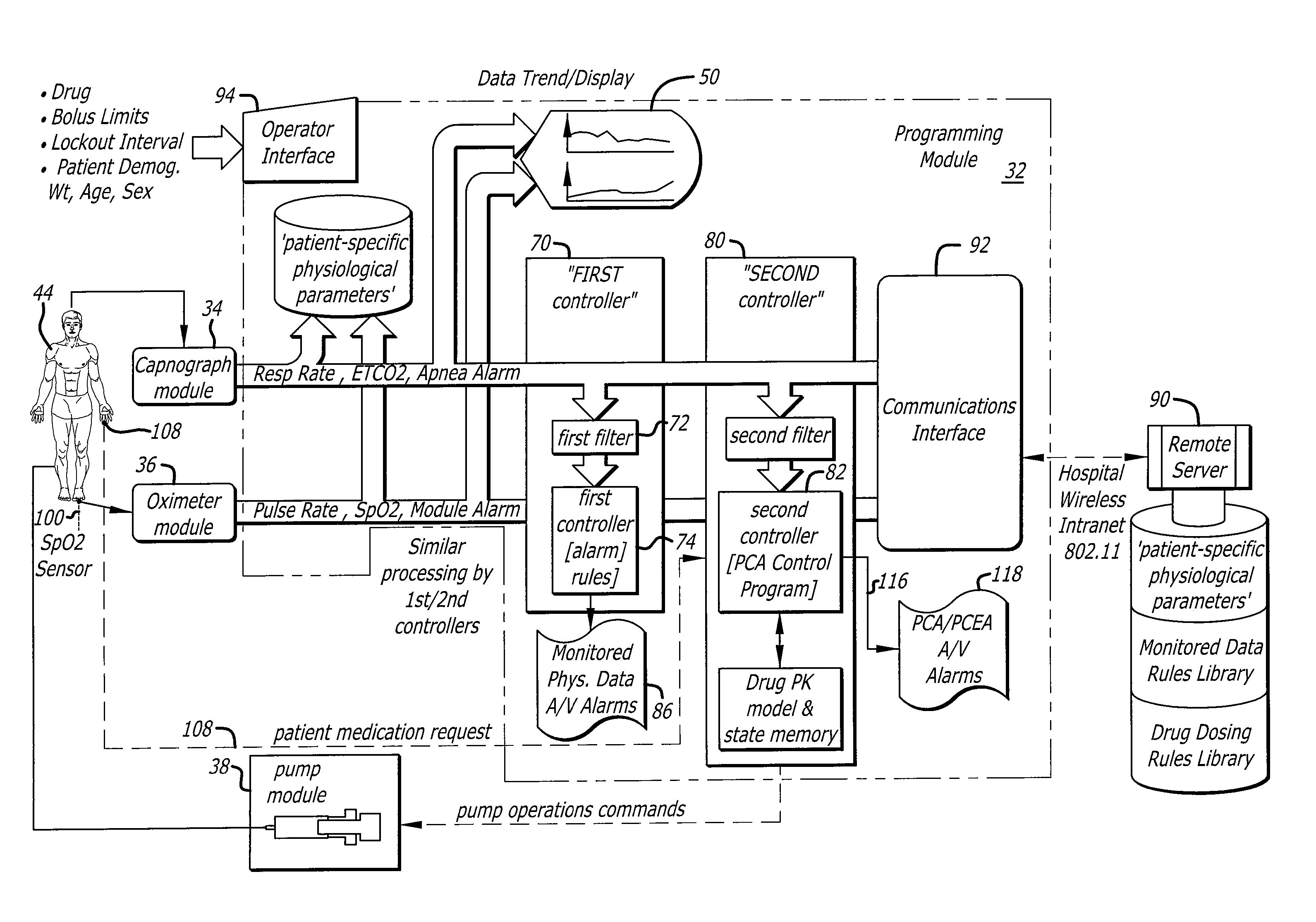
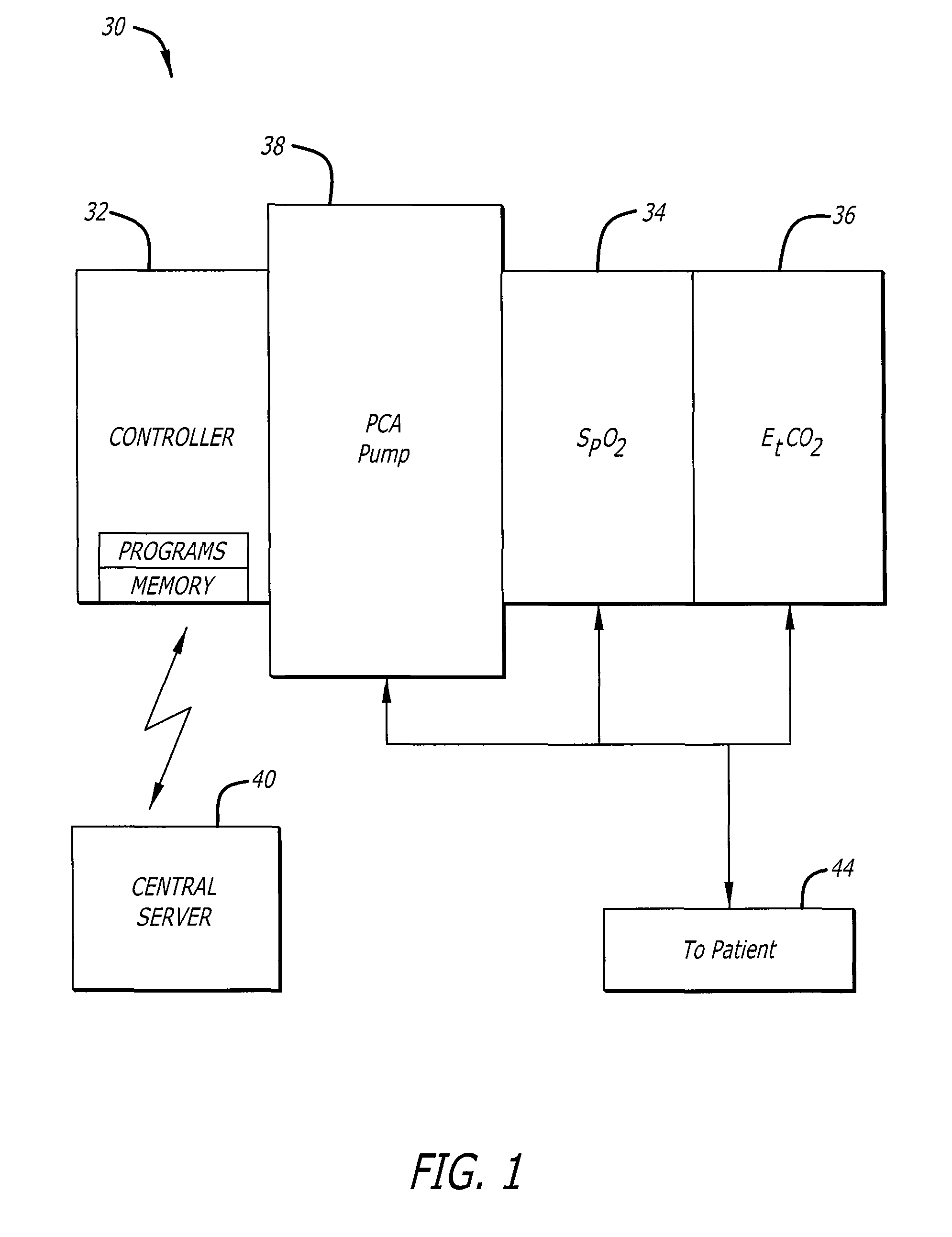
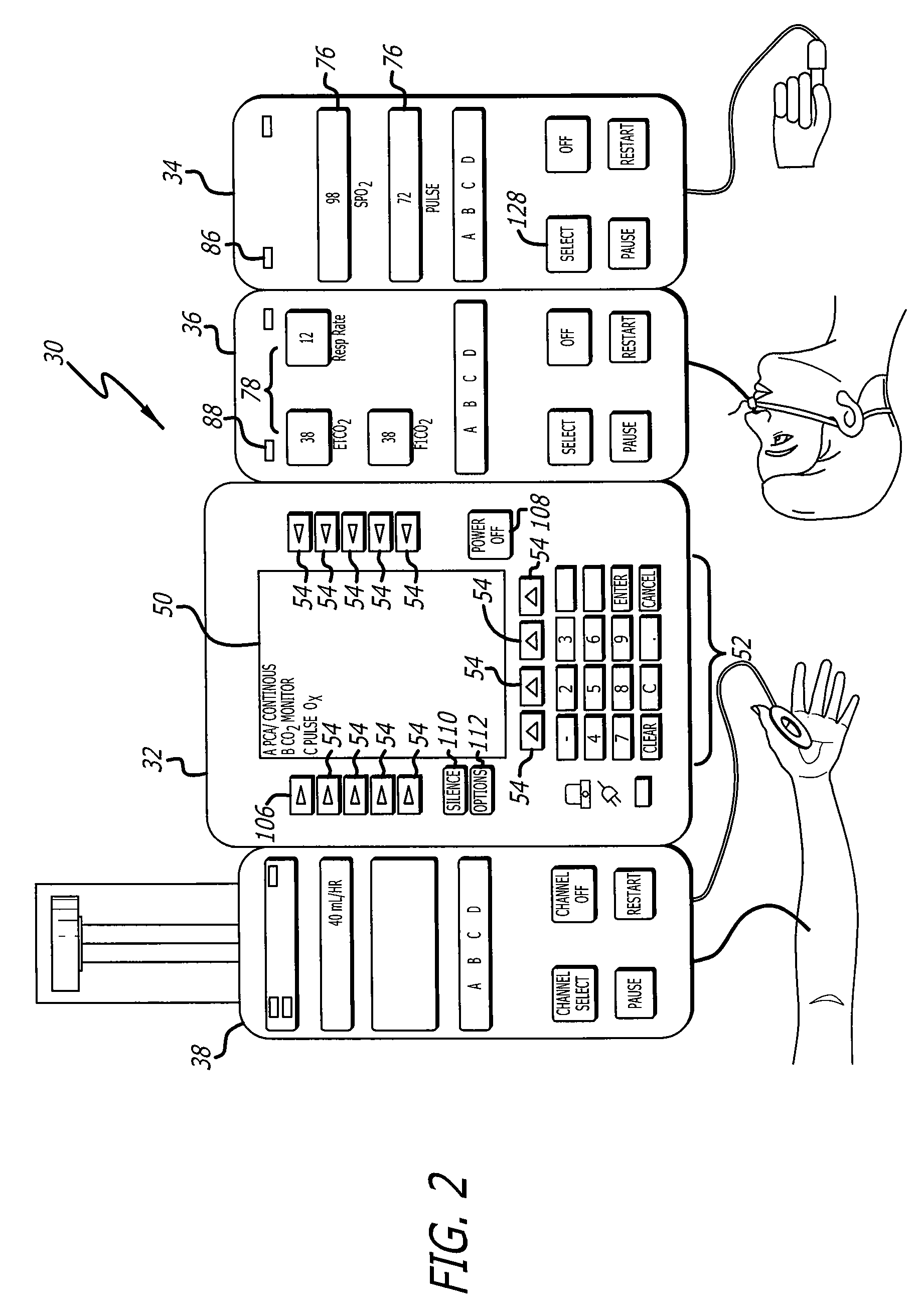
- A system and method that utilize a second controller to process physiological signals and request signals differently from the first controller, filtering data with techniques like moving averages and adaptive filters, and incorporating pharmacokinetic modeling to optimize PCA device operation, allowing for automatic inhibition of medication delivery during potential respiratory depression while minimizing false alarms.

Pump interconnectivity for pain medication therapies
PatentWO2023129948A1
Innovation
- The integration of a hub device that enables communication between PCA pumps and infusion pumps via connections such as CAN, Ethernet, serial, USB, or wireless connections, allowing for the sharing of status and event messages, including alerts and alarms, to coordinate fluid delivery and ensure vein patency between PCA boluses.


Regulatory Framework for PCA Medical Device Algorithms
The regulatory landscape for PCA medical device algorithms is governed by a complex framework of international standards and national regulations designed to ensure patient safety and device efficacy. The primary regulatory bodies include the FDA in the United States, the European Medicines Agency (EMA) in Europe, and Health Canada, each maintaining specific guidelines for software-controlled medical devices. These agencies classify PCA pumps as Class II or Class III medical devices, requiring rigorous premarket approval processes that include comprehensive algorithm validation and clinical testing.
International standards play a crucial role in establishing baseline requirements for PCA pump algorithms. ISO 14971 provides the foundation for risk management processes, requiring manufacturers to conduct thorough risk analyses of algorithm failures and their potential clinical consequences. IEC 62304 specifically addresses medical device software lifecycle processes, mandating structured development, testing, and maintenance protocols for PCA algorithms. Additionally, ISO 13485 establishes quality management system requirements that encompass algorithm design controls and validation procedures.
The regulatory approval process for PCA pump algorithms involves multiple phases of documentation and testing. Manufacturers must demonstrate algorithm safety through extensive verification and validation studies, including worst-case scenario testing and failure mode analysis. Clinical data requirements typically include comparative studies demonstrating non-inferiority to existing approved devices, with specific emphasis on dosing accuracy, response time, and safety profile documentation.
Post-market surveillance requirements mandate continuous monitoring of algorithm performance in real-world clinical settings. Regulatory bodies require manufacturers to establish adverse event reporting systems and implement software update protocols that maintain regulatory compliance. Recent regulatory trends emphasize cybersecurity considerations, requiring robust protection against unauthorized algorithm modifications and data breaches.
Emerging regulatory challenges include the integration of artificial intelligence and machine learning components within PCA algorithms. Regulatory agencies are developing new frameworks to address adaptive algorithms that modify their behavior based on patient data, requiring novel approaches to validation and ongoing performance monitoring in clinical environments.
International standards play a crucial role in establishing baseline requirements for PCA pump algorithms. ISO 14971 provides the foundation for risk management processes, requiring manufacturers to conduct thorough risk analyses of algorithm failures and their potential clinical consequences. IEC 62304 specifically addresses medical device software lifecycle processes, mandating structured development, testing, and maintenance protocols for PCA algorithms. Additionally, ISO 13485 establishes quality management system requirements that encompass algorithm design controls and validation procedures.
The regulatory approval process for PCA pump algorithms involves multiple phases of documentation and testing. Manufacturers must demonstrate algorithm safety through extensive verification and validation studies, including worst-case scenario testing and failure mode analysis. Clinical data requirements typically include comparative studies demonstrating non-inferiority to existing approved devices, with specific emphasis on dosing accuracy, response time, and safety profile documentation.
Post-market surveillance requirements mandate continuous monitoring of algorithm performance in real-world clinical settings. Regulatory bodies require manufacturers to establish adverse event reporting systems and implement software update protocols that maintain regulatory compliance. Recent regulatory trends emphasize cybersecurity considerations, requiring robust protection against unauthorized algorithm modifications and data breaches.
Emerging regulatory challenges include the integration of artificial intelligence and machine learning components within PCA algorithms. Regulatory agencies are developing new frameworks to address adaptive algorithms that modify their behavior based on patient data, requiring novel approaches to validation and ongoing performance monitoring in clinical environments.
Clinical Safety Considerations in PCA Algorithm Design
Patient safety represents the paramount concern in PCA algorithm design, requiring comprehensive risk assessment frameworks that address both acute and chronic safety scenarios. Modern PCA systems must incorporate multiple layers of safety mechanisms, including hard limits on bolus doses, lockout intervals, and maximum hourly delivery rates. These safety parameters must be dynamically adjustable based on patient-specific factors such as age, weight, renal function, and opioid tolerance levels.
The implementation of intelligent safety monitoring requires real-time physiological parameter tracking, particularly respiratory rate and oxygen saturation levels. Advanced algorithms should integrate continuous monitoring data to detect early signs of respiratory depression, automatically adjusting delivery parameters or triggering clinical alerts when predetermined thresholds are approached. This proactive approach significantly reduces the risk of opioid-induced adverse events while maintaining therapeutic efficacy.
Drug library management constitutes another critical safety component, ensuring that medication concentrations, dosing limits, and patient-specific protocols are accurately programmed and regularly updated. The system must prevent programming errors through standardized drug libraries, dose error reduction systems, and mandatory double-verification protocols for high-risk medications.
Fail-safe mechanisms must be embedded throughout the algorithm architecture, including automatic system shutdowns in case of sensor failures, communication interruptions, or detected anomalies in delivery patterns. These mechanisms should default to the most conservative safety settings while maintaining essential pain management capabilities.
Clinical workflow integration requires seamless communication between PCA systems and electronic health records, enabling real-time documentation of medication administration, patient responses, and any safety events. This integration supports clinical decision-making and provides comprehensive audit trails for quality assurance and regulatory compliance.
Training and competency validation for healthcare providers represents an essential safety consideration, ensuring proper system operation, appropriate patient selection, and timely recognition of potential complications. Regular competency assessments and standardized protocols help maintain consistent safety standards across different clinical settings and provider experience levels.
The implementation of intelligent safety monitoring requires real-time physiological parameter tracking, particularly respiratory rate and oxygen saturation levels. Advanced algorithms should integrate continuous monitoring data to detect early signs of respiratory depression, automatically adjusting delivery parameters or triggering clinical alerts when predetermined thresholds are approached. This proactive approach significantly reduces the risk of opioid-induced adverse events while maintaining therapeutic efficacy.
Drug library management constitutes another critical safety component, ensuring that medication concentrations, dosing limits, and patient-specific protocols are accurately programmed and regularly updated. The system must prevent programming errors through standardized drug libraries, dose error reduction systems, and mandatory double-verification protocols for high-risk medications.
Fail-safe mechanisms must be embedded throughout the algorithm architecture, including automatic system shutdowns in case of sensor failures, communication interruptions, or detected anomalies in delivery patterns. These mechanisms should default to the most conservative safety settings while maintaining essential pain management capabilities.
Clinical workflow integration requires seamless communication between PCA systems and electronic health records, enabling real-time documentation of medication administration, patient responses, and any safety events. This integration supports clinical decision-making and provides comprehensive audit trails for quality assurance and regulatory compliance.
Training and competency validation for healthcare providers represents an essential safety consideration, ensuring proper system operation, appropriate patient selection, and timely recognition of potential complications. Regular competency assessments and standardized protocols help maintain consistent safety standards across different clinical settings and provider experience levels.
Unlock deeper insights with Patsnap Eureka Quick Research — get a full tech report to explore trends and direct your research. Try now!
Generate Your Research Report Instantly with AI Agent
Supercharge your innovation with Patsnap Eureka AI Agent Platform!