

Compare PCM vs Solid Sorption HVAC Systems
FEB 26, 20268 MIN READ
Generate Your Research Report Instantly with AI Agent
PatSnap Eureka helps you evaluate technical feasibility & market potential.
PCM vs Solid Sorption HVAC Technology Background and Goals
The evolution of HVAC systems has been driven by the persistent need for energy-efficient thermal management solutions that can reduce operational costs while maintaining optimal indoor comfort. Traditional vapor-compression systems, while effective, consume substantial electrical energy and contribute significantly to peak demand loads. This challenge has intensified with growing environmental concerns and stricter energy efficiency regulations worldwide.
Phase Change Material (PCM) technology represents a thermal energy storage approach that leverages the latent heat absorption and release properties of materials during phase transitions. When integrated into HVAC systems, PCMs can store excess cooling or heating energy during off-peak periods and release it when needed, effectively shifting energy consumption patterns and reducing peak demand loads.
Solid sorption HVAC systems operate on fundamentally different principles, utilizing the adsorption and desorption characteristics of solid materials to create cooling or heating effects. These systems typically employ silica gel, zeolites, or other porous materials that can absorb and release moisture or refrigerants, driven by heat sources rather than electrical compressors.
The primary technological objective in comparing these systems centers on identifying optimal applications for each technology based on performance metrics, energy efficiency, and operational characteristics. PCM systems aim to achieve thermal load shifting and peak demand reduction while maintaining consistent temperature control. The target performance includes thermal storage density improvements, enhanced heat transfer rates, and extended material lifecycle stability.
Solid sorption systems target applications where waste heat recovery or renewable energy integration is prioritized. Key objectives include maximizing coefficient of performance under variable heat source conditions, achieving reliable operation in diverse climatic conditions, and minimizing electrical energy consumption through thermally-driven processes.
Both technologies share common goals of reducing environmental impact, improving system reliability, and providing cost-effective alternatives to conventional HVAC solutions. The comparative analysis seeks to establish clear application boundaries where each technology demonstrates superior performance characteristics, considering factors such as installation complexity, maintenance requirements, and long-term operational sustainability.
Phase Change Material (PCM) technology represents a thermal energy storage approach that leverages the latent heat absorption and release properties of materials during phase transitions. When integrated into HVAC systems, PCMs can store excess cooling or heating energy during off-peak periods and release it when needed, effectively shifting energy consumption patterns and reducing peak demand loads.
Solid sorption HVAC systems operate on fundamentally different principles, utilizing the adsorption and desorption characteristics of solid materials to create cooling or heating effects. These systems typically employ silica gel, zeolites, or other porous materials that can absorb and release moisture or refrigerants, driven by heat sources rather than electrical compressors.
The primary technological objective in comparing these systems centers on identifying optimal applications for each technology based on performance metrics, energy efficiency, and operational characteristics. PCM systems aim to achieve thermal load shifting and peak demand reduction while maintaining consistent temperature control. The target performance includes thermal storage density improvements, enhanced heat transfer rates, and extended material lifecycle stability.
Solid sorption systems target applications where waste heat recovery or renewable energy integration is prioritized. Key objectives include maximizing coefficient of performance under variable heat source conditions, achieving reliable operation in diverse climatic conditions, and minimizing electrical energy consumption through thermally-driven processes.
Both technologies share common goals of reducing environmental impact, improving system reliability, and providing cost-effective alternatives to conventional HVAC solutions. The comparative analysis seeks to establish clear application boundaries where each technology demonstrates superior performance characteristics, considering factors such as installation complexity, maintenance requirements, and long-term operational sustainability.
Market Demand Analysis for Advanced HVAC Systems
The global HVAC market is experiencing unprecedented transformation driven by stringent energy efficiency regulations and growing environmental consciousness. Traditional vapor-compression systems face increasing scrutiny due to their high energy consumption and refrigerant-related environmental concerns. This regulatory pressure creates substantial market opportunities for alternative cooling technologies, particularly Phase Change Material (PCM) and solid sorption systems.
Commercial and industrial sectors represent the primary demand drivers for advanced HVAC solutions. Data centers, manufacturing facilities, and large office complexes seek cooling systems that can reduce operational costs while meeting sustainability targets. These sectors demonstrate willingness to invest in higher upfront costs for long-term energy savings and regulatory compliance benefits.
Residential market adoption follows different patterns, with early adopters concentrated in regions with high electricity costs or strong environmental incentives. Geographic demand varies significantly, with European markets leading adoption due to comprehensive energy efficiency mandates, while Asia-Pacific regions show growing interest driven by rapid urbanization and increasing cooling demands.
PCM-based systems address specific market needs including thermal energy storage and peak load management. Utilities increasingly value demand response capabilities, creating additional revenue streams for PCM system operators. The technology particularly appeals to applications requiring consistent temperature maintenance with minimal energy input during off-peak periods.
Solid sorption systems target markets where waste heat recovery presents significant value propositions. Industrial facilities with abundant low-grade waste heat represent prime adoption candidates. The technology also serves regions with unreliable electrical infrastructure, where thermally-driven cooling provides operational advantages over electrically-dependent alternatives.
Market barriers include limited awareness among potential users and higher initial capital requirements compared to conventional systems. However, total cost of ownership calculations increasingly favor advanced technologies as energy costs rise and carbon pricing mechanisms expand globally. Professional education and demonstration projects play crucial roles in accelerating market acceptance and driving demand growth for both PCM and solid sorption HVAC technologies.
Commercial and industrial sectors represent the primary demand drivers for advanced HVAC solutions. Data centers, manufacturing facilities, and large office complexes seek cooling systems that can reduce operational costs while meeting sustainability targets. These sectors demonstrate willingness to invest in higher upfront costs for long-term energy savings and regulatory compliance benefits.
Residential market adoption follows different patterns, with early adopters concentrated in regions with high electricity costs or strong environmental incentives. Geographic demand varies significantly, with European markets leading adoption due to comprehensive energy efficiency mandates, while Asia-Pacific regions show growing interest driven by rapid urbanization and increasing cooling demands.
PCM-based systems address specific market needs including thermal energy storage and peak load management. Utilities increasingly value demand response capabilities, creating additional revenue streams for PCM system operators. The technology particularly appeals to applications requiring consistent temperature maintenance with minimal energy input during off-peak periods.
Solid sorption systems target markets where waste heat recovery presents significant value propositions. Industrial facilities with abundant low-grade waste heat represent prime adoption candidates. The technology also serves regions with unreliable electrical infrastructure, where thermally-driven cooling provides operational advantages over electrically-dependent alternatives.
Market barriers include limited awareness among potential users and higher initial capital requirements compared to conventional systems. However, total cost of ownership calculations increasingly favor advanced technologies as energy costs rise and carbon pricing mechanisms expand globally. Professional education and demonstration projects play crucial roles in accelerating market acceptance and driving demand growth for both PCM and solid sorption HVAC technologies.
Current Status and Challenges of PCM and Solid Sorption HVAC
Phase Change Material (PCM) HVAC systems have achieved significant commercial deployment in recent years, with global market penetration reaching approximately 15% in specialized applications such as data centers and high-performance buildings. Leading manufacturers including Rubitherm, Microtek Laboratories, and Phase Change Energy Solutions have developed standardized PCM products with melting points ranging from 18°C to 28°C for HVAC applications. Current PCM systems demonstrate energy storage densities of 150-250 kJ/kg and can achieve 20-30% energy savings in peak load reduction scenarios.
However, PCM technology faces substantial challenges in thermal conductivity limitations, typically ranging from 0.2-0.8 W/mK, which significantly impacts heat transfer rates and system responsiveness. Encapsulation durability remains problematic, with material degradation occurring after 1000-5000 thermal cycles, leading to reduced performance and potential leakage issues. Cost barriers persist, with PCM materials priced 3-5 times higher than conventional thermal storage media.
Solid sorption HVAC systems represent an emerging technology with limited commercial adoption, primarily concentrated in research institutions and pilot projects across Europe and Asia. Key players include Fahrenheit, SorTech AG, and several Japanese manufacturers who have developed silica gel, zeolite, and metal-organic framework (MOF) based systems. Current solid sorption systems achieve coefficient of performance (COP) values between 0.6-1.2 and can operate effectively with low-grade heat sources at temperatures as low as 60°C.
The primary challenges facing solid sorption technology include complex system integration requirements, with multi-component configurations involving adsorbent beds, heat exchangers, and sophisticated control systems. Cycle times remain lengthy, typically 10-30 minutes per adsorption-desorption cycle, limiting system responsiveness compared to conventional HVAC solutions. Manufacturing scalability presents significant obstacles, as current production capabilities cannot meet large-scale commercial demand.
Both technologies struggle with integration complexity into existing building infrastructure, requiring specialized installation expertise and modified control strategies. Market acceptance remains limited due to higher initial capital costs and uncertain long-term performance data, particularly in diverse climatic conditions and varying operational scenarios.
However, PCM technology faces substantial challenges in thermal conductivity limitations, typically ranging from 0.2-0.8 W/mK, which significantly impacts heat transfer rates and system responsiveness. Encapsulation durability remains problematic, with material degradation occurring after 1000-5000 thermal cycles, leading to reduced performance and potential leakage issues. Cost barriers persist, with PCM materials priced 3-5 times higher than conventional thermal storage media.
Solid sorption HVAC systems represent an emerging technology with limited commercial adoption, primarily concentrated in research institutions and pilot projects across Europe and Asia. Key players include Fahrenheit, SorTech AG, and several Japanese manufacturers who have developed silica gel, zeolite, and metal-organic framework (MOF) based systems. Current solid sorption systems achieve coefficient of performance (COP) values between 0.6-1.2 and can operate effectively with low-grade heat sources at temperatures as low as 60°C.
The primary challenges facing solid sorption technology include complex system integration requirements, with multi-component configurations involving adsorbent beds, heat exchangers, and sophisticated control systems. Cycle times remain lengthy, typically 10-30 minutes per adsorption-desorption cycle, limiting system responsiveness compared to conventional HVAC solutions. Manufacturing scalability presents significant obstacles, as current production capabilities cannot meet large-scale commercial demand.
Both technologies struggle with integration complexity into existing building infrastructure, requiring specialized installation expertise and modified control strategies. Market acceptance remains limited due to higher initial capital costs and uncertain long-term performance data, particularly in diverse climatic conditions and varying operational scenarios.
Current PCM and Solid Sorption HVAC Solutions
01 Integration of PCM with HVAC systems for thermal energy storage
Phase change materials can be integrated into HVAC systems to store thermal energy during off-peak hours and release it during peak demand periods. This integration helps reduce energy consumption and improve system efficiency by utilizing the latent heat storage capacity of PCMs. The PCM modules can be incorporated into air handling units, ducts, or as separate thermal storage tanks within the HVAC system architecture.- Integration of PCM with HVAC systems for thermal energy storage: Phase change materials can be integrated into HVAC systems to store thermal energy during off-peak hours and release it during peak demand periods. This integration helps reduce energy consumption and improve system efficiency by leveraging the latent heat storage capacity of PCMs. The PCM modules can be incorporated into air handling units, ducts, or as separate thermal storage tanks within the HVAC infrastructure.
- Solid sorption-based cooling and dehumidification systems: Solid sorption technology utilizes desiccant materials to remove moisture from air streams in HVAC applications. These systems employ solid sorbents such as silica gel, zeolites, or metal-organic frameworks that adsorb water vapor from humid air. The sorption process can be coupled with regeneration cycles using waste heat or solar energy, enabling energy-efficient cooling and dehumidification without traditional vapor-compression refrigeration.
- Hybrid PCM and sorption systems for enhanced thermal management: Combining phase change materials with solid sorption technology creates hybrid systems that provide both sensible and latent cooling capabilities. These integrated approaches allow for simultaneous temperature control and humidity management in HVAC applications. The hybrid configuration optimizes energy utilization by coordinating the thermal storage function of PCMs with the moisture removal capability of solid sorbents, resulting in improved overall system performance.
- PCM encapsulation and containment methods for HVAC applications: Various encapsulation techniques are employed to contain phase change materials within HVAC systems, including microencapsulation, macroencapsulation in panels or tubes, and shape-stabilized PCM composites. These containment methods prevent leakage during phase transitions while maintaining thermal conductivity and heat transfer efficiency. Proper encapsulation also enhances the durability and longevity of PCM-based thermal storage components in heating and cooling systems.
- Control strategies and optimization for PCM-sorption HVAC systems: Advanced control algorithms are developed to optimize the operation of HVAC systems incorporating both PCM thermal storage and solid sorption components. These strategies include predictive control based on weather forecasts, demand-response integration, and coordinated charging-discharging cycles. The control systems monitor temperature, humidity, and energy consumption parameters to dynamically adjust system operation, maximizing energy savings while maintaining indoor comfort conditions.
02 Solid sorption-based cooling and dehumidification systems
Solid sorption technology utilizes desiccant materials to remove moisture from air streams in HVAC applications. These systems employ solid sorbent materials such as silica gel, zeolites, or metal-organic frameworks that adsorb water vapor from humid air. The sorption process can be coupled with regeneration cycles using waste heat or solar energy, providing energy-efficient cooling and dehumidification capabilities for building climate control.Expand Specific Solutions03 Hybrid PCM and sorption systems for enhanced energy efficiency
Combining phase change materials with solid sorption technology creates hybrid HVAC systems that leverage both thermal storage and moisture control capabilities. These integrated systems can simultaneously manage sensible and latent cooling loads while storing thermal energy. The hybrid approach optimizes energy performance by coordinating PCM charging and discharging cycles with sorption-based dehumidification processes, resulting in reduced peak power demand and improved overall system efficiency.Expand Specific Solutions04 PCM encapsulation and containment methods for HVAC applications
Various encapsulation techniques are employed to contain phase change materials within HVAC systems, including microencapsulation, macroencapsulation in panels or tubes, and shape-stabilized PCM composites. These containment methods prevent leakage during phase transitions, enhance heat transfer rates, and facilitate integration into existing HVAC infrastructure. The encapsulation approach affects the thermal performance, durability, and maintenance requirements of PCM-enhanced climate control systems.Expand Specific Solutions05 Control strategies and optimization for PCM-sorption HVAC systems
Advanced control algorithms and optimization strategies are essential for managing the operation of combined PCM and sorption-based HVAC systems. These control methods coordinate the charging and discharging of thermal storage, regulate sorption regeneration cycles, and optimize system performance based on weather forecasts, occupancy patterns, and utility rate structures. Intelligent control systems enable demand response capabilities, predictive maintenance, and adaptive operation to maximize energy savings and thermal comfort.Expand Specific Solutions
Major Players in PCM and Solid Sorption HVAC Industry
The PCM versus solid sorption HVAC systems comparison reveals a competitive landscape in the early-to-mature development stage with significant growth potential. The market encompasses diverse players from established corporations like General Electric Company and Valeo Thermal Systems to specialized innovators such as Sunamp Ltd. and Fluide Energy SRL. Research institutions including Carnegie Mellon University, École Polytechnique Fédérale de Lausanne, and various national laboratories drive technological advancement. Technology maturity varies considerably: PCM systems demonstrate higher commercial readiness through companies like Sunamp Ltd., while solid sorption technologies remain largely in research phases at institutions like UT-Battelle LLC and Battelle Memorial Institute. Government organizations including the United States Army and Defense Research & Development Organization indicate strategic interest, suggesting emerging market validation and future scaling opportunities.
Sunamp Ltd.
Technical Solution: Sunamp specializes in phase change material (PCM) thermal energy storage systems for HVAC applications. Their technology utilizes proprietary salt hydrate PCMs that can store and release thermal energy at specific temperatures for heating and cooling. The company's PCM-based systems offer high energy density storage, typically 5-10 times more compact than conventional hot water tanks. Their solutions integrate with heat pumps and renewable energy systems, providing thermal buffering that reduces peak electrical demand and improves system efficiency. The PCM technology operates through latent heat storage, maintaining consistent temperatures during phase transitions, which is particularly effective for space conditioning applications.
Advantages: High energy density, compact design, excellent temperature stability, integrates well with renewable systems. Disadvantages: Higher initial costs, limited temperature range flexibility, potential for thermal cycling degradation over time.
Valeo Thermal Systems Japan Corp.
Technical Solution: Valeo has developed innovative PCM-based thermal management systems specifically for automotive HVAC applications. Their technology incorporates microencapsulated phase change materials integrated into heat exchangers and thermal storage units. The PCM systems provide rapid cabin heating and cooling while reducing energy consumption from the vehicle's electrical system. Valeo's approach includes paraffin-based and salt hydrate PCMs with melting points optimized for human comfort temperatures (18-25°C). The systems feature enhanced heat transfer through finned surfaces and optimized PCM distribution, achieving thermal storage capacities of 200-400 Wh/kg. Their technology also includes smart thermal management that pre-conditions vehicle cabins using stored thermal energy.
Advantages: Rapid thermal response, energy efficient, reduces electrical load on vehicle systems, compact integration. Disadvantages: Limited thermal cycling life, temperature-dependent performance, higher manufacturing complexity.
Core Technology Analysis of PCM vs Solid Sorption Systems
Systems and method for heating and/or cooling at least one medium
PatentPendingUS20250137734A1
Innovation
- The system comprises a first heat exchanger, a force unit, a PCM accumulator, a valve system, and a control unit. The control unit manages the valve system to disconnect the PCM accumulator during compression and connect it during expansion, allowing for efficient phase change management and thermal energy transfer.
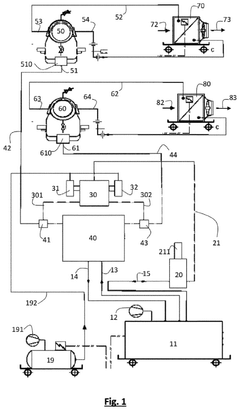
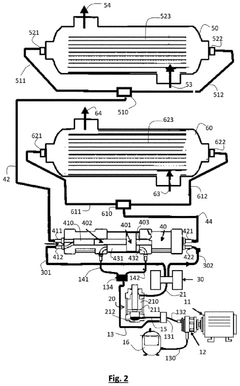
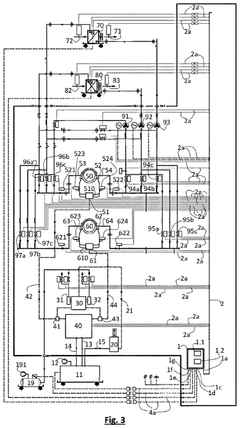
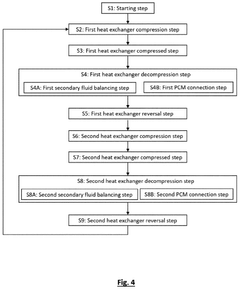
Heat exchanger with integral phase change material for heating and cooling applications
PatentInactiveUS20110083459A1
Innovation
- A heat exchanger design incorporating uncrosslinked high-density polyethylene as the phase change material, with additives like carbon black and zinc stearate, housed within metal heat exchange pipes, and utilizing a heat exchange fluid such as ethylene glycol, to efficiently store and release thermal energy for heating and cooling applications.


Energy Efficiency Standards and HVAC Regulations
The regulatory landscape for HVAC systems is increasingly emphasizing energy efficiency standards that directly impact the adoption and development of both PCM and solid sorption technologies. The International Energy Conservation Code (IECC) and ASHRAE Standard 90.1 establish minimum efficiency requirements that drive innovation in alternative cooling and heating solutions. These standards are progressively tightening, with recent updates requiring higher Seasonal Energy Efficiency Ratios (SEER) and Energy Efficiency Ratios (EER) for conventional systems, creating opportunities for advanced thermal management technologies.
PCM-based HVAC systems face unique regulatory challenges as they often operate outside traditional efficiency metrics designed for vapor-compression systems. Current standards primarily focus on steady-state performance measurements, which may not adequately capture the dynamic thermal storage benefits that PCM systems provide. The lack of standardized testing protocols for phase change material applications in HVAC creates uncertainty for manufacturers seeking compliance certification and market acceptance.
Solid sorption systems encounter different regulatory considerations, particularly regarding refrigerant regulations and environmental compliance. The Montreal Protocol and subsequent amendments, including the Kigali Amendment targeting hydrofluorocarbon (HFC) reduction, favor sorption technologies that utilize natural refrigerants or water as working fluids. The European F-Gas Regulation and similar legislation in other regions are accelerating the transition away from high Global Warming Potential (GWP) refrigerants, positioning solid sorption systems advantageously.
Building energy codes are evolving to incorporate performance-based compliance pathways that could benefit both technologies. The adoption of whole-building energy modeling approaches allows for more comprehensive evaluation of thermal storage and natural refrigerant systems. Green building certification programs like LEED and BREEAM are increasingly recognizing innovative HVAC technologies that demonstrate superior environmental performance, even if they operate differently from conventional systems.
Regional variations in energy efficiency standards create diverse market opportunities for both PCM and solid sorption technologies. California's Title 24 and similar progressive building codes are establishing precedents for advanced thermal management requirements that could accelerate adoption of these alternative HVAC approaches in specific geographic markets.
PCM-based HVAC systems face unique regulatory challenges as they often operate outside traditional efficiency metrics designed for vapor-compression systems. Current standards primarily focus on steady-state performance measurements, which may not adequately capture the dynamic thermal storage benefits that PCM systems provide. The lack of standardized testing protocols for phase change material applications in HVAC creates uncertainty for manufacturers seeking compliance certification and market acceptance.
Solid sorption systems encounter different regulatory considerations, particularly regarding refrigerant regulations and environmental compliance. The Montreal Protocol and subsequent amendments, including the Kigali Amendment targeting hydrofluorocarbon (HFC) reduction, favor sorption technologies that utilize natural refrigerants or water as working fluids. The European F-Gas Regulation and similar legislation in other regions are accelerating the transition away from high Global Warming Potential (GWP) refrigerants, positioning solid sorption systems advantageously.
Building energy codes are evolving to incorporate performance-based compliance pathways that could benefit both technologies. The adoption of whole-building energy modeling approaches allows for more comprehensive evaluation of thermal storage and natural refrigerant systems. Green building certification programs like LEED and BREEAM are increasingly recognizing innovative HVAC technologies that demonstrate superior environmental performance, even if they operate differently from conventional systems.
Regional variations in energy efficiency standards create diverse market opportunities for both PCM and solid sorption technologies. California's Title 24 and similar progressive building codes are establishing precedents for advanced thermal management requirements that could accelerate adoption of these alternative HVAC approaches in specific geographic markets.
Environmental Impact Assessment of HVAC Technologies
The environmental implications of PCM and solid sorption HVAC systems present distinct profiles across multiple impact categories. Both technologies demonstrate significant potential for reducing overall environmental footprint compared to conventional vapor-compression systems, yet their environmental benefits manifest through different mechanisms and operational characteristics.
PCM-based HVAC systems exhibit lower direct environmental impact during operation due to their passive thermal regulation capabilities. These systems primarily utilize phase change materials such as paraffin waxes, salt hydrates, or bio-based compounds that store and release thermal energy without chemical reactions. The environmental advantage stems from reduced electricity consumption during peak cooling periods, leading to decreased indirect emissions from power generation. However, the manufacturing phase presents environmental challenges, particularly for synthetic PCM materials that require energy-intensive production processes and may involve petroleum-based feedstocks.
Solid sorption systems demonstrate exceptional environmental performance through their ability to utilize low-grade heat sources, including solar thermal energy and waste heat recovery. The adsorption and desorption cycles in these systems typically employ environmentally benign working pairs such as silica gel-water or zeolite-water combinations. This characteristic enables significant reduction in primary energy consumption and associated carbon emissions. The environmental benefit amplifies when integrated with renewable energy sources, achieving near-zero operational emissions.
Lifecycle assessment considerations reveal contrasting environmental profiles between the two technologies. PCM systems generally require less complex manufacturing processes but face challenges in end-of-life material recovery and recycling. Certain PCM materials may pose disposal concerns if not properly managed. Conversely, solid sorption systems utilize naturally occurring or easily synthesized adsorbent materials that present minimal environmental risks during disposal and often allow for material recovery and reuse.
The carbon footprint analysis indicates that solid sorption systems typically achieve superior long-term environmental performance, particularly in applications with access to renewable heat sources. PCM systems excel in reducing peak electrical demand and associated grid stress, contributing to overall system-level environmental benefits through improved energy infrastructure efficiency.
PCM-based HVAC systems exhibit lower direct environmental impact during operation due to their passive thermal regulation capabilities. These systems primarily utilize phase change materials such as paraffin waxes, salt hydrates, or bio-based compounds that store and release thermal energy without chemical reactions. The environmental advantage stems from reduced electricity consumption during peak cooling periods, leading to decreased indirect emissions from power generation. However, the manufacturing phase presents environmental challenges, particularly for synthetic PCM materials that require energy-intensive production processes and may involve petroleum-based feedstocks.
Solid sorption systems demonstrate exceptional environmental performance through their ability to utilize low-grade heat sources, including solar thermal energy and waste heat recovery. The adsorption and desorption cycles in these systems typically employ environmentally benign working pairs such as silica gel-water or zeolite-water combinations. This characteristic enables significant reduction in primary energy consumption and associated carbon emissions. The environmental benefit amplifies when integrated with renewable energy sources, achieving near-zero operational emissions.
Lifecycle assessment considerations reveal contrasting environmental profiles between the two technologies. PCM systems generally require less complex manufacturing processes but face challenges in end-of-life material recovery and recycling. Certain PCM materials may pose disposal concerns if not properly managed. Conversely, solid sorption systems utilize naturally occurring or easily synthesized adsorbent materials that present minimal environmental risks during disposal and often allow for material recovery and reuse.
The carbon footprint analysis indicates that solid sorption systems typically achieve superior long-term environmental performance, particularly in applications with access to renewable heat sources. PCM systems excel in reducing peak electrical demand and associated grid stress, contributing to overall system-level environmental benefits through improved energy infrastructure efficiency.
Unlock deeper insights with PatSnap Eureka Quick Research — get a full tech report to explore trends and direct your research. Try now!
Generate Your Research Report Instantly with AI Agent
Supercharge your innovation with PatSnap Eureka AI Agent Platform!