

Develop PCM Metrics for Future-Proofed Applications
FEB 26, 202610 MIN READ
Generate Your Research Report Instantly with AI Agent
PatSnap Eureka helps you evaluate technical feasibility & market potential.
PCM Metrics Development Background and Objectives
Phase Change Memory (PCM) technology has emerged as a critical component in the evolution of next-generation computing architectures, representing a paradigm shift from traditional volatile memory systems toward persistent, high-performance storage solutions. As computing demands continue to escalate with the proliferation of artificial intelligence, machine learning, and data-intensive applications, the need for comprehensive performance evaluation frameworks has become increasingly apparent.
The historical development of PCM technology traces back to the early 2000s when researchers first demonstrated the potential of chalcogenide materials for non-volatile memory applications. Over the past two decades, PCM has evolved from laboratory curiosities to commercially viable products, with major semiconductor manufacturers investing heavily in scaling and optimization efforts. This evolution has been marked by significant improvements in switching speed, endurance, and energy efficiency, positioning PCM as a viable alternative to traditional DRAM and NAND flash memory technologies.
Current market dynamics reveal a growing demand for memory solutions that can bridge the performance gap between volatile and non-volatile storage systems. The emergence of memory-centric computing architectures, edge computing applications, and real-time analytics platforms has created unprecedented requirements for memory systems that combine high performance with data persistence. These applications demand memory technologies that can maintain consistent performance characteristics across varying workloads while providing predictable behavior for future system designs.
The primary objective of developing comprehensive PCM metrics centers on establishing standardized evaluation frameworks that can accurately predict and measure performance characteristics across diverse application scenarios. These metrics must encompass traditional performance indicators such as latency, bandwidth, and power consumption, while also addressing unique PCM characteristics including thermal behavior, endurance patterns, and retention properties under varying operational conditions.
Future-proofing considerations necessitate the development of metrics that can adapt to evolving application requirements and emerging use cases. As computing architectures continue to diversify with the integration of neuromorphic computing, quantum-classical hybrid systems, and advanced AI accelerators, PCM metrics must provide reliable performance predictions for applications that may not yet exist in current computing environments.
The strategic importance of this initiative extends beyond immediate performance evaluation needs, encompassing long-term technology roadmap planning and competitive positioning in rapidly evolving memory markets. Establishing robust metrics frameworks will enable more accurate system-level design decisions and facilitate the integration of PCM technology into next-generation computing platforms with confidence in their long-term viability and performance sustainability.
The historical development of PCM technology traces back to the early 2000s when researchers first demonstrated the potential of chalcogenide materials for non-volatile memory applications. Over the past two decades, PCM has evolved from laboratory curiosities to commercially viable products, with major semiconductor manufacturers investing heavily in scaling and optimization efforts. This evolution has been marked by significant improvements in switching speed, endurance, and energy efficiency, positioning PCM as a viable alternative to traditional DRAM and NAND flash memory technologies.
Current market dynamics reveal a growing demand for memory solutions that can bridge the performance gap between volatile and non-volatile storage systems. The emergence of memory-centric computing architectures, edge computing applications, and real-time analytics platforms has created unprecedented requirements for memory systems that combine high performance with data persistence. These applications demand memory technologies that can maintain consistent performance characteristics across varying workloads while providing predictable behavior for future system designs.
The primary objective of developing comprehensive PCM metrics centers on establishing standardized evaluation frameworks that can accurately predict and measure performance characteristics across diverse application scenarios. These metrics must encompass traditional performance indicators such as latency, bandwidth, and power consumption, while also addressing unique PCM characteristics including thermal behavior, endurance patterns, and retention properties under varying operational conditions.
Future-proofing considerations necessitate the development of metrics that can adapt to evolving application requirements and emerging use cases. As computing architectures continue to diversify with the integration of neuromorphic computing, quantum-classical hybrid systems, and advanced AI accelerators, PCM metrics must provide reliable performance predictions for applications that may not yet exist in current computing environments.
The strategic importance of this initiative extends beyond immediate performance evaluation needs, encompassing long-term technology roadmap planning and competitive positioning in rapidly evolving memory markets. Establishing robust metrics frameworks will enable more accurate system-level design decisions and facilitate the integration of PCM technology into next-generation computing platforms with confidence in their long-term viability and performance sustainability.
Market Demand for Future-Proofed PCM Applications
The global demand for future-proofed Phase Change Material (PCM) applications is experiencing unprecedented growth, driven by the urgent need for sustainable energy solutions and enhanced thermal management systems. This surge in market interest stems from increasing environmental regulations, rising energy costs, and the growing emphasis on carbon footprint reduction across industries. Organizations worldwide are actively seeking advanced thermal energy storage solutions that can adapt to evolving technological requirements while maintaining long-term operational efficiency.
The building and construction sector represents the largest market segment for future-proofed PCM applications, particularly in smart building technologies and passive thermal regulation systems. Modern architectural designs increasingly incorporate PCM-based solutions to achieve net-zero energy buildings and comply with stringent green building standards. The demand is particularly strong in regions with extreme climate conditions, where traditional HVAC systems prove energy-intensive and costly to operate.
Industrial applications constitute another significant demand driver, especially in manufacturing processes requiring precise temperature control and waste heat recovery. Industries such as electronics cooling, automotive thermal management, and renewable energy storage are actively pursuing PCM solutions that can evolve with technological advancements. The semiconductor industry shows particularly strong interest in PCM metrics that can accommodate future chip architectures and increasing power densities.
The transportation sector is witnessing growing demand for PCM applications in electric vehicle battery thermal management and cabin climate control systems. As electric vehicle adoption accelerates globally, manufacturers require PCM solutions with metrics that can adapt to next-generation battery technologies and autonomous vehicle requirements. This demand is further amplified by regulatory pressures to improve vehicle energy efficiency and extend battery life cycles.
Emerging applications in data centers and telecommunications infrastructure are creating new market opportunities for future-proofed PCM solutions. The exponential growth in data processing requirements and edge computing deployments necessitates thermal management systems that can scale with evolving hardware specifications and performance demands.
The market demand is also influenced by the increasing integration of Internet of Things (IoT) technologies and smart monitoring systems, which require PCM solutions with standardized metrics for seamless integration and predictive maintenance capabilities. This trend reflects the broader industry shift toward intelligent, adaptive thermal management systems that can optimize performance based on real-time conditions and future operational scenarios.
The building and construction sector represents the largest market segment for future-proofed PCM applications, particularly in smart building technologies and passive thermal regulation systems. Modern architectural designs increasingly incorporate PCM-based solutions to achieve net-zero energy buildings and comply with stringent green building standards. The demand is particularly strong in regions with extreme climate conditions, where traditional HVAC systems prove energy-intensive and costly to operate.
Industrial applications constitute another significant demand driver, especially in manufacturing processes requiring precise temperature control and waste heat recovery. Industries such as electronics cooling, automotive thermal management, and renewable energy storage are actively pursuing PCM solutions that can evolve with technological advancements. The semiconductor industry shows particularly strong interest in PCM metrics that can accommodate future chip architectures and increasing power densities.
The transportation sector is witnessing growing demand for PCM applications in electric vehicle battery thermal management and cabin climate control systems. As electric vehicle adoption accelerates globally, manufacturers require PCM solutions with metrics that can adapt to next-generation battery technologies and autonomous vehicle requirements. This demand is further amplified by regulatory pressures to improve vehicle energy efficiency and extend battery life cycles.
Emerging applications in data centers and telecommunications infrastructure are creating new market opportunities for future-proofed PCM solutions. The exponential growth in data processing requirements and edge computing deployments necessitates thermal management systems that can scale with evolving hardware specifications and performance demands.
The market demand is also influenced by the increasing integration of Internet of Things (IoT) technologies and smart monitoring systems, which require PCM solutions with standardized metrics for seamless integration and predictive maintenance capabilities. This trend reflects the broader industry shift toward intelligent, adaptive thermal management systems that can optimize performance based on real-time conditions and future operational scenarios.
Current PCM Metrics Limitations and Technical Challenges
Current Phase Change Memory (PCM) metrics face significant limitations that hinder their effectiveness in evaluating future-proofed applications. Traditional metrics primarily focus on basic performance indicators such as read/write latency, endurance cycles, and power consumption, but fail to capture the complex behavioral patterns required for emerging computational paradigms. These conventional measurements inadequately represent the nuanced requirements of neuromorphic computing, in-memory processing, and adaptive storage systems that demand sophisticated evaluation frameworks.
The temporal granularity of existing PCM metrics presents a fundamental challenge. Current measurement approaches typically assess performance at discrete time intervals, missing critical transient behaviors and intermediate resistance states that are crucial for applications requiring analog computing capabilities. This limitation becomes particularly problematic when evaluating PCM devices for machine learning accelerators, where gradual conductance changes and multi-level cell programming require continuous monitoring rather than binary state assessments.
Scalability constraints represent another significant technical barrier. Existing metrics frameworks struggle to maintain accuracy and relevance when transitioning from single-cell characterization to array-level and system-level implementations. The complex interactions between neighboring cells, thermal crosstalk effects, and cumulative drift phenomena are inadequately captured by current measurement methodologies, leading to substantial discrepancies between laboratory characterization and real-world deployment performance.
The heterogeneity challenge emerges from the diverse application requirements across different computing domains. Current PCM metrics lack the flexibility to accommodate varying operational modes, from high-speed cache applications requiring nanosecond response times to long-term storage systems prioritizing data retention over decades. This one-size-fits-all approach fails to provide meaningful insights for application-specific optimization and design decisions.
Environmental variability poses additional complications for existing measurement frameworks. Temperature fluctuations, voltage variations, and aging effects significantly impact PCM device behavior, yet current metrics inadequately account for these dynamic conditions. The absence of robust environmental compensation mechanisms in measurement protocols leads to unreliable performance predictions and suboptimal system integration outcomes.
Furthermore, the lack of standardized benchmarking protocols across different PCM technologies and manufacturers creates significant interoperability challenges. Inconsistent measurement conditions, varying test patterns, and disparate reporting formats make comparative analysis extremely difficult, hampering technology adoption and limiting the development of universal design guidelines for future-proofed applications.
The temporal granularity of existing PCM metrics presents a fundamental challenge. Current measurement approaches typically assess performance at discrete time intervals, missing critical transient behaviors and intermediate resistance states that are crucial for applications requiring analog computing capabilities. This limitation becomes particularly problematic when evaluating PCM devices for machine learning accelerators, where gradual conductance changes and multi-level cell programming require continuous monitoring rather than binary state assessments.
Scalability constraints represent another significant technical barrier. Existing metrics frameworks struggle to maintain accuracy and relevance when transitioning from single-cell characterization to array-level and system-level implementations. The complex interactions between neighboring cells, thermal crosstalk effects, and cumulative drift phenomena are inadequately captured by current measurement methodologies, leading to substantial discrepancies between laboratory characterization and real-world deployment performance.
The heterogeneity challenge emerges from the diverse application requirements across different computing domains. Current PCM metrics lack the flexibility to accommodate varying operational modes, from high-speed cache applications requiring nanosecond response times to long-term storage systems prioritizing data retention over decades. This one-size-fits-all approach fails to provide meaningful insights for application-specific optimization and design decisions.
Environmental variability poses additional complications for existing measurement frameworks. Temperature fluctuations, voltage variations, and aging effects significantly impact PCM device behavior, yet current metrics inadequately account for these dynamic conditions. The absence of robust environmental compensation mechanisms in measurement protocols leads to unreliable performance predictions and suboptimal system integration outcomes.
Furthermore, the lack of standardized benchmarking protocols across different PCM technologies and manufacturers creates significant interoperability challenges. Inconsistent measurement conditions, varying test patterns, and disparate reporting formats make comparative analysis extremely difficult, hampering technology adoption and limiting the development of universal design guidelines for future-proofed applications.
Existing PCM Performance Evaluation Solutions
01 Phase Change Material composition and formulation methods
This category focuses on the development and optimization of phase change material compositions, including the selection of base materials, additives, and encapsulation techniques to enhance thermal storage properties. The formulations aim to improve stability, heat capacity, and phase transition characteristics for various applications.- Phase Change Material Thermal Performance Metrics: Methods and systems for measuring and evaluating the thermal performance characteristics of phase change materials, including metrics such as heat storage capacity, thermal conductivity, and phase transition temperature ranges. These metrics are essential for assessing the effectiveness of PCM in thermal energy storage applications.
- PCM Encapsulation and Containment Measurement: Techniques for quantifying the encapsulation efficiency and structural integrity of phase change materials within containment systems. This includes metrics for evaluating shell thickness, encapsulation ratio, and leakage prevention performance to ensure long-term stability and functionality of encapsulated PCM products.
- Cycling Stability and Durability Assessment: Evaluation methods for determining the long-term performance and reliability of phase change materials through repeated thermal cycling. Metrics include measurement of property degradation, phase separation, and performance retention after multiple heating and cooling cycles to predict service life and operational reliability.
- PCM Composite Material Performance Indicators: Metrics for characterizing composite materials incorporating phase change materials, including thermal response time, heat transfer efficiency, and mechanical properties. These indicators help optimize the formulation and structure of PCM composites for specific applications in building materials, textiles, and thermal management systems.
- Quality Control and Standardization Metrics: Standardized testing protocols and quality control metrics for phase change materials manufacturing and application. This includes measurement standards for purity, consistency, thermal properties verification, and compliance testing to ensure product quality and performance reproducibility across different batches and applications.
02 Thermal performance measurement and testing methodologies
This area covers methods and systems for measuring and evaluating the thermal performance of phase change materials, including techniques for determining heat storage capacity, thermal conductivity, and phase transition temperatures. These methodologies enable accurate characterization of PCM properties under different operating conditions.Expand Specific Solutions03 PCM integration in building and construction applications
This category addresses the incorporation of phase change materials into building components and construction materials to improve energy efficiency and thermal regulation. The technologies focus on embedding PCM in walls, roofs, and other structural elements to reduce heating and cooling demands.Expand Specific Solutions04 Encapsulation and containment systems for PCM
This classification encompasses technologies for encapsulating and containing phase change materials to prevent leakage, enhance durability, and improve heat transfer efficiency. Various encapsulation methods including microencapsulation and macroencapsulation are employed to protect PCM while maintaining thermal performance.Expand Specific Solutions05 PCM application in thermal management systems
This category covers the use of phase change materials in active thermal management systems for electronics, automotive, and industrial applications. The technologies focus on utilizing PCM properties to regulate temperature, absorb excess heat, and maintain optimal operating conditions in various devices and equipment.Expand Specific Solutions
Key Players in PCM and Thermal Management Industry
The PCM metrics development landscape represents an emerging market segment within the broader performance monitoring and application optimization industry. The market is currently in its early growth stage, driven by increasing demand for future-proofed applications across diverse sectors. Key players demonstrate varying levels of technological maturity, with established technology giants like IBM, Microsoft Technology Licensing, and Huawei Technologies leading in foundational infrastructure and AI-driven analytics capabilities. Semiconductor manufacturers including Taiwan Semiconductor Manufacturing and GlobalFoundries provide essential hardware foundations, while academic institutions such as Beijing Institute of Technology, Harbin Institute of Technology, and University of California contribute significant research advancement. The competitive landscape shows fragmentation between pure-play technology companies, research institutions, and industry-specific players like State Grid Corp and Électricité de France, indicating the cross-industry applicability of PCM metrics solutions and suggesting substantial market expansion potential as standardization efforts mature.
Taiwan Semiconductor Manufacturing Co., Ltd.
Technical Solution: TSMC has developed PCM manufacturing processes with focus on yield optimization and reliability metrics for future applications. Their approach emphasizes process-aware design methodologies that incorporate variability metrics, defect density measurements, and thermal cycling performance indicators. TSMC's PCM metrics framework includes statistical process control parameters, device matching characteristics across different process corners, and aging models that predict long-term behavior. They have implemented advanced characterization techniques to measure programming current distributions, resistance drift patterns, and endurance variations across wafer lots. Their manufacturing metrics ensure consistent PCM performance for automotive, IoT, and edge computing applications requiring long operational lifespans.
Strengths: World-class semiconductor manufacturing capabilities, advanced process control systems, strong quality assurance protocols. Weaknesses: Limited system-level application expertise, dependency on customer design requirements.
Huawei Technologies Co., Ltd.
Technical Solution: Huawei has developed PCM metrics specifically targeting 5G infrastructure and edge computing applications with future-proofing capabilities. Their solution includes latency-optimized access patterns, power efficiency metrics for battery-powered devices, and reliability indicators for mission-critical communications systems. Huawei's PCM implementation focuses on real-time performance monitoring, adaptive wear leveling algorithms, and predictive maintenance metrics that anticipate failure modes. They have created application-specific benchmarks for telecommunications equipment, incorporating temperature variation effects, electromagnetic interference resilience, and long-term data retention requirements. Their metrics framework supports both current 5G deployments and anticipated 6G technology requirements.
Strengths: Deep understanding of telecommunications requirements, extensive field deployment experience, integrated hardware-software optimization. Weaknesses: Geopolitical restrictions limiting market access, potential supply chain constraints.
Core Innovations in Advanced PCM Characterization Methods
Conditioning phase change memory cells
PatentWO2013061191A1
Innovation
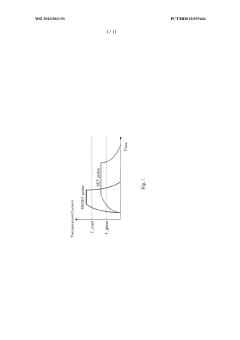
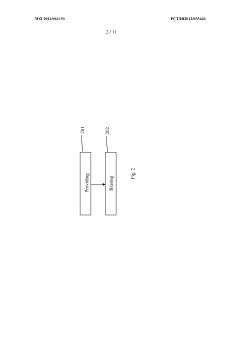
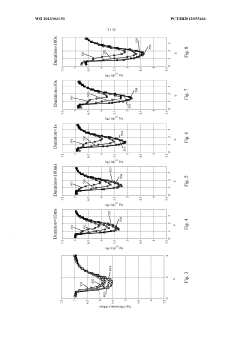
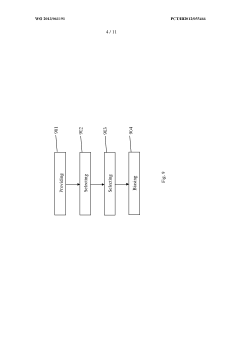
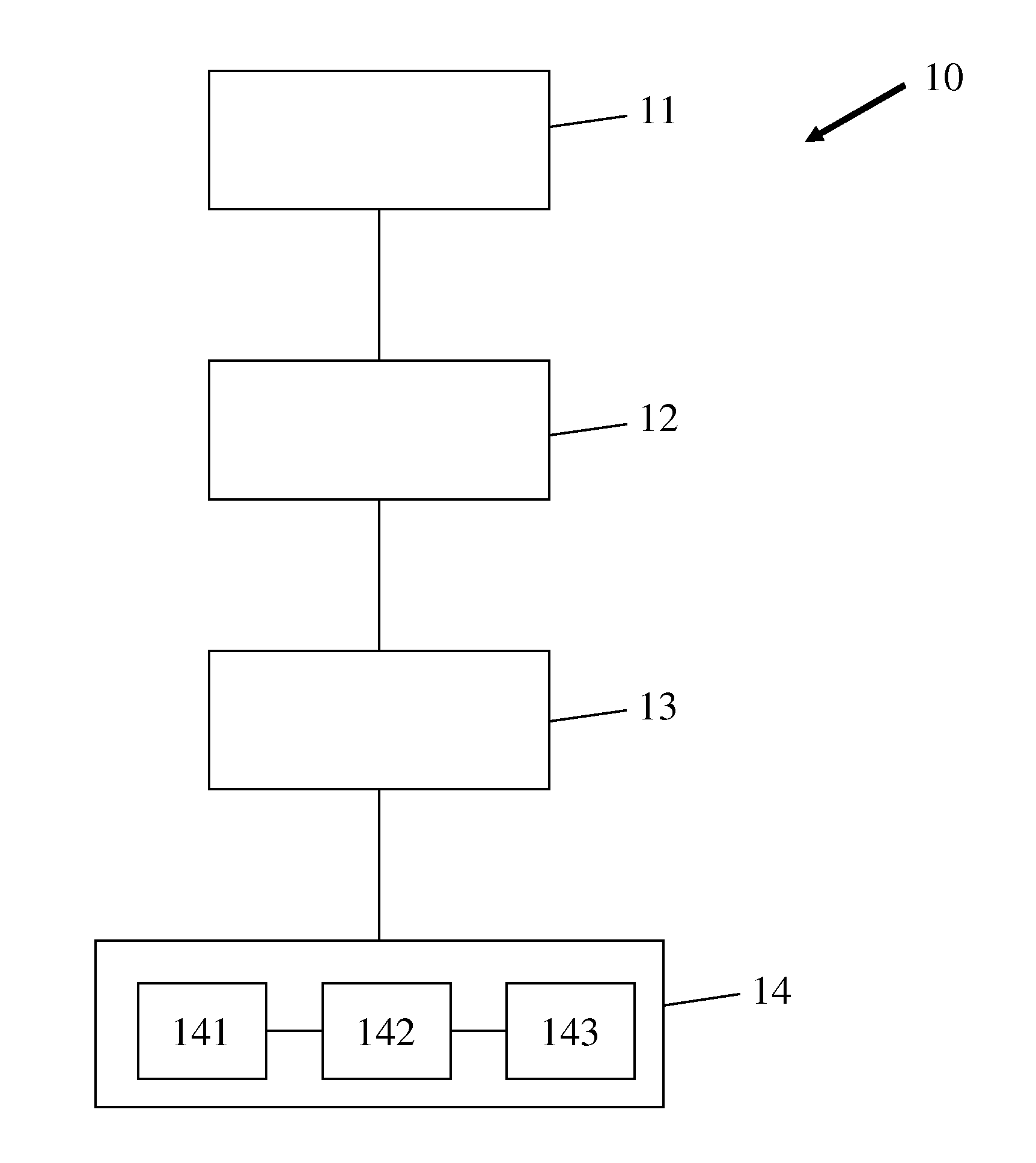
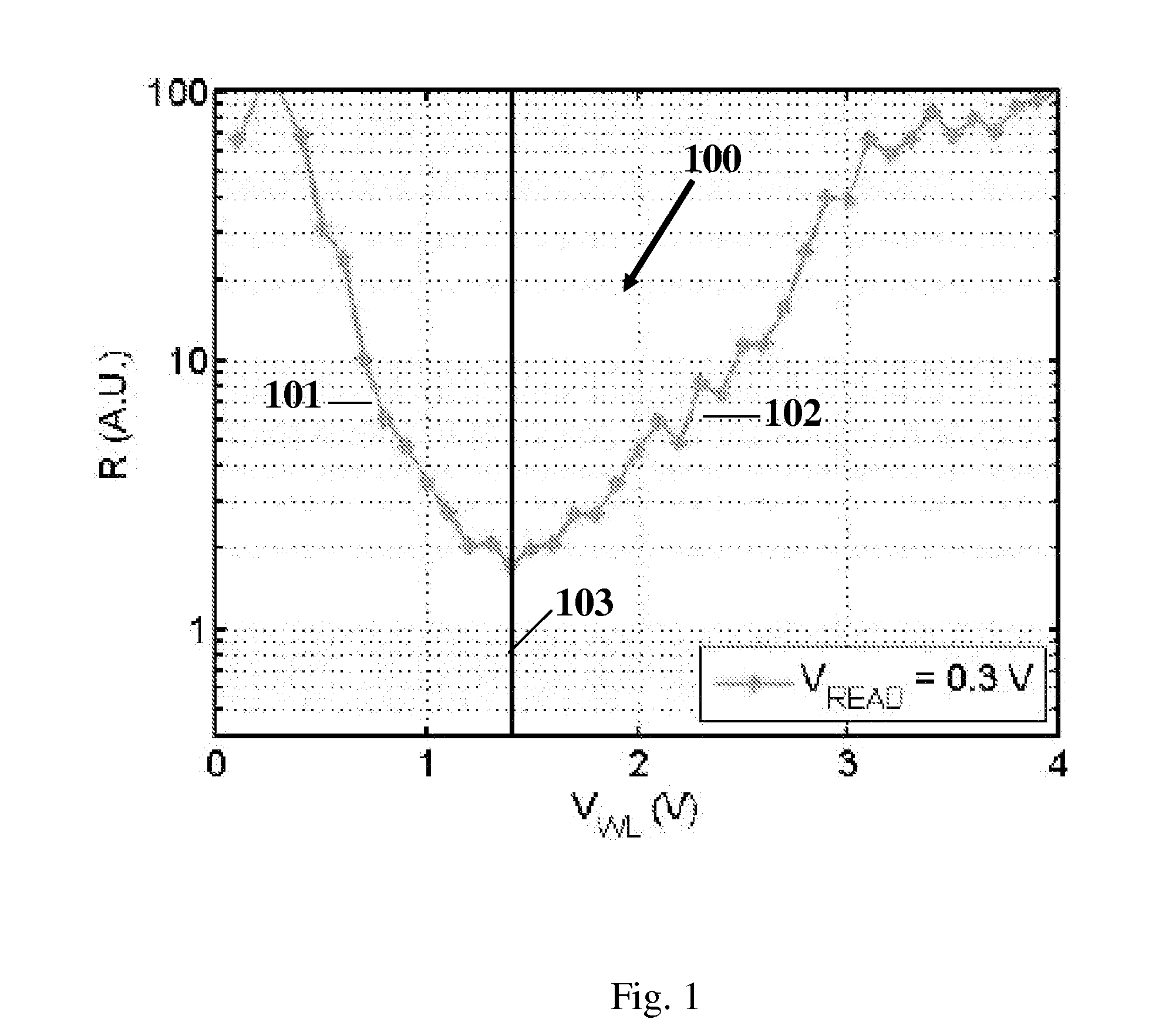
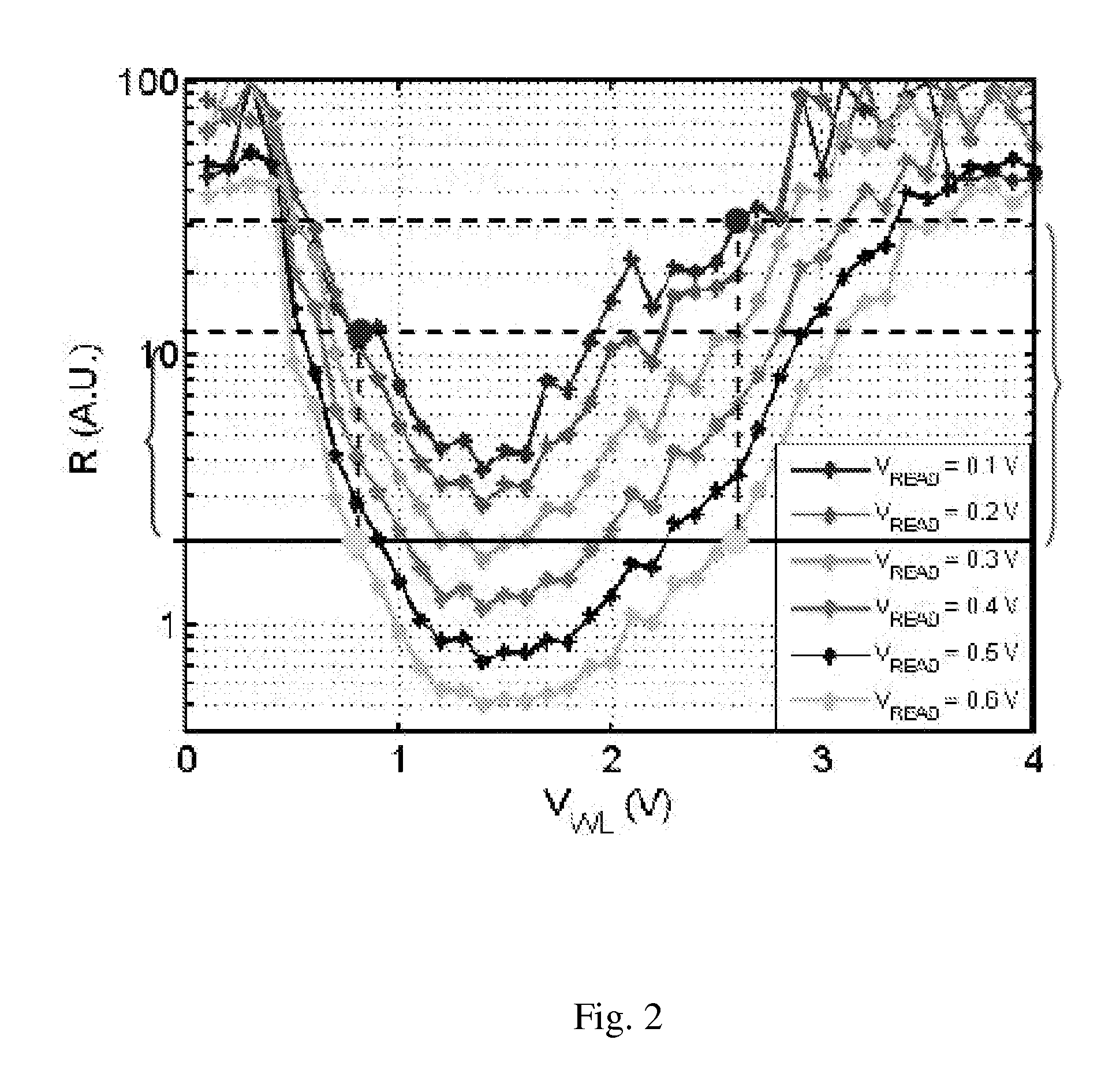
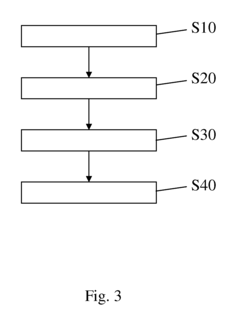
- A method for conditioning PCM cells by applying specific conditioning pulses to tailor their characteristics, such as resistance margin, programming speed, and power, to suit various applications, enabling simultaneous enhancement of performance and reduction of programming power, and increasing multi-level cell capability.
Programming at Least One Multi-Level Phase Change Memory Cell
PatentInactiveUS20110242884A1
Innovation
- A two-dimensional programming scheme is introduced, where the cell state is defined not only by the resistance value but also by the type of programming pulse (annealing or melting pulse), allowing for increased storage capacity by distinguishing between left and right slopes of the programming curve.
Standardization Framework for PCM Performance Metrics
The establishment of a comprehensive standardization framework for PCM performance metrics represents a critical foundation for ensuring consistent evaluation and comparison across diverse applications and implementations. Current industry practices suffer from fragmented measurement approaches, where different organizations employ varying methodologies to assess thermal conductivity, heat capacity, melting point stability, and cycling durability. This inconsistency creates significant barriers to technology adoption and limits the ability to make informed decisions regarding PCM selection for specific applications.
International standardization bodies, including ASTM International and ISO, have initiated preliminary efforts to develop unified testing protocols for phase change materials. However, these standards primarily focus on basic thermophysical properties rather than application-specific performance indicators. The framework must encompass both fundamental material characteristics and operational metrics that reflect real-world performance under varying environmental conditions, load profiles, and system integration scenarios.
A robust standardization framework should incorporate multi-tiered metric categories addressing material-level properties, component-level performance, and system-level integration effectiveness. Material-level metrics must include standardized procedures for measuring enthalpy of fusion, thermal conductivity in both solid and liquid phases, subcooling behavior, and chemical stability over extended cycling periods. These measurements require precise temperature control protocols and standardized sample preparation methods to ensure reproducibility across different testing facilities.
Component-level standardization should address encapsulation effectiveness, heat transfer enhancement techniques, and thermal interface performance. This includes establishing standard test configurations for evaluating PCM modules under controlled boundary conditions, with specific attention to heat transfer rates, temperature uniformity, and mechanical integrity during phase transitions. The framework must also define acceptable tolerance ranges for performance variations and establish certification procedures for commercial PCM products.
System-level metrics require standardized approaches for evaluating PCM integration within complete thermal management systems. This encompasses defining standard test environments that simulate realistic operating conditions, establishing protocols for measuring overall system efficiency improvements, and creating benchmarking methodologies that enable fair comparison between different PCM implementations and alternative thermal management approaches.
The framework must also address emerging requirements for smart PCM systems incorporating sensors and control mechanisms. Standardized communication protocols, data formats, and performance monitoring procedures will become increasingly important as PCM applications evolve toward more sophisticated, adaptive thermal management solutions that can respond dynamically to changing operational demands.
International standardization bodies, including ASTM International and ISO, have initiated preliminary efforts to develop unified testing protocols for phase change materials. However, these standards primarily focus on basic thermophysical properties rather than application-specific performance indicators. The framework must encompass both fundamental material characteristics and operational metrics that reflect real-world performance under varying environmental conditions, load profiles, and system integration scenarios.
A robust standardization framework should incorporate multi-tiered metric categories addressing material-level properties, component-level performance, and system-level integration effectiveness. Material-level metrics must include standardized procedures for measuring enthalpy of fusion, thermal conductivity in both solid and liquid phases, subcooling behavior, and chemical stability over extended cycling periods. These measurements require precise temperature control protocols and standardized sample preparation methods to ensure reproducibility across different testing facilities.
Component-level standardization should address encapsulation effectiveness, heat transfer enhancement techniques, and thermal interface performance. This includes establishing standard test configurations for evaluating PCM modules under controlled boundary conditions, with specific attention to heat transfer rates, temperature uniformity, and mechanical integrity during phase transitions. The framework must also define acceptable tolerance ranges for performance variations and establish certification procedures for commercial PCM products.
System-level metrics require standardized approaches for evaluating PCM integration within complete thermal management systems. This encompasses defining standard test environments that simulate realistic operating conditions, establishing protocols for measuring overall system efficiency improvements, and creating benchmarking methodologies that enable fair comparison between different PCM implementations and alternative thermal management approaches.
The framework must also address emerging requirements for smart PCM systems incorporating sensors and control mechanisms. Standardized communication protocols, data formats, and performance monitoring procedures will become increasingly important as PCM applications evolve toward more sophisticated, adaptive thermal management solutions that can respond dynamically to changing operational demands.
Sustainability Impact Assessment for PCM Applications
The sustainability impact assessment of Phase Change Materials (PCM) applications represents a critical evaluation framework that extends beyond traditional performance metrics to encompass environmental, social, and economic dimensions. This comprehensive assessment methodology addresses the growing demand for sustainable thermal management solutions while ensuring long-term viability in diverse application scenarios.
Environmental impact evaluation forms the cornerstone of PCM sustainability assessment, focusing on lifecycle carbon footprint analysis from raw material extraction through manufacturing, deployment, and end-of-life disposal. Key environmental indicators include embodied energy content, greenhouse gas emissions during production phases, and potential for material recyclability or biodegradation. The assessment framework particularly emphasizes the evaluation of organic versus inorganic PCM materials, considering their respective environmental burdens and regenerative capabilities.
Resource efficiency metrics constitute another fundamental component, examining the utilization of critical raw materials and energy consumption patterns throughout the PCM lifecycle. This includes assessment of material sourcing sustainability, manufacturing process energy intensity, and operational efficiency gains achieved through PCM implementation. The framework evaluates trade-offs between initial resource investment and long-term energy savings potential across various application contexts.
Social sustainability dimensions encompass occupational health and safety considerations during PCM manufacturing and installation processes, particularly for applications involving potentially hazardous materials or complex integration procedures. The assessment framework addresses indoor air quality impacts, material toxicity profiles, and worker exposure risks associated with different PCM formulations and deployment methodologies.
Economic sustainability evaluation integrates cost-benefit analysis with long-term value creation potential, examining initial investment requirements against operational savings and maintenance costs. This includes assessment of market scalability, supply chain resilience, and economic viability across different geographic regions and regulatory environments. The framework considers technology maturation curves and potential for cost reduction through manufacturing scale-up and process optimization.
Circular economy principles are embedded throughout the assessment methodology, evaluating opportunities for material recovery, reprocessing, and integration into closed-loop systems. This includes analysis of PCM regeneration potential, compatibility with existing waste management infrastructure, and opportunities for creating value-added secondary applications from end-of-life materials.
Environmental impact evaluation forms the cornerstone of PCM sustainability assessment, focusing on lifecycle carbon footprint analysis from raw material extraction through manufacturing, deployment, and end-of-life disposal. Key environmental indicators include embodied energy content, greenhouse gas emissions during production phases, and potential for material recyclability or biodegradation. The assessment framework particularly emphasizes the evaluation of organic versus inorganic PCM materials, considering their respective environmental burdens and regenerative capabilities.
Resource efficiency metrics constitute another fundamental component, examining the utilization of critical raw materials and energy consumption patterns throughout the PCM lifecycle. This includes assessment of material sourcing sustainability, manufacturing process energy intensity, and operational efficiency gains achieved through PCM implementation. The framework evaluates trade-offs between initial resource investment and long-term energy savings potential across various application contexts.
Social sustainability dimensions encompass occupational health and safety considerations during PCM manufacturing and installation processes, particularly for applications involving potentially hazardous materials or complex integration procedures. The assessment framework addresses indoor air quality impacts, material toxicity profiles, and worker exposure risks associated with different PCM formulations and deployment methodologies.
Economic sustainability evaluation integrates cost-benefit analysis with long-term value creation potential, examining initial investment requirements against operational savings and maintenance costs. This includes assessment of market scalability, supply chain resilience, and economic viability across different geographic regions and regulatory environments. The framework considers technology maturation curves and potential for cost reduction through manufacturing scale-up and process optimization.
Circular economy principles are embedded throughout the assessment methodology, evaluating opportunities for material recovery, reprocessing, and integration into closed-loop systems. This includes analysis of PCM regeneration potential, compatibility with existing waste management infrastructure, and opportunities for creating value-added secondary applications from end-of-life materials.
Unlock deeper insights with PatSnap Eureka Quick Research — get a full tech report to explore trends and direct your research. Try now!
Generate Your Research Report Instantly with AI Agent
Supercharge your innovation with PatSnap Eureka AI Agent Platform!