

Developing Standards for PCM Use in Public Spaces
FEB 26, 20269 MIN READ
Generate Your Research Report Instantly with AI Agent
PatSnap Eureka helps you evaluate technical feasibility & market potential.
PCM Standards Development Background and Objectives
Phase Change Materials (PCM) have emerged as a critical technology for enhancing energy efficiency and thermal comfort in built environments. The development of comprehensive standards for PCM implementation in public spaces represents a significant advancement in sustainable building practices and energy management systems. This standardization effort addresses the growing need for reliable, safe, and effective thermal regulation solutions in high-occupancy environments where traditional HVAC systems often struggle with efficiency and cost-effectiveness.
The historical evolution of PCM technology spans several decades, beginning with early applications in aerospace and industrial sectors during the 1970s. Initial research focused primarily on paraffin-based materials for temperature regulation in spacecraft and electronic components. The transition to building applications gained momentum in the 1990s as energy efficiency became a priority in construction and architecture. However, the lack of standardized implementation guidelines has hindered widespread adoption, particularly in public infrastructure projects where safety, durability, and performance consistency are paramount.
Current market drivers for PCM standardization include increasing energy costs, stringent environmental regulations, and growing awareness of climate change impacts. Public buildings such as schools, hospitals, libraries, and transportation hubs consume approximately 30% of total building energy worldwide, making them prime candidates for PCM integration. The technology's ability to reduce peak cooling loads by 15-30% and heating demands by 10-20% presents substantial economic and environmental benefits for public sector organizations operating under tight budget constraints.
The primary objective of developing PCM standards for public spaces centers on establishing uniform performance criteria, safety protocols, and installation procedures. These standards aim to ensure consistent thermal performance across different climate zones while maintaining occupant safety and comfort. Key performance targets include achieving thermal stability within ±2°C of design temperatures, maintaining phase change efficiency above 85% over minimum 10,000 cycles, and ensuring fire safety compliance with existing building codes.
Standardization efforts also focus on addressing material compatibility issues with common building materials, establishing testing methodologies for long-term performance evaluation, and creating certification processes for PCM products and installation contractors. The standards development process involves collaboration between material scientists, building engineers, regulatory bodies, and public facility managers to ensure practical applicability and regulatory compliance across diverse public space applications.
The historical evolution of PCM technology spans several decades, beginning with early applications in aerospace and industrial sectors during the 1970s. Initial research focused primarily on paraffin-based materials for temperature regulation in spacecraft and electronic components. The transition to building applications gained momentum in the 1990s as energy efficiency became a priority in construction and architecture. However, the lack of standardized implementation guidelines has hindered widespread adoption, particularly in public infrastructure projects where safety, durability, and performance consistency are paramount.
Current market drivers for PCM standardization include increasing energy costs, stringent environmental regulations, and growing awareness of climate change impacts. Public buildings such as schools, hospitals, libraries, and transportation hubs consume approximately 30% of total building energy worldwide, making them prime candidates for PCM integration. The technology's ability to reduce peak cooling loads by 15-30% and heating demands by 10-20% presents substantial economic and environmental benefits for public sector organizations operating under tight budget constraints.
The primary objective of developing PCM standards for public spaces centers on establishing uniform performance criteria, safety protocols, and installation procedures. These standards aim to ensure consistent thermal performance across different climate zones while maintaining occupant safety and comfort. Key performance targets include achieving thermal stability within ±2°C of design temperatures, maintaining phase change efficiency above 85% over minimum 10,000 cycles, and ensuring fire safety compliance with existing building codes.
Standardization efforts also focus on addressing material compatibility issues with common building materials, establishing testing methodologies for long-term performance evaluation, and creating certification processes for PCM products and installation contractors. The standards development process involves collaboration between material scientists, building engineers, regulatory bodies, and public facility managers to ensure practical applicability and regulatory compliance across diverse public space applications.
Market Demand for PCM Applications in Public Infrastructure
The global public infrastructure sector is experiencing unprecedented demand for energy-efficient thermal management solutions, with Phase Change Materials (PCM) emerging as a critical technology for sustainable building operations. Urban heat island effects and rising energy costs have intensified the need for passive cooling and heating systems in public buildings, transportation hubs, schools, and healthcare facilities.
Government initiatives worldwide are driving substantial investments in green building technologies. The European Union's Green Deal and similar policies in North America and Asia-Pacific regions mandate significant reductions in public sector energy consumption. These regulatory frameworks create substantial market pull for PCM applications in retrofitting existing public buildings and integrating thermal management systems in new construction projects.
Educational institutions represent a particularly strong market segment, as schools and universities seek cost-effective solutions to maintain comfortable learning environments while reducing operational expenses. The extended operational hours and high occupancy rates of public buildings make them ideal candidates for PCM thermal storage systems that can shift cooling loads to off-peak hours.
Transportation infrastructure presents another high-growth application area. Airports, train stations, and bus terminals require consistent temperature control across large spaces with variable occupancy patterns. PCM systems offer the capability to moderate temperature fluctuations while reducing peak energy demands, addressing both comfort and operational efficiency requirements.
Healthcare facilities within public systems demonstrate strong adoption potential due to their critical need for stable indoor environments and continuous operation requirements. The ability of PCM systems to provide thermal buffering during power outages or equipment failures adds significant value proposition for these mission-critical applications.
Municipal governments are increasingly recognizing PCM technology as a strategic investment for achieving carbon neutrality goals. The technology's compatibility with renewable energy systems and its potential to reduce grid stress during peak demand periods align with broader smart city initiatives and infrastructure modernization programs.
Market barriers include initial capital costs and the need for standardized performance metrics to enable confident procurement decisions. However, lifecycle cost analyses consistently demonstrate favorable returns on investment, particularly when considering avoided infrastructure upgrades and reduced maintenance requirements compared to conventional HVAC systems.
Government initiatives worldwide are driving substantial investments in green building technologies. The European Union's Green Deal and similar policies in North America and Asia-Pacific regions mandate significant reductions in public sector energy consumption. These regulatory frameworks create substantial market pull for PCM applications in retrofitting existing public buildings and integrating thermal management systems in new construction projects.
Educational institutions represent a particularly strong market segment, as schools and universities seek cost-effective solutions to maintain comfortable learning environments while reducing operational expenses. The extended operational hours and high occupancy rates of public buildings make them ideal candidates for PCM thermal storage systems that can shift cooling loads to off-peak hours.
Transportation infrastructure presents another high-growth application area. Airports, train stations, and bus terminals require consistent temperature control across large spaces with variable occupancy patterns. PCM systems offer the capability to moderate temperature fluctuations while reducing peak energy demands, addressing both comfort and operational efficiency requirements.
Healthcare facilities within public systems demonstrate strong adoption potential due to their critical need for stable indoor environments and continuous operation requirements. The ability of PCM systems to provide thermal buffering during power outages or equipment failures adds significant value proposition for these mission-critical applications.
Municipal governments are increasingly recognizing PCM technology as a strategic investment for achieving carbon neutrality goals. The technology's compatibility with renewable energy systems and its potential to reduce grid stress during peak demand periods align with broader smart city initiatives and infrastructure modernization programs.
Market barriers include initial capital costs and the need for standardized performance metrics to enable confident procurement decisions. However, lifecycle cost analyses consistently demonstrate favorable returns on investment, particularly when considering avoided infrastructure upgrades and reduced maintenance requirements compared to conventional HVAC systems.
Current PCM Implementation Challenges in Public Spaces
The implementation of Phase Change Materials (PCM) in public spaces faces significant technical and operational challenges that currently limit widespread adoption. One of the primary obstacles is the lack of standardized installation protocols, which results in inconsistent performance across different applications. Without unified guidelines, contractors and facility managers often struggle with proper integration techniques, leading to suboptimal thermal regulation and reduced system longevity.
Durability concerns represent another critical challenge, particularly regarding PCM containment systems. Public spaces experience high traffic volumes and varying environmental conditions, placing substantial stress on PCM encapsulation materials. Current containment solutions often fail to withstand prolonged exposure to temperature fluctuations, mechanical stress, and potential vandalism, resulting in leakage issues and system failures that compromise both performance and safety.
Maintenance complexity poses substantial operational difficulties for facility managers. Existing PCM systems require specialized knowledge for monitoring, troubleshooting, and repair procedures. The absence of standardized maintenance protocols means that many public facility operators lack the necessary expertise to properly service these systems, leading to premature degradation and costly replacements.
Cost-effectiveness remains a significant barrier to widespread PCM adoption in public infrastructure projects. Initial installation costs are substantially higher than conventional thermal management solutions, while the long-term return on investment calculations are often unclear due to inconsistent performance data. This economic uncertainty makes it difficult for public sector decision-makers to justify PCM investments, particularly when operating under tight budget constraints.
Performance variability across different climate zones and building types creates additional implementation challenges. Current PCM formulations may not perform optimally in all geographic locations or architectural configurations commonly found in public spaces. The lack of climate-specific application guidelines results in systems that underperform in certain conditions, failing to deliver expected energy savings and thermal comfort improvements.
Integration with existing HVAC systems presents technical complications that often require extensive modifications to current infrastructure. Many public buildings lack the necessary structural accommodations for PCM installation, necessitating costly retrofitting processes. Additionally, compatibility issues between PCM systems and legacy building management systems create operational inefficiencies and monitoring difficulties.
Quality control and performance verification represent ongoing challenges throughout the implementation process. The absence of standardized testing procedures makes it difficult to ensure consistent product quality and system performance. This lack of verification protocols undermines confidence in PCM technology and creates liability concerns for public sector applications.
Durability concerns represent another critical challenge, particularly regarding PCM containment systems. Public spaces experience high traffic volumes and varying environmental conditions, placing substantial stress on PCM encapsulation materials. Current containment solutions often fail to withstand prolonged exposure to temperature fluctuations, mechanical stress, and potential vandalism, resulting in leakage issues and system failures that compromise both performance and safety.
Maintenance complexity poses substantial operational difficulties for facility managers. Existing PCM systems require specialized knowledge for monitoring, troubleshooting, and repair procedures. The absence of standardized maintenance protocols means that many public facility operators lack the necessary expertise to properly service these systems, leading to premature degradation and costly replacements.
Cost-effectiveness remains a significant barrier to widespread PCM adoption in public infrastructure projects. Initial installation costs are substantially higher than conventional thermal management solutions, while the long-term return on investment calculations are often unclear due to inconsistent performance data. This economic uncertainty makes it difficult for public sector decision-makers to justify PCM investments, particularly when operating under tight budget constraints.
Performance variability across different climate zones and building types creates additional implementation challenges. Current PCM formulations may not perform optimally in all geographic locations or architectural configurations commonly found in public spaces. The lack of climate-specific application guidelines results in systems that underperform in certain conditions, failing to deliver expected energy savings and thermal comfort improvements.
Integration with existing HVAC systems presents technical complications that often require extensive modifications to current infrastructure. Many public buildings lack the necessary structural accommodations for PCM installation, necessitating costly retrofitting processes. Additionally, compatibility issues between PCM systems and legacy building management systems create operational inefficiencies and monitoring difficulties.
Quality control and performance verification represent ongoing challenges throughout the implementation process. The absence of standardized testing procedures makes it difficult to ensure consistent product quality and system performance. This lack of verification protocols undermines confidence in PCM technology and creates liability concerns for public sector applications.
Existing PCM Standards and Regulatory Frameworks
01 PCM encapsulation and containment structures
Phase change materials can be encapsulated or contained within various structures to prevent leakage and improve stability. Encapsulation techniques include microencapsulation, macroencapsulation, and incorporation into porous materials or polymer matrices. These containment methods enhance the durability and applicability of PCMs in different environments while maintaining their thermal storage capabilities.- PCM encapsulation and containment structures: Phase change materials can be encapsulated or contained within various structures to prevent leakage and improve stability. Encapsulation techniques include microencapsulation, macroencapsulation, and incorporation into porous materials or polymer matrices. These containment methods enhance the durability and applicability of PCMs in different environments while maintaining their thermal storage capabilities.
- PCM integration in building materials and construction: Phase change materials are incorporated into building materials such as concrete, gypsum boards, and insulation panels to enhance thermal regulation and energy efficiency. The integration allows buildings to store and release thermal energy, reducing heating and cooling demands. Various methods include mixing PCMs directly into construction materials or embedding PCM-containing elements within building structures.
- PCM compositions and formulations: Different compositions and formulations of phase change materials are developed to achieve specific melting points and thermal properties. These formulations may include organic compounds, inorganic salts, eutectic mixtures, or hybrid combinations. The selection and optimization of PCM compositions enable tailored thermal management solutions for various temperature ranges and applications.
- PCM applications in thermal energy storage systems: Phase change materials are utilized in thermal energy storage systems to capture and store heat or cold for later use. These systems can be integrated with renewable energy sources, HVAC systems, or industrial processes to improve energy efficiency and load management. The PCM-based storage systems provide latent heat storage capabilities that enable more compact and efficient thermal management compared to sensible heat storage.
- PCM heat transfer enhancement techniques: Various techniques are employed to enhance heat transfer rates in phase change materials, addressing the typically low thermal conductivity of PCMs. Methods include incorporating high-conductivity additives such as metal foams, graphite, carbon nanotubes, or metallic particles. Other approaches involve using fins, heat pipes, or optimized geometric configurations to improve thermal performance and reduce charging and discharging times.
02 PCM composite materials and integration
Phase change materials can be integrated with other materials to form composite structures that combine thermal storage properties with mechanical strength or other functional characteristics. These composites may include PCMs combined with building materials, textiles, foams, or structural components to create multifunctional products with enhanced thermal management capabilities.Expand Specific Solutions03 PCM thermal management systems
Phase change materials are utilized in thermal management systems to regulate temperature through latent heat storage and release. These systems can be applied in various applications including electronics cooling, battery thermal management, HVAC systems, and temperature-controlled packaging. The PCM absorbs or releases heat during phase transitions to maintain desired temperature ranges.Expand Specific Solutions04 PCM formulation and composition optimization
The formulation of phase change materials involves selecting and combining specific compounds to achieve desired melting points, latent heat capacities, and thermal stability. Optimization may include using eutectic mixtures, adding nucleating agents, thermal conductivity enhancers, or stabilizers to improve performance characteristics and prevent degradation over multiple thermal cycles.Expand Specific Solutions05 PCM applications in building and construction
Phase change materials are incorporated into building materials and construction elements to improve energy efficiency and thermal comfort. Applications include integration into walls, roofs, floors, insulation panels, and glazing systems. These PCM-enhanced building components help reduce heating and cooling loads by storing excess thermal energy and releasing it when needed, thereby stabilizing indoor temperatures.Expand Specific Solutions
Key Players in PCM Standards and Public Space Applications
The development of standards for PCM use in public spaces represents an emerging market segment within the broader thermal energy storage industry, currently in its early commercialization phase with significant growth potential driven by increasing energy efficiency demands and sustainable building initiatives. The market exhibits moderate fragmentation with established chemical giants like DuPont de Nemours and Dow Global Technologies leveraging their materials expertise alongside specialized PCM companies such as Phase Change Solutions and Tan90 Thermal Solutions who focus exclusively on thermal management applications. Technology maturity varies considerably across the competitive landscape, with research institutions including Swiss Federal Institute of Technology, University of Southern Denmark, and Industrial Technology Research Institute advancing fundamental PCM science, while companies like Henry Co. and CIC energiGUNE bridge the gap between laboratory research and commercial implementation. The standardization challenge reflects the industry's transition from niche applications to mainstream adoption in public infrastructure projects.
DuPont de Nemours, Inc.
Technical Solution: DuPont has developed comprehensive PCM solutions for public space applications, focusing on microencapsulated phase change materials integrated into building materials and textiles. Their technology includes bio-based PCM formulations with enhanced thermal stability and fire retardancy specifically designed for high-traffic public environments. The company's standards development approach emphasizes safety protocols, environmental impact assessment, and performance benchmarking for commercial deployment in schools, hospitals, and office buildings.
Strengths: Extensive material science expertise and established safety testing protocols. Weaknesses: Higher cost compared to conventional materials and limited temperature range options.
Dow Global Technologies LLC
Technical Solution: Dow has pioneered polymer-based PCM encapsulation technologies for public infrastructure applications. Their approach focuses on developing standardized testing methodologies for PCM durability, thermal cycling performance, and long-term stability in public environments. The company's technical standards framework includes guidelines for PCM integration in HVAC systems, building envelopes, and urban heat island mitigation projects, with emphasis on scalable manufacturing processes and regulatory compliance for public safety.
Strengths: Strong polymer chemistry capabilities and established regulatory relationships. Weaknesses: Limited experience in direct PCM manufacturing and dependency on third-party PCM suppliers.
Core Technical Requirements for Public Space PCM Standards
Phase change material panels and container with phase change material panels
PatentWO2025074277A1
Innovation
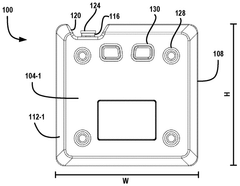
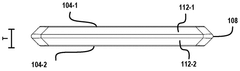
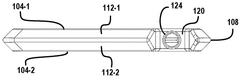
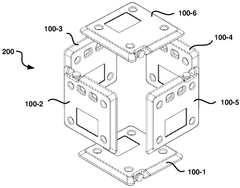
- A container design incorporating rectangular PCM panels with beveled perimeters, arranged at right angles to form a payload enclosure, combined with an inner tub and vacuum insulated panels (VIPs) for enhanced thermal performance and structural integrity.
Phase change material
PatentWO2016189090A1
Innovation
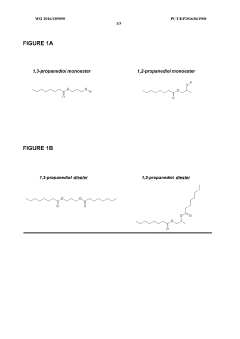
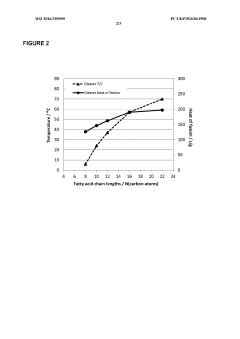
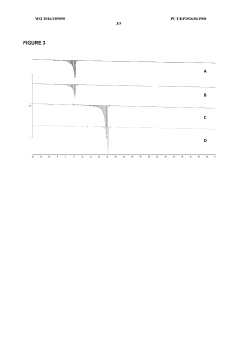
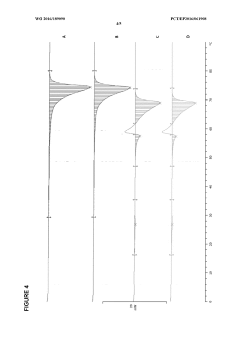
- Development of 1,3-propanediol fatty acid esters as phase change materials, which are fully bio-based, renewable, and biodegradable, offering high latent heat and narrow melting temperature ranges, and can be produced from food-grade raw materials for use in temperature regulation articles and food packaging.
Safety and Environmental Regulations for Public PCM Use
The implementation of Phase Change Materials (PCM) in public spaces requires comprehensive safety and environmental regulatory frameworks to ensure public health protection and environmental sustainability. Current regulatory landscapes vary significantly across jurisdictions, with most existing standards primarily focused on building materials rather than specific PCM applications in public environments.
Fire safety regulations represent the most critical aspect of PCM deployment in public spaces. PCM systems must comply with stringent fire resistance standards, including flame spread ratings, smoke generation limits, and toxic gas emission thresholds. Many jurisdictions require PCM installations to meet Class A fire ratings and undergo rigorous testing protocols such as ASTM E84 or equivalent international standards. Emergency response procedures must also account for potential PCM leakage scenarios and specialized firefighting requirements.
Environmental protection regulations focus on preventing PCM contamination of soil, groundwater, and air quality. Regulatory bodies mandate comprehensive environmental impact assessments before large-scale PCM installations in public areas. These assessments must evaluate potential leakage pathways, biodegradability of PCM materials, and long-term environmental persistence. Containment systems require secondary barriers and monitoring protocols to detect early signs of material degradation or breach.
Health and safety standards address direct human exposure risks through inhalation, skin contact, or accidental ingestion pathways. Regulatory frameworks typically establish permissible exposure limits for PCM vapors and require proper ventilation systems in enclosed public spaces. Material safety data sheets must be readily available, and installation personnel require specialized training certifications to handle PCM materials safely.
Waste management regulations govern end-of-life PCM disposal and recycling procedures. These standards mandate proper collection, treatment, and disposal methods to prevent environmental contamination. Many jurisdictions classify certain PCM materials as hazardous waste, requiring specialized handling and disposal facilities. Recycling protocols are increasingly emphasized to support circular economy principles and reduce environmental impact.
Emerging regulatory trends indicate movement toward more stringent bio-based PCM requirements and enhanced lifecycle assessment standards. Future regulations are expected to incorporate carbon footprint considerations and mandate renewable PCM sources where technically feasible, reflecting growing environmental consciousness in public infrastructure development.
Fire safety regulations represent the most critical aspect of PCM deployment in public spaces. PCM systems must comply with stringent fire resistance standards, including flame spread ratings, smoke generation limits, and toxic gas emission thresholds. Many jurisdictions require PCM installations to meet Class A fire ratings and undergo rigorous testing protocols such as ASTM E84 or equivalent international standards. Emergency response procedures must also account for potential PCM leakage scenarios and specialized firefighting requirements.
Environmental protection regulations focus on preventing PCM contamination of soil, groundwater, and air quality. Regulatory bodies mandate comprehensive environmental impact assessments before large-scale PCM installations in public areas. These assessments must evaluate potential leakage pathways, biodegradability of PCM materials, and long-term environmental persistence. Containment systems require secondary barriers and monitoring protocols to detect early signs of material degradation or breach.
Health and safety standards address direct human exposure risks through inhalation, skin contact, or accidental ingestion pathways. Regulatory frameworks typically establish permissible exposure limits for PCM vapors and require proper ventilation systems in enclosed public spaces. Material safety data sheets must be readily available, and installation personnel require specialized training certifications to handle PCM materials safely.
Waste management regulations govern end-of-life PCM disposal and recycling procedures. These standards mandate proper collection, treatment, and disposal methods to prevent environmental contamination. Many jurisdictions classify certain PCM materials as hazardous waste, requiring specialized handling and disposal facilities. Recycling protocols are increasingly emphasized to support circular economy principles and reduce environmental impact.
Emerging regulatory trends indicate movement toward more stringent bio-based PCM requirements and enhanced lifecycle assessment standards. Future regulations are expected to incorporate carbon footprint considerations and mandate renewable PCM sources where technically feasible, reflecting growing environmental consciousness in public infrastructure development.
Quality Assurance and Testing Protocols for PCM Standards
Quality assurance and testing protocols form the cornerstone of reliable PCM standards for public space applications. These protocols must address the unique challenges posed by high-traffic environments, varying occupancy patterns, and diverse climatic conditions that characterize public buildings, transportation hubs, and recreational facilities.
Thermal performance testing represents the primary validation mechanism for PCM systems in public spaces. Standard test procedures should encompass cyclic temperature testing under accelerated conditions, simulating years of operation within compressed timeframes. These tests must evaluate phase change temperature stability, latent heat capacity retention, and thermal conductivity variations across multiple heating and cooling cycles. Specific attention should be given to partial melting scenarios common in public spaces where temperature fluctuations may not complete full phase transitions.
Material compatibility testing becomes critical given the extended service life expectations in public infrastructure. Protocols should assess PCM interaction with common building materials including concrete, steel, aluminum, and various polymeric encapsulation systems. Corrosion testing, chemical stability analysis, and material degradation assessments under realistic environmental conditions ensure long-term system integrity and public safety.
Fire safety and toxicity testing protocols must address the heightened safety requirements of public occupancy. Standard flame spread tests, smoke generation measurements, and toxic gas emission analysis during both normal operation and emergency scenarios are essential. These protocols should align with existing building codes while establishing PCM-specific safety benchmarks for public space applications.
Environmental durability testing should simulate real-world conditions including humidity variations, air quality impacts, and potential contamination exposure typical in public environments. Accelerated aging tests, UV exposure protocols for systems with natural lighting exposure, and freeze-thaw cycling for climate-sensitive installations provide comprehensive performance validation.
Quality control protocols must establish clear acceptance criteria, sampling procedures, and batch testing requirements for PCM products destined for public space deployment. Statistical process control methods, traceability requirements, and certification procedures ensure consistent product quality and regulatory compliance across different manufacturers and installation projects.
Thermal performance testing represents the primary validation mechanism for PCM systems in public spaces. Standard test procedures should encompass cyclic temperature testing under accelerated conditions, simulating years of operation within compressed timeframes. These tests must evaluate phase change temperature stability, latent heat capacity retention, and thermal conductivity variations across multiple heating and cooling cycles. Specific attention should be given to partial melting scenarios common in public spaces where temperature fluctuations may not complete full phase transitions.
Material compatibility testing becomes critical given the extended service life expectations in public infrastructure. Protocols should assess PCM interaction with common building materials including concrete, steel, aluminum, and various polymeric encapsulation systems. Corrosion testing, chemical stability analysis, and material degradation assessments under realistic environmental conditions ensure long-term system integrity and public safety.
Fire safety and toxicity testing protocols must address the heightened safety requirements of public occupancy. Standard flame spread tests, smoke generation measurements, and toxic gas emission analysis during both normal operation and emergency scenarios are essential. These protocols should align with existing building codes while establishing PCM-specific safety benchmarks for public space applications.
Environmental durability testing should simulate real-world conditions including humidity variations, air quality impacts, and potential contamination exposure typical in public environments. Accelerated aging tests, UV exposure protocols for systems with natural lighting exposure, and freeze-thaw cycling for climate-sensitive installations provide comprehensive performance validation.
Quality control protocols must establish clear acceptance criteria, sampling procedures, and batch testing requirements for PCM products destined for public space deployment. Statistical process control methods, traceability requirements, and certification procedures ensure consistent product quality and regulatory compliance across different manufacturers and installation projects.
Unlock deeper insights with PatSnap Eureka Quick Research — get a full tech report to explore trends and direct your research. Try now!
Generate Your Research Report Instantly with AI Agent
Supercharge your innovation with PatSnap Eureka AI Agent Platform!