

How to Secure PCM Sustainability with Lifecycle Analysis
FEB 26, 20269 MIN READ
Generate Your Research Report Instantly with AI Agent
PatSnap Eureka helps you evaluate technical feasibility & market potential.
PCM Sustainability Background and LCA Goals
Phase Change Materials have emerged as critical components in thermal energy storage systems, building energy efficiency, and temperature regulation applications across multiple industries. The growing emphasis on sustainable development and circular economy principles has intensified focus on the environmental implications of PCM technologies throughout their operational lifecycle. Traditional PCM deployment often overlooks long-term sustainability considerations, creating potential environmental burdens that may offset their energy-saving benefits.
The sustainability challenge in PCM applications stems from complex interactions between material composition, manufacturing processes, operational performance, and end-of-life management. Many commercially available PCMs rely on petroleum-based paraffins or synthetic materials that raise concerns about resource depletion, carbon footprint, and disposal impacts. Additionally, encapsulation materials and system integration components contribute to the overall environmental profile, creating a multifaceted sustainability assessment challenge.
Lifecycle Analysis has evolved as the predominant methodology for evaluating environmental impacts across all stages of product development, from raw material extraction through manufacturing, use phase, and disposal or recycling. LCA provides a systematic framework for quantifying environmental burdens, identifying hotspots, and comparing alternative solutions based on comprehensive impact categories including carbon footprint, resource consumption, toxicity potential, and ecosystem effects.
The integration of LCA principles into PCM sustainability assessment represents a paradigm shift from performance-focused evaluation to holistic environmental consideration. This approach enables identification of trade-offs between thermal performance benefits and environmental costs, facilitating informed decision-making for sustainable PCM selection and system design. Contemporary LCA methodologies incorporate dynamic assessment capabilities that account for temporal variations in environmental impacts and regional differences in energy systems.
The primary objective of applying LCA to PCM sustainability involves establishing comprehensive environmental profiles that encompass cradle-to-grave impacts while identifying optimization opportunities for reduced environmental burden. This includes developing standardized assessment protocols, creating reliable databases for PCM-specific impact factors, and establishing benchmarks for sustainable PCM performance across different application contexts and geographic regions.
The sustainability challenge in PCM applications stems from complex interactions between material composition, manufacturing processes, operational performance, and end-of-life management. Many commercially available PCMs rely on petroleum-based paraffins or synthetic materials that raise concerns about resource depletion, carbon footprint, and disposal impacts. Additionally, encapsulation materials and system integration components contribute to the overall environmental profile, creating a multifaceted sustainability assessment challenge.
Lifecycle Analysis has evolved as the predominant methodology for evaluating environmental impacts across all stages of product development, from raw material extraction through manufacturing, use phase, and disposal or recycling. LCA provides a systematic framework for quantifying environmental burdens, identifying hotspots, and comparing alternative solutions based on comprehensive impact categories including carbon footprint, resource consumption, toxicity potential, and ecosystem effects.
The integration of LCA principles into PCM sustainability assessment represents a paradigm shift from performance-focused evaluation to holistic environmental consideration. This approach enables identification of trade-offs between thermal performance benefits and environmental costs, facilitating informed decision-making for sustainable PCM selection and system design. Contemporary LCA methodologies incorporate dynamic assessment capabilities that account for temporal variations in environmental impacts and regional differences in energy systems.
The primary objective of applying LCA to PCM sustainability involves establishing comprehensive environmental profiles that encompass cradle-to-grave impacts while identifying optimization opportunities for reduced environmental burden. This includes developing standardized assessment protocols, creating reliable databases for PCM-specific impact factors, and establishing benchmarks for sustainable PCM performance across different application contexts and geographic regions.
Market Demand for Sustainable PCM Solutions
The global phase change materials market is experiencing unprecedented growth driven by increasing environmental consciousness and stringent regulatory frameworks targeting carbon neutrality. Building and construction sectors represent the largest application segment, where PCMs are integrated into walls, roofs, and HVAC systems to enhance thermal energy storage and reduce heating and cooling demands. This sector's expansion is fueled by green building certifications and energy efficiency mandates across developed economies.
Industrial applications constitute another significant demand driver, particularly in cold chain logistics, electronics thermal management, and renewable energy storage systems. The electronics industry increasingly requires sustainable thermal management solutions as device miniaturization intensifies heat generation challenges. Solar thermal energy storage applications are gaining momentum as renewable energy adoption accelerates globally.
Automotive and aerospace industries are emerging as high-growth segments, seeking lightweight thermal management solutions that align with electrification trends and sustainability goals. Electric vehicle battery thermal management systems represent a particularly promising application area, where sustainable PCMs can enhance battery performance while meeting environmental standards.
Regional demand patterns reveal strong growth in Europe and North America, driven by comprehensive sustainability regulations and established green building markets. The European Union's Green Deal and various national carbon reduction commitments are creating substantial market pull for sustainable PCM solutions. Asia-Pacific markets, led by China and Japan, are rapidly expanding due to urbanization trends and increasing environmental awareness.
Market drivers extend beyond regulatory compliance to include corporate sustainability commitments and consumer preference shifts toward environmentally responsible products. End-users increasingly demand transparency regarding product lifecycle impacts, creating opportunities for PCM manufacturers who can demonstrate comprehensive sustainability credentials through lifecycle analysis.
The premium pricing acceptance for sustainable PCM solutions indicates market maturity and willingness to invest in long-term environmental benefits. This trend is particularly pronounced in commercial and industrial applications where lifecycle cost considerations favor sustainable alternatives despite higher initial investments.
Supply chain sustainability requirements are reshaping procurement practices, with major corporations implementing supplier sustainability scorecards that evaluate environmental performance throughout product lifecycles. This development creates competitive advantages for PCM manufacturers who can provide detailed lifecycle analysis documentation and demonstrate continuous improvement in sustainability metrics.
Industrial applications constitute another significant demand driver, particularly in cold chain logistics, electronics thermal management, and renewable energy storage systems. The electronics industry increasingly requires sustainable thermal management solutions as device miniaturization intensifies heat generation challenges. Solar thermal energy storage applications are gaining momentum as renewable energy adoption accelerates globally.
Automotive and aerospace industries are emerging as high-growth segments, seeking lightweight thermal management solutions that align with electrification trends and sustainability goals. Electric vehicle battery thermal management systems represent a particularly promising application area, where sustainable PCMs can enhance battery performance while meeting environmental standards.
Regional demand patterns reveal strong growth in Europe and North America, driven by comprehensive sustainability regulations and established green building markets. The European Union's Green Deal and various national carbon reduction commitments are creating substantial market pull for sustainable PCM solutions. Asia-Pacific markets, led by China and Japan, are rapidly expanding due to urbanization trends and increasing environmental awareness.
Market drivers extend beyond regulatory compliance to include corporate sustainability commitments and consumer preference shifts toward environmentally responsible products. End-users increasingly demand transparency regarding product lifecycle impacts, creating opportunities for PCM manufacturers who can demonstrate comprehensive sustainability credentials through lifecycle analysis.
The premium pricing acceptance for sustainable PCM solutions indicates market maturity and willingness to invest in long-term environmental benefits. This trend is particularly pronounced in commercial and industrial applications where lifecycle cost considerations favor sustainable alternatives despite higher initial investments.
Supply chain sustainability requirements are reshaping procurement practices, with major corporations implementing supplier sustainability scorecards that evaluate environmental performance throughout product lifecycles. This development creates competitive advantages for PCM manufacturers who can provide detailed lifecycle analysis documentation and demonstrate continuous improvement in sustainability metrics.
Current PCM Sustainability Challenges and LCA Gaps
Phase Change Materials face significant sustainability challenges that impede their widespread adoption across thermal energy storage applications. The primary environmental concern stems from the manufacturing processes of organic PCMs, particularly paraffin-based materials, which rely heavily on petroleum derivatives and generate substantial carbon emissions during production. Additionally, many synthetic PCMs contain chemical additives and stabilizers that raise questions about their end-of-life disposal and potential environmental contamination.
The durability and performance degradation of PCMs present another critical sustainability challenge. Repeated thermal cycling often leads to material degradation, phase separation, and reduced heat storage capacity, necessitating frequent replacement and generating additional waste streams. This degradation issue is particularly pronounced in building-integrated applications where PCMs are expected to maintain performance over decades.
Current Life Cycle Assessment methodologies exhibit significant gaps when applied to PCM systems. Traditional LCA frameworks struggle to accurately capture the dynamic thermal performance benefits of PCMs throughout their operational lifetime. The temporal variability of energy savings, which depends on climate conditions, building characteristics, and usage patterns, is often oversimplified in existing assessment models. This limitation leads to incomplete or misleading sustainability evaluations.
The boundary definition in PCM LCA studies remains inconsistent across research efforts. Many assessments focus solely on material production impacts while neglecting installation, maintenance, and end-of-life scenarios. The lack of standardized impact categories specifically relevant to thermal storage materials creates difficulties in comparing different PCM solutions and establishing industry benchmarks.
Data availability represents a fundamental challenge in comprehensive PCM sustainability assessment. Manufacturers often withhold detailed information about chemical compositions, production processes, and performance degradation rates, limiting the accuracy of LCA studies. The absence of long-term field performance data further complicates efforts to quantify real-world environmental benefits versus laboratory-measured properties.
Integration challenges arise when attempting to assess PCM sustainability within complex building systems. Current LCA methodologies inadequately address the interdependencies between PCM performance and other building components, such as HVAC systems, insulation, and control strategies. This systems-level gap prevents accurate evaluation of PCMs' true contribution to overall building sustainability and energy efficiency improvements.
The durability and performance degradation of PCMs present another critical sustainability challenge. Repeated thermal cycling often leads to material degradation, phase separation, and reduced heat storage capacity, necessitating frequent replacement and generating additional waste streams. This degradation issue is particularly pronounced in building-integrated applications where PCMs are expected to maintain performance over decades.
Current Life Cycle Assessment methodologies exhibit significant gaps when applied to PCM systems. Traditional LCA frameworks struggle to accurately capture the dynamic thermal performance benefits of PCMs throughout their operational lifetime. The temporal variability of energy savings, which depends on climate conditions, building characteristics, and usage patterns, is often oversimplified in existing assessment models. This limitation leads to incomplete or misleading sustainability evaluations.
The boundary definition in PCM LCA studies remains inconsistent across research efforts. Many assessments focus solely on material production impacts while neglecting installation, maintenance, and end-of-life scenarios. The lack of standardized impact categories specifically relevant to thermal storage materials creates difficulties in comparing different PCM solutions and establishing industry benchmarks.
Data availability represents a fundamental challenge in comprehensive PCM sustainability assessment. Manufacturers often withhold detailed information about chemical compositions, production processes, and performance degradation rates, limiting the accuracy of LCA studies. The absence of long-term field performance data further complicates efforts to quantify real-world environmental benefits versus laboratory-measured properties.
Integration challenges arise when attempting to assess PCM sustainability within complex building systems. Current LCA methodologies inadequately address the interdependencies between PCM performance and other building components, such as HVAC systems, insulation, and control strategies. This systems-level gap prevents accurate evaluation of PCMs' true contribution to overall building sustainability and energy efficiency improvements.
Existing PCM Sustainability Assessment Solutions
01 Bio-based and renewable PCM materials
Phase change materials derived from sustainable, bio-based, or renewable sources offer improved environmental profiles compared to petroleum-based alternatives. These materials can include plant-derived fatty acids, natural waxes, and other organic compounds that provide thermal energy storage capabilities while reducing carbon footprint and dependence on fossil fuels. The use of renewable feedstocks in PCM formulations supports circular economy principles and reduces environmental impact throughout the product lifecycle.- Bio-based and renewable PCM materials: Phase change materials derived from biological or renewable sources offer improved sustainability compared to petroleum-based alternatives. These materials can include plant-based fatty acids, bio-waxes, and other naturally occurring compounds that provide thermal energy storage capabilities while reducing environmental impact. The use of renewable feedstocks in PCM formulations supports circular economy principles and reduces carbon footprint.
- Recycling and reusability of PCM systems: Development of phase change materials and containment systems designed for multiple use cycles and end-of-life recovery enhances sustainability. This includes designing PCM encapsulation methods that allow for material recovery, regeneration processes that restore PCM properties after degradation, and modular systems that facilitate disassembly and component reuse. Such approaches minimize waste generation and resource consumption.
- Energy efficiency optimization in PCM applications: Enhancing the thermal performance and energy storage efficiency of phase change materials contributes to overall system sustainability by reducing energy consumption. This involves optimizing phase transition temperatures, improving thermal conductivity, and maximizing latent heat storage capacity. Advanced PCM formulations and composite materials enable better thermal management in buildings, transportation, and industrial processes.
- Non-toxic and environmentally safe PCM compositions: Formulation of phase change materials using non-hazardous, non-flammable, and environmentally benign components addresses safety and ecological concerns. This includes replacing toxic organic compounds with safer alternatives, developing water-based PCM systems, and ensuring biodegradability or low environmental persistence. Such materials meet stringent environmental regulations and reduce risks during manufacturing, use, and disposal.
- Life cycle assessment and sustainable manufacturing of PCMs: Comprehensive evaluation of environmental impacts throughout the entire life cycle of phase change materials, from raw material extraction through manufacturing, use, and disposal, enables identification of sustainability improvement opportunities. This includes reducing manufacturing energy consumption, minimizing waste generation during production, optimizing transportation logistics, and developing closed-loop manufacturing processes. Integration of sustainability metrics into PCM development guides design decisions toward more environmentally responsible solutions.
02 Recycled and waste-derived PCM compositions
Incorporating recycled materials or waste streams into phase change material formulations enhances sustainability by diverting materials from landfills and reducing the need for virgin resources. These approaches may involve repurposing industrial byproducts, post-consumer waste, or end-of-life materials as components in PCM systems. Such strategies contribute to waste reduction goals while maintaining thermal performance characteristics necessary for energy storage applications.Expand Specific Solutions03 Enhanced thermal stability and longevity of PCM systems
Improving the durability and thermal cycling stability of phase change materials extends their operational lifespan, thereby reducing replacement frequency and associated environmental impacts. Technical approaches include encapsulation methods, stabilizing additives, and composite formulations that prevent degradation over repeated heating and cooling cycles. Extended service life directly contributes to sustainability by minimizing material consumption and waste generation over the product's lifetime.Expand Specific Solutions04 Energy-efficient PCM manufacturing processes
Sustainable production methods for phase change materials focus on reducing energy consumption, minimizing emissions, and decreasing water usage during manufacturing. These processes may involve lower-temperature synthesis routes, solvent-free formulations, or continuous production methods that improve efficiency. Manufacturing innovations that reduce the environmental footprint of PCM production contribute significantly to overall product sustainability while maintaining performance standards.Expand Specific Solutions05 PCM integration in sustainable building and packaging applications
Application of phase change materials in green building systems and sustainable packaging solutions enables passive thermal management that reduces active heating and cooling energy requirements. These implementations support energy conservation goals in construction and logistics sectors while improving thermal comfort and product protection. Integration strategies focus on maximizing energy savings and environmental benefits through optimized PCM placement and system design.Expand Specific Solutions
Key Players in Sustainable PCM and LCA Industry
The PCM (Phase Change Materials) sustainability landscape with lifecycle analysis represents an emerging yet rapidly evolving market driven by growing environmental regulations and energy efficiency demands. The competitive ecosystem spans diverse sectors, with technology giants like IBM, Google, and SAP providing data analytics and AI-driven lifecycle assessment platforms, while industrial leaders such as Siemens AG and Schneider Electric focus on integrated energy management solutions. Academic institutions including Swiss Federal Institute of Technology and Beijing University of Technology contribute fundamental research, particularly in thermal energy storage applications. The technology maturity varies significantly across applications - building materials and thermal management systems show higher readiness levels, while advanced industrial applications remain in development phases. Companies like Fujitsu and Tencent are leveraging IoT and cloud computing for real-time monitoring systems, indicating the sector's shift toward digitalized sustainability tracking and predictive maintenance approaches.
International Business Machines Corp.
Technical Solution: IBM has developed AI-driven lifecycle analysis platforms specifically designed for PCM sustainability assessment. Their Watson-based analytics system processes vast amounts of environmental data to predict PCM performance degradation, optimize replacement cycles, and minimize waste generation. The platform integrates blockchain technology for supply chain transparency and incorporates machine learning algorithms to identify optimal PCM formulations for specific applications. IBM's approach emphasizes data-driven decision making throughout the PCM lifecycle, from raw material sourcing to end-of-life recycling, enabling organizations to achieve measurable sustainability improvements while maintaining thermal performance standards.
Strengths: Advanced AI capabilities and robust data analytics infrastructure for comprehensive lifecycle tracking. Weaknesses: Requires significant data integration efforts and may have limited domain-specific PCM expertise.
Siemens AG
Technical Solution: Siemens has developed comprehensive lifecycle assessment frameworks for Phase Change Materials (PCM) sustainability, integrating digital twin technology with environmental impact modeling. Their approach combines real-time monitoring systems with predictive analytics to optimize PCM performance throughout the entire lifecycle from manufacturing to disposal. The company leverages IoT sensors and cloud-based platforms to continuously track thermal efficiency, material degradation, and energy consumption patterns. Their sustainability framework includes carbon footprint analysis, recyclability assessments, and circular economy principles to ensure long-term environmental viability of PCM applications in building automation and industrial processes.
Strengths: Strong industrial automation expertise and comprehensive digital infrastructure for lifecycle monitoring. Weaknesses: High implementation costs and complexity may limit adoption in smaller applications.
Core LCA Innovations for PCM Materials
Cables made of phase change material
PatentWO2017079018A1
Innovation
- Development of cables comprising a core surrounded by a PCM layer made of a 1,3-propanediol fatty acid ester composition, with a biobased PCM composition and a protective polymer layer, designed to maintain high thermal conductivity and resistance to temperatures from -20°C to 130°C, and chemical exposure.


Phase change material
PatentWO2016189090A1
Innovation
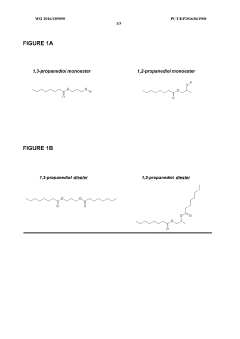
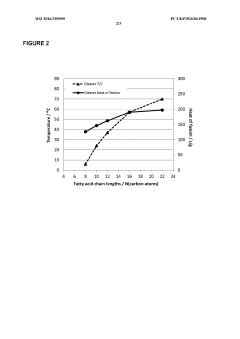
- Development of 1,3-propanediol fatty acid esters as phase change materials, which are fully bio-based, renewable, and biodegradable, offering high latent heat and narrow melting temperature ranges, and can be produced from food-grade raw materials for use in temperature regulation articles and food packaging.
Environmental Regulations for PCM Applications
The regulatory landscape for Phase Change Materials (PCM) applications is rapidly evolving as governments worldwide recognize the critical role these materials play in energy efficiency and climate change mitigation. Current environmental regulations primarily focus on material safety, manufacturing processes, and end-of-life disposal requirements. The European Union's REACH regulation mandates comprehensive chemical safety assessments for PCM components, while similar frameworks in North America and Asia-Pacific regions establish baseline requirements for material registration and hazard communication.
Emerging regulatory trends indicate a shift toward lifecycle-based environmental standards that align with circular economy principles. The EU's Sustainable Products Initiative and the proposed Ecodesign for Sustainable Products Regulation are establishing mandatory lifecycle assessment requirements for energy-related products, directly impacting PCM applications in building materials and thermal management systems. These regulations require manufacturers to demonstrate environmental performance across the entire product lifecycle, from raw material extraction through disposal or recycling.
Regional variations in regulatory approaches create complex compliance challenges for PCM manufacturers operating in global markets. While European regulations emphasize precautionary principles and comprehensive environmental impact assessments, North American frameworks tend to focus on performance-based standards and voluntary certification programs. Asian markets are increasingly adopting hybrid approaches that combine mandatory safety requirements with incentive-based sustainability programs.
The integration of carbon footprint disclosure requirements represents a significant regulatory development affecting PCM sustainability strategies. Jurisdictions implementing carbon border adjustment mechanisms and mandatory climate-related financial disclosures are compelling PCM manufacturers to adopt comprehensive lifecycle analysis methodologies. These requirements extend beyond direct manufacturing emissions to encompass upstream supply chain impacts and downstream application benefits.
Future regulatory developments are expected to establish standardized methodologies for PCM lifecycle assessment, creating uniform evaluation criteria across different applications and markets. Anticipated regulations will likely mandate minimum recycled content requirements, establish take-back programs for end-of-life PCM products, and implement extended producer responsibility frameworks that hold manufacturers accountable for environmental impacts throughout the product lifecycle.
Emerging regulatory trends indicate a shift toward lifecycle-based environmental standards that align with circular economy principles. The EU's Sustainable Products Initiative and the proposed Ecodesign for Sustainable Products Regulation are establishing mandatory lifecycle assessment requirements for energy-related products, directly impacting PCM applications in building materials and thermal management systems. These regulations require manufacturers to demonstrate environmental performance across the entire product lifecycle, from raw material extraction through disposal or recycling.
Regional variations in regulatory approaches create complex compliance challenges for PCM manufacturers operating in global markets. While European regulations emphasize precautionary principles and comprehensive environmental impact assessments, North American frameworks tend to focus on performance-based standards and voluntary certification programs. Asian markets are increasingly adopting hybrid approaches that combine mandatory safety requirements with incentive-based sustainability programs.
The integration of carbon footprint disclosure requirements represents a significant regulatory development affecting PCM sustainability strategies. Jurisdictions implementing carbon border adjustment mechanisms and mandatory climate-related financial disclosures are compelling PCM manufacturers to adopt comprehensive lifecycle analysis methodologies. These requirements extend beyond direct manufacturing emissions to encompass upstream supply chain impacts and downstream application benefits.
Future regulatory developments are expected to establish standardized methodologies for PCM lifecycle assessment, creating uniform evaluation criteria across different applications and markets. Anticipated regulations will likely mandate minimum recycled content requirements, establish take-back programs for end-of-life PCM products, and implement extended producer responsibility frameworks that hold manufacturers accountable for environmental impacts throughout the product lifecycle.
Circular Economy Integration in PCM Design
The integration of circular economy principles into Phase Change Material (PCM) design represents a paradigm shift from traditional linear manufacturing models toward sustainable, regenerative approaches. This integration fundamentally reimagines PCM development by embedding end-of-life considerations into the initial design phase, creating materials that can maintain their functional properties through multiple use cycles while minimizing environmental impact.
Circular economy integration begins with material selection strategies that prioritize renewable, bio-based, or recycled feedstocks for PCM synthesis. Advanced molecular design techniques enable the development of PCMs using agricultural waste derivatives, recycled polymers, and biodegradable encapsulation materials. These approaches reduce dependency on virgin fossil-based resources while maintaining thermal performance characteristics essential for energy storage applications.
Design for disassembly emerges as a critical consideration in PCM system architecture. Modular PCM units with standardized interfaces facilitate component separation and material recovery at end-of-life. Reversible encapsulation methods, such as mechanical containment systems rather than permanent chemical bonding, enable efficient material extraction and purification for subsequent reuse cycles.
The implementation of material passports and digital tracking systems supports circular economy objectives by maintaining comprehensive records of PCM composition, performance history, and degradation patterns. These digital twins enable predictive maintenance strategies and optimize material recovery processes by providing detailed information about remaining useful life and contamination levels.
Regenerative manufacturing processes further enhance circularity by developing in-situ purification and reconditioning techniques for used PCMs. Advanced separation technologies, including selective crystallization and membrane-based purification, restore thermal properties of degraded materials to near-original specifications, extending material lifecycles significantly.
Collaborative ecosystem development facilitates material flow optimization through industrial symbiosis networks where PCM waste from one application becomes feedstock for another. Cross-industry partnerships between building materials, automotive, and electronics sectors create closed-loop material flows that maximize resource utilization efficiency while reducing overall environmental footprint through systematic circular integration approaches.
Circular economy integration begins with material selection strategies that prioritize renewable, bio-based, or recycled feedstocks for PCM synthesis. Advanced molecular design techniques enable the development of PCMs using agricultural waste derivatives, recycled polymers, and biodegradable encapsulation materials. These approaches reduce dependency on virgin fossil-based resources while maintaining thermal performance characteristics essential for energy storage applications.
Design for disassembly emerges as a critical consideration in PCM system architecture. Modular PCM units with standardized interfaces facilitate component separation and material recovery at end-of-life. Reversible encapsulation methods, such as mechanical containment systems rather than permanent chemical bonding, enable efficient material extraction and purification for subsequent reuse cycles.
The implementation of material passports and digital tracking systems supports circular economy objectives by maintaining comprehensive records of PCM composition, performance history, and degradation patterns. These digital twins enable predictive maintenance strategies and optimize material recovery processes by providing detailed information about remaining useful life and contamination levels.
Regenerative manufacturing processes further enhance circularity by developing in-situ purification and reconditioning techniques for used PCMs. Advanced separation technologies, including selective crystallization and membrane-based purification, restore thermal properties of degraded materials to near-original specifications, extending material lifecycles significantly.
Collaborative ecosystem development facilitates material flow optimization through industrial symbiosis networks where PCM waste from one application becomes feedstock for another. Cross-industry partnerships between building materials, automotive, and electronics sectors create closed-loop material flows that maximize resource utilization efficiency while reducing overall environmental footprint through systematic circular integration approaches.
Unlock deeper insights with PatSnap Eureka Quick Research — get a full tech report to explore trends and direct your research. Try now!
Generate Your Research Report Instantly with AI Agent
Supercharge your innovation with PatSnap Eureka AI Agent Platform!