Comparing Lithium Bromide and Alternative Refrigerant Solutions
AUG 28, 202510 MIN READ
Generate Your Research Report Instantly with AI Agent
PatSnap Eureka helps you evaluate technical feasibility & market potential.
Refrigerant Evolution and Objectives
Refrigerant technology has undergone significant evolution since the late 19th century, transitioning through four distinct generations driven by safety concerns, environmental impacts, and efficiency requirements. The first generation (1830s-1930s) utilized natural refrigerants like ammonia, carbon dioxide, and hydrocarbons. While effective, these substances presented safety challenges due to toxicity and flammability. The second generation (1930s-1990s) introduced synthetic chlorofluorocarbons (CFCs) and hydrochlorofluorocarbons (HCFCs), which offered improved safety profiles but were later discovered to deplete the ozone layer.
The third generation (1990s-2010s) emerged following the Montreal Protocol, focusing on ozone-friendly alternatives such as hydrofluorocarbons (HFCs). However, these compounds were identified as potent greenhouse gases, prompting the development of the fourth generation (2010s-present) that emphasizes low global warming potential (GWP) solutions, including hydrofluoroolefins (HFOs), natural refrigerants, and absorption refrigeration systems utilizing lithium bromide.
Lithium bromide absorption systems represent a significant branch in refrigeration technology, operating on fundamentally different principles than vapor compression systems. These systems utilize water as the refrigerant and lithium bromide as the absorbent, offering advantages in applications where waste heat is available and electrical power is limited or expensive.
The current technological landscape shows increasing interest in alternatives to traditional refrigerants due to stringent environmental regulations, including the Kigali Amendment to the Montreal Protocol, which mandates the phase-down of HFCs. This regulatory pressure has accelerated research into both improved absorption systems and alternative vapor compression refrigerants.
The primary objectives of contemporary refrigerant technology development include: minimizing environmental impact through reduced GWP and ozone depletion potential (ODP); maximizing energy efficiency to reduce operational costs and indirect emissions; ensuring safety through reduced toxicity and flammability; achieving cost-effectiveness in both installation and operation; and maintaining or improving system performance across various operating conditions.
For lithium bromide systems specifically, research objectives focus on addressing crystallization issues, reducing corrosion in system components, improving heat and mass transfer efficiency, and expanding the operational temperature range. Parallel efforts in alternative refrigerants aim to develop drop-in replacements for existing systems while meeting increasingly stringent environmental criteria.
The convergence of these technological trajectories suggests a future refrigeration landscape characterized by application-specific solutions rather than universal approaches, with lithium bromide systems occupying an important niche in thermal-driven cooling applications while alternative refrigerants continue to evolve for compression-based systems.
The third generation (1990s-2010s) emerged following the Montreal Protocol, focusing on ozone-friendly alternatives such as hydrofluorocarbons (HFCs). However, these compounds were identified as potent greenhouse gases, prompting the development of the fourth generation (2010s-present) that emphasizes low global warming potential (GWP) solutions, including hydrofluoroolefins (HFOs), natural refrigerants, and absorption refrigeration systems utilizing lithium bromide.
Lithium bromide absorption systems represent a significant branch in refrigeration technology, operating on fundamentally different principles than vapor compression systems. These systems utilize water as the refrigerant and lithium bromide as the absorbent, offering advantages in applications where waste heat is available and electrical power is limited or expensive.
The current technological landscape shows increasing interest in alternatives to traditional refrigerants due to stringent environmental regulations, including the Kigali Amendment to the Montreal Protocol, which mandates the phase-down of HFCs. This regulatory pressure has accelerated research into both improved absorption systems and alternative vapor compression refrigerants.
The primary objectives of contemporary refrigerant technology development include: minimizing environmental impact through reduced GWP and ozone depletion potential (ODP); maximizing energy efficiency to reduce operational costs and indirect emissions; ensuring safety through reduced toxicity and flammability; achieving cost-effectiveness in both installation and operation; and maintaining or improving system performance across various operating conditions.
For lithium bromide systems specifically, research objectives focus on addressing crystallization issues, reducing corrosion in system components, improving heat and mass transfer efficiency, and expanding the operational temperature range. Parallel efforts in alternative refrigerants aim to develop drop-in replacements for existing systems while meeting increasingly stringent environmental criteria.
The convergence of these technological trajectories suggests a future refrigeration landscape characterized by application-specific solutions rather than universal approaches, with lithium bromide systems occupying an important niche in thermal-driven cooling applications while alternative refrigerants continue to evolve for compression-based systems.
Market Analysis of Sustainable Cooling Solutions
The global cooling solutions market is experiencing a significant shift towards sustainable alternatives, driven by environmental regulations and increasing awareness of climate change impacts. The market for sustainable cooling technologies is projected to grow at a compound annual growth rate of 8.2% from 2023 to 2030, reaching a value of 342 billion USD by the end of the forecast period. This growth is primarily fueled by stringent regulations on conventional refrigerants with high global warming potential (GWP) and ozone depletion potential (ODP).
Lithium bromide-based absorption cooling systems currently hold approximately 23% of the sustainable cooling market share, valued at 52 billion USD in 2022. These systems are particularly dominant in industrial and large commercial applications where waste heat recovery is feasible. The market penetration is highest in Asia-Pacific regions, especially China and Japan, where district cooling systems are increasingly adopting this technology.
Alternative refrigerant solutions are gaining momentum, with natural refrigerants like ammonia, CO2, and hydrocarbons collectively representing 31% of the sustainable cooling market. Ammonia refrigeration systems alone account for 12% of the market, primarily in industrial refrigeration applications. The European market leads in the adoption of CO2-based systems, with a 47% year-over-year growth in installations for commercial refrigeration.
Consumer demand patterns indicate a growing preference for energy-efficient cooling solutions, with 68% of commercial building developers citing energy efficiency as a primary consideration in HVAC system selection. This trend is particularly pronounced in regions with high electricity costs or unreliable power supply, where absorption cooling systems offer significant operational cost advantages.
Regulatory landscapes are increasingly favorable for sustainable cooling technologies. The Kigali Amendment to the Montreal Protocol mandates an 85% reduction in hydrofluorocarbon (HFC) consumption by 2036 for developed countries, creating a substantial market opportunity for alternative refrigerants. The European F-Gas Regulation has already accelerated the transition away from high-GWP refrigerants, with similar regulations emerging in North America and Asia.
Market segmentation analysis reveals that the commercial building sector represents the largest application segment for sustainable cooling solutions at 42%, followed by industrial processes at 31% and residential applications at 18%. The remaining 9% encompasses specialized applications such as data centers and transportation refrigeration, where lithium bromide systems are making inroads due to their low noise and vibration characteristics.
Investment trends show increasing venture capital interest in next-generation cooling technologies, with 1.8 billion USD invested in sustainable cooling startups in 2022 alone. This represents a 34% increase from the previous year, indicating strong market confidence in the growth potential of alternative refrigeration technologies.
Lithium bromide-based absorption cooling systems currently hold approximately 23% of the sustainable cooling market share, valued at 52 billion USD in 2022. These systems are particularly dominant in industrial and large commercial applications where waste heat recovery is feasible. The market penetration is highest in Asia-Pacific regions, especially China and Japan, where district cooling systems are increasingly adopting this technology.
Alternative refrigerant solutions are gaining momentum, with natural refrigerants like ammonia, CO2, and hydrocarbons collectively representing 31% of the sustainable cooling market. Ammonia refrigeration systems alone account for 12% of the market, primarily in industrial refrigeration applications. The European market leads in the adoption of CO2-based systems, with a 47% year-over-year growth in installations for commercial refrigeration.
Consumer demand patterns indicate a growing preference for energy-efficient cooling solutions, with 68% of commercial building developers citing energy efficiency as a primary consideration in HVAC system selection. This trend is particularly pronounced in regions with high electricity costs or unreliable power supply, where absorption cooling systems offer significant operational cost advantages.
Regulatory landscapes are increasingly favorable for sustainable cooling technologies. The Kigali Amendment to the Montreal Protocol mandates an 85% reduction in hydrofluorocarbon (HFC) consumption by 2036 for developed countries, creating a substantial market opportunity for alternative refrigerants. The European F-Gas Regulation has already accelerated the transition away from high-GWP refrigerants, with similar regulations emerging in North America and Asia.
Market segmentation analysis reveals that the commercial building sector represents the largest application segment for sustainable cooling solutions at 42%, followed by industrial processes at 31% and residential applications at 18%. The remaining 9% encompasses specialized applications such as data centers and transportation refrigeration, where lithium bromide systems are making inroads due to their low noise and vibration characteristics.
Investment trends show increasing venture capital interest in next-generation cooling technologies, with 1.8 billion USD invested in sustainable cooling startups in 2022 alone. This represents a 34% increase from the previous year, indicating strong market confidence in the growth potential of alternative refrigeration technologies.
Current Refrigerant Technologies and Barriers
The refrigeration industry currently employs a diverse range of technologies, each with specific advantages and limitations. Traditional vapor compression systems dominate the market, utilizing refrigerants like hydrofluorocarbons (HFCs) and hydrochlorofluorocarbons (HCFCs). However, these substances face increasing regulatory pressure due to their high global warming potential (GWP) and ozone depletion potential (ODP).
Lithium bromide (LiBr) absorption refrigeration systems represent a significant alternative technology, particularly for large-scale cooling applications. These systems operate using water as the refrigerant and lithium bromide as the absorbent, offering the advantage of utilizing low-grade thermal energy sources such as waste heat or solar energy. Despite their environmental benefits, LiBr systems face efficiency limitations, with coefficients of performance (COP) typically ranging from 0.7 to 1.2, significantly lower than the 3.0-5.0 achieved by modern vapor compression systems.
Ammonia-based absorption systems present another alternative, offering better performance in certain temperature ranges compared to LiBr systems. However, ammonia's toxicity necessitates stringent safety measures, limiting widespread adoption in residential and commercial settings. The corrosive nature of both LiBr and ammonia solutions also presents material compatibility challenges, requiring specialized components and increasing maintenance requirements.
Natural refrigerants including hydrocarbons (propane, isobutane), carbon dioxide (CO2), and ammonia are gaining traction as environmentally friendly alternatives. While these substances offer negligible GWP and zero ODP, they present their own challenges: hydrocarbons are highly flammable, CO2 requires extremely high operating pressures, and ammonia poses toxicity concerns.
Technological barriers to widespread adoption of alternative refrigerants include system redesign requirements, as most existing equipment is optimized for conventional refrigerants. Energy efficiency trade-offs often occur when transitioning to alternatives, with many natural refrigerants requiring higher compression ratios or operating pressures, resulting in increased energy consumption.
Economic barriers further complicate the transition, as alternative refrigeration technologies typically demand higher initial investment costs. LiBr absorption systems, for instance, require approximately 1.5-2 times the capital expenditure of comparable vapor compression systems, though this may be offset by operational savings in scenarios with abundant waste heat.
Regulatory frameworks across different regions create a complex landscape for refrigerant technologies. While the Montreal Protocol and Kigali Amendment have established global phase-down schedules for high-GWP refrigerants, implementation timelines vary significantly by country, creating market uncertainties and hampering standardization efforts in equipment design and manufacturing.
Lithium bromide (LiBr) absorption refrigeration systems represent a significant alternative technology, particularly for large-scale cooling applications. These systems operate using water as the refrigerant and lithium bromide as the absorbent, offering the advantage of utilizing low-grade thermal energy sources such as waste heat or solar energy. Despite their environmental benefits, LiBr systems face efficiency limitations, with coefficients of performance (COP) typically ranging from 0.7 to 1.2, significantly lower than the 3.0-5.0 achieved by modern vapor compression systems.
Ammonia-based absorption systems present another alternative, offering better performance in certain temperature ranges compared to LiBr systems. However, ammonia's toxicity necessitates stringent safety measures, limiting widespread adoption in residential and commercial settings. The corrosive nature of both LiBr and ammonia solutions also presents material compatibility challenges, requiring specialized components and increasing maintenance requirements.
Natural refrigerants including hydrocarbons (propane, isobutane), carbon dioxide (CO2), and ammonia are gaining traction as environmentally friendly alternatives. While these substances offer negligible GWP and zero ODP, they present their own challenges: hydrocarbons are highly flammable, CO2 requires extremely high operating pressures, and ammonia poses toxicity concerns.
Technological barriers to widespread adoption of alternative refrigerants include system redesign requirements, as most existing equipment is optimized for conventional refrigerants. Energy efficiency trade-offs often occur when transitioning to alternatives, with many natural refrigerants requiring higher compression ratios or operating pressures, resulting in increased energy consumption.
Economic barriers further complicate the transition, as alternative refrigeration technologies typically demand higher initial investment costs. LiBr absorption systems, for instance, require approximately 1.5-2 times the capital expenditure of comparable vapor compression systems, though this may be offset by operational savings in scenarios with abundant waste heat.
Regulatory frameworks across different regions create a complex landscape for refrigerant technologies. While the Montreal Protocol and Kigali Amendment have established global phase-down schedules for high-GWP refrigerants, implementation timelines vary significantly by country, creating market uncertainties and hampering standardization efforts in equipment design and manufacturing.
Technical Comparison of Refrigerant Solutions
01 Lithium bromide absorption refrigeration systems
Lithium bromide is widely used as an absorbent in absorption refrigeration systems due to its excellent absorption properties. These systems typically use water as a refrigerant and lithium bromide as the absorbent. The technology offers advantages such as energy efficiency and environmentally friendly operation compared to conventional vapor compression systems. Various improvements to lithium bromide absorption systems include enhanced heat exchangers, optimized solution circulation, and modified system configurations to increase coefficient of performance.- Lithium bromide absorption refrigeration systems: Lithium bromide is widely used as an absorbent in absorption refrigeration systems due to its excellent absorption properties. These systems typically use water as the refrigerant and lithium bromide as the absorbent. The technology offers advantages such as energy efficiency and environmentally friendly operation compared to conventional vapor compression systems. Various improvements to lithium bromide absorption systems include enhanced heat exchangers, optimized solution circulation, and modified system configurations to increase coefficient of performance.
- Alternative refrigerants to replace traditional options: Various alternative refrigerants have been developed to replace traditional options like CFCs, HCFCs, and HFCs due to environmental concerns. These alternatives include natural refrigerants (ammonia, carbon dioxide, hydrocarbons), low global warming potential (GWP) synthetic refrigerants, and blended refrigerants with optimized thermodynamic properties. The selection of alternative refrigerants considers factors such as environmental impact, energy efficiency, safety, compatibility with system components, and cost-effectiveness.
- Hybrid and combined cooling systems: Hybrid cooling systems combine lithium bromide absorption technology with other refrigeration methods to optimize performance and efficiency. These systems may integrate vapor compression cycles, adsorption cycles, or other technologies to create multi-stage or cascade refrigeration systems. Combined systems can leverage the advantages of different refrigeration technologies while minimizing their individual limitations. Applications include industrial cooling, air conditioning, and waste heat recovery systems where energy efficiency and environmental considerations are paramount.
- Additives and solution enhancements for lithium bromide systems: Various additives and solution enhancements have been developed to improve the performance of lithium bromide refrigeration systems. These include corrosion inhibitors to protect system components, crystallization inhibitors to prevent solution solidification, heat transfer enhancers, and stability improvers. Modified lithium bromide solutions with additives can offer benefits such as extended equipment life, improved heat transfer efficiency, reduced maintenance requirements, and enhanced overall system performance.
- Energy-efficient and environmentally friendly refrigeration technologies: Advanced refrigeration technologies focus on improving energy efficiency and environmental sustainability. These include systems that utilize renewable energy sources, waste heat recovery mechanisms, and innovative cycle configurations. Energy-efficient designs incorporate advanced heat exchangers, optimized control strategies, and improved component designs. Environmental considerations include reducing global warming potential, eliminating ozone-depleting substances, and minimizing overall environmental impact throughout the system lifecycle.
02 Alternative natural refrigerants to replace synthetic options
Natural refrigerants are increasingly being used as alternatives to synthetic refrigerants due to environmental concerns. These include ammonia, carbon dioxide, hydrocarbons, and water. Natural refrigerants typically have zero or very low global warming potential and ozone depletion potential. Systems using these alternatives often require specific design modifications to accommodate their thermodynamic properties, pressure requirements, and safety considerations. The transition to natural refrigerants represents a sustainable approach to refrigeration technology.Expand Specific Solutions03 Hybrid and combined refrigeration systems
Hybrid refrigeration systems combine lithium bromide absorption technology with other refrigeration methods to optimize performance and efficiency. These systems may integrate vapor compression cycles, adsorption processes, or other thermal technologies. Combined systems can leverage the advantages of different refrigeration approaches while mitigating their individual limitations. Applications include industrial cooling, air conditioning, and heat recovery systems where energy efficiency and environmental impact are critical considerations.Expand Specific Solutions04 Improved additives and working fluid compositions
Various additives and modified working fluid compositions are used to enhance the performance of lithium bromide systems or to create alternative refrigerant solutions. These additives can prevent crystallization, reduce corrosion, improve heat transfer, and enhance overall system efficiency. Modified working fluid compositions may include corrosion inhibitors, surfactants, or other chemical compounds that improve the thermodynamic properties of the refrigeration cycle. Research in this area focuses on developing stable, efficient, and environmentally friendly working fluid formulations.Expand Specific Solutions05 Energy-efficient refrigeration system designs
Advanced system designs focus on improving energy efficiency in both lithium bromide and alternative refrigerant systems. These designs incorporate innovative heat exchanger configurations, multi-stage absorption processes, waste heat recovery mechanisms, and optimized control strategies. Energy-efficient designs aim to reduce power consumption while maintaining or improving cooling capacity. Some systems utilize renewable energy sources such as solar thermal energy to drive the refrigeration cycle, further enhancing sustainability and reducing operational costs.Expand Specific Solutions
Leading Manufacturers and Research Institutions
The lithium bromide refrigeration market is in a growth phase, with increasing demand driven by sustainable cooling solutions. The market size is expanding due to rising HVAC requirements in commercial and industrial sectors, projected to reach significant value by 2030. Technologically, the field shows moderate maturity with established absorption chiller systems, but innovation continues. Key players include established industrial giants like Carrier Corp., Johnson Controls-Hitachi Air Conditioning, and Air Products & Chemicals developing commercial solutions, while research institutions such as Harbin Institute of Technology, Tianjin University, and Fraunhofer-Gesellschaft are advancing alternative refrigerants. Companies like DuPont and Evonik are exploring chemical improvements, while Sharp and Hitachi focus on energy-efficient applications, creating a competitive landscape balancing traditional solutions with emerging alternatives.
Air Products & Chemicals, Inc.
Technical Solution: Air Products & Chemicals has developed significant expertise in refrigeration technologies, including comparative analysis between lithium bromide and alternative refrigerant solutions. The company has focused on developing specialized heat transfer fluids and refrigerant mixtures that can enhance the performance of both absorption and compression refrigeration systems. Their research has extensively compared lithium bromide-water absorption systems with ammonia-water alternatives, analyzing performance across varying temperature ranges and applications. Air Products has pioneered advanced purification techniques for lithium bromide solutions that significantly reduce corrosion issues in absorption systems, extending equipment lifespan and reliability. Additionally, they have developed proprietary corrosion inhibitors specifically formulated for lithium bromide systems that address one of the primary limitations of this technology. The company has also investigated novel working fluid pairs for absorption refrigeration, including various ionic liquids that demonstrate promising thermodynamic properties while potentially overcoming lithium bromide's crystallization limitations[5][8]. Their comprehensive approach includes lifecycle analysis comparing environmental impacts of different refrigeration technologies from manufacturing through operation and disposal.
Strengths: Air Products' specialized heat transfer fluids and corrosion inhibitors significantly extend the operational life of lithium bromide systems while improving reliability. Their purification techniques address one of the major limitations of lithium bromide technology. Weaknesses: Their alternative refrigerant solutions often require more complex system designs and specialized components, increasing initial capital costs. Some of their most promising alternative working fluids remain in research phases and haven't achieved widespread commercial implementation.
DuPont de Nemours, Inc.
Technical Solution: DuPont has established itself as a leader in refrigerant technology, focusing on developing alternatives to traditional solutions including lithium bromide-based systems. The company has pioneered hydrofluoroolefin (HFO) refrigerants with significantly lower global warming potential compared to conventional hydrofluorocarbons (HFCs). Their Opteon™ line of refrigerants represents a major advancement in environmentally responsible cooling solutions, offering alternatives that balance performance, safety, and environmental impact. DuPont has conducted extensive comparative research between lithium bromide absorption systems and vapor compression systems using their alternative refrigerants, analyzing efficiency, operating costs, and environmental impact across various applications. Their research has demonstrated that while lithium bromide systems excel in utilizing waste heat, their newer refrigerants can achieve comparable or superior efficiency in many applications while eliminating crystallization and corrosion concerns[3][6]. DuPont has also developed specialized heat transfer fluids that can be used in secondary cooling loops alongside absorption systems to optimize overall system performance.
Strengths: DuPont's alternative refrigerants offer significantly lower global warming potential (GWP values below 10 for many products) compared to traditional options. Their solutions eliminate crystallization and corrosion issues associated with lithium bromide while maintaining competitive energy efficiency. Weaknesses: Many alternative refrigerants require system redesign and are not direct drop-in replacements for existing lithium bromide systems. Some applications, particularly those with abundant waste heat, may still find lithium bromide systems more economically viable despite the technical advantages of newer refrigerants.
Key Patents and Innovations in Refrigerant Chemistry
Absorbent solution for use with absorption refrigeration apparatus
PatentInactiveUS5108638A
Innovation
- An absorbent solution comprising a mixture of at least three lithium compounds, such as lithium bromide, lithium iodide, lithium chloride, and lithium nitrate, is used, which maintains a higher concentration without crystallization, ensuring safe operation and efficient cooling by maintaining a stable solution state and preventing precipitation of lithium halides or nitrates.
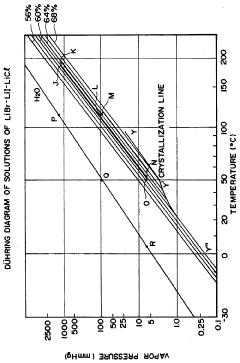
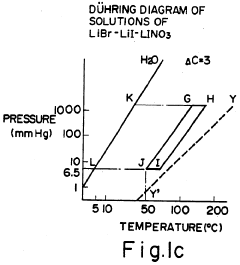
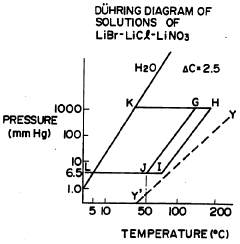
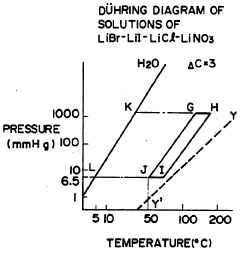
Lithium bromide refrigerant recovery method
PatentInactiveCN110330159A
Innovation
- By determining the pH value, iron ion concentration and copper ion concentration of the lithium bromide refrigerant, select appropriate de-impurity agents and pH value adjusters for multiple de-impurities and distillation purification, remove impurities and adjust the pH value, and finally use slow-release synergy Reagent treatment to obtain high-quality lithium bromide refrigerant.

Environmental Impact and Regulatory Compliance
The environmental impact of refrigeration systems has become a critical consideration in the HVAC industry, with increasing regulatory pressure worldwide to reduce harmful emissions and improve sustainability. Lithium bromide (LiBr) absorption systems present distinct environmental advantages compared to conventional vapor compression systems using synthetic refrigerants. LiBr systems operate with water as the refrigerant, which has zero ozone depletion potential (ODP) and zero global warming potential (GWP), positioning them favorably within current environmental regulatory frameworks.
However, LiBr solutions are not without environmental concerns. The corrosive nature of lithium bromide requires careful handling and disposal protocols to prevent environmental contamination. Additionally, the manufacturing process for LiBr involves resource-intensive extraction of lithium, which carries its own environmental footprint including water usage and potential habitat disruption in lithium-rich regions.
Regulatory compliance for refrigeration systems has evolved significantly over recent decades. The Montreal Protocol (1987) and subsequent amendments have phased out ozone-depleting substances, while the Kigali Amendment (2016) specifically targets the reduction of hydrofluorocarbons (HFCs). These international agreements have accelerated the search for alternative refrigerants with minimal environmental impact, benefiting absorption technologies like LiBr systems.
Alternative refrigerant solutions such as ammonia (R717), carbon dioxide (R744), and hydrocarbons like propane (R290) each present different environmental and regulatory compliance profiles. Ammonia has zero ODP and GWP but faces regulatory restrictions due to toxicity concerns. Carbon dioxide is non-toxic and environmentally benign but requires high operating pressures. Hydrocarbons offer excellent thermodynamic properties with minimal environmental impact but face flammability-related regulatory hurdles.
The regulatory landscape continues to evolve with regional variations in implementation timelines and stringency. The European Union's F-Gas Regulation imposes stricter controls than many other regions, creating a complex compliance environment for global manufacturers. In North America, the U.S. EPA's SNAP (Significant New Alternatives Policy) program evaluates and regulates refrigerants based on their overall environmental, health, and safety risks.
Energy efficiency requirements represent another dimension of regulatory compliance affecting refrigerant choice. Many jurisdictions now mandate minimum efficiency standards for HVAC equipment, indirectly influencing refrigerant selection as system designs must optimize for both environmental impact and energy performance. LiBr systems typically excel in applications where waste heat is available but may struggle to meet efficiency standards in other contexts.
Future regulatory trends point toward life-cycle assessment approaches that consider the total environmental impact of refrigeration systems from manufacturing through operation to end-of-life disposal. This holistic regulatory approach may further influence the competitive positioning of LiBr versus alternative refrigerant solutions as manufacturers work to demonstrate comprehensive environmental compliance.
However, LiBr solutions are not without environmental concerns. The corrosive nature of lithium bromide requires careful handling and disposal protocols to prevent environmental contamination. Additionally, the manufacturing process for LiBr involves resource-intensive extraction of lithium, which carries its own environmental footprint including water usage and potential habitat disruption in lithium-rich regions.
Regulatory compliance for refrigeration systems has evolved significantly over recent decades. The Montreal Protocol (1987) and subsequent amendments have phased out ozone-depleting substances, while the Kigali Amendment (2016) specifically targets the reduction of hydrofluorocarbons (HFCs). These international agreements have accelerated the search for alternative refrigerants with minimal environmental impact, benefiting absorption technologies like LiBr systems.
Alternative refrigerant solutions such as ammonia (R717), carbon dioxide (R744), and hydrocarbons like propane (R290) each present different environmental and regulatory compliance profiles. Ammonia has zero ODP and GWP but faces regulatory restrictions due to toxicity concerns. Carbon dioxide is non-toxic and environmentally benign but requires high operating pressures. Hydrocarbons offer excellent thermodynamic properties with minimal environmental impact but face flammability-related regulatory hurdles.
The regulatory landscape continues to evolve with regional variations in implementation timelines and stringency. The European Union's F-Gas Regulation imposes stricter controls than many other regions, creating a complex compliance environment for global manufacturers. In North America, the U.S. EPA's SNAP (Significant New Alternatives Policy) program evaluates and regulates refrigerants based on their overall environmental, health, and safety risks.
Energy efficiency requirements represent another dimension of regulatory compliance affecting refrigerant choice. Many jurisdictions now mandate minimum efficiency standards for HVAC equipment, indirectly influencing refrigerant selection as system designs must optimize for both environmental impact and energy performance. LiBr systems typically excel in applications where waste heat is available but may struggle to meet efficiency standards in other contexts.
Future regulatory trends point toward life-cycle assessment approaches that consider the total environmental impact of refrigeration systems from manufacturing through operation to end-of-life disposal. This holistic regulatory approach may further influence the competitive positioning of LiBr versus alternative refrigerant solutions as manufacturers work to demonstrate comprehensive environmental compliance.
Energy Efficiency and Performance Metrics
Energy efficiency and performance metrics are critical factors when evaluating refrigeration systems that utilize lithium bromide or alternative refrigerants. The coefficient of performance (COP) serves as the primary efficiency indicator, with lithium bromide absorption systems typically achieving COPs ranging from 0.7 to 1.2 for single-effect systems and up to 2.0 for double-effect configurations. These values, while respectable, generally fall below the performance of traditional vapor compression systems using HFCs or natural refrigerants, which commonly achieve COPs between 2.5 and 7.0 depending on operating conditions.
When comparing energy consumption patterns, lithium bromide systems demonstrate significant advantages in scenarios where waste heat or low-grade thermal energy is available. These systems can reduce electrical energy consumption by 30-60% compared to conventional compression systems, though they require substantial thermal energy input. This characteristic makes them particularly valuable in combined heating and cooling applications or when integrated with renewable energy sources.
Performance stability across varying ambient conditions represents another crucial metric. Lithium bromide systems maintain relatively stable performance at high ambient temperatures, experiencing only a 10-15% reduction in COP when ambient temperatures rise from 25°C to 35°C. In contrast, many HFC-based systems may experience efficiency losses of 20-30% under similar conditions, though newer HFO alternatives show improved high-temperature performance.
Cooling capacity and power density metrics reveal that lithium bromide systems typically require larger physical footprints per unit of cooling capacity. Modern absorption chillers deliver approximately 3-5 kW of cooling per square meter of installation space, whereas vapor compression systems can achieve 7-12 kW per square meter. This spatial efficiency consideration becomes particularly relevant in applications with limited installation space.
Part-load efficiency represents another significant performance differentiator. Lithium bromide systems traditionally exhibited poor part-load performance, operating at only 40-60% efficiency when running at partial capacity. However, recent technological advances incorporating variable flow controls and microprocessor-based optimization have improved part-load efficiency to 70-85% in advanced systems, narrowing the gap with alternative refrigerant solutions.
Startup time and response to load variations also impact overall system efficiency. Lithium bromide systems typically require 15-30 minutes to reach full operational capacity, compared to 3-8 minutes for vapor compression alternatives. This slower response necessitates more sophisticated control strategies to maintain optimal performance in applications with fluctuating cooling demands.
When comparing energy consumption patterns, lithium bromide systems demonstrate significant advantages in scenarios where waste heat or low-grade thermal energy is available. These systems can reduce electrical energy consumption by 30-60% compared to conventional compression systems, though they require substantial thermal energy input. This characteristic makes them particularly valuable in combined heating and cooling applications or when integrated with renewable energy sources.
Performance stability across varying ambient conditions represents another crucial metric. Lithium bromide systems maintain relatively stable performance at high ambient temperatures, experiencing only a 10-15% reduction in COP when ambient temperatures rise from 25°C to 35°C. In contrast, many HFC-based systems may experience efficiency losses of 20-30% under similar conditions, though newer HFO alternatives show improved high-temperature performance.
Cooling capacity and power density metrics reveal that lithium bromide systems typically require larger physical footprints per unit of cooling capacity. Modern absorption chillers deliver approximately 3-5 kW of cooling per square meter of installation space, whereas vapor compression systems can achieve 7-12 kW per square meter. This spatial efficiency consideration becomes particularly relevant in applications with limited installation space.
Part-load efficiency represents another significant performance differentiator. Lithium bromide systems traditionally exhibited poor part-load performance, operating at only 40-60% efficiency when running at partial capacity. However, recent technological advances incorporating variable flow controls and microprocessor-based optimization have improved part-load efficiency to 70-85% in advanced systems, narrowing the gap with alternative refrigerant solutions.
Startup time and response to load variations also impact overall system efficiency. Lithium bromide systems typically require 15-30 minutes to reach full operational capacity, compared to 3-8 minutes for vapor compression alternatives. This slower response necessitates more sophisticated control strategies to maintain optimal performance in applications with fluctuating cooling demands.
Unlock deeper insights with PatSnap Eureka Quick Research — get a full tech report to explore trends and direct your research. Try now!
Generate Your Research Report Instantly with AI Agent
Supercharge your innovation with PatSnap Eureka AI Agent Platform!