Conductive Polymer Composites in Optical Technologies: An Overview
OCT 23, 20259 MIN READ
Generate Your Research Report Instantly with AI Agent
PatSnap Eureka helps you evaluate technical feasibility & market potential.
Conductive Polymer Evolution and Research Objectives
Conductive polymers have undergone significant evolution since their initial discovery in the 1970s when Alan Heeger, Alan MacDiarmid, and Hideki Shirakawa demonstrated that polyacetylene could conduct electricity when doped with iodine. This groundbreaking work, which earned them the Nobel Prize in Chemistry in 2000, marked the beginning of a new era in polymer science and electronics. The subsequent decades witnessed remarkable advancements in synthesis methods, structural design, and property enhancement of conductive polymers.
The 1980s and 1990s saw the development of more stable conductive polymers such as polypyrrole, polyaniline, and polythiophene, which addressed the oxidative stability issues of polyacetylene. These materials demonstrated improved processability and environmental stability, making them more suitable for practical applications. The introduction of soluble derivatives, particularly poly(3,4-ethylenedioxythiophene) (PEDOT) complexed with poly(styrenesulfonate) (PSS), represented a significant milestone in the late 1990s, enabling solution processing techniques.
The early 2000s marked a shift toward conductive polymer composites (CPCs), where conductive polymers were combined with various fillers including carbon nanotubes, graphene, and metallic nanoparticles. This hybridization strategy allowed for tailored electrical, optical, and mechanical properties that could not be achieved with pure conductive polymers. The synergistic effects between the polymer matrix and conductive fillers opened new possibilities for applications in flexible electronics, sensors, and energy storage devices.
In the optical technology domain, conductive polymer composites have demonstrated unique capabilities due to their tunable optoelectronic properties. The ability to modulate refractive index, absorption, and emission characteristics through chemical modification or external stimuli has positioned these materials as promising candidates for next-generation optical devices. The integration of plasmonic nanostructures with conductive polymers has further enhanced their light-matter interactions, enabling applications in surface-enhanced spectroscopy and photonic circuits.
Current research objectives in this field focus on several key areas: enhancing the long-term stability of conductive polymer composites under various environmental conditions; improving the uniformity of filler dispersion to ensure consistent optical and electrical properties; developing scalable manufacturing processes for industrial implementation; and exploring novel composite architectures for specific optical applications such as waveguides, modulators, and photodetectors.
The convergence of nanotechnology, materials science, and photonics has accelerated innovation in conductive polymer composites for optical technologies. Research efforts are increasingly directed toward understanding the fundamental mechanisms governing the interaction between light and these composite materials at the nanoscale, with the ultimate goal of designing materials with precisely controlled optical responses for advanced photonic systems.
The 1980s and 1990s saw the development of more stable conductive polymers such as polypyrrole, polyaniline, and polythiophene, which addressed the oxidative stability issues of polyacetylene. These materials demonstrated improved processability and environmental stability, making them more suitable for practical applications. The introduction of soluble derivatives, particularly poly(3,4-ethylenedioxythiophene) (PEDOT) complexed with poly(styrenesulfonate) (PSS), represented a significant milestone in the late 1990s, enabling solution processing techniques.
The early 2000s marked a shift toward conductive polymer composites (CPCs), where conductive polymers were combined with various fillers including carbon nanotubes, graphene, and metallic nanoparticles. This hybridization strategy allowed for tailored electrical, optical, and mechanical properties that could not be achieved with pure conductive polymers. The synergistic effects between the polymer matrix and conductive fillers opened new possibilities for applications in flexible electronics, sensors, and energy storage devices.
In the optical technology domain, conductive polymer composites have demonstrated unique capabilities due to their tunable optoelectronic properties. The ability to modulate refractive index, absorption, and emission characteristics through chemical modification or external stimuli has positioned these materials as promising candidates for next-generation optical devices. The integration of plasmonic nanostructures with conductive polymers has further enhanced their light-matter interactions, enabling applications in surface-enhanced spectroscopy and photonic circuits.
Current research objectives in this field focus on several key areas: enhancing the long-term stability of conductive polymer composites under various environmental conditions; improving the uniformity of filler dispersion to ensure consistent optical and electrical properties; developing scalable manufacturing processes for industrial implementation; and exploring novel composite architectures for specific optical applications such as waveguides, modulators, and photodetectors.
The convergence of nanotechnology, materials science, and photonics has accelerated innovation in conductive polymer composites for optical technologies. Research efforts are increasingly directed toward understanding the fundamental mechanisms governing the interaction between light and these composite materials at the nanoscale, with the ultimate goal of designing materials with precisely controlled optical responses for advanced photonic systems.
Market Applications for Optical Conductive Polymers
The optical technology market has witnessed significant growth in recent years, with conductive polymer composites (CPCs) playing an increasingly vital role across multiple sectors. The global market for optical conductive polymers reached approximately $3.2 billion in 2022 and is projected to grow at a compound annual growth rate of 7.8% through 2028, driven by expanding applications in telecommunications, consumer electronics, and medical devices.
In the telecommunications industry, optical conductive polymers are revolutionizing fiber optic networks by enabling more efficient signal transmission and reducing signal loss. These materials are crucial components in optical switches, modulators, and waveguides, contributing to the development of faster and more reliable communication infrastructure. The deployment of 5G networks has further accelerated demand, as these advanced materials help overcome bandwidth limitations.
Consumer electronics represents another significant market segment, with optical conductive polymers finding applications in displays, touchscreens, and optoelectronic devices. OLED displays, which utilize conductive polymers for improved light emission and energy efficiency, have seen widespread adoption in smartphones, televisions, and wearable devices. The market for polymer-based display technologies alone is estimated to reach $12.5 billion by 2026.
The automotive sector has emerged as a rapidly growing application area, incorporating optical conductive polymers in advanced driver-assistance systems (ADAS), heads-up displays, and interior lighting solutions. As vehicles become increasingly connected and autonomous, the demand for high-performance optical materials continues to rise, with the automotive optical polymer market expanding at 9.3% annually.
In healthcare and biomedical applications, optical conductive polymers are transforming diagnostic and therapeutic technologies. These materials enable the development of biosensors, medical imaging devices, and drug delivery systems with enhanced sensitivity and functionality. The biomedical optical polymer market segment is expected to double in size over the next five years, driven by innovations in point-of-care diagnostics and minimally invasive surgical tools.
Emerging applications in renewable energy, particularly in organic photovoltaics and smart windows, represent promising growth opportunities. Conductive polymer composites are being integrated into next-generation solar cells to improve light absorption and energy conversion efficiency, addressing the growing demand for sustainable energy solutions.
Regional analysis indicates that North America and Europe currently lead in optical conductive polymer adoption, particularly in high-tech and medical applications. However, the Asia-Pacific region is experiencing the fastest growth rate, fueled by expanding electronics manufacturing capabilities and increasing investments in telecommunications infrastructure across China, South Korea, and Japan.
In the telecommunications industry, optical conductive polymers are revolutionizing fiber optic networks by enabling more efficient signal transmission and reducing signal loss. These materials are crucial components in optical switches, modulators, and waveguides, contributing to the development of faster and more reliable communication infrastructure. The deployment of 5G networks has further accelerated demand, as these advanced materials help overcome bandwidth limitations.
Consumer electronics represents another significant market segment, with optical conductive polymers finding applications in displays, touchscreens, and optoelectronic devices. OLED displays, which utilize conductive polymers for improved light emission and energy efficiency, have seen widespread adoption in smartphones, televisions, and wearable devices. The market for polymer-based display technologies alone is estimated to reach $12.5 billion by 2026.
The automotive sector has emerged as a rapidly growing application area, incorporating optical conductive polymers in advanced driver-assistance systems (ADAS), heads-up displays, and interior lighting solutions. As vehicles become increasingly connected and autonomous, the demand for high-performance optical materials continues to rise, with the automotive optical polymer market expanding at 9.3% annually.
In healthcare and biomedical applications, optical conductive polymers are transforming diagnostic and therapeutic technologies. These materials enable the development of biosensors, medical imaging devices, and drug delivery systems with enhanced sensitivity and functionality. The biomedical optical polymer market segment is expected to double in size over the next five years, driven by innovations in point-of-care diagnostics and minimally invasive surgical tools.
Emerging applications in renewable energy, particularly in organic photovoltaics and smart windows, represent promising growth opportunities. Conductive polymer composites are being integrated into next-generation solar cells to improve light absorption and energy conversion efficiency, addressing the growing demand for sustainable energy solutions.
Regional analysis indicates that North America and Europe currently lead in optical conductive polymer adoption, particularly in high-tech and medical applications. However, the Asia-Pacific region is experiencing the fastest growth rate, fueled by expanding electronics manufacturing capabilities and increasing investments in telecommunications infrastructure across China, South Korea, and Japan.
Technical Barriers and Global Development Status
Despite significant advancements in conductive polymer composites (CPCs) for optical technologies, several technical barriers continue to impede their widespread implementation. The primary challenge remains achieving optimal balance between electrical conductivity and optical transparency, as increasing conductive filler content typically reduces light transmission. This fundamental trade-off limits application potential in transparent electronics and optoelectronic devices.
Processing difficulties present another significant hurdle, with many CPCs exhibiting poor processability due to high viscosity and aggregation tendencies of conductive fillers. These issues lead to inconsistent dispersion and structural defects that compromise both electrical and optical performance. Additionally, long-term stability concerns persist, as many CPCs demonstrate degradation under environmental stressors including UV exposure, humidity, and temperature fluctuations.
Interface engineering between polymer matrices and conductive fillers remains underdeveloped, with weak interfacial bonding leading to performance deterioration over time. The scalable manufacturing of CPCs with consistent properties also presents significant challenges, particularly for applications requiring precise optical and electrical specifications.
Globally, research and development in CPC optical technologies shows distinct regional patterns. North America, particularly the United States, leads in fundamental research and patent generation, with major universities and corporations focusing on novel material development. The European Union emphasizes environmentally sustainable CPC formulations, with strong governmental support for green technologies and circular economy principles in materials science.
Asia-Pacific represents the fastest-growing region for CPC development and implementation, with Japan specializing in high-precision optical applications, South Korea focusing on display technologies, and China rapidly expanding both research capacity and manufacturing capabilities. Chinese institutions have significantly increased their publication output in this field over the past decade, particularly in scalable manufacturing techniques.
Industrial adoption varies considerably across sectors, with consumer electronics showing the highest implementation rates, followed by automotive and aerospace industries. Medical applications remain in earlier development stages due to stringent regulatory requirements. Recent collaborative international research initiatives have emerged to address key technical barriers, including the International Consortium for Optical Polymers and the Global Alliance for Conductive Materials, which coordinate research efforts across geographical boundaries to accelerate technological breakthroughs in this promising field.
Processing difficulties present another significant hurdle, with many CPCs exhibiting poor processability due to high viscosity and aggregation tendencies of conductive fillers. These issues lead to inconsistent dispersion and structural defects that compromise both electrical and optical performance. Additionally, long-term stability concerns persist, as many CPCs demonstrate degradation under environmental stressors including UV exposure, humidity, and temperature fluctuations.
Interface engineering between polymer matrices and conductive fillers remains underdeveloped, with weak interfacial bonding leading to performance deterioration over time. The scalable manufacturing of CPCs with consistent properties also presents significant challenges, particularly for applications requiring precise optical and electrical specifications.
Globally, research and development in CPC optical technologies shows distinct regional patterns. North America, particularly the United States, leads in fundamental research and patent generation, with major universities and corporations focusing on novel material development. The European Union emphasizes environmentally sustainable CPC formulations, with strong governmental support for green technologies and circular economy principles in materials science.
Asia-Pacific represents the fastest-growing region for CPC development and implementation, with Japan specializing in high-precision optical applications, South Korea focusing on display technologies, and China rapidly expanding both research capacity and manufacturing capabilities. Chinese institutions have significantly increased their publication output in this field over the past decade, particularly in scalable manufacturing techniques.
Industrial adoption varies considerably across sectors, with consumer electronics showing the highest implementation rates, followed by automotive and aerospace industries. Medical applications remain in earlier development stages due to stringent regulatory requirements. Recent collaborative international research initiatives have emerged to address key technical barriers, including the International Consortium for Optical Polymers and the Global Alliance for Conductive Materials, which coordinate research efforts across geographical boundaries to accelerate technological breakthroughs in this promising field.
Current Implementation Approaches and Methodologies
01 Carbon-based conductive polymer composites
Carbon-based materials such as carbon nanotubes, graphene, and carbon black are incorporated into polymer matrices to create conductive composites. These fillers provide excellent electrical conductivity while maintaining the mechanical properties of the polymer. The resulting composites can be used in various applications including electromagnetic shielding, antistatic materials, and flexible electronics. The dispersion method and filler concentration significantly affect the conductivity and performance of these composites.- Conductive polymer composites with carbon-based fillers: Carbon-based materials such as carbon nanotubes, graphene, and carbon black can be incorporated into polymer matrices to create conductive composites. These fillers form conductive networks within the polymer, significantly enhancing electrical conductivity while maintaining the processability and mechanical properties of the base polymer. The resulting composites offer tunable conductivity based on filler concentration and dispersion methods, making them suitable for various electronic applications.
- Metal-polymer conductive composites: Metal particles or nanowires, particularly silver, copper, and nickel, can be dispersed within polymer matrices to create highly conductive composites. These metal-polymer composites offer excellent electrical conductivity while maintaining flexibility and processability. The conductivity can be controlled by adjusting the metal content, particle size, and distribution. These materials are particularly valuable in flexible electronics, electromagnetic shielding, and conductive adhesives applications.
- Self-healing conductive polymer composites: Self-healing conductive polymer composites incorporate special additives or structural designs that enable the material to repair damage automatically. These composites can restore electrical conductivity after mechanical damage through various mechanisms including microencapsulated healing agents, reversible chemical bonds, or physical interactions. This self-healing capability significantly enhances the durability and reliability of electronic devices, particularly in applications subject to mechanical stress or repeated deformation.
- Thermally conductive polymer composites: Polymer composites can be engineered to exhibit enhanced thermal conductivity while maintaining electrical insulation properties or combined with electrical conductivity. These materials incorporate fillers such as boron nitride, aluminum oxide, or specialized carbon structures that create pathways for heat dissipation. The resulting composites are valuable for thermal management in electronic devices, LED lighting, and other applications where heat dissipation is critical while maintaining the processing advantages of polymers.
- Stimuli-responsive conductive polymer composites: These advanced composites change their electrical, mechanical, or optical properties in response to external stimuli such as temperature, pH, light, or mechanical force. By incorporating responsive elements into conductive polymer matrices, these materials can function as sensors, actuators, or smart switches. Applications include wearable electronics, soft robotics, and adaptive electronic systems where the material's conductivity can be dynamically controlled based on environmental conditions or user inputs.
02 Metal-polymer conductive composites
Metal particles or nanowires, such as silver, copper, or aluminum, are incorporated into polymer matrices to create highly conductive composites. These metal-polymer composites offer superior electrical conductivity compared to carbon-based composites and can be formulated to maintain flexibility. Applications include printed electronics, conductive adhesives, and electromagnetic interference shielding. The size, shape, and distribution of metal particles within the polymer matrix are critical factors affecting the composite's conductivity and mechanical properties.Expand Specific Solutions03 Intrinsically conductive polymer composites
Intrinsically conductive polymers such as polyaniline, polypyrrole, and PEDOT:PSS are combined with conventional polymers to create composites with tunable electrical properties. These materials offer advantages including processability, flexibility, and the ability to control conductivity through doping. Applications include sensors, actuators, and organic electronics. The synthesis method, doping level, and processing conditions significantly influence the electrical and mechanical properties of these composites.Expand Specific Solutions04 Thermal management conductive polymer composites
Polymer composites formulated with thermally conductive fillers to enhance heat dissipation while maintaining electrical properties. These composites are designed for applications requiring efficient thermal management such as electronic packaging, LED heat sinks, and battery components. The thermal conductivity can be tailored by selecting appropriate fillers, optimizing filler concentration, and controlling the interface between the filler and polymer matrix. These materials often balance thermal conductivity with electrical insulation or conductivity depending on the application requirements.Expand Specific Solutions05 Flexible and stretchable conductive polymer composites
Specialized polymer composites designed to maintain electrical conductivity under mechanical deformation, including bending, stretching, and twisting. These materials typically incorporate conductive fillers in elastomeric matrices using specialized processing techniques to create percolation networks that remain intact during deformation. Applications include wearable electronics, flexible displays, and soft robotics. The composite design often involves creating hierarchical or segregated conductive networks that can accommodate strain without significant loss of electrical performance.Expand Specific Solutions
Industry Leaders and Competitive Landscape
Conductive Polymer Composites in optical technologies are currently in a growth phase, with the market expanding due to increasing applications in displays, sensors, and photovoltaics. The global market is estimated to reach several billion dollars by 2025, driven by demand for flexible electronics and energy-efficient devices. Technologically, the field shows varying maturity levels across applications, with companies demonstrating different specializations. Cambridge Display Technology and LG Chem lead in OLED polymer development, while DuPont and Merck focus on advanced materials formulation. Samsung and E Ink dominate display applications, with research institutions like Naval Research Laboratory and universities contributing fundamental innovations. Emerging players like Nexdot are advancing quantum dot technology, indicating a dynamic competitive landscape with both established corporations and specialized startups.
Cambridge Display Technology Ltd.
Technical Solution: Cambridge Display Technology (CDT) specializes in polymer light-emitting diode (PLED) technology, utilizing conductive polymer composites for display applications. Their proprietary technology involves solution-processable electroluminescent polymers that can be deposited via inkjet printing or spin coating methods. CDT has developed a range of polyfluorene-based conductive polymers with tailored optical properties, enabling efficient blue, green, and red light emission. Their technology incorporates specialized charge transport layers and electrode configurations to optimize device performance. Recent advancements include the development of polymer composites with quantum dots to enhance color gamut and efficiency in display applications. CDT's approach allows for flexible, lightweight displays with reduced manufacturing complexity compared to traditional OLED technologies.
Strengths: Solution-processable manufacturing enables low-cost, large-area fabrication; flexibility in substrate selection allows for bendable displays; lower energy consumption compared to LCD technology. Weaknesses: Shorter operational lifetimes than inorganic alternatives, particularly for blue emitters; efficiency limitations compared to state-of-the-art inorganic LEDs; challenges in achieving consistent performance across large display areas.
DuPont de Nemours, Inc.
Technical Solution: DuPont has developed advanced conductive polymer composites for optical applications through their proprietary PEDOT:PSS (poly(3,4-ethylenedioxythiophene):polystyrene sulfonate) formulations. Their technology focuses on creating transparent conductive films with optimized optical transmission and electrical conductivity for touchscreens, displays, and photovoltaic applications. DuPont's approach involves precise control of polymer morphology and additive incorporation to enhance conductivity while maintaining transparency. Their formulations include specialized dopants and stabilizers that improve environmental stability and processing compatibility. Recent innovations include stretchable conductive polymer composites that maintain optical clarity under mechanical deformation, enabling applications in flexible displays and wearable technology. DuPont has also developed hybrid systems combining conductive polymers with metallic nanostructures to achieve enhanced conductivity while preserving optical transparency.
Strengths: Established manufacturing infrastructure enables consistent quality and scalable production; extensive formulation expertise allows customization for specific applications; strong intellectual property portfolio in conductive polymer technology. Weaknesses: Higher cost compared to some competing transparent conductor technologies; performance limitations in extremely demanding applications requiring both ultra-high transparency and conductivity; potential environmental concerns with some processing additives.
Key Patents and Scientific Breakthroughs
Open-shell conjugated polymer conductors, composites, and compositions
PatentPendingUS20240327568A1
Innovation
- Development of polymer structures with open-shell character and modular narrow band gap conjugated compounds that exhibit high intrinsic conductivity and tunability, using donor-acceptor moieties and π-conjugated spacers to enhance diradical character, allowing for stable conductivity without dopants and efficient SWCNT dispersion.
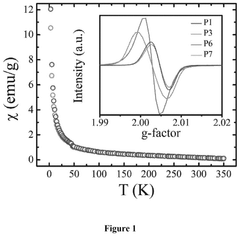
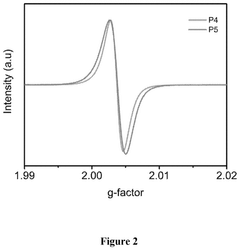
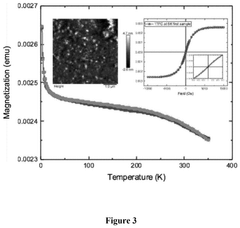
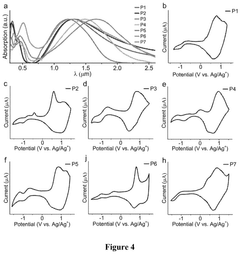
Conductive polymer thin film complex
PatentWO2005024852A1
Innovation
- A conductive polymer thin film composite is developed by blending carbon nanotubes (CNTs) with a conductive polymer and a metal oxide semiconductor film, specifically TiO2, with a CNT concentration of 10 wt% or less, and a thickness of 1Onm-10 μm, to enhance electron emission and sensitivity.


Material Sustainability and Environmental Impact
The environmental impact of conductive polymer composites (CPCs) in optical technologies represents a critical consideration as these materials gain prominence in advanced applications. Traditional optical materials often rely on rare earth elements and precious metals that involve environmentally damaging extraction processes and generate significant waste. In contrast, many conductive polymers can be synthesized from renewable resources and require less energy-intensive manufacturing processes, positioning them as potentially more sustainable alternatives.
Life cycle assessment studies indicate that polymer-based optical components generally have a lower carbon footprint compared to conventional inorganic materials. For instance, polythiophene derivatives and PEDOT:PSS systems demonstrate reduced environmental impact during production while maintaining comparable performance in optical applications. These materials also typically require fewer toxic solvents during processing, further enhancing their environmental credentials.
Recyclability presents both challenges and opportunities for CPC optical materials. While pure polymers are often recyclable, the addition of conductive fillers can complicate end-of-life processing. Recent innovations have focused on developing CPCs with reversible crosslinking mechanisms that facilitate material recovery and reprocessing without significant performance degradation. This approach addresses growing regulatory pressures for extended producer responsibility and circular economy principles.
Biodegradability represents another frontier in sustainable CPC development. Research into naturally derived conductive polymers, such as those based on cellulose or chitosan matrices with conductive functionalization, shows promise for applications where temporary functionality is sufficient. These materials can decompose under controlled conditions while minimizing persistent environmental contamination that characterizes many traditional electronic and optical materials.
Energy efficiency during the operational lifetime of CPC-based optical devices further enhances their sustainability profile. Lower power requirements for polymer-based electro-optical components translate to reduced energy consumption throughout product lifecycles. Additionally, the inherent flexibility and lightweight nature of these materials can reduce transportation-related emissions and enable more efficient installation processes.
Manufacturing scalability with reduced environmental impact represents a significant advantage of CPCs. Solution-processable polymers enable printing and coating techniques that minimize material waste compared to traditional subtractive manufacturing methods. These approaches align with green chemistry principles by reducing solvent usage and enabling ambient temperature processing that decreases energy requirements.
Life cycle assessment studies indicate that polymer-based optical components generally have a lower carbon footprint compared to conventional inorganic materials. For instance, polythiophene derivatives and PEDOT:PSS systems demonstrate reduced environmental impact during production while maintaining comparable performance in optical applications. These materials also typically require fewer toxic solvents during processing, further enhancing their environmental credentials.
Recyclability presents both challenges and opportunities for CPC optical materials. While pure polymers are often recyclable, the addition of conductive fillers can complicate end-of-life processing. Recent innovations have focused on developing CPCs with reversible crosslinking mechanisms that facilitate material recovery and reprocessing without significant performance degradation. This approach addresses growing regulatory pressures for extended producer responsibility and circular economy principles.
Biodegradability represents another frontier in sustainable CPC development. Research into naturally derived conductive polymers, such as those based on cellulose or chitosan matrices with conductive functionalization, shows promise for applications where temporary functionality is sufficient. These materials can decompose under controlled conditions while minimizing persistent environmental contamination that characterizes many traditional electronic and optical materials.
Energy efficiency during the operational lifetime of CPC-based optical devices further enhances their sustainability profile. Lower power requirements for polymer-based electro-optical components translate to reduced energy consumption throughout product lifecycles. Additionally, the inherent flexibility and lightweight nature of these materials can reduce transportation-related emissions and enable more efficient installation processes.
Manufacturing scalability with reduced environmental impact represents a significant advantage of CPCs. Solution-processable polymers enable printing and coating techniques that minimize material waste compared to traditional subtractive manufacturing methods. These approaches align with green chemistry principles by reducing solvent usage and enabling ambient temperature processing that decreases energy requirements.
Manufacturing Scalability Challenges
The scaling of conductive polymer composite (CPC) manufacturing for optical technologies presents significant challenges that must be addressed to enable widespread commercial adoption. Current laboratory-scale production methods often fail to translate effectively to industrial-scale manufacturing, creating a substantial gap between research achievements and market implementation.
Material consistency represents a primary obstacle in scaling CPC production. The optical properties of these composites depend critically on uniform dispersion of conductive fillers within the polymer matrix. As batch sizes increase, maintaining homogeneous dispersion becomes exponentially more difficult, leading to inconsistent optical performance across production runs. This variability is particularly problematic for applications requiring precise optical characteristics.
Process adaptation challenges further complicate manufacturing scalability. Laboratory techniques such as solution casting or spin coating work effectively for small samples but become impractical or economically unfeasible at industrial scales. Alternative methods like extrusion or injection molding can achieve higher throughput but often compromise the delicate nanostructures that enable desired optical properties.
Quality control systems for large-scale CPC production remain underdeveloped. Current inspection methods struggle to detect nanoscale defects or inconsistencies that significantly impact optical performance. The development of inline monitoring technologies capable of real-time assessment represents a critical need for scaling production while maintaining quality standards.
Cost considerations present another significant barrier. Many high-performance CPCs incorporate expensive materials such as noble metal nanoparticles or specialized conductive polymers. Finding cost-effective alternatives or developing more efficient material utilization strategies is essential for commercial viability. Additionally, the energy requirements for processing these materials often increase disproportionately with production volume.
Environmental and regulatory challenges also impact manufacturing scalability. Some solvents and processing aids commonly used in laboratory CPC preparation face restrictions in industrial settings due to environmental regulations. Developing greener processing methods that maintain optical performance while complying with regulations represents an ongoing challenge.
Cross-industry standardization remains insufficient, with limited consensus on testing protocols or performance benchmarks for optically active CPCs. This lack of standardization complicates quality assurance and hinders the establishment of reliable supply chains necessary for scaled manufacturing operations.
Material consistency represents a primary obstacle in scaling CPC production. The optical properties of these composites depend critically on uniform dispersion of conductive fillers within the polymer matrix. As batch sizes increase, maintaining homogeneous dispersion becomes exponentially more difficult, leading to inconsistent optical performance across production runs. This variability is particularly problematic for applications requiring precise optical characteristics.
Process adaptation challenges further complicate manufacturing scalability. Laboratory techniques such as solution casting or spin coating work effectively for small samples but become impractical or economically unfeasible at industrial scales. Alternative methods like extrusion or injection molding can achieve higher throughput but often compromise the delicate nanostructures that enable desired optical properties.
Quality control systems for large-scale CPC production remain underdeveloped. Current inspection methods struggle to detect nanoscale defects or inconsistencies that significantly impact optical performance. The development of inline monitoring technologies capable of real-time assessment represents a critical need for scaling production while maintaining quality standards.
Cost considerations present another significant barrier. Many high-performance CPCs incorporate expensive materials such as noble metal nanoparticles or specialized conductive polymers. Finding cost-effective alternatives or developing more efficient material utilization strategies is essential for commercial viability. Additionally, the energy requirements for processing these materials often increase disproportionately with production volume.
Environmental and regulatory challenges also impact manufacturing scalability. Some solvents and processing aids commonly used in laboratory CPC preparation face restrictions in industrial settings due to environmental regulations. Developing greener processing methods that maintain optical performance while complying with regulations represents an ongoing challenge.
Cross-industry standardization remains insufficient, with limited consensus on testing protocols or performance benchmarks for optically active CPCs. This lack of standardization complicates quality assurance and hinders the establishment of reliable supply chains necessary for scaled manufacturing operations.
Unlock deeper insights with PatSnap Eureka Quick Research — get a full tech report to explore trends and direct your research. Try now!
Generate Your Research Report Instantly with AI Agent
Supercharge your innovation with PatSnap Eureka AI Agent Platform!