

Conformal Coating Vs Barrier Films: Diffusion Resistance Studies
SEP 17, 20259 MIN READ
Generate Your Research Report Instantly with AI Agent
PatSnap Eureka helps you evaluate technical feasibility & market potential.
Conformal Coating and Barrier Films Background and Objectives
Conformal coatings and barrier films represent two distinct yet complementary approaches to protecting electronic components and sensitive materials from environmental factors. The evolution of these protective technologies dates back to the mid-20th century, with significant advancements occurring in parallel with the miniaturization and increased complexity of electronic devices. Initially developed for military and aerospace applications where reliability under extreme conditions was paramount, these technologies have since expanded into consumer electronics, medical devices, and renewable energy systems.
The fundamental principle behind both technologies centers on creating a protective layer that prevents moisture, gases, chemicals, and other contaminants from reaching sensitive components. However, they differ significantly in their application methods, material properties, and performance characteristics. Conformal coatings typically involve applying a thin polymeric film directly onto electronic assemblies, while barrier films are pre-manufactured multilayer structures designed to be integrated during the packaging process.
Recent technological trends indicate a growing emphasis on developing solutions with enhanced diffusion resistance properties, particularly against water vapor and oxygen. This trend is driven by the increasing deployment of electronics in harsh environments and the rising demand for extended product lifespans. Additionally, the emergence of flexible electronics, wearable devices, and IoT applications has created new challenges that conventional protection methods struggle to address effectively.
The global market for protective coatings and films in electronics is projected to reach $15 billion by 2025, with a compound annual growth rate of approximately 6.8%. This growth is fueled by expanding applications in automotive electronics, medical implants, and advanced sensing technologies, all of which require superior protection against environmental factors.
The primary objective of this technical research is to conduct a comprehensive comparative analysis of conformal coatings and barrier films, specifically focusing on their diffusion resistance capabilities. This includes evaluating their effectiveness against various permeants, understanding the fundamental mechanisms governing diffusion processes, and identifying the key factors that influence long-term performance under diverse environmental conditions.
Furthermore, this research aims to establish quantitative benchmarks for comparing different solutions, explore emerging materials and application techniques that promise enhanced protection, and develop predictive models for estimating service life under various exposure scenarios. The ultimate goal is to provide evidence-based guidance for selecting optimal protection strategies based on specific application requirements and environmental challenges.
The fundamental principle behind both technologies centers on creating a protective layer that prevents moisture, gases, chemicals, and other contaminants from reaching sensitive components. However, they differ significantly in their application methods, material properties, and performance characteristics. Conformal coatings typically involve applying a thin polymeric film directly onto electronic assemblies, while barrier films are pre-manufactured multilayer structures designed to be integrated during the packaging process.
Recent technological trends indicate a growing emphasis on developing solutions with enhanced diffusion resistance properties, particularly against water vapor and oxygen. This trend is driven by the increasing deployment of electronics in harsh environments and the rising demand for extended product lifespans. Additionally, the emergence of flexible electronics, wearable devices, and IoT applications has created new challenges that conventional protection methods struggle to address effectively.
The global market for protective coatings and films in electronics is projected to reach $15 billion by 2025, with a compound annual growth rate of approximately 6.8%. This growth is fueled by expanding applications in automotive electronics, medical implants, and advanced sensing technologies, all of which require superior protection against environmental factors.
The primary objective of this technical research is to conduct a comprehensive comparative analysis of conformal coatings and barrier films, specifically focusing on their diffusion resistance capabilities. This includes evaluating their effectiveness against various permeants, understanding the fundamental mechanisms governing diffusion processes, and identifying the key factors that influence long-term performance under diverse environmental conditions.
Furthermore, this research aims to establish quantitative benchmarks for comparing different solutions, explore emerging materials and application techniques that promise enhanced protection, and develop predictive models for estimating service life under various exposure scenarios. The ultimate goal is to provide evidence-based guidance for selecting optimal protection strategies based on specific application requirements and environmental challenges.
Market Demand Analysis for Diffusion Resistant Materials
The global market for diffusion resistant materials has witnessed substantial growth in recent years, driven primarily by the increasing demand for electronic component protection in harsh environments. The market value for conformal coatings reached approximately $2.1 billion in 2022, with projections indicating a compound annual growth rate (CAGR) of 5.8% through 2028. Barrier films, as a complementary technology, represented a market segment of $1.7 billion in 2022, expected to grow at 6.3% CAGR during the same period.
Consumer electronics remains the largest application segment, accounting for 34% of the total market share. This dominance stems from the proliferation of portable devices and wearable technology that require protection against moisture, chemicals, and temperature fluctuations. The automotive electronics sector follows closely at 28%, where the trend toward electric vehicles and advanced driver assistance systems has significantly increased the need for reliable protection solutions against environmental factors.
Industrial electronics and aerospace applications collectively represent 25% of the market, with particular emphasis on long-term reliability under extreme conditions. Medical device manufacturing has emerged as the fastest-growing segment, expanding at 7.2% annually due to stringent regulatory requirements and the increasing integration of electronics in healthcare equipment.
Regional analysis reveals Asia-Pacific as the dominant market, controlling 45% of global demand, primarily due to the concentration of electronics manufacturing in countries like China, South Korea, and Taiwan. North America and Europe account for 27% and 21% respectively, with their markets driven by high-value applications in defense, aerospace, and medical sectors.
Customer requirements are evolving toward thinner protective layers that maintain or improve diffusion resistance properties. Market research indicates that 78% of electronics manufacturers prioritize moisture protection, while 65% consider chemical resistance critical. Thermal stability requirements have increased by 15% over the past three years, reflecting the trend toward higher-density electronic assemblies operating at elevated temperatures.
The market is experiencing a shift toward environmentally friendly solutions, with 62% of new product developments focusing on reducing or eliminating volatile organic compounds (VOCs). This trend is particularly pronounced in Europe, where regulatory pressures have accelerated the adoption of water-based and UV-curable conformal coatings.
Supply chain considerations have gained prominence following recent global disruptions, with 53% of manufacturers now prioritizing domestic or regionally diversified material sourcing strategies to ensure continuity of production.
Consumer electronics remains the largest application segment, accounting for 34% of the total market share. This dominance stems from the proliferation of portable devices and wearable technology that require protection against moisture, chemicals, and temperature fluctuations. The automotive electronics sector follows closely at 28%, where the trend toward electric vehicles and advanced driver assistance systems has significantly increased the need for reliable protection solutions against environmental factors.
Industrial electronics and aerospace applications collectively represent 25% of the market, with particular emphasis on long-term reliability under extreme conditions. Medical device manufacturing has emerged as the fastest-growing segment, expanding at 7.2% annually due to stringent regulatory requirements and the increasing integration of electronics in healthcare equipment.
Regional analysis reveals Asia-Pacific as the dominant market, controlling 45% of global demand, primarily due to the concentration of electronics manufacturing in countries like China, South Korea, and Taiwan. North America and Europe account for 27% and 21% respectively, with their markets driven by high-value applications in defense, aerospace, and medical sectors.
Customer requirements are evolving toward thinner protective layers that maintain or improve diffusion resistance properties. Market research indicates that 78% of electronics manufacturers prioritize moisture protection, while 65% consider chemical resistance critical. Thermal stability requirements have increased by 15% over the past three years, reflecting the trend toward higher-density electronic assemblies operating at elevated temperatures.
The market is experiencing a shift toward environmentally friendly solutions, with 62% of new product developments focusing on reducing or eliminating volatile organic compounds (VOCs). This trend is particularly pronounced in Europe, where regulatory pressures have accelerated the adoption of water-based and UV-curable conformal coatings.
Supply chain considerations have gained prominence following recent global disruptions, with 53% of manufacturers now prioritizing domestic or regionally diversified material sourcing strategies to ensure continuity of production.
Current State and Challenges in Diffusion Resistance Technologies
The global diffusion resistance technology landscape is currently experiencing significant advancements, with conformal coatings and barrier films representing two dominant approaches. Conformal coating technologies have evolved from simple acrylic and silicone-based solutions to sophisticated multi-layer systems incorporating nanomaterials. These advanced coatings demonstrate improved moisture vapor transmission rates (MVTR) of 10^-3 to 10^-4 g/m²/day, representing a substantial improvement over previous generations.
Barrier films, meanwhile, have progressed toward ultra-thin multi-layer structures, with industry leaders achieving oxygen transmission rates (OTR) below 10^-6 cm³/m²/day and water vapor transmission rates below 10^-5 g/m²/day under standard testing conditions. This performance level represents the current gold standard for high-performance applications in electronics and pharmaceutical packaging.
Despite these advancements, significant technical challenges persist across both technologies. For conformal coatings, achieving uniform thickness during application remains problematic, particularly for complex geometries with high aspect ratio features. Edge coverage deficiencies create vulnerability points where moisture and contaminants can penetrate. Additionally, the trade-off between flexibility and barrier performance continues to challenge material scientists, as increasing cross-linking density improves barrier properties but reduces mechanical flexibility.
Barrier films face their own set of challenges, primarily centered around mechanical durability. Micro-crack formation under mechanical stress significantly compromises barrier integrity, with research showing that even 1% strain can increase permeation rates by several orders of magnitude. Manufacturing scalability also remains problematic, as high-performance barrier films typically require specialized deposition equipment operating under vacuum conditions, limiting production throughput and increasing costs.
Geographically, diffusion resistance technology development shows distinct regional specialization. North America leads in conformal coating innovation, particularly for aerospace and defense applications, while East Asian manufacturers dominate high-volume barrier film production for consumer electronics. European research institutions have pioneered fundamental advances in understanding permeation mechanisms and developing standardized testing methodologies.
The integration of these technologies with emerging flexible and stretchable electronics represents perhaps the most significant current challenge. Traditional barrier approaches often fail when subjected to repeated mechanical deformation, with cyclic testing showing performance degradation after as few as 1,000 bending cycles. This limitation has spurred research into self-healing barrier systems and dynamic materials that can maintain integrity under mechanical stress.
Barrier films, meanwhile, have progressed toward ultra-thin multi-layer structures, with industry leaders achieving oxygen transmission rates (OTR) below 10^-6 cm³/m²/day and water vapor transmission rates below 10^-5 g/m²/day under standard testing conditions. This performance level represents the current gold standard for high-performance applications in electronics and pharmaceutical packaging.
Despite these advancements, significant technical challenges persist across both technologies. For conformal coatings, achieving uniform thickness during application remains problematic, particularly for complex geometries with high aspect ratio features. Edge coverage deficiencies create vulnerability points where moisture and contaminants can penetrate. Additionally, the trade-off between flexibility and barrier performance continues to challenge material scientists, as increasing cross-linking density improves barrier properties but reduces mechanical flexibility.
Barrier films face their own set of challenges, primarily centered around mechanical durability. Micro-crack formation under mechanical stress significantly compromises barrier integrity, with research showing that even 1% strain can increase permeation rates by several orders of magnitude. Manufacturing scalability also remains problematic, as high-performance barrier films typically require specialized deposition equipment operating under vacuum conditions, limiting production throughput and increasing costs.
Geographically, diffusion resistance technology development shows distinct regional specialization. North America leads in conformal coating innovation, particularly for aerospace and defense applications, while East Asian manufacturers dominate high-volume barrier film production for consumer electronics. European research institutions have pioneered fundamental advances in understanding permeation mechanisms and developing standardized testing methodologies.
The integration of these technologies with emerging flexible and stretchable electronics represents perhaps the most significant current challenge. Traditional barrier approaches often fail when subjected to repeated mechanical deformation, with cyclic testing showing performance degradation after as few as 1,000 bending cycles. This limitation has spurred research into self-healing barrier systems and dynamic materials that can maintain integrity under mechanical stress.
Comparative Analysis of Current Diffusion Resistance Solutions
01 Polymer-based conformal coatings for electronic components
Polymer-based conformal coatings provide effective barrier protection for electronic components against moisture, chemicals, and environmental contaminants. These coatings form a thin protective layer that conforms to the irregular surfaces of electronic assemblies, enhancing their diffusion resistance. Various polymers such as acrylics, polyurethanes, and silicones can be used, each offering different levels of protection, flexibility, and adhesion properties. These coatings are typically applied through dipping, spraying, or vapor deposition methods to ensure complete coverage and maximum protection.- Multilayer barrier films for enhanced diffusion resistance: Multilayer barrier films can be designed to enhance diffusion resistance by combining different materials with complementary properties. These structures typically include alternating organic and inorganic layers that create a tortuous path for gas and moisture molecules, significantly reducing permeation rates. The inorganic layers provide barrier properties while the organic layers add flexibility and prevent crack propagation. This approach is particularly effective for protecting sensitive electronic components and extending device lifetimes in harsh environments.
- Conformal coating materials for electronic device protection: Specialized conformal coating materials can be applied to electronic components to provide protection against moisture, chemicals, and contaminants. These materials include parylene, silicone, acrylic, urethane, and epoxy-based formulations, each offering different levels of diffusion resistance and other protective properties. The coatings conform to the irregular surfaces of circuit boards and components, creating a uniform protective barrier that prevents corrosion and electrical failures while maintaining electrical insulation properties.
- Deposition techniques for high-performance barrier films: Advanced deposition techniques are crucial for creating high-performance barrier films with superior diffusion resistance. Methods such as atomic layer deposition (ALD), plasma-enhanced chemical vapor deposition (PECVD), and physical vapor deposition (PVD) enable the creation of ultra-thin, defect-free barrier layers. These techniques allow precise control over film thickness, composition, and microstructure, resulting in enhanced barrier properties against oxygen, moisture, and other gases. The deposition parameters can be optimized to achieve the desired combination of barrier performance and other functional properties.
- Nanocomposite materials for improved barrier properties: Nanocomposite materials incorporate nanoscale fillers such as clay platelets, metal oxide nanoparticles, or graphene into polymer matrices to significantly enhance diffusion resistance. These nanofillers create a tortuous path for diffusing molecules, effectively increasing the diffusion path length and reducing permeation rates. The high aspect ratio of nanomaterials like clay platelets or graphene sheets is particularly effective at improving barrier properties even at low loading levels. Additionally, these nanocomposites often maintain good optical transparency and mechanical flexibility while providing superior barrier performance.
- Self-healing and adaptive barrier systems: Innovative self-healing and adaptive barrier systems can maintain diffusion resistance even after mechanical damage or environmental stress. These systems incorporate microcapsules containing healing agents, reversible chemical bonds, or stimuli-responsive materials that can repair defects or adapt to changing conditions. When damage occurs, the healing mechanisms are triggered to restore the barrier integrity, extending the effective lifetime of the protective coating. This approach is particularly valuable for applications in harsh environments where conventional barrier films would degrade over time.
02 Metal-based barrier films for improved diffusion resistance
Metal-based barrier films provide superior diffusion resistance against gases, moisture, and other contaminants. These films typically consist of thin layers of metals such as aluminum, copper, or titanium, which can be deposited using techniques like sputtering, evaporation, or chemical vapor deposition. The dense atomic structure of metals creates an effective barrier against molecular diffusion. Multi-layer metal films or metal-polymer composites can further enhance barrier properties while maintaining flexibility. These barriers are particularly useful in sensitive electronic applications, semiconductor packaging, and optoelectronic devices where hermetic sealing is required.Expand Specific Solutions03 Nanocomposite barrier materials for enhanced protection
Nanocomposite materials incorporate nanoscale particles or structures into barrier films to create tortuous paths for diffusing molecules, significantly enhancing diffusion resistance. These materials typically combine polymers with nanoparticles such as clay, silica, or metal oxides. The nanoparticles increase the path length that diffusing molecules must travel, effectively reducing permeation rates. Nanocomposite barriers can achieve high performance while maintaining flexibility and optical clarity. These advanced materials find applications in electronics protection, food packaging, and medical devices where both barrier properties and other functional characteristics are required.Expand Specific Solutions04 Atomic layer deposition for ultra-thin barrier films
Atomic layer deposition (ALD) enables the creation of ultra-thin, highly conformal barrier films with exceptional diffusion resistance. This technique deposits materials one atomic layer at a time, allowing precise control over film thickness and composition. ALD can create pinhole-free barriers even on complex three-dimensional structures. These ultra-thin films are particularly valuable in microelectronics, where traditional thicker coatings might interfere with device performance. ALD barriers can be composed of various materials including metal oxides, nitrides, and sulfides, each offering specific barrier properties against different permeants.Expand Specific Solutions05 Environmental protection and reliability enhancement techniques
Advanced techniques for enhancing the environmental protection and reliability of conformal coatings and barrier films focus on improving adhesion, durability, and long-term performance. These include surface preparation methods, plasma treatments, and the incorporation of adhesion promoters to ensure strong bonding between the coating and substrate. Multi-layer barrier systems combine different materials to provide protection against various environmental factors. Self-healing capabilities can be incorporated through encapsulated healing agents or reversible chemical bonds. Testing protocols evaluate barrier performance under accelerated aging conditions, thermal cycling, and mechanical stress to ensure long-term diffusion resistance in demanding applications.Expand Specific Solutions
Key Industry Players in Conformal Coating and Barrier Films
The conformal coating versus barrier films market is currently in a growth phase, with increasing demand driven by electronics miniaturization and reliability requirements. The global market for these protective technologies is expanding at approximately 5-7% annually, reaching several billion dollars. Technologically, barrier films are advancing rapidly with companies like Mitsubishi Plastics, Nitto Denko, and Samsung Electronics leading in high-performance multilayer solutions, while Beneq Group and ASM International dominate in atomic layer deposition technologies for conformal coatings. Research institutions such as North Carolina State University and Xi'an Jiaotong University are contributing significant innovations in diffusion resistance methodologies. The competitive landscape shows established chemical companies (Wacker Chemie, LG Chem) competing with specialized coating manufacturers, with increasing focus on environmentally sustainable solutions and enhanced moisture/oxygen barrier properties.
Beneq Group Oy
Technical Solution: Beneq has pioneered atomic layer deposition (ALD) technology for creating ultra-thin, highly conformal barrier films with exceptional diffusion resistance. Their proprietary ALD process enables the deposition of nanoscale barrier layers with precise thickness control (typically 5-200 nm) and perfect conformality even on complex 3D structures with high aspect ratios. Beneq's technology creates pinhole-free, uniform films that provide superior protection against moisture, oxygen, and corrosive gases. Their research demonstrates water vapor transmission rates (WVTR) as low as 10^-6 g/m²/day, orders of magnitude better than conventional conformal coatings[3]. The company has developed specialized ALD equipment and processes for various substrate materials, including temperature-sensitive components, enabling barrier film deposition at temperatures as low as 50°C. Beneq's multi-layer nanolaminate structures, alternating different materials like Al₂O₃ and TiO₂, create tortuous diffusion paths that significantly enhance barrier performance while maintaining flexibility.
Strengths: Exceptional barrier properties with ultra-low permeation rates; perfect conformality even on complex geometries; excellent adhesion to various substrate materials; pinhole-free films even at nanoscale thicknesses. Weaknesses: Slower deposition rates compared to traditional coating methods; higher initial equipment investment; more complex process control requirements; limited scalability for very large components.
ASM International NV
Technical Solution: ASM International has developed advanced thin film deposition technologies for creating high-performance barrier films with exceptional diffusion resistance properties. Their portfolio includes Atomic Layer Deposition (ALD) and Plasma Enhanced Chemical Vapor Deposition (PECVD) systems capable of producing ultra-thin (5-100 nm), highly conformal barrier layers. ASM's technology enables the creation of multi-layer barrier stacks with precisely controlled interfaces between inorganic layers (such as SiNx, Al₂O₃, and SiO₂) and organic buffer layers. Their research demonstrates that these engineered barrier structures can achieve water vapor transmission rates (WVTR) below 10^-5 g/m²/day even after extensive environmental stress testing[4]. ASM's barrier film technology incorporates specialized surface treatments and interface engineering to enhance adhesion and prevent delamination under thermal and mechanical stress. Their systems allow for low-temperature processing (as low as 80°C), making them compatible with temperature-sensitive substrates while still achieving excellent barrier properties against oxygen, moisture, and ionic contaminants.
Strengths: Exceptional thickness uniformity and conformality; ability to create complex multi-layer barrier structures; compatibility with temperature-sensitive substrates; excellent long-term reliability under environmental stress. Weaknesses: Higher capital equipment costs compared to conventional coating methods; more complex process control requirements; slower throughput for thicker barrier stacks; potential challenges with scaling to very large substrate sizes.
Critical Patents and Research in Diffusion Barrier Technologies
Barrier film and manufacturing method therefor
PatentWO2017018707A1
Innovation
- A barrier film structure comprising an undercoating layer, an inorganic layer, and an overcoating layer with a combination of thermoplastic and thermosetting resins, which enhances adhesion and prevents cracking, maintaining barrier performance and brightness stability.


Coatings for barrier films and methods of making and using the same
PatentInactiveUS10784455B2
Innovation
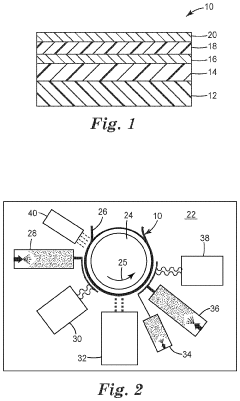
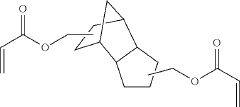
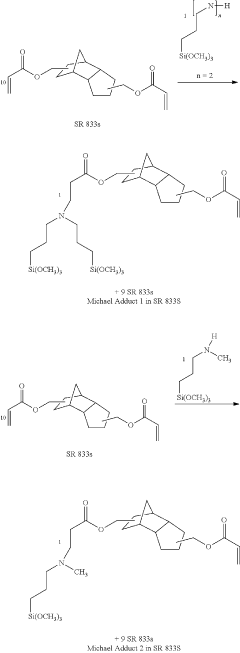
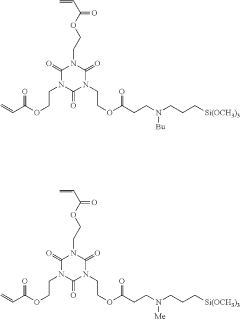
- A barrier film composition comprising a substrate with a base polymer layer, an oxide layer, and a protective polymer layer formed from a reaction product of a (meth)acryloyl compound and a (meth)acryl-silane compound derived from a Michael reaction, which improves moisture resistance and adhesion without requiring a silicon sub-oxide tie layer.
Environmental Impact and Sustainability Considerations
The environmental impact of electronic protection methods has become increasingly significant as industries face stricter regulations and growing consumer demand for sustainable products. When comparing conformal coatings and barrier films, their environmental footprints differ substantially throughout their lifecycle stages.
Conformal coatings, particularly solvent-based varieties, often contain volatile organic compounds (VOCs) that contribute to air pollution and pose potential health risks during application. Water-based alternatives have emerged as more environmentally friendly options, reducing VOC emissions by up to 95% compared to traditional formulations. However, these alternatives may require more energy-intensive curing processes, creating a sustainability trade-off that manufacturers must carefully evaluate.
Barrier films present different environmental challenges. While they typically involve fewer hazardous chemicals during application, their production often requires energy-intensive manufacturing processes. The multi-layer structure of high-performance barrier films frequently incorporates materials that are difficult to separate for recycling, complicating end-of-life management. Recent innovations in mono-material barrier films show promise for improving recyclability, with research indicating up to 60% better recovery rates.
End-of-life considerations reveal significant differences between these protection methods. Conformal coatings can often be removed through chemical or mechanical processes, potentially allowing for component reuse. Conversely, barrier films typically remain permanently attached to substrates, potentially hindering the recyclability of the entire assembly. This distinction becomes particularly important as electronic waste volumes continue to grow globally at approximately 3-5% annually.
Water usage represents another important environmental factor. Conformal coating processes, especially those requiring extensive cleaning steps, can consume substantial water resources. Studies indicate that advanced barrier film application techniques may reduce water consumption by up to 40% compared to traditional coating methods, though this advantage varies significantly based on specific manufacturing protocols.
Carbon footprint assessments comparing these technologies reveal complex results dependent on specific formulations and application methods. Life cycle analyses suggest that barrier films may offer lower greenhouse gas emissions during production, while conformal coatings might present advantages during application and use phases. The overall environmental impact ultimately depends on factors including product lifespan, operating conditions, and end-of-life handling procedures.
As sustainability becomes increasingly central to product development strategies, manufacturers are exploring bio-based alternatives for both protection methods. Early research indicates promising diffusion resistance properties from coatings derived from renewable resources, potentially offering environmental benefits without compromising performance in less demanding applications.
Conformal coatings, particularly solvent-based varieties, often contain volatile organic compounds (VOCs) that contribute to air pollution and pose potential health risks during application. Water-based alternatives have emerged as more environmentally friendly options, reducing VOC emissions by up to 95% compared to traditional formulations. However, these alternatives may require more energy-intensive curing processes, creating a sustainability trade-off that manufacturers must carefully evaluate.
Barrier films present different environmental challenges. While they typically involve fewer hazardous chemicals during application, their production often requires energy-intensive manufacturing processes. The multi-layer structure of high-performance barrier films frequently incorporates materials that are difficult to separate for recycling, complicating end-of-life management. Recent innovations in mono-material barrier films show promise for improving recyclability, with research indicating up to 60% better recovery rates.
End-of-life considerations reveal significant differences between these protection methods. Conformal coatings can often be removed through chemical or mechanical processes, potentially allowing for component reuse. Conversely, barrier films typically remain permanently attached to substrates, potentially hindering the recyclability of the entire assembly. This distinction becomes particularly important as electronic waste volumes continue to grow globally at approximately 3-5% annually.
Water usage represents another important environmental factor. Conformal coating processes, especially those requiring extensive cleaning steps, can consume substantial water resources. Studies indicate that advanced barrier film application techniques may reduce water consumption by up to 40% compared to traditional coating methods, though this advantage varies significantly based on specific manufacturing protocols.
Carbon footprint assessments comparing these technologies reveal complex results dependent on specific formulations and application methods. Life cycle analyses suggest that barrier films may offer lower greenhouse gas emissions during production, while conformal coatings might present advantages during application and use phases. The overall environmental impact ultimately depends on factors including product lifespan, operating conditions, and end-of-life handling procedures.
As sustainability becomes increasingly central to product development strategies, manufacturers are exploring bio-based alternatives for both protection methods. Early research indicates promising diffusion resistance properties from coatings derived from renewable resources, potentially offering environmental benefits without compromising performance in less demanding applications.
Cost-Benefit Analysis of Implementation Strategies
When evaluating implementation strategies for conformal coating versus barrier films in diffusion resistance applications, cost-benefit analysis reveals significant economic considerations that influence technology adoption decisions.
Initial investment costs differ substantially between these technologies. Conformal coating typically requires lower capital expenditure for equipment setup, with spray or dip coating systems ranging from $50,000 to $200,000 depending on automation levels. Barrier film implementation, conversely, demands higher initial investment, often between $300,000 to $1 million for vacuum deposition systems and associated handling equipment.
Operational expenses present another critical dimension. Conformal coating processes generally consume more materials per unit area protected, with material costs ranging from $0.05 to $0.20 per square inch. Labor costs are also higher due to masking requirements and quality control procedures. Barrier films, while requiring higher-grade materials ($0.15 to $0.40 per square inch), offer more efficient material utilization and reduced labor costs through automated roll-to-roll processing.
Long-term performance metrics significantly impact total cost of ownership. Field data indicates conformal coatings typically require maintenance or reapplication every 3-5 years in standard environments, while high-performance barrier films can maintain effectiveness for 7-10 years. This extended service life translates to reduced maintenance interventions and associated downtime costs, particularly valuable in applications where accessibility is limited or disruption is costly.
Scalability economics favor different approaches depending on production volume. For low to medium production runs (under 10,000 units annually), conformal coating presents lower overall costs due to minimal tooling requirements. For high-volume manufacturing, barrier films demonstrate superior economies of scale, with per-unit costs decreasing significantly as production volumes increase.
Environmental compliance costs are increasingly significant. Traditional solvent-based conformal coatings incur higher regulatory compliance costs ($15,000-$50,000 annually) compared to environmentally friendly barrier films. Additionally, waste disposal costs for conformal coating processes typically exceed those of barrier film implementation by 30-40%.
Risk mitigation value must also be quantified. Barrier films demonstrate 15-25% lower failure rates in high-humidity environments, translating to reduced warranty claims and field service costs. This reliability premium justifies higher implementation costs in mission-critical applications where failure consequences are severe.
Initial investment costs differ substantially between these technologies. Conformal coating typically requires lower capital expenditure for equipment setup, with spray or dip coating systems ranging from $50,000 to $200,000 depending on automation levels. Barrier film implementation, conversely, demands higher initial investment, often between $300,000 to $1 million for vacuum deposition systems and associated handling equipment.
Operational expenses present another critical dimension. Conformal coating processes generally consume more materials per unit area protected, with material costs ranging from $0.05 to $0.20 per square inch. Labor costs are also higher due to masking requirements and quality control procedures. Barrier films, while requiring higher-grade materials ($0.15 to $0.40 per square inch), offer more efficient material utilization and reduced labor costs through automated roll-to-roll processing.
Long-term performance metrics significantly impact total cost of ownership. Field data indicates conformal coatings typically require maintenance or reapplication every 3-5 years in standard environments, while high-performance barrier films can maintain effectiveness for 7-10 years. This extended service life translates to reduced maintenance interventions and associated downtime costs, particularly valuable in applications where accessibility is limited or disruption is costly.
Scalability economics favor different approaches depending on production volume. For low to medium production runs (under 10,000 units annually), conformal coating presents lower overall costs due to minimal tooling requirements. For high-volume manufacturing, barrier films demonstrate superior economies of scale, with per-unit costs decreasing significantly as production volumes increase.
Environmental compliance costs are increasingly significant. Traditional solvent-based conformal coatings incur higher regulatory compliance costs ($15,000-$50,000 annually) compared to environmentally friendly barrier films. Additionally, waste disposal costs for conformal coating processes typically exceed those of barrier film implementation by 30-40%.
Risk mitigation value must also be quantified. Barrier films demonstrate 15-25% lower failure rates in high-humidity environments, translating to reduced warranty claims and field service costs. This reliability premium justifies higher implementation costs in mission-critical applications where failure consequences are severe.
Unlock deeper insights with PatSnap Eureka Quick Research — get a full tech report to explore trends and direct your research. Try now!
Generate Your Research Report Instantly with AI Agent
Supercharge your innovation with PatSnap Eureka AI Agent Platform!