

Testing Conformal Coating Efficacy in Reducing Oxidation
SEP 17, 20259 MIN READ
Generate Your Research Report Instantly with AI Agent
PatSnap Eureka helps you evaluate technical feasibility & market potential.
Conformal Coating Technology Background and Objectives
Conformal coating technology has evolved significantly over the past five decades, transitioning from simple protective layers to sophisticated engineered materials designed to shield electronic components from environmental stressors. Originally developed for military and aerospace applications in the 1970s, these coatings have become increasingly critical in modern electronics manufacturing as device miniaturization and deployment in harsh environments have accelerated. The fundamental purpose of conformal coatings remains consistent: to provide a protective barrier against moisture, dust, chemicals, and temperature fluctuations that can lead to oxidation and corrosion of sensitive electronic components.
The evolution of conformal coating materials has seen progression from basic acrylic and epoxy formulations to advanced silicone, polyurethane, and parylene variants, each offering specific performance characteristics suited to different application environments. Recent technological advancements have focused on developing nano-enhanced coatings that provide superior protection while maintaining minimal thickness, addressing the increasing density of modern circuit boards.
Testing methodologies for conformal coating efficacy, particularly regarding oxidation prevention, have historically relied on accelerated aging tests and environmental exposure chambers. However, these approaches often fail to accurately simulate real-world conditions or provide quantifiable metrics for long-term performance prediction. The correlation between laboratory testing results and field performance remains a significant challenge in the industry.
The primary objective of current research in conformal coating testing is to develop standardized, reproducible methodologies that can accurately predict a coating's effectiveness in preventing oxidation across various environmental conditions and operational lifespans. This includes establishing clear metrics for success, identifying appropriate test parameters that correlate with field performance, and creating testing protocols that can be widely adopted across the industry.
Secondary objectives include understanding the relationship between coating thickness, composition, and application method on oxidation prevention performance, as well as developing non-destructive testing methods that can be implemented during manufacturing quality control processes. Additionally, there is growing interest in environmentally friendly coating formulations that maintain or exceed the protective capabilities of traditional solutions while reducing VOC emissions and environmental impact.
The technological trajectory suggests movement toward multi-functional coatings that not only prevent oxidation but also provide additional benefits such as thermal management, EMI shielding, and self-healing capabilities. These advanced materials represent the next frontier in conformal coating technology, potentially revolutionizing electronic device reliability in extreme environments.
The evolution of conformal coating materials has seen progression from basic acrylic and epoxy formulations to advanced silicone, polyurethane, and parylene variants, each offering specific performance characteristics suited to different application environments. Recent technological advancements have focused on developing nano-enhanced coatings that provide superior protection while maintaining minimal thickness, addressing the increasing density of modern circuit boards.
Testing methodologies for conformal coating efficacy, particularly regarding oxidation prevention, have historically relied on accelerated aging tests and environmental exposure chambers. However, these approaches often fail to accurately simulate real-world conditions or provide quantifiable metrics for long-term performance prediction. The correlation between laboratory testing results and field performance remains a significant challenge in the industry.
The primary objective of current research in conformal coating testing is to develop standardized, reproducible methodologies that can accurately predict a coating's effectiveness in preventing oxidation across various environmental conditions and operational lifespans. This includes establishing clear metrics for success, identifying appropriate test parameters that correlate with field performance, and creating testing protocols that can be widely adopted across the industry.
Secondary objectives include understanding the relationship between coating thickness, composition, and application method on oxidation prevention performance, as well as developing non-destructive testing methods that can be implemented during manufacturing quality control processes. Additionally, there is growing interest in environmentally friendly coating formulations that maintain or exceed the protective capabilities of traditional solutions while reducing VOC emissions and environmental impact.
The technological trajectory suggests movement toward multi-functional coatings that not only prevent oxidation but also provide additional benefits such as thermal management, EMI shielding, and self-healing capabilities. These advanced materials represent the next frontier in conformal coating technology, potentially revolutionizing electronic device reliability in extreme environments.
Market Demand Analysis for Anti-Oxidation Solutions
The global market for anti-oxidation solutions has experienced significant growth in recent years, driven primarily by the increasing complexity and miniaturization of electronic components across various industries. The conformal coating segment specifically has seen a compound annual growth rate of approximately 5.8% between 2018 and 2022, with projections indicating continued expansion through 2028.
Electronic manufacturing represents the largest market segment demanding effective anti-oxidation solutions, particularly in regions with high humidity or harsh environmental conditions. The automotive electronics sector has emerged as a particularly strong growth area, with demand increasing by nearly 7% annually as vehicles incorporate more sophisticated electronic systems requiring protection from oxidative damage.
Consumer electronics manufacturers have also intensified their focus on product longevity, creating substantial demand for advanced conformal coating technologies that can extend device lifespans without adding significant production costs or complexity. Market research indicates that consumers are increasingly willing to pay premium prices for devices with demonstrated durability against environmental factors.
The aerospace and defense sectors continue to represent high-value market segments, where the consequences of oxidation-related failures can be catastrophic. These industries demand coating solutions with exceptional performance characteristics and comprehensive testing protocols to verify efficacy under extreme conditions.
Regional analysis reveals that Asia-Pacific dominates the market for anti-oxidation solutions, accounting for over 40% of global demand, followed by North America and Europe. This distribution closely mirrors global electronics manufacturing hubs, with particular concentration in China, Taiwan, South Korea, and Japan.
Market surveys indicate that end-users prioritize several key performance attributes when selecting anti-oxidation solutions: long-term protection efficacy, ease of application in production environments, environmental compliance, and cost-effectiveness. The ability to quantitatively demonstrate protection levels through standardized testing has become increasingly important as manufacturers seek to validate performance claims.
Emerging market opportunities exist in medical electronics, renewable energy systems, and IoT devices deployed in challenging environments. These applications often require specialized coating formulations that can maintain integrity while meeting industry-specific regulatory requirements.
The market landscape shows growing preference for water-based and environmentally friendly coating formulations as global regulations increasingly restrict the use of volatile organic compounds and other hazardous substances in manufacturing processes. This regulatory trend is reshaping product development priorities across the industry.
Electronic manufacturing represents the largest market segment demanding effective anti-oxidation solutions, particularly in regions with high humidity or harsh environmental conditions. The automotive electronics sector has emerged as a particularly strong growth area, with demand increasing by nearly 7% annually as vehicles incorporate more sophisticated electronic systems requiring protection from oxidative damage.
Consumer electronics manufacturers have also intensified their focus on product longevity, creating substantial demand for advanced conformal coating technologies that can extend device lifespans without adding significant production costs or complexity. Market research indicates that consumers are increasingly willing to pay premium prices for devices with demonstrated durability against environmental factors.
The aerospace and defense sectors continue to represent high-value market segments, where the consequences of oxidation-related failures can be catastrophic. These industries demand coating solutions with exceptional performance characteristics and comprehensive testing protocols to verify efficacy under extreme conditions.
Regional analysis reveals that Asia-Pacific dominates the market for anti-oxidation solutions, accounting for over 40% of global demand, followed by North America and Europe. This distribution closely mirrors global electronics manufacturing hubs, with particular concentration in China, Taiwan, South Korea, and Japan.
Market surveys indicate that end-users prioritize several key performance attributes when selecting anti-oxidation solutions: long-term protection efficacy, ease of application in production environments, environmental compliance, and cost-effectiveness. The ability to quantitatively demonstrate protection levels through standardized testing has become increasingly important as manufacturers seek to validate performance claims.
Emerging market opportunities exist in medical electronics, renewable energy systems, and IoT devices deployed in challenging environments. These applications often require specialized coating formulations that can maintain integrity while meeting industry-specific regulatory requirements.
The market landscape shows growing preference for water-based and environmentally friendly coating formulations as global regulations increasingly restrict the use of volatile organic compounds and other hazardous substances in manufacturing processes. This regulatory trend is reshaping product development priorities across the industry.
Current Conformal Coating Technologies and Challenges
Conformal coating technologies have evolved significantly over the past decades, with several distinct types now dominating the market. Acrylic coatings remain popular due to their ease of application and rework capabilities, offering good moisture resistance while being cost-effective. Silicone coatings excel in extreme temperature environments (-65°C to 200°C) and provide superior flexibility, though at a higher cost. Polyurethane coatings deliver excellent chemical and moisture resistance with good dielectric properties, making them suitable for harsh environments despite their challenging rework process.
Epoxy coatings offer exceptional chemical and abrasion resistance with strong adhesion properties, though they present significant rework difficulties. The newer parylene coatings, applied through vapor deposition polymerization, provide uniform, pinhole-free coverage with excellent barrier properties, but require specialized equipment and carry higher processing costs.
Despite these advancements, the industry faces several critical challenges in testing conformal coating efficacy against oxidation. Standardization issues persist, with varying test methodologies across different industries making comparative analysis difficult. The ASTM B117 salt spray test, while common, doesn't always correlate with real-world performance in preventing oxidation under diverse environmental conditions.
Accelerated aging tests present another challenge, as they often fail to accurately simulate the complex combination of environmental stressors that electronic components encounter over their operational lifetime. This creates uncertainty in predicting long-term oxidation protection performance, particularly for newer coating formulations.
Thickness measurement and uniformity verification remain technically challenging, especially for complex geometries and high-density assemblies. Non-destructive testing methods are limited in their ability to detect microscopic defects that could lead to oxidation pathways.
The industry also struggles with quantifying the relationship between coating parameters and oxidation resistance. Variables such as thickness, adhesion quality, and cure conditions significantly impact performance, but their interdependencies are not fully characterized, making optimization difficult.
Environmental compliance presents additional challenges as regulations increasingly restrict traditional coating chemicals. Manufacturers must reformulate products to meet VOC restrictions and eliminate substances of concern while maintaining oxidation protection performance. This regulatory landscape varies globally, complicating supply chain management for international manufacturers.
Emerging miniaturization trends in electronics create new challenges, as ultra-thin coatings must provide adequate oxidation protection without interfering with thermal management or signal integrity in densely packed assemblies.
Epoxy coatings offer exceptional chemical and abrasion resistance with strong adhesion properties, though they present significant rework difficulties. The newer parylene coatings, applied through vapor deposition polymerization, provide uniform, pinhole-free coverage with excellent barrier properties, but require specialized equipment and carry higher processing costs.
Despite these advancements, the industry faces several critical challenges in testing conformal coating efficacy against oxidation. Standardization issues persist, with varying test methodologies across different industries making comparative analysis difficult. The ASTM B117 salt spray test, while common, doesn't always correlate with real-world performance in preventing oxidation under diverse environmental conditions.
Accelerated aging tests present another challenge, as they often fail to accurately simulate the complex combination of environmental stressors that electronic components encounter over their operational lifetime. This creates uncertainty in predicting long-term oxidation protection performance, particularly for newer coating formulations.
Thickness measurement and uniformity verification remain technically challenging, especially for complex geometries and high-density assemblies. Non-destructive testing methods are limited in their ability to detect microscopic defects that could lead to oxidation pathways.
The industry also struggles with quantifying the relationship between coating parameters and oxidation resistance. Variables such as thickness, adhesion quality, and cure conditions significantly impact performance, but their interdependencies are not fully characterized, making optimization difficult.
Environmental compliance presents additional challenges as regulations increasingly restrict traditional coating chemicals. Manufacturers must reformulate products to meet VOC restrictions and eliminate substances of concern while maintaining oxidation protection performance. This regulatory landscape varies globally, complicating supply chain management for international manufacturers.
Emerging miniaturization trends in electronics create new challenges, as ultra-thin coatings must provide adequate oxidation protection without interfering with thermal management or signal integrity in densely packed assemblies.
Current Testing Methodologies for Conformal Coating Efficacy
01 Anti-oxidation conformal coating materials
Various materials can be incorporated into conformal coatings to provide anti-oxidation properties. These include specialized polymers, metal oxides, and composite materials that create a barrier against oxygen and other oxidizing agents. These materials form a protective layer that prevents oxidation of the underlying components, particularly in electronic applications, extending the lifespan of the coated parts and maintaining their functionality in harsh environments.- Anti-oxidation conformal coating compositions: Specific conformal coating compositions can be formulated with anti-oxidation properties to protect electronic components from oxidative damage. These compositions typically include polymeric materials combined with anti-oxidant additives that create a protective barrier against oxygen and other oxidizing agents. The coatings form a thin, uniform layer that conforms to the topography of the substrate while providing effective oxidation resistance for extended periods.
- Application methods for oxidation-resistant conformal coatings: Various application techniques can be employed to ensure optimal coverage and oxidation protection when applying conformal coatings. These methods include spray coating, dip coating, brush application, and automated dispensing systems. The application process significantly impacts the coating's effectiveness in preventing oxidation, with factors such as thickness uniformity, curing conditions, and substrate preparation playing crucial roles in maximizing oxidation resistance performance.
- Conformal coatings with corrosion inhibitors for electronic protection: Specialized conformal coatings incorporate corrosion inhibitors that actively prevent oxidation and corrosion of electronic components and circuit boards. These formulations typically contain compounds that neutralize corrosive agents or form protective complexes with metal surfaces. The inhibitors work synergistically with the base polymer to provide enhanced protection against humidity, salt, and other environmental factors that accelerate oxidation processes in electronic assemblies.
- Thermal management coatings with oxidation resistance: Advanced conformal coatings combine thermal management properties with oxidation resistance to protect heat-generating electronic components. These coatings incorporate thermally conductive fillers while maintaining excellent barrier properties against oxidation. The dual functionality allows for efficient heat dissipation while simultaneously protecting sensitive components from oxidative degradation, extending the operational life of electronic devices in demanding environments.
- Environmentally friendly conformal coatings for oxidation protection: Eco-friendly conformal coating formulations provide effective oxidation protection while reducing environmental impact. These coatings typically eliminate or reduce hazardous components such as volatile organic compounds (VOCs) and halogenated materials while maintaining excellent oxidation resistance. Water-based systems, UV-curable formulations, and bio-based polymers are increasingly being developed to meet stringent environmental regulations without compromising the protective qualities needed to prevent oxidation in electronic applications.
02 Application methods for oxidation-resistant coatings
Various application techniques can be employed to apply conformal coatings that reduce oxidation. These methods include spray coating, dip coating, vapor deposition, and automated selective coating processes. The application method significantly impacts the coating's effectiveness in preventing oxidation by ensuring uniform coverage, proper adhesion, and optimal thickness. Advanced application techniques can target specific areas requiring enhanced oxidation protection while maintaining the electrical and thermal properties of the components.Expand Specific Solutions03 Electronic component protection from oxidation
Conformal coatings specifically designed for electronic components provide protection against oxidation in circuit boards, semiconductors, and other electronic assemblies. These coatings create a barrier that prevents moisture, oxygen, and corrosive elements from reaching sensitive electronic components. The coatings are formulated to maintain electrical properties while providing oxidation resistance, ensuring long-term reliability of electronic devices, particularly in high-humidity environments or applications exposed to temperature fluctuations.Expand Specific Solutions04 Environmentally friendly oxidation-resistant coatings
Environmentally friendly conformal coatings that reduce oxidation are being developed to replace traditional coatings containing harmful chemicals. These eco-friendly formulations utilize bio-based materials, water-based solutions, and low-VOC compounds while maintaining effective oxidation protection. These coatings comply with environmental regulations while providing the necessary barrier against oxidation, making them suitable for use in consumer electronics, medical devices, and other applications where environmental impact is a concern.Expand Specific Solutions05 Nano-enhanced conformal coatings for oxidation reduction
Nanotechnology is being incorporated into conformal coatings to enhance oxidation resistance. Nanoparticles and nanostructured materials can be dispersed within coating formulations to create more effective barriers against oxygen penetration. These nano-enhanced coatings provide superior oxidation protection due to their unique physical and chemical properties, including increased surface area and reactivity. The incorporation of nanomaterials can significantly improve the coating's ability to prevent oxidation while maintaining thin film characteristics and flexibility.Expand Specific Solutions
Major Manufacturers and Suppliers in Conformal Coating Industry
The conformal coating market for oxidation prevention is in a growth phase, with increasing demand driven by electronics miniaturization and harsh environment applications. The market size is expanding steadily, projected to reach significant value as industries prioritize reliability and longevity of electronic components. Technologically, the field shows moderate maturity with ongoing innovation. Leading players like 3M Innovative Properties demonstrate advanced polymer-based solutions, while Nordson Corp. focuses on application equipment technology. Companies including PPG Industries, Wacker Chemie, and Evonik Operations are developing specialized formulations with enhanced oxidation resistance. Seiko Epson and Panasonic are advancing application-specific coatings for consumer electronics, while IBM and Toyota are researching next-generation protective technologies for specialized applications, indicating a competitive landscape with diverse technological approaches.
3M Innovative Properties Co.
Technical Solution: 3M has developed advanced conformal coating testing methodologies that combine environmental stress testing with real-time monitoring capabilities. Their approach utilizes specialized fluorinated coatings with hydrophobic and oleophobic properties that create an effective barrier against moisture, salt, and corrosive chemicals. The company employs accelerated aging chambers that can simulate years of environmental exposure in weeks, using controlled temperature cycling (-65°C to +150°C), humidity (up to 98% RH), and salt fog exposure to evaluate coating performance[1]. 3M's testing protocol includes impedance spectroscopy to detect early signs of oxidation beneath coatings, and their proprietary optical inspection systems can detect coating defects as small as 5 microns. Additionally, they've developed specialized cross-hatch adhesion tests combined with thermal shock exposure to evaluate coating durability under extreme conditions[3].
Strengths: Industry-leading expertise in fluoropolymer technology providing superior chemical resistance; comprehensive testing capabilities that simulate multiple environmental stressors simultaneously; advanced analytical equipment for precise failure analysis. Weaknesses: Higher cost compared to conventional solutions; some formulations require specialized application equipment; longer curing times for certain high-performance coatings.
Nordson Corp.
Technical Solution: Nordson has pioneered automated conformal coating inspection systems that integrate directly with their coating application equipment. Their technology employs multi-spectral imaging combined with AI-powered defect recognition to evaluate coating coverage and identify potential weak points in real-time. The system uses UV-traceable additives in coatings that allow for precise thickness measurement (±2μm accuracy) and coverage verification without destructive testing[2]. Nordson's approach includes environmental testing chambers that can cycle between extreme conditions while continuously monitoring electrical performance of coated test assemblies. Their proprietary "Accelerated Ionic Migration Test" can predict long-term oxidation resistance by exposing samples to high-voltage bias under elevated temperature and humidity conditions, measuring leakage current as an early indicator of coating failure[4]. The company has also developed specialized fixtures that allow for in-situ testing of coated assemblies under operating conditions, providing data on how mechanical stress and thermal cycling affect coating performance over time.
Strengths: Seamless integration of coating application and inspection systems; real-time quality control capabilities; extensive database of coating performance across different industries allowing for application-specific recommendations. Weaknesses: Higher initial capital investment; requires specialized training for operators; some inspection technologies limited to specific coating types.
Key Research Innovations in Anti-Oxidation Coatings
Evaluation of the corrosion inhibiting activity of a coating
PatentInactiveUS20050082174A1
Innovation
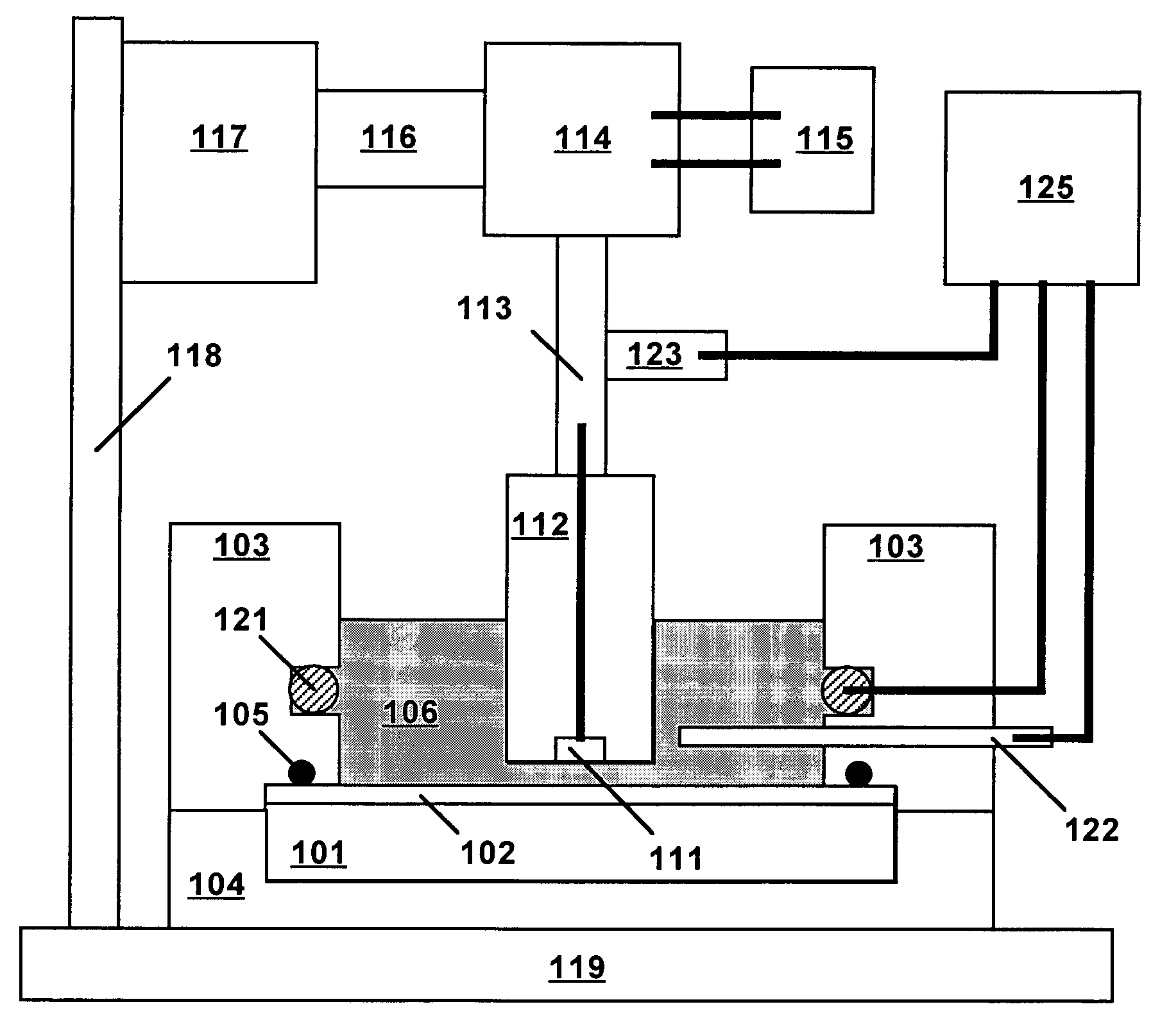
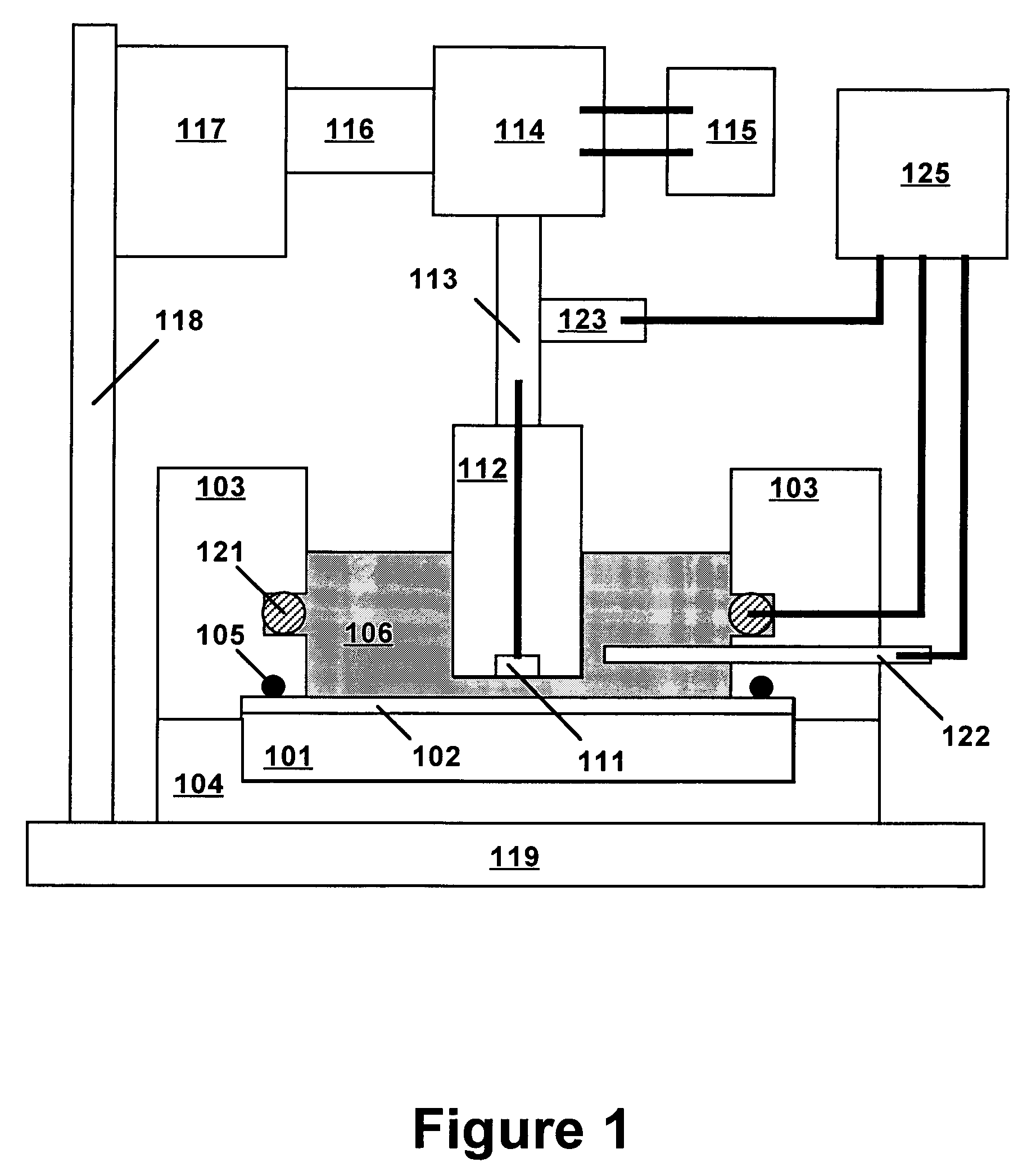
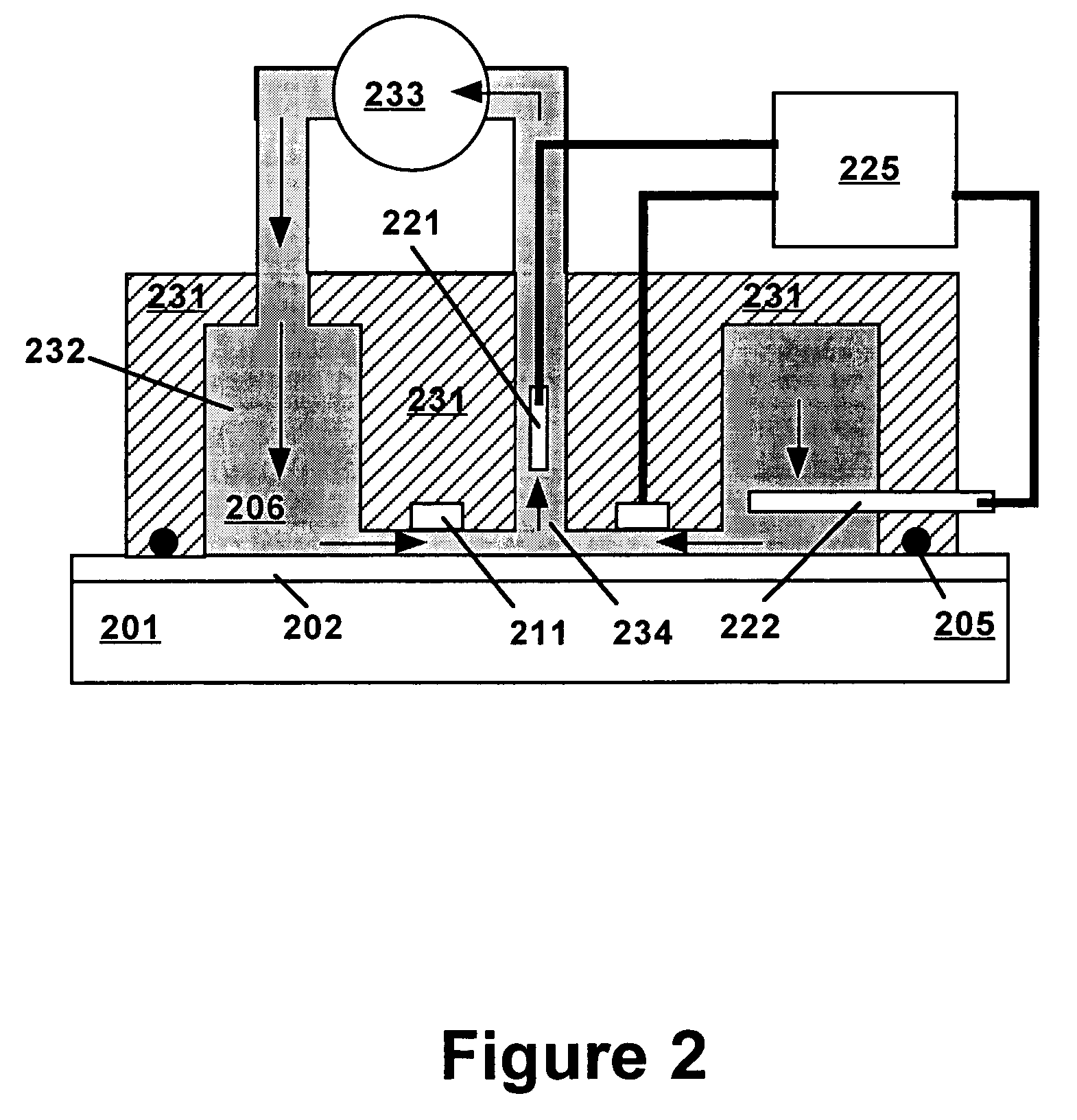
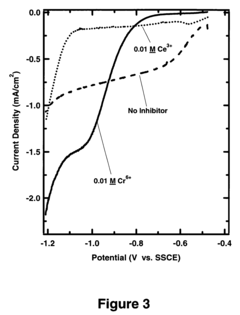
- A method and apparatus that detect corrosion inhibiting species released from coatings by using a cathode with an oxygen reduction catalyst in close proximity to the coating, with laminar flow of electrolytic solution and controlled potential to measure the reduction in oxygen reduction current, providing a rapid, non-destructive, and portable evaluation of corrosion inhibiting activity.
A surface treatment for enhanced resistance to corrosion and synergistic wear and corrosion (tribocorrosion) degradation
PatentWO2017005582A1
Innovation
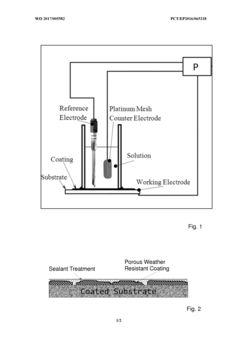
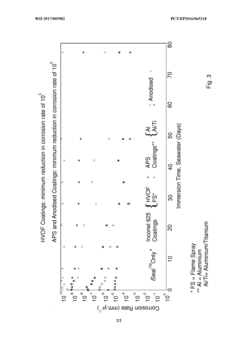
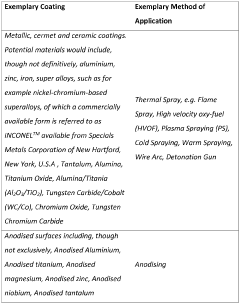
- A Rare Earth Metal (REM)-based hybrid organic/inorganic coating is applied using a near-neutral pH electrodeposition process, which seals the porosity of underlying coatings, providing a conformal barrier that enhances both wear and corrosion resistance by penetrating and sealing the pores of wear-resistant coatings.
Environmental Impact and Sustainability Considerations
The environmental impact of conformal coating processes represents a significant consideration in the electronics manufacturing industry. Traditional conformal coating materials often contain volatile organic compounds (VOCs) and other hazardous substances that pose risks to both human health and the environment. Recent regulatory frameworks, including RoHS (Restriction of Hazardous Substances) and REACH (Registration, Evaluation, Authorization and Restriction of Chemicals), have accelerated the transition toward more environmentally friendly coating solutions that maintain effective oxidation protection.
Water-based acrylic conformal coatings have emerged as a sustainable alternative, offering reduced VOC emissions while providing adequate protection against oxidation in less severe environments. These coatings typically contain 80-95% less harmful solvents compared to conventional solvent-based options, significantly reducing air pollution during application and curing processes. Testing data indicates that while their oxidation resistance may be 15-20% lower than solvent-based counterparts in extreme conditions, they perform comparably in standard indoor environments.
The energy consumption associated with conformal coating application and curing represents another critical sustainability factor. UV-curable coatings have demonstrated a 40-60% reduction in energy requirements compared to thermal curing methods, with corresponding decreases in carbon emissions. Advanced testing protocols now incorporate energy efficiency metrics alongside oxidation protection parameters, enabling manufacturers to optimize both environmental and functional performance.
End-of-life considerations have gained prominence in sustainability assessments of conformal coatings. Silicone-based coatings, while offering excellent oxidation protection, present significant recycling challenges due to their chemical stability. Conversely, newer bio-based coatings derived from renewable resources show promising biodegradability profiles while maintaining acceptable oxidation resistance in controlled environments, though their long-term performance remains under investigation.
Testing methodologies themselves are evolving to incorporate sustainability metrics. Life Cycle Assessment (LCA) approaches now complement traditional oxidation resistance tests, providing comprehensive environmental impact data across production, application, use, and disposal phases. These integrated testing frameworks reveal that parylene coatings, despite their excellent oxidation protection, carry a higher environmental footprint due to energy-intensive vacuum deposition processes and end-of-life management challenges.
The industry is witnessing growing adoption of closed-loop application systems that capture and recycle excess coating materials, reducing waste by 30-40% compared to conventional spray methods. Such systems not only minimize environmental impact but also improve coating uniformity, potentially enhancing oxidation protection through more consistent application thickness and coverage.
Water-based acrylic conformal coatings have emerged as a sustainable alternative, offering reduced VOC emissions while providing adequate protection against oxidation in less severe environments. These coatings typically contain 80-95% less harmful solvents compared to conventional solvent-based options, significantly reducing air pollution during application and curing processes. Testing data indicates that while their oxidation resistance may be 15-20% lower than solvent-based counterparts in extreme conditions, they perform comparably in standard indoor environments.
The energy consumption associated with conformal coating application and curing represents another critical sustainability factor. UV-curable coatings have demonstrated a 40-60% reduction in energy requirements compared to thermal curing methods, with corresponding decreases in carbon emissions. Advanced testing protocols now incorporate energy efficiency metrics alongside oxidation protection parameters, enabling manufacturers to optimize both environmental and functional performance.
End-of-life considerations have gained prominence in sustainability assessments of conformal coatings. Silicone-based coatings, while offering excellent oxidation protection, present significant recycling challenges due to their chemical stability. Conversely, newer bio-based coatings derived from renewable resources show promising biodegradability profiles while maintaining acceptable oxidation resistance in controlled environments, though their long-term performance remains under investigation.
Testing methodologies themselves are evolving to incorporate sustainability metrics. Life Cycle Assessment (LCA) approaches now complement traditional oxidation resistance tests, providing comprehensive environmental impact data across production, application, use, and disposal phases. These integrated testing frameworks reveal that parylene coatings, despite their excellent oxidation protection, carry a higher environmental footprint due to energy-intensive vacuum deposition processes and end-of-life management challenges.
The industry is witnessing growing adoption of closed-loop application systems that capture and recycle excess coating materials, reducing waste by 30-40% compared to conventional spray methods. Such systems not only minimize environmental impact but also improve coating uniformity, potentially enhancing oxidation protection through more consistent application thickness and coverage.
Industry Standards and Compliance Requirements
Conforming to industry standards is paramount when evaluating conformal coating efficacy in reducing oxidation. The IPC-CC-830B standard serves as the cornerstone for conformal coating specifications, establishing rigorous testing methodologies and performance criteria. This standard defines essential parameters such as coating thickness, adhesion properties, and resistance to environmental stressors, providing manufacturers with clear benchmarks for quality assurance.
The IEC 60068 series complements these specifications by outlining environmental testing procedures specifically designed to evaluate electronic components' resilience under various conditions. For conformal coating oxidation resistance assessment, IEC 60068-2-11 (salt spray testing) and IEC 60068-2-30 (damp heat cycling) are particularly relevant, as they simulate accelerated corrosive environments.
Military specifications add another layer of compliance requirements, with MIL-I-46058C and MIL-STD-810G imposing stringent performance criteria for conformal coatings used in defense applications. These standards mandate extensive testing for moisture resistance, fungus resistance, and thermal cycling stability, ensuring coatings maintain their protective properties under extreme operational conditions.
The automotive industry follows the AEC-Q200 qualification requirements, which include specific testing protocols for conformal coatings used in vehicle electronics. These standards address the unique challenges of automotive environments, including temperature extremes, vibration, and exposure to automotive fluids and chemicals that could potentially accelerate oxidation processes.
Regulatory compliance extends beyond performance standards to environmental and safety considerations. The RoHS (Restriction of Hazardous Substances) and REACH (Registration, Evaluation, Authorization and Restriction of Chemicals) regulations impose restrictions on certain chemical compounds commonly used in conformal coatings. Manufacturers must ensure their coating formulations comply with these regulations while maintaining effective oxidation protection.
Testing laboratories must maintain ISO/IEC 17025 accreditation to ensure the validity and reliability of conformal coating efficacy tests. This standard establishes requirements for testing competence, impartiality, and consistent operation of laboratories, providing confidence in test results across different facilities and regions.
Emerging standards are addressing new challenges in conformal coating applications, particularly for miniaturized electronics and flexible substrates. The IPC-CC-830C draft revision includes updated testing methodologies specifically designed for these advanced applications, recognizing that traditional testing approaches may not adequately evaluate coating performance on complex three-dimensional assemblies or flexible circuits where oxidation risks are heightened.
The IEC 60068 series complements these specifications by outlining environmental testing procedures specifically designed to evaluate electronic components' resilience under various conditions. For conformal coating oxidation resistance assessment, IEC 60068-2-11 (salt spray testing) and IEC 60068-2-30 (damp heat cycling) are particularly relevant, as they simulate accelerated corrosive environments.
Military specifications add another layer of compliance requirements, with MIL-I-46058C and MIL-STD-810G imposing stringent performance criteria for conformal coatings used in defense applications. These standards mandate extensive testing for moisture resistance, fungus resistance, and thermal cycling stability, ensuring coatings maintain their protective properties under extreme operational conditions.
The automotive industry follows the AEC-Q200 qualification requirements, which include specific testing protocols for conformal coatings used in vehicle electronics. These standards address the unique challenges of automotive environments, including temperature extremes, vibration, and exposure to automotive fluids and chemicals that could potentially accelerate oxidation processes.
Regulatory compliance extends beyond performance standards to environmental and safety considerations. The RoHS (Restriction of Hazardous Substances) and REACH (Registration, Evaluation, Authorization and Restriction of Chemicals) regulations impose restrictions on certain chemical compounds commonly used in conformal coatings. Manufacturers must ensure their coating formulations comply with these regulations while maintaining effective oxidation protection.
Testing laboratories must maintain ISO/IEC 17025 accreditation to ensure the validity and reliability of conformal coating efficacy tests. This standard establishes requirements for testing competence, impartiality, and consistent operation of laboratories, providing confidence in test results across different facilities and regions.
Emerging standards are addressing new challenges in conformal coating applications, particularly for miniaturized electronics and flexible substrates. The IPC-CC-830C draft revision includes updated testing methodologies specifically designed for these advanced applications, recognizing that traditional testing approaches may not adequately evaluate coating performance on complex three-dimensional assemblies or flexible circuits where oxidation risks are heightened.
Unlock deeper insights with PatSnap Eureka Quick Research — get a full tech report to explore trends and direct your research. Try now!
Generate Your Research Report Instantly with AI Agent
Supercharge your innovation with PatSnap Eureka AI Agent Platform!