

Creating Thermoelectric Devices for Challenging Environments
AUG 27, 202510 MIN READ
Generate Your Research Report Instantly with AI Agent
PatSnap Eureka helps you evaluate technical feasibility & market potential.
Thermoelectric Technology Background and Objectives
Thermoelectric technology has evolved significantly since its discovery in the early 19th century when Thomas Johann Seebeck first observed the conversion of temperature differences into electrical voltage. This phenomenon, known as the Seebeck effect, laid the foundation for thermoelectric devices that can directly convert heat into electricity without moving parts. The complementary Peltier effect, discovered shortly after, enables the reverse process—using electricity to create temperature differences—forming the basis for thermoelectric cooling applications.
Over the past few decades, thermoelectric technology has progressed from simple metallic thermocouples to sophisticated semiconductor-based devices with enhanced efficiency. The development of advanced materials such as bismuth telluride, lead telluride, and silicon-germanium alloys has significantly improved the performance metrics of thermoelectric generators (TEGs) and coolers (TECs). Recent breakthroughs in nanostructured materials and quantum well structures have pushed the boundaries of conversion efficiency even further.
The current technological trajectory is focused on developing thermoelectric devices capable of operating reliably in extreme environments characterized by high temperatures, corrosive conditions, intense radiation, or mechanical stress. These challenging environments include deep-sea applications, space exploration, industrial furnaces, automotive exhaust systems, and nuclear facilities. Traditional thermoelectric materials often degrade or fail under such conditions, limiting their practical applications.
The primary objective of current research is to engineer robust thermoelectric devices that maintain stable performance and structural integrity in these harsh conditions while achieving competitive conversion efficiencies. This involves developing new material compositions with enhanced thermal stability, mechanical strength, and chemical resistance, as well as innovative device architectures that can withstand extreme thermal gradients and mechanical stresses.
Another critical goal is to improve the figure of merit (ZT) of thermoelectric materials for challenging environments, which currently lags behind that of conventional applications. Achieving higher ZT values while maintaining durability would significantly expand the application scope of thermoelectric technology in energy harvesting from waste heat in industrial processes, remote power generation in hostile environments, and thermal management in extreme conditions.
The long-term vision encompasses the development of self-powered sensors and systems for environmental monitoring in inaccessible locations, energy-autonomous devices for space missions, and waste heat recovery systems for high-temperature industrial processes. These applications align with global sustainability goals by enabling energy harvesting from otherwise wasted thermal resources, potentially reducing fossil fuel consumption and associated emissions.
Over the past few decades, thermoelectric technology has progressed from simple metallic thermocouples to sophisticated semiconductor-based devices with enhanced efficiency. The development of advanced materials such as bismuth telluride, lead telluride, and silicon-germanium alloys has significantly improved the performance metrics of thermoelectric generators (TEGs) and coolers (TECs). Recent breakthroughs in nanostructured materials and quantum well structures have pushed the boundaries of conversion efficiency even further.
The current technological trajectory is focused on developing thermoelectric devices capable of operating reliably in extreme environments characterized by high temperatures, corrosive conditions, intense radiation, or mechanical stress. These challenging environments include deep-sea applications, space exploration, industrial furnaces, automotive exhaust systems, and nuclear facilities. Traditional thermoelectric materials often degrade or fail under such conditions, limiting their practical applications.
The primary objective of current research is to engineer robust thermoelectric devices that maintain stable performance and structural integrity in these harsh conditions while achieving competitive conversion efficiencies. This involves developing new material compositions with enhanced thermal stability, mechanical strength, and chemical resistance, as well as innovative device architectures that can withstand extreme thermal gradients and mechanical stresses.
Another critical goal is to improve the figure of merit (ZT) of thermoelectric materials for challenging environments, which currently lags behind that of conventional applications. Achieving higher ZT values while maintaining durability would significantly expand the application scope of thermoelectric technology in energy harvesting from waste heat in industrial processes, remote power generation in hostile environments, and thermal management in extreme conditions.
The long-term vision encompasses the development of self-powered sensors and systems for environmental monitoring in inaccessible locations, energy-autonomous devices for space missions, and waste heat recovery systems for high-temperature industrial processes. These applications align with global sustainability goals by enabling energy harvesting from otherwise wasted thermal resources, potentially reducing fossil fuel consumption and associated emissions.
Market Analysis for Extreme Environment Applications
The thermoelectric device market for extreme environments is experiencing significant growth, driven by increasing demands in aerospace, deep-sea exploration, industrial manufacturing, and nuclear sectors. Current market valuation stands at approximately 450 million USD for specialized extreme environment thermoelectric solutions, with projections indicating growth to reach 720 million USD by 2028, representing a compound annual growth rate of 8.2%.
Aerospace and defense applications constitute the largest market segment, accounting for 38% of the total market share. These applications require thermoelectric devices capable of withstanding temperature extremes from -270°C in space to over 1500°C in propulsion systems. The reliability requirements in these sectors are exceptionally stringent, with failure rates demanded below 0.001% for critical missions.
Deep-sea exploration represents another rapidly expanding market segment, growing at 9.7% annually. Thermoelectric generators (TEGs) deployed in underwater environments must withstand pressures exceeding 1000 atmospheres and operate reliably in highly corrosive saltwater conditions for extended periods, often 5-10 years without maintenance.
Industrial applications, particularly in oil and gas, chemical processing, and metal refining, demand thermoelectric devices that can function in environments with temperatures exceeding 800°C while exposed to corrosive chemicals and mechanical stress. This segment currently represents 27% of the market but is expected to grow to 32% by 2027.
Geographic distribution of market demand shows North America leading with 42% market share, followed by Europe (28%), Asia-Pacific (23%), and rest of world (7%). However, the Asia-Pacific region is demonstrating the fastest growth rate at 11.3% annually, primarily driven by increased industrial automation and aerospace investments in China, Japan, and South Korea.
Customer requirements analysis reveals five critical parameters driving purchasing decisions: temperature range tolerance (cited by 87% of customers), operational lifespan (82%), power conversion efficiency (76%), size/weight considerations (68%), and cost-effectiveness (65%). Notably, efficiency considerations become secondary to reliability and durability in extreme environment applications.
The pricing structure for extreme environment thermoelectric devices commands a premium of 300-500% compared to standard commercial alternatives, reflecting the specialized materials, manufacturing processes, and extensive testing required. Despite this premium, market elasticity remains relatively low, with a price sensitivity index of 0.4, indicating customers prioritize performance and reliability over cost considerations.
Aerospace and defense applications constitute the largest market segment, accounting for 38% of the total market share. These applications require thermoelectric devices capable of withstanding temperature extremes from -270°C in space to over 1500°C in propulsion systems. The reliability requirements in these sectors are exceptionally stringent, with failure rates demanded below 0.001% for critical missions.
Deep-sea exploration represents another rapidly expanding market segment, growing at 9.7% annually. Thermoelectric generators (TEGs) deployed in underwater environments must withstand pressures exceeding 1000 atmospheres and operate reliably in highly corrosive saltwater conditions for extended periods, often 5-10 years without maintenance.
Industrial applications, particularly in oil and gas, chemical processing, and metal refining, demand thermoelectric devices that can function in environments with temperatures exceeding 800°C while exposed to corrosive chemicals and mechanical stress. This segment currently represents 27% of the market but is expected to grow to 32% by 2027.
Geographic distribution of market demand shows North America leading with 42% market share, followed by Europe (28%), Asia-Pacific (23%), and rest of world (7%). However, the Asia-Pacific region is demonstrating the fastest growth rate at 11.3% annually, primarily driven by increased industrial automation and aerospace investments in China, Japan, and South Korea.
Customer requirements analysis reveals five critical parameters driving purchasing decisions: temperature range tolerance (cited by 87% of customers), operational lifespan (82%), power conversion efficiency (76%), size/weight considerations (68%), and cost-effectiveness (65%). Notably, efficiency considerations become secondary to reliability and durability in extreme environment applications.
The pricing structure for extreme environment thermoelectric devices commands a premium of 300-500% compared to standard commercial alternatives, reflecting the specialized materials, manufacturing processes, and extensive testing required. Despite this premium, market elasticity remains relatively low, with a price sensitivity index of 0.4, indicating customers prioritize performance and reliability over cost considerations.
Current Challenges in Harsh Environment Thermoelectrics
Despite significant advancements in thermoelectric technology, developing devices for harsh environments presents formidable challenges that impede widespread implementation. Temperature extremes constitute a primary obstacle, with many applications requiring operation in environments exceeding 500°C or below -40°C. Traditional thermoelectric materials like bismuth telluride exhibit performance degradation or complete failure under such conditions, necessitating the development of novel material systems with enhanced thermal stability.
Mechanical stress resistance represents another critical challenge, particularly in applications involving vibration, shock, or high-pressure conditions. Thermoelectric modules typically comprise brittle semiconductor materials joined by metallic interconnects, creating interfaces vulnerable to thermal expansion mismatch and mechanical fatigue. This vulnerability is especially pronounced in automotive exhaust systems, aerospace applications, and deep-sea exploration equipment.
Chemical compatibility issues further complicate device design, as harsh environments often involve corrosive substances, oxidizing atmospheres, or reactive gases. Materials that maintain excellent thermoelectric properties frequently demonstrate poor chemical stability, requiring protective encapsulation that may compromise thermal performance or increase manufacturing complexity.
Reliability and longevity concerns are paramount in harsh environment applications, where maintenance access is limited or impossible. Current thermoelectric devices typically experience performance degradation of 5-15% annually under extreme conditions, falling short of the 10+ year operational lifespan required for many industrial applications. This degradation stems from interdiffusion between material layers, oxidation, and microstructural changes during thermal cycling.
Manufacturing scalability presents additional challenges, as harsh environment thermoelectrics often require specialized fabrication techniques incompatible with established mass-production methods. The complex material systems necessary for extreme condition operation frequently involve rare elements or precise compositional control that increases production costs and limits commercial viability.
Power density limitations also restrict application potential, with current harsh environment thermoelectric generators typically achieving only 0.1-0.5 W/cm², insufficient for many high-power applications. This limitation stems from the inherent trade-offs between thermal stability and thermoelectric conversion efficiency, forcing designers to sacrifice performance for durability.
Integration challenges with existing systems further complicate implementation, as harsh environment thermoelectrics must interface with conventional electronics and power management systems while maintaining thermal isolation and mechanical integrity. The disparate requirements of these components often lead to complex, bulky designs that limit practical deployment opportunities.
Mechanical stress resistance represents another critical challenge, particularly in applications involving vibration, shock, or high-pressure conditions. Thermoelectric modules typically comprise brittle semiconductor materials joined by metallic interconnects, creating interfaces vulnerable to thermal expansion mismatch and mechanical fatigue. This vulnerability is especially pronounced in automotive exhaust systems, aerospace applications, and deep-sea exploration equipment.
Chemical compatibility issues further complicate device design, as harsh environments often involve corrosive substances, oxidizing atmospheres, or reactive gases. Materials that maintain excellent thermoelectric properties frequently demonstrate poor chemical stability, requiring protective encapsulation that may compromise thermal performance or increase manufacturing complexity.
Reliability and longevity concerns are paramount in harsh environment applications, where maintenance access is limited or impossible. Current thermoelectric devices typically experience performance degradation of 5-15% annually under extreme conditions, falling short of the 10+ year operational lifespan required for many industrial applications. This degradation stems from interdiffusion between material layers, oxidation, and microstructural changes during thermal cycling.
Manufacturing scalability presents additional challenges, as harsh environment thermoelectrics often require specialized fabrication techniques incompatible with established mass-production methods. The complex material systems necessary for extreme condition operation frequently involve rare elements or precise compositional control that increases production costs and limits commercial viability.
Power density limitations also restrict application potential, with current harsh environment thermoelectric generators typically achieving only 0.1-0.5 W/cm², insufficient for many high-power applications. This limitation stems from the inherent trade-offs between thermal stability and thermoelectric conversion efficiency, forcing designers to sacrifice performance for durability.
Integration challenges with existing systems further complicate implementation, as harsh environment thermoelectrics must interface with conventional electronics and power management systems while maintaining thermal isolation and mechanical integrity. The disparate requirements of these components often lead to complex, bulky designs that limit practical deployment opportunities.
Current Thermoelectric Solutions for Harsh Environments
01 Thermoelectric material compositions and structures
Various material compositions and structures are used in thermoelectric devices to enhance their performance. These include specialized semiconductor materials, nanostructured materials, and composite structures that can improve the Seebeck coefficient and reduce thermal conductivity. Advanced material engineering techniques are employed to create more efficient thermoelectric elements with improved figure of merit (ZT) values, enabling better conversion between thermal and electrical energy.- Thermoelectric material compositions and structures: Various material compositions and structures are used in thermoelectric devices to improve energy conversion efficiency. These include specialized semiconductor materials, nanostructured materials, and composite structures that enhance the Seebeck effect while reducing thermal conductivity. Advanced manufacturing techniques allow for precise control of material properties at the nanoscale, resulting in improved figure of merit (ZT) values and better overall device performance.
- Thermoelectric power generation applications: Thermoelectric devices can convert waste heat into usable electrical energy through the Seebeck effect. Applications include waste heat recovery systems for industrial processes, automotive exhaust heat recovery, remote power generation, and energy harvesting from temperature differentials in various environments. These systems help improve overall energy efficiency by capturing thermal energy that would otherwise be lost.
- Cooling and refrigeration applications: Thermoelectric devices can function as solid-state heat pumps through the Peltier effect, providing cooling without moving parts or refrigerants. Applications include electronic device cooling, portable refrigeration, temperature-controlled containers, and precision temperature control systems. These cooling solutions offer advantages in situations requiring compact size, reliability, precise temperature control, or operation in challenging environments.
- Device architecture and integration: The physical design and integration of thermoelectric devices significantly impact their performance and applicability. Innovations include flexible thermoelectric modules, miniaturized designs for electronics integration, stackable architectures for increased power output, and hybrid systems that combine thermoelectric technology with other energy technologies. Advanced packaging techniques help optimize thermal interfaces and electrical connections while protecting the thermoelectric elements.
- Efficiency enhancement techniques: Various techniques are employed to enhance the efficiency of thermoelectric devices. These include segmented leg designs that optimize material properties across temperature gradients, thermal concentration techniques to maximize temperature differentials, electrical circuit optimizations, and cascaded device architectures. Additional approaches involve surface treatments, interface engineering, and the development of complementary systems that manage heat flow to maximize conversion efficiency.
02 Thermoelectric device configurations and assemblies
Different configurations and assemblies of thermoelectric devices are designed to optimize energy conversion efficiency. These include various arrangements of p-type and n-type semiconductor elements, module designs, and integration methods. The physical layout and connection of thermoelectric elements significantly impact the overall performance of the device, with innovations focusing on reducing thermal resistance and improving electrical connectivity between components.Expand Specific Solutions03 Cooling and temperature management applications
Thermoelectric devices are utilized for cooling and temperature management in various applications. These devices can create temperature differentials when electrical current is applied, enabling precise cooling without moving parts. Applications include electronic device cooling, refrigeration systems, and temperature-controlled environments. Innovations in this area focus on improving cooling efficiency, reducing power consumption, and enhancing heat dissipation capabilities.Expand Specific Solutions04 Energy harvesting and power generation
Thermoelectric devices can convert waste heat into usable electrical energy through the Seebeck effect. These energy harvesting applications include recovering energy from industrial processes, vehicle exhaust systems, and other heat sources. Developments in this field focus on improving conversion efficiency, scaling systems for different heat sources, and integrating thermoelectric generators with other energy systems to maximize overall energy recovery and utilization.Expand Specific Solutions05 Fabrication methods and manufacturing techniques
Various fabrication methods and manufacturing techniques are employed to produce thermoelectric devices with enhanced performance characteristics. These include thin-film deposition, bulk material processing, and advanced assembly techniques. Manufacturing innovations focus on improving material uniformity, reducing contact resistance between elements, and developing scalable production processes that can maintain high performance while reducing costs. Novel approaches include printed electronics techniques and microfabrication methods for miniaturized thermoelectric systems.Expand Specific Solutions
Leading Companies and Research Institutions
The thermoelectric devices market for challenging environments is currently in a growth phase, with increasing demand driven by waste heat recovery applications and sustainable energy solutions. The market size is projected to expand significantly as industries seek energy-efficient technologies for harsh operating conditions. Technologically, the field shows varying maturity levels, with established players like LG Innotek, Toshiba, and Robert Bosch offering commercial solutions, while specialized companies such as ZT3 Technologies and European Thermodynamics focus on advanced material development. Research institutions including Texas A&M University and Electronics & Telecommunications Research Institute are pushing boundaries in thermal management innovation. The competitive landscape features diverse participants from electronics manufacturers to automotive suppliers like Continental Automotive, indicating broad cross-industry applications and growing market potential.
Battelle Memorial Institute
Technical Solution: Battelle has developed advanced thermoelectric materials and devices specifically engineered for extreme environments. Their approach combines novel material compositions with specialized fabrication techniques to create robust thermoelectric generators (TEGs) that maintain performance under harsh conditions. Their technology utilizes skutterudite-based materials with enhanced thermal stability up to 600°C and incorporates protective coatings to shield against chemical corrosion and mechanical stress. Battelle's devices feature segmented leg designs that optimize performance across wide temperature gradients, crucial for applications in deep-well drilling, aerospace, and industrial settings where conventional electronics fail. Their manufacturing process includes specialized bonding techniques that maintain electrical contacts under thermal cycling and vibration, significantly extending device lifespan in challenging environments.
Strengths: Superior thermal stability in extreme temperatures; enhanced mechanical robustness against vibration and shock; proprietary contact materials that resist degradation. Weaknesses: Higher manufacturing costs compared to conventional thermoelectrics; limited power density in ultra-compact applications; requires specialized integration expertise for optimal deployment.
ZT3 Technologies, Inc.
Technical Solution: ZT3 Technologies has pioneered high-performance thermoelectric materials specifically designed for extreme environmental conditions. Their proprietary technology centers on nanostructured half-Heusler compounds that deliver exceptional ZT values (figure of merit) exceeding 1.5 at elevated temperatures, significantly outperforming traditional bismuth telluride materials. The company employs advanced powder metallurgy techniques and spark plasma sintering to create dense, mechanically robust thermoelectric elements with minimized thermal conductivity while maintaining electrical conductivity. ZT3's devices incorporate specialized protective encapsulation systems that shield the thermoelectric elements from oxidation, corrosion, and mechanical stress while allowing efficient heat transfer. Their modular design approach enables customization for specific environmental challenges, whether extreme heat (up to 800°C), cryogenic conditions, high radiation environments, or corrosive atmospheres.
Strengths: Industry-leading ZT values at high temperatures; exceptional mechanical durability in vibration-intensive applications; modular design allowing application-specific optimization. Weaknesses: Higher initial cost compared to conventional thermoelectrics; limited production scale affecting availability for large deployments; requires specialized integration expertise for optimal performance.
Key Patents and Innovations in Thermal-Resistant Materials
High temperature thermocouple design and fabrication
PatentActiveUS20080205483A1
Innovation
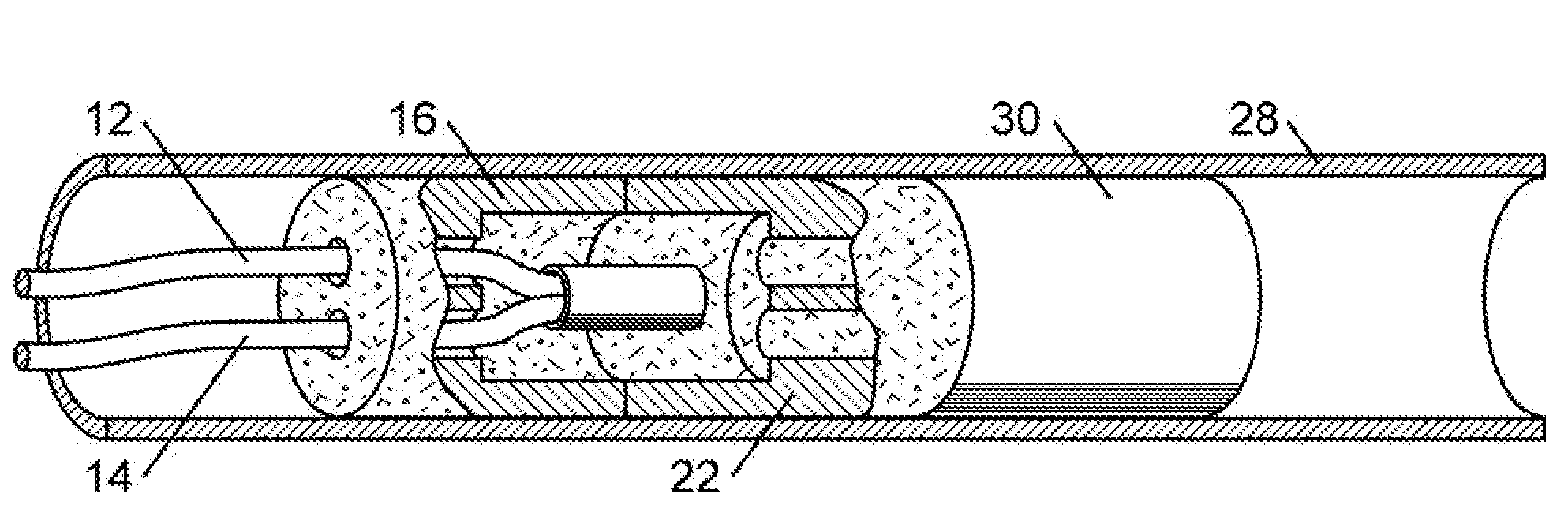
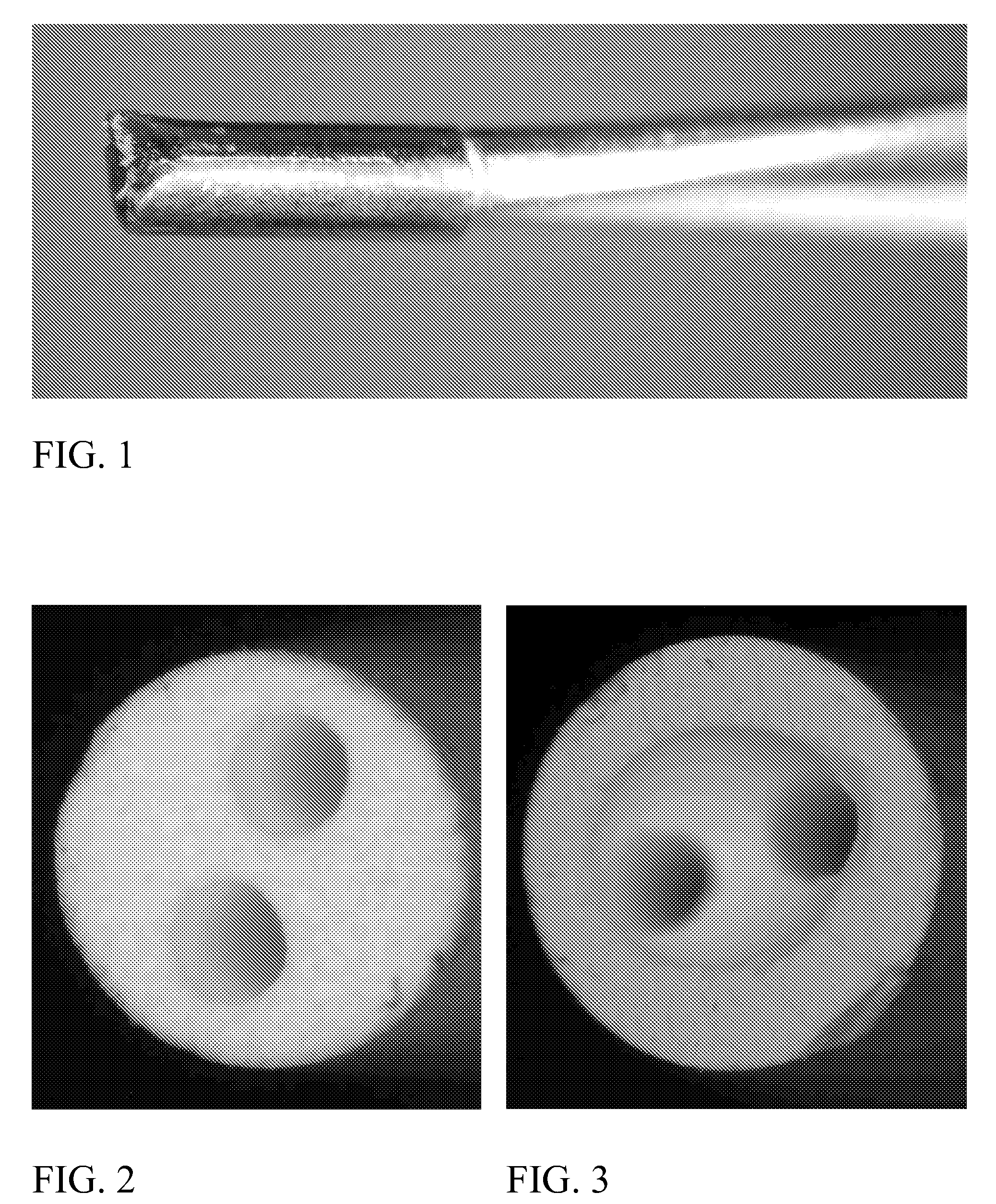
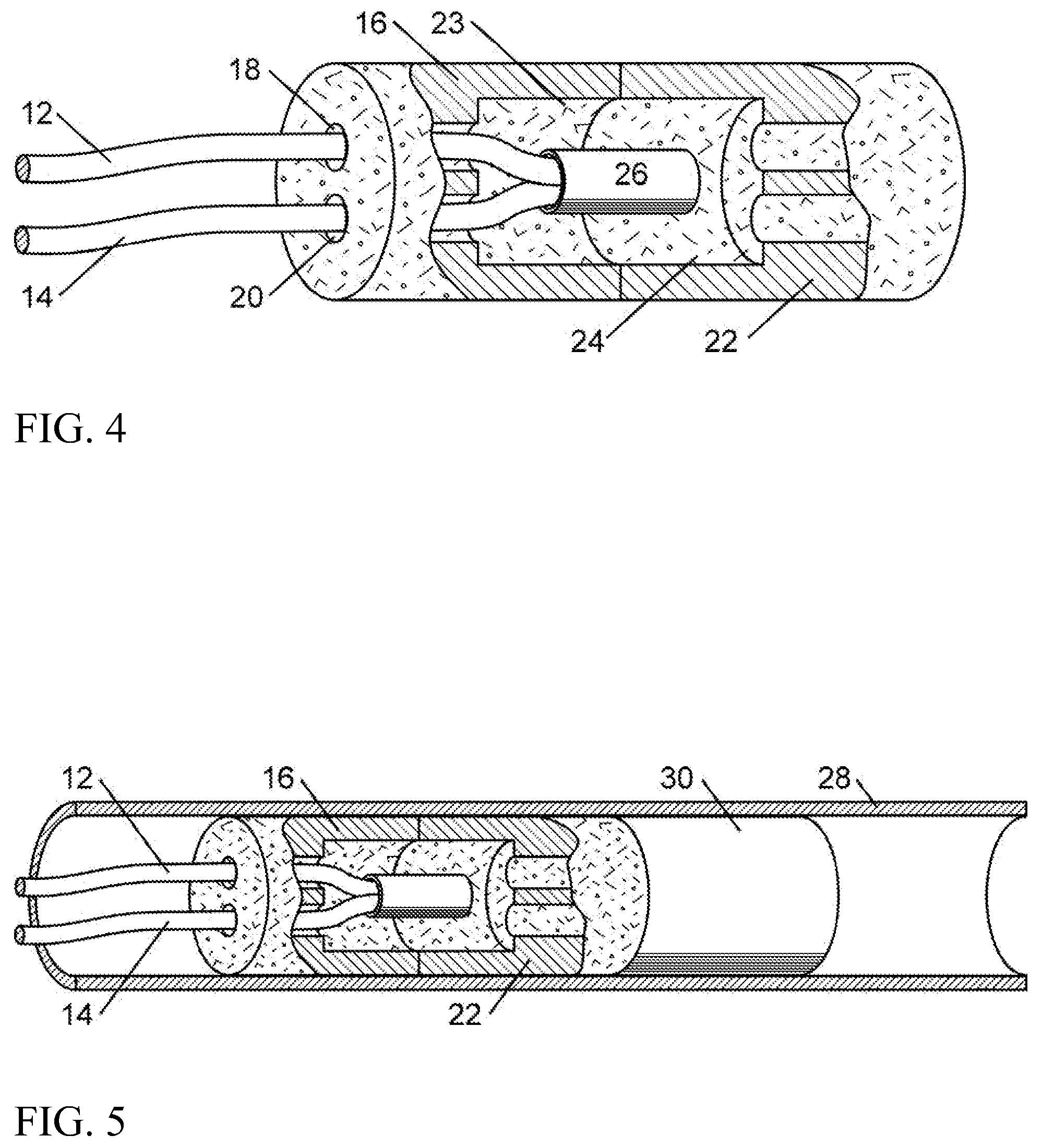
- A thermocouple design using doped molybdenum and niobium/zirconium alloy thermoelement wires with a swaged metallic tube junction and non-reactive insulating materials, such as hafnium dioxide and alumina, to minimize signal drift and mechanical failure, ensuring stability and durability.

Thermoelectric device and method of manufacturing the same
PatentInactiveEP3373335A3
Innovation
- A thermoelectric device with a zigzag configuration featuring peaks and valleys on a flexible substrate, using a solution process for large-area production, incorporating a p-type and n-type thermoelectric material alternately disposed with an electrode material, and a thermal insulator to achieve a vertical temperature difference and enhance flexibility and lightness.

Material Durability and Reliability Testing Methodologies
The development of thermoelectric devices for challenging environments necessitates rigorous material durability and reliability testing methodologies. These testing protocols must simulate extreme conditions including high temperatures, corrosive atmospheres, mechanical stress, and radiation exposure that these devices will encounter in real-world applications such as deep-sea exploration, aerospace, nuclear facilities, and industrial processing.
Accelerated aging tests represent a cornerstone methodology, where materials are subjected to intensified environmental stressors to predict long-term performance within compressed timeframes. These tests typically involve cycling between temperature extremes (-60°C to 600°C), exposure to controlled humidity levels, and simultaneous application of electrical current to simulate operational conditions. The resulting data enables the calculation of mean time between failures (MTBF) and establishment of reliability metrics.
Thermal shock resistance testing evaluates material integrity under rapid temperature fluctuations. Samples undergo repeated cycles between extreme temperatures with minimal transition time, often utilizing specialized chambers capable of temperature change rates exceeding 50°C per minute. This methodology is particularly critical for thermoelectric applications in aerospace and automotive environments where thermal cycling is frequent and severe.
Mechanical durability assessments include vibration testing (following standards such as MIL-STD-810 or IEC 60068), impact resistance evaluation, and fatigue testing under cyclic loading conditions. These tests are essential for applications in transportation and industrial settings where constant vibration and mechanical stress are prevalent. Advanced methodologies incorporate multi-axis vibration systems that can simultaneously apply forces in multiple directions to better simulate real-world conditions.
Chemical resistance testing exposes materials to corrosive substances relevant to the target environment, including salt spray (ASTM B117), acid rain simulation, and industry-specific chemical exposures. For marine applications, extended immersion in saltwater under pressure helps predict performance in deep-sea environments. These tests typically measure weight loss, dimensional changes, and degradation of electrical properties over time.
Radiation hardness testing is crucial for space and nuclear applications, where materials are exposed to controlled doses of gamma, neutron, or particle radiation while monitoring changes in thermoelectric performance. This methodology often requires specialized facilities and careful dosimetry to ensure accurate simulation of radiation environments.
Combined environmental testing represents the most sophisticated approach, where multiple stressors are applied simultaneously to better replicate real-world conditions. These highly integrated test protocols provide the most realistic assessment of material performance but require complex test chambers and precise control systems to maintain consistent test conditions.
Accelerated aging tests represent a cornerstone methodology, where materials are subjected to intensified environmental stressors to predict long-term performance within compressed timeframes. These tests typically involve cycling between temperature extremes (-60°C to 600°C), exposure to controlled humidity levels, and simultaneous application of electrical current to simulate operational conditions. The resulting data enables the calculation of mean time between failures (MTBF) and establishment of reliability metrics.
Thermal shock resistance testing evaluates material integrity under rapid temperature fluctuations. Samples undergo repeated cycles between extreme temperatures with minimal transition time, often utilizing specialized chambers capable of temperature change rates exceeding 50°C per minute. This methodology is particularly critical for thermoelectric applications in aerospace and automotive environments where thermal cycling is frequent and severe.
Mechanical durability assessments include vibration testing (following standards such as MIL-STD-810 or IEC 60068), impact resistance evaluation, and fatigue testing under cyclic loading conditions. These tests are essential for applications in transportation and industrial settings where constant vibration and mechanical stress are prevalent. Advanced methodologies incorporate multi-axis vibration systems that can simultaneously apply forces in multiple directions to better simulate real-world conditions.
Chemical resistance testing exposes materials to corrosive substances relevant to the target environment, including salt spray (ASTM B117), acid rain simulation, and industry-specific chemical exposures. For marine applications, extended immersion in saltwater under pressure helps predict performance in deep-sea environments. These tests typically measure weight loss, dimensional changes, and degradation of electrical properties over time.
Radiation hardness testing is crucial for space and nuclear applications, where materials are exposed to controlled doses of gamma, neutron, or particle radiation while monitoring changes in thermoelectric performance. This methodology often requires specialized facilities and careful dosimetry to ensure accurate simulation of radiation environments.
Combined environmental testing represents the most sophisticated approach, where multiple stressors are applied simultaneously to better replicate real-world conditions. These highly integrated test protocols provide the most realistic assessment of material performance but require complex test chambers and precise control systems to maintain consistent test conditions.
Environmental Impact and Sustainability Considerations
The development of thermoelectric devices for challenging environments necessitates careful consideration of environmental impacts and sustainability factors throughout their lifecycle. These devices offer significant potential for waste heat recovery and energy efficiency improvements, which inherently contribute to reduced carbon emissions and resource conservation when properly implemented.
Material selection represents a critical environmental consideration in thermoelectric device development. Traditional thermoelectric materials often contain toxic or rare elements such as tellurium, bismuth, and lead, which pose extraction challenges and end-of-life disposal concerns. Recent research has focused on developing alternative materials with reduced environmental footprints, including silicon-germanium alloys, skutterudites, and organic thermoelectric compounds derived from more abundant and less toxic resources.
Manufacturing processes for thermoelectric devices currently involve energy-intensive techniques including high-temperature sintering, vacuum deposition, and precision machining. The environmental impact of these processes can be substantial, particularly regarding energy consumption and chemical waste generation. Emerging sustainable manufacturing approaches such as additive manufacturing, green chemistry principles, and low-temperature processing techniques show promise for reducing the ecological footprint of production while maintaining device performance.
Lifecycle assessment (LCA) studies indicate that the environmental benefits of thermoelectric devices in challenging environments depend heavily on their operational efficiency and lifespan. Devices deployed in extreme conditions face accelerated degradation, potentially shortening their useful life and diminishing their net environmental benefit. Designing for durability, repairability, and recyclability becomes particularly important to maximize sustainability in these applications.
End-of-life management presents unique challenges for thermoelectric devices used in extreme environments. Contamination from exposure to harsh chemicals, radiation, or biological agents may complicate recycling efforts. Advanced recovery techniques, including selective leaching processes and automated disassembly systems, are being developed to safely reclaim valuable materials while minimizing environmental hazards.
The sustainability profile of thermoelectric devices improves significantly when integrated into circular economy frameworks. This includes designing for material recovery, establishing take-back programs, and developing standardized components that facilitate repair and remanufacturing. Several manufacturers have begun implementing product stewardship initiatives that track materials throughout the product lifecycle and ensure responsible end-of-life handling.
Regulatory compliance and certification standards increasingly influence the environmental considerations in thermoelectric device development. International frameworks such as RoHS (Restriction of Hazardous Substances), REACH (Registration, Evaluation, Authorization and Restriction of Chemicals), and emerging carbon footprint disclosure requirements are driving innovation toward more environmentally benign designs and manufacturing processes.
Material selection represents a critical environmental consideration in thermoelectric device development. Traditional thermoelectric materials often contain toxic or rare elements such as tellurium, bismuth, and lead, which pose extraction challenges and end-of-life disposal concerns. Recent research has focused on developing alternative materials with reduced environmental footprints, including silicon-germanium alloys, skutterudites, and organic thermoelectric compounds derived from more abundant and less toxic resources.
Manufacturing processes for thermoelectric devices currently involve energy-intensive techniques including high-temperature sintering, vacuum deposition, and precision machining. The environmental impact of these processes can be substantial, particularly regarding energy consumption and chemical waste generation. Emerging sustainable manufacturing approaches such as additive manufacturing, green chemistry principles, and low-temperature processing techniques show promise for reducing the ecological footprint of production while maintaining device performance.
Lifecycle assessment (LCA) studies indicate that the environmental benefits of thermoelectric devices in challenging environments depend heavily on their operational efficiency and lifespan. Devices deployed in extreme conditions face accelerated degradation, potentially shortening their useful life and diminishing their net environmental benefit. Designing for durability, repairability, and recyclability becomes particularly important to maximize sustainability in these applications.
End-of-life management presents unique challenges for thermoelectric devices used in extreme environments. Contamination from exposure to harsh chemicals, radiation, or biological agents may complicate recycling efforts. Advanced recovery techniques, including selective leaching processes and automated disassembly systems, are being developed to safely reclaim valuable materials while minimizing environmental hazards.
The sustainability profile of thermoelectric devices improves significantly when integrated into circular economy frameworks. This includes designing for material recovery, establishing take-back programs, and developing standardized components that facilitate repair and remanufacturing. Several manufacturers have begun implementing product stewardship initiatives that track materials throughout the product lifecycle and ensure responsible end-of-life handling.
Regulatory compliance and certification standards increasingly influence the environmental considerations in thermoelectric device development. International frameworks such as RoHS (Restriction of Hazardous Substances), REACH (Registration, Evaluation, Authorization and Restriction of Chemicals), and emerging carbon footprint disclosure requirements are driving innovation toward more environmentally benign designs and manufacturing processes.
Unlock deeper insights with PatSnap Eureka Quick Research — get a full tech report to explore trends and direct your research. Try now!
Generate Your Research Report Instantly with AI Agent
Supercharge your innovation with PatSnap Eureka AI Agent Platform!