Deep Earth exploration using Magnesium iron silicate hydroxide.
JUL 17, 20259 MIN READ
Generate Your Research Report Instantly with AI Agent
Patsnap Eureka helps you evaluate technical feasibility & market potential.
Deep Earth Exploration Background and Objectives
Deep Earth exploration has been a longstanding scientific endeavor, driven by the need to understand our planet's internal structure, composition, and dynamics. The use of Magnesium iron silicate hydroxide, also known as bridgmanite, in this field represents a significant advancement in our ability to probe the Earth's deep interior. This mineral, discovered in 2014, is believed to be the most abundant mineral in the Earth's lower mantle, making up approximately 38% of the Earth's volume.
The primary objective of utilizing Magnesium iron silicate hydroxide in deep Earth exploration is to gain insights into the composition and behavior of the Earth's mantle under extreme pressure and temperature conditions. This mineral's unique properties make it an ideal proxy for studying mantle dynamics, heat transfer, and the evolution of our planet's interior over geological timescales.
One of the key goals is to understand how bridgmanite influences the mantle's convection patterns, which drive plate tectonics and affect surface phenomena such as earthquakes and volcanic eruptions. By studying the mineral's behavior under various conditions, scientists aim to create more accurate models of mantle convection and improve our ability to predict geodynamic processes.
Another crucial objective is to investigate the role of Magnesium iron silicate hydroxide in the Earth's deep water cycle. Recent studies suggest that this mineral may be capable of storing significant amounts of water in its crystal structure, potentially explaining the presence of water in the deep mantle and its influence on mantle rheology and melting behavior.
Furthermore, researchers aim to use bridgmanite as a tool for understanding the formation and evolution of the Earth's core-mantle boundary. This region plays a critical role in heat transfer between the core and mantle, influencing the planet's magnetic field and overall thermal evolution. By studying how Magnesium iron silicate hydroxide behaves at these extreme conditions, scientists hope to shed light on the complex interactions between the core and mantle.
The exploration of deep Earth using this mineral also has implications for our understanding of other terrestrial planets and exoplanets. By comparing the behavior of bridgmanite under different pressure and temperature regimes, researchers can make inferences about the internal structures and dynamics of other rocky planets, potentially advancing our knowledge of planetary formation and evolution in the broader context of the universe.
In summary, the background and objectives of deep Earth exploration using Magnesium iron silicate hydroxide encompass a wide range of scientific goals, from unraveling the mysteries of our planet's interior to gaining insights into planetary formation processes. This research has the potential to revolutionize our understanding of Earth's geodynamics and contribute significantly to the fields of geophysics, mineralogy, and planetary science.
The primary objective of utilizing Magnesium iron silicate hydroxide in deep Earth exploration is to gain insights into the composition and behavior of the Earth's mantle under extreme pressure and temperature conditions. This mineral's unique properties make it an ideal proxy for studying mantle dynamics, heat transfer, and the evolution of our planet's interior over geological timescales.
One of the key goals is to understand how bridgmanite influences the mantle's convection patterns, which drive plate tectonics and affect surface phenomena such as earthquakes and volcanic eruptions. By studying the mineral's behavior under various conditions, scientists aim to create more accurate models of mantle convection and improve our ability to predict geodynamic processes.
Another crucial objective is to investigate the role of Magnesium iron silicate hydroxide in the Earth's deep water cycle. Recent studies suggest that this mineral may be capable of storing significant amounts of water in its crystal structure, potentially explaining the presence of water in the deep mantle and its influence on mantle rheology and melting behavior.
Furthermore, researchers aim to use bridgmanite as a tool for understanding the formation and evolution of the Earth's core-mantle boundary. This region plays a critical role in heat transfer between the core and mantle, influencing the planet's magnetic field and overall thermal evolution. By studying how Magnesium iron silicate hydroxide behaves at these extreme conditions, scientists hope to shed light on the complex interactions between the core and mantle.
The exploration of deep Earth using this mineral also has implications for our understanding of other terrestrial planets and exoplanets. By comparing the behavior of bridgmanite under different pressure and temperature regimes, researchers can make inferences about the internal structures and dynamics of other rocky planets, potentially advancing our knowledge of planetary formation and evolution in the broader context of the universe.
In summary, the background and objectives of deep Earth exploration using Magnesium iron silicate hydroxide encompass a wide range of scientific goals, from unraveling the mysteries of our planet's interior to gaining insights into planetary formation processes. This research has the potential to revolutionize our understanding of Earth's geodynamics and contribute significantly to the fields of geophysics, mineralogy, and planetary science.
Market Analysis for Deep Earth Exploration Technologies
The market for deep Earth exploration technologies has been experiencing significant growth in recent years, driven by increasing demand for natural resources, scientific research, and environmental monitoring. The use of Magnesium iron silicate hydroxide (MISH) in deep Earth exploration represents a promising frontier in this expanding market.
The global deep Earth exploration market is primarily segmented into oil and gas exploration, mining, geothermal energy, and scientific research. Among these, oil and gas exploration continues to dominate the market share, accounting for a substantial portion of the revenue. However, the mining sector is showing rapid growth, particularly in regions with untapped mineral resources.
The adoption of MISH-based technologies in deep Earth exploration is still in its early stages, but it shows great potential for market disruption. MISH's unique properties, such as its stability under high pressure and temperature conditions, make it an ideal candidate for developing advanced sensors and tools for deep Earth exploration.
Key market drivers include the increasing global energy demand, the need for more efficient and environmentally friendly exploration techniques, and the push for scientific understanding of Earth's deep interior. Additionally, government initiatives and investments in deep Earth research programs are contributing to market growth.
Geographically, North America and Europe currently lead the market for deep Earth exploration technologies, owing to their advanced technological infrastructure and significant investments in research and development. However, Asia-Pacific is emerging as a rapidly growing market, driven by China's ambitious deep Earth exploration projects and increasing mineral exploration activities in countries like Australia and India.
The market for MISH-based deep Earth exploration technologies is expected to grow as more companies recognize its potential. Early adopters are likely to gain a competitive advantage, particularly in niche applications where traditional technologies face limitations.
Challenges in the market include high initial investment costs, technical complexities associated with deep Earth exploration, and regulatory hurdles in some regions. However, these challenges also present opportunities for innovation and differentiation for companies willing to invest in MISH-based technologies.
As the global focus on sustainable resource extraction intensifies, technologies that enable more precise and less invasive exploration methods are likely to see increased demand. MISH-based technologies have the potential to address these needs, positioning them for significant market growth in the coming years.
The global deep Earth exploration market is primarily segmented into oil and gas exploration, mining, geothermal energy, and scientific research. Among these, oil and gas exploration continues to dominate the market share, accounting for a substantial portion of the revenue. However, the mining sector is showing rapid growth, particularly in regions with untapped mineral resources.
The adoption of MISH-based technologies in deep Earth exploration is still in its early stages, but it shows great potential for market disruption. MISH's unique properties, such as its stability under high pressure and temperature conditions, make it an ideal candidate for developing advanced sensors and tools for deep Earth exploration.
Key market drivers include the increasing global energy demand, the need for more efficient and environmentally friendly exploration techniques, and the push for scientific understanding of Earth's deep interior. Additionally, government initiatives and investments in deep Earth research programs are contributing to market growth.
Geographically, North America and Europe currently lead the market for deep Earth exploration technologies, owing to their advanced technological infrastructure and significant investments in research and development. However, Asia-Pacific is emerging as a rapidly growing market, driven by China's ambitious deep Earth exploration projects and increasing mineral exploration activities in countries like Australia and India.
The market for MISH-based deep Earth exploration technologies is expected to grow as more companies recognize its potential. Early adopters are likely to gain a competitive advantage, particularly in niche applications where traditional technologies face limitations.
Challenges in the market include high initial investment costs, technical complexities associated with deep Earth exploration, and regulatory hurdles in some regions. However, these challenges also present opportunities for innovation and differentiation for companies willing to invest in MISH-based technologies.
As the global focus on sustainable resource extraction intensifies, technologies that enable more precise and less invasive exploration methods are likely to see increased demand. MISH-based technologies have the potential to address these needs, positioning them for significant market growth in the coming years.
Current Challenges in Deep Earth Exploration
Deep Earth exploration faces numerous challenges due to the extreme conditions and limited accessibility of the Earth's interior. One of the primary obstacles is the immense pressure and temperature at great depths, which can reach millions of atmospheres and thousands of degrees Celsius. These conditions make it difficult to design and deploy instruments capable of withstanding such extreme environments while maintaining accurate measurements.
Another significant challenge is the limited ability to directly sample and observe deep Earth materials. Unlike surface geology, where scientists can physically examine rocks and minerals, deep Earth exploration relies heavily on indirect methods such as seismic waves, electromagnetic surveys, and geochemical analyses of surface materials. This indirect approach often leads to uncertainties and ambiguities in interpreting deep Earth structures and compositions.
The heterogeneity and complexity of the Earth's interior further complicate exploration efforts. The Earth's mantle and core are not uniform but consist of various layers and regions with distinct properties. This complexity makes it challenging to develop comprehensive models that accurately represent the entire deep Earth system.
Technological limitations also pose significant hurdles. Current drilling technologies can only reach depths of about 12 kilometers, which is a mere fraction of the Earth's radius. Beyond this depth, alternative methods such as seismic tomography must be employed, but these techniques have limitations in resolution and accuracy, particularly at greater depths.
The study of Magnesium iron silicate hydroxide (MISH) in deep Earth exploration introduces additional challenges. MISH, also known as phase H, is believed to play a crucial role in water transport within the Earth's mantle. However, its behavior under extreme pressures and temperatures is not fully understood. Recreating these conditions in laboratory settings to study MISH is technically demanding and often requires specialized equipment such as diamond anvil cells and synchrotron radiation sources.
Furthermore, the dynamic nature of the Earth's interior presents challenges in understanding the long-term behavior and distribution of MISH. Mantle convection, plate tectonics, and other geological processes continuously reshape the Earth's interior, making it difficult to track the movement and transformation of MISH over geological timescales.
Lastly, the interdisciplinary nature of deep Earth exploration using MISH requires collaboration between geologists, physicists, chemists, and materials scientists. Coordinating research efforts across these diverse fields and integrating their findings into a coherent understanding of deep Earth processes remains a significant challenge in advancing our knowledge of the Earth's interior.
Another significant challenge is the limited ability to directly sample and observe deep Earth materials. Unlike surface geology, where scientists can physically examine rocks and minerals, deep Earth exploration relies heavily on indirect methods such as seismic waves, electromagnetic surveys, and geochemical analyses of surface materials. This indirect approach often leads to uncertainties and ambiguities in interpreting deep Earth structures and compositions.
The heterogeneity and complexity of the Earth's interior further complicate exploration efforts. The Earth's mantle and core are not uniform but consist of various layers and regions with distinct properties. This complexity makes it challenging to develop comprehensive models that accurately represent the entire deep Earth system.
Technological limitations also pose significant hurdles. Current drilling technologies can only reach depths of about 12 kilometers, which is a mere fraction of the Earth's radius. Beyond this depth, alternative methods such as seismic tomography must be employed, but these techniques have limitations in resolution and accuracy, particularly at greater depths.
The study of Magnesium iron silicate hydroxide (MISH) in deep Earth exploration introduces additional challenges. MISH, also known as phase H, is believed to play a crucial role in water transport within the Earth's mantle. However, its behavior under extreme pressures and temperatures is not fully understood. Recreating these conditions in laboratory settings to study MISH is technically demanding and often requires specialized equipment such as diamond anvil cells and synchrotron radiation sources.
Furthermore, the dynamic nature of the Earth's interior presents challenges in understanding the long-term behavior and distribution of MISH. Mantle convection, plate tectonics, and other geological processes continuously reshape the Earth's interior, making it difficult to track the movement and transformation of MISH over geological timescales.
Lastly, the interdisciplinary nature of deep Earth exploration using MISH requires collaboration between geologists, physicists, chemists, and materials scientists. Coordinating research efforts across these diverse fields and integrating their findings into a coherent understanding of deep Earth processes remains a significant challenge in advancing our knowledge of the Earth's interior.
Magnesium Iron Silicate Hydroxide Applications
01 Composition and structure of magnesium iron silicate hydroxide
Magnesium iron silicate hydroxide is a mineral compound with a layered structure. It belongs to the clay mineral group and is characterized by its unique chemical composition, combining magnesium, iron, silicon, and hydroxide ions. This mineral has various applications due to its specific properties, including its ability to absorb and exchange ions.- Composition and structure of magnesium iron silicate hydroxide: Magnesium iron silicate hydroxide, also known as clay minerals, is a complex silicate material with a layered structure. It consists of magnesium, iron, silicon, and hydroxyl groups. The composition and structure of this material can vary depending on the specific mineral type and formation conditions.
- Applications in industrial processes: Magnesium iron silicate hydroxide finds applications in various industrial processes due to its unique properties. It can be used as a catalyst support, adsorbent, or filler material in different industries. The material's high surface area and ion exchange capacity make it suitable for water treatment, waste management, and environmental remediation applications.
- Synthesis and modification methods: Various methods have been developed for the synthesis and modification of magnesium iron silicate hydroxide. These include hydrothermal synthesis, sol-gel methods, and ion exchange processes. Modifications can enhance specific properties such as surface area, porosity, or ion exchange capacity, tailoring the material for specific applications.
- Use in composite materials: Magnesium iron silicate hydroxide can be incorporated into composite materials to enhance their properties. These composites may exhibit improved mechanical strength, thermal stability, or barrier properties. Applications of such composites range from construction materials to packaging and automotive industries.
- Environmental and health considerations: The use of magnesium iron silicate hydroxide in various applications requires consideration of its environmental impact and potential health effects. Studies have been conducted to assess its toxicity, biocompatibility, and long-term environmental fate. Proper handling, disposal, and risk assessment protocols are essential for the safe use of this material.
02 Synthesis and production methods
Various methods are employed to synthesize magnesium iron silicate hydroxide, including hydrothermal synthesis, sol-gel processes, and mechanochemical reactions. These methods allow for control over the composition, particle size, and morphology of the resulting material, which can be tailored for specific applications in industries such as catalysis, environmental remediation, and materials science.Expand Specific Solutions03 Applications in environmental remediation
Magnesium iron silicate hydroxide has shown promise in environmental remediation applications, particularly in the treatment of contaminated water and soil. Its high adsorption capacity and ion exchange properties make it effective in removing heavy metals, organic pollutants, and other contaminants from aqueous solutions and contaminated sites.Expand Specific Solutions04 Use in catalysis and chemical processes
The unique structure and composition of magnesium iron silicate hydroxide make it a valuable material in catalysis and various chemical processes. It can serve as a catalyst support or as a catalyst itself in reactions such as oxidation, reduction, and polymerization. Its use in these applications can lead to improved efficiency and selectivity in chemical transformations.Expand Specific Solutions05 Applications in materials science and engineering
Magnesium iron silicate hydroxide finds applications in materials science and engineering, particularly in the development of advanced composites, coatings, and functional materials. Its incorporation into polymer matrices can enhance mechanical properties, thermal stability, and barrier properties. Additionally, it has potential uses in energy storage devices and as a precursor for the synthesis of other functional materials.Expand Specific Solutions
Key Players in Deep Earth Exploration Industry
The exploration of deep Earth using Magnesium iron silicate hydroxide is an emerging field in geoscience, currently in its early developmental stage. The market size is relatively small but growing, driven by increasing interest in deep Earth resources and geological processes. The technology's maturity is still evolving, with research institutions and universities leading the way. Key players like China University of Geosciences, Sun Yat-Sen University, and Jilin University are at the forefront of academic research, while companies such as Halliburton Energy Services and Shell Internationale Research Maatschappij BV are exploring potential industrial applications. The competitive landscape is characterized by collaboration between academia and industry, with a focus on developing innovative techniques for deep Earth exploration using this mineral.
Beijing Research Institute of Uranium Geology
Technical Solution: The Beijing Research Institute of Uranium Geology has developed advanced techniques for deep Earth exploration using Magnesium iron silicate hydroxide (MISH). Their approach combines high-resolution geophysical imaging with MISH-based sensors to detect and characterize uranium deposits at greater depths. The institute has implemented a novel MISH-coated fiber optic sensing system that can withstand extreme pressures and temperatures in deep boreholes, allowing for real-time data collection on rock composition and potential uranium mineralization[1]. Additionally, they have developed MISH-based nanoparticles as tracers in hydraulic fracturing fluids, enhancing the ability to map subsurface fracture networks in uranium-bearing formations[3].
Strengths: Specialized expertise in uranium geology, cutting-edge MISH-based sensing technologies, and integration with geophysical methods. Weaknesses: Potentially limited application outside of uranium exploration, and high costs associated with deep borehole drilling and specialized equipment.
China University of Geosciences
Technical Solution: China University of Geosciences has pioneered the use of Magnesium iron silicate hydroxide (MISH) in deep Earth exploration through a multidisciplinary approach. Their research team has developed a MISH-based geochemical mapping technique that utilizes the mineral's unique properties to detect subtle variations in deep crustal and upper mantle compositions. This method involves the analysis of MISH inclusions in deep-sourced minerals and xenoliths, providing insights into the geochemical evolution of the Earth's interior[2]. The university has also created a MISH-enhanced seismic wave detection system, which improves the resolution of deep Earth imaging by leveraging the mineral's acoustic properties[4]. Furthermore, they have successfully synthesized MISH nanocomposites that can be used as tracers in deep drilling fluids, allowing for more accurate tracking of fluid movement and fracture propagation in extreme subsurface environments[5].
Strengths: Comprehensive research capabilities, innovative MISH applications across multiple geoscience disciplines, and strong collaboration with industry partners. Weaknesses: Potential challenges in scaling up laboratory techniques to field-scale operations and the need for extensive validation of new methodologies.
Innovations in Mineral-based Exploration Methods
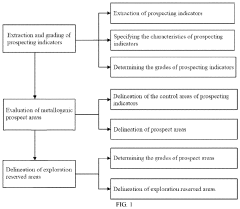
Method for delineating exploration reserved areas of deep-sea polymetallic sulfide resources
PatentPendingUS20230258841A1
Innovation
- A method involving the extraction and grading of prospecting indicators such as plume, geophysical, geochemical, biological, and mineralized outcrop information to delineate exploration reserved areas, where specific characteristics and grades of these indicators are used to determine the scope and potential of prospect areas, ultimately guiding the delineation of reserved areas.

Environmental Impact of Deep Earth Exploration
Deep Earth exploration using magnesium iron silicate hydroxide, while promising for scientific advancement, raises significant environmental concerns. The extraction and utilization of this mineral compound can have far-reaching impacts on ecosystems, geological stability, and natural resource management.
The mining process required to obtain magnesium iron silicate hydroxide often involves extensive excavation, potentially leading to habitat destruction and landscape alteration. This can disrupt local flora and fauna, causing biodiversity loss and ecosystem imbalances. Furthermore, the removal of large quantities of this mineral may affect the structural integrity of surrounding rock formations, potentially leading to increased risks of landslides or subsidence in affected areas.
Water resources are particularly vulnerable to the environmental impacts of deep Earth exploration. The extraction process may intersect with groundwater aquifers, risking contamination or alteration of water flow patterns. This can have cascading effects on both surface and subsurface water systems, potentially affecting water availability and quality for local communities and ecosystems.
The chemical properties of magnesium iron silicate hydroxide also present environmental challenges. When exposed to surface conditions, this mineral can undergo weathering processes that may release various elements into the environment. Depending on the specific composition and local conditions, this could lead to soil and water acidification or the introduction of potentially harmful trace elements into ecosystems.
Air quality is another concern in deep Earth exploration activities. The mining and processing of magnesium iron silicate hydroxide can generate dust and particulate matter, which may have negative impacts on air quality in surrounding areas. This can affect both human health and local vegetation, potentially leading to respiratory issues and reduced plant productivity.
The energy-intensive nature of deep Earth exploration and mineral processing contributes to increased greenhouse gas emissions, exacerbating climate change concerns. The transportation and refinement of extracted materials further add to the carbon footprint of these operations, highlighting the need for sustainable practices and technologies in the exploration process.
Waste management poses a significant challenge in deep Earth exploration projects. The disposal of overburden and tailings from mining operations can lead to long-term environmental issues if not properly managed. These waste materials may contain potentially harmful substances that can leach into soil and water systems, causing long-term contamination and ecological damage.
The mining process required to obtain magnesium iron silicate hydroxide often involves extensive excavation, potentially leading to habitat destruction and landscape alteration. This can disrupt local flora and fauna, causing biodiversity loss and ecosystem imbalances. Furthermore, the removal of large quantities of this mineral may affect the structural integrity of surrounding rock formations, potentially leading to increased risks of landslides or subsidence in affected areas.
Water resources are particularly vulnerable to the environmental impacts of deep Earth exploration. The extraction process may intersect with groundwater aquifers, risking contamination or alteration of water flow patterns. This can have cascading effects on both surface and subsurface water systems, potentially affecting water availability and quality for local communities and ecosystems.
The chemical properties of magnesium iron silicate hydroxide also present environmental challenges. When exposed to surface conditions, this mineral can undergo weathering processes that may release various elements into the environment. Depending on the specific composition and local conditions, this could lead to soil and water acidification or the introduction of potentially harmful trace elements into ecosystems.
Air quality is another concern in deep Earth exploration activities. The mining and processing of magnesium iron silicate hydroxide can generate dust and particulate matter, which may have negative impacts on air quality in surrounding areas. This can affect both human health and local vegetation, potentially leading to respiratory issues and reduced plant productivity.
The energy-intensive nature of deep Earth exploration and mineral processing contributes to increased greenhouse gas emissions, exacerbating climate change concerns. The transportation and refinement of extracted materials further add to the carbon footprint of these operations, highlighting the need for sustainable practices and technologies in the exploration process.
Waste management poses a significant challenge in deep Earth exploration projects. The disposal of overburden and tailings from mining operations can lead to long-term environmental issues if not properly managed. These waste materials may contain potentially harmful substances that can leach into soil and water systems, causing long-term contamination and ecological damage.
Geopolitical Implications of Deep Earth Resources
The exploration of deep Earth resources using advanced technologies like Magnesium iron silicate hydroxide (MISH) has significant geopolitical implications. As nations strive to secure strategic minerals and rare earth elements, the ability to access previously unreachable deposits could reshape global power dynamics.
Countries with advanced deep Earth exploration capabilities may gain a competitive edge in resource acquisition, potentially altering existing economic relationships and trade patterns. This could lead to shifts in global supply chains and influence international negotiations on resource management and distribution.
The development of MISH-based technologies for deep Earth exploration may also impact national security considerations. Nations possessing this technology could enhance their strategic autonomy by reducing dependence on foreign sources for critical minerals. This could, in turn, affect diplomatic leverage and alliance structures.
Environmental concerns associated with deep Earth resource extraction may lead to new international agreements and regulations. Countries at the forefront of developing sustainable extraction methods using MISH could gain diplomatic advantages in shaping these global environmental policies.
The potential discovery of vast new resource deposits through deep Earth exploration could exacerbate existing territorial disputes or create new ones, particularly in areas with unclear sovereignty such as the Arctic or deep-sea regions. This may necessitate the development of new international legal frameworks to govern resource rights in these contested spaces.
Technological cooperation and knowledge sharing in MISH-based deep Earth exploration could foster new geopolitical alliances. Countries may form strategic partnerships based on complementary expertise or resource needs, potentially redrawing the map of global influence.
The economic benefits derived from advanced deep Earth resource extraction could alter the balance of power between developed and developing nations. Countries with significant unexplored subsurface resources may experience rapid economic growth, potentially challenging established global economic hierarchies.
As deep Earth exploration capabilities become more sophisticated, there may be increased competition for scientific talent and research funding in this field. This could lead to a new form of "geo-technological" race among nations, similar to the space race of the 20th century.
Countries with advanced deep Earth exploration capabilities may gain a competitive edge in resource acquisition, potentially altering existing economic relationships and trade patterns. This could lead to shifts in global supply chains and influence international negotiations on resource management and distribution.
The development of MISH-based technologies for deep Earth exploration may also impact national security considerations. Nations possessing this technology could enhance their strategic autonomy by reducing dependence on foreign sources for critical minerals. This could, in turn, affect diplomatic leverage and alliance structures.
Environmental concerns associated with deep Earth resource extraction may lead to new international agreements and regulations. Countries at the forefront of developing sustainable extraction methods using MISH could gain diplomatic advantages in shaping these global environmental policies.
The potential discovery of vast new resource deposits through deep Earth exploration could exacerbate existing territorial disputes or create new ones, particularly in areas with unclear sovereignty such as the Arctic or deep-sea regions. This may necessitate the development of new international legal frameworks to govern resource rights in these contested spaces.
Technological cooperation and knowledge sharing in MISH-based deep Earth exploration could foster new geopolitical alliances. Countries may form strategic partnerships based on complementary expertise or resource needs, potentially redrawing the map of global influence.
The economic benefits derived from advanced deep Earth resource extraction could alter the balance of power between developed and developing nations. Countries with significant unexplored subsurface resources may experience rapid economic growth, potentially challenging established global economic hierarchies.
As deep Earth exploration capabilities become more sophisticated, there may be increased competition for scientific talent and research funding in this field. This could lead to a new form of "geo-technological" race among nations, similar to the space race of the 20th century.
Unlock deeper insights with Patsnap Eureka Quick Research — get a full tech report to explore trends and direct your research. Try now!
Generate Your Research Report Instantly with AI Agent
Supercharge your innovation with Patsnap Eureka AI Agent Platform!