

Electrode Stack Lamination In Anode-Free Solid-State
SEP 1, 20259 MIN READ
Generate Your Research Report Instantly with AI Agent
PatSnap Eureka helps you evaluate technical feasibility & market potential.
Anode-Free SSB Lamination Technology Background and Objectives
Solid-state batteries (SSBs) represent a significant evolution in energy storage technology, promising enhanced safety, higher energy density, and longer lifespan compared to conventional lithium-ion batteries. Within this domain, anode-free solid-state batteries have emerged as a particularly promising configuration, offering theoretical energy density improvements of up to 50% over conventional lithium-ion designs. The electrode stack lamination process in these batteries constitutes a critical manufacturing step that directly impacts performance, reliability, and scalability.
The historical development of solid-state battery technology dates back to the 1970s, but significant advancements in anode-free configurations have primarily occurred within the last decade. The elimination of the traditional graphite or silicon anode represents a paradigm shift in battery design, allowing for substantial weight and volume reductions while simultaneously addressing safety concerns associated with dendrite formation.
Current lamination techniques for electrode stacks in anode-free SSBs face several technical challenges, including interface stability issues, mechanical stress management during cycling, and achieving uniform pressure distribution across the stack. These challenges have limited commercial viability despite the promising theoretical advantages of the technology.
The primary technical objectives for advancing electrode stack lamination in anode-free SSBs include developing processes that ensure intimate contact between the solid electrolyte and cathode materials, minimizing interfacial resistance, and maintaining structural integrity throughout battery operation. Additionally, these processes must be compatible with high-volume manufacturing techniques to enable commercial scalability.
Recent technological trends indicate a convergence toward dry lamination processes that eliminate liquid-phase intermediates, thereby simplifying manufacturing and reducing environmental impact. Concurrently, there is growing interest in pressure-controlled lamination techniques that optimize the mechanical properties of the electrode-electrolyte interface without compromising material integrity.
The advancement of electrode stack lamination technology for anode-free SSBs aligns with broader industry goals of achieving energy densities exceeding 400 Wh/kg at the cell level, cycle life beyond 1,000 cycles, and manufacturing costs below $100/kWh. These metrics represent the threshold for widespread commercial adoption across multiple sectors, including electric vehicles, consumer electronics, and grid storage applications.
Achieving these objectives requires interdisciplinary collaboration spanning materials science, mechanical engineering, and manufacturing technology. The successful development of efficient, reliable lamination processes for anode-free SSBs would represent a significant milestone in the commercialization of next-generation energy storage solutions, potentially enabling transformative improvements in device performance and sustainability.
The historical development of solid-state battery technology dates back to the 1970s, but significant advancements in anode-free configurations have primarily occurred within the last decade. The elimination of the traditional graphite or silicon anode represents a paradigm shift in battery design, allowing for substantial weight and volume reductions while simultaneously addressing safety concerns associated with dendrite formation.
Current lamination techniques for electrode stacks in anode-free SSBs face several technical challenges, including interface stability issues, mechanical stress management during cycling, and achieving uniform pressure distribution across the stack. These challenges have limited commercial viability despite the promising theoretical advantages of the technology.
The primary technical objectives for advancing electrode stack lamination in anode-free SSBs include developing processes that ensure intimate contact between the solid electrolyte and cathode materials, minimizing interfacial resistance, and maintaining structural integrity throughout battery operation. Additionally, these processes must be compatible with high-volume manufacturing techniques to enable commercial scalability.
Recent technological trends indicate a convergence toward dry lamination processes that eliminate liquid-phase intermediates, thereby simplifying manufacturing and reducing environmental impact. Concurrently, there is growing interest in pressure-controlled lamination techniques that optimize the mechanical properties of the electrode-electrolyte interface without compromising material integrity.
The advancement of electrode stack lamination technology for anode-free SSBs aligns with broader industry goals of achieving energy densities exceeding 400 Wh/kg at the cell level, cycle life beyond 1,000 cycles, and manufacturing costs below $100/kWh. These metrics represent the threshold for widespread commercial adoption across multiple sectors, including electric vehicles, consumer electronics, and grid storage applications.
Achieving these objectives requires interdisciplinary collaboration spanning materials science, mechanical engineering, and manufacturing technology. The successful development of efficient, reliable lamination processes for anode-free SSBs would represent a significant milestone in the commercialization of next-generation energy storage solutions, potentially enabling transformative improvements in device performance and sustainability.
Market Analysis for Anode-Free Solid-State Battery Applications
The anode-free solid-state battery market is experiencing significant growth potential, driven by the increasing demand for high-energy-density energy storage solutions across multiple sectors. Current market projections indicate that the global solid-state battery market could reach $8 billion by 2030, with anode-free designs potentially capturing 15-20% of this emerging segment due to their superior energy density advantages.
The electric vehicle (EV) sector represents the primary market opportunity for anode-free solid-state batteries. With major automotive manufacturers committing to electrification targets, the demand for batteries offering greater range, faster charging, and enhanced safety is accelerating. Anode-free designs, with their theoretical energy density improvements of 30-50% over conventional lithium-ion batteries, directly address these requirements.
Consumer electronics constitutes another substantial market segment, where device miniaturization and extended battery life remain critical competitive factors. The compact form factor and high energy density of anode-free solid-state batteries make them particularly attractive for smartphones, wearables, and portable computing devices, potentially commanding premium pricing in these applications.
Grid-scale energy storage represents a developing market opportunity, particularly as renewable energy integration increases globally. The enhanced safety profile of solid-state batteries, especially anode-free designs that eliminate dendrite formation risks, positions them favorably for stationary storage applications where safety concerns are paramount.
Market adoption faces several barriers, including manufacturing scalability challenges specifically related to electrode stack lamination processes. Current production methods for anode-free solid-state batteries remain largely laboratory-scale, with costs estimated at 5-8 times higher than conventional lithium-ion batteries. Industry analysts project that manufacturing innovations in electrode stack lamination could reduce production costs by 40-60% over the next five years.
Regional market analysis reveals significant investment in anode-free solid-state battery technology across Asia-Pacific, North America, and Europe. Japan and South Korea lead in patent filings related to electrode stack lamination techniques, while North American startups have secured substantial venture capital funding for manufacturing process innovations.
Customer willingness-to-pay studies indicate that automotive OEMs would accept a 20-30% premium for batteries offering verified 40% improvements in energy density, provided manufacturing scalability is demonstrated. This price sensitivity underscores the importance of developing cost-effective electrode stack lamination processes to achieve market penetration.
The electric vehicle (EV) sector represents the primary market opportunity for anode-free solid-state batteries. With major automotive manufacturers committing to electrification targets, the demand for batteries offering greater range, faster charging, and enhanced safety is accelerating. Anode-free designs, with their theoretical energy density improvements of 30-50% over conventional lithium-ion batteries, directly address these requirements.
Consumer electronics constitutes another substantial market segment, where device miniaturization and extended battery life remain critical competitive factors. The compact form factor and high energy density of anode-free solid-state batteries make them particularly attractive for smartphones, wearables, and portable computing devices, potentially commanding premium pricing in these applications.
Grid-scale energy storage represents a developing market opportunity, particularly as renewable energy integration increases globally. The enhanced safety profile of solid-state batteries, especially anode-free designs that eliminate dendrite formation risks, positions them favorably for stationary storage applications where safety concerns are paramount.
Market adoption faces several barriers, including manufacturing scalability challenges specifically related to electrode stack lamination processes. Current production methods for anode-free solid-state batteries remain largely laboratory-scale, with costs estimated at 5-8 times higher than conventional lithium-ion batteries. Industry analysts project that manufacturing innovations in electrode stack lamination could reduce production costs by 40-60% over the next five years.
Regional market analysis reveals significant investment in anode-free solid-state battery technology across Asia-Pacific, North America, and Europe. Japan and South Korea lead in patent filings related to electrode stack lamination techniques, while North American startups have secured substantial venture capital funding for manufacturing process innovations.
Customer willingness-to-pay studies indicate that automotive OEMs would accept a 20-30% premium for batteries offering verified 40% improvements in energy density, provided manufacturing scalability is demonstrated. This price sensitivity underscores the importance of developing cost-effective electrode stack lamination processes to achieve market penetration.
Current Challenges in Electrode Stack Lamination Technology
Despite significant advancements in solid-state battery technology, electrode stack lamination in anode-free configurations presents several critical challenges that impede commercial viability. The interface between solid electrolyte and cathode materials remains problematic, with poor contact leading to increased impedance and reduced ionic conductivity. This interfacial resistance significantly impacts overall battery performance and cycle life.
Temperature management during lamination poses another substantial hurdle. The process requires precise thermal control to ensure proper adhesion without degrading temperature-sensitive components. Current lamination techniques often operate at temperatures that can compromise the structural integrity of solid electrolytes or trigger unwanted chemical reactions at material interfaces.
Pressure distribution uniformity represents a persistent challenge in stack assembly. Uneven pressure application results in inconsistent contact between layers, creating areas of high resistance and potential failure points. The mechanical properties of solid electrolytes—typically more brittle than liquid counterparts—exacerbate this issue, as they can crack or delaminate under localized pressure extremes.
Scalability concerns further complicate industrial implementation. Laboratory-scale lamination processes that yield excellent results often fail to translate to high-volume manufacturing environments. The precision required for proper alignment and consistent pressure application becomes exponentially more difficult at production scales, resulting in higher defect rates and yield losses.
Moisture sensitivity during processing presents additional complications. Many solid electrolyte materials react unfavorably with atmospheric moisture, necessitating strictly controlled processing environments. This requirement adds significant complexity and cost to manufacturing operations, particularly when scaling to industrial production volumes.
Material compatibility issues between cathode active materials, solid electrolytes, and current collectors create challenges in achieving stable interfaces. Differential expansion coefficients among these components can lead to mechanical stress during cycling, eventually causing delamination and performance degradation over time.
The absence of a liquid electrolyte in anode-free designs eliminates the self-healing properties present in conventional batteries, making any lamination defects particularly detrimental to long-term performance. This places extraordinary demands on manufacturing precision that exceed capabilities of current industrial equipment.
Thickness control and dimensional stability during and after lamination remain problematic, with variations as small as a few micrometers potentially creating significant performance inconsistencies across cells in the same production batch.
Temperature management during lamination poses another substantial hurdle. The process requires precise thermal control to ensure proper adhesion without degrading temperature-sensitive components. Current lamination techniques often operate at temperatures that can compromise the structural integrity of solid electrolytes or trigger unwanted chemical reactions at material interfaces.
Pressure distribution uniformity represents a persistent challenge in stack assembly. Uneven pressure application results in inconsistent contact between layers, creating areas of high resistance and potential failure points. The mechanical properties of solid electrolytes—typically more brittle than liquid counterparts—exacerbate this issue, as they can crack or delaminate under localized pressure extremes.
Scalability concerns further complicate industrial implementation. Laboratory-scale lamination processes that yield excellent results often fail to translate to high-volume manufacturing environments. The precision required for proper alignment and consistent pressure application becomes exponentially more difficult at production scales, resulting in higher defect rates and yield losses.
Moisture sensitivity during processing presents additional complications. Many solid electrolyte materials react unfavorably with atmospheric moisture, necessitating strictly controlled processing environments. This requirement adds significant complexity and cost to manufacturing operations, particularly when scaling to industrial production volumes.
Material compatibility issues between cathode active materials, solid electrolytes, and current collectors create challenges in achieving stable interfaces. Differential expansion coefficients among these components can lead to mechanical stress during cycling, eventually causing delamination and performance degradation over time.
The absence of a liquid electrolyte in anode-free designs eliminates the self-healing properties present in conventional batteries, making any lamination defects particularly detrimental to long-term performance. This places extraordinary demands on manufacturing precision that exceed capabilities of current industrial equipment.
Thickness control and dimensional stability during and after lamination remain problematic, with variations as small as a few micrometers potentially creating significant performance inconsistencies across cells in the same production batch.
Current Electrode Stack Lamination Solutions for SSBs
01 Electrode stack assembly methods
Various methods for assembling electrode stacks in battery or capacitor manufacturing. These methods involve precise alignment and stacking of electrode layers, separators, and current collectors to form a cohesive unit. Advanced assembly techniques may include automated stacking systems, registration mechanisms, and specialized equipment to ensure uniform layer placement and consistent electrical performance of the final stack.- Electrode stack assembly methods: Various methods for assembling electrode stacks in battery or capacitor manufacturing. These methods include precise alignment techniques, automated stacking processes, and specialized equipment for handling electrode sheets. The assembly methods focus on maintaining consistent spacing between electrodes and ensuring proper alignment to optimize electrical performance and prevent short circuits.
- Lamination techniques for electrode materials: Specific lamination techniques used to bond electrode materials together, including heat lamination, pressure lamination, and adhesive bonding. These techniques ensure strong mechanical connections between layers while maintaining electrical conductivity. The lamination process often involves controlled temperature and pressure parameters to achieve optimal bonding without damaging sensitive electrode materials.
- Electrode stack compression and fixation: Methods for compressing and fixing electrode stacks to maintain structural integrity and electrical performance. This includes the use of compression plates, clamping mechanisms, and specialized fixtures that apply uniform pressure across the stack. Proper compression helps minimize internal resistance and ensures consistent electrical contact between layers throughout the battery or capacitor life.
- Multi-layer electrode design and configuration: Design considerations for multi-layer electrode stacks, including layer thickness optimization, material selection, and configuration patterns. These designs focus on maximizing energy density while maintaining mechanical stability. Various configurations such as bipolar, monopolar, and interleaved designs are used depending on the specific application requirements and performance targets.
- Automated manufacturing systems for electrode stacking: Advanced automated systems specifically designed for high-precision electrode stacking and lamination in mass production environments. These systems incorporate robotics, computer vision for quality control, and synchronized motion control to achieve consistent results. Automation helps reduce human error, increase throughput, and maintain tight tolerances required for modern energy storage devices.
02 Lamination processes for electrode stacks
Specific lamination techniques used to bond electrode stack components together. These processes typically involve applying heat and pressure to create strong interfacial bonds between layers. Lamination parameters such as temperature, pressure, and dwell time are carefully controlled to optimize adhesion while preventing damage to active materials. Various lamination equipment designs enable continuous or batch processing of electrode stacks.Expand Specific Solutions03 Materials for electrode stack lamination
Specialized materials used in electrode stack lamination including binders, adhesives, and separator materials. These materials are selected for their electrochemical stability, thermal resistance, and mechanical properties. Advanced composite materials may be incorporated to enhance conductivity, reduce internal resistance, or improve thermal management within the stack. Material selection significantly impacts the performance and durability of the laminated electrode assembly.Expand Specific Solutions04 Quality control in electrode stack lamination
Methods and systems for ensuring quality during the electrode stack lamination process. These include in-line inspection techniques, defect detection systems, and process monitoring tools that verify proper alignment, thickness uniformity, and bond integrity. Quality control measures may involve optical inspection, ultrasonic testing, or electrical characterization to identify defects before final assembly. Statistical process control methods help maintain consistent lamination quality across production batches.Expand Specific Solutions05 Innovations in electrode stack design
Novel electrode stack configurations and design approaches that enhance performance or manufacturing efficiency. These innovations may include bipolar designs, interdigitated electrodes, or specialized geometries that optimize power density and energy capacity. Advanced stack designs might incorporate thermal management features, pressure equalization systems, or novel current collection methods. These design innovations aim to improve energy density, cycle life, and safety characteristics of the final energy storage device.Expand Specific Solutions
Key Industry Players in Solid-State Battery Manufacturing
The electrode stack lamination in anode-free solid-state batteries market is in an early growth phase, with significant R&D investment but limited commercial deployment. Major automotive manufacturers (Toyota, Honda, Hyundai, Volkswagen) are partnering with battery specialists (LG Energy Solution, SK On, StoreDot) to accelerate development. The technology shows promising potential with a projected market size reaching $5-7 billion by 2030. Technical maturity varies across companies, with LG Energy Solution, Toyota, and StoreDot leading in patent activity and prototype demonstrations. Traditional battery manufacturers like Murata, Panasonic, and AESC are advancing lamination techniques to overcome interface challenges, while newer entrants like Solid Power focus on specialized electrolyte formulations for improved stack integrity.
LG Energy Solution Ltd.
Technical Solution: LG Energy Solution has developed a sophisticated electrode stack lamination technology for anode-free solid-state batteries centered around their proprietary "ASSB Integration Platform." This platform utilizes a composite solid electrolyte system combining sulfide and polymer components to optimize both ionic conductivity and mechanical properties. Their lamination process employs a sequential stacking approach where cathode layers are first prepared with controlled porosity to accommodate lithium expansion, followed by precision application of the solid electrolyte layer. The company's innovation includes a specialized pressure-gradient lamination technique that creates optimal interfacial contact while preventing electrolyte fracture. LG's manufacturing system incorporates real-time impedance monitoring during lamination to ensure proper layer adhesion and employs proprietary edge-sealing technology to prevent moisture ingress and lithium dendrite formation at cell boundaries.
Strengths: Advanced quality control systems ensure consistent cell performance; composite electrolyte approach balances mechanical and electrochemical requirements. Weaknesses: Complex multi-material system increases production variables and potential failure points; requires specialized equipment not compatible with all existing production lines.
Toyota Motor Corp.
Technical Solution: Toyota has pioneered a unique electrode stack lamination approach for anode-free solid-state batteries through their "integrated solid-state sheet" technology. Their process utilizes a sulfide-based superionic conductor electrolyte with proprietary additives to enhance interfacial stability. Toyota's lamination technique involves a specialized dry-room assembly process where cathode materials are first bonded to a current collector, followed by precision application of their solid electrolyte layer. The innovation lies in their pressure-controlled lamination system that creates engineered void spaces designed to accommodate lithium plating during initial charging cycles. Toyota's manufacturing approach incorporates ultrasonic welding techniques for terminal connections and employs a proprietary heat-treatment step post-lamination to enhance interfacial contact without compromising electrolyte integrity. Their process achieves energy densities exceeding 400 Wh/kg while maintaining cycle stability through careful control of lithium plating morphology.
Strengths: Extensive experience with solid electrolyte materials provides deep understanding of interface challenges; integrated manufacturing approach optimizes cell consistency. Weaknesses: Sulfide electrolytes require stringent environmental controls during manufacturing; sensitivity to pressure variations during lamination can affect cell-to-cell consistency.
Critical Patents in Anode-Free Battery Lamination Technology
Anode-free solid-state battery and method of battery fabrication
PatentActiveUS11824159B2
Innovation
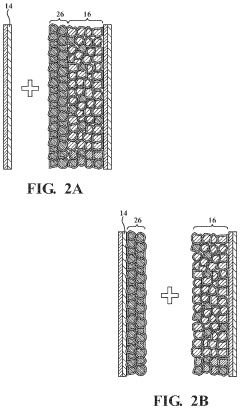
- An anode-free solid-state battery design that uses a cathode layer with transient anode elements, a bare current collector, and a gelled solid-state electrolyte layer to facilitate ionic conduction, eliminating the need for a permanent anode and simplifying the battery structure.



Anode-free solid-state battery and use thereof
PatentWO2025103689A1
Innovation
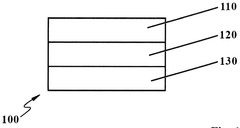
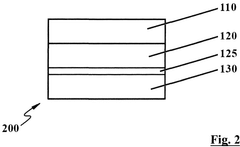
- Incorporating an additional solid-state electrolyte layer between the solid-state electrolyte separator and the conductor improves deformability and maintains contact between the components during charging cycles.
Materials Compatibility and Interface Engineering
Materials compatibility and interface engineering represent critical challenges in electrode stack lamination for anode-free solid-state batteries. The interfaces between different battery components—particularly between the solid electrolyte and cathode materials—often suffer from chemical and mechanical incompatibilities that lead to high interfacial resistance and poor cycling performance.
Chemical reactions at these interfaces can form resistive interphases that impede ion transport. For instance, sulfide-based solid electrolytes frequently react with oxide cathode materials, creating interfacial layers that increase resistance and degrade battery performance. Similarly, polymer electrolytes may experience oxidative decomposition when in contact with high-voltage cathode materials, compromising the integrity of the electrode-electrolyte interface.
Mechanical issues also arise during lamination processes. The different thermal expansion coefficients of battery components can create stress at interfaces during temperature fluctuations, leading to delamination and loss of contact. This problem is particularly pronounced in anode-free configurations where volume changes during cycling create additional mechanical stresses at interfaces.
Recent advances in interface engineering have focused on developing buffer layers and coatings to mitigate these issues. Atomic layer deposition (ALD) techniques have enabled the creation of ultrathin protective layers on cathode particles, preventing direct contact between reactive components while maintaining ionic conductivity. Gradient interfaces, where composition gradually transitions between materials, have also shown promise in reducing interfacial resistance.
Surface modification strategies using dopants or functional additives have emerged as effective approaches to enhance interfacial stability. For example, incorporating small amounts of lithium salts at interfaces can improve wettability and ionic transport across boundaries. Polymer-ceramic composite interlayers have demonstrated success in accommodating mechanical stresses while maintaining good ionic conductivity.
The lamination process itself significantly impacts interface quality. Parameters such as pressure, temperature, and duration must be carefully optimized to ensure intimate contact between layers without triggering unwanted reactions. Advanced techniques like pulsed laser deposition and solution-based methods are being explored to create more uniform and stable interfaces during stack assembly.
Future research directions include developing in-situ interface formation techniques that create chemically stable interfaces during battery operation, as well as self-healing interfaces that can recover from mechanical damage during cycling. Computational modeling approaches are increasingly being employed to predict interfacial behaviors and guide the design of more compatible material combinations for next-generation anode-free solid-state batteries.
Chemical reactions at these interfaces can form resistive interphases that impede ion transport. For instance, sulfide-based solid electrolytes frequently react with oxide cathode materials, creating interfacial layers that increase resistance and degrade battery performance. Similarly, polymer electrolytes may experience oxidative decomposition when in contact with high-voltage cathode materials, compromising the integrity of the electrode-electrolyte interface.
Mechanical issues also arise during lamination processes. The different thermal expansion coefficients of battery components can create stress at interfaces during temperature fluctuations, leading to delamination and loss of contact. This problem is particularly pronounced in anode-free configurations where volume changes during cycling create additional mechanical stresses at interfaces.
Recent advances in interface engineering have focused on developing buffer layers and coatings to mitigate these issues. Atomic layer deposition (ALD) techniques have enabled the creation of ultrathin protective layers on cathode particles, preventing direct contact between reactive components while maintaining ionic conductivity. Gradient interfaces, where composition gradually transitions between materials, have also shown promise in reducing interfacial resistance.
Surface modification strategies using dopants or functional additives have emerged as effective approaches to enhance interfacial stability. For example, incorporating small amounts of lithium salts at interfaces can improve wettability and ionic transport across boundaries. Polymer-ceramic composite interlayers have demonstrated success in accommodating mechanical stresses while maintaining good ionic conductivity.
The lamination process itself significantly impacts interface quality. Parameters such as pressure, temperature, and duration must be carefully optimized to ensure intimate contact between layers without triggering unwanted reactions. Advanced techniques like pulsed laser deposition and solution-based methods are being explored to create more uniform and stable interfaces during stack assembly.
Future research directions include developing in-situ interface formation techniques that create chemically stable interfaces during battery operation, as well as self-healing interfaces that can recover from mechanical damage during cycling. Computational modeling approaches are increasingly being employed to predict interfacial behaviors and guide the design of more compatible material combinations for next-generation anode-free solid-state batteries.
Scalability and Manufacturing Cost Analysis
The scalability of electrode stack lamination processes for anode-free solid-state batteries presents significant manufacturing challenges that directly impact commercial viability. Current laboratory-scale lamination techniques typically involve manual or semi-automated processes that achieve excellent interfacial contact but are inherently limited in throughput. When projecting to gigafactory-scale production, these processes face substantial scaling barriers, particularly in maintaining uniform pressure distribution and temperature control across larger electrode areas.
Manufacturing cost analysis reveals that lamination equipment represents 15-20% of capital expenditure for solid-state battery production lines. The precision requirements for anode-free configurations further increase this cost, as specialized equipment must maintain nanometer-scale tolerances while handling delicate solid electrolyte layers. Energy consumption during lamination also contributes significantly to operational expenses, with high-temperature processes requiring 2-3 times more energy than conventional lithium-ion battery assembly.
Material waste during scale-up presents another critical cost factor. Current lamination processes for anode-free designs show rejection rates of 12-18% due to electrolyte cracking and delamination issues. This waste rate must be reduced below 5% to achieve cost parity with conventional lithium-ion batteries. Additionally, the specialized handling requirements for moisture-sensitive solid electrolytes necessitate controlled atmosphere environments, adding approximately $8-12 million in infrastructure costs per gigawatt-hour of production capacity.
Time-efficiency metrics indicate that lamination cycle times for anode-free solid-state batteries currently exceed those of conventional batteries by 2.5-3.5 times. This throughput limitation creates production bottlenecks that significantly impact overall manufacturing economics. Industry analysis suggests that achieving competitive cost structures requires reducing lamination cycle times by at least 60% while maintaining interfacial quality.
Recent techno-economic modeling indicates that at current technology readiness levels, the lamination process contributes approximately $24-38/kWh to overall cell costs. This represents a substantial premium compared to conventional lithium-ion battery manufacturing. However, sensitivity analysis suggests that improvements in lamination speed, yield, and energy efficiency could reduce this contribution to $10-15/kWh, bringing anode-free solid-state batteries closer to commercial viability.
The path to cost-effective scaling requires parallel innovation in equipment design, process optimization, and material engineering. Roll-to-roll lamination technologies show particular promise, potentially reducing capital costs by 40-50% compared to discrete sheet processing, though significant engineering challenges remain in adapting these techniques to the unique requirements of anode-free configurations.
Manufacturing cost analysis reveals that lamination equipment represents 15-20% of capital expenditure for solid-state battery production lines. The precision requirements for anode-free configurations further increase this cost, as specialized equipment must maintain nanometer-scale tolerances while handling delicate solid electrolyte layers. Energy consumption during lamination also contributes significantly to operational expenses, with high-temperature processes requiring 2-3 times more energy than conventional lithium-ion battery assembly.
Material waste during scale-up presents another critical cost factor. Current lamination processes for anode-free designs show rejection rates of 12-18% due to electrolyte cracking and delamination issues. This waste rate must be reduced below 5% to achieve cost parity with conventional lithium-ion batteries. Additionally, the specialized handling requirements for moisture-sensitive solid electrolytes necessitate controlled atmosphere environments, adding approximately $8-12 million in infrastructure costs per gigawatt-hour of production capacity.
Time-efficiency metrics indicate that lamination cycle times for anode-free solid-state batteries currently exceed those of conventional batteries by 2.5-3.5 times. This throughput limitation creates production bottlenecks that significantly impact overall manufacturing economics. Industry analysis suggests that achieving competitive cost structures requires reducing lamination cycle times by at least 60% while maintaining interfacial quality.
Recent techno-economic modeling indicates that at current technology readiness levels, the lamination process contributes approximately $24-38/kWh to overall cell costs. This represents a substantial premium compared to conventional lithium-ion battery manufacturing. However, sensitivity analysis suggests that improvements in lamination speed, yield, and energy efficiency could reduce this contribution to $10-15/kWh, bringing anode-free solid-state batteries closer to commercial viability.
The path to cost-effective scaling requires parallel innovation in equipment design, process optimization, and material engineering. Roll-to-roll lamination technologies show particular promise, potentially reducing capital costs by 40-50% compared to discrete sheet processing, though significant engineering challenges remain in adapting these techniques to the unique requirements of anode-free configurations.
Unlock deeper insights with PatSnap Eureka Quick Research — get a full tech report to explore trends and direct your research. Try now!
Generate Your Research Report Instantly with AI Agent
Supercharge your innovation with PatSnap Eureka AI Agent Platform!