

Anode-Free Solid-State Environmental And EHS Compliance
SEP 1, 20259 MIN READ
Generate Your Research Report Instantly with AI Agent
PatSnap Eureka helps you evaluate technical feasibility & market potential.
Anode-Free Battery Technology Background and Objectives
The evolution of battery technology has witnessed significant advancements over the past decades, with lithium-ion batteries dominating the market since their commercial introduction in the early 1990s. However, conventional lithium-ion batteries face inherent limitations in energy density, safety, and environmental impact. Anode-free solid-state battery technology represents a revolutionary approach that addresses these challenges by eliminating the traditional graphite anode, thereby increasing energy density while enhancing safety profiles.
The development of anode-free battery technology can be traced back to early research in the 2000s, but significant breakthroughs have only emerged in the last decade. This technology leverages the concept of in-situ lithium plating during the initial charging process, where lithium ions from the cathode deposit directly onto the current collector, forming a lithium metal anode. This approach eliminates the need for pre-lithiated anodes, simplifying manufacturing processes and reducing material costs.
The primary objective of anode-free solid-state battery research is to achieve higher energy densities exceeding 400 Wh/kg, compared to the theoretical limit of approximately 260 Wh/kg for conventional lithium-ion batteries. This substantial increase would enable longer-range electric vehicles and extended operation times for portable electronics, addressing a critical market demand.
Environmental and EHS (Environmental, Health, and Safety) compliance represents another crucial objective in this technological domain. By eliminating toxic and flammable liquid electrolytes through solid-state architecture, these batteries offer reduced fire risks and lower environmental impact throughout their lifecycle. The absence of traditional anodes also reduces the dependency on graphite mining, which has been associated with significant environmental degradation in certain regions.
Current research aims to overcome key technical challenges, including dendrite formation during lithium plating, interface stability between solid electrolytes and electrodes, and manufacturing scalability. The technology roadmap envisions commercial viability within the next 5-7 years, with initial applications in premium consumer electronics followed by automotive and grid storage implementations.
Global interest in anode-free solid-state batteries has accelerated significantly, with research investments exceeding $2 billion in 2022 alone. This surge reflects the recognition of this technology's potential to revolutionize energy storage while addressing critical environmental concerns. The convergence of higher energy density, improved safety, and reduced environmental footprint positions anode-free solid-state batteries as a transformative technology in the sustainable energy landscape.
The development of anode-free battery technology can be traced back to early research in the 2000s, but significant breakthroughs have only emerged in the last decade. This technology leverages the concept of in-situ lithium plating during the initial charging process, where lithium ions from the cathode deposit directly onto the current collector, forming a lithium metal anode. This approach eliminates the need for pre-lithiated anodes, simplifying manufacturing processes and reducing material costs.
The primary objective of anode-free solid-state battery research is to achieve higher energy densities exceeding 400 Wh/kg, compared to the theoretical limit of approximately 260 Wh/kg for conventional lithium-ion batteries. This substantial increase would enable longer-range electric vehicles and extended operation times for portable electronics, addressing a critical market demand.
Environmental and EHS (Environmental, Health, and Safety) compliance represents another crucial objective in this technological domain. By eliminating toxic and flammable liquid electrolytes through solid-state architecture, these batteries offer reduced fire risks and lower environmental impact throughout their lifecycle. The absence of traditional anodes also reduces the dependency on graphite mining, which has been associated with significant environmental degradation in certain regions.
Current research aims to overcome key technical challenges, including dendrite formation during lithium plating, interface stability between solid electrolytes and electrodes, and manufacturing scalability. The technology roadmap envisions commercial viability within the next 5-7 years, with initial applications in premium consumer electronics followed by automotive and grid storage implementations.
Global interest in anode-free solid-state batteries has accelerated significantly, with research investments exceeding $2 billion in 2022 alone. This surge reflects the recognition of this technology's potential to revolutionize energy storage while addressing critical environmental concerns. The convergence of higher energy density, improved safety, and reduced environmental footprint positions anode-free solid-state batteries as a transformative technology in the sustainable energy landscape.
Market Analysis for Anode-Free Solid-State Batteries
The global market for anode-free solid-state batteries is experiencing significant growth, driven by increasing demand for safer, higher energy density power solutions across multiple industries. Current market projections indicate that the solid-state battery market will reach approximately $8 billion by 2028, with anode-free technologies potentially capturing 15-20% of this segment as the technology matures.
The automotive sector represents the largest potential market for anode-free solid-state batteries, with electric vehicle manufacturers actively seeking battery technologies that offer improved safety profiles and energy density compared to conventional lithium-ion batteries. Major automakers including Toyota, Volkswagen, and BMW have made substantial investments in solid-state battery research, with particular interest in anode-free configurations due to their theoretical energy density advantages.
Consumer electronics constitutes the second-largest market segment, where demand for longer-lasting, faster-charging, and safer batteries continues to grow. The reduced fire risk and potential for higher energy density make anode-free solid-state batteries particularly attractive for wearable devices, smartphones, and laptops where space constraints are significant.
Market analysis reveals regional variations in adoption potential. Asia-Pacific, particularly Japan and South Korea, leads in research and development investments, while North America shows strong commercial interest driven by venture capital funding. Europe's market is primarily shaped by stringent environmental regulations and automotive industry demands.
A critical market driver is the increasing regulatory pressure regarding battery recycling and environmental impact. The simplified structure of anode-free designs potentially offers advantages in end-of-life processing and recycling, aligning with circular economy principles being adopted globally.
Supply chain considerations significantly impact market development. The reduced material requirements of anode-free designs may alleviate some raw material constraints, particularly regarding graphite and copper foil used in conventional anodes. However, the specialized electrolyte materials required for solid-state batteries present new supply chain challenges.
Price sensitivity analysis indicates that while current production costs remain prohibitively high for mass-market adoption, the technology learning curve suggests potential for 30-40% cost reduction within five years as manufacturing processes mature. The elimination of anode materials and associated processing steps could eventually provide cost advantages over conventional lithium-ion batteries.
Market penetration is expected to follow a staged approach, with initial adoption in premium segments where performance advantages justify higher costs, followed by broader market penetration as economies of scale develop. Industry forecasts suggest meaningful commercial deployment beginning around 2025-2026, with accelerated adoption in the latter part of the decade.
The automotive sector represents the largest potential market for anode-free solid-state batteries, with electric vehicle manufacturers actively seeking battery technologies that offer improved safety profiles and energy density compared to conventional lithium-ion batteries. Major automakers including Toyota, Volkswagen, and BMW have made substantial investments in solid-state battery research, with particular interest in anode-free configurations due to their theoretical energy density advantages.
Consumer electronics constitutes the second-largest market segment, where demand for longer-lasting, faster-charging, and safer batteries continues to grow. The reduced fire risk and potential for higher energy density make anode-free solid-state batteries particularly attractive for wearable devices, smartphones, and laptops where space constraints are significant.
Market analysis reveals regional variations in adoption potential. Asia-Pacific, particularly Japan and South Korea, leads in research and development investments, while North America shows strong commercial interest driven by venture capital funding. Europe's market is primarily shaped by stringent environmental regulations and automotive industry demands.
A critical market driver is the increasing regulatory pressure regarding battery recycling and environmental impact. The simplified structure of anode-free designs potentially offers advantages in end-of-life processing and recycling, aligning with circular economy principles being adopted globally.
Supply chain considerations significantly impact market development. The reduced material requirements of anode-free designs may alleviate some raw material constraints, particularly regarding graphite and copper foil used in conventional anodes. However, the specialized electrolyte materials required for solid-state batteries present new supply chain challenges.
Price sensitivity analysis indicates that while current production costs remain prohibitively high for mass-market adoption, the technology learning curve suggests potential for 30-40% cost reduction within five years as manufacturing processes mature. The elimination of anode materials and associated processing steps could eventually provide cost advantages over conventional lithium-ion batteries.
Market penetration is expected to follow a staged approach, with initial adoption in premium segments where performance advantages justify higher costs, followed by broader market penetration as economies of scale develop. Industry forecasts suggest meaningful commercial deployment beginning around 2025-2026, with accelerated adoption in the latter part of the decade.
Technical Challenges in Anode-Free Battery Development
Anode-free battery technology represents a significant advancement in energy storage systems, offering potential solutions to critical challenges in current lithium-ion battery designs. However, the development of these batteries faces substantial technical hurdles that must be addressed before widespread commercial adoption becomes feasible. The primary challenge lies in the lithium metal deposition process, which occurs during battery charging. Without a dedicated anode structure, controlling this deposition to ensure uniformity and prevent dendrite formation becomes exceptionally difficult.
The solid-state electrolyte interface presents another major obstacle. While solid electrolytes theoretically provide better safety profiles than liquid alternatives, they introduce complex interfacial issues. The solid-solid contact between the lithium metal and electrolyte often suffers from poor wetting characteristics and high interfacial resistance, limiting ion transport efficiency and overall battery performance. These interfaces are particularly vulnerable during repeated charge-discharge cycles, leading to mechanical degradation over time.
Cycle stability remains one of the most significant barriers to commercialization. Current anode-free designs typically demonstrate rapid capacity fade after relatively few cycles, with many prototypes losing more than 50% of their initial capacity within 100 cycles. This degradation stems from irreversible lithium loss during cycling, electrolyte decomposition, and mechanical stresses at interfaces that worsen with each cycle.
The volumetric expansion during lithium plating introduces substantial mechanical stress throughout the battery structure. Without a dedicated anode to accommodate this expansion, the entire cell must withstand significant dimensional changes. This expansion can lead to delamination between layers, cracking of the solid electrolyte, and eventual cell failure. Engineering solutions that can accommodate this expansion while maintaining structural integrity represent a critical research direction.
Manufacturing scalability presents additional challenges. Current laboratory-scale production methods for anode-free solid-state batteries involve complex, multi-step processes that are difficult to translate to mass production. The precise control required for electrolyte deposition, cathode preparation, and cell assembly exceeds the capabilities of many existing battery manufacturing facilities, necessitating significant capital investment for commercialization.
Environmental and safety compliance adds another layer of complexity. While eliminating the conventional graphite anode reduces certain environmental impacts, the increased reliance on lithium metal raises concerns about resource availability and extraction impacts. Additionally, ensuring the safety of these high-energy-density systems requires extensive testing and validation protocols that are still being developed by regulatory bodies worldwide.
The solid-state electrolyte interface presents another major obstacle. While solid electrolytes theoretically provide better safety profiles than liquid alternatives, they introduce complex interfacial issues. The solid-solid contact between the lithium metal and electrolyte often suffers from poor wetting characteristics and high interfacial resistance, limiting ion transport efficiency and overall battery performance. These interfaces are particularly vulnerable during repeated charge-discharge cycles, leading to mechanical degradation over time.
Cycle stability remains one of the most significant barriers to commercialization. Current anode-free designs typically demonstrate rapid capacity fade after relatively few cycles, with many prototypes losing more than 50% of their initial capacity within 100 cycles. This degradation stems from irreversible lithium loss during cycling, electrolyte decomposition, and mechanical stresses at interfaces that worsen with each cycle.
The volumetric expansion during lithium plating introduces substantial mechanical stress throughout the battery structure. Without a dedicated anode to accommodate this expansion, the entire cell must withstand significant dimensional changes. This expansion can lead to delamination between layers, cracking of the solid electrolyte, and eventual cell failure. Engineering solutions that can accommodate this expansion while maintaining structural integrity represent a critical research direction.
Manufacturing scalability presents additional challenges. Current laboratory-scale production methods for anode-free solid-state batteries involve complex, multi-step processes that are difficult to translate to mass production. The precise control required for electrolyte deposition, cathode preparation, and cell assembly exceeds the capabilities of many existing battery manufacturing facilities, necessitating significant capital investment for commercialization.
Environmental and safety compliance adds another layer of complexity. While eliminating the conventional graphite anode reduces certain environmental impacts, the increased reliance on lithium metal raises concerns about resource availability and extraction impacts. Additionally, ensuring the safety of these high-energy-density systems requires extensive testing and validation protocols that are still being developed by regulatory bodies worldwide.
Current Anode-Free Solid-State Battery Solutions
01 Environmental impact of anode-free solid-state battery materials
Anode-free solid-state batteries offer environmental advantages through the elimination of traditional anode materials like graphite or silicon, reducing resource extraction impacts. These batteries utilize lithium metal that forms in situ during charging, minimizing waste and environmental footprint. The absence of conventional anodes also reduces the overall battery weight and volume, leading to more efficient use of materials and potentially lower environmental impact throughout the product lifecycle.- Environmental impact of anode-free solid-state battery materials: Anode-free solid-state batteries offer environmental advantages through the elimination of traditional anode materials like graphite or silicon, reducing resource extraction impacts. These batteries utilize lithium metal that forms in situ during charging, decreasing the overall material footprint. The absence of conventional anodes also reduces manufacturing complexity and associated environmental impacts, while potentially extending battery lifespan and reducing waste generation. The simplified design contributes to more sustainable battery production with fewer components requiring extraction, processing, and disposal.
- Safety compliance and hazard mitigation in anode-free designs: Anode-free solid-state battery designs address critical safety concerns by eliminating flammable liquid electrolytes and replacing them with solid electrolytes that are less prone to thermal runaway. These designs incorporate safety features such as pressure relief mechanisms, thermal management systems, and protective layers to prevent lithium dendrite formation. Compliance with safety standards includes testing for mechanical integrity, thermal stability, and electrical safety. The solid electrolyte interface also provides enhanced protection against short circuits and reduces risks associated with battery failure modes, making these batteries more suitable for various applications including electric vehicles and consumer electronics.
- Regulatory compliance frameworks for anode-free battery production: Manufacturers of anode-free solid-state batteries must navigate complex regulatory frameworks that govern battery production, transportation, and disposal. These include compliance with international standards such as IEC 62133 for safety requirements, UN 38.3 for transport regulations, and regional directives like the EU Battery Directive. Environmental regulations require proper management of production waste, particularly concerning electrolyte materials and lithium compounds. Companies must implement environmental management systems, conduct life cycle assessments, and ensure proper labeling and documentation. Emerging regulations increasingly focus on sustainable sourcing of materials, carbon footprint reduction, and end-of-life recycling considerations.
- Recycling and end-of-life management for anode-free batteries: End-of-life management for anode-free solid-state batteries presents unique challenges and opportunities. The absence of traditional anode materials simplifies some recycling processes while introducing new considerations for recovering solid electrolyte components. Recycling methods include mechanical separation, hydrometallurgical processes, and direct recycling approaches that preserve the structural integrity of key components. Advanced recycling technologies focus on efficient recovery of lithium and other valuable materials from the cathode and solid electrolyte. Design for disassembly principles are being incorporated into battery manufacturing to facilitate easier separation of components at end-of-life, reducing environmental impact and improving resource recovery rates.
- Occupational health considerations in manufacturing processes: Manufacturing anode-free solid-state batteries presents distinct occupational health and safety considerations. Workers may be exposed to various hazards including lithium compounds, ceramic electrolyte materials, and processing chemicals. Engineering controls such as enclosed processing systems, local exhaust ventilation, and automated handling equipment are essential for minimizing exposure risks. Personal protective equipment requirements typically include respiratory protection, chemical-resistant gloves, and eye protection. Workplace monitoring programs should assess airborne concentrations of particulates and chemical exposures. Training programs must address safe handling procedures for reactive materials, emergency response protocols, and proper use of safety equipment to ensure compliance with occupational health standards.
02 Safety compliance and hazard mitigation in anode-free designs
Anode-free solid-state battery designs address several EHS concerns by eliminating flammable liquid electrolytes and replacing them with solid electrolytes that are less prone to thermal runaway. These designs incorporate safety features such as protective layers and specialized separators to prevent lithium dendrite formation. Compliance with safety standards involves rigorous testing protocols for mechanical integrity, thermal stability, and electrical safety to ensure the batteries meet international safety regulations for consumer electronics, electric vehicles, and energy storage applications.Expand Specific Solutions03 Manufacturing process compliance and waste management
Manufacturing anode-free solid-state batteries requires specialized processes that must comply with environmental regulations regarding emissions, waste disposal, and resource utilization. These processes include dry room manufacturing techniques, solvent-free electrode preparation, and advanced recycling methods to recover valuable materials. Manufacturers implement closed-loop systems to minimize waste generation and employ water conservation strategies during production. Compliance with ISO 14001 environmental management standards and regional manufacturing regulations is essential for sustainable production.Expand Specific Solutions04 End-of-life considerations and recycling protocols
Anode-free solid-state batteries present unique end-of-life management challenges and opportunities. Recycling processes are designed to recover high-value materials like lithium and other metals from these batteries while minimizing environmental impact. Advanced separation techniques enable efficient material recovery without the contamination issues associated with liquid electrolytes. Manufacturers are implementing take-back programs and designing batteries with disassembly in mind to facilitate recycling. Compliance with extended producer responsibility regulations and waste electrical and electronic equipment directives is crucial for responsible end-of-life management.Expand Specific Solutions05 Regulatory frameworks and certification requirements
Anode-free solid-state batteries must comply with various regulatory frameworks and certification requirements across different regions. These include transportation regulations for lithium batteries under UN 38.3 testing requirements, product safety certifications like UL and IEC standards, and chemical registration under frameworks such as REACH and RoHS. Manufacturers must document material composition, safety testing results, and environmental impact assessments to obtain necessary certifications. Emerging regulations specifically addressing solid-state battery technologies are being developed to ensure appropriate oversight of this evolving technology.Expand Specific Solutions
Key Industry Players in Anode-Free Battery Research
The anode-free solid-state battery technology market is currently in an early growth phase, characterized by intensive R&D activities and strategic positioning by major players. The market is projected to expand significantly as automotive manufacturers like Hyundai, Kia, GM, and Nissan pursue zero-emission vehicle strategies. Technical maturity varies considerably among competitors, with LG Energy Solution, POSCO Holdings, and Applied Materials demonstrating advanced capabilities in materials engineering and manufacturing processes. Academic-industrial partnerships are prevalent, with institutions like KIST, University of Shanghai for Science & Technology, and Hong Kong University of Science & Technology collaborating with industry leaders to overcome key challenges in electrolyte stability, interface engineering, and scalable production methods for environmentally compliant solid-state battery technologies.
GM Global Technology Operations LLC
Technical Solution: GM has developed a proprietary anode-free solid-state battery technology focused on environmental sustainability and EHS compliance for their next-generation electric vehicles. Their approach utilizes a lithium metal electrode that forms during initial charging, eliminating the need for conventional graphite anodes and their associated environmental impacts. GM's solid electrolyte formulation incorporates bio-sourced polymers derived from sustainable feedstocks, reducing dependency on petroleum-based materials. The company has implemented a comprehensive lifecycle assessment framework that tracks environmental impacts from raw material sourcing through end-of-life recycling. Their manufacturing process eliminates the use of NMP (N-Methyl-2-pyrrolidone) and other toxic solvents traditionally used in battery production, significantly reducing workplace hazards and VOC emissions. GM's batteries utilize a proprietary ceramic-polymer composite electrolyte that meets stringent fire safety standards while enabling fast-charging capabilities. The technology incorporates design features that facilitate easier disassembly and material recovery at end-of-life, with over 90% of battery materials being recyclable.
Strengths: Elimination of toxic solvents in manufacturing improves workplace safety and reduces environmental impact; bio-sourced polymer components reduce carbon footprint; design optimized for recyclability and material recovery. Weaknesses: Current production scale remains limited to prototype and small batch manufacturing; ceramic-polymer composite electrolytes face challenges with mechanical stability during thermal cycling; higher initial production costs compared to conventional lithium-ion batteries.
LG Energy Solution Ltd.
Technical Solution: LG Energy Solution has developed an innovative anode-free solid-state battery technology that addresses environmental and EHS compliance challenges. Their approach eliminates the traditional graphite or silicon anode, replacing it with a lithium metal anode that forms in-situ during the first charge cycle. This design significantly reduces the battery's environmental footprint by eliminating mining and processing of anode materials. Their solid electrolyte system uses sulfide-based materials that enable superior ionic conductivity while meeting strict safety standards. The company has implemented a closed-loop manufacturing process that recovers over 95% of the rare metals used in production, minimizing waste and environmental impact. Their batteries demonstrate energy densities exceeding 900 Wh/L while maintaining compliance with international safety standards including UL 1642 and IEC 62133. LG's manufacturing facilities utilize renewable energy sources for over 60% of production energy needs, further reducing the carbon footprint of their battery technology.
Strengths: Higher energy density (900+ Wh/L) compared to conventional lithium-ion batteries; elimination of anode materials reduces supply chain vulnerabilities and environmental impact; closed-loop manufacturing process minimizes waste. Weaknesses: Sulfide-based electrolytes may be sensitive to moisture requiring specialized manufacturing environments; higher initial production costs compared to conventional batteries; technology still scaling to mass production levels.
Critical Patents in Anode-Free Battery Technology
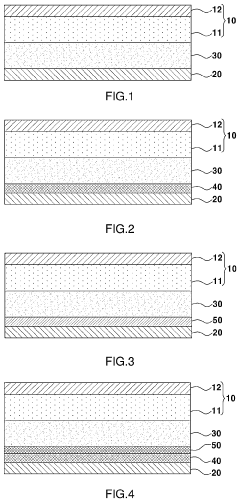
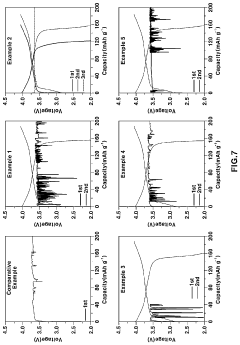
Anode-free all-solid-state battery including solid electrolyte having high ion conductivity and surface-roughened anode current collector
PatentPendingUS20220393180A1
Innovation
- An anode-free all-solid-state battery design featuring an anode current collector layer with surface roughness of 100 nm to 1,000 nm, directly contacting a solid electrolyte layer with ionic conductivity of 1 mS/cm to 20 mS/cm, and optionally a coating layer containing carbon and lithium-forming metals, which enhances lithium deposition uniformity and stability without additional layers.


Anode-free solid-state battery adaptable to volume expansion
PatentActiveJP2022533089A
Innovation
- Incorporating a porous, electrically conductive lithium ion buffer layer between the anode current collector and the solid electrolyte to store lithium ions during charging, reducing swelling by accommodating them within its porous structure.


Environmental Impact Assessment of Battery Manufacturing
The manufacturing of batteries, particularly those utilizing advanced technologies like anode-free solid-state designs, presents significant environmental considerations that must be thoroughly assessed. Traditional lithium-ion battery production involves energy-intensive processes and hazardous materials that contribute to environmental degradation through resource extraction, chemical processing, and waste generation.
Anode-free solid-state battery manufacturing offers potential environmental advantages compared to conventional lithium-ion technologies. The elimination of the anode component reduces the need for graphite mining and processing, which typically generates substantial carbon emissions and requires extensive land use. Additionally, the solid electrolyte systems employed in these batteries often replace liquid electrolytes containing volatile organic compounds and toxic lithium salts, thereby reducing the risk of harmful chemical releases during production.
Water consumption represents another critical environmental factor in battery manufacturing. Conventional battery production requires significant water resources for cooling, cleaning, and chemical processing. Preliminary assessments suggest that solid-state battery manufacturing may reduce water requirements by eliminating certain wet chemical processes, though comprehensive data remains limited as the technology advances toward commercialization.
Energy consumption during manufacturing constitutes a major environmental impact area. The high-temperature sintering processes often required for solid electrolyte preparation in solid-state batteries can be energy-intensive, potentially offsetting some environmental gains. However, the simplified cell assembly process may reduce overall energy requirements compared to conventional battery production lines.
Waste generation and management present ongoing challenges. While anode-free designs reduce certain waste streams, the production of specialized solid electrolytes may introduce new waste materials requiring proper handling and disposal protocols. Life cycle assessments indicate that improvements in manufacturing efficiency and material recovery systems could significantly reduce the environmental footprint of these advanced battery technologies.
Air quality impacts from battery manufacturing primarily stem from particulate emissions, solvent evaporation, and energy generation. Solid-state battery production potentially reduces volatile organic compound emissions by eliminating certain liquid components, though fine particulate generation during solid electrolyte processing requires careful monitoring and mitigation strategies to prevent workplace and environmental contamination.
Land use considerations extend beyond the manufacturing facility to include the entire supply chain. The transition to anode-free solid-state technologies may alter resource extraction patterns, potentially reducing mining impacts associated with traditional anode materials while potentially increasing demand for alternative mineral resources required for specialized solid electrolytes.
Anode-free solid-state battery manufacturing offers potential environmental advantages compared to conventional lithium-ion technologies. The elimination of the anode component reduces the need for graphite mining and processing, which typically generates substantial carbon emissions and requires extensive land use. Additionally, the solid electrolyte systems employed in these batteries often replace liquid electrolytes containing volatile organic compounds and toxic lithium salts, thereby reducing the risk of harmful chemical releases during production.
Water consumption represents another critical environmental factor in battery manufacturing. Conventional battery production requires significant water resources for cooling, cleaning, and chemical processing. Preliminary assessments suggest that solid-state battery manufacturing may reduce water requirements by eliminating certain wet chemical processes, though comprehensive data remains limited as the technology advances toward commercialization.
Energy consumption during manufacturing constitutes a major environmental impact area. The high-temperature sintering processes often required for solid electrolyte preparation in solid-state batteries can be energy-intensive, potentially offsetting some environmental gains. However, the simplified cell assembly process may reduce overall energy requirements compared to conventional battery production lines.
Waste generation and management present ongoing challenges. While anode-free designs reduce certain waste streams, the production of specialized solid electrolytes may introduce new waste materials requiring proper handling and disposal protocols. Life cycle assessments indicate that improvements in manufacturing efficiency and material recovery systems could significantly reduce the environmental footprint of these advanced battery technologies.
Air quality impacts from battery manufacturing primarily stem from particulate emissions, solvent evaporation, and energy generation. Solid-state battery production potentially reduces volatile organic compound emissions by eliminating certain liquid components, though fine particulate generation during solid electrolyte processing requires careful monitoring and mitigation strategies to prevent workplace and environmental contamination.
Land use considerations extend beyond the manufacturing facility to include the entire supply chain. The transition to anode-free solid-state technologies may alter resource extraction patterns, potentially reducing mining impacts associated with traditional anode materials while potentially increasing demand for alternative mineral resources required for specialized solid electrolytes.
Regulatory Compliance Framework for Battery Production
The regulatory landscape for battery production, particularly for advanced technologies like anode-free solid-state batteries, has evolved significantly in response to growing environmental concerns and safety requirements. These regulations span multiple jurisdictions and address various aspects of the battery lifecycle, from raw material sourcing to end-of-life management.
At the international level, frameworks such as the United Nations' Strategic Approach to International Chemicals Management (SAICM) and the Basel Convention provide overarching guidance for hazardous materials management relevant to battery production. The International Organization for Standardization (ISO) has developed specific standards for batteries, including ISO 21498 for solid-state batteries, which manufacturers must consider during development and production phases.
In the European Union, the Battery Directive (2006/66/EC) and its recent update, the Battery Regulation (2023), establish comprehensive requirements for battery producers. These regulations introduce stringent carbon footprint declarations, recycled content requirements, and due diligence obligations for supply chains. The EU's REACH (Registration, Evaluation, Authorization and Restriction of Chemicals) and RoHS (Restriction of Hazardous Substances) directives further restrict the use of certain hazardous materials in battery manufacturing.
The United States regulatory framework is more fragmented, with oversight divided among agencies including the Environmental Protection Agency (EPA), the Department of Transportation (DOT), and the Occupational Safety and Health Administration (OSHA). The EPA's Toxic Substances Control Act (TSCA) regulates new chemical substances, while OSHA's Hazard Communication Standard ensures worker safety during manufacturing processes.
In Asia, China has implemented the Measures for the Administration of the Pollution Control of Electronic Information Products (China RoHS) and specific battery standards through GB/T regulations. Japan's Battery Association has established voluntary guidelines for battery safety and environmental performance that often exceed regulatory requirements.
Emerging regulations are increasingly focusing on sustainable sourcing of critical materials, with the EU's Conflict Minerals Regulation and similar initiatives in the US requiring supply chain due diligence. Carbon footprint reporting and lifecycle assessment requirements are becoming more prevalent, with the EU leading in implementing mandatory carbon intensity thresholds for batteries placed on the market.
For anode-free solid-state battery technologies specifically, regulatory frameworks are still evolving to address their unique characteristics and potential environmental impacts. Manufacturers must navigate this complex regulatory landscape while anticipating future developments in environmental and safety standards as these technologies move toward commercialization.
At the international level, frameworks such as the United Nations' Strategic Approach to International Chemicals Management (SAICM) and the Basel Convention provide overarching guidance for hazardous materials management relevant to battery production. The International Organization for Standardization (ISO) has developed specific standards for batteries, including ISO 21498 for solid-state batteries, which manufacturers must consider during development and production phases.
In the European Union, the Battery Directive (2006/66/EC) and its recent update, the Battery Regulation (2023), establish comprehensive requirements for battery producers. These regulations introduce stringent carbon footprint declarations, recycled content requirements, and due diligence obligations for supply chains. The EU's REACH (Registration, Evaluation, Authorization and Restriction of Chemicals) and RoHS (Restriction of Hazardous Substances) directives further restrict the use of certain hazardous materials in battery manufacturing.
The United States regulatory framework is more fragmented, with oversight divided among agencies including the Environmental Protection Agency (EPA), the Department of Transportation (DOT), and the Occupational Safety and Health Administration (OSHA). The EPA's Toxic Substances Control Act (TSCA) regulates new chemical substances, while OSHA's Hazard Communication Standard ensures worker safety during manufacturing processes.
In Asia, China has implemented the Measures for the Administration of the Pollution Control of Electronic Information Products (China RoHS) and specific battery standards through GB/T regulations. Japan's Battery Association has established voluntary guidelines for battery safety and environmental performance that often exceed regulatory requirements.
Emerging regulations are increasingly focusing on sustainable sourcing of critical materials, with the EU's Conflict Minerals Regulation and similar initiatives in the US requiring supply chain due diligence. Carbon footprint reporting and lifecycle assessment requirements are becoming more prevalent, with the EU leading in implementing mandatory carbon intensity thresholds for batteries placed on the market.
For anode-free solid-state battery technologies specifically, regulatory frameworks are still evolving to address their unique characteristics and potential environmental impacts. Manufacturers must navigate this complex regulatory landscape while anticipating future developments in environmental and safety standards as these technologies move toward commercialization.
Unlock deeper insights with PatSnap Eureka Quick Research — get a full tech report to explore trends and direct your research. Try now!
Generate Your Research Report Instantly with AI Agent
Supercharge your innovation with PatSnap Eureka AI Agent Platform!