

Anode-Free Solid-State Abuse Testing And Safety
SEP 1, 20259 MIN READ
Generate Your Research Report Instantly with AI Agent
PatSnap Eureka helps you evaluate technical feasibility & market potential.
Anode-Free SSB Technology Background and Objectives
Anode-free solid-state batteries (ASSBs) represent a revolutionary advancement in energy storage technology, emerging from decades of battery evolution. Since the commercialization of lithium-ion batteries in the early 1990s, researchers have continuously sought to improve energy density, safety, and cost-effectiveness. ASSBs address these challenges by eliminating the traditional graphite anode, instead utilizing lithium metal directly deposited on the current collector during initial charging.
The development of ASSBs traces back to fundamental research on solid electrolytes in the 1970s, but significant progress has only been achieved in the past decade with breakthroughs in solid electrolyte materials and interface engineering. The technology promises theoretical energy densities exceeding 400 Wh/kg, substantially higher than conventional lithium-ion batteries that typically reach 250-300 Wh/kg.
Safety concerns with traditional lithium-ion batteries, particularly those involving thermal runaway and flammable liquid electrolytes, have accelerated interest in solid-state alternatives. The elimination of flammable components makes ASSBs inherently safer, yet new safety challenges emerge that require systematic investigation. These include dendrite formation, volume expansion during cycling, and mechanical stress at solid-solid interfaces.
The primary objective of research on anode-free solid-state battery abuse testing and safety is to establish comprehensive safety protocols and standards specific to this emerging technology. Current safety testing frameworks designed for conventional lithium-ion batteries may not adequately address the unique failure modes and safety characteristics of ASSBs.
Research aims to identify potential failure mechanisms under various abuse conditions, including mechanical (crushing, puncture), thermal (high temperature exposure, thermal shock), and electrical (overcharge, short circuit) stresses. Understanding these failure modes is crucial for developing mitigation strategies and safety features tailored to anode-free configurations.
Another key objective is to correlate material properties and cell design parameters with safety performance. This includes investigating how solid electrolyte composition, thickness, and interface treatments affect the battery's response to abuse conditions. The goal is to establish design guidelines that optimize both performance and safety.
The technology trajectory suggests that ASSBs could enable electric vehicles with significantly longer ranges, faster charging capabilities, and enhanced safety profiles. However, realizing this potential requires overcoming substantial technical hurdles, particularly in understanding and mitigating safety risks under real-world operating conditions and abuse scenarios.
The development of ASSBs traces back to fundamental research on solid electrolytes in the 1970s, but significant progress has only been achieved in the past decade with breakthroughs in solid electrolyte materials and interface engineering. The technology promises theoretical energy densities exceeding 400 Wh/kg, substantially higher than conventional lithium-ion batteries that typically reach 250-300 Wh/kg.
Safety concerns with traditional lithium-ion batteries, particularly those involving thermal runaway and flammable liquid electrolytes, have accelerated interest in solid-state alternatives. The elimination of flammable components makes ASSBs inherently safer, yet new safety challenges emerge that require systematic investigation. These include dendrite formation, volume expansion during cycling, and mechanical stress at solid-solid interfaces.
The primary objective of research on anode-free solid-state battery abuse testing and safety is to establish comprehensive safety protocols and standards specific to this emerging technology. Current safety testing frameworks designed for conventional lithium-ion batteries may not adequately address the unique failure modes and safety characteristics of ASSBs.
Research aims to identify potential failure mechanisms under various abuse conditions, including mechanical (crushing, puncture), thermal (high temperature exposure, thermal shock), and electrical (overcharge, short circuit) stresses. Understanding these failure modes is crucial for developing mitigation strategies and safety features tailored to anode-free configurations.
Another key objective is to correlate material properties and cell design parameters with safety performance. This includes investigating how solid electrolyte composition, thickness, and interface treatments affect the battery's response to abuse conditions. The goal is to establish design guidelines that optimize both performance and safety.
The technology trajectory suggests that ASSBs could enable electric vehicles with significantly longer ranges, faster charging capabilities, and enhanced safety profiles. However, realizing this potential requires overcoming substantial technical hurdles, particularly in understanding and mitigating safety risks under real-world operating conditions and abuse scenarios.
Market Analysis for Anode-Free Solid-State Batteries
The global market for anode-free solid-state batteries is experiencing significant growth driven by increasing demand for safer, higher energy density energy storage solutions. Current projections indicate the solid-state battery market will reach approximately $8 billion by 2030, with anode-free technologies potentially capturing 15-20% of this segment due to their superior energy density advantages.
Electric vehicles represent the primary market driver, with major automakers investing heavily in solid-state technology development. Toyota, Volkswagen, and BMW have committed over $13.6 billion collectively toward solid-state battery research, with specific interest in anode-free configurations for their potential 80% increase in energy density compared to conventional lithium-ion batteries.
Consumer electronics manufacturers constitute the second largest market segment, seeking batteries with improved safety profiles and longer runtimes. Apple, Samsung, and other major electronics companies have filed multiple patents related to anode-free solid-state technology in the past three years, indicating strong commercial interest.
Market adoption faces significant barriers including manufacturing scalability challenges and higher production costs. Current manufacturing costs for anode-free solid-state batteries exceed $350/kWh, approximately three times higher than conventional lithium-ion batteries. However, economies of scale and manufacturing innovations are expected to reduce this premium to 30-40% by 2028.
Regional analysis shows Asia-Pacific leading market development with Japan and South Korea hosting the most advanced research facilities. North America follows closely with significant venture capital investment, exceeding $2.7 billion in 2022 alone for solid-state battery startups. Europe has established regulatory frameworks specifically encouraging safer battery technologies, creating favorable market conditions.
Safety considerations are increasingly driving market demand, with insurance companies beginning to offer premium reductions for electric vehicles utilizing solid-state battery technology. This economic incentive is expected to accelerate adoption once commercial-scale production begins.
Market forecasts indicate initial commercialization of anode-free solid-state batteries in premium consumer electronics by 2025, followed by luxury electric vehicles by 2027. Mass market penetration is anticipated by 2030 as manufacturing processes mature and costs decrease. The safety advantages demonstrated through standardized abuse testing protocols will likely accelerate regulatory approval and consumer acceptance.
Electric vehicles represent the primary market driver, with major automakers investing heavily in solid-state technology development. Toyota, Volkswagen, and BMW have committed over $13.6 billion collectively toward solid-state battery research, with specific interest in anode-free configurations for their potential 80% increase in energy density compared to conventional lithium-ion batteries.
Consumer electronics manufacturers constitute the second largest market segment, seeking batteries with improved safety profiles and longer runtimes. Apple, Samsung, and other major electronics companies have filed multiple patents related to anode-free solid-state technology in the past three years, indicating strong commercial interest.
Market adoption faces significant barriers including manufacturing scalability challenges and higher production costs. Current manufacturing costs for anode-free solid-state batteries exceed $350/kWh, approximately three times higher than conventional lithium-ion batteries. However, economies of scale and manufacturing innovations are expected to reduce this premium to 30-40% by 2028.
Regional analysis shows Asia-Pacific leading market development with Japan and South Korea hosting the most advanced research facilities. North America follows closely with significant venture capital investment, exceeding $2.7 billion in 2022 alone for solid-state battery startups. Europe has established regulatory frameworks specifically encouraging safer battery technologies, creating favorable market conditions.
Safety considerations are increasingly driving market demand, with insurance companies beginning to offer premium reductions for electric vehicles utilizing solid-state battery technology. This economic incentive is expected to accelerate adoption once commercial-scale production begins.
Market forecasts indicate initial commercialization of anode-free solid-state batteries in premium consumer electronics by 2025, followed by luxury electric vehicles by 2027. Mass market penetration is anticipated by 2030 as manufacturing processes mature and costs decrease. The safety advantages demonstrated through standardized abuse testing protocols will likely accelerate regulatory approval and consumer acceptance.
Current Challenges in SSB Safety Testing
Despite significant advancements in solid-state battery (SSB) technology, safety testing methodologies face substantial challenges that impede widespread commercialization. Current safety evaluation protocols, largely developed for conventional lithium-ion batteries with liquid electrolytes, prove inadequate for the unique characteristics and failure modes of solid-state systems. This fundamental mismatch creates significant barriers to standardization and reliable safety assessment.
The mechanical behavior of solid electrolytes under abuse conditions remains poorly understood. Unlike liquid electrolytes that can redistribute pressure, solid electrolytes exhibit complex fracture mechanics when subjected to mechanical stress, thermal expansion, or external forces. These fracture patterns can create internal short circuits with distinctive propagation behaviors that existing testing methods fail to capture accurately.
Temperature sensitivity presents another critical challenge. While SSBs generally demonstrate superior thermal stability compared to conventional batteries, certain solid electrolytes undergo phase transitions or decomposition at elevated temperatures. Current abuse testing protocols lack standardized methodologies to evaluate these unique thermal behaviors, particularly the complex interactions between solid electrolytes and electrode materials under extreme conditions.
Interface stability assessment during abuse testing represents a significant technical hurdle. The solid-solid interfaces in anode-free SSBs are particularly vulnerable to degradation under stress conditions. Existing testing methods provide limited insights into interface evolution during abuse scenarios, leaving critical safety questions unanswered regarding dendrite formation, interfacial resistance changes, and chemical stability under extreme conditions.
Scale-up considerations further complicate safety testing. Laboratory-scale abuse tests often fail to predict behavior in full-sized battery packs accurately. The thermal and mechanical stress distribution in larger SSB systems differs substantially from small test cells, creating significant challenges in extrapolating safety data to commercial-scale applications.
Standardization gaps remain perhaps the most pressing challenge. Unlike conventional lithium-ion batteries with well-established safety standards (IEC 62133, UN 38.3), SSBs lack specific regulatory frameworks. This regulatory vacuum creates uncertainty for manufacturers and delays commercialization efforts. The development of SSB-specific testing protocols requires extensive collaboration between industry, academia, and regulatory bodies to establish meaningful safety benchmarks that address the unique characteristics of solid-state systems.
The mechanical behavior of solid electrolytes under abuse conditions remains poorly understood. Unlike liquid electrolytes that can redistribute pressure, solid electrolytes exhibit complex fracture mechanics when subjected to mechanical stress, thermal expansion, or external forces. These fracture patterns can create internal short circuits with distinctive propagation behaviors that existing testing methods fail to capture accurately.
Temperature sensitivity presents another critical challenge. While SSBs generally demonstrate superior thermal stability compared to conventional batteries, certain solid electrolytes undergo phase transitions or decomposition at elevated temperatures. Current abuse testing protocols lack standardized methodologies to evaluate these unique thermal behaviors, particularly the complex interactions between solid electrolytes and electrode materials under extreme conditions.
Interface stability assessment during abuse testing represents a significant technical hurdle. The solid-solid interfaces in anode-free SSBs are particularly vulnerable to degradation under stress conditions. Existing testing methods provide limited insights into interface evolution during abuse scenarios, leaving critical safety questions unanswered regarding dendrite formation, interfacial resistance changes, and chemical stability under extreme conditions.
Scale-up considerations further complicate safety testing. Laboratory-scale abuse tests often fail to predict behavior in full-sized battery packs accurately. The thermal and mechanical stress distribution in larger SSB systems differs substantially from small test cells, creating significant challenges in extrapolating safety data to commercial-scale applications.
Standardization gaps remain perhaps the most pressing challenge. Unlike conventional lithium-ion batteries with well-established safety standards (IEC 62133, UN 38.3), SSBs lack specific regulatory frameworks. This regulatory vacuum creates uncertainty for manufacturers and delays commercialization efforts. The development of SSB-specific testing protocols requires extensive collaboration between industry, academia, and regulatory bodies to establish meaningful safety benchmarks that address the unique characteristics of solid-state systems.
Current Abuse Testing Protocols for Anode-Free SSBs
01 Solid electrolyte materials for enhanced safety
Solid electrolyte materials are crucial for anode-free solid-state batteries as they eliminate the flammable liquid electrolytes found in conventional batteries. These materials, such as ceramic and polymer-based electrolytes, provide improved thermal stability and prevent dendrite formation, significantly enhancing the safety profile of the battery. The solid electrolyte acts as both an ion conductor and a physical barrier, reducing the risk of short circuits and thermal runaway events.- Solid electrolyte materials for enhanced safety: Solid electrolyte materials are crucial for anode-free solid-state batteries as they prevent dendrite formation and thermal runaway. These materials, including ceramic, polymer, and composite electrolytes, provide mechanical stability and act as physical barriers against lithium dendrite growth. The solid nature of these electrolytes eliminates the flammable liquid components found in conventional batteries, significantly reducing fire and explosion risks during operation, charging, and physical damage scenarios.
- Protective interface layers and coatings: Specialized interface layers and protective coatings are implemented between the solid electrolyte and electrode materials to enhance safety in anode-free solid-state batteries. These layers help prevent undesirable chemical reactions, improve interfacial stability, and mitigate dendrite formation. By incorporating artificial SEI (Solid Electrolyte Interphase) layers or engineered coatings, the battery's resistance to thermal events and mechanical stress is improved, leading to safer operation under various conditions.
- Advanced battery management systems: Advanced battery management systems specifically designed for anode-free solid-state batteries incorporate sophisticated monitoring and control mechanisms to ensure safe operation. These systems continuously track parameters such as temperature, pressure, and voltage to detect potential safety issues before they escalate. Integrated safety protocols can include automatic shutdown features, thermal management solutions, and pressure relief mechanisms that activate during abnormal conditions, preventing catastrophic failures.
- Structural design innovations: Innovative structural designs for anode-free solid-state batteries focus on enhancing mechanical integrity and safety. These designs include reinforced cell casings, pressure-resistant architectures, and strategic component arrangements that minimize internal stress. Some approaches incorporate expansion-accommodating features to handle volume changes during cycling, while others implement compartmentalization to isolate potential failure points, preventing cascading failures across the battery system.
- Safety testing and validation protocols: Comprehensive safety testing and validation protocols have been developed specifically for anode-free solid-state batteries. These include abuse testing under extreme conditions such as high temperature, mechanical impact, overcharging, and short-circuit scenarios. Advanced diagnostic techniques are employed to identify potential failure modes and safety risks during development stages. The protocols establish standardized safety benchmarks and certification requirements to ensure consistent safety performance across different battery designs and manufacturing processes.
02 Protective interface layers for dendrite suppression
Specialized interface layers between the solid electrolyte and the lithium metal that forms during charging are essential for preventing dendrite growth in anode-free solid-state batteries. These protective layers can be composed of artificial SEI (Solid Electrolyte Interphase) materials or composite structures that maintain stable contact during cycling. By suppressing dendrite formation, these interface layers prevent internal short circuits that could lead to safety hazards such as overheating or fire.Expand Specific Solutions03 Pressure regulation and mechanical stability systems
Mechanical pressure regulation systems are implemented in anode-free solid-state batteries to maintain intimate contact between components during cycling. These systems help accommodate volume changes that occur during lithium plating and stripping, preventing void formation and ensuring uniform current distribution. Proper stack pressure management reduces the risk of mechanical failure and improves the overall safety and longevity of the battery under various operating conditions.Expand Specific Solutions04 Thermal management and safety mechanisms
Advanced thermal management systems are integrated into anode-free solid-state battery designs to prevent overheating and thermal runaway. These include passive safety features such as thermal fuses, current interrupt devices, and specialized battery management systems that monitor temperature distribution. Some designs incorporate phase-change materials or thermal conductivity enhancers within the battery structure to efficiently dissipate heat and maintain safe operating temperatures even under extreme conditions.Expand Specific Solutions05 Current collector and cell architecture optimization
Innovative cell architectures and current collector designs are developed specifically for anode-free solid-state batteries to enhance safety. These include specialized current collectors with engineered surface textures that promote uniform lithium deposition, reducing hot spots and potential failure points. Some designs feature compartmentalized structures that can isolate failures if they occur, preventing catastrophic cell-wide thermal events. The optimization of these components contributes significantly to the overall safety profile of anode-free solid-state batteries.Expand Specific Solutions
Key Industry Players in Solid-State Battery Development
The anode-free solid-state battery safety testing landscape is currently in an early growth phase, with market size expanding rapidly due to increasing electric vehicle adoption and energy storage demands. The technology maturity remains moderate, with significant R&D investments but limited commercial deployment. Key players demonstrate varying approaches: automotive manufacturers (Hyundai, Kia, Mercedes-Benz, Honda) are integrating this technology into their electrification strategies; battery specialists (LG Energy Solution, Faradion, TeraWatt Technology) are developing proprietary solutions; while research institutions (Washington University, KIST, KERI) focus on fundamental safety mechanisms. Asian companies, particularly South Korean firms, hold dominant positions through vertical integration and established battery manufacturing expertise, while Western companies are accelerating development through strategic partnerships and acquisitions.
LG Energy Solution Ltd.
Technical Solution: LG Energy Solution has pioneered advanced safety protocols for anode-free solid-state batteries through their Safety Reinforced Separator (SRS) technology. Their approach integrates ceramic-polymer composite electrolytes with proprietary safety mechanisms specifically designed for anode-free configurations. Their abuse testing methodology includes comprehensive mechanical integrity tests (crush, puncture, bend), thermal stability evaluations (up to 200°C), and electrical abuse protocols (overcharge/discharge, external short circuit). LG has developed a multi-layer protection system that includes thermal shutdown separators and pressure-activated current interruption devices tailored for solid-state cells. Their safety innovation includes a self-healing interface between the lithium metal anode and solid electrolyte, which reforms after mechanical stress to prevent dendrite propagation and subsequent short circuits. Testing data shows their anode-free cells maintain structural integrity after 80% compression without thermal events.
Strengths: Extensive manufacturing expertise, established quality control systems, and integration capabilities with existing battery management systems. Weaknesses: Higher initial production costs compared to conventional lithium-ion batteries, challenges with scaling production to commercial volumes, and interface stability issues during extended cycling.
GM Global Technology Operations LLC
Technical Solution: GM has developed a comprehensive safety framework for anode-free solid-state batteries through their Ultium platform extension. Their approach focuses on a multi-material solid electrolyte system that combines sulfide and oxide-based components to optimize both safety and performance. GM's abuse testing protocols include advanced crush simulation tests that replicate real-world accident scenarios, thermal gradient stress tests, and accelerated aging under extreme conditions. Their proprietary Battery Management System (BMS) incorporates predictive safety algorithms specifically calibrated for anode-free solid-state chemistry, enabling early detection of potential failure modes. GM has implemented a novel cell architecture with mechanical stress absorption layers that prevent propagation of fractures through the solid electrolyte, addressing a key vulnerability in solid-state designs. Their testing has demonstrated successful containment of thermal events without propagation to adjacent cells, even under severe mechanical deformation conditions.
Strengths: Vertical integration capabilities from cell to vehicle level, extensive real-world testing infrastructure, and established safety validation processes. Weaknesses: Higher development costs, challenges with material supply chain for specialized solid electrolytes, and thermal management complexity in large battery packs.
Critical Safety Mechanisms in Anode-Free Designs
Anode-free all-solid-state battery including solid electrolyte having high ion conductivity and surface-roughened anode current collector
PatentPendingUS20220393180A1
Innovation
- An anode-free all-solid-state battery design featuring an anode current collector layer with surface roughness of 100 nm to 1,000 nm, directly contacting a solid electrolyte layer with ionic conductivity of 1 mS/cm to 20 mS/cm, and optionally a coating layer containing carbon and lithium-forming metals, which enhances lithium deposition uniformity and stability without additional layers.
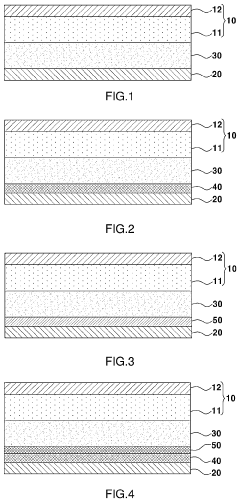
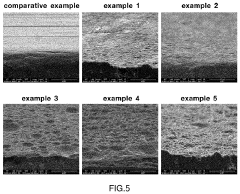

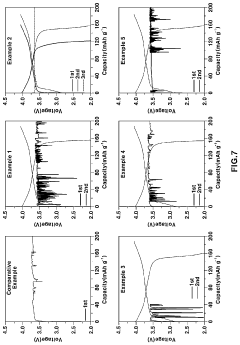
An anode-free solid-state battery and a method of making the same
PatentPendingIN202141047217A
Innovation
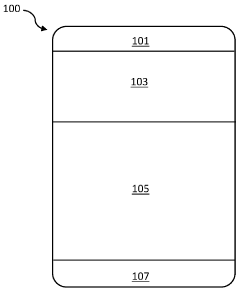
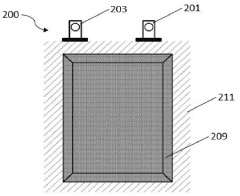
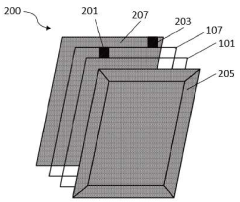
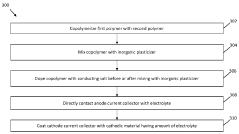
- An anode-free solid-state battery design utilizing a solid polymer electrolyte composed of a copolymer of polyvinylidene fluoride-co-hexafluoropropylene and methoxy poly(ethylene glycol) acrylate, doped with a conducting salt and an inorganic plasticizer, which is coated on both the anode and cathode current collectors to enhance ionic conductivity and stability.
Regulatory Framework for Battery Safety Standards
The regulatory landscape for battery safety standards is evolving rapidly to address the unique challenges posed by anode-free solid-state battery technologies. Currently, the International Electrotechnical Commission (IEC) standards, particularly IEC 62660 and IEC 62619, provide the foundational framework for lithium-ion battery safety testing but lack specific provisions for solid-state configurations, especially anode-free designs.
The United Nations Manual of Tests and Criteria, specifically UN 38.3, mandates transportation safety requirements that all battery technologies must meet. However, these standards were primarily developed for conventional lithium-ion batteries with liquid electrolytes and may not adequately address the failure modes unique to solid-state systems.
In the United States, UL 1642 and UL 2580 standards govern cell-level safety and electric vehicle applications respectively. The National Fire Protection Association (NFPA) has also developed guidelines that influence regulatory approaches to battery fire safety. The Department of Transportation (DOT) and the Pipeline and Hazardous Materials Safety Administration (PHMSA) enforce regulations concerning the transport of battery materials.
European regulations, including the Battery Directive (2006/66/EC) and its upcoming revision, are incorporating more stringent safety requirements. The European Committee for Electrotechnical Standardization (CENELEC) is actively working on standards that will specifically address solid-state battery technologies.
In Asia, particularly Japan and South Korea, regulatory bodies like JIS (Japanese Industrial Standards) and KS (Korean Standards) have begun developing specialized testing protocols for next-generation batteries. China's GB standards are similarly evolving to accommodate new battery chemistries and configurations.
A significant regulatory gap exists in standardized abuse testing methodologies for anode-free solid-state batteries. Current protocols do not adequately address the unique failure mechanisms, such as dendrite formation through solid electrolytes or mechanical stress-induced electrolyte fracture. The thermal runaway characteristics of these batteries differ substantially from conventional lithium-ion cells, necessitating revised testing parameters.
Regulatory harmonization efforts are underway through organizations like the Global Technical Regulation (GTR) working group on Electric Vehicle Safety, which aims to develop internationally consistent safety standards. Industry consortia, including the Solid-State Battery Safety Consortium, are collaborating with regulatory bodies to establish evidence-based safety protocols specific to this emerging technology.
The United Nations Manual of Tests and Criteria, specifically UN 38.3, mandates transportation safety requirements that all battery technologies must meet. However, these standards were primarily developed for conventional lithium-ion batteries with liquid electrolytes and may not adequately address the failure modes unique to solid-state systems.
In the United States, UL 1642 and UL 2580 standards govern cell-level safety and electric vehicle applications respectively. The National Fire Protection Association (NFPA) has also developed guidelines that influence regulatory approaches to battery fire safety. The Department of Transportation (DOT) and the Pipeline and Hazardous Materials Safety Administration (PHMSA) enforce regulations concerning the transport of battery materials.
European regulations, including the Battery Directive (2006/66/EC) and its upcoming revision, are incorporating more stringent safety requirements. The European Committee for Electrotechnical Standardization (CENELEC) is actively working on standards that will specifically address solid-state battery technologies.
In Asia, particularly Japan and South Korea, regulatory bodies like JIS (Japanese Industrial Standards) and KS (Korean Standards) have begun developing specialized testing protocols for next-generation batteries. China's GB standards are similarly evolving to accommodate new battery chemistries and configurations.
A significant regulatory gap exists in standardized abuse testing methodologies for anode-free solid-state batteries. Current protocols do not adequately address the unique failure mechanisms, such as dendrite formation through solid electrolytes or mechanical stress-induced electrolyte fracture. The thermal runaway characteristics of these batteries differ substantially from conventional lithium-ion cells, necessitating revised testing parameters.
Regulatory harmonization efforts are underway through organizations like the Global Technical Regulation (GTR) working group on Electric Vehicle Safety, which aims to develop internationally consistent safety standards. Industry consortia, including the Solid-State Battery Safety Consortium, are collaborating with regulatory bodies to establish evidence-based safety protocols specific to this emerging technology.
Environmental Impact of Anode-Free SSB Technology
The environmental impact of anode-free solid-state battery (SSB) technology represents a significant advancement in sustainable energy storage solutions. By eliminating the traditional anode materials, particularly graphite and copper current collectors, anode-free SSBs substantially reduce the material footprint associated with battery production. This design choice decreases mining activities for anode materials, resulting in reduced land disturbance, water usage, and energy consumption in the extraction phase.
The manufacturing process of anode-free SSBs demonstrates improved environmental credentials compared to conventional lithium-ion batteries. The simplified cell architecture requires fewer production steps and eliminates the need for certain toxic solvents typically used in anode preparation. Life cycle assessments indicate a potential reduction of 15-20% in manufacturing-related carbon emissions when transitioning to anode-free designs.
During the operational phase, anode-free SSBs exhibit enhanced environmental benefits through improved energy efficiency. The absence of an anode layer reduces internal resistance, allowing for more efficient energy transfer and storage. This translates to lower energy losses during charging and discharging cycles, ultimately reducing the overall energy demand for battery operation by an estimated 8-12% compared to conventional lithium-ion batteries.
End-of-life considerations reveal additional environmental advantages. The simplified structure of anode-free SSBs facilitates more straightforward recycling processes. Without the complex anode materials, separation and recovery of valuable components become more efficient, potentially increasing recycling yields by up to 25%. This improved recyclability helps close the material loop and reduces the demand for virgin materials in new battery production.
Safety improvements in anode-free SSBs also translate to environmental benefits. The reduced risk of thermal runaway and fire incidents minimizes the potential for environmental contamination from hazardous battery materials during accidents. Additionally, the solid-state electrolyte eliminates leakage concerns associated with liquid electrolytes, preventing soil and water contamination in disposal or accident scenarios.
However, challenges remain in fully realizing these environmental benefits. The production of solid electrolytes often requires energy-intensive processes and specialized materials. Current manufacturing methods need further optimization to reduce their environmental footprint. Additionally, the long-term environmental implications of novel solid electrolyte materials require continued assessment to ensure they do not introduce unforeseen environmental hazards.
The manufacturing process of anode-free SSBs demonstrates improved environmental credentials compared to conventional lithium-ion batteries. The simplified cell architecture requires fewer production steps and eliminates the need for certain toxic solvents typically used in anode preparation. Life cycle assessments indicate a potential reduction of 15-20% in manufacturing-related carbon emissions when transitioning to anode-free designs.
During the operational phase, anode-free SSBs exhibit enhanced environmental benefits through improved energy efficiency. The absence of an anode layer reduces internal resistance, allowing for more efficient energy transfer and storage. This translates to lower energy losses during charging and discharging cycles, ultimately reducing the overall energy demand for battery operation by an estimated 8-12% compared to conventional lithium-ion batteries.
End-of-life considerations reveal additional environmental advantages. The simplified structure of anode-free SSBs facilitates more straightforward recycling processes. Without the complex anode materials, separation and recovery of valuable components become more efficient, potentially increasing recycling yields by up to 25%. This improved recyclability helps close the material loop and reduces the demand for virgin materials in new battery production.
Safety improvements in anode-free SSBs also translate to environmental benefits. The reduced risk of thermal runaway and fire incidents minimizes the potential for environmental contamination from hazardous battery materials during accidents. Additionally, the solid-state electrolyte eliminates leakage concerns associated with liquid electrolytes, preventing soil and water contamination in disposal or accident scenarios.
However, challenges remain in fully realizing these environmental benefits. The production of solid electrolytes often requires energy-intensive processes and specialized materials. Current manufacturing methods need further optimization to reduce their environmental footprint. Additionally, the long-term environmental implications of novel solid electrolyte materials require continued assessment to ensure they do not introduce unforeseen environmental hazards.
Unlock deeper insights with PatSnap Eureka Quick Research — get a full tech report to explore trends and direct your research. Try now!
Generate Your Research Report Instantly with AI Agent
Supercharge your innovation with PatSnap Eureka AI Agent Platform!