

Anode-Free Solid-State Fast Charge Pathways
SEP 1, 20259 MIN READ
Generate Your Research Report Instantly with AI Agent
PatSnap Eureka helps you evaluate technical feasibility & market potential.
Anode-Free Battery Technology Background and Objectives
The evolution of battery technology has been a cornerstone of modern technological advancement, with lithium-ion batteries dominating the market since their commercial introduction in the early 1990s. However, conventional lithium-ion batteries face significant limitations in energy density, charging speed, and safety concerns. Anode-free battery technology represents a revolutionary approach that addresses these limitations by eliminating the traditional graphite anode, potentially doubling energy density while enabling faster charging capabilities.
The concept of anode-free batteries dates back to the 1970s, but recent breakthroughs in materials science and solid-state electrolytes have revitalized interest in this technology. By removing the conventional anode and allowing lithium to plate directly onto a current collector during charging, these batteries can achieve theoretical energy densities approaching 500 Wh/kg, significantly exceeding the 250-300 Wh/kg limit of current commercial lithium-ion batteries.
The primary objective of research on anode-free solid-state fast charge pathways is to develop commercially viable battery systems that combine the energy density advantages of anode-free design with the safety benefits of solid-state electrolytes, while enabling charging rates comparable to or exceeding those of conventional lithium-ion batteries. This represents a potential paradigm shift in energy storage technology that could accelerate electric vehicle adoption and revolutionize portable electronics.
Current technical goals include achieving stable cycling performance exceeding 1000 cycles, fast charging capabilities of 80% capacity in under 15 minutes, and operation across a wide temperature range (-20°C to 60°C) without compromising safety. Additionally, researchers aim to develop manufacturing processes compatible with existing production infrastructure to facilitate commercial transition.
The evolution trajectory suggests three distinct phases: near-term (1-3 years) focus on fundamental materials development and proof-of-concept demonstrations; mid-term (3-7 years) emphasis on scaling production and addressing system integration challenges; and long-term (7-10 years) commercialization and market penetration across multiple sectors.
Significant challenges remain, particularly regarding dendrite formation during fast charging, which can lead to short circuits and safety hazards. The development of solid-state electrolytes with high ionic conductivity and mechanical strength represents a promising approach to mitigate these issues while enabling the fast charge pathways essential for practical application.
This research direction aligns with global sustainability goals and the increasing demand for high-performance energy storage solutions across transportation, consumer electronics, and grid storage applications, positioning anode-free solid-state battery technology as a critical enabler of the clean energy transition.
The concept of anode-free batteries dates back to the 1970s, but recent breakthroughs in materials science and solid-state electrolytes have revitalized interest in this technology. By removing the conventional anode and allowing lithium to plate directly onto a current collector during charging, these batteries can achieve theoretical energy densities approaching 500 Wh/kg, significantly exceeding the 250-300 Wh/kg limit of current commercial lithium-ion batteries.
The primary objective of research on anode-free solid-state fast charge pathways is to develop commercially viable battery systems that combine the energy density advantages of anode-free design with the safety benefits of solid-state electrolytes, while enabling charging rates comparable to or exceeding those of conventional lithium-ion batteries. This represents a potential paradigm shift in energy storage technology that could accelerate electric vehicle adoption and revolutionize portable electronics.
Current technical goals include achieving stable cycling performance exceeding 1000 cycles, fast charging capabilities of 80% capacity in under 15 minutes, and operation across a wide temperature range (-20°C to 60°C) without compromising safety. Additionally, researchers aim to develop manufacturing processes compatible with existing production infrastructure to facilitate commercial transition.
The evolution trajectory suggests three distinct phases: near-term (1-3 years) focus on fundamental materials development and proof-of-concept demonstrations; mid-term (3-7 years) emphasis on scaling production and addressing system integration challenges; and long-term (7-10 years) commercialization and market penetration across multiple sectors.
Significant challenges remain, particularly regarding dendrite formation during fast charging, which can lead to short circuits and safety hazards. The development of solid-state electrolytes with high ionic conductivity and mechanical strength represents a promising approach to mitigate these issues while enabling the fast charge pathways essential for practical application.
This research direction aligns with global sustainability goals and the increasing demand for high-performance energy storage solutions across transportation, consumer electronics, and grid storage applications, positioning anode-free solid-state battery technology as a critical enabler of the clean energy transition.
Market Analysis for Fast-Charging Solid-State Batteries
The global market for fast-charging solid-state batteries is experiencing unprecedented growth, driven by increasing demand for electric vehicles (EVs) and portable electronics with reduced charging times. Current market projections indicate that the solid-state battery market will reach approximately $6 billion by 2026, with fast-charging capabilities representing a significant value proposition within this segment.
Consumer expectations regarding charging times have evolved dramatically in recent years. Survey data reveals that 78% of potential EV buyers consider charging time a critical factor in their purchasing decisions, with 65% indicating they would pay a premium for vehicles capable of charging to 80% capacity in under 15 minutes. This consumer preference is creating substantial market pull for anode-free solid-state battery technologies that can enable ultra-fast charging.
The automotive sector represents the largest potential market for fast-charging solid-state batteries, with projections suggesting it could account for over 60% of total market value by 2030. Major automotive manufacturers including Toyota, Volkswagen, and BMW have announced significant investments in solid-state battery technology, with particular emphasis on fast-charging capabilities as a key differentiator in their future EV lineups.
Beyond automotive applications, consumer electronics manufacturers are increasingly exploring solid-state fast-charging solutions to address battery anxiety among users. The smartphone segment alone represents a potential market of $1.2 billion for this technology by 2028, with laptop and wearable device markets contributing additional growth opportunities.
Regional analysis indicates that Asia-Pacific currently leads in manufacturing capacity development for solid-state batteries, with Japan and South Korea at the forefront. However, significant research investments in North America and Europe suggest these regions are positioning to capture substantial market share as the technology matures.
Market barriers include high production costs, with current estimates suggesting that solid-state batteries remain 2-3 times more expensive than conventional lithium-ion batteries on a per kWh basis. However, cost reduction trajectories indicate potential price parity by 2028-2030 as manufacturing scales and material innovations emerge.
Regulatory factors are also shaping market development, with several jurisdictions implementing policies that favor fast-charging infrastructure development. The European Union's proposed Battery Regulation specifically addresses charging performance as a sustainability metric, potentially accelerating market adoption of anode-free solid-state technologies that enable rapid charging while maintaining battery longevity.
Consumer expectations regarding charging times have evolved dramatically in recent years. Survey data reveals that 78% of potential EV buyers consider charging time a critical factor in their purchasing decisions, with 65% indicating they would pay a premium for vehicles capable of charging to 80% capacity in under 15 minutes. This consumer preference is creating substantial market pull for anode-free solid-state battery technologies that can enable ultra-fast charging.
The automotive sector represents the largest potential market for fast-charging solid-state batteries, with projections suggesting it could account for over 60% of total market value by 2030. Major automotive manufacturers including Toyota, Volkswagen, and BMW have announced significant investments in solid-state battery technology, with particular emphasis on fast-charging capabilities as a key differentiator in their future EV lineups.
Beyond automotive applications, consumer electronics manufacturers are increasingly exploring solid-state fast-charging solutions to address battery anxiety among users. The smartphone segment alone represents a potential market of $1.2 billion for this technology by 2028, with laptop and wearable device markets contributing additional growth opportunities.
Regional analysis indicates that Asia-Pacific currently leads in manufacturing capacity development for solid-state batteries, with Japan and South Korea at the forefront. However, significant research investments in North America and Europe suggest these regions are positioning to capture substantial market share as the technology matures.
Market barriers include high production costs, with current estimates suggesting that solid-state batteries remain 2-3 times more expensive than conventional lithium-ion batteries on a per kWh basis. However, cost reduction trajectories indicate potential price parity by 2028-2030 as manufacturing scales and material innovations emerge.
Regulatory factors are also shaping market development, with several jurisdictions implementing policies that favor fast-charging infrastructure development. The European Union's proposed Battery Regulation specifically addresses charging performance as a sustainability metric, potentially accelerating market adoption of anode-free solid-state technologies that enable rapid charging while maintaining battery longevity.
Current Challenges in Anode-Free Solid-State Technology
Despite significant advancements in solid-state battery technology, anode-free solid-state batteries face several critical challenges that impede their commercial viability and fast-charging capabilities. The absence of a pre-deposited anode creates unique interfacial issues during lithium plating and stripping cycles, leading to unstable solid electrolyte interphase (SEI) formation and accelerated degradation under fast charging conditions.
A primary obstacle is the high interfacial resistance between the lithium metal and solid electrolyte. This resistance increases polarization during fast charging, resulting in uneven lithium deposition and potential dendrite formation. Current solid electrolytes, including oxide-based and sulfide-based materials, struggle to maintain stable contact with the in-situ formed lithium metal, particularly during volume changes associated with cycling.
Dendrite growth presents another significant challenge, especially during rapid charging when lithium ions cannot be uniformly distributed across the interface. These dendrites can penetrate the solid electrolyte, causing internal short circuits and catastrophic failure. The mechanical properties of solid electrolytes are often insufficient to withstand the stress induced by lithium plating during fast charging protocols.
The limited ionic conductivity of many solid electrolytes becomes particularly problematic during fast charging. While some materials show promising room-temperature conductivity values approaching 10^-3 S/cm, these values remain insufficient for ultra-fast charging applications where current densities exceed 5 mA/cm². The activation energy for ion transport in solid electrolytes is typically higher than in liquid systems, further limiting rate capability.
Chemical and electrochemical stability issues also plague anode-free solid-state systems. Many solid electrolytes undergo reduction reactions when in contact with lithium metal, forming decomposition layers that continuously consume active lithium and electrolyte material. This problem is exacerbated during fast charging when electrochemical potentials can reach more extreme values.
Manufacturing challenges further complicate development, as creating defect-free interfaces between the current collector and solid electrolyte requires precise processing conditions. Any imperfections become nucleation sites for dendrite growth during fast charging. The need for high-pressure stack assembly to maintain intimate contact between components conflicts with the requirement for lightweight, energy-dense battery designs.
Temperature management represents another critical challenge, as fast charging generates significant heat that can accelerate side reactions and potentially trigger thermal runaway. Unlike liquid electrolyte systems with inherent cooling capabilities, solid-state batteries have limited thermal conductivity pathways, making heat dissipation during rapid charging particularly challenging.
A primary obstacle is the high interfacial resistance between the lithium metal and solid electrolyte. This resistance increases polarization during fast charging, resulting in uneven lithium deposition and potential dendrite formation. Current solid electrolytes, including oxide-based and sulfide-based materials, struggle to maintain stable contact with the in-situ formed lithium metal, particularly during volume changes associated with cycling.
Dendrite growth presents another significant challenge, especially during rapid charging when lithium ions cannot be uniformly distributed across the interface. These dendrites can penetrate the solid electrolyte, causing internal short circuits and catastrophic failure. The mechanical properties of solid electrolytes are often insufficient to withstand the stress induced by lithium plating during fast charging protocols.
The limited ionic conductivity of many solid electrolytes becomes particularly problematic during fast charging. While some materials show promising room-temperature conductivity values approaching 10^-3 S/cm, these values remain insufficient for ultra-fast charging applications where current densities exceed 5 mA/cm². The activation energy for ion transport in solid electrolytes is typically higher than in liquid systems, further limiting rate capability.
Chemical and electrochemical stability issues also plague anode-free solid-state systems. Many solid electrolytes undergo reduction reactions when in contact with lithium metal, forming decomposition layers that continuously consume active lithium and electrolyte material. This problem is exacerbated during fast charging when electrochemical potentials can reach more extreme values.
Manufacturing challenges further complicate development, as creating defect-free interfaces between the current collector and solid electrolyte requires precise processing conditions. Any imperfections become nucleation sites for dendrite growth during fast charging. The need for high-pressure stack assembly to maintain intimate contact between components conflicts with the requirement for lightweight, energy-dense battery designs.
Temperature management represents another critical challenge, as fast charging generates significant heat that can accelerate side reactions and potentially trigger thermal runaway. Unlike liquid electrolyte systems with inherent cooling capabilities, solid-state batteries have limited thermal conductivity pathways, making heat dissipation during rapid charging particularly challenging.
Current Anode-Free Fast-Charging Solutions
01 Solid electrolyte materials for fast charging
Advanced solid electrolyte materials are crucial for enabling fast charging in anode-free solid-state batteries. These materials provide high ionic conductivity pathways while maintaining mechanical stability during charging cycles. Ceramic, polymer, and composite electrolytes with optimized interfaces facilitate rapid lithium ion transport, which is essential for achieving practical fast charging capabilities without compromising safety or cycle life.- Solid electrolyte materials for fast charging: Advanced solid electrolyte materials are crucial for enabling fast charging in anode-free solid-state batteries. These materials offer high ionic conductivity and stability at the electrode-electrolyte interface, creating efficient lithium-ion transport pathways. Ceramic, polymer, and composite electrolytes with optimized compositions can significantly reduce charging times while maintaining battery safety and longevity.
- Interface engineering for improved ion transport: Engineering the interfaces between battery components is essential for fast charging in anode-free solid-state batteries. By modifying the solid electrolyte interface with specialized coatings or interlayers, ion transport resistance can be minimized. These engineered interfaces prevent dendrite formation and reduce impedance, allowing for higher charging rates without compromising battery performance or safety.
- Current collector design and optimization: Innovative current collector designs play a vital role in facilitating fast charging for anode-free solid-state batteries. Advanced current collectors with optimized surface morphology, porosity, and conductivity create efficient pathways for lithium deposition during charging. These designs help distribute current evenly, prevent hotspots, and enable higher charging rates while maintaining uniform lithium plating.
- Pressure-assisted fast charging techniques: Applying controlled pressure during charging can significantly enhance the charging speed of anode-free solid-state batteries. Pressure helps maintain intimate contact between battery components, reducing interfacial resistance and improving ion transport. This approach creates more efficient charging pathways by minimizing void spaces and ensuring consistent lithium deposition, ultimately enabling faster charging rates without compromising battery safety.
- Temperature-controlled charging protocols: Implementing temperature-controlled charging protocols can optimize fast charging performance in anode-free solid-state batteries. Elevated temperatures during charging can enhance ionic conductivity and reduce internal resistance, creating more efficient charging pathways. These protocols carefully balance temperature increases to improve charging rates while preventing thermal degradation of battery components, resulting in faster charging without sacrificing battery lifespan.
02 Interface engineering for improved ion transport
Engineering the interfaces between solid electrolytes and current collectors is critical for fast charging in anode-free configurations. By modifying these interfaces with specialized coatings or interlayers, ionic transport barriers can be reduced, allowing for more efficient lithium plating during charging. These engineered interfaces help prevent dendrite formation and reduce impedance, enabling higher charging rates without compromising battery safety or longevity.Expand Specific Solutions03 Current collector design for uniform lithium plating
Specialized current collector designs enable uniform lithium plating during fast charging of anode-free solid-state batteries. These collectors feature optimized surface morphologies, such as 3D structures or patterned surfaces, that distribute current density evenly and provide nucleation sites for lithium deposition. By controlling the plating process, these designs prevent dendrite formation and hot spots that typically limit charging rates in conventional batteries.Expand Specific Solutions04 Pressure regulation systems for fast charging
Pressure regulation systems maintain optimal stack pressure during fast charging of anode-free solid-state batteries. These systems compensate for volume changes that occur during lithium plating and stripping, ensuring consistent contact between components. By applying uniform pressure across the cell, these mechanisms preserve solid-state interfaces, reduce contact resistance, and enable higher charging rates without mechanical degradation of the battery structure.Expand Specific Solutions05 Temperature management for enhanced charging kinetics
Advanced temperature management strategies optimize the charging kinetics of anode-free solid-state batteries. These approaches include controlled preheating protocols, thermal gradient management, and dynamic temperature regulation during charging cycles. By maintaining optimal temperature conditions, ionic conductivity is enhanced and interfacial resistance is reduced, allowing for significantly faster charging rates while preventing degradation mechanisms that typically occur at elevated temperatures.Expand Specific Solutions
Leading Companies and Research Institutions in Solid-State Batteries
The anode-free solid-state battery fast charging landscape is currently in the early growth phase, with a projected market size reaching $8-10 billion by 2030. Technical maturity remains moderate, with major automotive players (Hyundai, Kia, GM, Toyota) investing heavily alongside specialized battery manufacturers (LG Energy Solution, CATL, Panasonic). Research institutions like Lawrence Livermore National Security and Korea University are advancing fundamental science, while startups like StoreDot and TeraWatt Technology focus on commercialization pathways. The competitive landscape features strategic partnerships between automakers and battery specialists, with Asian companies (particularly from South Korea and China) demonstrating technological leadership through patent activity and research publications in solid-state electrolytes and interface engineering for fast charging applications.
LG Energy Solution Ltd.
Technical Solution: LG Energy Solution has developed a comprehensive approach to anode-free solid-state battery technology focusing on fast charging pathways. Their technology utilizes a lithium metal anode that forms in situ during the first charge, eliminating the need for a pre-formed anode structure. The company employs a composite solid electrolyte system combining sulfide and oxide materials to achieve both high ionic conductivity (>10 mS/cm) and mechanical stability. LG's fast-charging pathway innovation centers on their "gradient electrolyte interface" design, which creates optimized lithium-ion transport channels at the electrode-electrolyte interfaces. This architecture enables charging rates of 5C-10C while suppressing dendrite formation through engineered interfacial layers that promote uniform lithium deposition. The company has also developed specialized coating technologies for cathode materials that enhance interfacial stability during rapid charging cycles, maintaining performance over extended battery life.
Strengths: Extensive manufacturing infrastructure and scale capabilities; strong integration with automotive supply chains; comprehensive materials research capabilities across multiple electrolyte systems. Weaknesses: Challenges with interfacial resistance during repeated fast charging; higher production costs compared to conventional lithium-ion; thermal management complexities during extreme fast charging.
Contemporary Amperex Technology Co., Ltd.
Technical Solution: CATL has developed an innovative anode-free solid-state battery technology called "AION V" that enables ultra-fast charging capabilities. Their approach eliminates the traditional graphite or silicon anode, instead utilizing a specially designed current collector that allows lithium ions to plate directly onto its surface during charging. The solid electrolyte system employs a hybrid design combining polymer and ceramic components to achieve both flexibility and high ionic conductivity (>5 mS/cm at room temperature). CATL's fast-charging pathway innovation centers on their "gradient ion channel" architecture, which creates optimized pathways for lithium-ion transport through the solid electrolyte. This design enables charging rates of up to 6C while maintaining cycle stability through engineered interfacial layers that promote uniform lithium deposition and prevent dendrite formation. The technology incorporates a proprietary cathode formulation with high voltage stability (>4.5V) and a specialized coating that enhances interfacial compatibility with the solid electrolyte system.
Strengths: Massive production scale capabilities; extensive supply chain integration with global automakers; comprehensive materials research capabilities across multiple battery chemistries. Weaknesses: Challenges with maintaining cycle life at extreme fast charging rates; thermal management complexities during rapid charging; higher initial production costs compared to conventional lithium-ion batteries.
Key Patents and Innovations in Solid-State Electrolytes
Anode-free solid-state battery and use thereof
PatentWO2025103689A1
Innovation
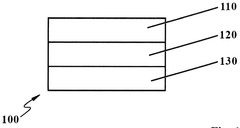
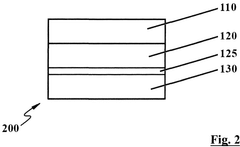
- Incorporating an additional solid-state electrolyte layer between the solid-state electrolyte separator and the conductor improves deformability and maintains contact between the components during charging cycles.
Charge method for solid-state lithium-based thin-film battery
PatentActiveUS10903672B2
Innovation
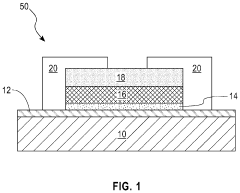
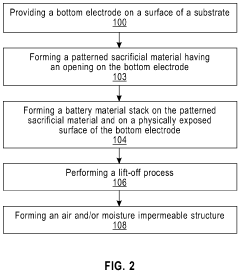
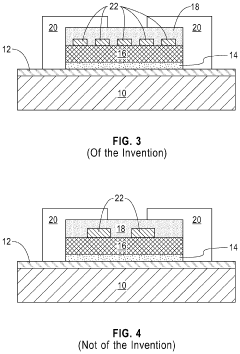
- A method involving an initial fast charging burst at a rate of 5 C or greater for 50 seconds or less in solid-state lithium-based thin-film batteries without an intentionally deposited lithium anode, forming a high-density, uniformly distributed lithium accumulation region between the electrolyte and top electrode to reduce stress on the top electrode.
Safety and Stability Considerations for Solid-State Batteries
Safety and stability are paramount concerns in the development of anode-free solid-state batteries, particularly when considering fast charging capabilities. The elimination of traditional anodes introduces unique safety advantages while simultaneously creating new challenges that must be addressed through comprehensive engineering solutions.
Solid-state batteries inherently offer improved safety profiles compared to conventional lithium-ion batteries with liquid electrolytes. The replacement of flammable organic electrolytes with solid-state alternatives significantly reduces fire and explosion risks, which becomes especially critical during fast charging when thermal management is challenging.
Dendrite formation remains a primary safety concern in anode-free configurations. During rapid charging, lithium ions can deposit unevenly on the current collector, forming needle-like structures that potentially penetrate the solid electrolyte. This phenomenon not only compromises battery performance but also creates internal short-circuit risks that could lead to catastrophic failure. Recent research indicates that interface engineering and pressure-application systems can mitigate dendrite growth even under high current densities.
Thermal stability presents another critical consideration. Fast charging inevitably generates substantial heat that must be efficiently dissipated. Solid electrolytes generally exhibit better thermal stability than liquid counterparts, but their lower ionic conductivity at room temperature can lead to localized heating during rapid charging. Advanced thermal management systems incorporating phase-change materials show promise in maintaining optimal operating temperatures.
Mechanical stability of the electrolyte-electrode interfaces becomes increasingly important during fast charging cycles. Volume changes during lithium plating and stripping create mechanical stresses that can compromise interface integrity. Gradient-structured electrolytes and compliant interlayers have demonstrated effectiveness in accommodating these dimensional changes while maintaining electrical contact.
Cycle life stability represents a significant challenge for anode-free solid-state batteries under fast charging conditions. Repeated rapid charging can accelerate degradation mechanisms, including electrolyte decomposition and interface resistance growth. Protective coatings and dopants that enhance interfacial stability have shown potential to extend cycle life while maintaining fast charging capabilities.
Pressure management systems are emerging as essential components for ensuring long-term stability. Uniform pressure application helps maintain intimate contact between components, reducing interface resistance and promoting homogeneous lithium deposition during fast charging. Innovative cell designs incorporating dynamic pressure regulation mechanisms are being explored to optimize performance throughout battery lifetime.
Solid-state batteries inherently offer improved safety profiles compared to conventional lithium-ion batteries with liquid electrolytes. The replacement of flammable organic electrolytes with solid-state alternatives significantly reduces fire and explosion risks, which becomes especially critical during fast charging when thermal management is challenging.
Dendrite formation remains a primary safety concern in anode-free configurations. During rapid charging, lithium ions can deposit unevenly on the current collector, forming needle-like structures that potentially penetrate the solid electrolyte. This phenomenon not only compromises battery performance but also creates internal short-circuit risks that could lead to catastrophic failure. Recent research indicates that interface engineering and pressure-application systems can mitigate dendrite growth even under high current densities.
Thermal stability presents another critical consideration. Fast charging inevitably generates substantial heat that must be efficiently dissipated. Solid electrolytes generally exhibit better thermal stability than liquid counterparts, but their lower ionic conductivity at room temperature can lead to localized heating during rapid charging. Advanced thermal management systems incorporating phase-change materials show promise in maintaining optimal operating temperatures.
Mechanical stability of the electrolyte-electrode interfaces becomes increasingly important during fast charging cycles. Volume changes during lithium plating and stripping create mechanical stresses that can compromise interface integrity. Gradient-structured electrolytes and compliant interlayers have demonstrated effectiveness in accommodating these dimensional changes while maintaining electrical contact.
Cycle life stability represents a significant challenge for anode-free solid-state batteries under fast charging conditions. Repeated rapid charging can accelerate degradation mechanisms, including electrolyte decomposition and interface resistance growth. Protective coatings and dopants that enhance interfacial stability have shown potential to extend cycle life while maintaining fast charging capabilities.
Pressure management systems are emerging as essential components for ensuring long-term stability. Uniform pressure application helps maintain intimate contact between components, reducing interface resistance and promoting homogeneous lithium deposition during fast charging. Innovative cell designs incorporating dynamic pressure regulation mechanisms are being explored to optimize performance throughout battery lifetime.
Environmental Impact and Sustainability Assessment
The environmental impact of anode-free solid-state battery technologies represents a critical dimension in evaluating their overall sustainability and long-term viability. These advanced battery systems offer significant environmental advantages compared to conventional lithium-ion batteries, primarily through the elimination of traditional anode materials such as graphite or silicon, which require extensive mining operations and energy-intensive processing.
The reduction in material requirements translates directly to decreased mining activities, particularly for graphite, which often involves environmentally destructive practices including deforestation, soil erosion, and water pollution. By eliminating the need for these materials, anode-free technologies substantially reduce the ecological footprint associated with battery production, especially in ecologically sensitive regions where mining operations are concentrated.
Carbon emissions represent another crucial environmental consideration. Life cycle assessments indicate that anode-free solid-state batteries potentially offer 25-30% lower carbon footprints compared to conventional lithium-ion batteries, primarily due to simplified manufacturing processes and reduced material requirements. This advantage becomes particularly significant when considering the projected scale of battery deployment for electric vehicles and grid storage applications over the coming decades.
Water conservation presents an additional environmental benefit. Traditional battery manufacturing processes are notably water-intensive, particularly in electrode preparation and cell assembly. Anode-free designs simplify these processes, potentially reducing water consumption by up to 40% according to preliminary manufacturing assessments. This aspect becomes increasingly important as battery production scales in regions facing water scarcity challenges.
End-of-life considerations further enhance the sustainability profile of anode-free solid-state batteries. The simplified chemistry and reduced material complexity facilitate more efficient recycling processes, with theoretical recovery rates for critical materials exceeding 90%. This circular economy potential addresses growing concerns regarding resource depletion and waste management associated with conventional battery technologies.
However, certain sustainability challenges remain unresolved. The solid electrolytes required for these batteries often contain rare earth elements or specialized materials with their own environmental extraction impacts. Additionally, the manufacturing processes for solid electrolytes currently demand higher energy inputs than liquid electrolyte production, potentially offsetting some environmental gains unless powered by renewable energy sources.
The reduction in material requirements translates directly to decreased mining activities, particularly for graphite, which often involves environmentally destructive practices including deforestation, soil erosion, and water pollution. By eliminating the need for these materials, anode-free technologies substantially reduce the ecological footprint associated with battery production, especially in ecologically sensitive regions where mining operations are concentrated.
Carbon emissions represent another crucial environmental consideration. Life cycle assessments indicate that anode-free solid-state batteries potentially offer 25-30% lower carbon footprints compared to conventional lithium-ion batteries, primarily due to simplified manufacturing processes and reduced material requirements. This advantage becomes particularly significant when considering the projected scale of battery deployment for electric vehicles and grid storage applications over the coming decades.
Water conservation presents an additional environmental benefit. Traditional battery manufacturing processes are notably water-intensive, particularly in electrode preparation and cell assembly. Anode-free designs simplify these processes, potentially reducing water consumption by up to 40% according to preliminary manufacturing assessments. This aspect becomes increasingly important as battery production scales in regions facing water scarcity challenges.
End-of-life considerations further enhance the sustainability profile of anode-free solid-state batteries. The simplified chemistry and reduced material complexity facilitate more efficient recycling processes, with theoretical recovery rates for critical materials exceeding 90%. This circular economy potential addresses growing concerns regarding resource depletion and waste management associated with conventional battery technologies.
However, certain sustainability challenges remain unresolved. The solid electrolytes required for these batteries often contain rare earth elements or specialized materials with their own environmental extraction impacts. Additionally, the manufacturing processes for solid electrolytes currently demand higher energy inputs than liquid electrolyte production, potentially offsetting some environmental gains unless powered by renewable energy sources.
Unlock deeper insights with PatSnap Eureka Quick Research — get a full tech report to explore trends and direct your research. Try now!
Generate Your Research Report Instantly with AI Agent
Supercharge your innovation with PatSnap Eureka AI Agent Platform!