

Energy-Efficient HEV Engineering: Key Research Updates
AUG 14, 20259 MIN READ
Generate Your Research Report Instantly with AI Agent
PatSnap Eureka helps you evaluate technical feasibility & market potential.
HEV Energy Efficiency Background and Objectives
Hybrid Electric Vehicles (HEVs) have emerged as a pivotal technology in the automotive industry's pursuit of energy efficiency and reduced environmental impact. The development of HEVs dates back to the late 20th century, with significant advancements occurring in the past two decades. This technology combines conventional internal combustion engines with electric propulsion systems, aiming to optimize fuel consumption and reduce emissions.
The evolution of HEV technology has been driven by increasing global concerns over climate change, stringent emissions regulations, and the need for sustainable transportation solutions. Key milestones in HEV development include the introduction of regenerative braking systems, advanced battery technologies, and sophisticated power management algorithms. These innovations have collectively contributed to the improved energy efficiency of HEVs over time.
Current trends in HEV engineering focus on further enhancing energy efficiency through various approaches. These include the development of more efficient electric motors, advanced power electronics, and improved energy storage systems. Additionally, there is a growing emphasis on the integration of artificial intelligence and machine learning algorithms to optimize power distribution and driving patterns in real-time.
The primary objectives of energy-efficient HEV engineering research are multifaceted. Firstly, researchers aim to increase the overall energy efficiency of HEVs by minimizing energy losses across all components of the powertrain. This involves optimizing the interaction between the internal combustion engine and the electric motor, as well as improving the efficiency of power conversion and transmission systems.
Secondly, there is a strong focus on extending the electric-only driving range of HEVs. This objective is closely tied to advancements in battery technology, including the development of higher energy density batteries and more efficient battery management systems. By increasing the electric-only range, HEVs can further reduce their reliance on fossil fuels and decrease overall emissions.
Another critical objective is the reduction of vehicle weight without compromising safety or performance. This involves the exploration of lightweight materials and innovative structural designs that can contribute to improved energy efficiency. Additionally, researchers are working on enhancing the aerodynamics of HEVs to reduce drag and further improve fuel economy.
The integration of renewable energy sources into HEV charging infrastructure is also a key area of research. This includes the development of smart charging systems that can optimize charging times based on grid demand and the availability of renewable energy sources. Such advancements aim to reduce the overall carbon footprint of HEVs throughout their lifecycle.
The evolution of HEV technology has been driven by increasing global concerns over climate change, stringent emissions regulations, and the need for sustainable transportation solutions. Key milestones in HEV development include the introduction of regenerative braking systems, advanced battery technologies, and sophisticated power management algorithms. These innovations have collectively contributed to the improved energy efficiency of HEVs over time.
Current trends in HEV engineering focus on further enhancing energy efficiency through various approaches. These include the development of more efficient electric motors, advanced power electronics, and improved energy storage systems. Additionally, there is a growing emphasis on the integration of artificial intelligence and machine learning algorithms to optimize power distribution and driving patterns in real-time.
The primary objectives of energy-efficient HEV engineering research are multifaceted. Firstly, researchers aim to increase the overall energy efficiency of HEVs by minimizing energy losses across all components of the powertrain. This involves optimizing the interaction between the internal combustion engine and the electric motor, as well as improving the efficiency of power conversion and transmission systems.
Secondly, there is a strong focus on extending the electric-only driving range of HEVs. This objective is closely tied to advancements in battery technology, including the development of higher energy density batteries and more efficient battery management systems. By increasing the electric-only range, HEVs can further reduce their reliance on fossil fuels and decrease overall emissions.
Another critical objective is the reduction of vehicle weight without compromising safety or performance. This involves the exploration of lightweight materials and innovative structural designs that can contribute to improved energy efficiency. Additionally, researchers are working on enhancing the aerodynamics of HEVs to reduce drag and further improve fuel economy.
The integration of renewable energy sources into HEV charging infrastructure is also a key area of research. This includes the development of smart charging systems that can optimize charging times based on grid demand and the availability of renewable energy sources. Such advancements aim to reduce the overall carbon footprint of HEVs throughout their lifecycle.
Market Analysis for Energy-Efficient HEVs
The market for energy-efficient Hybrid Electric Vehicles (HEVs) has experienced significant growth in recent years, driven by increasing environmental concerns, stricter emissions regulations, and rising fuel costs. This segment of the automotive industry has shown remarkable resilience and potential for expansion, even in the face of global economic challenges.
Consumer demand for HEVs has been steadily increasing, with a notable shift in preferences towards more fuel-efficient and environmentally friendly transportation options. This trend is particularly pronounced in urban areas and regions with high fuel prices or strong environmental policies. The market has also benefited from advancements in battery technology and powertrain efficiency, which have improved the overall performance and range of HEVs.
Government incentives and regulations have played a crucial role in shaping the HEV market. Many countries have implemented tax breaks, subsidies, and other financial incentives to encourage the adoption of hybrid vehicles. Additionally, stricter emissions standards in major markets like the European Union, China, and the United States have pushed automakers to invest heavily in HEV technology to meet these requirements.
The global HEV market size has been expanding at a compound annual growth rate (CAGR) of over 8% in recent years. This growth is expected to continue, with projections indicating that the market could reach a value of over $100 billion by 2026. The Asia-Pacific region, particularly countries like Japan and China, has emerged as a dominant force in the HEV market, both in terms of production and consumption.
Key market segments for HEVs include compact cars, mid-size sedans, and SUVs. There is also growing interest in hybrid technology for commercial vehicles and public transportation, presenting new opportunities for market expansion. The luxury segment has also seen increased adoption of hybrid technology, as premium automakers seek to combine performance with improved fuel efficiency.
Despite the positive outlook, the HEV market faces some challenges. The ongoing transition towards fully electric vehicles (EVs) could potentially impact long-term growth prospects for HEVs. However, many industry experts believe that HEVs will continue to play a significant role in the automotive market, particularly in regions with limited EV charging infrastructure or where consumers have range anxiety concerns.
In conclusion, the market analysis for energy-efficient HEVs reveals a robust and growing sector with strong potential for continued expansion. The combination of technological advancements, supportive government policies, and shifting consumer preferences is likely to drive further innovation and market penetration in the coming years.
Consumer demand for HEVs has been steadily increasing, with a notable shift in preferences towards more fuel-efficient and environmentally friendly transportation options. This trend is particularly pronounced in urban areas and regions with high fuel prices or strong environmental policies. The market has also benefited from advancements in battery technology and powertrain efficiency, which have improved the overall performance and range of HEVs.
Government incentives and regulations have played a crucial role in shaping the HEV market. Many countries have implemented tax breaks, subsidies, and other financial incentives to encourage the adoption of hybrid vehicles. Additionally, stricter emissions standards in major markets like the European Union, China, and the United States have pushed automakers to invest heavily in HEV technology to meet these requirements.
The global HEV market size has been expanding at a compound annual growth rate (CAGR) of over 8% in recent years. This growth is expected to continue, with projections indicating that the market could reach a value of over $100 billion by 2026. The Asia-Pacific region, particularly countries like Japan and China, has emerged as a dominant force in the HEV market, both in terms of production and consumption.
Key market segments for HEVs include compact cars, mid-size sedans, and SUVs. There is also growing interest in hybrid technology for commercial vehicles and public transportation, presenting new opportunities for market expansion. The luxury segment has also seen increased adoption of hybrid technology, as premium automakers seek to combine performance with improved fuel efficiency.
Despite the positive outlook, the HEV market faces some challenges. The ongoing transition towards fully electric vehicles (EVs) could potentially impact long-term growth prospects for HEVs. However, many industry experts believe that HEVs will continue to play a significant role in the automotive market, particularly in regions with limited EV charging infrastructure or where consumers have range anxiety concerns.
In conclusion, the market analysis for energy-efficient HEVs reveals a robust and growing sector with strong potential for continued expansion. The combination of technological advancements, supportive government policies, and shifting consumer preferences is likely to drive further innovation and market penetration in the coming years.
Current HEV Energy Efficiency Challenges
Hybrid Electric Vehicles (HEVs) face several significant challenges in achieving optimal energy efficiency. One of the primary hurdles is the complex power management system required to balance the use of internal combustion engines and electric motors. This system must continuously optimize the power split between these two sources, adapting to various driving conditions and user demands while maximizing overall efficiency.
Battery technology remains a critical bottleneck in HEV development. Current lithium-ion batteries, while improved, still struggle with energy density limitations, charging speeds, and longevity issues. These factors directly impact the electric-only range and overall performance of HEVs, constraining their ability to fully leverage electric propulsion for extended periods.
Thermal management presents another substantial challenge. The integration of electric powertrains with traditional combustion engines creates complex heat generation patterns. Efficiently dissipating this heat while maintaining optimal operating temperatures for both systems is crucial for performance and longevity but remains technically challenging.
Weight reduction is an ongoing concern in HEV engineering. The addition of electric components, particularly batteries, significantly increases vehicle weight, which in turn affects energy consumption. Engineers must balance the need for sufficient battery capacity with the goal of minimizing overall vehicle mass to maintain efficiency.
Regenerative braking systems, while beneficial, still face efficiency limitations. Capturing and converting kinetic energy during deceleration is not a lossless process, and current systems are unable to recover all available energy. Improving the efficiency of these systems without compromising braking performance or driver comfort remains a key area of focus.
The integration of advanced materials and manufacturing processes poses both opportunities and challenges. While lightweight materials like carbon fiber composites offer potential weight savings, their high cost and complex manufacturing processes limit widespread adoption in mass-market HEVs.
Lastly, the optimization of control algorithms for hybrid powertrains continues to be a significant challenge. These algorithms must balance multiple objectives, including fuel efficiency, emissions reduction, and performance, while adapting to diverse driving conditions and driver behaviors. Developing robust, adaptive control strategies that can optimize energy use across various scenarios remains an active area of research and development in the HEV industry.
Battery technology remains a critical bottleneck in HEV development. Current lithium-ion batteries, while improved, still struggle with energy density limitations, charging speeds, and longevity issues. These factors directly impact the electric-only range and overall performance of HEVs, constraining their ability to fully leverage electric propulsion for extended periods.
Thermal management presents another substantial challenge. The integration of electric powertrains with traditional combustion engines creates complex heat generation patterns. Efficiently dissipating this heat while maintaining optimal operating temperatures for both systems is crucial for performance and longevity but remains technically challenging.
Weight reduction is an ongoing concern in HEV engineering. The addition of electric components, particularly batteries, significantly increases vehicle weight, which in turn affects energy consumption. Engineers must balance the need for sufficient battery capacity with the goal of minimizing overall vehicle mass to maintain efficiency.
Regenerative braking systems, while beneficial, still face efficiency limitations. Capturing and converting kinetic energy during deceleration is not a lossless process, and current systems are unable to recover all available energy. Improving the efficiency of these systems without compromising braking performance or driver comfort remains a key area of focus.
The integration of advanced materials and manufacturing processes poses both opportunities and challenges. While lightweight materials like carbon fiber composites offer potential weight savings, their high cost and complex manufacturing processes limit widespread adoption in mass-market HEVs.
Lastly, the optimization of control algorithms for hybrid powertrains continues to be a significant challenge. These algorithms must balance multiple objectives, including fuel efficiency, emissions reduction, and performance, while adapting to diverse driving conditions and driver behaviors. Developing robust, adaptive control strategies that can optimize energy use across various scenarios remains an active area of research and development in the HEV industry.
Current Energy-Efficient HEV Solutions
01 Power management systems for HEVs
Advanced power management systems are crucial for optimizing energy efficiency in hybrid electric vehicles. These systems intelligently distribute power between the electric motor and internal combustion engine, maximizing fuel economy and reducing emissions. They often incorporate sophisticated algorithms to predict driving conditions and adjust power distribution accordingly.- Powertrain optimization for HEVs: Improving the powertrain design and control strategies in hybrid electric vehicles to maximize energy efficiency. This includes optimizing the integration of electric motors, internal combustion engines, and power electronics to reduce energy losses and improve overall vehicle performance.
- Energy recovery and regenerative braking systems: Developing advanced energy recovery systems, particularly focusing on regenerative braking technology. These systems capture and store kinetic energy during deceleration, which can then be used to power the vehicle, significantly improving overall energy efficiency.
- Thermal management and cooling systems: Implementing efficient thermal management and cooling systems for HEV components, including batteries, electric motors, and power electronics. Proper thermal management helps maintain optimal operating temperatures, enhancing overall energy efficiency and extending component lifespan.
- Lightweight materials and aerodynamic design: Utilizing lightweight materials in vehicle construction and improving aerodynamic design to reduce overall vehicle weight and air resistance. This approach minimizes energy consumption and increases the efficiency of both electric and combustion powertrains in hybrid vehicles.
- Intelligent energy management systems: Developing advanced energy management systems that use artificial intelligence and machine learning algorithms to optimize power distribution between electric and combustion powertrains. These systems adapt to driving conditions, route information, and driver behavior to maximize energy efficiency in real-time.
02 Thermal management in HEVs
Effective thermal management is essential for maintaining optimal performance and energy efficiency in hybrid electric vehicles. This includes cooling systems for batteries, electric motors, and power electronics, as well as heat recovery systems that can convert waste heat into usable energy. Improved thermal management can significantly enhance overall vehicle efficiency.Expand Specific Solutions03 Regenerative braking systems
Regenerative braking systems play a crucial role in improving the energy efficiency of hybrid electric vehicles. These systems capture kinetic energy during deceleration and convert it into electrical energy, which is then stored in the battery for later use. Advanced regenerative braking technologies can significantly extend the electric range of HEVs.Expand Specific Solutions04 Lightweight materials and aerodynamic design
The use of lightweight materials in vehicle construction and improved aerodynamic design contribute significantly to the energy efficiency of hybrid electric vehicles. Advanced materials such as high-strength steel, aluminum alloys, and carbon fiber composites reduce overall vehicle weight, while optimized body shapes minimize air resistance, resulting in reduced energy consumption.Expand Specific Solutions05 Advanced battery technologies
Innovations in battery technology are crucial for enhancing the energy efficiency of hybrid electric vehicles. This includes the development of high-capacity, fast-charging batteries with improved energy density and longer lifespan. Advanced battery management systems optimize charging and discharging cycles, further improving overall vehicle efficiency.Expand Specific Solutions
Key Players in HEV Energy Efficiency
The energy-efficient HEV engineering landscape is characterized by intense competition and rapid technological advancements. The industry is in a growth phase, with increasing market size driven by global environmental concerns and stricter emissions regulations. The technology maturity varies across different aspects of HEV engineering, with some areas well-established and others still evolving. Key players like Ford, Toyota, and Hyundai are leading the charge, while academic institutions such as Jilin University and Chongqing University contribute significant research. Chinese companies like FAW and Chery are also making strides in this field. The market is seeing a blend of established automotive giants and emerging players, all vying for dominance in this crucial sector of the automotive industry.
Toyota Motor Engineering & Manufacturing North America, Inc.
Technical Solution: Toyota has pioneered the development of their next-generation hybrid powertrain, focusing on reducing energy losses and improving overall system efficiency. Their latest HEV technology features a redesigned power control unit with silicon carbide semiconductors, reducing power losses by approximately 20% compared to conventional systems[4]. The company has also introduced a high-efficiency, compact electric motor with a new magnet arrangement that increases power density by 30% while reducing size and weight[5]. Toyota's energy management system incorporates AI-driven predictive control algorithms that optimize power distribution based on real-time driving conditions and learned driver behavior patterns. Furthermore, they have developed an advanced heat recovery system that captures waste heat from the engine and exhaust to warm the cabin and battery, reducing the energy demand on the vehicle's electrical system[6].
Strengths: High-efficiency power electronics, compact and powerful electric motors, and innovative heat recovery systems. Weaknesses: Potential over-reliance on hybrid technology compared to full electric vehicles.
Ford Motor Co.
Technical Solution: Ford has developed an advanced energy management system for their HEVs, focusing on predictive energy optimization. This system utilizes machine learning algorithms to analyze driving patterns, traffic conditions, and terrain data to optimize the power distribution between the electric motor and internal combustion engine. The technology incorporates a sophisticated battery thermal management system that enhances battery life and performance by maintaining optimal operating temperatures. Ford has also implemented a regenerative braking system that captures up to 94% of braking energy, significantly improving overall energy efficiency[1][3]. Additionally, they have introduced a novel powertrain architecture that allows for seamless switching between series and parallel hybrid modes, maximizing efficiency across various driving scenarios[2].
Strengths: Advanced predictive energy optimization, high-efficiency regenerative braking, and flexible powertrain architecture. Weaknesses: Potential complexity in system integration and higher initial costs for advanced technologies.
Core HEV Energy Efficiency Innovations
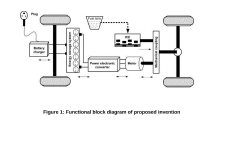
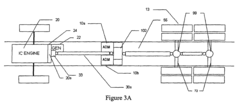
Hybrid electric vehicle with electric motor providing strategic power assist to load balance internal combustion engine
PatentPendingIN202441000035A
Innovation
- A Hybrid Electric Vehicle (HEV) system with an electric motor providing strategic power assist to the internal combustion engine, optimizing power distribution and energy management through advanced control algorithms.
Power combining apparatus for hybrid electric vehicle
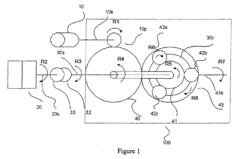
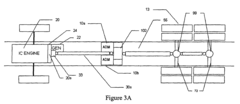
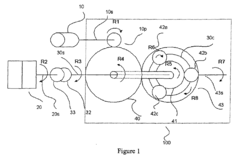
PatentInactiveEP1232892A3
Innovation
- A vehicle transmission system utilizing a planetary gear set with a clutch and brake mechanism, allowing operation in three modes: mechanical, electrical, and combined, where the system can selectively connect or disconnect power sources to optimize power transmission and torque generation, with the ability to synchronize the variable power source for efficient mode changes.
Environmental Impact of HEV Technologies
The environmental impact of Hybrid Electric Vehicle (HEV) technologies has become a crucial consideration in the automotive industry's pursuit of sustainable transportation solutions. As HEVs combine conventional internal combustion engines with electric propulsion systems, they offer a promising pathway to reduce greenhouse gas emissions and improve overall energy efficiency in the transportation sector.
One of the primary environmental benefits of HEV technologies is the significant reduction in fuel consumption and, consequently, lower carbon dioxide emissions. Studies have shown that HEVs can achieve up to 35% reduction in CO2 emissions compared to conventional vehicles, depending on driving conditions and vehicle specifications. This reduction is primarily attributed to the regenerative braking systems and the ability to operate in electric-only mode for short distances.
However, the environmental impact of HEVs extends beyond tailpipe emissions. The production and disposal of batteries used in these vehicles present unique environmental challenges. The mining and processing of raw materials for battery production, such as lithium, cobalt, and nickel, can have significant ecological consequences, including habitat destruction and water pollution. Additionally, the energy-intensive manufacturing process of batteries contributes to the overall carbon footprint of HEVs.
To address these concerns, researchers are focusing on developing more sustainable battery technologies and improving recycling processes. Advanced battery chemistries, such as solid-state batteries, promise higher energy density and longer lifespans, potentially reducing the environmental impact of battery production and disposal. Furthermore, innovative recycling techniques are being developed to recover and reuse critical materials from spent batteries, creating a more circular economy for HEV components.
The electricity source used to charge HEVs also plays a crucial role in their overall environmental impact. In regions where electricity is primarily generated from renewable sources, the benefits of HEVs are more pronounced. Conversely, in areas heavily reliant on fossil fuels for electricity generation, the environmental advantages of HEVs may be somewhat diminished. This underscores the importance of concurrent advancements in clean energy infrastructure to maximize the environmental benefits of HEV technologies.
Another aspect of HEV environmental impact is the potential for reduced noise pollution in urban areas. The ability of HEVs to operate in electric-only mode at low speeds can significantly decrease noise levels in city environments, contributing to improved quality of life for urban residents. However, this also raises safety concerns for pedestrians, particularly those with visual impairments, necessitating the development of acoustic vehicle alerting systems.
As HEV technologies continue to evolve, ongoing research is focused on optimizing the balance between environmental benefits and performance. This includes improving the efficiency of power electronics, developing more advanced energy management systems, and exploring the use of sustainable materials in vehicle construction. These advancements aim to further reduce the lifecycle environmental impact of HEVs while maintaining or enhancing their performance characteristics.
One of the primary environmental benefits of HEV technologies is the significant reduction in fuel consumption and, consequently, lower carbon dioxide emissions. Studies have shown that HEVs can achieve up to 35% reduction in CO2 emissions compared to conventional vehicles, depending on driving conditions and vehicle specifications. This reduction is primarily attributed to the regenerative braking systems and the ability to operate in electric-only mode for short distances.
However, the environmental impact of HEVs extends beyond tailpipe emissions. The production and disposal of batteries used in these vehicles present unique environmental challenges. The mining and processing of raw materials for battery production, such as lithium, cobalt, and nickel, can have significant ecological consequences, including habitat destruction and water pollution. Additionally, the energy-intensive manufacturing process of batteries contributes to the overall carbon footprint of HEVs.
To address these concerns, researchers are focusing on developing more sustainable battery technologies and improving recycling processes. Advanced battery chemistries, such as solid-state batteries, promise higher energy density and longer lifespans, potentially reducing the environmental impact of battery production and disposal. Furthermore, innovative recycling techniques are being developed to recover and reuse critical materials from spent batteries, creating a more circular economy for HEV components.
The electricity source used to charge HEVs also plays a crucial role in their overall environmental impact. In regions where electricity is primarily generated from renewable sources, the benefits of HEVs are more pronounced. Conversely, in areas heavily reliant on fossil fuels for electricity generation, the environmental advantages of HEVs may be somewhat diminished. This underscores the importance of concurrent advancements in clean energy infrastructure to maximize the environmental benefits of HEV technologies.
Another aspect of HEV environmental impact is the potential for reduced noise pollution in urban areas. The ability of HEVs to operate in electric-only mode at low speeds can significantly decrease noise levels in city environments, contributing to improved quality of life for urban residents. However, this also raises safety concerns for pedestrians, particularly those with visual impairments, necessitating the development of acoustic vehicle alerting systems.
As HEV technologies continue to evolve, ongoing research is focused on optimizing the balance between environmental benefits and performance. This includes improving the efficiency of power electronics, developing more advanced energy management systems, and exploring the use of sustainable materials in vehicle construction. These advancements aim to further reduce the lifecycle environmental impact of HEVs while maintaining or enhancing their performance characteristics.
HEV Energy Efficiency Standards and Regulations
The regulatory landscape for Hybrid Electric Vehicle (HEV) energy efficiency is rapidly evolving, driven by global efforts to reduce greenhouse gas emissions and improve fuel economy. In the United States, the Corporate Average Fuel Economy (CAFE) standards set by the National Highway Traffic Safety Administration (NHTSA) play a crucial role in shaping HEV development. These standards mandate progressive improvements in fleet-wide fuel efficiency, incentivizing automakers to invest in HEV technology.
The European Union has implemented stringent CO2 emission standards for new passenger cars and light commercial vehicles. These regulations are based on the Worldwide Harmonized Light Vehicles Test Procedure (WLTP), which provides a more realistic assessment of vehicle emissions and fuel consumption. The EU's target of reducing CO2 emissions by 37.5% for new cars and 31% for new vans by 2030 (compared to 2021 levels) is a significant driver for HEV innovation.
China, the world's largest automotive market, has introduced its own set of fuel consumption regulations and new energy vehicle (NEV) credit policies. The dual-credit policy system combines Corporate Average Fuel Consumption (CAFC) targets with NEV credits, effectively promoting the development and adoption of energy-efficient vehicles, including HEVs.
Japan, a pioneer in HEV technology, continues to refine its fuel efficiency standards. The country's Top Runner Program sets efficiency targets based on the most efficient models in each vehicle class, encouraging continuous improvement across the industry.
International harmonization efforts, such as the Global Technical Regulation No. 15 (GTR-15) on Worldwide harmonized Light vehicles Test Procedures (WLTP), aim to create a unified set of test procedures for determining emissions and fuel consumption of light-duty vehicles. This global approach facilitates technology transfer and reduces compliance costs for manufacturers operating in multiple markets.
The impact of these regulations on HEV engineering is profound. They drive research and development in key areas such as powertrain optimization, energy management strategies, and lightweight materials. Manufacturers are focusing on improving electric motor efficiency, battery performance, and regenerative braking systems to meet increasingly stringent standards.
As regulations continue to tighten, the industry is witnessing a shift towards more advanced HEV architectures, including plug-in hybrid electric vehicles (PHEVs) and range-extended electric vehicles (REEVs). These technologies offer greater flexibility in meeting both emission and fuel economy targets, while also addressing consumer demands for increased electric-only driving range.
The European Union has implemented stringent CO2 emission standards for new passenger cars and light commercial vehicles. These regulations are based on the Worldwide Harmonized Light Vehicles Test Procedure (WLTP), which provides a more realistic assessment of vehicle emissions and fuel consumption. The EU's target of reducing CO2 emissions by 37.5% for new cars and 31% for new vans by 2030 (compared to 2021 levels) is a significant driver for HEV innovation.
China, the world's largest automotive market, has introduced its own set of fuel consumption regulations and new energy vehicle (NEV) credit policies. The dual-credit policy system combines Corporate Average Fuel Consumption (CAFC) targets with NEV credits, effectively promoting the development and adoption of energy-efficient vehicles, including HEVs.
Japan, a pioneer in HEV technology, continues to refine its fuel efficiency standards. The country's Top Runner Program sets efficiency targets based on the most efficient models in each vehicle class, encouraging continuous improvement across the industry.
International harmonization efforts, such as the Global Technical Regulation No. 15 (GTR-15) on Worldwide harmonized Light vehicles Test Procedures (WLTP), aim to create a unified set of test procedures for determining emissions and fuel consumption of light-duty vehicles. This global approach facilitates technology transfer and reduces compliance costs for manufacturers operating in multiple markets.
The impact of these regulations on HEV engineering is profound. They drive research and development in key areas such as powertrain optimization, energy management strategies, and lightweight materials. Manufacturers are focusing on improving electric motor efficiency, battery performance, and regenerative braking systems to meet increasingly stringent standards.
As regulations continue to tighten, the industry is witnessing a shift towards more advanced HEV architectures, including plug-in hybrid electric vehicles (PHEVs) and range-extended electric vehicles (REEVs). These technologies offer greater flexibility in meeting both emission and fuel economy targets, while also addressing consumer demands for increased electric-only driving range.
Unlock deeper insights with PatSnap Eureka Quick Research — get a full tech report to explore trends and direct your research. Try now!
Generate Your Research Report Instantly with AI Agent
Supercharge your innovation with PatSnap Eureka AI Agent Platform!